
An empty beach cart going to another site is itself a piece of cargo. Remove the cooler, chairs and loose supplies before the crew arrives to load it. Decide whether the cart will travel assembled or in a configuration the supplier approves for that journey. Then ask the driver to show the clear space available after the other deliveries are on board.
Measure what reaches the vehicle door
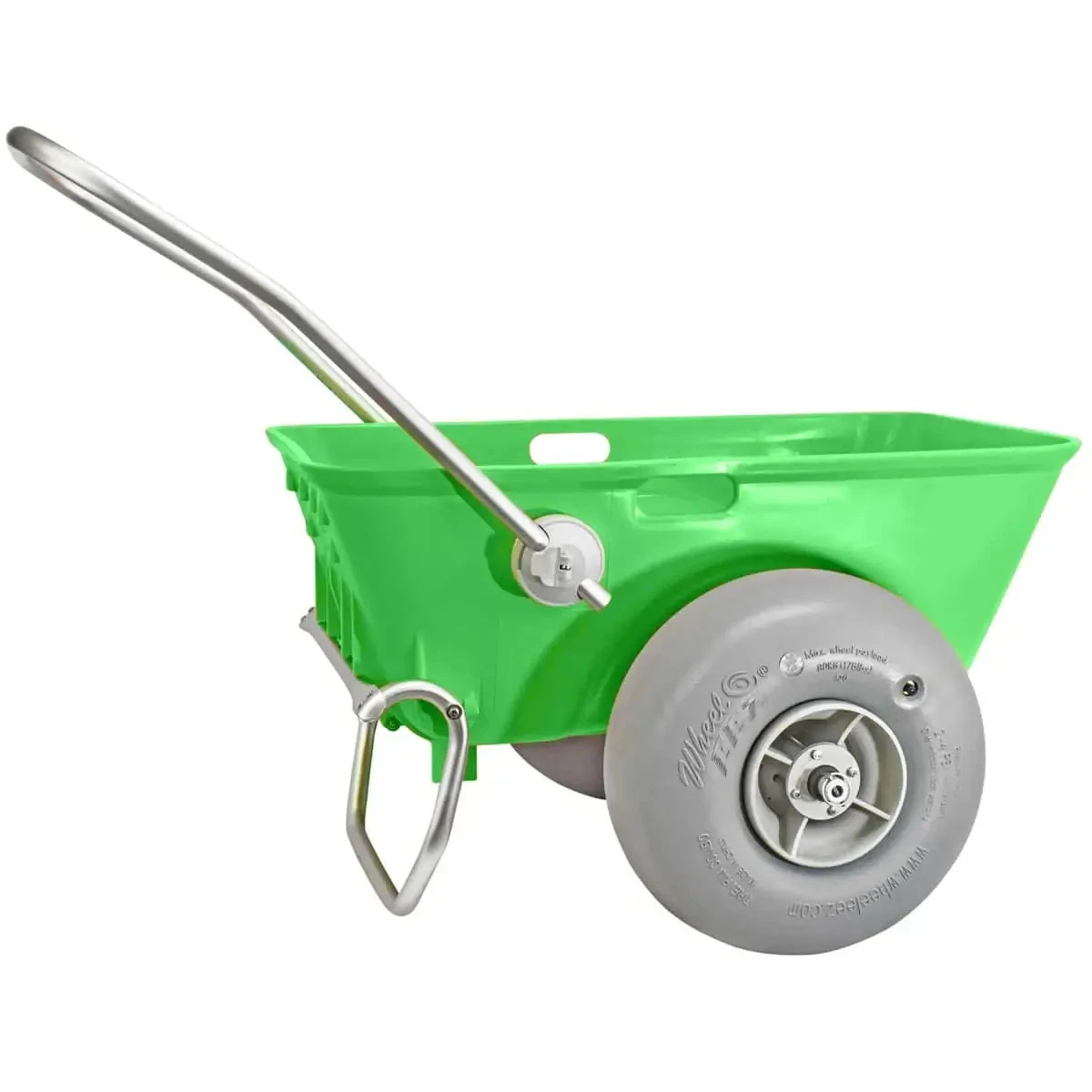
For the standard Ary Beach molded model, the manufacturer lists 98 × 86 × 51 cm overall, with the 86 cm width measured across the wheels. The export carton is 105 × 70 × 37 cm, with the wheels and handle packed inside the tub. The 17 kg figure is the gross weight of that packed carton. It does not give the empty assembled cart’s handling weight. Confirm the actual weight and load configuration if the driver or handling plan requires them. Cart dimensions and packing details
Suppose a service vehicle has 80 cm of clear space between the narrowest points of the rear opening. A carton listed at 70 cm wide does not prove the 86 cm assembled cart can roll straight in. Check another vehicle or a documented equipment configuration, including the time the receiving crew would need to reassemble and inspect it. A folding cart is another design and needs its own measurements.
Give the driver a load that can travel and come out again
Measure the door opening in its working position, the height of the sill and any change in clearance between the opening and the assigned position. Consider the space already occupied by beach mats, crates or other equipment. The driver also needs access to the vehicle’s approved cargo restraint system. Use its instructions and the cart supplier’s confirmed contact or securing arrangements. A pull handle and a parking stand identify operating parts. Neither description establishes a rated tie-down point.
Plan the loading aid and crew against the equipment and the actual loading height. Decide where workers can stand clear of other movements and where they will unload at the destination. The cart travels empty with no passengers. Keep unrelated items from rolling or being dropped into the tub during transit.
For a multi-stop run, list the cart’s stop beside the other consignments. If the cart is due off first and heavy crates block the door, change the loading order before departure. Check that rearranging the load still leaves every item suitably restrained.
Reconcile removed components at the far end
When removal is authorized, keep wheels, spacers, retainers and handle fittings identified with their parent cart. Record the configuration and the number of labelled containers transferred to the driver. Protect loose parts in transit under the approved loading arrangement. A loose pin at the bottom of a vehicle will look the same regardless of which cart it came from.
The receiver checks the cart number and components before the vehicle leaves. Inspect new contact marks, damage to the tub or a displaced wheel. Reassemble under the supplied instructions and perform the empty-cart check before dispatching it with goods. If a fitting cannot be accounted for, open an issue record and give the sending depot its exact description while the crew can still trace the load.