
A purchase specification that says “metal beach cart frame” leaves the buyer unable to judge a later substitution. Name the pieces the material claim covers. On a two-wheel cargo tub, that might include the handle, stand, axle supports and the structure fastening them to the tub. On a folding deck cart, identify the deck frame, pivots, lock and handle mounting separately. These parts carry and transfer loads in different ways.
Read the material claim one component at a time
The manufacturer describes its standard two-wheel cargo cart as having a one-piece molded plastic tub and a rigid metal handle and stand. That description identifies the construction without establishing a particular metal grade or coating for every member. Request the drawing or material schedule for the offered assembly if a project specification depends on the grade or finish. Two-wheel cargo cart construction
For comparison, the folding cart table expressly lists Q195 steel with a rust-resistant coating for the quick-fold 30021-SIS. Its neighboring four-wheel and two-wheel folding variants have different entries. Apply that grade only to the variant for which it is stated. Ask how the supplier treats cut ends, fastener interfaces and coating damage on the offered version. Obtain the applicable service guidance before deciding what local personnel may repair. Folding cart material comparison
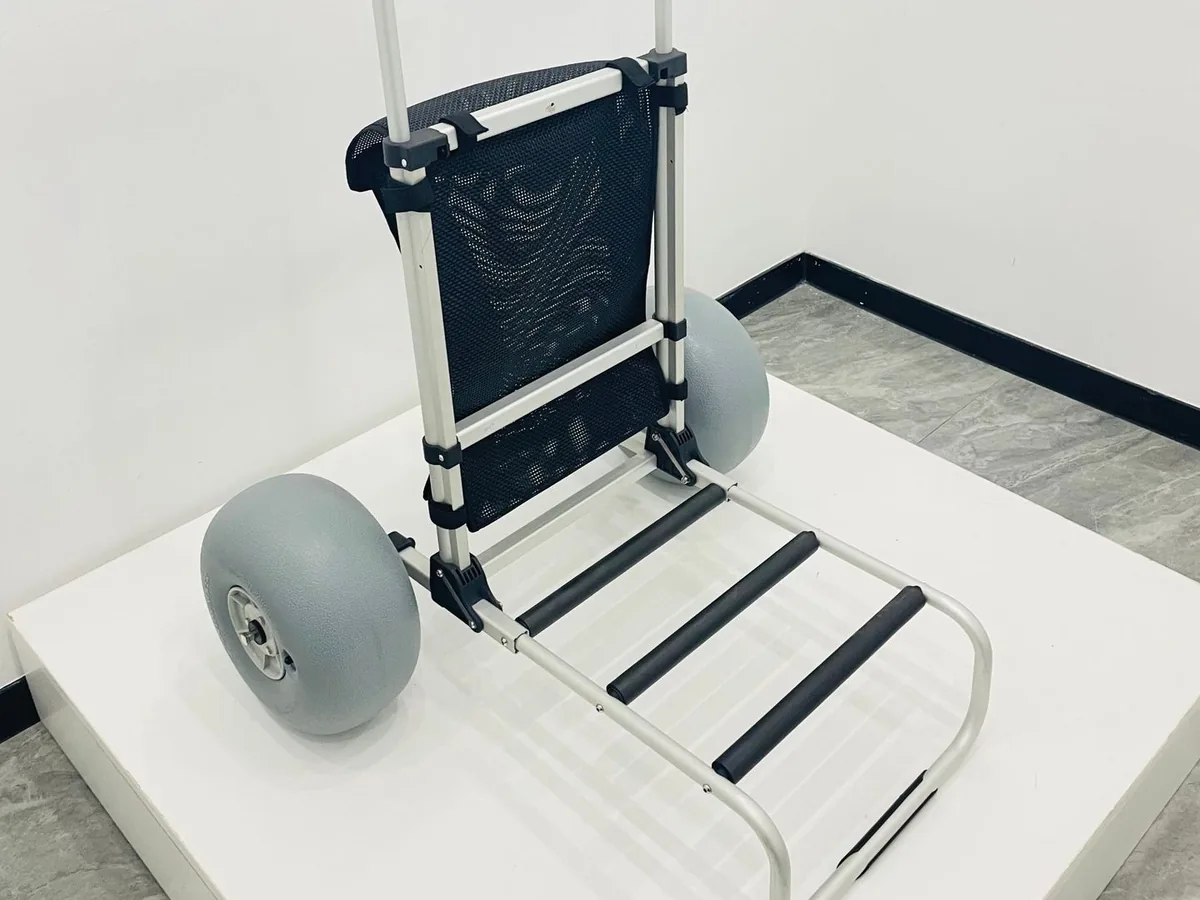
Trace a load through the actual assembly
| Part of the structure | What to examine on the identified sample |
|---|---|
| Tub or deck support | Where the cargo area contacts its supporting members, how fasteners bear on that surface and whether accessible fixing points agree with the drawing |
| Axle mount | Location of the mount, space between wheel and frame, and the retention hardware required on both sides |
| Handle or stand attachment | Which joints support the parked cart and which carry load while the operator is moving it |
| Folding mechanism, if fitted | Where pivots and locks engage, which wear parts the supplier can identify, and how to inspect the locked-open condition |
| Finish and exposed edges | Coating coverage at accessible joints, visible damage after transport and the supplier’s process for reporting a discrepancy |
Ask the supplier to point out which joints are permanently assembled and which can be replaced without changing the frame. A bolt-on component in a photograph may still require workshop service or a particular replacement kit. Request its part reference, supplied fasteners and approved procedure before counting it as field-repairable.
Handle a proposed change before bulk shipment
Suppose the approved sample has a stated frame finish, but the production offer describes the frame only as “painted metal.” Ask the supplier for the affected part number, base material, finish specification and revised drawing. Establish whether the change affects the fastener, mating surface or care instructions. If the change cannot be documented, leave it open in the purchase record and withhold approval of that substitution.
At receiving, compare the delivered joints and finish with the agreed configuration. Photograph a coating chip or distorted mount against the asset and package ID. Seek the supplier’s disposition before improvised straightening, drilling or coating repairs. Store the accepted frame revision with the cart sample record so the next order can be compared with the same physical arrangement.