
A load plan starts with the goods as they will leave the store. Weigh a cooler with its contents, ice and lid. Include the tote that holds the tools and any straps travelling with the cargo. Then check how staff will remove the first delivery without pulling a heavy item out from under everything else. A total weight written on the side of a box cannot answer that unloading question.
Make a manifest for one trip
Here is a fictional resort delivery. The masses are examples of measured packed goods, separate from the cart’s own weight.
| Item | Packed mass | Handling question |
|---|---|---|
| Closed drinks cooler | 21 kg | Does its base fit the tub and can the receiving team lift it out using its handles? |
| Lidded maintenance tote | 9 kg | Can it be kept separate from supplies for guests and taken out at the first stop? |
| Two towel bags | 4 kg each | Can both travel without hiding the handle, blocking sightlines or hanging near the wheels? |
| Removable securing equipment | 1 kg | Does the supplied attachment arrangement suit the goods and cart? |
| Total payload | 39 kg | Does the complete arrangement suit the actual route and local handling plan? |
The standard two-wheel tub cart product page lists a 75 kg goods capacity. The 39 kg example is below that listed figure. It still needs checks for fit, balance, control, ground conditions and manual handling. Confirm the rating of the actual order and any limiting accessories. Never transfer the tub-cart figure to a folding platform, sling cart or towed vehicle. These are cargo calculations and provide no basis for carrying a person. Manufacturer’s tub cart specification
Balance the load and keep the delivery sequence workable
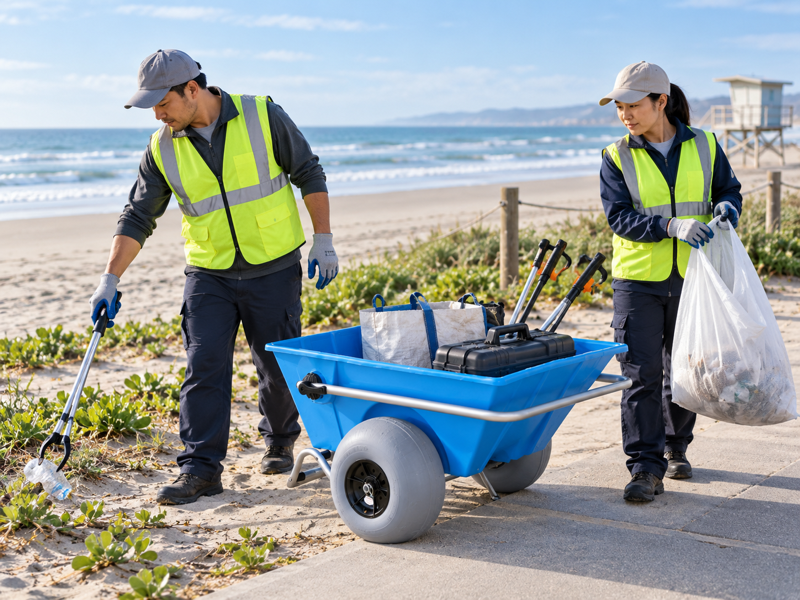
The manufacturer describes placing heavier goods low near the axle of its two-wheel tub. Use the approved means of restraint for the configuration. Check from both sides that a container cannot shift into a wheel, obstruct the handle or tip out at the transition. Allow for the movement of liquid and loose contents under the approved handling arrangement. A tall item that stays upright in the store still needs assessment on the actual route.
At the first stop, the maintenance team needs the tote. If the only way to reach it requires lifting the loaded cooler out onto the access path, change the arrangement or split the delivery. Recheck balance and control with the remaining load after each drop. The remaining 30 kg in this example has a different distribution once the 9 kg tote leaves.
Give the next shift a repeatable load card
List the cart ID, approved configuration, items and packed masses, loading position, receiving points, unloading order and the agreed route. Note any cargo that must travel separately. Keep representative photographs with the record, taken from the handle and wheel sides. A picture from above may conceal an overhanging bag.
Record any smaller practical limit established for this load and route under the site’s handling assessment. If one cooler is replaced by a larger model, two deliveries are combined or the route moves onto looser sand, recalculate and repeat the relevant checks. Where the load shifts or handling becomes unsuitable, stop and arrange a controlled unloading or another trip. Use the soft-sand route trial to check a proposed alternative before making it a standing instruction.