
A beach crew has taken its two-wheel cargo cart out of service because the right wheel rubs the tub. Buying a replacement wheel may be economical if the axle support is sound and a compatible assembly is available. If the support is damaged or the delivery gate no longer admits the cart, that purchase may leave the same route without a carrier. Start the replacement decision with the unit on hold and the work it still needs to do.
Identify what the lost trips cost
Record the cart ID, equipment type, assigned route and date it became unavailable. List the deliveries it would otherwise have made during the decision period. Identify which ones a spare covered and what that arrangement cost. A maintenance ticket spanning several calendar weeks during winter storage does not represent several weeks of missed beach deliveries.
Ask the technician to identify the fault, approved repair scope, matching parts, labor, lead time and the check needed for release. The standard beach cargo cart has a rigid molded tub, a metal handle and stand, and two balloon wheels. A loose or damaged axle attachment needs assessment against the actual cart drawing. A quotation for a tire or wheel does not resolve an uncertain mount. Keep the unit held until authorized work and verification are complete.
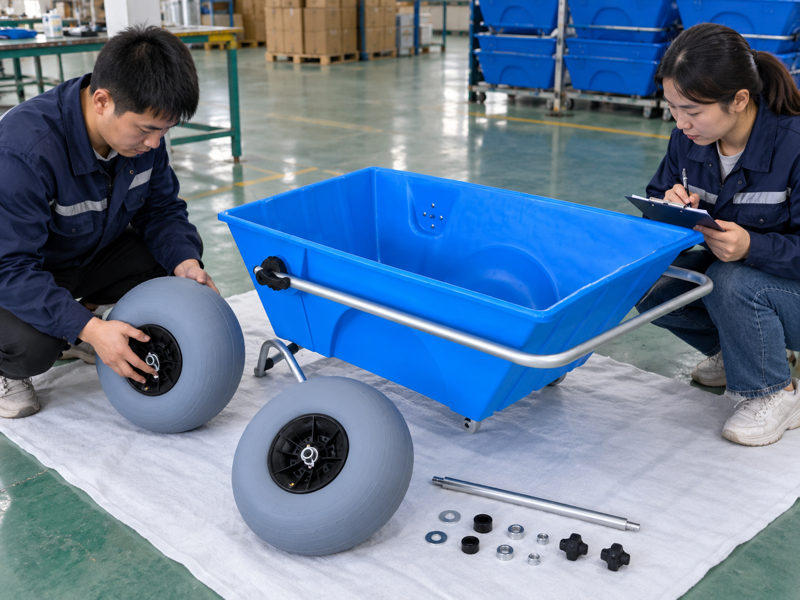
Compare options over the same service period
Use one decision horizon and one currency. Include delivery to the store, downtime cover and any approved disposal cost. Deduct only a documented residual value. Show possible future repairs as uncertain costs instead of adding them to only one side of the comparison.
| Illustrative one-season comparison | Repair the existing cart | Buy a replacement |
|---|---|---|
| Parts and approved labor, or delivered complete cart | $220 | $470 |
| Temporary delivery cover before release | $100 | $40 |
| Disposal of old unit | $0 | $30 |
| Total cash cost for the decision period | $320 | $540 |
These amounts are examples, not supplier prices. The replacement costs $220 more over the stated season. If the repair would require more than $220 of additional, substantiated cost compared with replacement, the financial preference could reverse. Keep any difference in end-of-season value visible and use a longer horizon if the options have materially different remaining lives. A low repair total is relevant only if the technical lead can release the repaired cart for the job.
Check whether changing the job is the better purchase
Take the buyer to the bottleneck with the actual packed cargo. A wider load, steeper unloading sill or narrower gate may have changed the requirement. Replacing the failed unit with an identical one will reproduce a clearance problem. A serviceable cart might instead work at a depot with suitable access. Obtain that depot’s acceptance and move the custody, parts and instructions with it. Price the old site’s remaining transport need separately.
For a replacement, attach the required load, route, storage arrangement and accepted cart configuration to the order. Allocate a new asset ID at receipt. For a repair, link the release check to the original defect and monitor the same wheel position on return. For retirement, remove the old unit from dispatch, identify its physical destination and close its outstanding jobs. Record the selected option, decision owner and actual costs so the next renewal review can compare estimates with experience.