
Illustrative installation scene from the Ary Beach image collection.
At Woorim Beach in Queensland, City of Moreton Bay describes a matted route to a viewing spot on the upper beach. At Suttons Beach, the same council describes a resting place near the seawall, some distance from the water. For someone arranging to meet family, “at the end of the mat” can be a more useful destination than “on the beach.” City of Moreton Bay accessible beaches
The council descriptions below were checked on 12 November 2026. Confirm the installed endpoint on the day of the visit, particularly after severe weather.
Follow two named routes in Moreton Bay
| Beach and starting point | Where the council says the mat goes | What to clarify for the visit |
|---|---|---|
| Woorim Beach. Beach Access Point 12, beside Bluey and Jean Piva Park. | Approximately 30 metres of matting passes between the dunes to an upper-beach viewing area. The mat stops short of the firmer sand in the intertidal zone. | If the party wants to sit on the matted approach, ask about space at its end. If the destination is the firm sand below, ask what surface and distance separate it from the last panel that day. |
| Suttons Beach. Look for the rotunda and seawall when identifying the matted area. | The council describes the mat near the rotunda as a resting point on the beach, away from the water’s edge. | When arranging a picnic, name the rotunda-side resting point. Someone expecting to meet the group at the water will need a separate description of the sand beyond it. |
The 30 metres at Woorim describes the matted route. Check the sand between its end and the firmer ground separately. Moreton Bay also says its matting can be shortened or removed in severe weather. After such a change, locate the last installed panel before giving directions from the car park. Moreton Bay’s site-by-site route descriptions
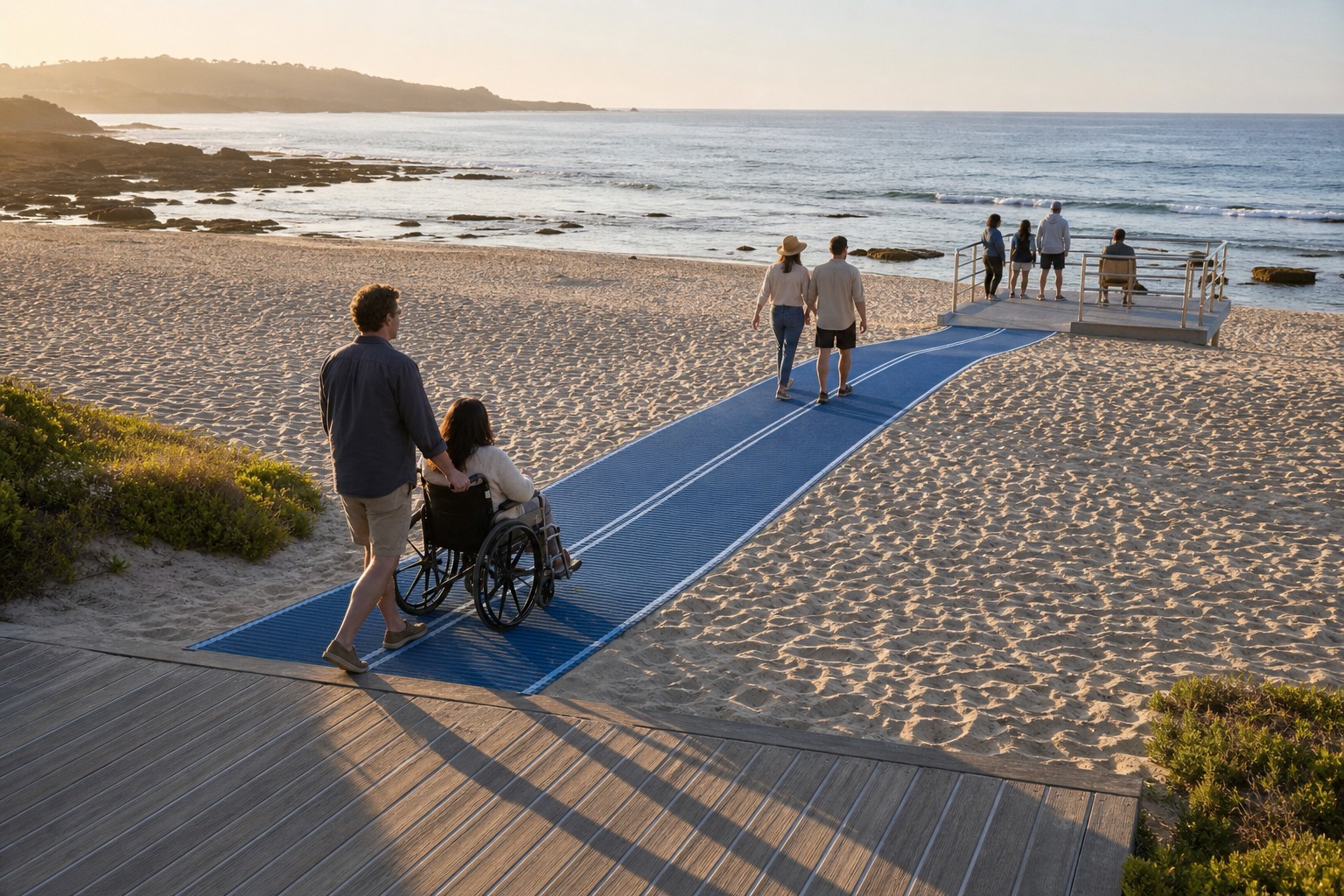
Illustrative route layout from the Ary Beach image collection.
What the Hobsons Bay listings tell a visitor
In Victoria, Hobsons Bay City Council’s accessible-beaches page describes year-round access to beach matting and wheelchair hire at Altona Beach and Williamstown Beach. It provides a separate beach-wheelchair booking link for each location. Select the beach you intend to visit before making a chair request. Hobsons Bay City Council accessible beaches and wheelchair bookings
Those listings help identify the service to contact. To plan the last part of the outing, ask a more precise question: “At the entrance we’ll use, what landmark is beside the end of the mat today, and what surface lies between it and our meeting place?” If a beach chair is needed, ask the relevant booking contact to confirm the chair, pickup point, assistance and return time. A link to a booking service cannot establish which unit is available on a particular day.
Check the gap from the last mat panel
A site worker can make the route description much more useful with one walk from the signed entrance to the intended destination and back. A visitor or companion can use the same points when speaking to the local operator.
- Name the start. Stand where the visitor leaves the firm approach. Identify the access number, ramp or boardwalk and any change in level at the first mat panel. The nearest beach name may cover several entrances. How to check a ramp-to-mat connection
- Describe the last panel. Give a recognisable landmark, the surface beyond the edge and the space available to turn back. If sand has built up or washed out at the edge, describe that step or lip from both directions.
- Measure the remaining journey. Choose an actual destination, such as a bench or the start of firmer sand. Measure from the last panel to that point and identify the surface between them. Add the local date and time. A measurement to the tide line is specific to the conditions when it was taken.
- Agree on a return. Identify where the person can turn and who can assist if the return crosses loose sand. Check the landward ramp or gate and the handover point for any borrowed equipment.
When the last stretch calls for a different chair
A visitor who wants the view from the mat may choose to stay in their own chair if the approach, surface and turning space work for them. For a destination across loose sand, discuss a suitable land beach wheelchair with the operator. Ask where a transfer could take place, who can assist, and where the visitor’s usual chair will be waiting afterward. Beach wheelchairs and access mats on soft sand
For example, the AY-ST-V2.0 is a four-wheel high-back chair for assisted travel on land. Its manufacturer lists an overall width of 110 cm. An operator considering this model should compare the actual chair with the entrance, usable mat width and turnaround, including room for the attendant. This example illustrates an equipment check. Confirm the model supplied at an Australian site directly with its operator. AY-ST-V2.0 model dimensions · Manufacturer’s land-use description
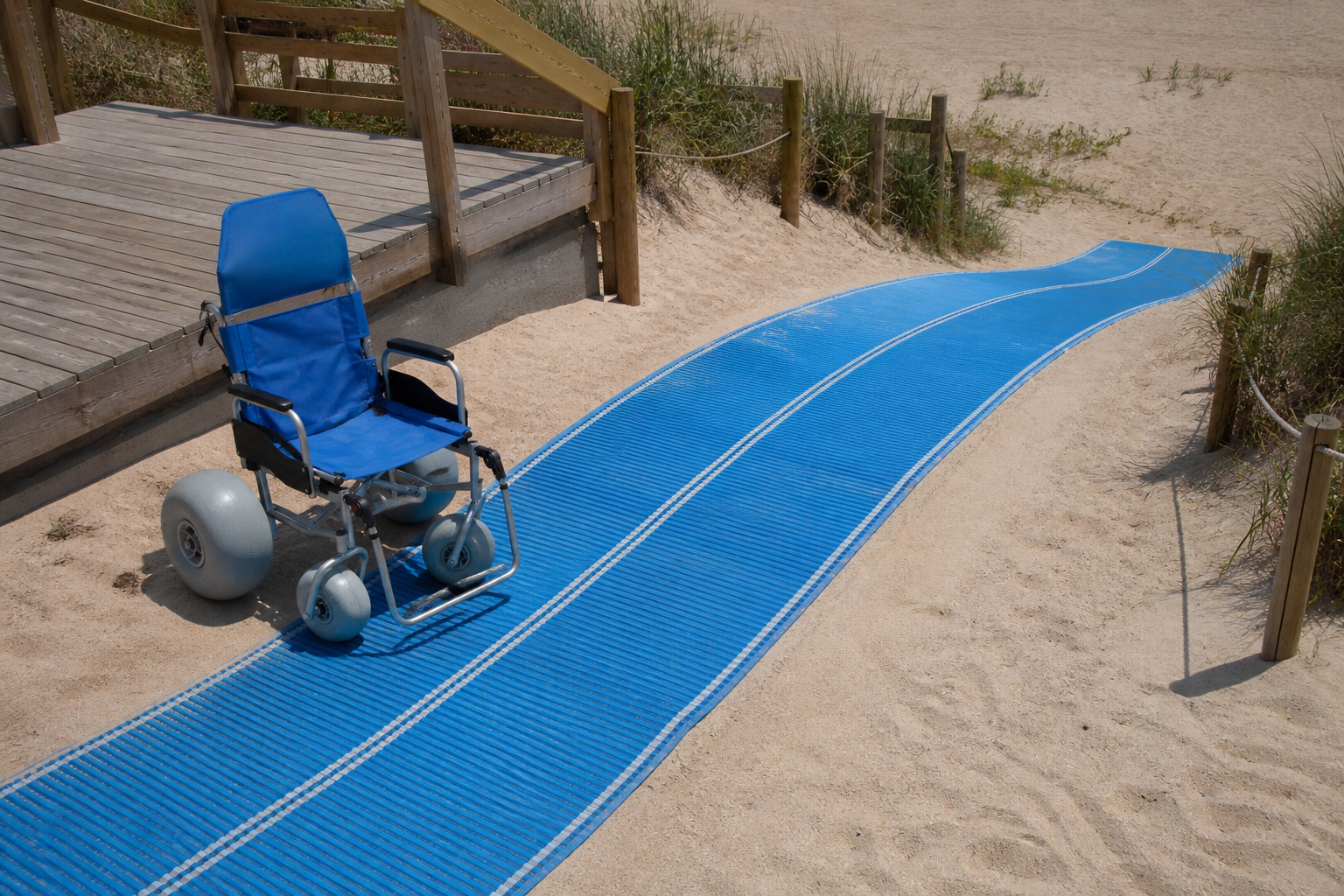
Illustrative example of a land chair at the mat-to-sand transition.
An endpoint notice a visitor can use
Illustrative sign for a fictional site. The landmarks, measurement, time and staff arrangements in this example apply only to the example.
West Gate to the timber seat. Route checked at 9:00 a.m. local time on 12 November. From the west car park, follow the ramp and blue mat to the timber seat on the upper beach. At the time of the check, 18 metres of loose sand separated the last panel from firmer sand below. The ramp and mat provide the return to West Gate. Ask at the kiosk before leaving the mat if you want to arrange an assisted land-chair outing.
For a real sign, use the entrance and landmark people can see, measure the gap that day and name the contact who can answer. When a storm changes the endpoint, update the sign and booking directions together. If a measured gap is the reason to extend a route, carry those same two endpoints into the beach access mat procurement brief.