
A signed delivery receipt establishes that a shipment arrived. To accept an AY-ST-V2.0 all-terrain beach wheelchair, the receiving team still has to match each chair to the order, account for its components and check its empty setup. Keep the carton, loose parts and photographs together under one unit reference until those checks are complete.
At the loading bay
Count the cartons against the delivery note. Before unpacking, photograph any crushed corner, puncture, wet area or damaged seal along with the carton label. Report a missing carton separately from a missing part inside a delivered carton. If an order includes several chairs, open and identify them individually before moving wheels or fittings to the assembly area.
The AY-ST-V2.0 technical table lists 80 × 25 × 90 cm as its carton size, 22.5 kg as packaged gross weight and 19.5 kg as product net weight. These figures help a receiver recognize a possible discrepancy. The purchase order and the supplier’s actual packing list define the shipment, including any additional accessories and spare assemblies. AY-ST-V2.0 manual, technical characteristics on page 2
Match the components to one chair
Use the model label, accepted configuration and manufacturer drawings. This chair has a folding carbon-steel frame, a removable high back, reclining backrest and adjustable leg support. The manual lists two 9 × 4.5-inch inflatable PU front wheels and two 12 × 5.5-inch inflatable PU rear wheels. Check the actual delivered assemblies against the correct positions. A similar tire size on another model gives no assurance that its axle or fittings belong here. AY-ST-V2.0 labelled view and assembly drawings, pages 3–5
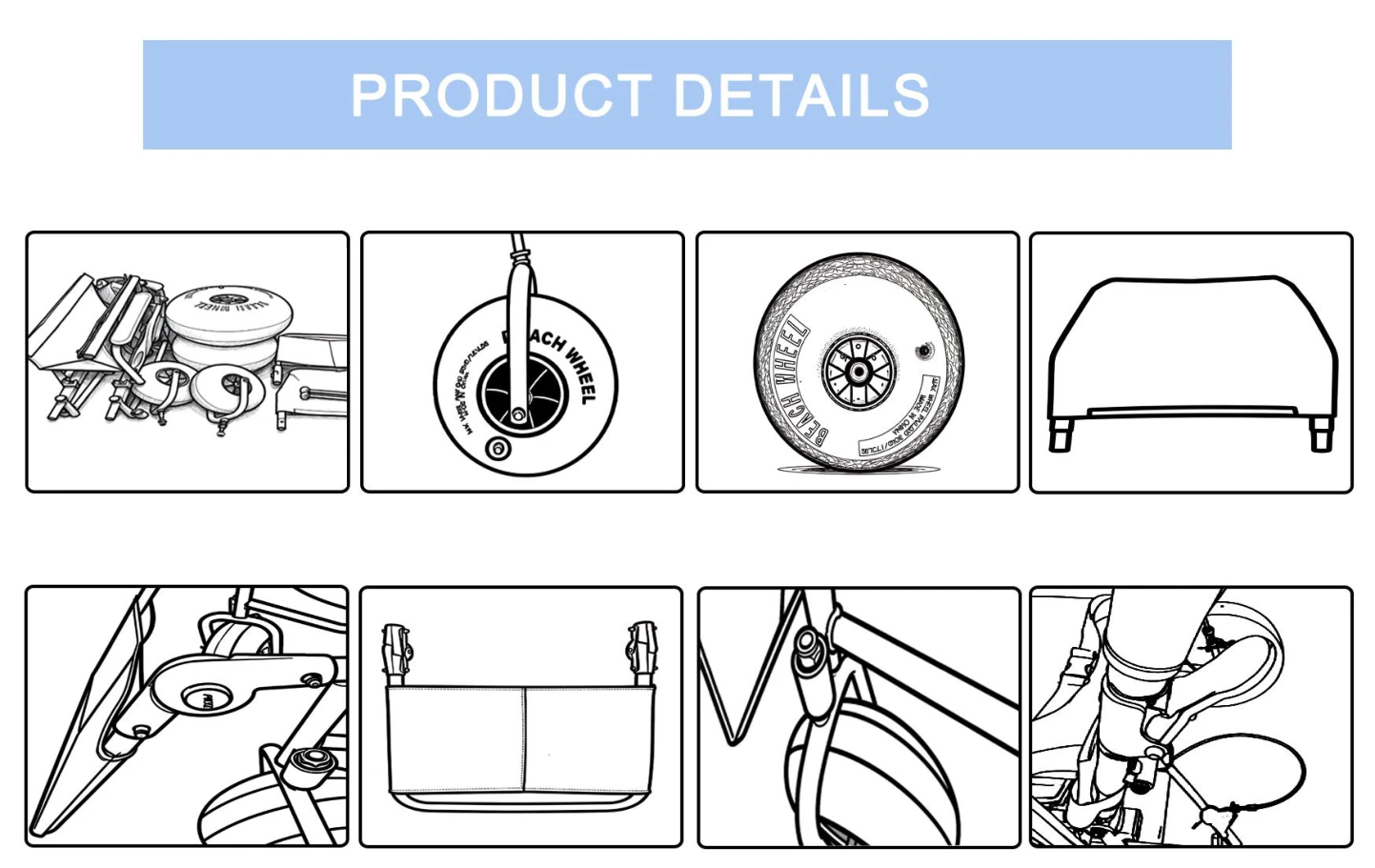
Component identification from the AY-ST-V2.0 manufacturer manual, page 3.
| At unpacking | What to compare or inspect | If the result differs |
|---|---|---|
| Frame and supports | Model identity, visible damage, attachment points, removable high back and supplied leg-support assembly | Keep the affected unit together and photograph the difference against the order. |
| Wheel set | Front/rear positions, condition, valve area and the hardware specified for each assembly | Identify the position and request the correct complete part or fitting. |
| Seating and controls | Fabric, support attachments, handles and brake parts against the delivered version | Hold the unit for clarification if anything required is damaged, missing or substituted. |
| Documents and accessories | Applicable manual, ordered options, spare quantities and packing references | Ask the supplier to reconcile the exact missing item against the relevant carton. |
Assemble and check the empty unit
Have the designated assembler follow the illustrated sequence on firm, level ground. Check frame opening, wheel retention, the fitted high back, and engagement of the leg support and backrest in their selected positions. For the standard V2.0 front and rear tires, the manual gives a recommended 2–4 PSI range. Use a gauge suitable for that range and confirm the delivered wheel specification before adjustment.
Move the empty chair through a short straight roll and a turn where the team can see the wheel and fork clearances. Check the applicable brake and adjustment functions according to current instructions. Stop on unexplained drag, a support that slips, or a connection that cannot be secured. Photograph what failed before making adjustments or arranging a supplier-approved correction.
For example, if one rear wheel rubs during a turn, identify the side, whether the chair was empty and which mounting components were fitted. Keep that chair unavailable until the cause is resolved and the affected checks are repeated. A photograph of the replacement wheel arriving does not demonstrate that the fitted assembly rolls freely.
Hand over accepted units
State how many chairs were ordered, received, accepted and held. Where the purchasing procedure permits partial acceptance, give operations the asset IDs of the passing units and keep the others physically identifiable. Supply the matching manual and record the disposition of shortages or damaged components. Use the equipment asset log for later service history.
An accepted unit can now go to the team responsible for hands-on V2.0 staff training. Guest fit and the suitability of the route will be assessed for the planned service. Neither decision can be made by signing for the carton.