
A portable beach wheelchair becomes easy to move when its folded size, removable parts, loading method, setup sequence, and sand performance match the people and vehicles using it. A resort can buy a lighter chair yet still struggle if the cargo opening is narrow, wheels roll loose during transport, or staff need several tools beside the beach. Those small mismatches create delayed handoffs, unsafe lifting, missing parts, and a chair that stays in storage during busy periods. A practical transport plan gives you a better result through measured vehicle fit, labeled components, team handling, a rehearsed setup, route-ready storage, and a return-care routine.
What Makes a Beach Wheelchair Truly Portable?
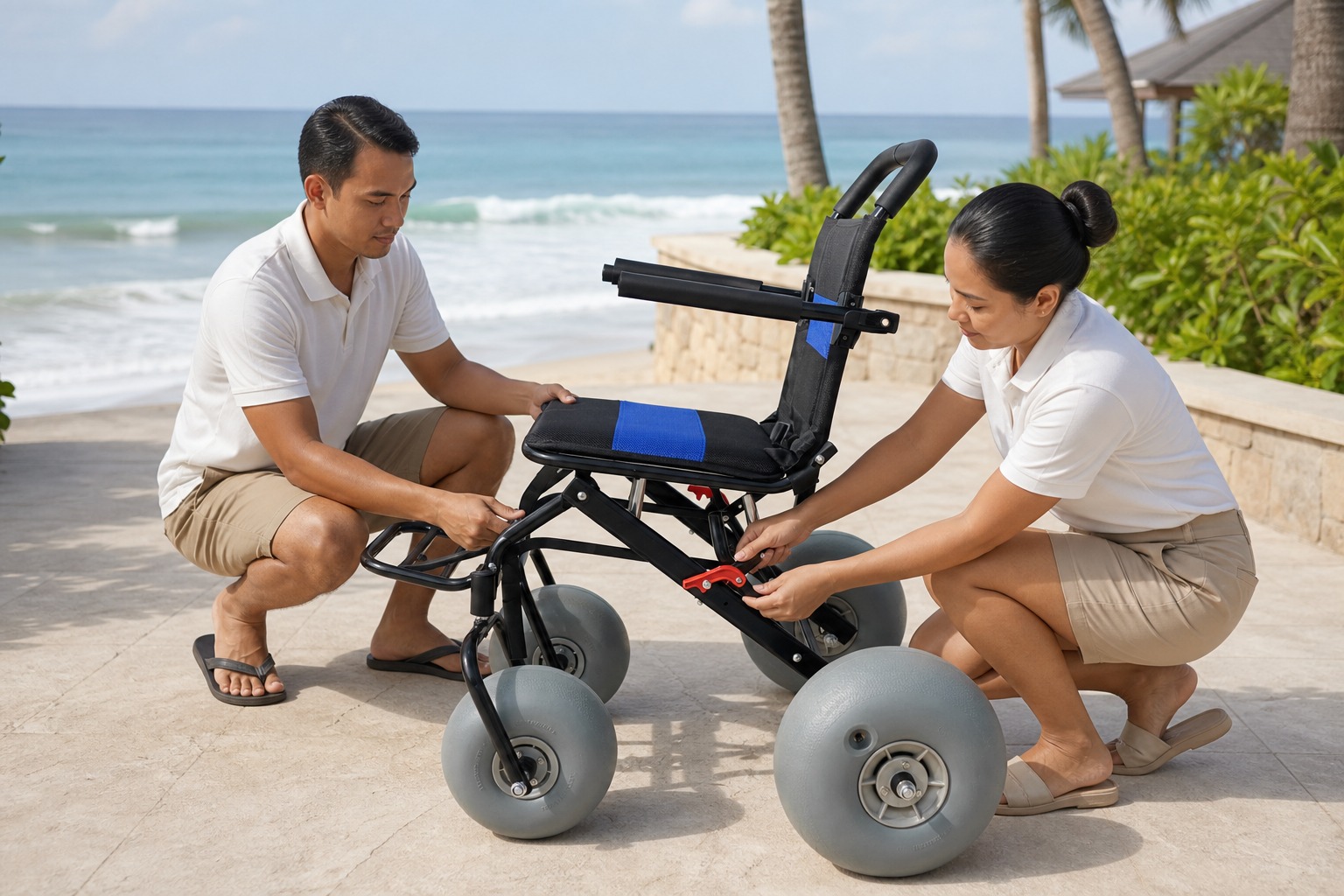
portable beach wheelchair becomes truly portable when weight, folded dimensions, removable parts, grip points, setup time, and cargo security work together. It gives you a practical control for this stage while keeping the guest, staff team, equipment, and site conditions in one decision.
The National Park Service rules at Padre Island show why portability depends on local routes, handling limits, and the exact device rather than weight alone.
Which product details affect handling?
Portability is a complete system: A low weight can help, but awkward geometry may still make a chair hard to lift through a vehicle opening. Buyers should review folded length, width, height, wheel removal, loose-part count, and safe hand positions. Staff should trial the real chair rather than relying on one catalog number.
- Folded dimensions.
- Removable wheel method.
- Clear lifting points.
- Small and labeled part count.
Why does the operating team matter?
The product moves through human hands: A chair that fits one employee may not fit a mixed seasonal team or a high cargo floor. Handling plans should define team size, lift height, storage location, and the path from vehicle to setup area. Training turns portable design into repeatable daily use.
Key Takeaway: Portability combines product geometry with the actual staff, vehicle, and route.
| Planning Area | Practical Control |
|---|---|
| Portability Factor | Buyer Test |
| Folded size | Measure cargo opening |
| Parts | Count and label |
| Handling | Run a staff trial |
This comparison separates a lightweight claim from a workable transport process.
How Should You Check Vehicle and Cargo Fit?
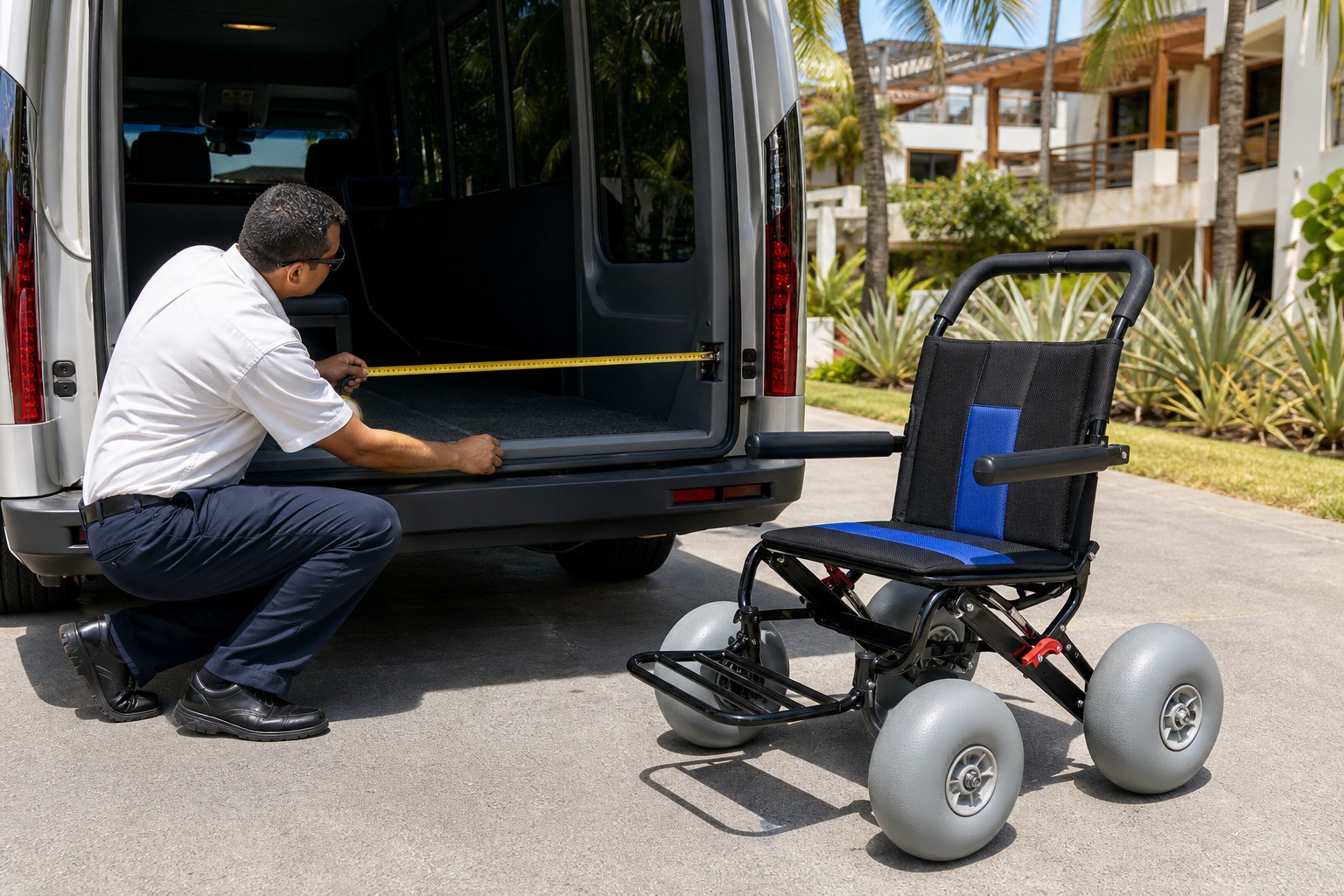
Portable beach wheelchair should check cargo-door width and height, floor depth, loading lip, anchor points, wheel clearance, and room for other equipment. It gives you a practical control for this stage while keeping the guest, staff team, equipment, and site conditions in one decision.
What measurements belong in the fit check?
Measure the narrowest point: Record the true opening after trim, seats, hinges, and door angles reduce usable space. Compare that opening with the chair’s folded dimensions and the path it follows into the vehicle. Leave room for hands, padding, restraints, and removal without twisting the frame.
- Usable door width and height.
- Cargo depth and loading lip.
- Anchor or restraint locations.
- Space for wheels and accessories.
Why should teams run a loading rehearsal?
Measurements cannot show every snag: A real trial reveals awkward wrist angles, unstable resting points, rolling wheels, interference with seats, or parts that become hard to reach. Rehearse loading and unloading with the normal staff count. Mark the preferred chair orientation so later shifts do not repeat the experiment.
Key Takeaway: A vehicle fits only when staff can load, secure, and remove the chair without strain or damage.
| Planning Area | Practical Control |
|---|---|
| Vehicle Check | Acceptance Point |
| Opening | Chair clears with hand space |
| Cargo floor | Chair rests without pressure |
| Restraint | Frame stays controlled |
The rehearsal converts measurements into a proven cargo layout.
What Safe Loading Method Should Teams Use?
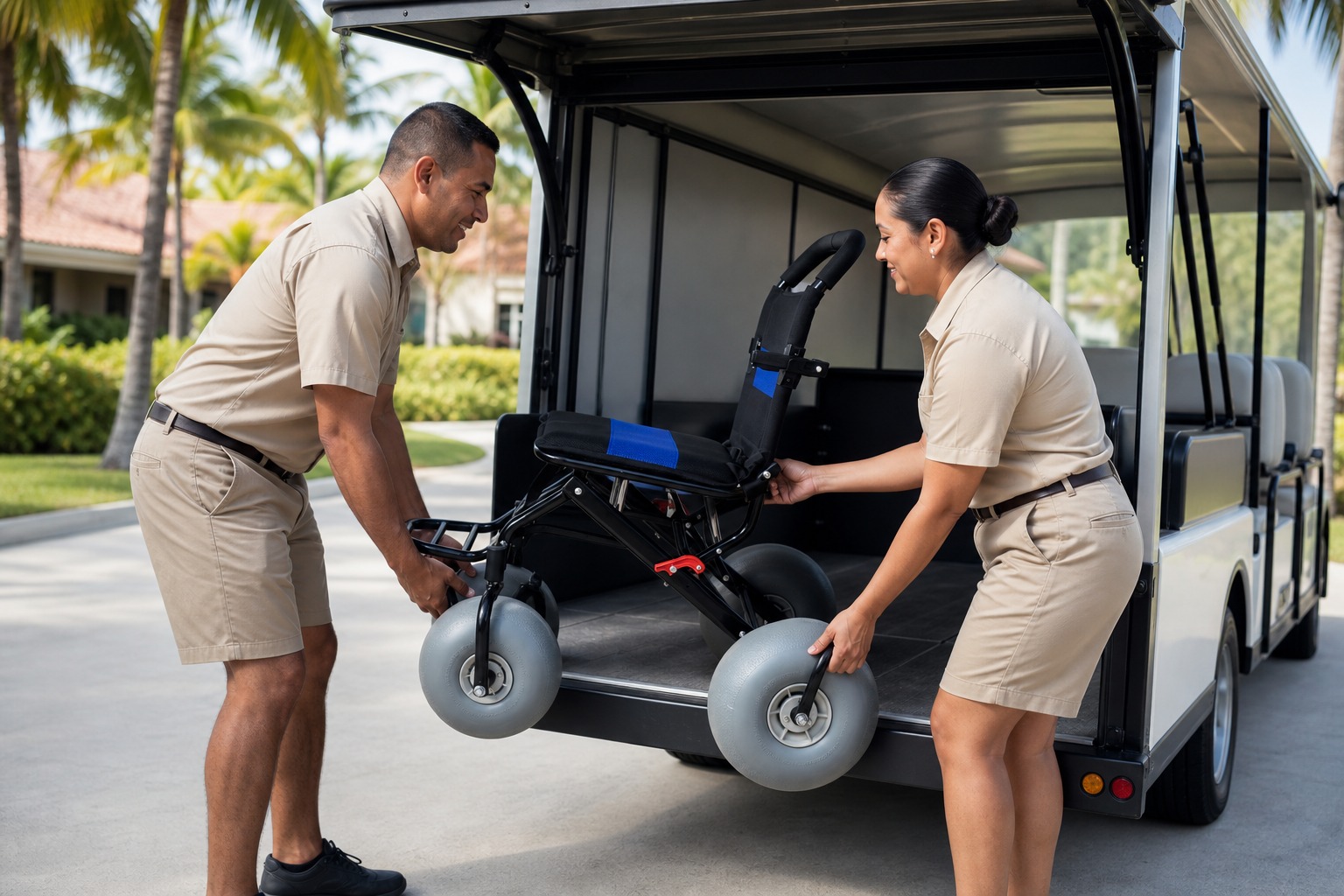
portable beach wheelchair should use a cleared path, agreed team count, stable grip points, controlled wheel removal, protected components, and rated cargo restraints. It gives you a practical control for this stage while keeping the guest, staff team, equipment, and site conditions in one decision.
How should staff prepare before lifting?
Stage every part before the lift: Park on firm level ground, clear the cargo area, position protective pads, assign who controls each end, and remove parts only as directed. Keep small hardware in a labeled container attached to the transport kit. Staff should follow workplace lifting rules and use mechanical help where required.
- Firm level loading area.
- Named handlers and clear count.
- Protected frame contact points.
- Labeled hardware and accessories.
How should the chair be secured in transit?
Control movement without crushing parts: Use approved restraint points on a stable frame area rather than straps, fabric, cables, or removable supports. Prevent wheels and footrests from rolling or striking the frame. Recheck the load after nearby baggage or supplies have been added.
Key Takeaway: Safe loading protects staff during the lift and protects the chair throughout the trip.
| Planning Area | Practical Control |
|---|---|
| Loading Stage | Control |
| Lift | Team count and clear grips |
| Parts | Label and contain |
| Transit | Restrain stable frame zones |
This method reduces both handling strain and cargo damage.
How Can Staff Set Up the Chair Quickly?
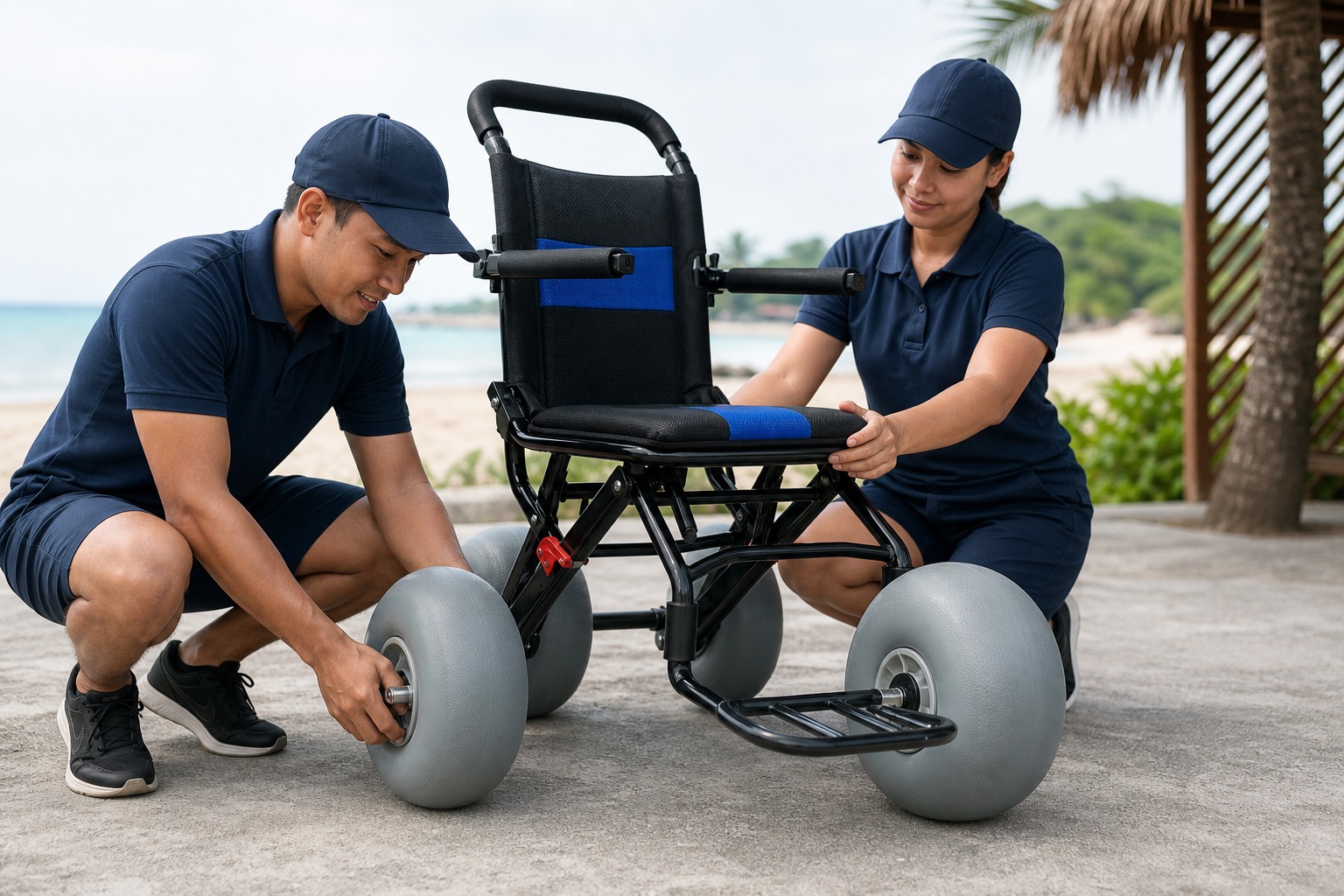
Portable beach wheelchair can set up quickly through a fixed sequence, labeled parts, tool-free connections where designed, a firm staging area, and a complete function check. It gives you a practical control for this stage while keeping the guest, staff team, equipment, and site conditions in one decision.
What sequence supports a smooth setup?
Use the same order every time: Place the folded frame on firm ground, open or lock structural parts, attach wheels and supports, confirm fasteners, arrange seating, and test movement and braking. Keep the instruction card with the chair. Never skip a control check simply because guests are waiting.
- Prepare a firm staging area.
- Open and lock the frame.
- Attach labeled parts in order.
- Run movement and brake checks.
How can managers reduce setup delays?
Look for repeated friction: Time a normal setup, note where staff search for parts or disagree about orientation, and revise labels or storage trays. Store related parts together in the order they are used. A short rehearsal at the start of a season helps new staff build the same method.
Key Takeaway: Fast setup comes from sequence and organization rather than rushed assembly.
| Planning Area | Practical Control |
|---|---|
| Setup Delay | Process Fix |
| Missing part | Use labeled kit |
| Wrong order | Add sequence card |
| Unclear check | Use sign-off list |
The delay review improves speed without weakening inspection.
How Should You Match the Chair to the Guest?
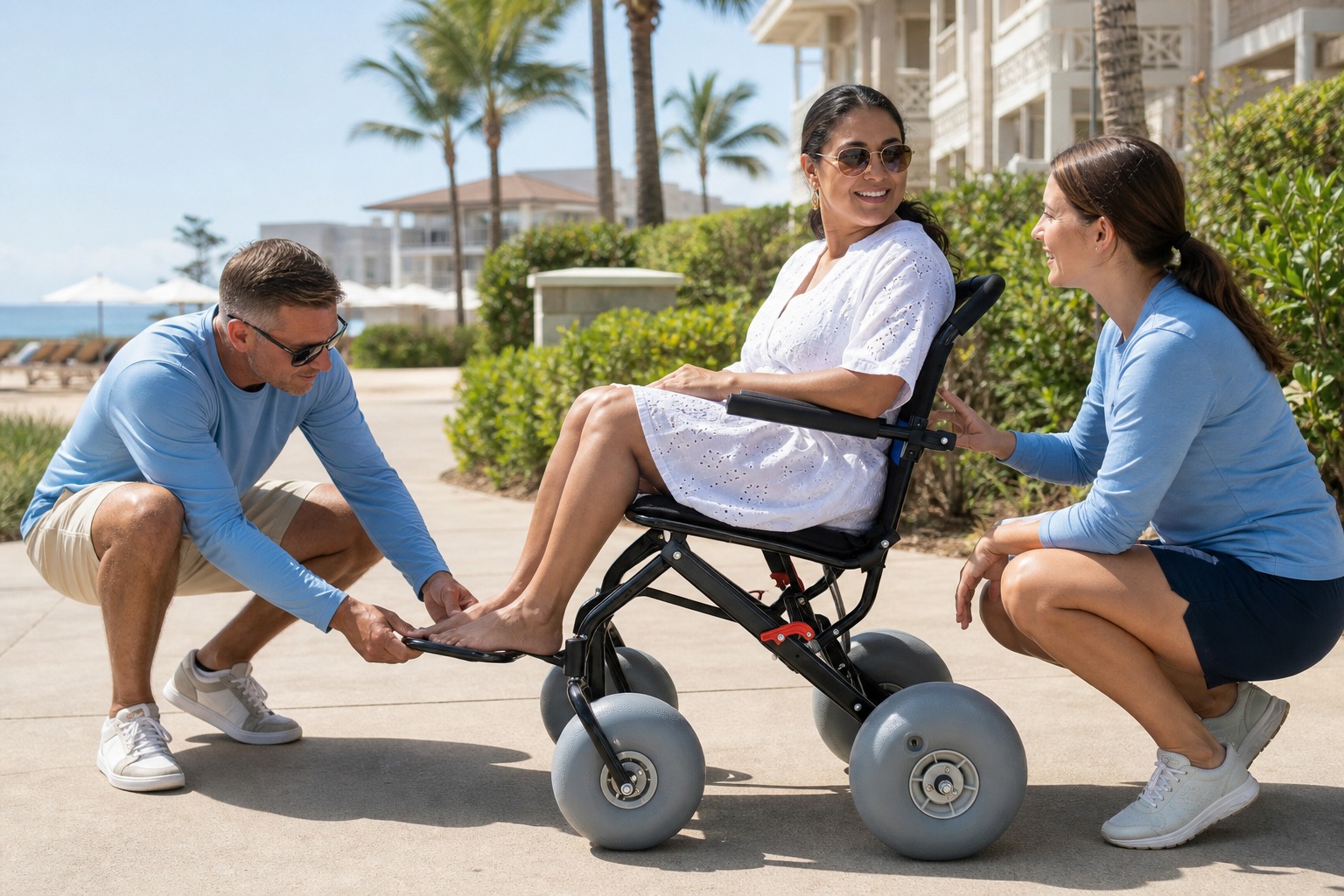
portable beach wheelchair should match the guest’s posture, transfer method, support needs, destination, and comfort before staff begin sand travel. It gives you a practical control for this stage while keeping the guest, staff team, equipment, and site conditions in one decision.
What should happen during the handoff?
Make the guest part of the setup: Explain the chair, ask about preferred transfer and support, confirm seat and foot position, and agree on the route and attendant communication. A portable frame still needs to fit the person using it. Do not assume one setup suits every booking.
- Preferred transfer method.
- Seat and foot positioning.
- Attendant communication.
- Planned destination and return.
When should another option be considered?
Fit comes before convenience: Use another chair or route when the guest cannot sit comfortably, supports do not align, transfer space is poor, or terrain exceeds the chair’s intended use. A quick transport advantage never justifies a poor user match. Record helpful settings for a repeat visit with the guest’s permission.
Key Takeaway: A portable chair is useful only when portability and personal fit work together.
| Planning Area | Practical Control |
|---|---|
| Guest Check | Planning Response |
| Posture | Adjust or change chair |
| Transfer | Prepare firm space |
| Destination | Match chair and route |
This handoff keeps transport efficiency connected to respectful service.
How Does a Portable Chair Move Across Sand?
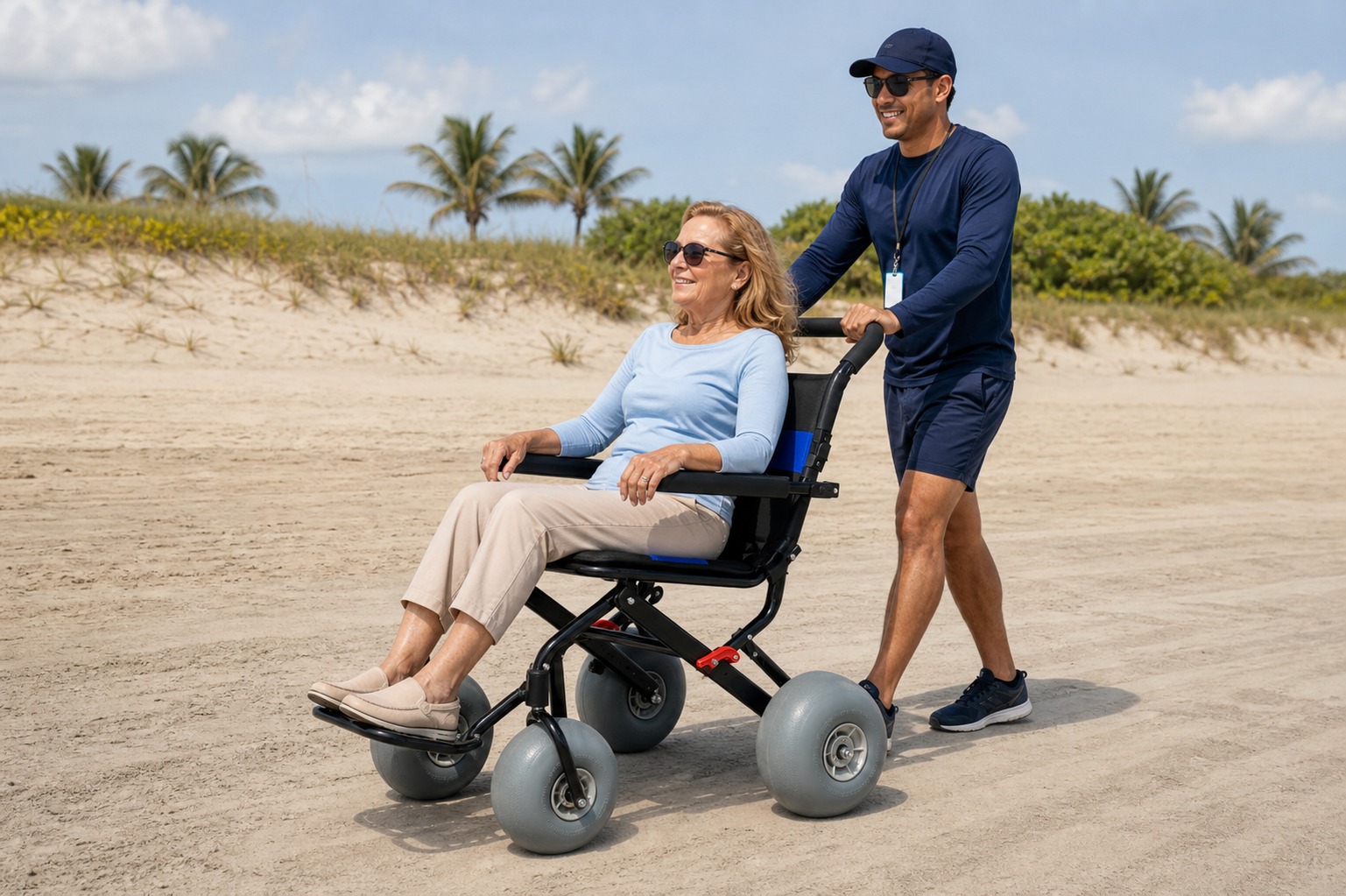
Portable beach wheelchair moves across sand through broad wheels, steady attendant control, a firm route, wide turns, and a pace that avoids digging into loose surfaces. It gives you a practical control for this stage while keeping the guest, staff team, equipment, and site conditions in one decision.
For deeper sand or mixed routes, compare a portable model with an all-terrain beach wheelchair under the same route trial.
Which handling habits reduce resistance?
Route choice does much of the work: Choose packed or firmer sand where possible, maintain steady forward movement, turn through broad arcs, and avoid sudden pivots. Shorter routes reduce staff effort and guest exposure. Check whether removable or compact design parts are fully locked before leaving the staging area.
- Use the firmest practical line.
- Keep a calm steady pace.
- Turn through broad arcs.
- Avoid steep side slopes.
Where does portability stop helping?
Terrain still sets the boundary: Deep ruts, steep dunes, rocks, unstable water edges, and crowded slopes can exceed safe chair handling. A light frame does not remove the need for route rules or adequate attendants. Stop and change the plan when staff control becomes uncertain.
Key Takeaway: Sand performance comes from wheel design, locked setup, route choice, and trained handling.
| Planning Area | Practical Control |
|---|---|
| Surface | Handling Choice |
| Packed sand | Steady direct route |
| Loose sand | Broad turns and shorter line |
| Steep slope | Use another route |
The terrain table shows why low weight alone does not define sand capability.
How Should Resorts Plan Route Deployment?
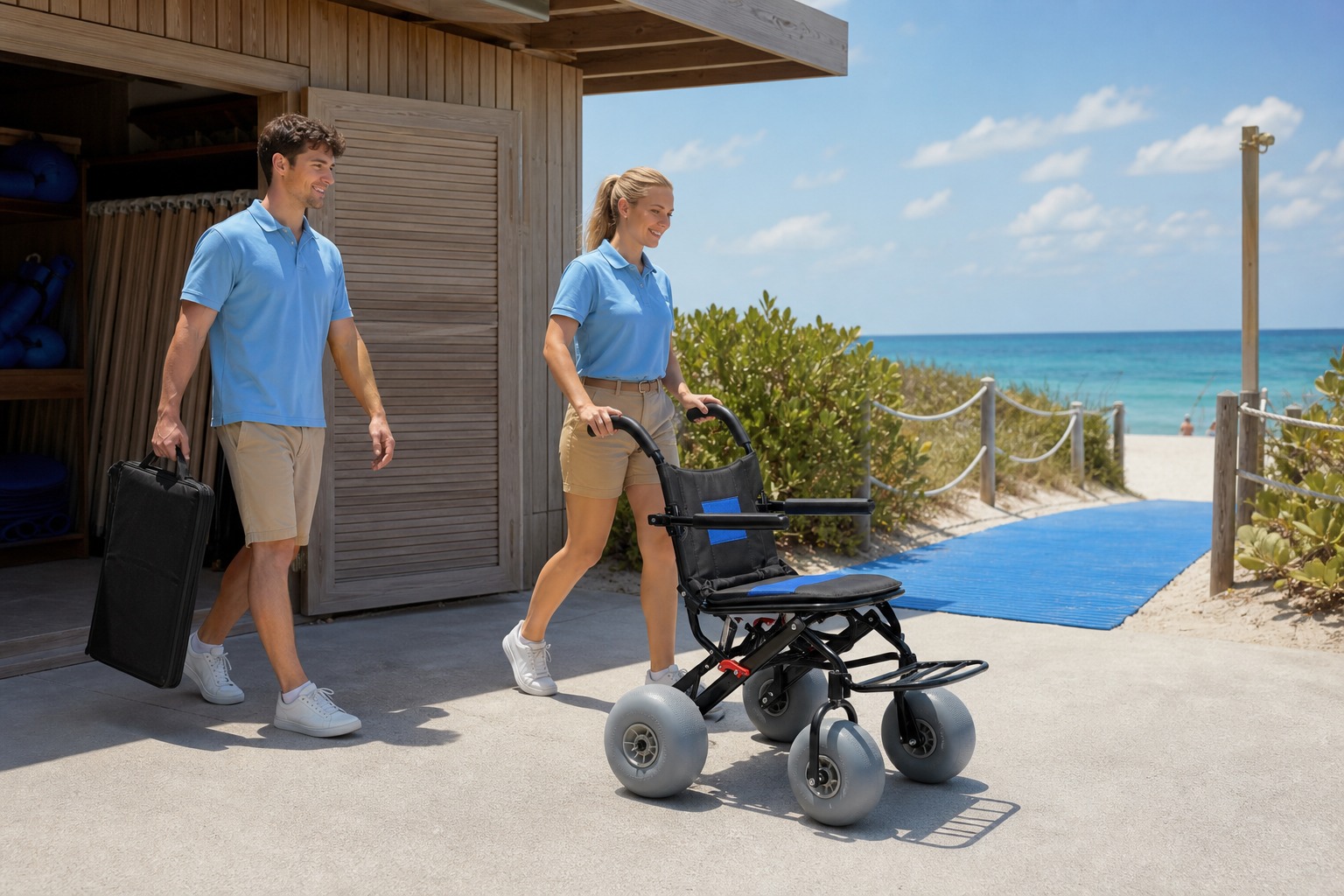
portable beach wheelchair should plan a continuous path from storage or vehicle through setup, transfer, sand travel, destination, return, cleaning, and secure storage. It gives you a practical control for this stage while keeping the guest, staff team, equipment, and site conditions in one decision.
Where should deployment planning begin?
Start at the storage door: Walk the route with the folded chair, transport kit, and normal staff count. Check doorways, elevators, loading areas, ramps, gates, mat connections, sand turns, and the cleaning point. A chair that travels well in a car may still be difficult to move through a crowded service corridor.
- Storage-to-vehicle path.
- Firm setup and transfer zone.
- Shortest practical sand route.
- Return route to cleaning.
How can teams make busy periods easier?
Stage readiness without blocking access: Keep labeled kits, checklists, and protective pads near the chair while leaving accessible paths clear. Confirm bookings and chair settings before peak arrival time. Assign one person to verify that every component returns after each session.
Key Takeaway: Deployment works when the folded chair, people, parts, and route arrive together.
| Planning Area | Practical Control |
|---|---|
| Deployment Zone | Ready Condition |
| Storage | Complete labeled kit |
| Setup | Firm clear space |
| Return | Direct path to care |
This route view catches hidden delays outside the beach itself.
What Storage Setup Protects a Portable Chair?
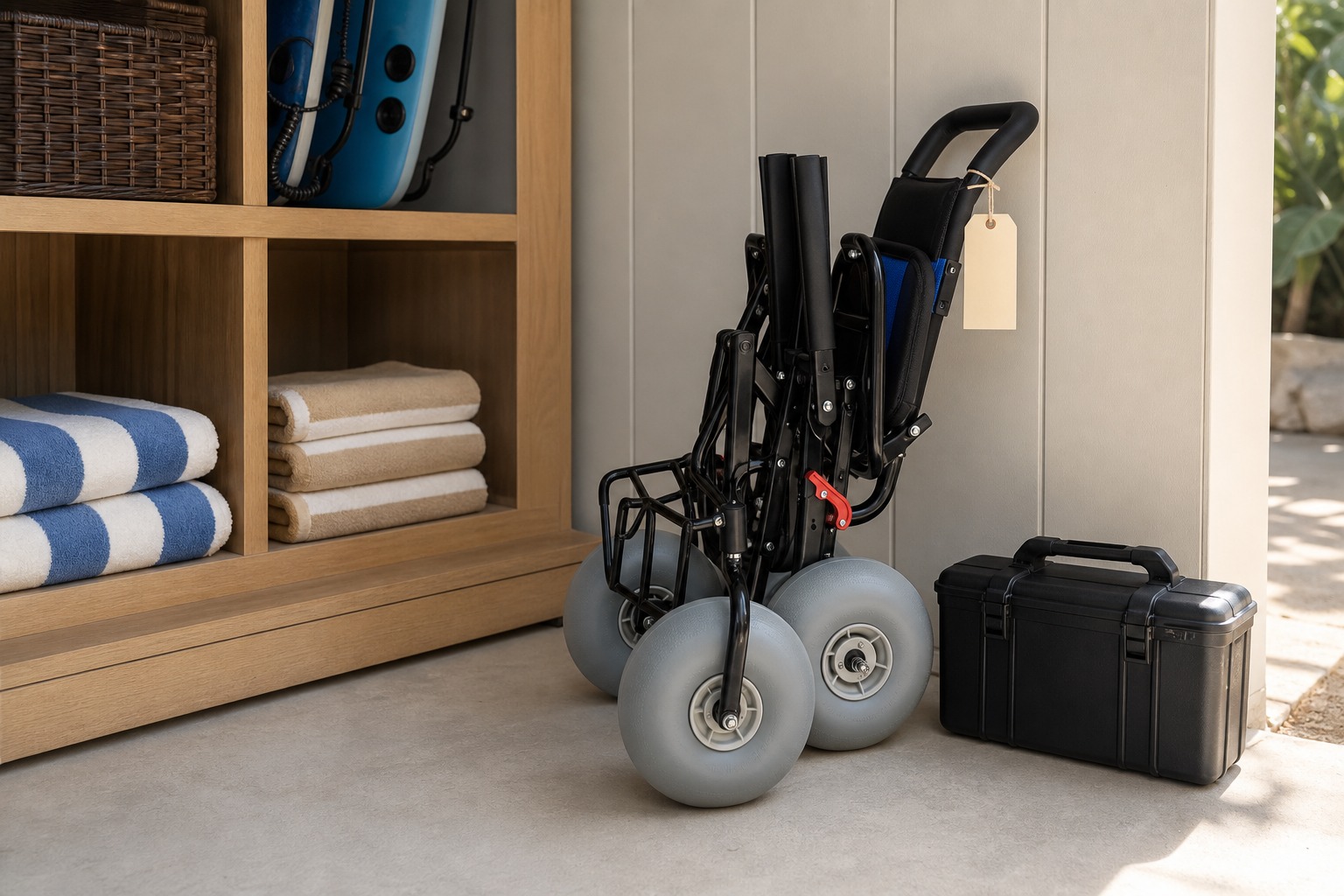
Portable beach wheelchair needs clean dry storage with supported frame placement, contained parts, protected fabric, clear inspection status, and enough room for safe handling. It gives you a practical control for this stage while keeping the guest, staff team, equipment, and site conditions in one decision.
How should folded chairs be positioned?
Protect the shape under storage load: Follow product instructions for folded orientation and avoid placing cargo on wheels, cables, seating, or removable supports. Keep parts in a labeled bin or secured bag assigned to that chair. Leave enough room for staff to lift without twisting around other equipment.
- Approved folded orientation.
- No load on fabric or controls.
- Contained wheels and hardware.
- Clear lifting access.
How should managers show service status?
Make readiness visible: Use a simple ready, inspection, or out-of-service tag tied to the chair ID. Store the latest check record nearby or in the operating system. A chair awaiting repair should be physically separated from ready equipment whenever possible.
Key Takeaway: Good storage protects components and prevents an incomplete chair from reaching a guest.
| Planning Area | Practical Control |
|---|---|
| Storage Control | Purpose |
| Part container | Keeps the kit complete |
| Status tag | Shows readiness |
| Clear access | Supports safe lifting |
The setup makes condition and completeness visible at a glance.
How Should Teams Clean and Maintain the Chair?
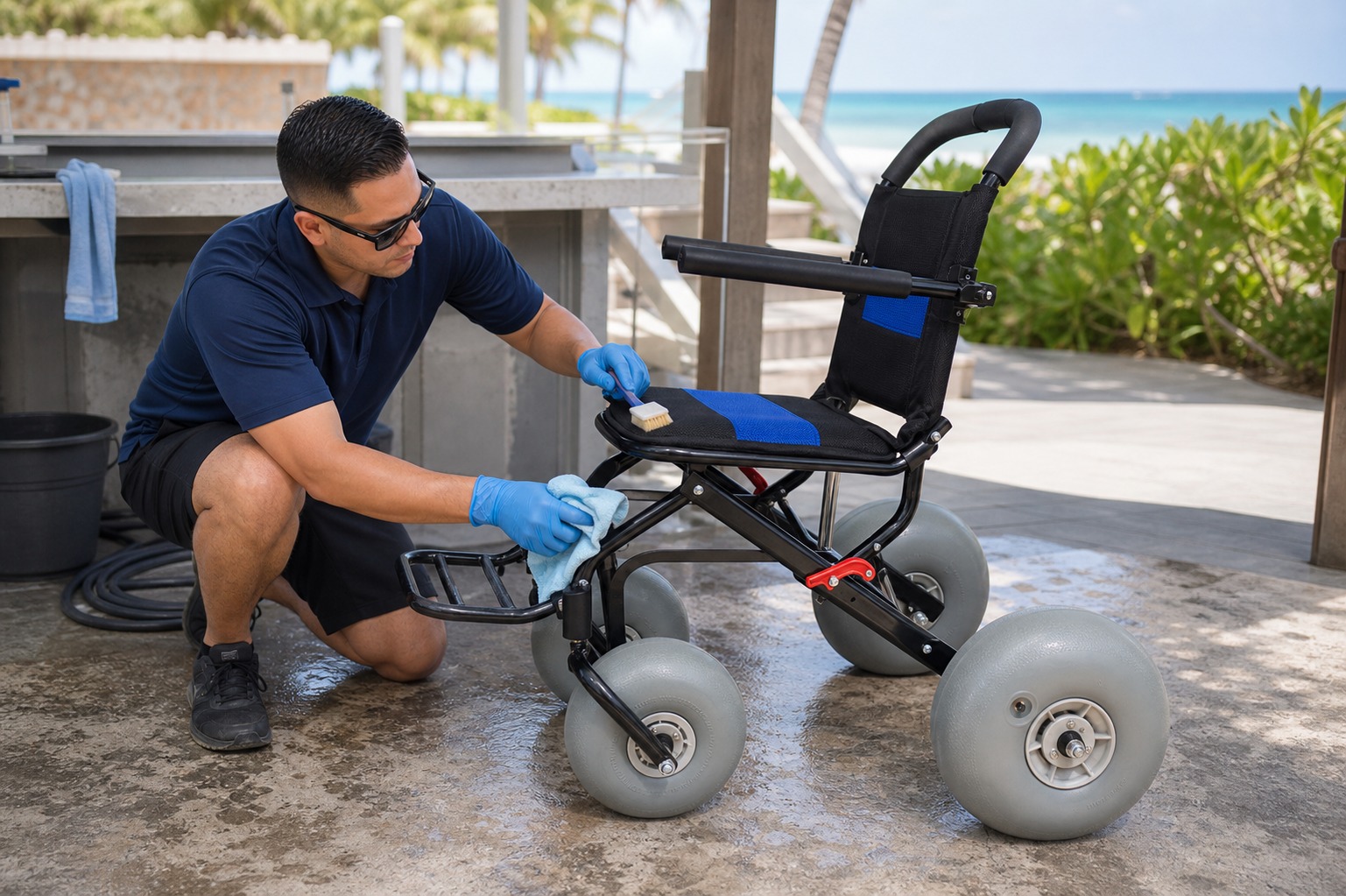
portable beach wheelchair needs sand removal, fresh-water rinsing after coastal exposure, drying, connection checks, wheel inspection, records, and scheduled service. It gives you a practical control for this stage while keeping the guest, staff team, equipment, and site conditions in one decision.
What belongs in the return routine?
Clean before parts disappear into storage: Remove loose sand, rinse approved areas after salt exposure, dry the frame and seating, then inspect wheels, locks, straps, fasteners, and removable components. Count every part against the transport kit. Record anything that changed during setup, use, loading, or return.
- Remove sand and coastal residue.
- Dry frame and seating.
- Inspect locks and wheel attachment.
- Count and store every component.
How can records improve transport reliability?
Connect wear with handling events: Log chair ID, trip, vehicle, setup result, inspection finding, repair, and return-to-service approval. Repeated scratches, bent supports, or missing hardware may point to a loading or storage problem rather than beach use. Managers can then adjust restraints, padding, labels, or training.
Key Takeaway: Maintenance records protect reliability by linking equipment condition with each transport stage.
| Planning Area | Practical Control |
|---|---|
| Record | Operational Value |
| Trip log | Links use and condition |
| Fault | Keeps chair out of service |
| Repair approval | Confirms readiness |
The history helps teams fix a process before damage repeats.
How Do Buyers Compare Portable Chair Options?
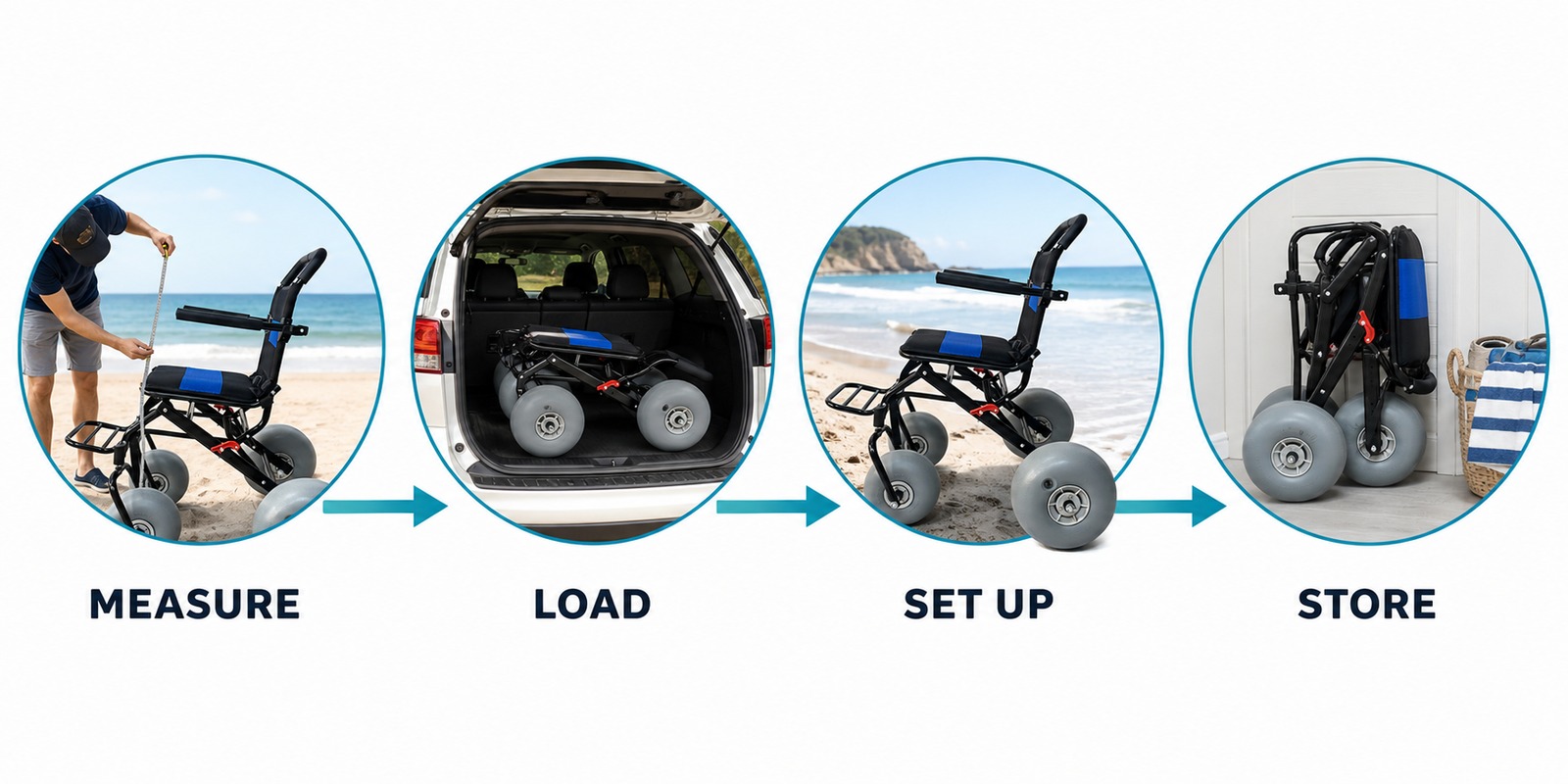
Portable beach wheelchair should compare folded fit, lifting method, wheel system, setup sequence, guest support, sand handling, parts control, care, and supplier guidance. It gives you a practical control for this stage while keeping the guest, staff team, equipment, and site conditions in one decision.
Finally, use the beach wheelchair comparison page to separate transport needs from water-access or fleet requirements.
What should a procurement trial include?
Test the complete use cycle: Load the chair into the normal vehicle, secure it, unload, assemble, fit a representative user safely, cross the planned surface, return, clean, fold, and store it. Invite operations, accessibility, transport, and maintenance staff. Record friction at every handoff rather than ranking features in isolation.
- Vehicle loading and restraint.
- Setup and user handoff.
- Sand route and attendant control.
- Return care and storage.
What should happen after the comparison?
Choose a process, not just a product: Document the preferred chair, vehicle layout, staff count, setup card, route, storage point, and care schedule. You can contact us today to discuss product fit and an operating plan. Portable coastal mobility should remove handling barriers without shifting difficulty onto guests or staff.
Key Takeaway: A strong buying decision solves transport, setup, fit, sand access, return care, and daily ownership together.
| Planning Area | Practical Control |
|---|---|
| Decision Area | Proof Needed |
| Portability | Real vehicle trial |
| Use | Route and fit test |
| Ownership | Named care process |
This final comparison keeps the purchase tied to a repeatable guest service.
FAQ
Can I fit a portable beach wheelchair in an SUV?
Often, but measure before buying. Compare folded dimensions with the true cargo opening, floor depth, loading lip, and restraint layout.
What’s the best way to secure removable wheels?
Use the approved transport method. Contain and pad wheels so they cannot roll, strike the frame, or separate from labeled hardware.
How do I know if staff can lift the chair safely?
Run a real handling trial. Use normal staff, vehicle height, storage path, and workplace lifting rules rather than relying on product weight alone.
Can a portable chair enter the ocean?
Only when the product is approved for water use. Many portable dry-sand chairs do not float, so follow the specific instructions.
What should a transport kit contain?
Keep only assigned operating items. Labeled parts, approved tools, protective pads, restraint equipment, instructions, and a checklist support repeatable setup.