
A ticket to a water park gives access to a venue with several different environments. The changing room, wet deck, wave pool, moving-water channel and slide loading point do not present the same equipment question. Before guest services advertises an outing in a floating wheelchair, name the exact destination and ask which team controls that attraction, the approach and the return.
For the AY-ST-V1.0, the manufacturer describes controlled, shallow, calm water, trained supervision and stable attendant footing. Its documentation does not approve every water park attraction. Separate the chair supplier’s confirmation of the proposed environment from the park’s own approval of the activity, transfer arrangements and emergency provisions. Manufacturer’s operating scope · Corrected model manual
Divide the park map by activity
| Requested destination | What the park can evaluate |
|---|---|
| Dry-land viewing or meeting area | The released equipment, suitable seat and supports, usable approach, shade or facilities actually supplied, turning area and staffed return. |
| Wet circulation deck or changing area | The complete empty-chair envelope, gates and turns, wet-surface conditions, drainage edges, interaction with waiting guests and the authorised assistance arrangement. |
| A specific controlled shallow-water area | Written supplier confirmation for the exact environment and water treatment, a suitable approved entry and exit, local aquatic assessment, trained team and guest-specific arrangement. |
| Wave basin, slide, flume or moving-water attraction | Treat use as unsupported by the generic floating-chair documentation. Do not improvise boarding, a slide transfer, wave exposure or a current test with a guest. Ask the attraction operator about its separately approved access provision. |
Use the table as an enquiry tool rather than a list of open attractions. A guest may want to watch a family activity near a pool without entering it. A verified dry viewpoint and an agreed route back may satisfy that request even when no water operation for the chair has been authorised.
Follow the wet-deck route during a changeover
Observe the actual journey from admission and changing to the proposed destination and back. A route that is clear before opening can be narrowed by queues, wet gear and cleaning equipment when one session ends and the next group arrives. Check turns with the chair in its delivered configuration and allow room for the attendant. The V1.0 manual lists 109 cm overall width. A nominally wider corridor can still fail at a gate or sharp turn with people waiting alongside it.
Keep hoses, personal mobility devices waiting for return and equipment staging out of the through-route. Identify where the guest’s own equipment can remain by agreement and who will bring it back. Ask the attraction team, the aquatics lead and guest services to name the place where responsibility changes. A lifeguard assigned to an attraction cannot be counted as dedicated chair assistance without the park confirming that duty and its cover.
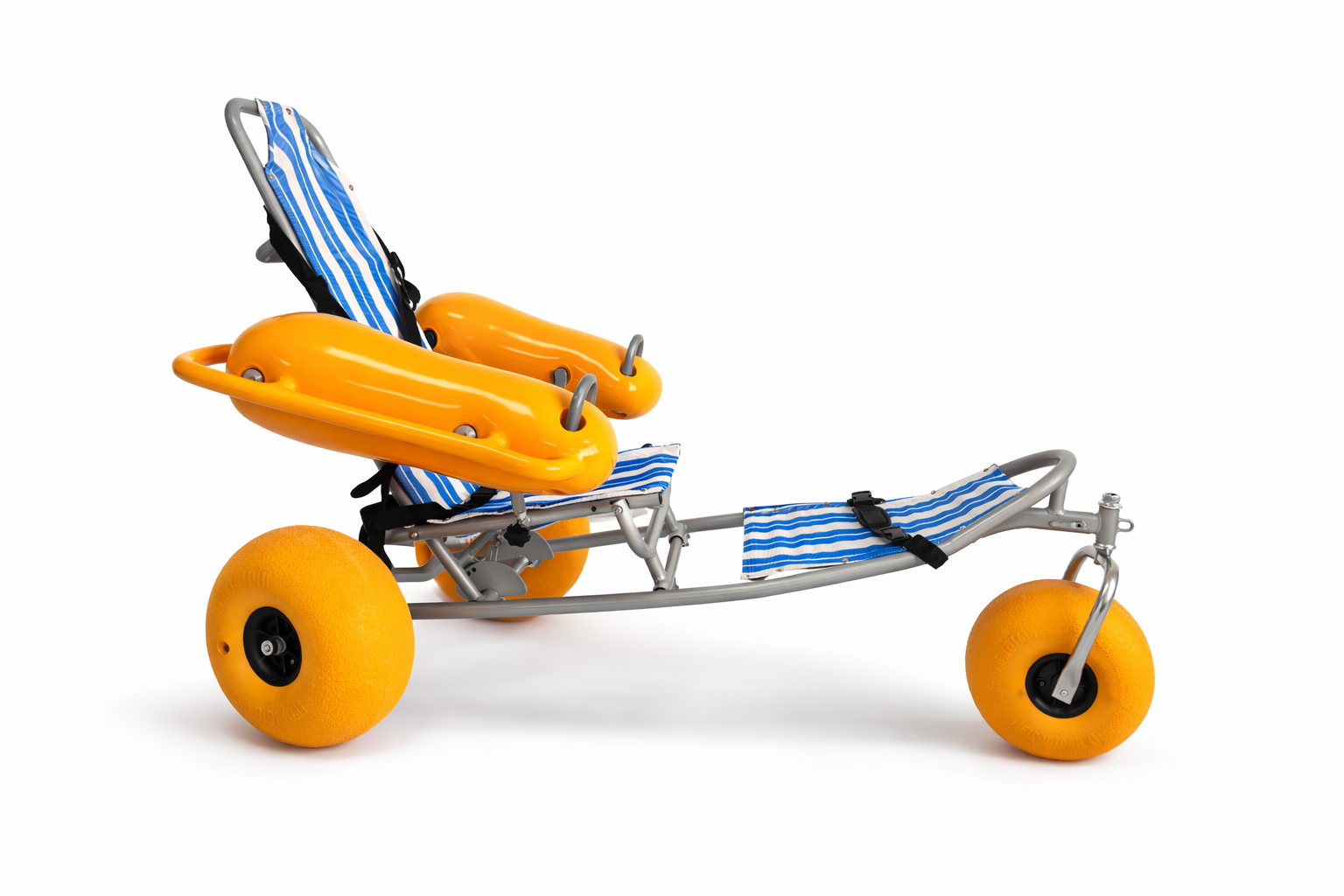
Make one attraction-specific decision
A hypothetical request is for entry to a wave pool because the guest saw a floating chair at another venue. The printed chair instructions exclude wave action. The park should decline that proposed chair use and ask its attraction operator what other approved arrangements are available. An image showing a calm beach or dry chair cannot alter the attraction’s operating conditions.
For a different request involving a quiet, shallow area, obtain the chair supplier’s written assessment of the pool-water exposure, contact surfaces, permitted access method and required after-use care. Obtain the aquatics operator’s decision on the particular location and activity. Keep it pending if a gate, lift, transfer method or usable exit is unresolved. No visitor should be asked to prove that an unapproved arrangement works. Assessing a floating wheelchair for a specific pool
Put the decision where attractions are booked
List each checked destination by name, the activity supported, access arrangements, operating conditions and the person who can confirm a session. Mark a declined or pending request against its specific attraction; avoid promising “water park access” that a guest could reasonably interpret as access to rides. If a change of layout or duty cover affects the return, pause affected new starts and have the local team support current visitors through its approved procedure. Floating wheelchair service closure and reopening