
The AY-ST-V1.0 floating beach wheelchair needs a pool-specific assessment before a facility offers it for use in a swimming pool. Ask the supplier about the exact water treatment, exposure, entry arrangement and care method. Ask the aquatics operator whether the basin, deck, access equipment and staffing can support the proposed visit. Permission for supervised calm-water beach use alone does not answer those questions.
Give the supplier a description of one basin
Identify the pool, planned activity, route from the changing area, water treatment and normal operating conditions. Ask the facility’s responsible person for the relevant water information. Describe whether the proposed entry is a sloped approach, a separate purpose-designed access device or another method the facility already operates. Send those details with the exact chair model and configuration to the supplier for written clarification.
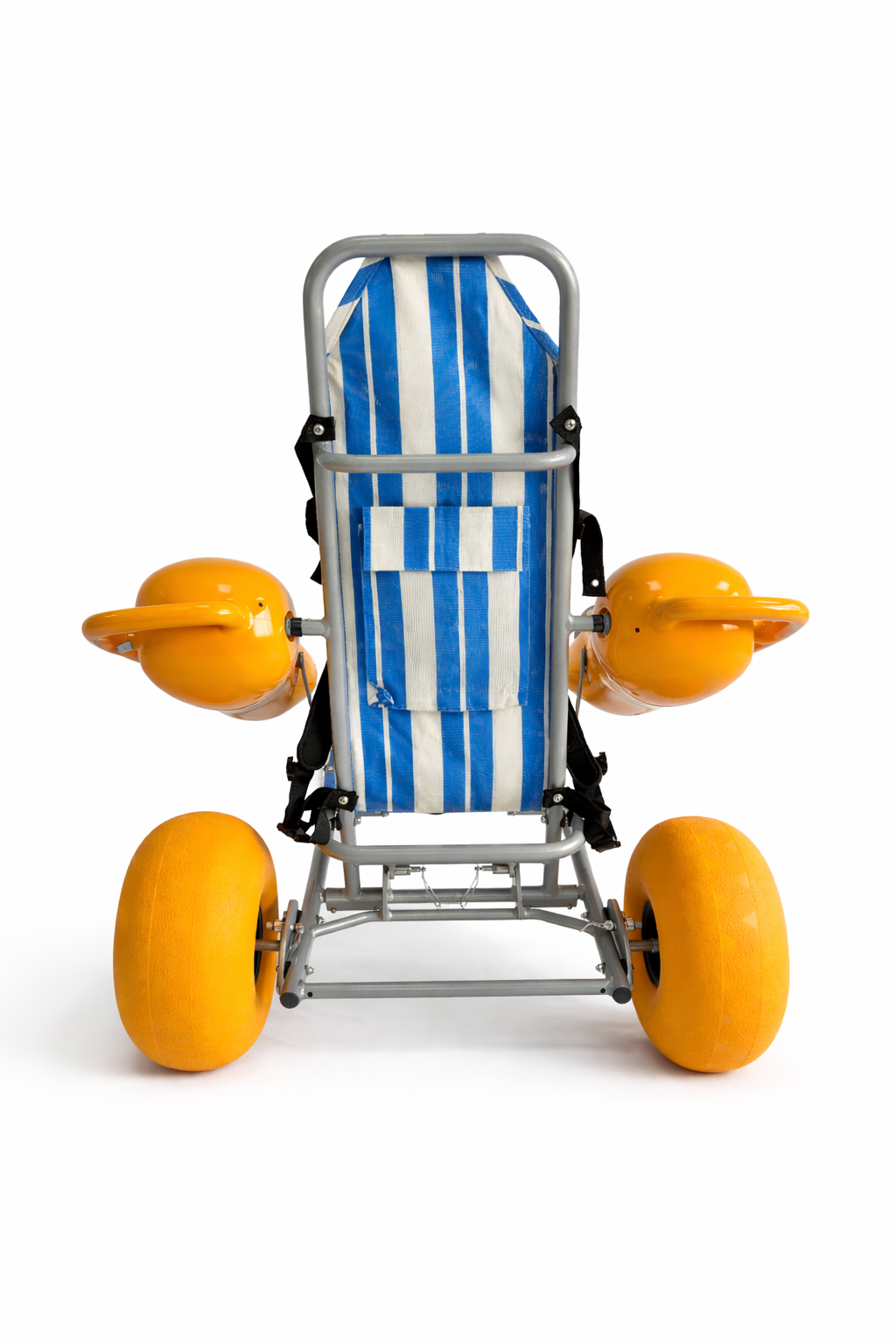
The corrected V1.0 manual identifies an aluminum-alloy frame, three inflatable PVC wheels and two detachable inflatable PVC armrests. The material descriptions help identify the parts on which the supplier should comment. They do not establish chemical compatibility, an exposure limit or a cleaning recipe for a treated pool. Request the approved care method and any restrictions associated with the proposed use. AY-ST-V1.0 manual, pages 2–5
Check the physical connection to the water
The chair manufacturer gives overall dimensions of 220 × 109 × 117 cm for the assembled unit. Measure the proposed deck approach, narrowest gate, change of direction and waiting or transfer space with the actual configuration. Identify where the guest’s usual equipment can remain, where the trained team will meet them and how it will be returned.
A pool lift or a set of entry steps introduces a separate equipment and procedure question. The beach-chair manual does not establish lifting points, lift compatibility or permission to carry an occupied chair down steps. Do not place the unit on a hoist or improvise an occupied transfer. The facility must identify a permitted access method for the specific user and equipment through its qualified team and the relevant instructions. If no such method can be confirmed, decline the proposed in-pool chair use and discuss the facility’s established accessible provision with the visitor.
A ramp that reaches shallow water still needs an assessed return under the actual conditions. Confirm where the attendant can keep stable footing, the room available to turn or exit as authorised, the supervision arrangement and what happens when other pool activities start. The manufacturer limits water use to controlled, calm, shallow settings with trained supervision. Manufacturer’s water-use boundaries
Decide what can be offered
| Situation at the proposed pool | Decision to communicate |
|---|---|
| Supplier compatibility with the water treatment is unresolved | Keep in-pool use pending. A dry-deck or viewing visit may be considered separately if its route and assistance are suitable. |
| Environmental suitability is confirmed, but the proposed lift or transfer is unverified | Hold that access arrangement and consult the persons responsible for the facility’s existing access equipment and user transfer plan. |
| The basin, exact equipment, site method, supervision, exit and individual arrangements have been approved | The duty lead can consider a session subject to a current check of the water, route, equipment and crew. |
| A lane schedule, cleaning activity, deck obstruction or staffing change prevents the authorised return | Pause affected starts and manage those already using the service under the local procedure. |
For example, a fictional pool has a suitable dry approach, a lift for specified uses and a quiet shallow area. The operator has no documentation connecting that lift to the V1.0 or approving the proposed occupied entry. Report the dry approach as checked and the proposed pool-chair entry as unavailable. Do not run a trial with a guest to fill the documentation gap.
Hand over the pool decision and the care requirement
Keep the supplier’s response, facility approval, restrictions and current instructions with the exact unit and named basin. Make clear who can reassess a change to water treatment or entry equipment. At the end of an approved visit, follow the supplier-confirmed after-use procedure and record any change in wheels, armrests or connections before the next issue. Cleaning an identified floating wheelchair
Give reception a simple answer for this pool and date, and the contact able to discuss individual assistance. Separate any other basin, spa, play feature or water park ride from that decision. Attraction-specific water park review