
A UK beach wheelchair service should connect anticipatory access planning, booking, routes, equipment, staffing and local operating checks. Beach wheelchairs in the UK work best when a council plans a service rather than buying a chair in isolation. Councils need an anticipatory brief covering terrain, routes, booking, staffing, storage, information, and local facilities. This guide uses Great Britain evidence and a Worthing-area example, while Northern Ireland requires separate local review. A beach wheelchair can support access, but it does not replace a route or a staffed service.
1. What should a UK beach wheelchair plan start with?
Still, plan the visitor journey first, then specify equipment that fits each handoff. A council should know who requests access and where a person arrives. Record the surface, support role, equipment location, and return step. That sequence exposes gaps a product sheet cannot answer. For that reason, keep the United Kingdom route plan tied to a named site.
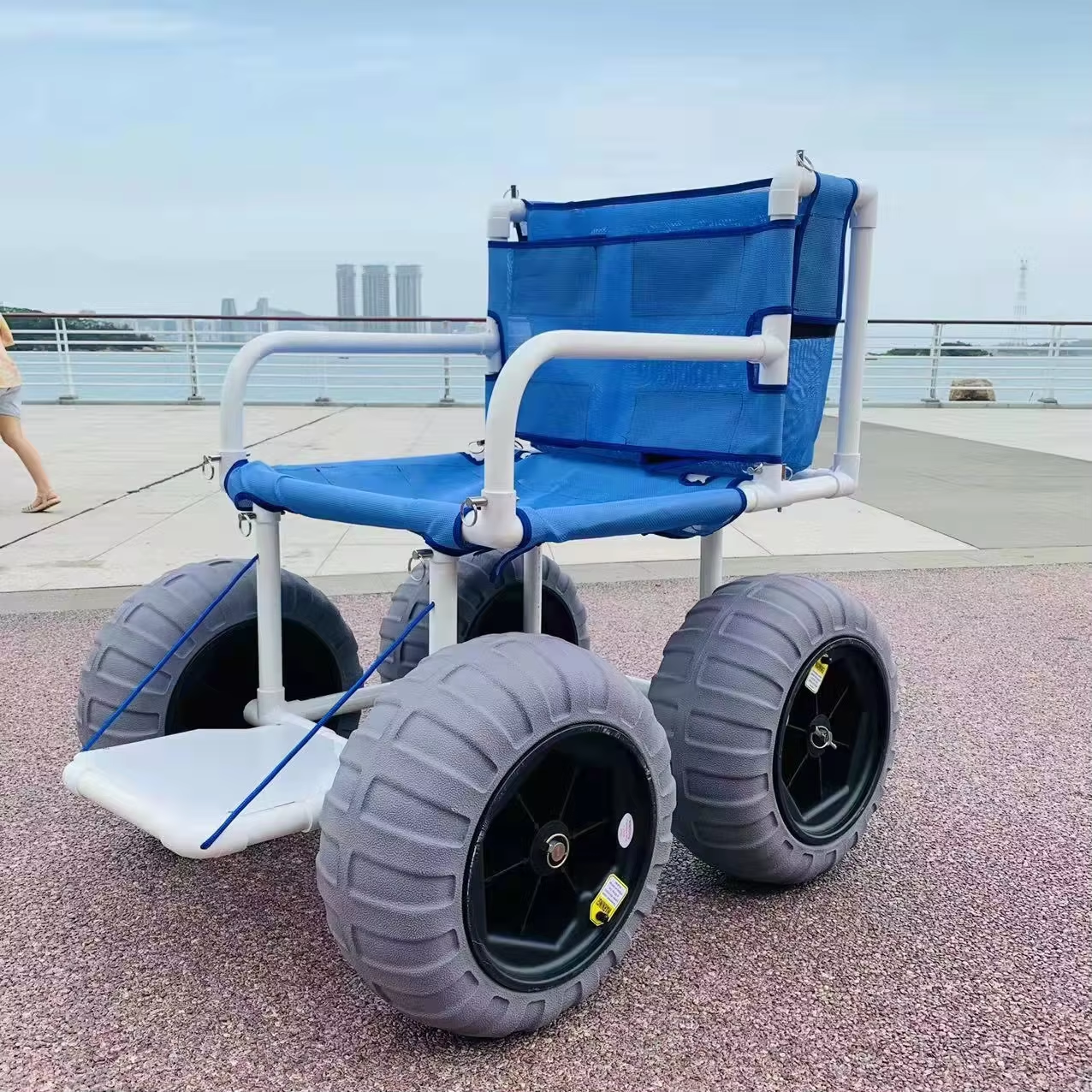
In fact, start with the service map. Put these questions in a short planning brief:
- For example, which beach, entrance, season, and operating hours are in scope?
- Then, which route connects parking, promenade, changing space, beach, and water edge?
- However, can visitors book, borrow, return, or request help through a clear channel?
- Who checks equipment before release and after return?
- Which local rules, land managers, concession holders, or insurers must review the plan?
However, record shingle, steep access, and tidal changes before selecting wheel size or chair type. A mat, chair, and trained assistance may form separate layers. No single item proves whole-beach access.
Write a buyer-ready service brief
| Brief area | Record before a quotation | Why the council needs it |
|---|---|---|
| Site | Entrance, surface, route, tide or weather limits | Matches equipment with real conditions |
| Users | Expected visitor needs and booking pattern | Shapes staffing and communication |
| Service | Loan, escorted use, return, and incident path | Prevents unclear responsibility |
| Facilities | Toilets, changing provision, shade, and first aid | Connects the chair with a complete visit |
Action: ask operations, accessibility, facilities, and procurement staff to sign one shared brief before requesting prices.
Key takeaway: a clear service brief protects the council from buying a disconnected chair.
How does anticipatory planning change council beach access?
For example, anticipatory planning means a service provider considers access before an individual request arrives. The GOV.UK service-provider guide discusses policies, physical features, auxiliary aids, and services across Great Britain. Northern Ireland needs separate review. In practice, local authority evidence should settle this United Kingdom question before procurement.
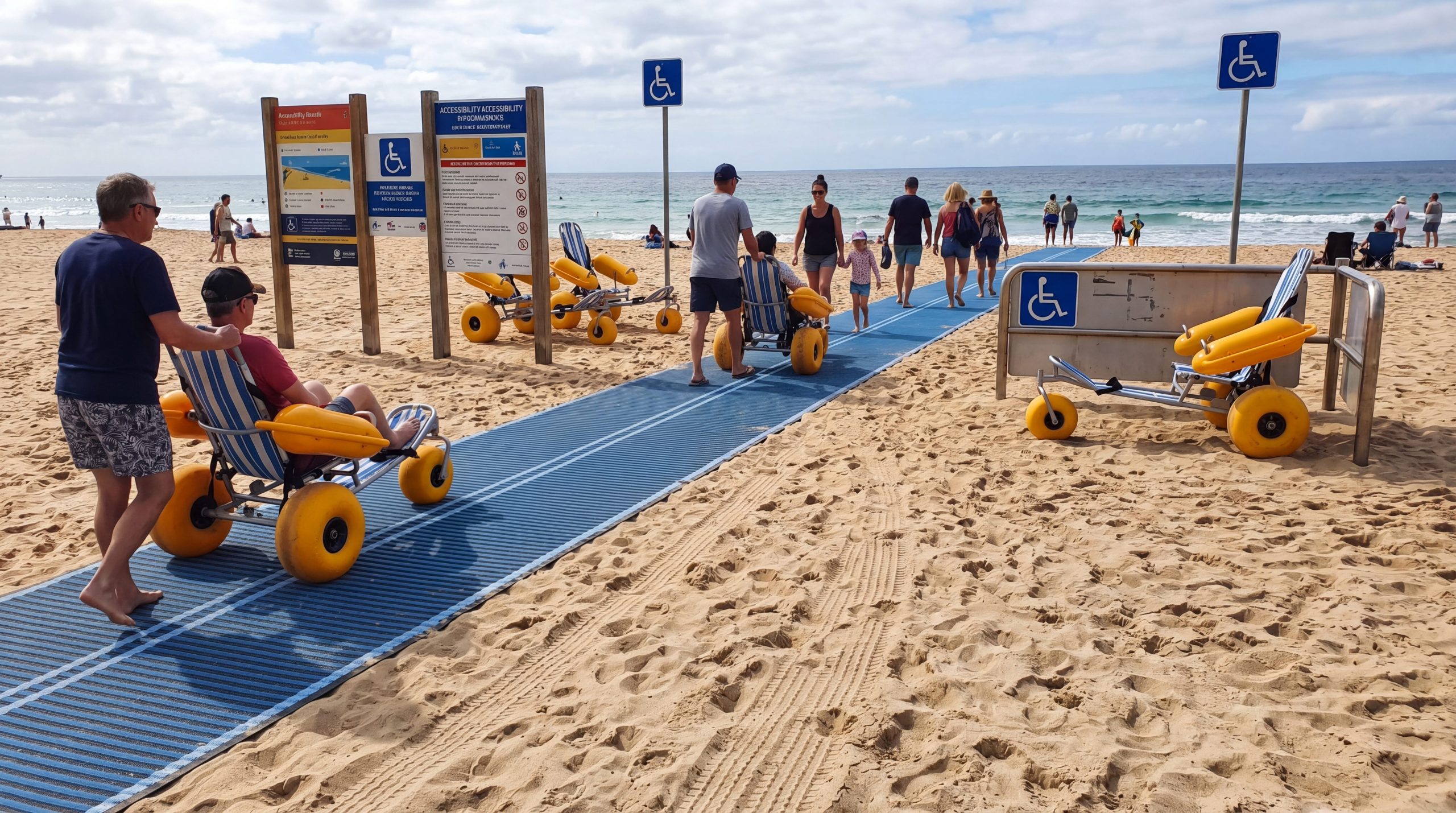
However, put preparation ahead of a complaint. An anticipatory plan can identify:
- Also, a public route map and clear arrival points;
- Instead, a published booking or enquiry method;
- For that reason, equipment options matched with surfaces;
- staff roles for checks, handoffs, and assistance;
- a method for collecting feedback and recording barriers.
Also, staff test foreseeable barriers, decide adjustments, and explain closures after storms, tide movement, or maintenance. Give visitors a clear route for checking current status.
Turn principles into operating controls
| Anticipatory control | Example council record | Boundary to explain |
|---|---|---|
| Policy | Booking and assistance procedure | Requests still depend on current conditions |
| Physical setting | Route, mat, ramp, and storage check | A chair cannot fix a missing route |
| Auxiliary aid | Chair, transfer support, or information | Staff role must match training and local policy |
| Review | Visitor feedback and incident log | Feedback does not replace formal local review |
Action: run a tabletop visit from arrival to return, then log every point where a visitor would need to guess.
Key takeaway: anticipatory planning turns a general duty into visible service controls.
Which terrain and route details must operators map?
Instead, map the actual journey, not only the beach entrance. Pavement, promenade, ramp, mat, sand, and shingle each change pushing effort, turning space, stopping control, and staff support. Weather can turn yesterday’s easy route into today’s hold point. At the same time, record who owns each United Kingdom service handoff.
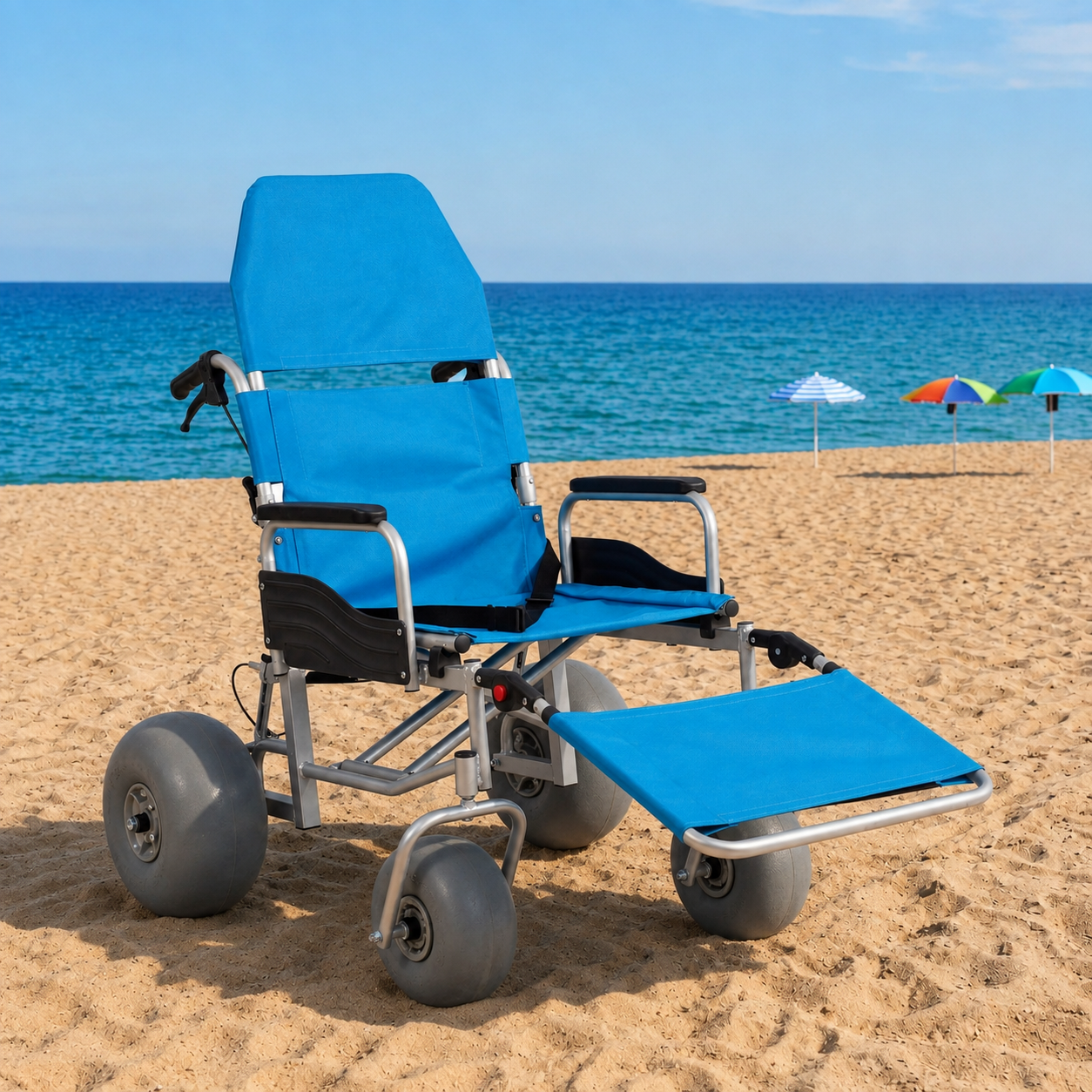
Also, follow the wheels all the way down. Record these route facts:
- Meanwhile, starting point, parking link, and step-free entrance;
- Still, surface changes, crossfall, loose sand, shingle, and narrow sections;
- At the same time, mat length, edge condition, turning areas, and end point;
- nearby shade, seating, toilets, and emergency access;
- weather or tide conditions that trigger a temporary change.
Because of that, an accessible beach mat may create a firmer passage, yet it still needs anchoring, inspection, cleaning, and a defined end point. Treat it as one route component, not proof that nearby surfaces suit every user.
Capture route decisions in a site sheet
| Route item | What to inspect | Buyer decision |
|---|---|---|
| Promenade to sand | Width, slope, turns, and obstacles | Publish route or identify assistance |
| Mat section | Stability, edges, length, and end point | Set inspection and replacement routine |
| Beach surface | Firmness, shingle, ruts, and wet areas | Match chair and staffing plan |
| Return route | Same conditions in reverse | Keep a safe recovery option |
Action: walk the route with operations staff at opening and after a typical weather change before finalising equipment.
Key takeaway: route mapping reveals where a chair helps and where site work remains necessary.
How should councils choose manual, all-terrain, or floating equipment?
Meanwhile, choose by task, surface, user handoff, and supervision model. A manual chair may suit a short escorted trip; an all-terrain model may suit loose ground. A floating chair needs a separate water-use procedure and supervision. For example, verify this step during normal United Kingdom beach operations.
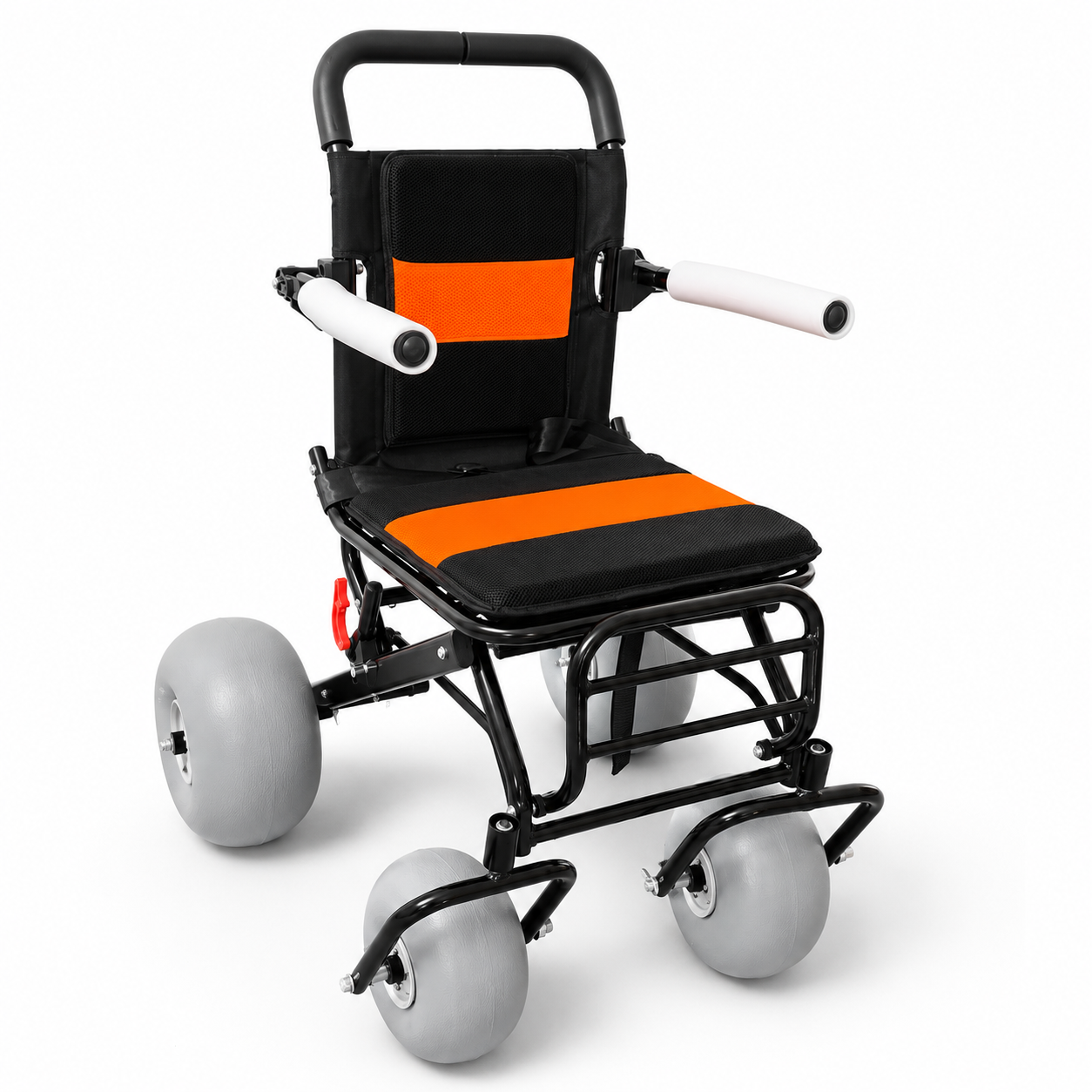
Meanwhile, match the tool with the handoff. Compare options by asking:
- In practice, who pushes, steers, transfers, or escorts the user?
- As a result, which route and surface can staff manage under local procedures?
- In fact, does the service stop at the sand, shoreline, or a separately supervised water activity?
- How will staff clean, store, inspect, and return each type?
- Which user information must appear before booking?
In fact, review an all-terrain beach wheelchair for loose surfaces or a lightweight beach wheelchair for another handling pattern. Those pages are product references, not a council risk assessment. A floating model still needs supervised water procedures.
Compare equipment by service role
| Equipment role | Useful planning question | Do not assume |
|---|---|---|
| Manual beach chair | Can staff manage the mapped route? | Independent use on every surface |
| All-terrain chair | Does the site need broader ground contact? | Any terrain becomes easy |
| Floating chair | Is a separate water procedure ready? | Shoreline access equals water approval |
| Mat or route aid | Where does a stable passage need support? | A mat replaces route planning |
Action: test shortlisted equipment with the staff who will actually move, check, clean, and store it.
Key takeaway: the right chair is the one that fits a defined service role.
What should booking and handoff procedures include?
As a result, booking should state what visitors can request, where they meet staff, how long a loan lasts, and what conditions may change service. Handoff should identify the chair, confirm the route, explain assistance, and record return. However, keep product facts separate from United Kingdom site promises.
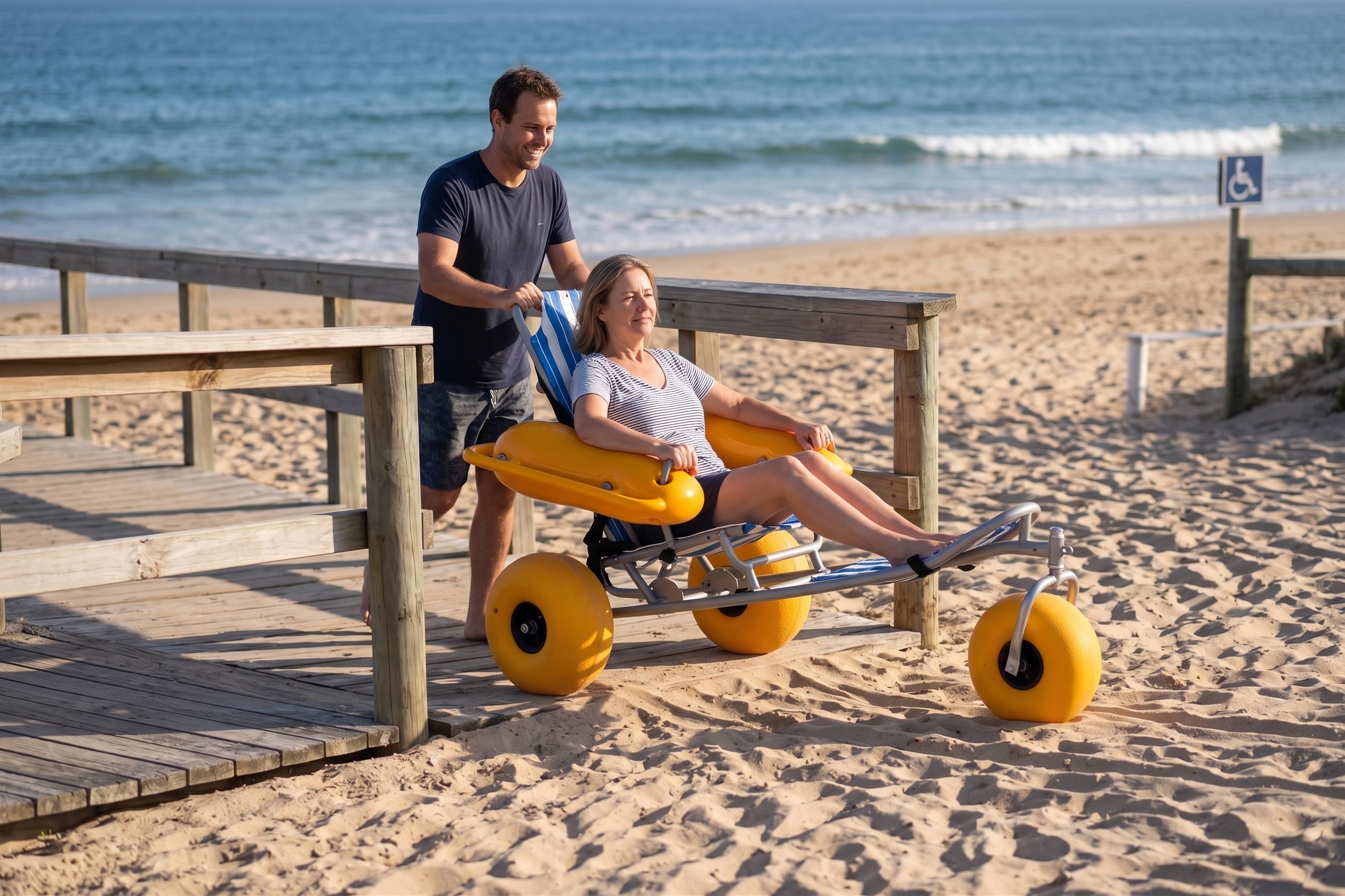
For example, make the first contact useful. A booking form or phone script can ask for:
- However, preferred date, time, beach entrance, and contact method;
- In fact, requested equipment category and route end point;
- Then, assistance needs the visitor wants staff to discuss;
- weather or tide questions that may affect availability;
- arrival instructions, meeting point, and cancellation contact.
For that reason, adur & Worthing Councils publish a local beach wheelchair service example with booking, different devices, shingle context, Changing Places information, and assistance expectations. It is a Great Britain local example, not a UK-wide equipment list or promise for another council.
Design the handoff record
| Handoff moment | Staff record | Visitor-facing message |
|---|---|---|
| Booking | Date, location, request, and contact | What can be requested |
| Arrival | Identity, equipment, and route briefing | Where to meet and what happens |
| Use | Status, assistance, and any change | Who remains available |
| Return | Condition, cleaning, and next check | How to report a problem |
Action: pilot one booking script and revise it after staff complete several supervised handoffs.
Key takeaway: a clear handoff prevents a booked service from becoming a guessing exercise.
How can staff define assistance and user independence?
Then, define assistance by task rather than by assumption. A visitor may want a push across loose sand, route information, transfer discussion, or a staff member nearby. Staff should ask, follow local procedures, and respect a request to stop. Meanwhile, give staff a written United Kingdom service boundary they can repeat.
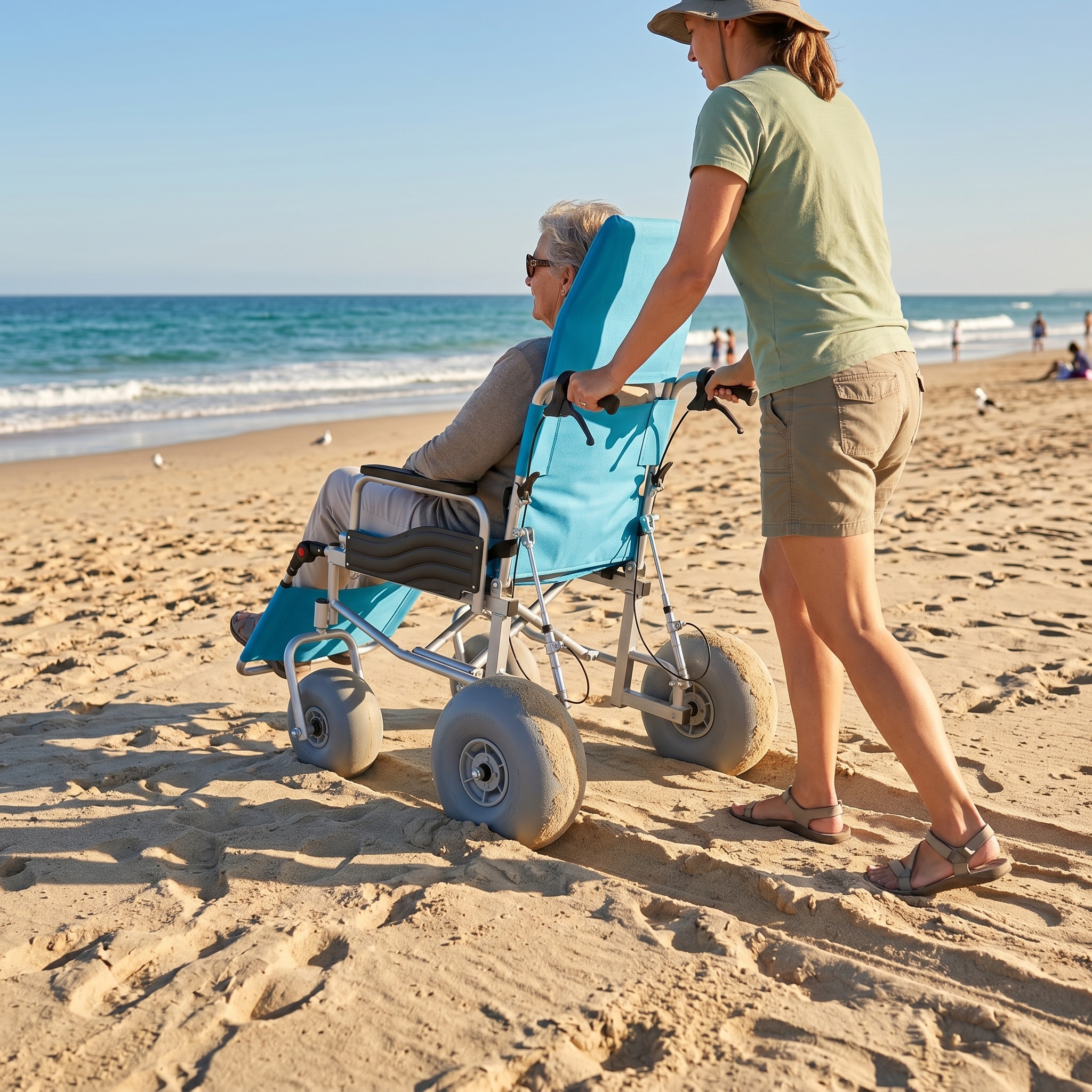
Still, ask before taking over. A practical staff brief should cover:
- For that reason, how to introduce the service and ask permission;
- Even so, who handles route movement and who handles booking records;
- Still, how staff pause when conditions change;
- what assistance falls outside their role;
- where to escalate a medical, safeguarding, or equipment concern.
At the same time, keep personal transfer, water entry, and manual handling within trained local roles. A matching beach wheelchair user manual supports familiarisation, but cannot replace local training, consent, or procedure.
Set role boundaries before opening
| Staff role | Can normally own | Must escalate |
|---|---|---|
| Booking contact | Request, timing, and arrival information | Unclear access or assistance expectation |
| Beach attendant | Route briefing, chair check, and agreed assistance | Condition outside training or procedure |
| Supervisor | Service status and incident review | Serious event or unresolved risk |
| Supplier contact | Product information within authority | Local release or user-specific decision |
Action: practise a consent-based handoff and a stop-work conversation before the first public booking.
Key takeaway: independence improves when staff explain choices and respect boundaries.
How do Changing Places and nearby facilities affect service design?
Even so, treat a beach wheelchair as one part of a visit that may include changing, toilets, shade, seating, first aid, and transport. Staff need accurate directions and opening information for each linked facility. As a result, every quotation can answer the same United Kingdom decision.
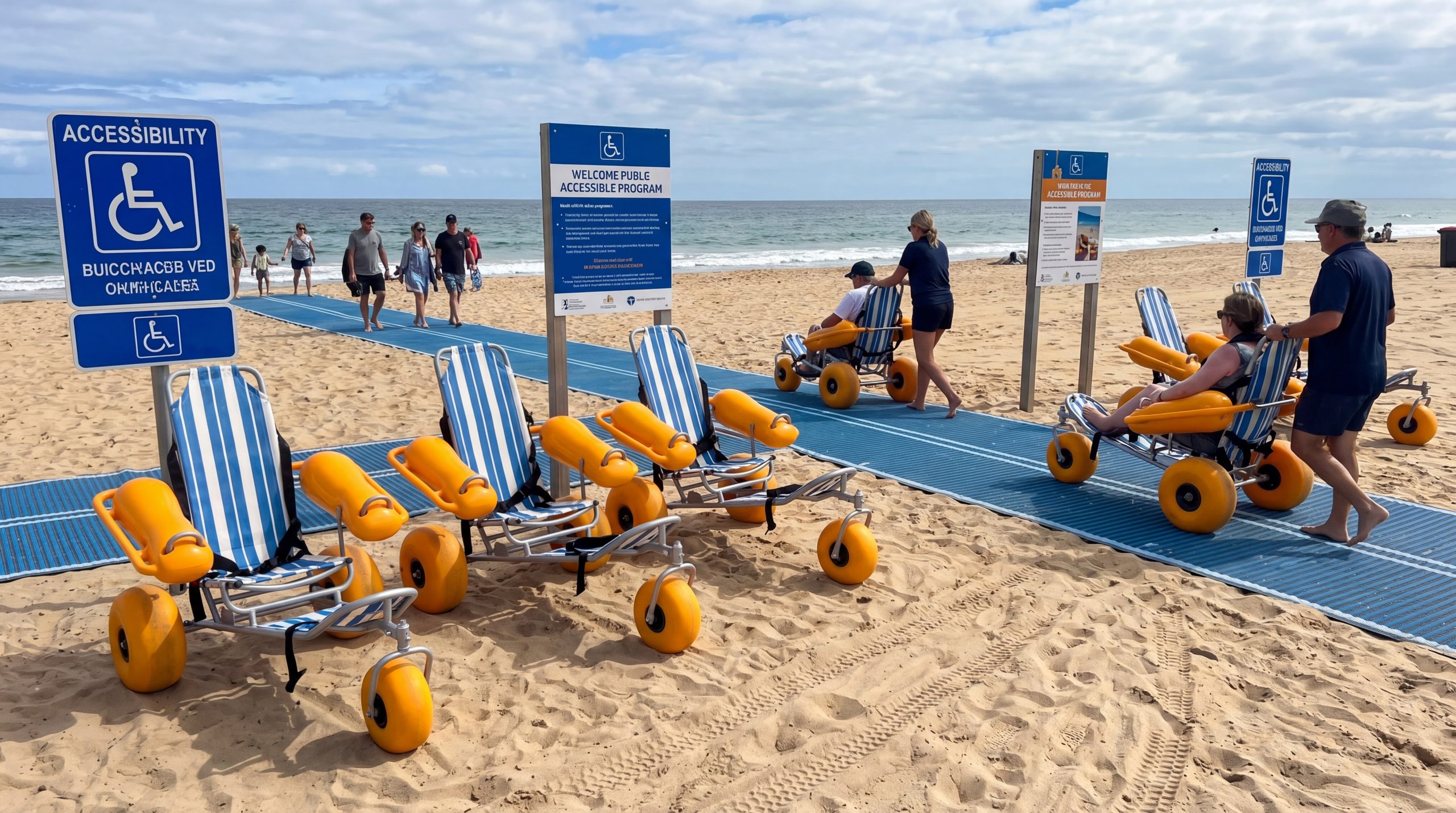
As a result, connect the stops on the map. A service plan should show:
- At the same time, step-free arrival and accessible parking information;
- Specifically, location, hours, and access rules for changing provision;
- As a result, seating, shade, drinking water, and toilets;
- first-aid and lifeguard arrangements where applicable;
- the fallback route when one facility closes.
Before purchase, the Worthing-area example links a beach wheelchair offer with Changing Places information. Other councils may differ. Do not copy that arrangement into a nationwide promise. Use the applications page for context, then verify local facilities.
Build the visitor-chain map
| Visit stage | Facility question | Service record |
|---|---|---|
| Arrival | Can a visitor reach the stated meeting point? | Route note and current status |
| Preparation | Where can changing or transfer planning occur? | Facility hours and contact |
| Beach use | Where does the chair service start and end? | Route and assistance boundary |
| Exit | How does the visitor return or report a problem? | Return route and escalation |
Action: publish one checked map with a named owner for updates when facilities or hours change.
Key takeaway: connected facilities make equipment access usable for a longer visit.
What should visitor information say before arrival?
In practice, write practical information without promising a perfect beach day. Visitors need current route, booking, equipment, assistance, weather, and facility details. Use plain language, visible dates, and one update contact. Before approval, attach a date and responsible United Kingdom service owner.
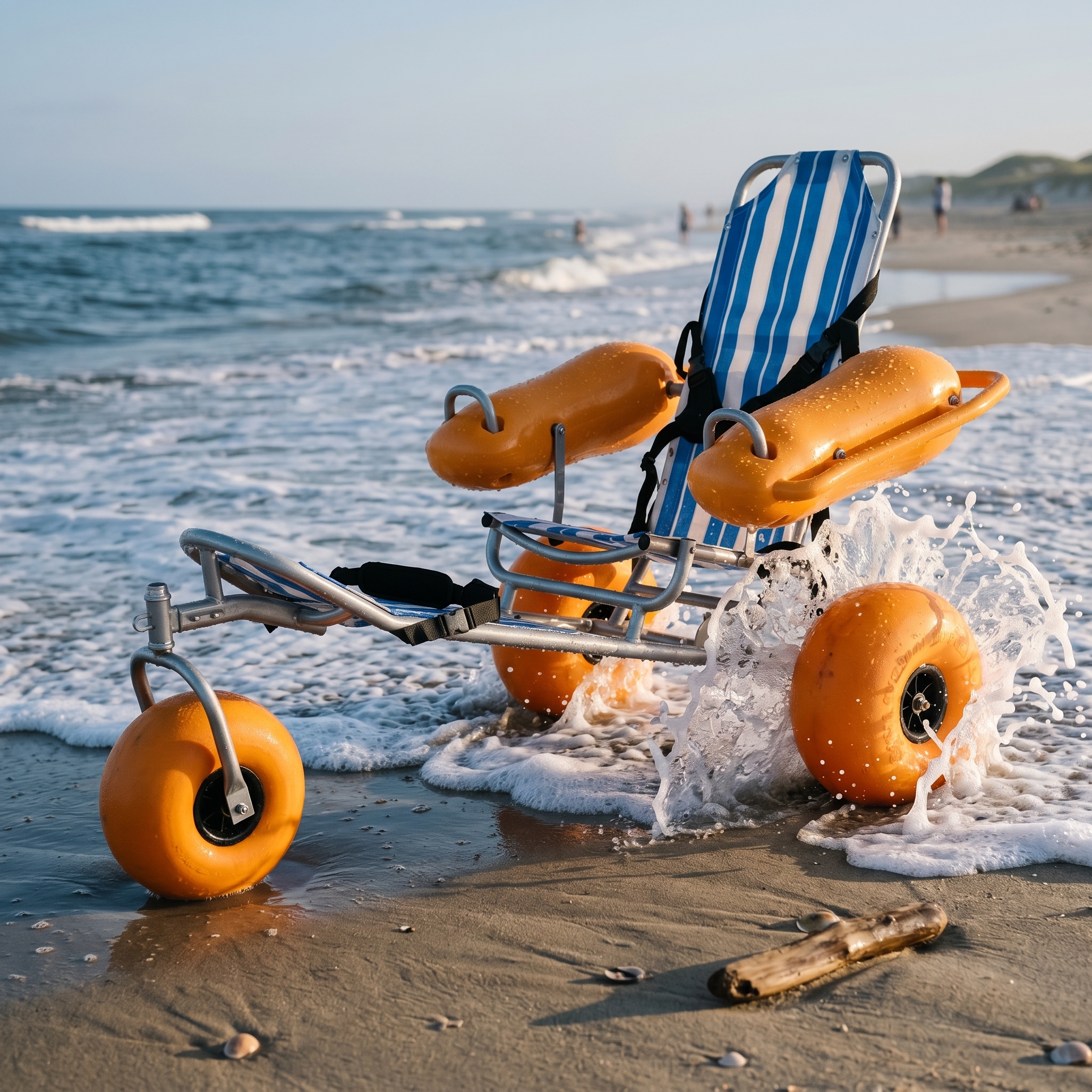
At the same time, publish the limits with the invitation. Include:
- At first, who can request the service and how far ahead;
- Then, where the visitor meets staff and how long a handoff takes;
- Afterward, which equipment types are available at that site;
- whether assistance, transfers, or water entry sit outside the service;
- what weather, tide, maintenance, or staffing changes may pause use.
During review, use “subject to current conditions” only when the page explains those conditions. Include a route update date and accessible contact method. Link to the about page for organisational context, not current site instructions.
Check information before publication
| Visitor question | Information to publish | Owner for checking |
|---|---|---|
| Can I request a chair? | Booking route and operating dates | Service coordinator |
| Where do I go? | Entrance, meeting point, and route note | Beach operations |
| What support exists? | Equipment and assistance boundary | Accessibility lead |
| What if conditions change? | Update method and contact route | Duty manager |
Action: ask a person unfamiliar with the beach to use the page and report every unanswered practical question.
Key takeaway: honest information lets visitors plan with confidence and fewer surprises.
What should procurement and maintenance records capture?
At that point, procurement should describe service outcomes, not only a product label. Record route, equipment role, staff tasks, storage, inspection, cleaning, spares, and training. Keep insurance, land-manager, and environmental questions with the council team. During review, leave unsupported United Kingdom claims marked open.
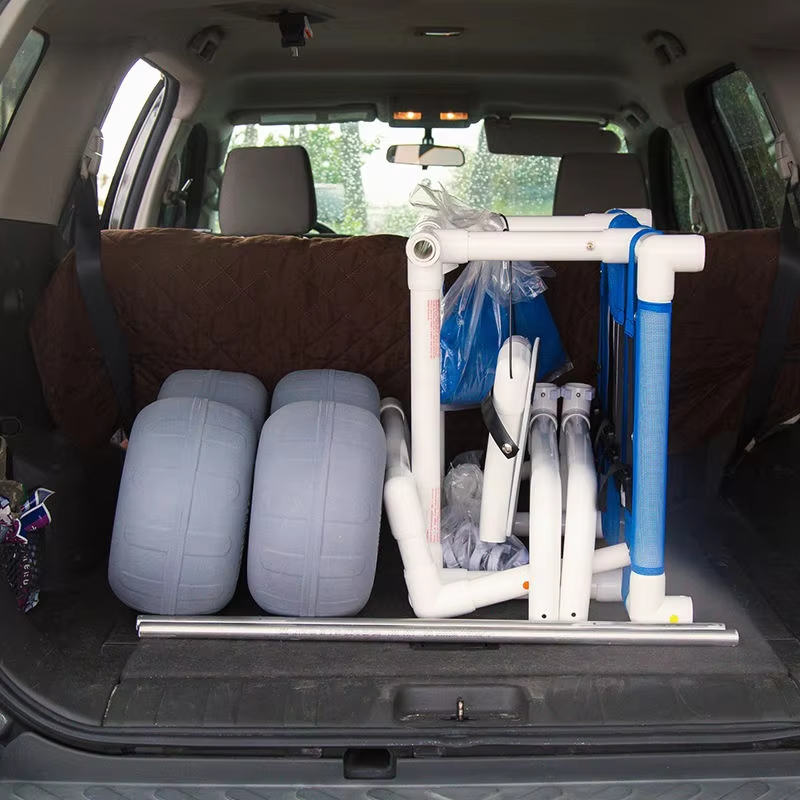
Instead, buy the operating routine with the frame. A request can ask suppliers to state:
- For example, visible configuration and supplied accessories;
- Also, cleaning and storage information;
- Instead, inspection points and replacement parts process;
- instructions and training materials supplied;
- packaging, delivery, and handoff assumptions;
- information the council must confirm before use.
Afterward, do not insert capacity, warranty, certification, or delivery claims without written evidence for the exact offer. Keep product documents beside the asset record. The projects page gives context, but cannot prove local fit or approval.
Create a maintenance-ready schedule
| Control | Record | Escalation trigger |
|---|---|---|
| Pre-use check | Date, chair identity, visible condition | Any unresolved change |
| Post-use care | Cleaning, drying, and storage location | Salt, sand, or damage concern |
| Periodic review | Staff check and open issues | Repeated issue or missing part |
| Supplier contact | Question, evidence, and reply | No clear answer or mismatch |
Action: make inspection, cleaning, storage, and escalation fields mandatory in the asset log.
Key takeaway: procurement succeeds when staff can operate and maintain what they receive.
How can a council turn a pilot into a dependable seasonal service?
On the other hand, turn a pilot into a repeatable service by reviewing bookings, route conditions, staff workload, facility links, and visitor feedback. Keep changes site-specific. A Worthing-area model cannot define another council’s demand or staffing. Afterward, update United Kingdom visitor information when conditions change.
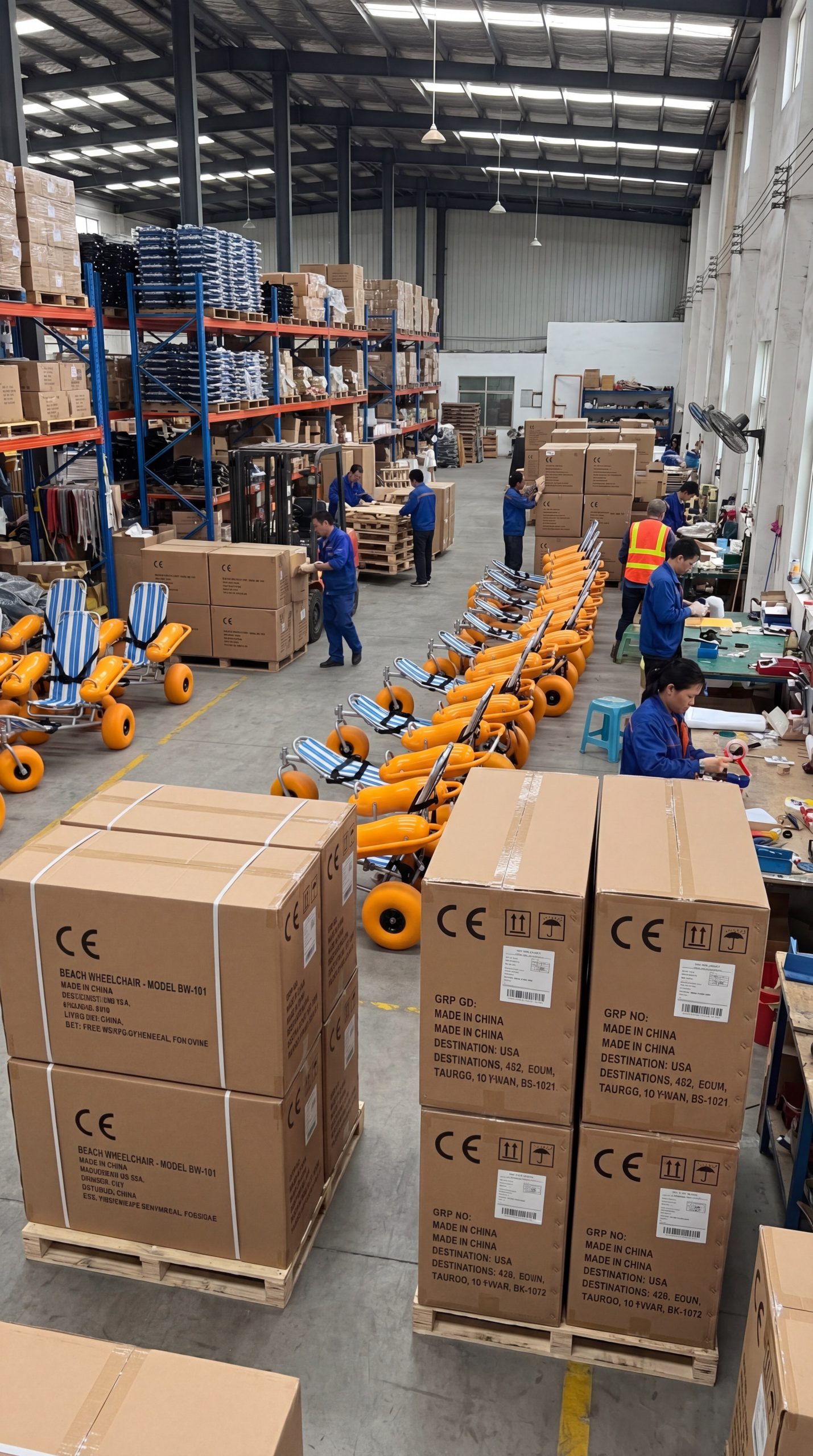
For that reason, make the next season easier to run. At closeout, review:
- Afterward, requests received, completed, cancelled, and paused;
- Later, route or weather conditions that changed service;
- Also, equipment checks, repairs, cleaning, and storage;
- staff questions that exposed unclear procedures;
- visitor feedback about information, handoff, and facilities.
Unlike a product claim, keep an improvement register with an owner and review date. Do not turn a local trial into a national claim. For a product comparison or route discussion, contact us with site conditions and the service brief.
Set the next-season decision gate
At closeout, ask whether the mapped route worked, equipment fit its role, booking explained limits, and staff could sustain the service. Bring condition notes, check records, visitor comments, and the storage log to a named decision owner. Publish only conditions the council can support.
Action: close the season with a named decision owner and a short change list for the next operating period.
Key takeaway: a dependable service grows from recorded local evidence, not from a generic country label.
Common buyer questions
Q1 In practice, does UK law require every beach to provide a beach wheelchair? No. Equipment duties and local service arrangements depend on the responsible authority, service context, and applicable rules. Great Britain guidance supports anticipatory planning, while Northern Ireland requires separate review.
Q2 For example, does a beach wheelchair replace an accessible route? No. A chair supports movement within a planned service. It cannot remove steps, unstable ground, missing facilities, or unclear staffing.
Q3 However, is the Worthing example a national UK standard? No. Adur & Worthing Councils show one local service model with booking, devices, terrain information, facilities, and assistance expectations. Other councils must verify their own conditions.
Q4 Also, should every council offer a floating chair? No. Water equipment needs a separate task, supervision plan, operating boundary, and local review. A manual or all-terrain chair may serve a different route.
Q5 For that reason, what should a council send when requesting a quotation? Send the site map, route surfaces, service hours, staffing model, equipment role, storage plan, visitor information needs, and local approval questions. Ask suppliers to identify assumptions in writing.