
A Spain beach wheelchair service point should connect routes, assisted bathing, staffing, equipment care and verified local availability. Beach wheelchairs in Spain should sit inside a seasonal accessible beach point. Map arrival, operating dates, staff roles, equipment boundaries, and current visitor information. Spain’s official tourism guidance notes that accessible services vary by destination and season. A city beach may offer a staffed bathing point while a remote natural beach offers only part of that service. Plan the named site, then verify autonomous-community, municipal, coastal, and environmental rules.
1. What should a Spain beach wheelchair plan start with?
Still, start with a service point that visitors can find and use. The point may connect accessible parking, promenade, stable route, shade, seating, toilets, equipment, staff, and a supervised bathing boundary. List operating dates and current conditions beside every element. A chair alone does not create an accessible beach point. For that reason, keep the Spain route plan tied to a named site.
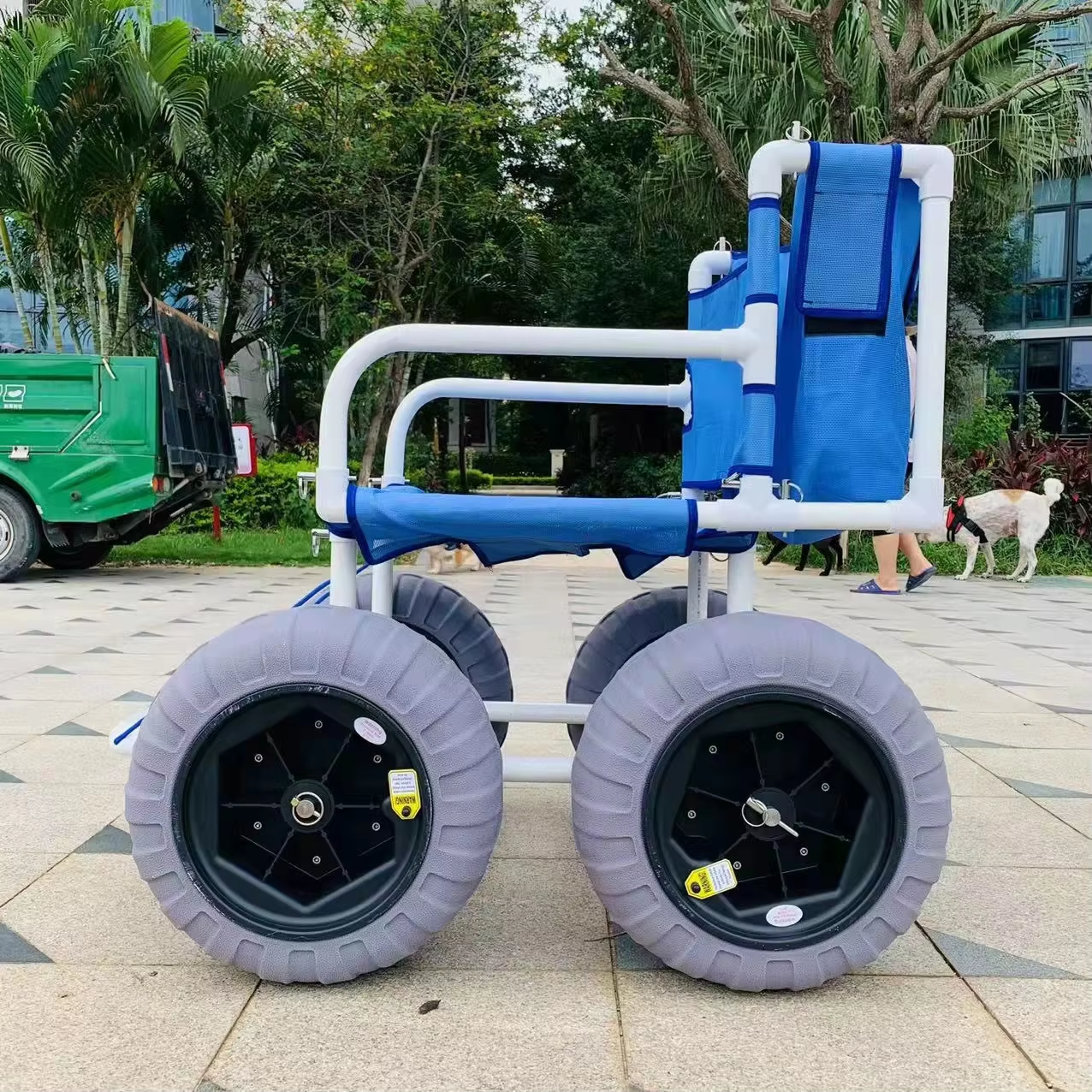
In fact, build the point as a visible system. A site brief should cover:
- For example, public arrival, parking, and meeting location;
- Then, route across promenade, ramp, mat, or firm sand;
- However, chair type, storage, booking, and staff handoff;
- shade, seating, toilets, first aid, and lifeguard information;
- assisted bathing boundary and weather or sea-condition stop rule.
However, spain’s official accessible beaches guidance describes a service mix that can include ramps, walkways, amphibious chairs, accessible toilets, changing support, and assistance. It also warns that availability varies by destination and season. Use that variation as a planning assumption, not as a defect in one product.
Define a seasonal service point
| Point layer | Site question | Record to keep |
|---|---|---|
| Arrival | Where does a visitor enter and meet staff? | Map and current contact |
| Route | What stable path reaches the planned area? | Surface and inspection log |
| Equipment | Which chair performs which task? | Asset and procedure record |
| Support | Who manages facilities and assisted bathing? | Roles, hours, and boundary |
Action: have the operator walk the entire point before publishing dates or equipment details.
Key takeaway: a seasonal point is a coordinated service, not a chair placed near the sea.
How do Spanish national baselines frame planning?
For example, use national accessibility baselines as a planning reference, then confirm the site’s responsible rules. Spain’s Orden TMA/851/2021 sits within the public-space accessibility framework. It does not give a supplier permission to label a chair compliant or remove the need for local review. Municipal beaches, concessions, coastal land, and natural settings can add conditions. In practice, local authority evidence should settle this Spain question before procurement.

However, use the baseline as a question list. Ask the responsible team to confirm:
- Also, which public-space elements fall within the project;
- Instead, how route, access, information, and service points are documented;
- For that reason, which local body accepts the seasonal setup;
- what coastal, environmental, or concession review applies;
- which features remain temporary or site-specific.
Also, a product page can support procurement discussion, yet it cannot stand in for a municipal decision. Keep national reference, local approval, and supplier evidence in separate sections. That separation protects an operator from copying a rule outside its scope.
Separate baseline from site decision
| Evidence layer | What it supports | What it cannot establish alone |
|---|---|---|
| National framework | Broad public-space planning context | Approval for a named beach |
| Municipal or concession file | Site operating decision | Product performance everywhere |
| Supplier documents | Equipment details and care | Legal compliance or service availability |
| Seasonal record | Current dates and conditions | Permanent national provision |
Action: ask the authority or concession owner to mark each planned feature as applicable, open, or outside scope.
Key takeaway: national baselines guide questions while local decisions define the beach point.
Why do destination and season change the service offer?
Instead, destination type changes the route, staffing, facilities, and equipment that an operator can sustain. An urban promenade may support a staffed point, stable walkway, toilets, and scheduled bathing assistance. A remote or natural beach may have a shorter season, difficult access, environmental limits, or no permanent staff. Publish the actual offer for each destination. At the same time, record who owns each Spain service handoff.
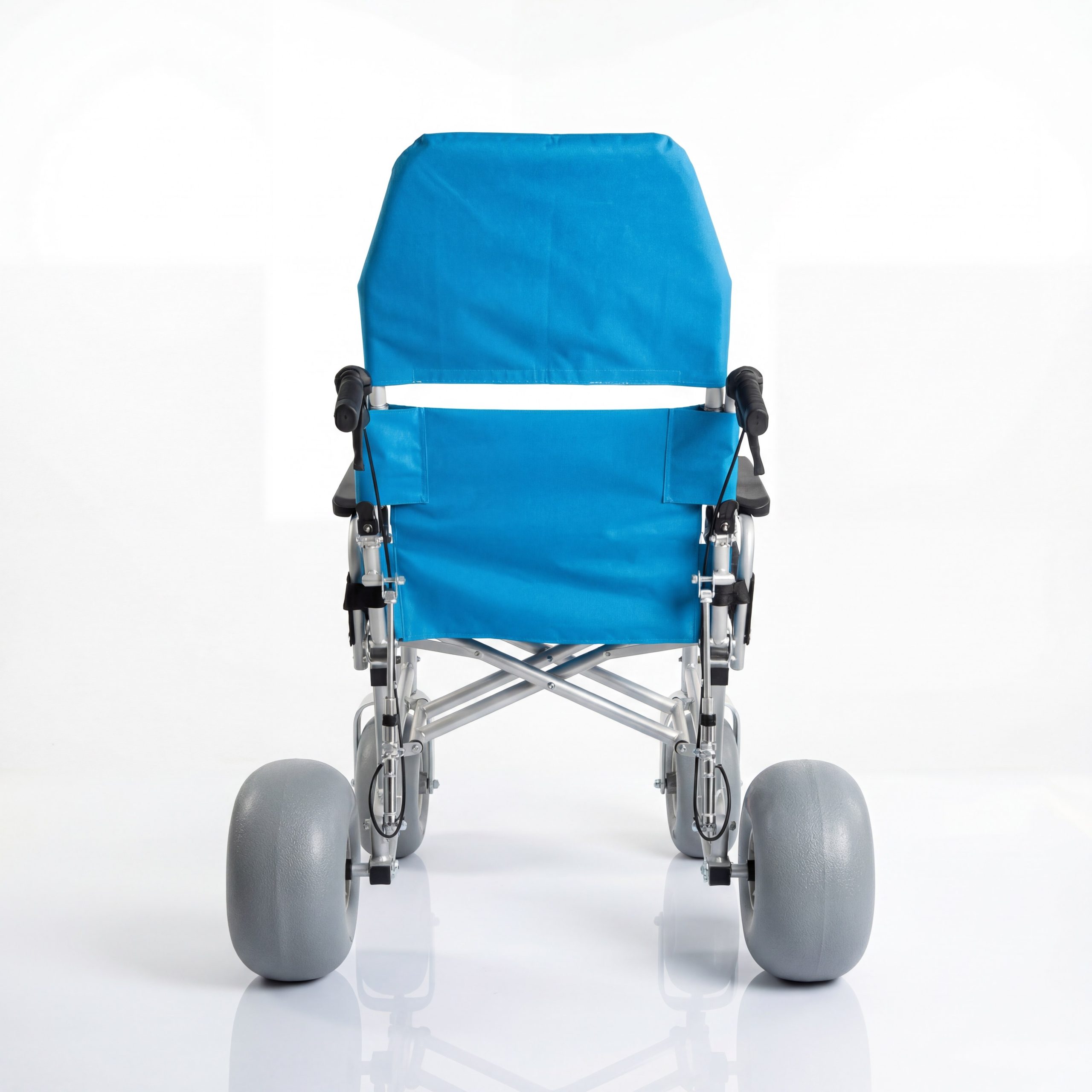
Also, plan the beach you operate, not the beach in a brochure. Compare:
- Meanwhile, urban access versus remote arrival and parking;
- Still, permanent route versus temporary seasonal matting;
- At the same time, staffed bathing point versus equipment-only availability;
- daily schedule versus weather or tide call-off;
- municipal facilities versus concession-managed facilities.
Because of that, do not describe all Spanish beaches as offering the same service. Use a destination page that states dates, equipment, assistance, facilities, and current contact. A seasonal accessible point can be strong when its boundaries are honest. A vague national promise creates the wrong expectation for visitors and staff.
Classify the destination before buying
| Destination setting | Likely planning pressure | Information priority |
|---|---|---|
| Urban beach | Demand, queues, and facility coordination | Booking, hours, and meeting point |
| Resort concession | Multiple operators and handoffs | Responsibility and service boundary |
| Remote natural beach | Route, environment, and staffing limits | Access limits and alternatives |
| Seasonal point | Weather, storage, and opening dates | Current status and closure notice |
Action: create one service card per destination instead of one national description.
Key takeaway: destination-specific information prevents a seasonal service from being oversold.
How should operators map arrival through the beach point?
Meanwhile, map every transition from parking or public transport through the point and back. A route can include curb, pavement, promenade, ramp, boardwalk, mat, sand, and bathing edge. Loose sand, slope, ruts, crowding, and construction can change the service after a route check. For example, verify this step during normal Spain beach operations.
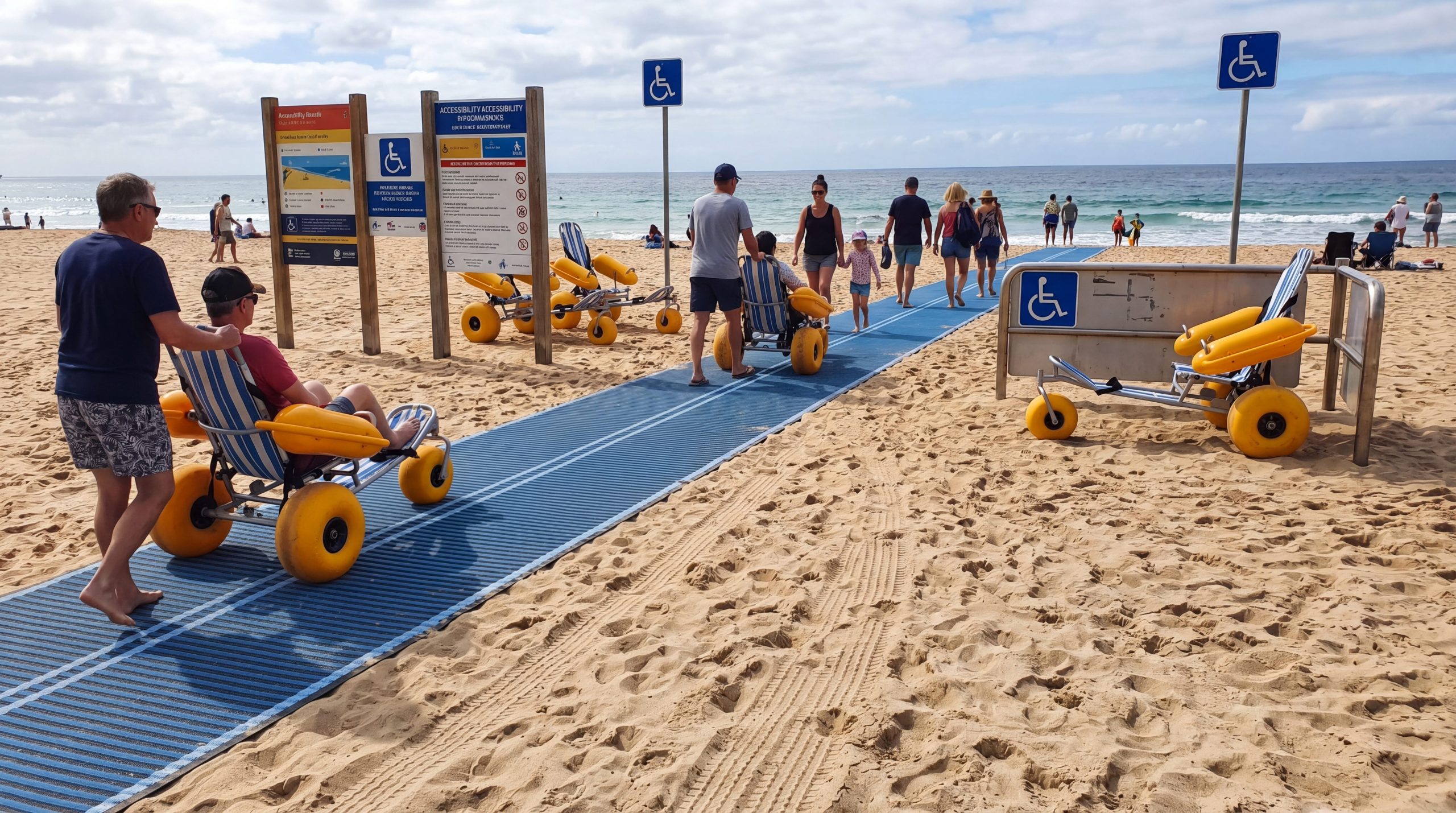
Meanwhile, follow the route beyond the first mat. Inspect:
- In practice, parking, transfer area, and step-free entry;
- As a result, route width, turning space, crossfall, and obstacles;
- In fact, mat or walkway edge, length, stability, and end point;
- firm-sand route, shade, seating, and toilet connection;
- return route and an alternative when conditions change.
In fact, an accessible beach mat can support one section of travel. It still needs local installation, edge inspection, cleaning, and a defined limit. Do not call a mat a complete route without checking its approach and exit. Record who can pause service after storms, works, or coastal change.
Keep a route and closure log
| Route segment | Check | Closure trigger |
|---|---|---|
| Arrival to entrance | Surface, curb, and transfer area | Blocked or unsafe connection |
| Entrance to mat | Ramp, width, and turning room | Change beyond procedure |
| Mat to beach point | Edge, stability, and sand | Damage or loose route |
| Point to return | Staff access and fallback | No safe recovery route |
Action: inspect at opening and after a condition change, then publish the updated route status.
Key takeaway: route evidence tells staff where equipment can help and where service must pause.
Which equipment roles should a Spanish operator define?
As a result, define roles before selecting models. A manual chair may support escorted movement. An all-terrain chair may suit loose ground. A floating chair may support a separate supervised bathing process. A lightweight option may help with storage or handling. These are service roles, not automatic permissions for every user or beach. However, keep product facts separate from Spain site promises.
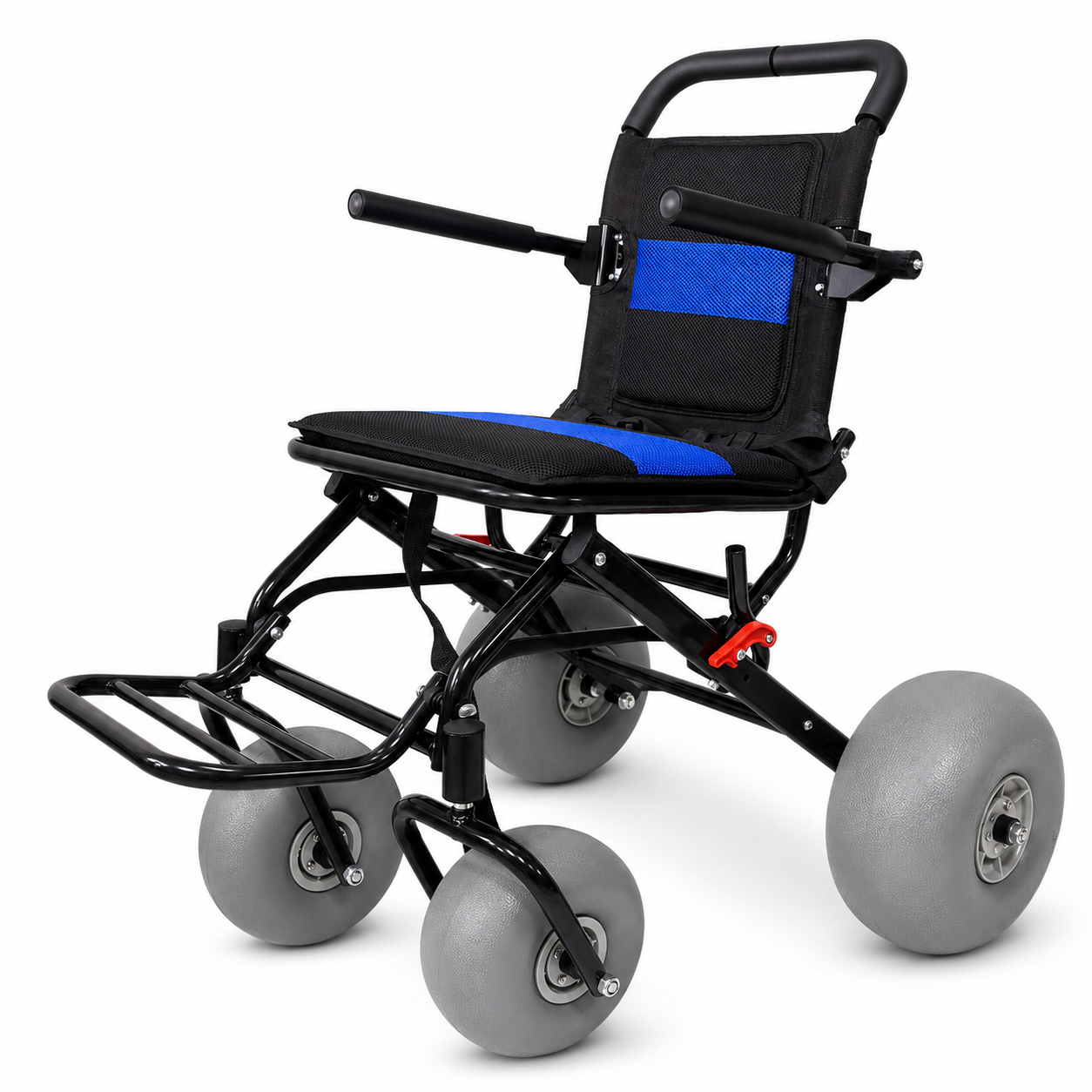
For example, make the task fit the equipment. For each option, record:
- However, route and surface where staff expect use;
- In fact, who pushes, steers, transfers, or escorts;
- Then, where use ends and how the chair returns;
- cleaning, drying, storage, and inspection routine;
- visitor information and limits that must be published.
For that reason, compare an all-terrain beach wheelchair, lightweight beach wheelchair, or floating beach wheelchair against the mapped site. These product references do not prove Spanish municipal approval, a bathing service, or suitability for a remote beach.
Assign each chair a service role
| Equipment role | Site fit question | Boundary to publish |
|---|---|---|
| Manual chair | Can staff manage the route? | Assisted movement expectations |
| All-terrain chair | What loose ground needs support? | Surface and staff limit |
| Lightweight chair | Does handling or storage drive selection? | Handling remains procedural |
| Floating chair | Is a supervised bathing point ready? | Water and weather stop rule |
Action: test each shortlisted model with the staff who will use it during the busiest planned period.
Key takeaway: product categories become useful only after an operator assigns a real site task.
How should operators set assisted bathing boundaries?
Then, treat assisted bathing as a separately managed activity. A chair reaching the shoreline does not mean water entry is approved, supervised, or available every day. Define the bathing zone, staff roles, lifeguard interface, user consent, weather limits, and stop rule. If any part is missing, publish a narrower service. Meanwhile, give staff a written Spain service boundary they can repeat.

Still, put the water boundary in the booking conversation. Confirm:
- For that reason, whether service ends on sand, at the shoreline, or in water;
- Even so, who stays with the user during an assisted activity;
- Still, which sea, weather, tide, or staffing conditions stop use;
- how staff explain transfer and chair handling;
- where the user returns and how the equipment is cared for.
At the same time, do not write “water access available” when only a shoreline route exists. A local lifeguard service may control bathing decisions. Keep the beach wheelchair user manual available for model familiarisation, yet do not use it as a substitute for local water procedures.
Write the bathing boundary
| Service statement | What it must clarify | Unsafe shortcut |
|---|---|---|
| Beach movement | Route and staff handoff | Promising independent use |
| Shoreline access | End point and surface | Calling it bathing |
| Assisted bathing | Staff, zone, and conditions | Omitting stop rules |
| Water equipment | Care and return procedure | Treating a product page as approval |
Action: have beach operations and lifeguard leads sign the public bathing wording before seasonal launch.
Key takeaway: a narrow, accurate bathing boundary is safer than a broad promise.
What should operators publish before visitors arrive?
Even so, publish current service information at destination level. Visitors need dates, booking path, meeting point, equipment type, assistance boundary, facilities, and closure updates. Say when access varies by season or destination. Keep a version date and named update owner so a closed point does not remain online as an open promise. As a result, every quotation can answer the same Spain decision.
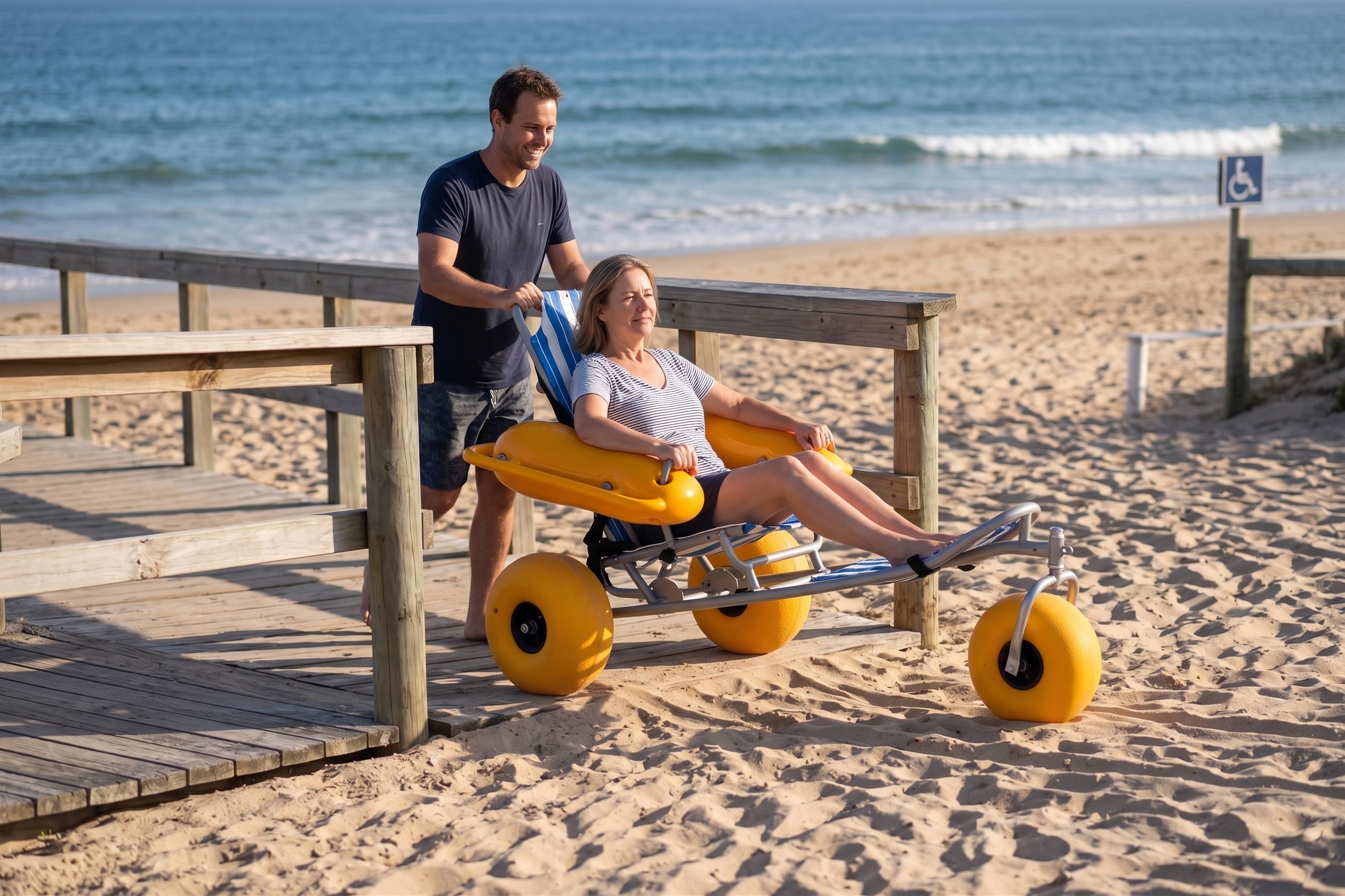
As a result, answer the practical questions before the trip. State:
- At the same time, operating dates, daily hours, and booking lead time;
- Specifically, arrival route, parking, meeting point, and contact method;
- As a result, equipment available and assistance staff can provide;
- whether bathing, transfers, or water entry sit outside scope;
- weather, maintenance, crowding, and sea-condition updates.
Before purchase, the applications page can support general use-case discussion. A Spanish destination page still needs its own route, season, facilities, and local contacts. Avoid describing an image of a chair as proof that service exists at that beach.
Check a destination information card
| Visitor need | Public content | Update owner |
|---|---|---|
| Arrival | Map, parking, meeting point | Site operations |
| Booking | Request path and dates | Service coordinator |
| Assistance | Equipment and staff boundary | Accessibility lead |
| Changes | Closure and condition update | Duty manager |
Action: ask a visitor unfamiliar with the site to plan a visit using only the published card, then correct every gap.
Key takeaway: current destination information turns seasonal availability into a usable service.
How should operators coordinate local and national beach rules?
In practice, assign each rule question to its responsible body. A beach point may involve an autonomous community, municipality, concession holder, coastal authority, lifeguard contractor, or environmental manager. National guidance cannot answer every local question. Keep approvals and operating conditions attached to the named site. Before approval, attach a date and responsible Spain service owner.
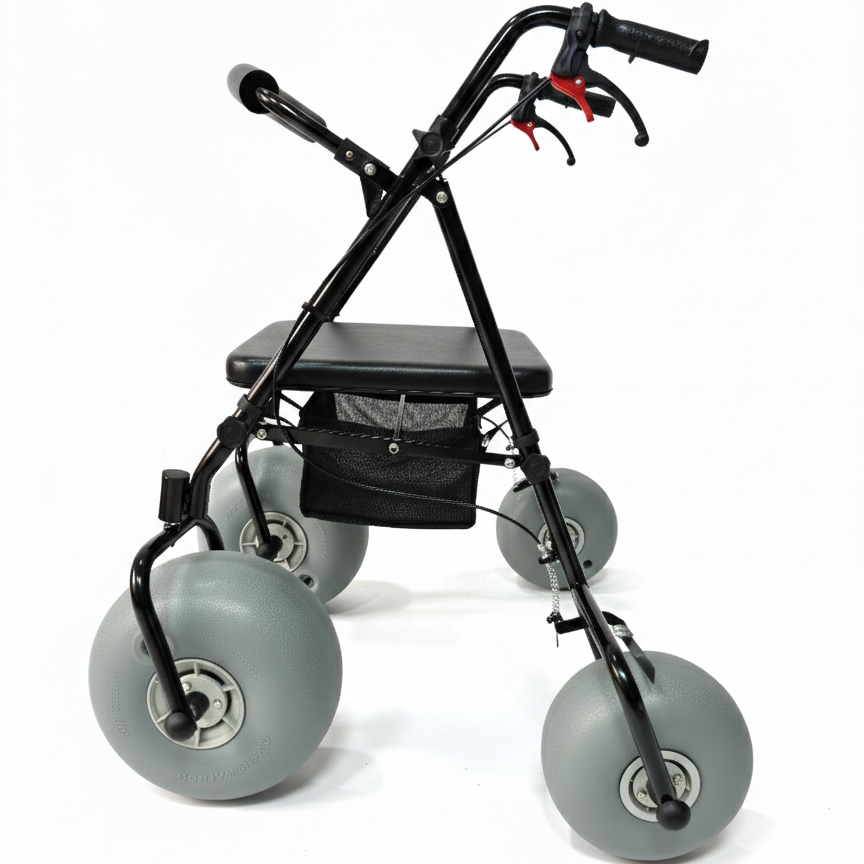
At the same time, put responsibility beside every assumption. Clarify:
- At first, public-space works and temporary routes;
- Then, coastal or protected-area conditions;
- Afterward, the beach concession or service contract;
- facilities, lifeguard coverage, and closures;
- equipment, information, and incident records.
During review, the beach walker category should remain separate from a wheelchair service unless a local plan intentionally includes it. Do not imply that a supplier can grant a municipal, coastal, or environmental approval. Use qualified local advice where a rule or exception remains unclear.
Build a responsibility matrix
| Decision | Possible responsible body | Record needed |
|---|---|---|
| Route or public-space change | Municipality or public works team | Site decision and date |
| Coastal or environment condition | Coastal or environmental authority | Applicable limit |
| Concession service | Operator or concession holder | Contract role and hours |
| Bathing and rescue | Lifeguard or beach safety lead | Zone and stop rule |
Action: hold a coordination meeting before procurement closes, then attach each answer to the named beach file.
Key takeaway: rule ownership keeps a local service decision from being mistaken for a supplier claim.
How should procurement, maintenance, and seasonal review work?
At that point, procurement should buy a service capability with records, not a country label. Ask for model identity, supplied configuration, cleaning, drying, storage, inspection, training material, replacement questions, and limits. Run opening and closing checks throughout the season, then use visitor and staff feedback for the next plan. During review, leave unsupported Spain claims marked open.
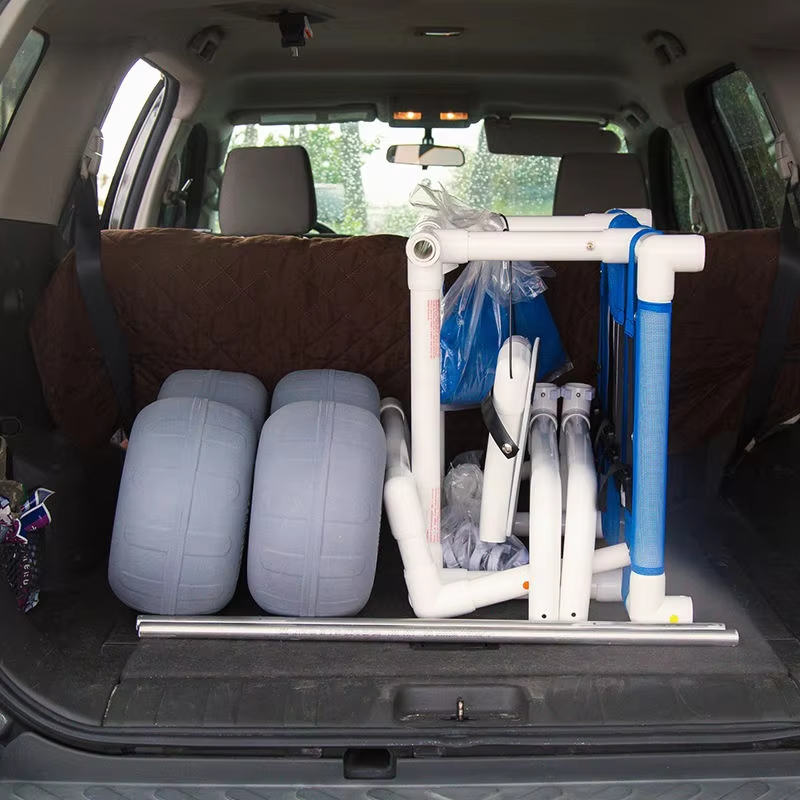
Instead, make the routine visible to temporary staff. Keep:
- For example, equipment identity and current status;
- Also, route, mat, facility, and closure checks;
- Instead, cleaning, storage, and inspection entries;
- booking, handoff, and assisted-bathing records;
- supplier questions and authority decisions;
- end-of-season feedback and open changes.
Afterward, do not add unsupported capacity, certification, warranty, delivery, or service-availability claims. Record any supplier statement against the exact quotation.
Set the seasonal review gate
| Review area | Evidence | Next decision |
|---|---|---|
| Route | Opening and closure logs | Keep, alter, or pause route |
| Equipment | Checks, care, and feedback | Retain, test, or replace |
| Staff | Handoffs and workload | Adjust training or hours |
| Visitors | Questions and service comments | Rewrite information |
Action: close each season with a named owner, evidence pack, and short list of changes before new dates are published.
Key takeaway: dependable seasonal service grows from records that match one destination.
How can an operator launch a reliable seasonal accessible point?
On the other hand, launch only after route, facilities, equipment, staff, information, and local responsibilities agree. Keep a separate card for each destination. If a coastal or environmental condition narrows service, publish that limit. A visitor should know what the point offers, where it starts, and when it may stop. Afterward, update Spain visitor information when conditions change.
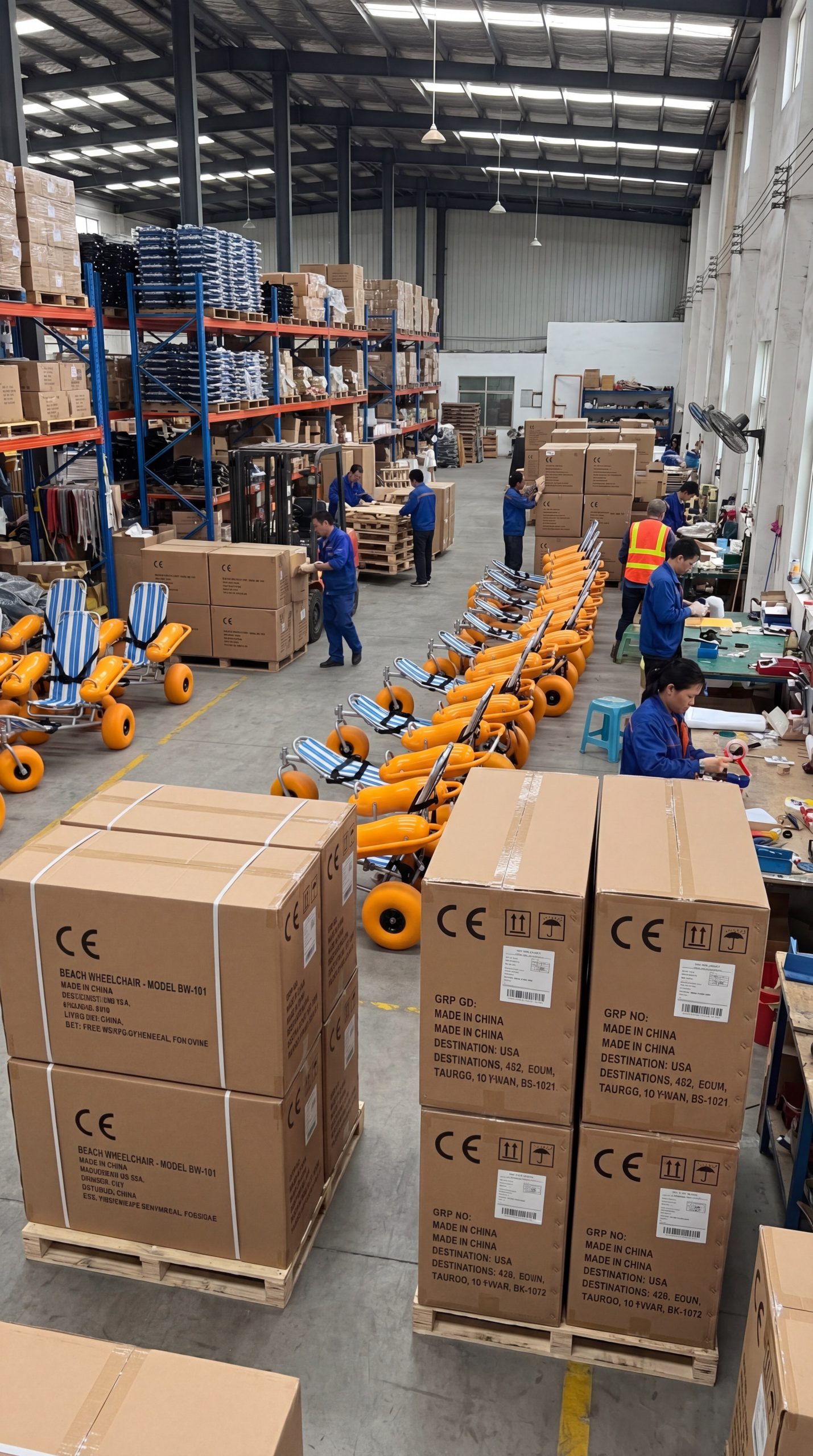
For that reason, use a go-live gate that staff can check. Confirm:
- Afterward, route and parking map is current;
- Later, equipment roles and care instructions are filed;
- Also, facilities and lifeguard contacts are live;
- staff know booking, handoff, and stop procedures;
- public page states dates, limits, and update owner.
Unlike a product claim, for a product or service discussion, operators can contact us with the destination route, season, equipment task, and operating boundary. We can provide product information for review. The local operator and authorities decide the beach point, service scope, and approvals.
Keep the launch decision site-specific
Before opening, confirm that visitors can arrive, staff can operate, the dated destination card explains limits, and responsible local bodies have answered open questions. Record one named launch decision for each beach and update public status when conditions change.
Action: record a named launch decision for each beach, then update the public status when conditions change.
Key takeaway: a reliable Spanish beach point is seasonal, local, and honest about its boundary.
Common buyer questions
Q1 In practice, do all Spanish beaches offer the same accessible services? No. Service availability varies by destination and season. Urban, resort, remote, and natural beaches can have different routes, staff, equipment, and facilities.
Q2 For example, does a beach wheelchair create an accessible beach point? No. The point also needs a usable arrival route, information, facilities, staff roles, and a defined service boundary.
Q3 However, does shoreline access mean assisted bathing is available? No. Water entry needs a separate procedure, supervision, bathing zone, conditions, and local approval.
Q4 Also, can a supplier declare a chair compliant with every Spanish beach rule? No. National baselines, autonomous-community requirements, municipal decisions, coastal conditions, and environmental rules still need site review.
Q5 For that reason, what should an operator include in a seasonal quotation request? Include the destination map, dates, route surfaces, equipment role, staff model, facilities, bathing boundary, maintenance routine, and local questions. Ask suppliers to state assumptions in writing.