
At a public beach, an open wheelchair store, an installed access mat and an open supervised water service are three separate facts. Publish them separately for each entrance. Someone arriving by bus with a companion needs to know where to collect an allocated chair, whether trained assistance is included and how they will return to their own equipment. The phrase “accessible beach” cannot settle any of those arrangements.
Put the right information at the right entrance
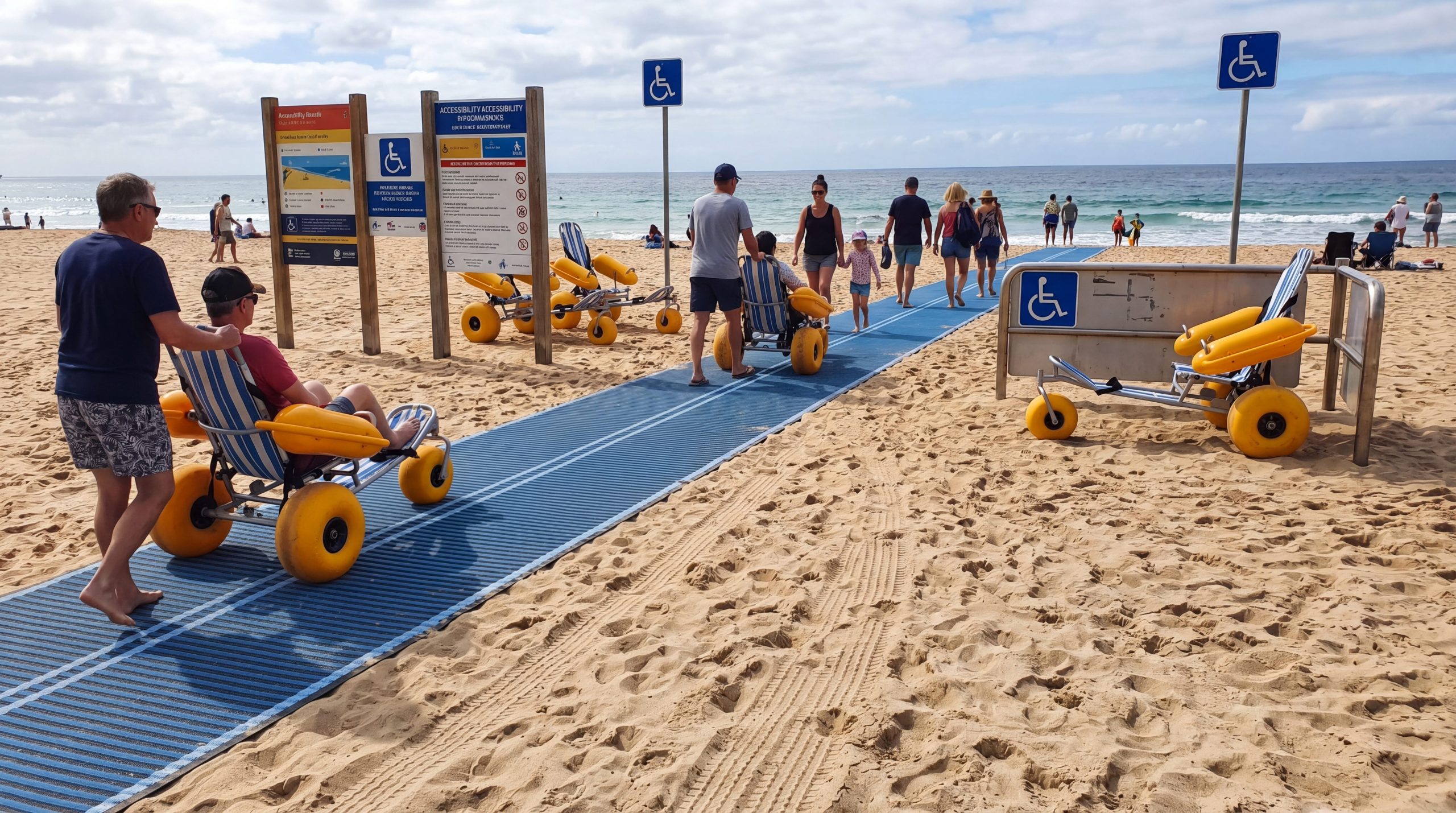
Give the public the entrance name used on local signs, collection-point landmark, verified route from public transport or drop-off, staffed hours and contact for changes. If a seasonal mat stops at a viewing point, describe that destination and the remaining surface. Identify separately whether the site lends a sand chair, offers an authorised floating-chair activity or refers enquiries to another operator.
An official example shows the value of keeping the contact details specific. Parks Canada’s Prince Edward Island National Park accessibility page distinguishes seasonal mobility mats at named beaches from its beach chair reservation service. It describes a sand chair and a buoyant chair and asks visitors to reserve in advance and arrange assistance to propel the chair. Check that park’s page for its own current arrangements. Other public beaches must publish the terms confirmed by their own operators. Parks Canada, PEI National Park accessibility information
Allocate the activity requested
At the desk, ask what the visitor hopes to do. Travelling across sand to sit with family and joining a supervised, calm-water activity require different confirmations. Use the operator’s stated allocation method for booked visits and walk-ins. Offer a request or update channel that works for a visitor who cannot remain in a standing queue. Keep individual fitting and assistance discussions private.
Before confirming a water appointment, obtain the current decision from the water-service lead for that named entry and exit. The AY-ST-V1.0 manufacturer describes continuous trained supervision, stable attendant footing and controlled shallow calm water. Waves reaching the entry, unavailable trained cover or an unresolved fault in an inflatable armrest can make the requested outing unavailable. A lifeguard serving the general beach is not automatically the attendant assigned to that booking. Floating model operating environment
Handle public demand without double-booking the support
| Request at the public desk | Confirm before offering it |
|---|---|
| “We only want to reach the matted viewing area.” | The named approach, mat endpoint, clear return and any personal support needed. |
| “Can we borrow a chair to go farther across the sand?” | Exact chair and permitted land use, fit, assistance, collection, return and equipment custody. |
| “We came to enter the water.” | Released floating model, current site approval, trained water team, individual arrangements and the usable exit for that session. |
| “Can we come through a different entrance?” | Which operator serves the other entrance, what route it currently offers and whether the booking or assistance can be transferred. |
A hypothetical case: an online listing correctly says that loan chairs are at the central entrance, but the water team is operating only from the east entrance today. Do not send the visitor across sand to discover the difference. Contact the east team, confirm whether it can support the requested visit and return, and ask the visitor whether the revised location and timing work for them. If the answer is unknown, explain the confirmed land option or when a water update can be given.
Keep the site notice and asset record in step
The public notice should report the activity and endpoint available, the local check time and the responsible contact. The restricted equipment record separately identifies the unit and any held components. For the AY-ST-V1.0, the manual shows the three inflatable wheels and detachable inflatable PVC armrests that staff must match and inspect before issue. Publish the service consequence of a held chair without putting personal details on a public board. V1.0 manual
At return, hear the visitor’s account, recover issued components and complete the required preparation checks before making the chair available to another person. Compare unserved requests by entrance and reason. A recurring missed water booking may be about an inaccessible connection between two stations rather than a shortage of floating chairs. Public visitor information guide · Peak-day queue and handover