
At a resort beach station, a full storeroom does little for the attendant who has run out of drinking-water stock or guest supplies. Start a replenishment run with the quantity the station actually needs before its next delivery, then check whether the cargo cart can carry that consignment on the available service path. Sending a cart simply because it is empty often brings back items the station had nowhere to put.
Start at the station shelf
Ask the beach attendant for stock on hand, items already promised, the next staffed delivery window and usable storage space. Suppose the station has six sealed water packs, expects to issue nine before lunch, and wants three left when the midday delivery arrives. Send six packs on the morning run. Six already on hand plus six delivered, less nine expected issues, leaves three before the midday delivery. The quantity is a stock decision. The storekeeper still needs the real packed mass, dimensions and space available in the tub to plan the journey.
Separate opening essentials from supplies that can arrive on a later run. A missing station sign might prevent visitors from finding the staffed pickup point. Spare display materials might wait. Ask the receiving attendant which shortage changes what they can offer, then give the store one consolidated pick list.
Choose the load the route can accept
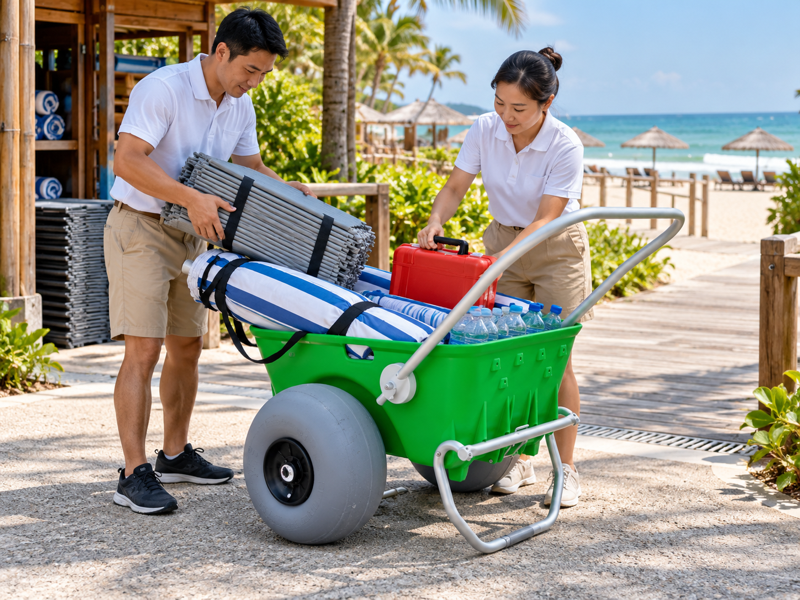
Ary’s standard beach cargo cart has a molded tub and two wide wheels, with an outer width of 86 cm across the wheels. Check the service gate with its latch protruding and the space through the turn beyond it. Include containers that project outside the tub and the operator’s position. Printed cart width is only one of those measurements.
Put the sealed supplies in identified containers that the receiving station can accept. Keep paths clear while staging. A box balanced on the rim because the tub is already full needs a different arrangement. Split the run if weight, visibility, handling room or an insecure item makes the combination unsuitable. The cargo load planning guide helps the store evaluate that decision.
Give the dispatch window a destination
A practical request names the receiving point, such as “supply door behind the north towel station.” “Deliver to the beach” leaves the operator looking for a recipient in a guest area. Confirm who can open the service entrance and whether the station can accept the goods at that time. Allow for the return of containers as well as the trip out.
Consider a late tour arrival that fills the pedestrian crossing just as a run is due. Keep the cart at the store or at an agreed holding bay clear of that crossing. Tell the attendant which supplies are delayed and when another route or time can be confirmed. If one essential item is needed first, check whether it can travel separately on an approved route. A larger emergency load does nothing to reopen the crossing.
Return the delivery count to the store
The store can pick six packs while the station receives only four. Record the received quantity, what went back and why. If the shelf held four, correct the next request. If two packs remained in the cart for another station, show that separate delivery. If packaging was damaged, send the item through the resort’s goods procedure.
At the end of a trial week, compare station shortages with return quantities and delayed windows. Repeated returns suggest that the receiving space or request size needs attention. Repeated stockouts while carts wait at the same crossing point suggest a timetable problem. These observations give the resort a reason to change the route or frequency before it adds another cart.