
Beach wheelchair dimensions become easy to verify when buyers link each stated measurement with the exact model, a current drawing, and a named site constraint. A coastal team may see a wide four-wheel stance, folding silver frame, blue seat, high back, armrests, and broad foot support, yet photos cannot confirm full width, seat space, folded envelope, turning area, vehicle fit, or storage clearance. Resorts, municipal programs, rental operators, distributors, and recreation teams need a shared measurement record before comparing quotes. This guide uses beach wheelchair dimensions as a practical bridge between product drawings and real doors, boardwalks, vehicles, handoff zones, care stations, and storage bays. It does not invent load figures, certifications, site compliance, product outcomes, or medical advice.
Which measurements belong in a buying brief?
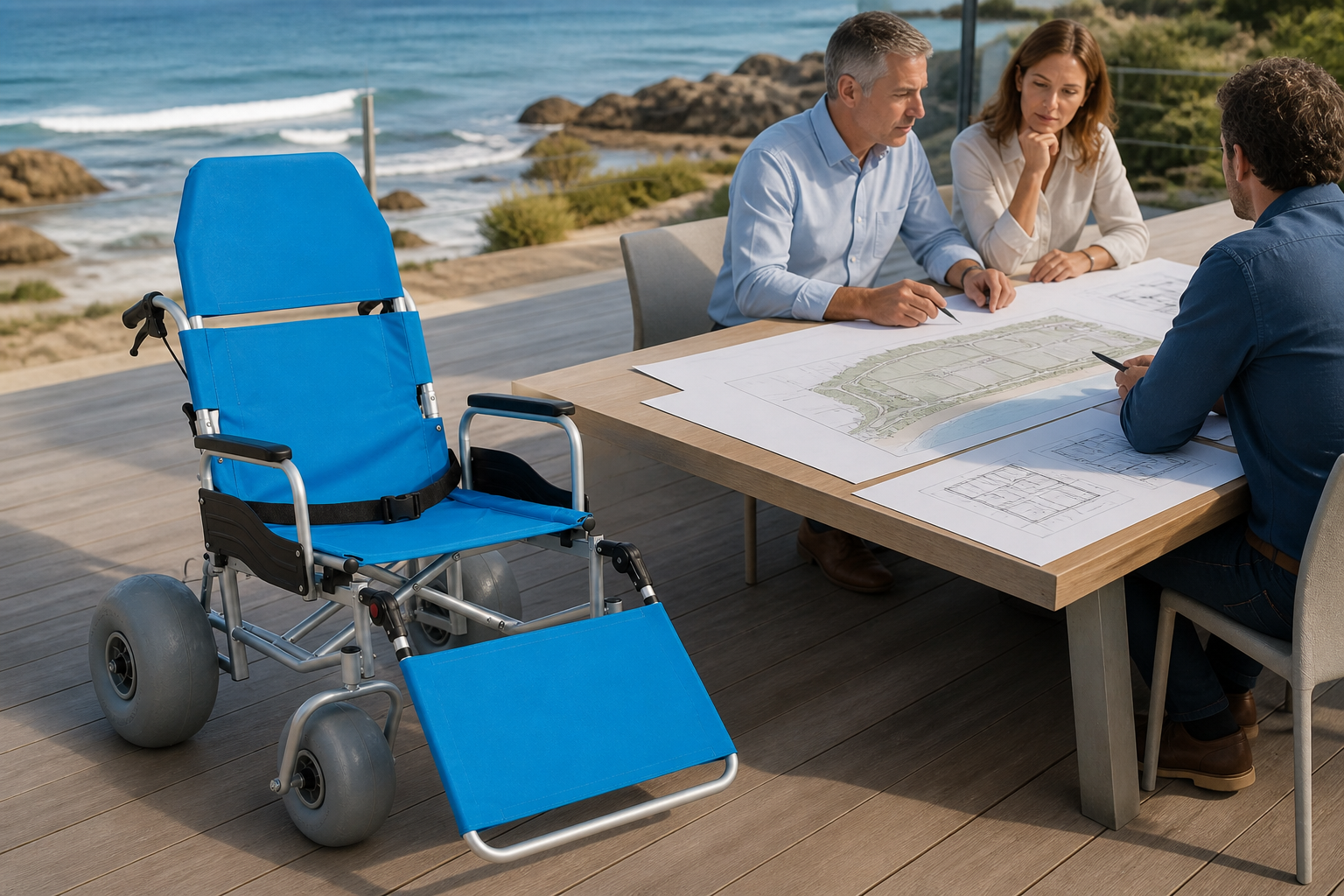
Beach wheelchair dimensions belong in a buying brief when they cover the chair states and spaces used across receiving, setup, service, care, transport, and storage. This decision connects product geometry with route and workflow limits. Product photos can show wheel stance, seat, back, armrests, handles, folded frame, and foot support, yet they cannot confirm measurement points, units, tolerances, operating state, or local fit. Record model, configuration, state, measurement name, value, unit, source, site limit, and decision against the exact model identity before approval. However, U.S. Access Board beach-route guidance applies to defined federal settings, so buyers must confirm which rules govern their own site.
Create one model-and-site measurement sheet
Start with the decision frame: Write every planned chair state before collecting numbers and request missing drawing labels from the supplier. Then save the buying brief. If a measurement lacks a source, leave it open for the supplier.
- Name assembled, folded, stored, and transport states.
- List every route and handoff constraint.
- Use one unit system across the sheet.
- Mark missing evidence with an owner.
Key Takeaway: A buying brief links every stated dimension with one operating question.
| Review area | Working record |
|---|---|
| Chair state | Assembled, folded, stored, or transported |
| Site record | Opening, turn, bay, vehicle, or handoff |
| Decision | Match, question, change, or hold |
The sheet prevents a single attractive number from standing in for complete fit.
How does chair width affect route planning?
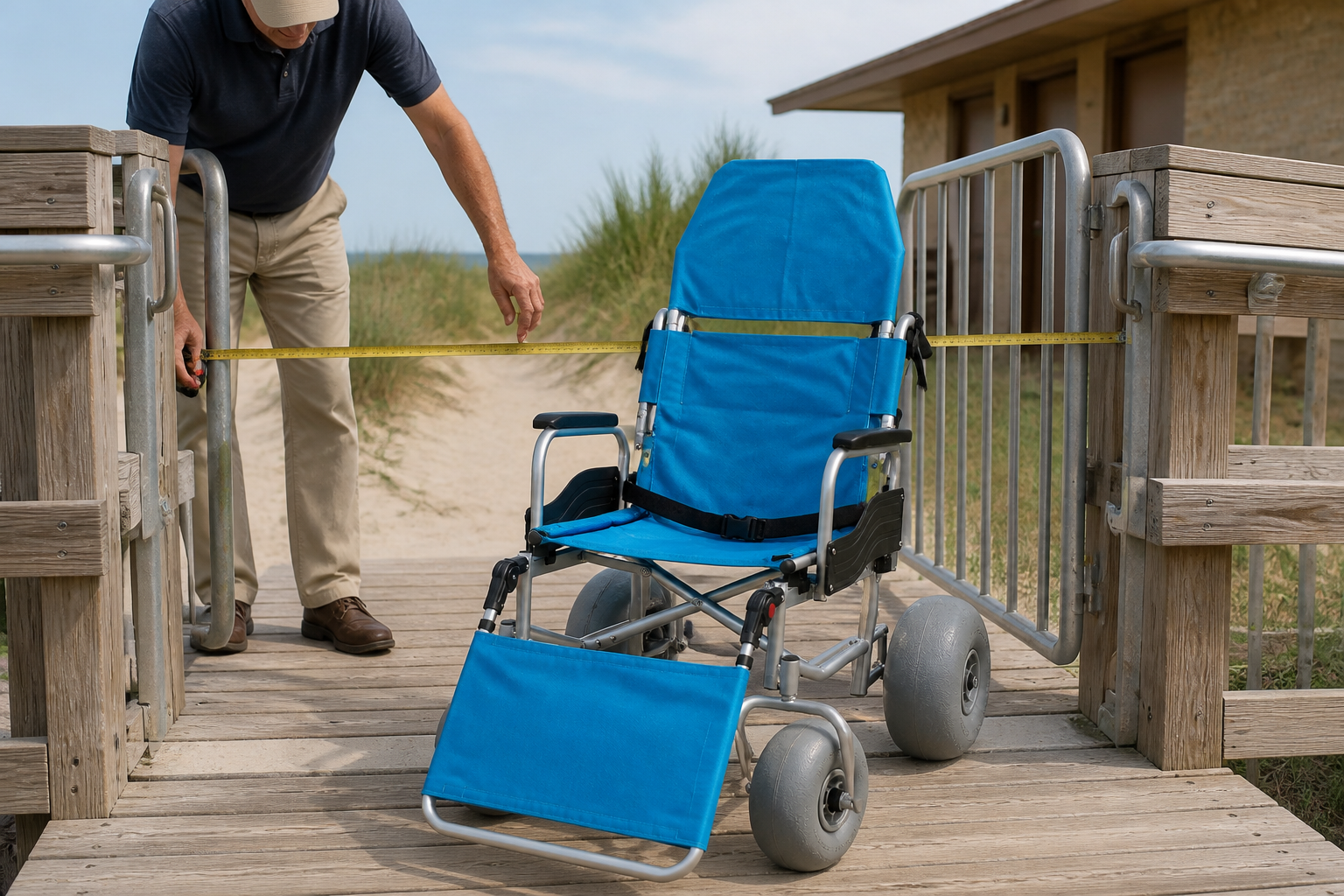
Beach wheelchair dimensions shape route planning through doors, gates, ramps, boardwalk seams, pause zones, turns, and return paths. This decision connects chair geometry with the named route, handoff, vehicle, care, or storage limit. Product photos can show a broad wheel stance and projecting arm or foot components, yet they cannot confirm clearance at a named opening or behavior through a surface change. Record clear width, fixed obstruction, chair state, staff position, travel direction, and alternate path against the exact model identity before approval. A beach access mat can change the measured route, especially at edges and surface joins.
Compare the operating width with each clear opening
Use the narrowest verified point: Walk the complete service loop in both directions and connect each limit with the all-terrain application and local route record. Next, file the route check. If the clear opening changes, repeat the measurement.
- Measure clear openings rather than nominal labels.
- Record wheel, arm, and foot projections.
- Check both travel directions and return access.
- Name a stop point for blocked routes.
Key Takeaway: Route width works only when chair state and staff position stay visible.
| Review area | Working record |
|---|---|
| Route point | Gate, door, ramp, seam, or turn |
| Chair state | Ready for movement on that segment |
| Response | Proceed, reroute, change, or hold |
A route map shows where another model drawing or local change may be needed.
Which seating dimensions need a separate review?
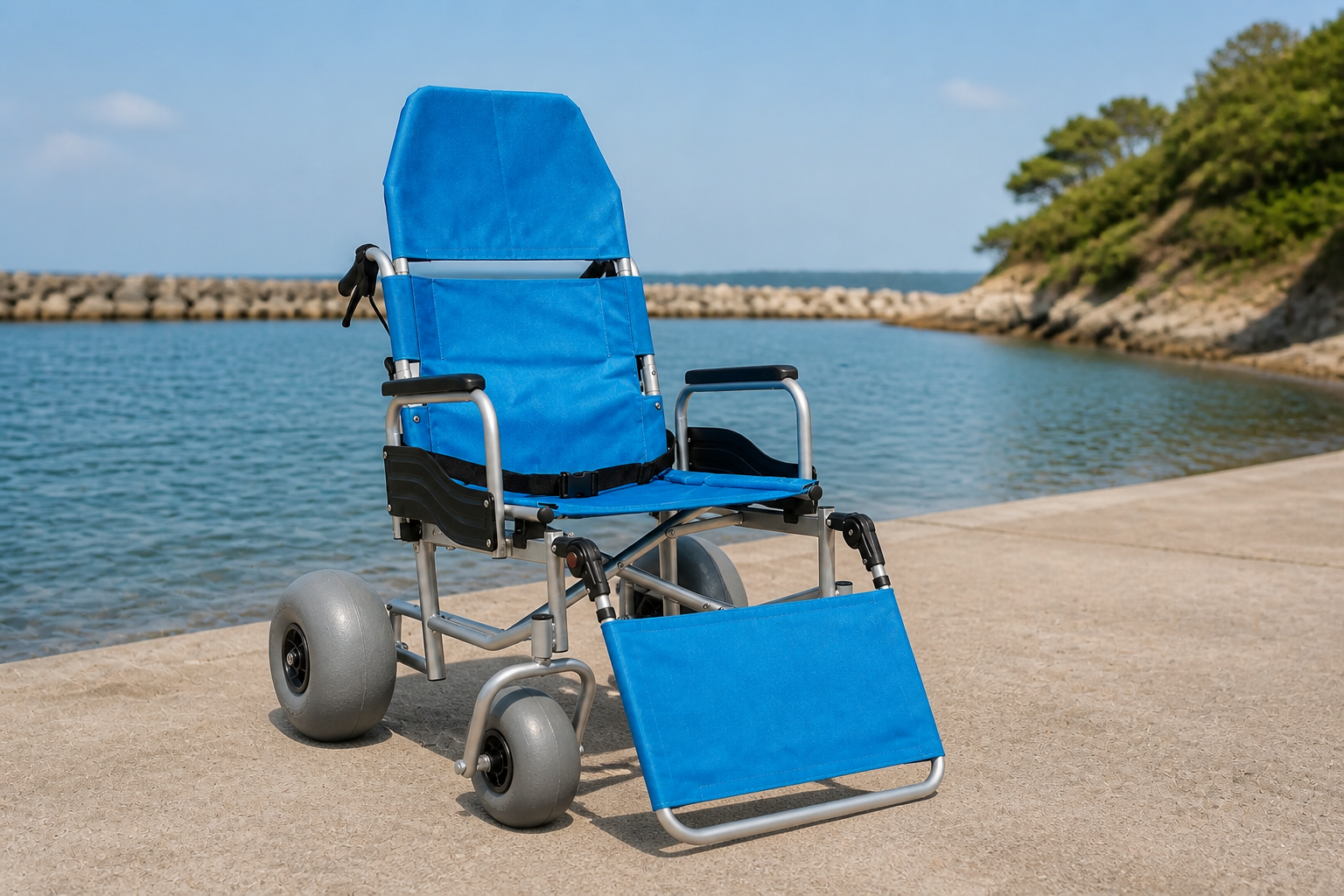
Beach wheelchair dimensions need a separate review for seat area, back shape, arm space, belt position, foot support, and nearby staff clearance. This decision connects product configuration with operational handoff space. Product photos can show blue fabric panels, black arm pads, side guards, belt, and wide foot support, yet they cannot confirm user-specific fit, assistance method, clinical suitability, or transfer clearance. Record drawing point, stated value, unit, chair option, handoff zone, policy source, and open question against the exact model identity before approval.
Review seating space through one record
Keep product data separate from personal guidance: Use exact model drawings for equipment facts and route individual needs through local policy or qualified guidance. Then save the seating record. If a personal question remains, follow the qualified review path.
- Record seat, back, arms, belt, and foot support.
- Map staff and equipment space around the chair.
- Keep option changes tied to a revision.
- Escalate personal-fit questions through policy.
Key Takeaway: Seating measurements support equipment planning without making personal promises.
| Review area | Working record |
|---|---|
| Product record | Exact model drawing and option |
| Site record | Handoff and staff clearance |
| Personal question | Local policy or qualified guidance |
This split protects purchasing accuracy and keeps individual decisions in the right process.
How do folded dimensions shape transport and storage?
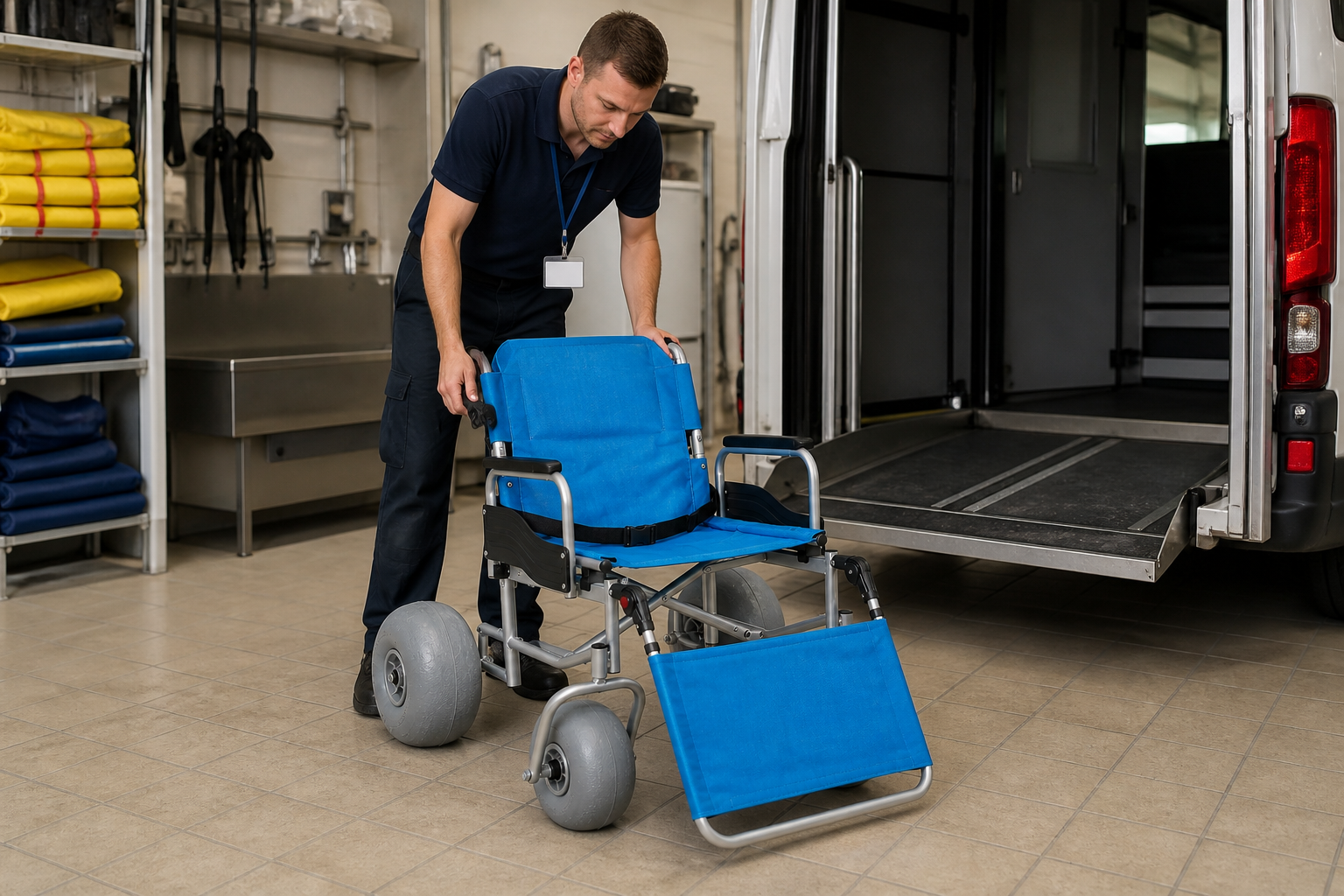
Beach wheelchair dimensions shape transport and storage when the folded state is defined through current instructions and compared with each vehicle or bay. This decision connects chair geometry with the named route, handoff, vehicle, care, or storage limit. Product photos can show folding joints, removable items, handles, wheels, and support surfaces, yet they cannot confirm approved folding steps, lifting points, secured position, or storage orientation. Record folded length, width, height, retained parts, support points, vehicle opening, bay limit, and release state against the exact model identity before approval. Then compare a lightweight beach wheelchair using its documented folded state and the real cargo opening.
Review folded envelope through one record
Measure the state teams will actually use: Rehearse the documented empty-chair fold and setup sequence, then compare the resulting envelope with the portable chair application and local space. Meanwhile, record each folded state. If one part detaches, list it with the same model.
- Confirm the approved fold or removal sequence.
- Keep loose parts with chair identity.
- Measure openings and usable cargo or bay space.
- Record setup and release checks after movement.
Key Takeaway: Folded size has value only when the exact sequence and retained parts are known.
| Review area | Working record |
|---|---|
| State | Assembled, folded, packed, or stored |
| Space | Opening plus usable interior envelope |
| Control | Parts, setup, inspection, and release |
A state-based comparison exposes gaps hidden by a single catalog dimension.
Why does turning space need its own record?
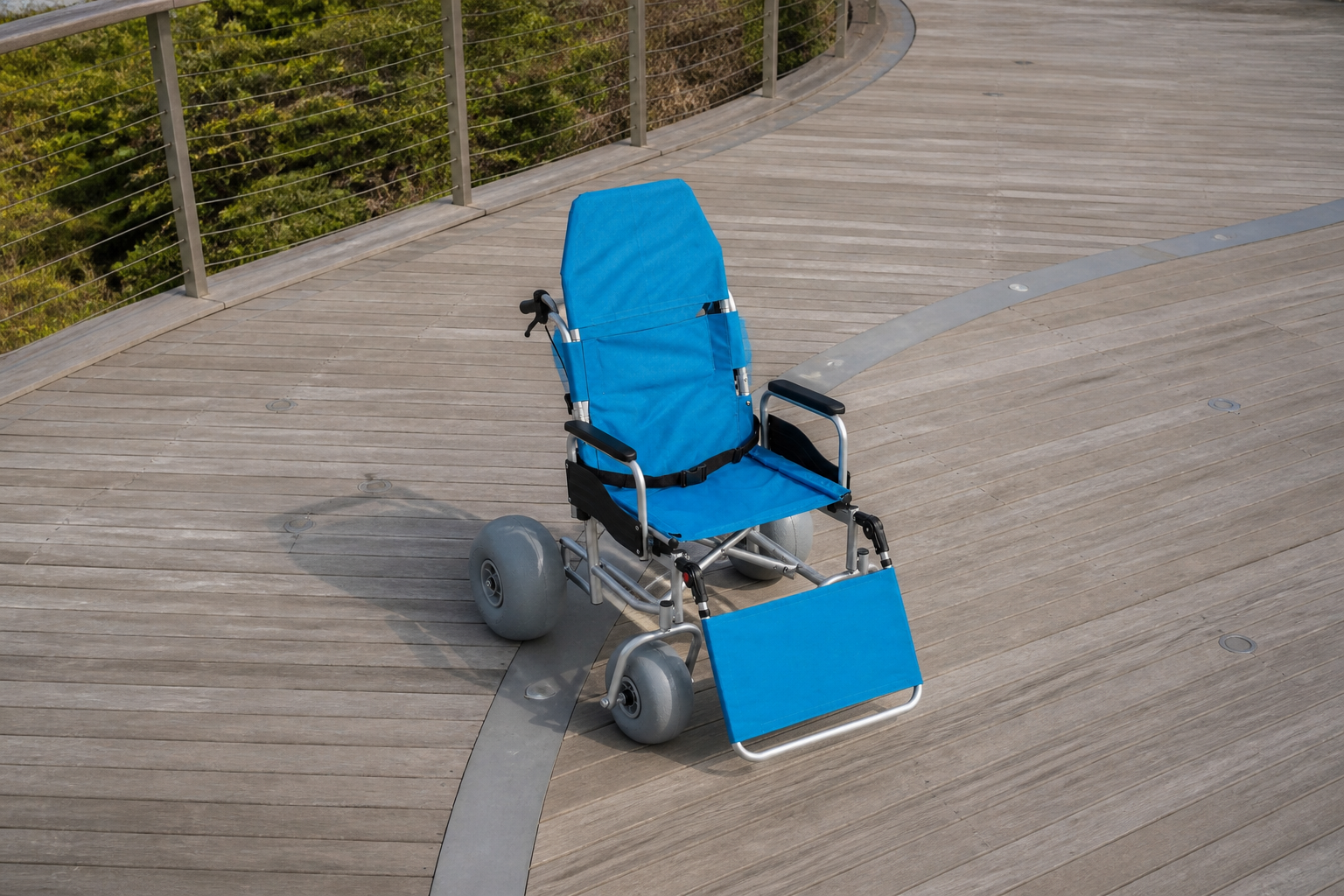
Beach wheelchair dimensions need a separate turning-space record because full length and width do not describe a complete maneuver through corners or handoffs. This decision connects chair geometry with the named route, handoff, vehicle, care, or storage limit. Product photos can show wheelbase, wheel positions, foot support, staff grip, surface, and route geometry, yet they cannot confirm turning behavior, permitted pivot method, staff clearance, or response on loose sand. Record location, surface, chair state, route direction, staff method, available area, observation, and stop rule against the exact model identity before approval.
Review turning space through one record
Treat every turn as a location: Review turns under current instructions with an empty chair and record observations only for that model, route, and condition. For example, mark every turning point. If the route changes, measure it again.
- Map corners, switchbacks, ramps, and pause zones.
- Include handles and foot support in the envelope.
- Record the planned staff position.
- Do not generalize one local observation.
Key Takeaway: Turning space belongs beside listed dimensions rather than inside an assumption.
| Review area | Working record |
|---|---|
| Geometry | Wheelbase, projections, and route shape |
| Method | Named direction and staff position |
| Record | Observed fit and open question |
A location record gives suppliers and site teams the same question to answer.
What drawing details should suppliers identify?
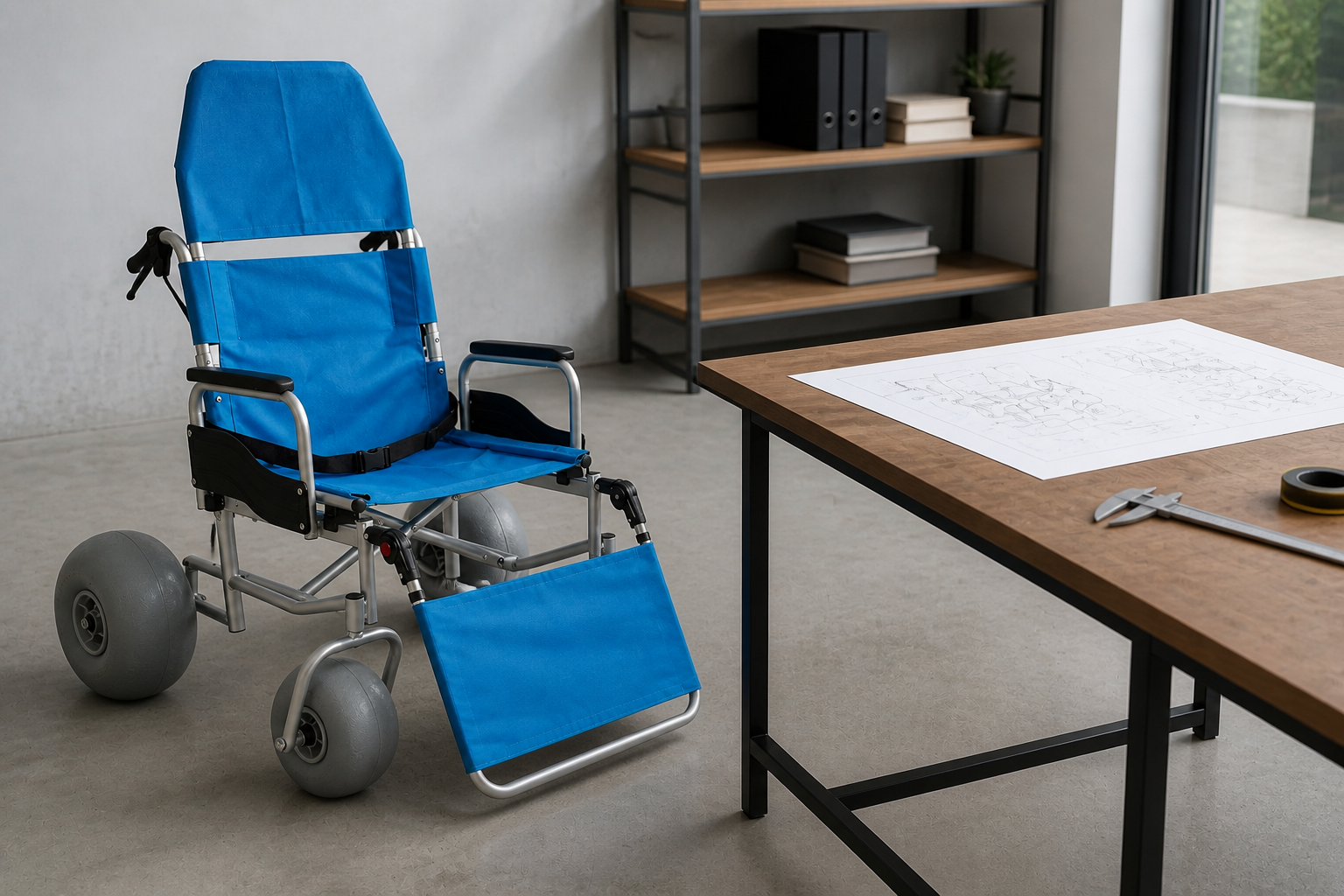
Beach wheelchair dimensions should identify dimension points, units, chair state, options, revision, and any measurement condition used for the quoted model. This decision connects procurement records with receiving and site-fit decisions. Product photos can show frame form, four wheels, seat, back, arms, handles, belt, and foot support, yet they cannot confirm which points a dimension spans or whether a drawing matches the delivered configuration. Record drawing title, model, option, revision, date, unit, labeled point, source contact, and buyer question against the exact model identity before approval. Use the supplier overview to prepare questions, then request current drawings for the quoted model.
Review supplier drawings through one record
Run the drawing test: Ask whether another team could reproduce the measurement without guessing, using the user manual page as operating context rather than a substitute for the model drawing. Then file the drawing revision. If labels conflict, ask for a corrected model document.
- Match every drawing with model and option.
- Label measurement endpoints and chair state.
- Keep units visible beside each value.
- Track revisions through receiving and service.
Key Takeaway: A usable drawing tells teams exactly what was measured and on which chair.
| Review area | Working record |
|---|---|
| Identity | Model, option, revision, and date |
| Dimension | Endpoints, unit, and chair state |
| Buyer use | Route, vehicle, handoff, or storage |
Clear endpoints make quote comparisons and later receiving checks reviewable.
How should teams measure local site constraints?
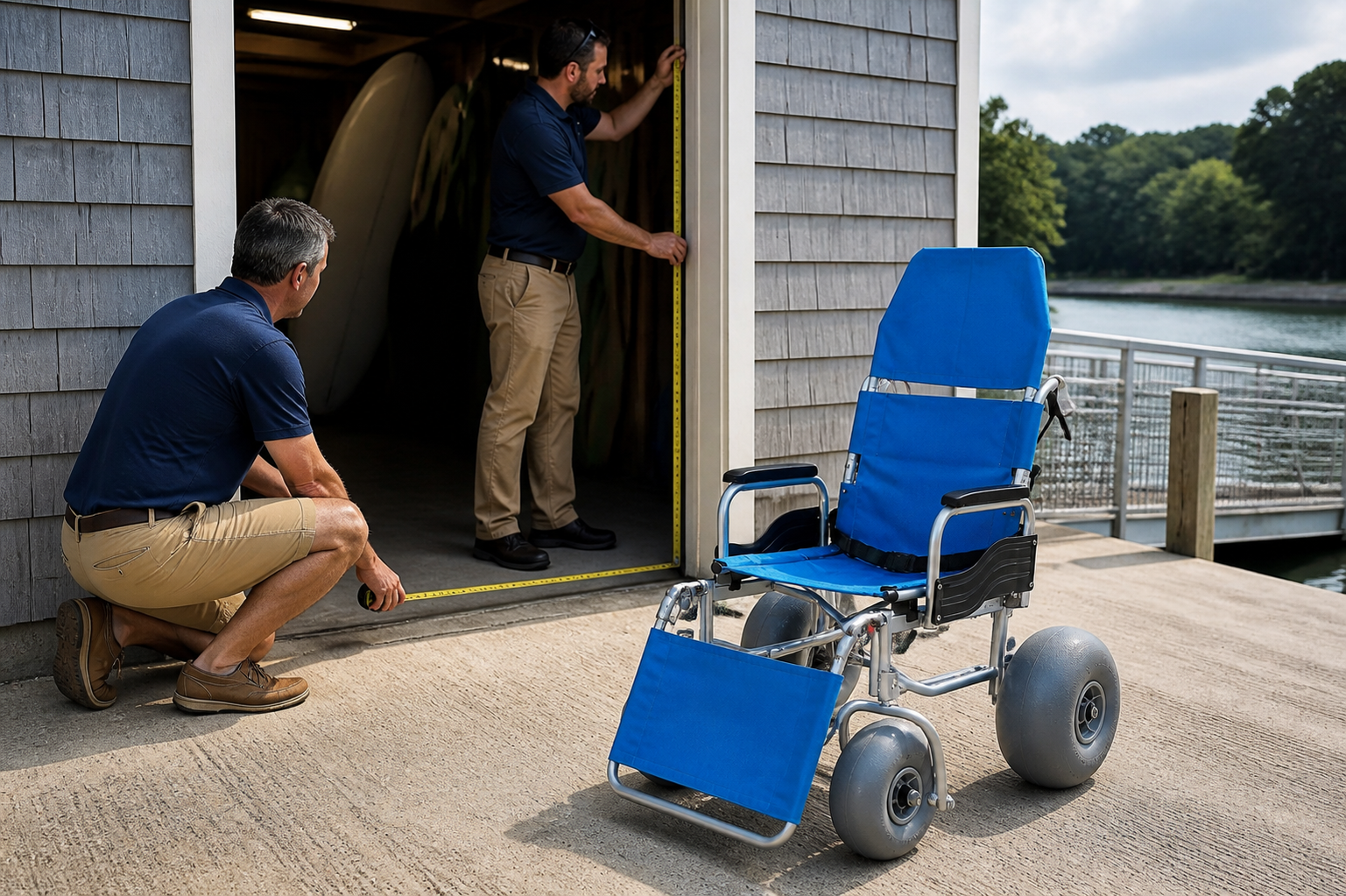
Beach wheelchair dimensions should be compared with local constraints gathered through named endpoints, clear openings, usable spaces, and current route conditions. This decision connects fixed site geometry with changing coastal access conditions. Product photos can show doors, gates, ramps, seams, storage racks, vehicle openings, and handoff areas, yet they cannot confirm usable clearance after obstructions, crowds, debris, or operational equipment are present. Record location ID, endpoints, unit, date, condition, photo reference, owner, and next review against the exact model identity before approval.
Review site measurement through one record
Measure what the chair must pass through: Use the same endpoint logic across the site and recheck spaces after route, storage, or service-layout changes. Next, save each site limit. If a route value changes, reopen the comparison.
- Name each site point and travel direction.
- Measure clear rather than nominal space.
- Record fixed and changing conditions separately.
- Schedule rechecks after layout changes.
Key Takeaway: Local measurements need the same traceability as product dimensions.
| Review area | Working record |
|---|---|
| Fixed limit | Opening, turn, ramp, bay, or vehicle |
| Changing condition | Debris, crowd, layout, or route status |
| Review | Date, owner, finding, and action |
A repeatable method lets another staff member confirm the record later.
How do measurements support receiving checks?
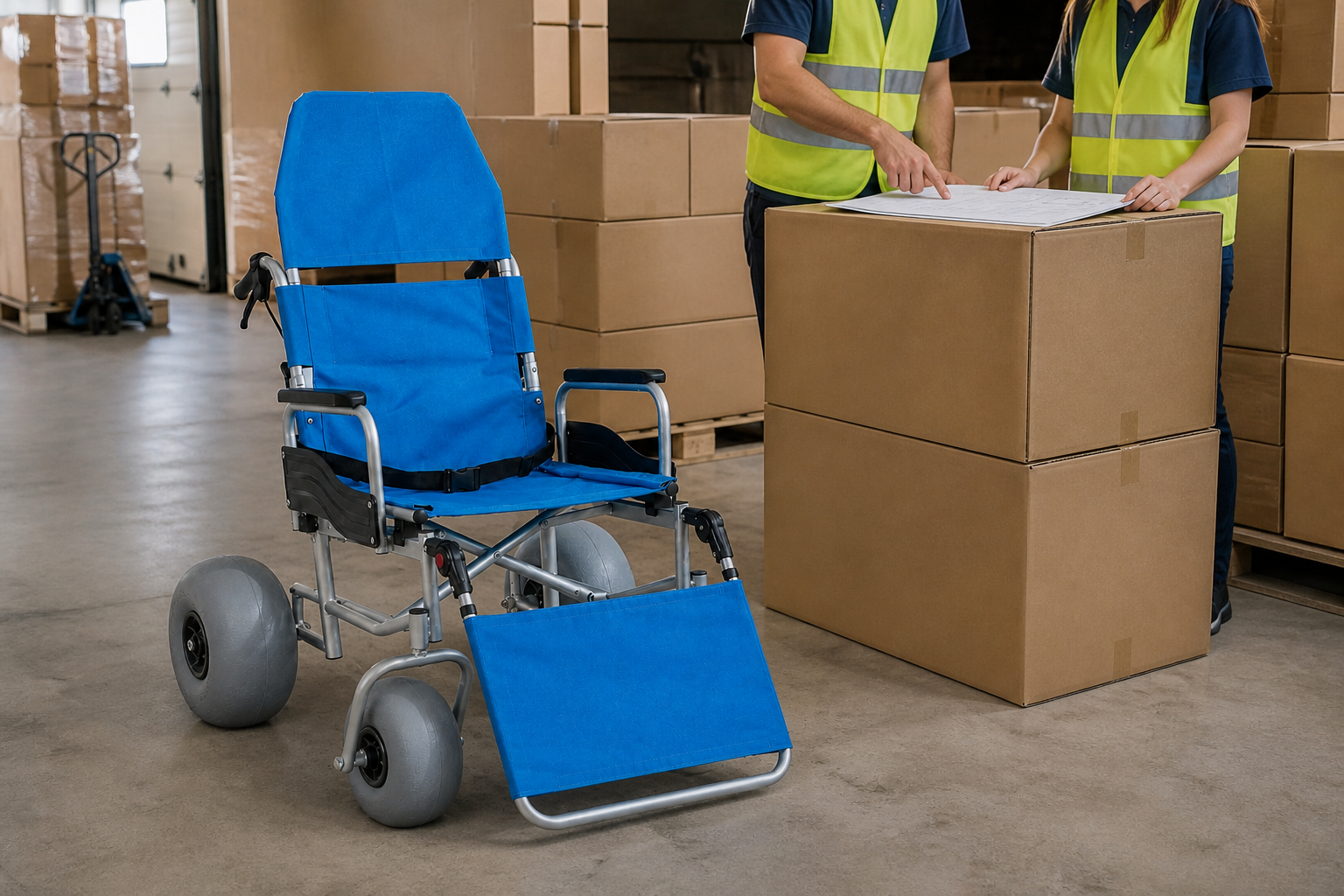
Beach wheelchair dimensions support receiving checks when delivered components and assembled form are compared with order records and approved drawings. This decision connects package identity, component count, setup state, visible condition, and model configuration. Product photos can show chair frame, wheel sizes, seating panels, arms, handles, belt, and foot support, yet they cannot confirm hidden damage, correct assembly, complete parts, or permission for substitution. Record order ID, model, component list, drawing revision, check point, finding, hold reason, owner, and release status against the exact model identity before approval.
Review receiving checks through one record
Separate delivery from release: Use a bright inspection area and follow current setup instructions before checking named dimensions or moving the chair into service. Afterward, compare the delivered chair with the approved sheet. Hold any mismatch for review.
- Match shipment with order and model records.
- Count and identify all named components.
- Check drawing points after stated setup.
- Record ready, hold, damage, or service.
Key Takeaway: Receiving ends with a documented release tied to the exact configuration.
| Review area | Working record |
|---|---|
| Delivered | Package, order, and model identity |
| Checking | Components, setup, and named dimensions |
| Released | Decision, owner, and next action |
This sequence stops an unchecked configuration from entering a route plan.
What records keep measurements tied to one model?
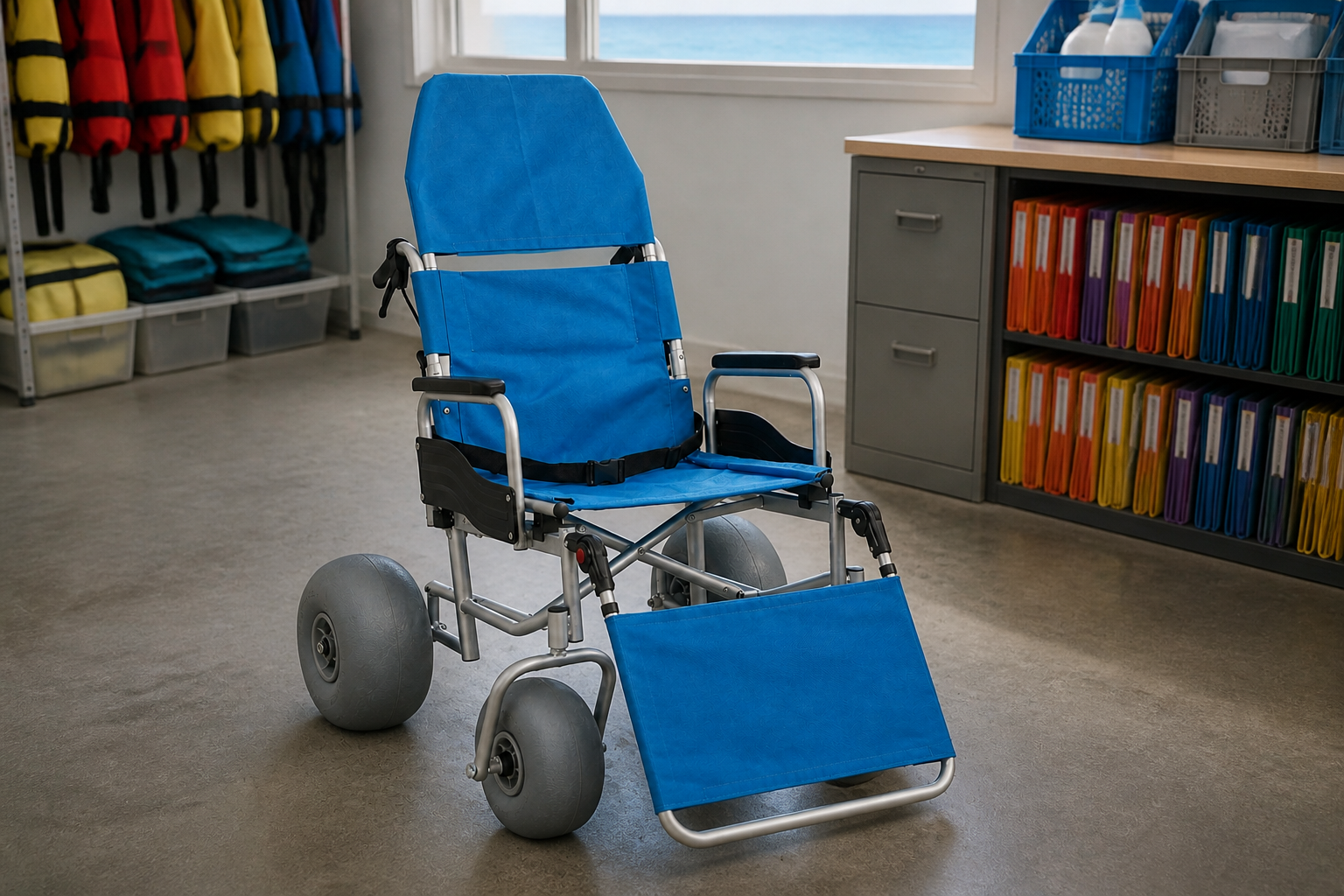
Beach wheelchair dimensions stay tied to one model through configuration IDs, drawing revisions, source files, change logs, receiving records, and local fit decisions. This decision connects purchasing, operations, care, storage, transport, and later parts questions. Product photos can show a recognizable product silhouette and visible components, yet they cannot confirm whether a later option, replacement part, or drawing revision changed the measured envelope. Record model, serial or asset reference, option, document revision, local record, change date, reviewer, and approval state against the exact model identity before approval.
Review revision control through one record
Give every change a trace: Link new files rather than replacing evidence without a log, and reopen fit decisions when geometry or site limits change. As a result, each number stays tied to one model. If the revision changes, update the record.
- Use one configuration identity across departments.
- Retain current and superseded revision references.
- Recheck affected route or storage decisions.
- Keep approval state visible to staff.
Key Takeaway: Revision control keeps a measurement useful after purchase day.
| Review area | Working record |
|---|---|
| Product identity | Model, option, asset, and component state |
| Document | Revision, source, date, and change |
| Local decision | Fit, question, change, or hold |
A linked history also supports clearer supplier questions during service life.
How can buyers build a dimension-to-site decision flow?
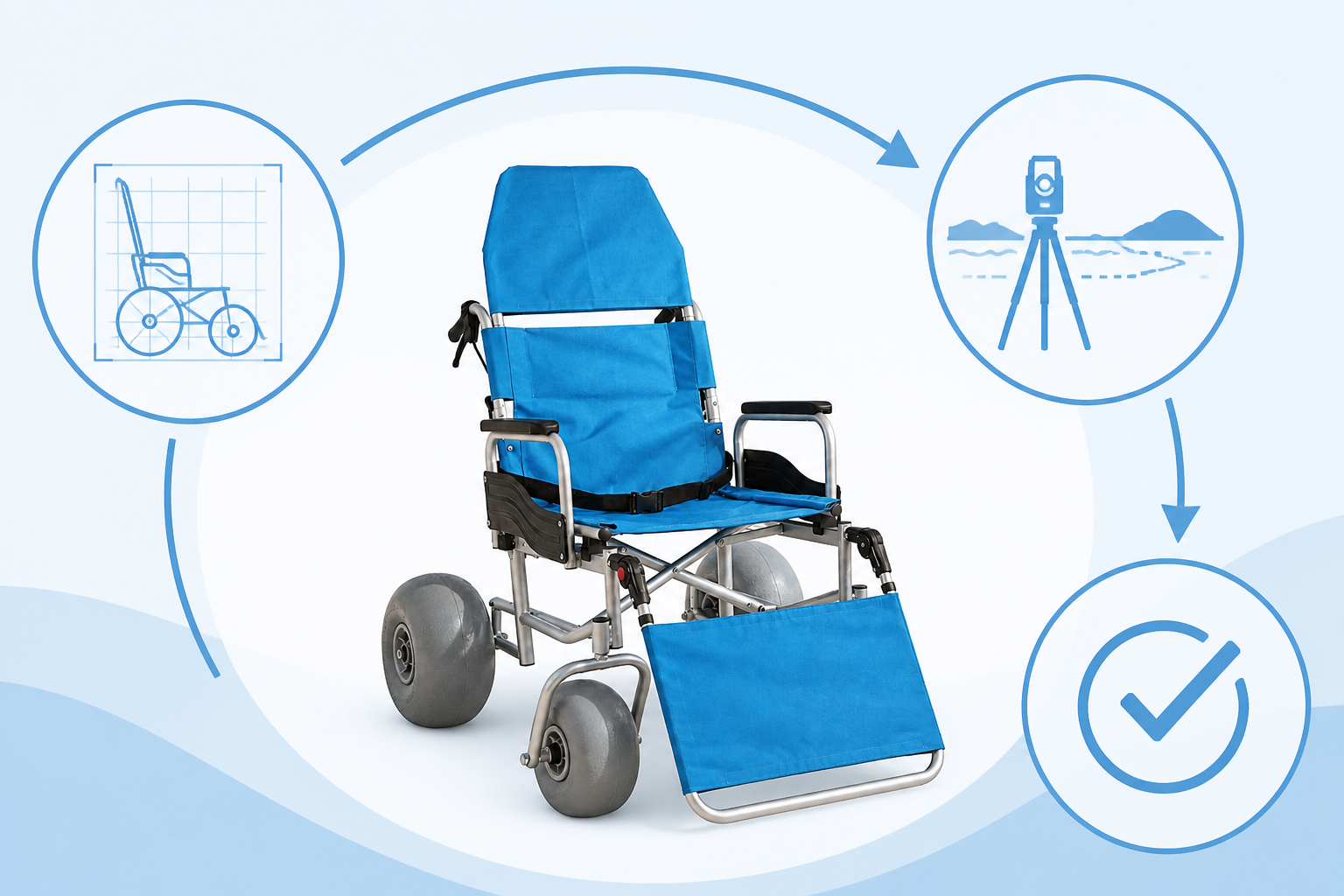
Beach wheelchair dimensions can form a decision flow that links model identity, drawing points, local limits, controlled checks, open questions, and approval status. This decision connects product evidence with route, vehicle, handoff, care, and storage evidence. Product photos can show chair geometry and each planned environment, yet they cannot confirm fit across every site or permission to infer missing values. Record need, model source, site limit, comparison, local check, owner, decision, and review trigger against the exact model identity before approval.
Review decision flow through one record
Make the evidence chain visible: Use one process map from need through source and site check, then place missing evidence on hold without a favorable guess. Then close the decision sheet. Assign any open measurement before approving the order.
- Define the operational need and chair state.
- Attach model and site source records.
- Compare values with matching units.
- Approve only after open questions close.
Key Takeaway: A visible flow turns dimensions into a reviewable buying decision.
| Review area | Working record |
|---|---|
| Input | Need, model source, and site limit |
| Review | Unit check, comparison, and local observation |
| Output | Match, change, question, or hold |
The flow shows where evidence supports fit and where another answer remains due.
Closing Notes
A reliable dimension review joins model identity, drawing revision, measurement points, route limits, transport space, storage space, handoff space, receiving checks, and a signed decision record. Keep every number tied to its source and unit. For help discussing a documented coastal equipment brief, contact us today with your route, vehicle, storage, handoff area, and open drawing questions.
Frequently Asked Questions
Can I measure a chair from a product photo?
No. Perspective changes apparent size, so use a current model drawing or a verified physical chair.
What’s the best dimension to check before buying?
No single measurement decides fit. Review the full route, handoff, vehicle, care, and storage envelope.
How do I know if a doorway will work?
Measure the clear opening and compare it with the stated operating configuration under the planned handling method.
Can folded size replace assembled size in a review?
No. Each state answers a different transport, storage, setup, or operating question.
What’s the best way to record measurement changes?
Use a revision-controlled sheet that names the model, unit, measurement points, source, date, and owner.