
A resort that runs its own beach wheelchair service needs to reserve the return trip before it confirms the outward one. A blue AY-ST-V2.0 may be ready at recreation while the only attendant familiar with the beach gate is still collecting a guest. Give the desk a schedule that accounts for both people and equipment.
Which part of the visit will resort staff cover?
Walk the itinerary with the teams that will actually work it. Pick a meeting point a guest can find from reception, a land destination the chair can reach, a place to turn and a return point. Include locked gates, furniture deliveries or a change from boardwalk to sand. Check the practical space with the configured chair. Describe the service offered along that particular route. A pool, jetty or beach shown on the resort map does not extend that commitment.
Agree where guests can leave their usual mobility equipment if they choose, who may look after it and when they can retrieve it. A guest may need it immediately on returning to the lobby. Giving the chair key to recreation while housekeeping locks the storage room can make an otherwise staffed return impossible.
Put the return on the shift board
This fictional morning shows how a recreation lead might book one chair and one attendant. Times illustrate a roster only. A resort should time its own route, allow time for the individual visit and discuss an extension with the guest.
| Time reserved | Commitment the desk can see |
|---|---|
| 09:15 | Recreation confirms the specific chair is released, the gate is open and a second staff member can receive return calls |
| 09:30 | Meet the first guest at the garden entrance and accompany them to the agreed beach viewing area |
| 10:00 | Attendant returns to the viewing area at the agreed time and accompanies the guest back to the garden entrance |
| After return | Receive the chair, arrange care and complete the applicable checks before offering the next departure |
Another guest requests a 10:00 accompanied departure. A second chair would not free the attendant already committed to the return. The desk can offer a later confirmed time, or ask the shift lead to assign another suitably briefed attendant and a released chair. If neither is available, keep the enquiry open and give a time for a reply. Guests should hear the same answer from reception and from the beach gate.
Hand the route to the next shift
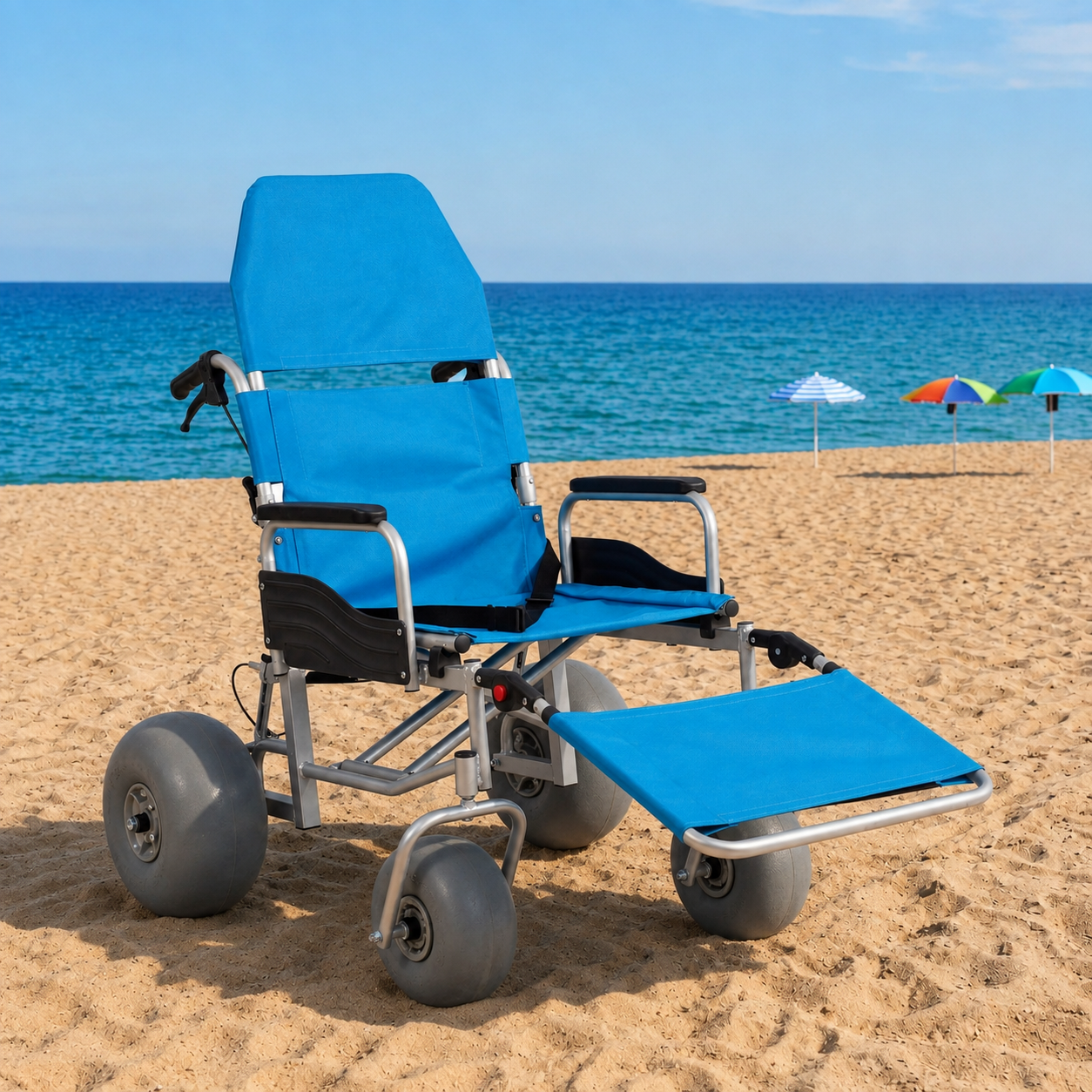
On the AY-ST-V2.0, the maker identifies a high back, adjustable leg support and differently sized front and rear inflatable wheels. Staff assigned to it need the matching instructions, a local route briefing and practical preparation for their role. A person familiar with the resort grounds still needs to know the equipment and what assistance the guest has agreed to. The manufacturer’s manual and the model-specific staff training guide help the recreation lead prepare the team.
At shift change, hand over people still out, their agreed collection points and times, the person taking each return, the chair ID and any route restriction. The incoming attendant needs to acknowledge the assignment before the outgoing colleague leaves. Tell reception immediately when a diversion changes the advertised destination. If a guest is already out, contact the attending team to agree an accessible return or another staffed meeting point with that guest.
What can reception offer when the service changes?
Give reception a short statement with the affected time and place. For example, “The beach garden service is paused while facilities clears the lower gate. Recreation is checking the terrace route and will call you at the time we agreed.” Keep the guest’s request attached to the person who promised that update. Only reopen new bookings after facilities confirms the route and recreation confirms coverage for the full visit.
A property that sends guests to an outside provider needs a separate process for accepting the request, billing and collection. The hotel wheelchair referral guide covers those responsibilities.