
A beach walker conversion kit fits only when the exact walker and walking mode are approved. Choose a complete walker or wheelchair when a program needs a defined, supported configuration. A walking aid and a rider-transport chair serve different jobs, so confirm identity, interfaces, user role, and written approval before considering a retrofit.
Start with the person’s planned mode. If someone must walk while holding the frame, assess a walking aid. If someone will sit and be pushed, procure a configuration expressly approved for rider transport. A rest seat on a walker does not erase that distinction.
What does a beach walker conversion kit claim to do?
A beach walker conversion kit adapts selected parts of an existing walking aid for a defined sand route. It cannot turn that aid into an approved wheelchair.
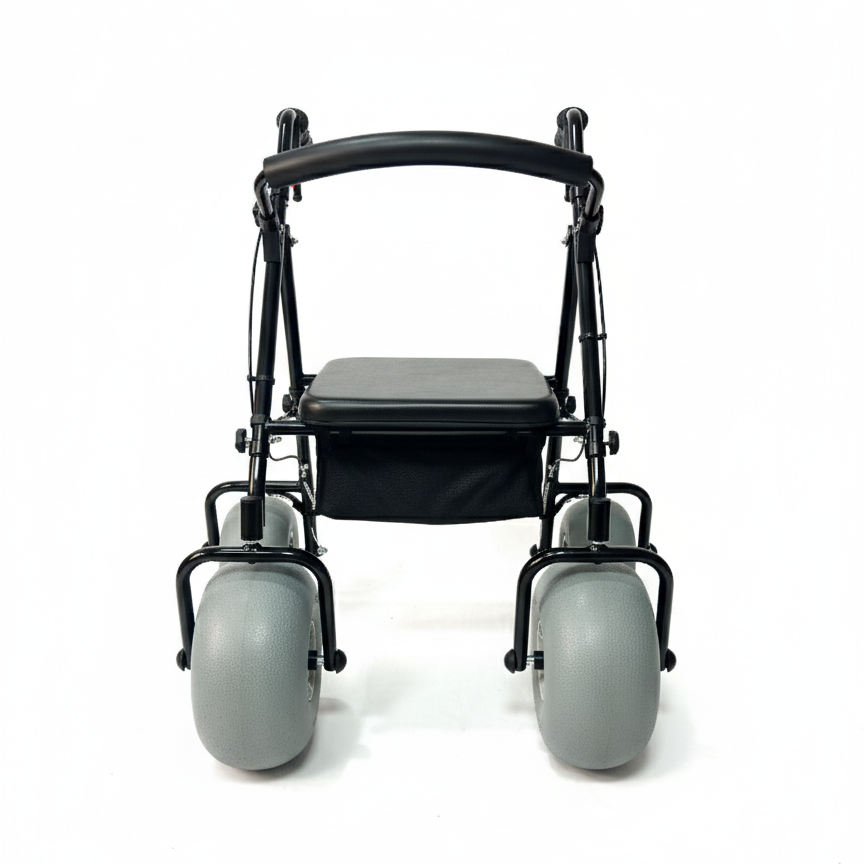
Define the walking-aid job
A walker conversion may target wheel size, ground contact, clearance, or another supplier-defined change. Describe how the person will use the frame: walking behind it, pausing beside it, or sitting briefly when a documented rest seat allows that mode. Those modes demand different supervision and support.
Keep the person’s role visible. Write “walking aid,” “rest seat,” or “rider transport” beside every request. A supplier should answer each role separately instead of letting one product label cover them all.
- Name the walking route and surfaces.
- State whether the user remains standing while moving.
- Describe any permitted rest-seat use from current documents.
Use a conversion screen
Use this screen before a supplier discusses a kit. An unanswered row stays open.
| Question | Walking-aid evidence | Stop signal |
|---|---|---|
| Base walker | Model and identity recorded | Unknown frame |
| Conversion purpose | Defined ground use | “Works anywhere” claim |
| User mode | Walking, rest, or transport separated | Modes blended |
| Accountability | Named approving supplier | No responsible party |
Key takeaway: Put user mode in the purchase request title.
How is a beach walker different from a wheelchair?
A beach walker supports a person who moves with a frame. A wheelchair carries a seated rider under a separate design and approval brief.
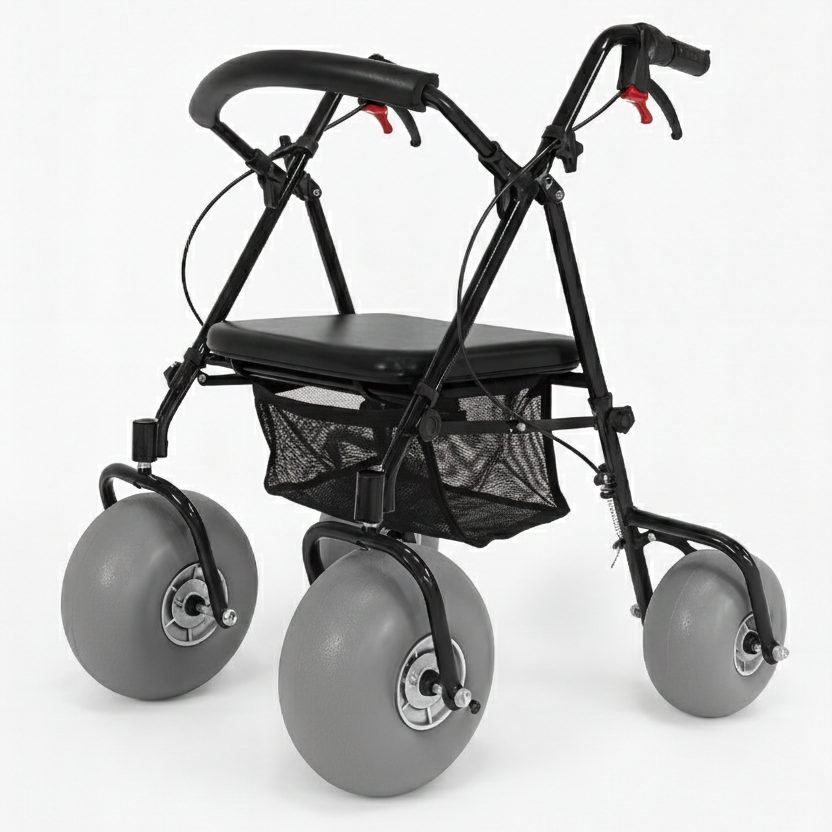
Separate movement modes
A walker’s handles, wheel position, frame balance, and seat arrangement are built around a standing user who controls movement through the frame. A wheelchair’s push points, seating supports, brakes, foot support, and transfer method answer a different question. Similar wide wheels do not merge those functions.
Say what the device carries. A product can show a seat and still lack approval for a person to be pushed while seated. Ask for the written mode before staff give a guest a different instruction.
- Mark whether the user pushes, is assisted, or is transported.
- Review handle height and reach for the intended walker user.
- Treat a seat as a rest feature unless transport approval says otherwise.
Use the right category comparison
Use the beach wheelchair category to compare seated transport, while a walker brief stays focused on walking support and controlled pauses.
| Device role | Typical buyer question | Evidence needed |
|---|---|---|
| Walking aid | Can the user move with the frame? | Mode and route guidance |
| Rest seat | Can the user pause safely? | Seat-use instructions |
| Rider transport | Can staff push a seated person? | Explicit approval and support plan |
| Wheelchair | Does seating match the user? | Model fit and transport documents |
Key takeaway: Create separate purchase lines for walker and wheelchair service.
Which walker details affect conversion fit?
Conversion fit depends on the exact walker frame, wheel mounts, brake controls, seat supports, and clearance, not on a generic “beach walker” description.
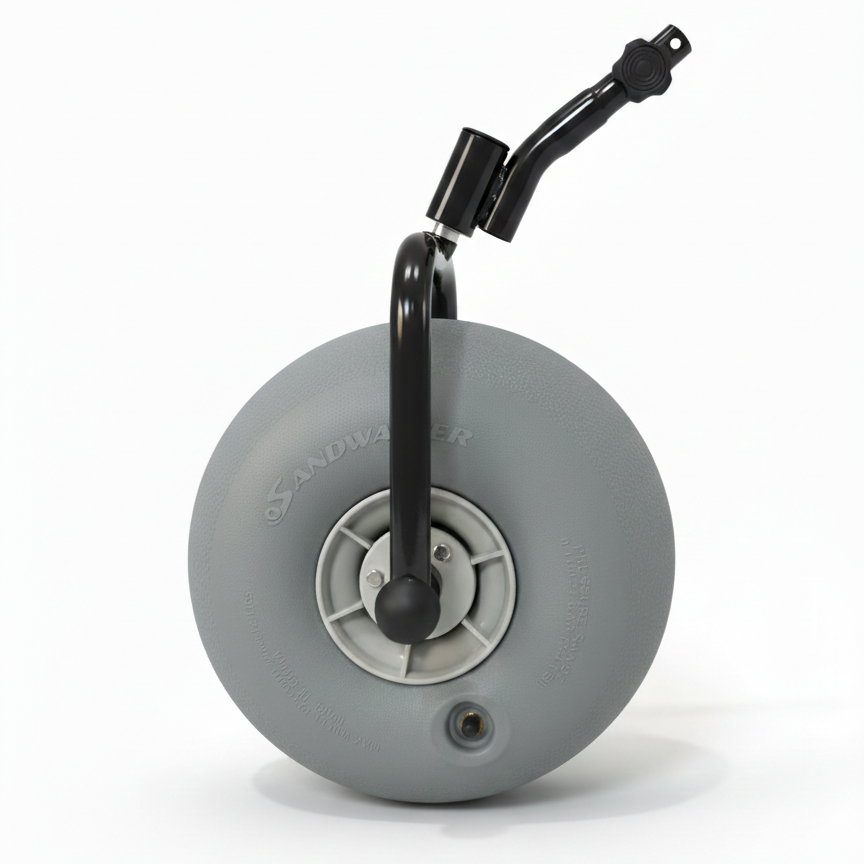
Identify interfaces before asking for parts
A supplier needs the model label, wheel position, brake arrangement, frame joints, seat hardware, and accessory history. Two walkers can share a silhouette while using different attachment points. A photo set supports triage, but a physical review may still be required before approval.
Trace every contact point. Ask where a proposed wheel, axle, bracket, or support meets the original frame. If nobody can name that interface, the quote is not ready for a user-facing program.
- Photograph both sides and each wheel mount.
- Record any non-original seat, basket, brake, or handle.
- Identify folding joints and clearance around moving parts.
Match walker evidence to route needs
Use the all-terrain beach wheelchair reference as a complete-chair benchmark, then request walker-specific interface evidence.
| Walker detail | Compatibility question |
|---|---|
| Frame joints | Does the proposed part clear moving points? |
| Wheel mount | Is the interface approved for this model? |
| Brake control | Can the user reach and use it? |
| Seat support | Is any rest mode documented? |
Key takeaway: Send labelled images and model records before requesting a conversion price.
What evidence must a supplier provide?
A supplier should provide model-specific fit, use, care, service, and responsibility documents before a walker conversion enters a program.
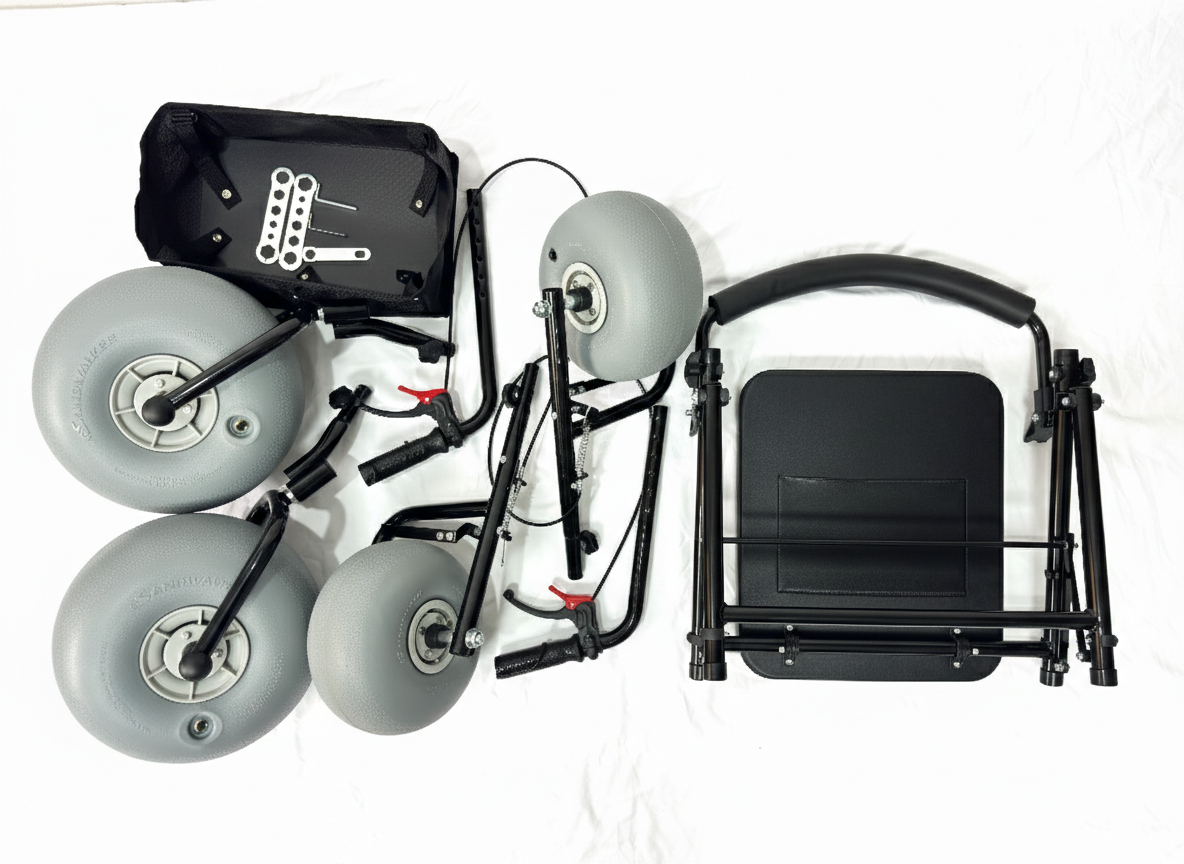
Ask for a complete document set
Documents should state what the conversion changes, how the finished walker may be used, and which uses remain outside scope. They should also identify inspection points, replacement parts, and the person responsible for review. Missing documents are a procurement issue, not a reason for staff to make their own operating interpretation.
Make the use boundary a signed line. Ask the supplier whether the setup supports walking only, walking plus rest, or seated transport. Keep that line with training records.
- Request the model and revision identity.
- Ask for configuration drawings or a parts map.
- Record excluded accessories and excluded user modes.
Sort evidence by people who use it
Use the lightweight beach wheelchair page for a separate transport comparison, then ask the walker supplier about use and service.
| Evidence | Reviewer | Decision it supports |
|---|---|---|
| Fit record | Technical lead | Whether model match exists |
| Use statement | Operations lead | Which modes staff may offer |
| Care guidance | Fleet owner | Rinse, dry, and storage plan |
| Service terms | Procurement | Who supports failures |
Key takeaway: Give all review owners the document set before staff release.
When is a complete beach walker the safer procurement path?
A complete beach walker offers a clearer procurement path when the base identity is unclear or responsibility stays split. It also suits a program needing a repeatable walking-aid configuration.
Recognize a weak conversion candidate
A conversion becomes hard to govern if the supplier cannot identify the base walker or parts come from several sources. Staff may then decide whether a seat supports transport. Shared programs also need consistent briefing and spare parts.
Treat uncertainty as a procurement signal. If the supplier says “probably fits” or suggests an unlisted wheel, compare a complete model with one accountable support path.
- Stop when the base model has no reliable identity.
- Stop when use limits remain verbal.
- Compare staff training across every unit.
Compare service, not only hardware
Plan the route with an accessible beach mat, then request walker compatibility and user-mode approval.
| Signal | Conversion may fit | Complete walker may fit |
|---|---|---|
| Base identity | Clear and supported | Unknown or mixed |
| User mode | Walking role stays narrow | Program needs one defined setup |
| Support | One accountable supplier | Complete parts and instructions |
| Fleet | Small controlled use | Repeated public or rental use |
Key takeaway: Compare both options against the same route and staffing plan.
How should staff separate walking and resting modes?
Staff should separate walking, resting, and rider-transport modes in training, booking language, and handover records.
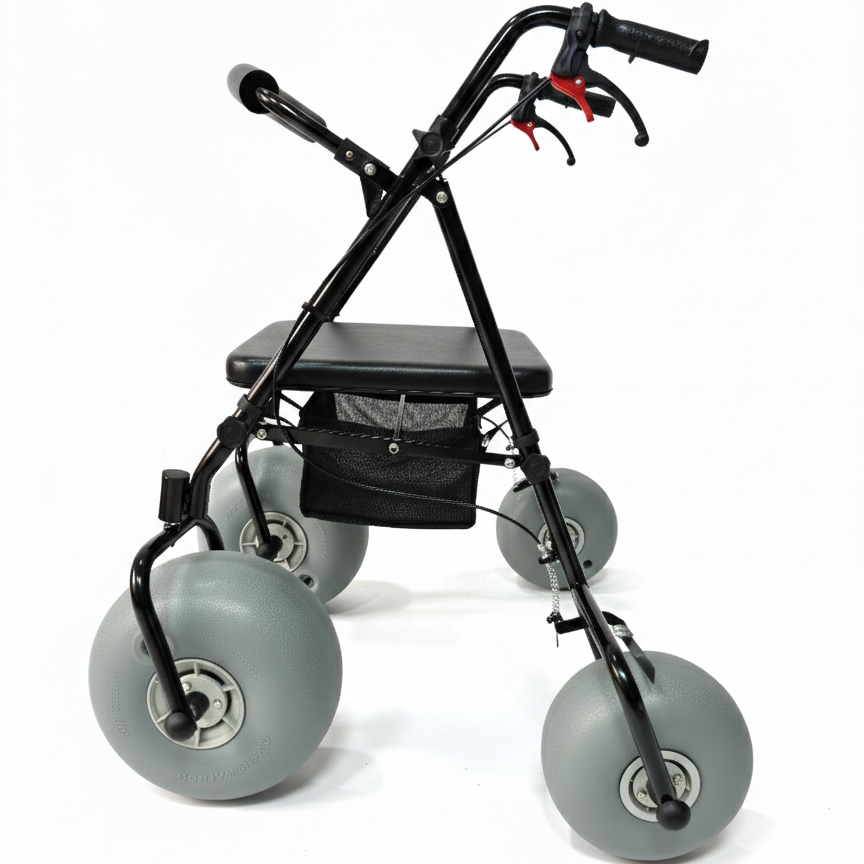
Train the mode before the route
A staff member may see a seat and assume a guest can be pushed. That assumption can create a dangerous handoff. Training should explain what staff may offer, how the user controls a walking mode, and which situations require another access device or a stop.
Name the action on a card. Use “walk with,” “pause on,” or “transport in” only when maker documents support that action. Plain wording is kinder than a polished but ambiguous product label.
- Put permitted modes on booking and handover forms.
- Keep wheelchair requests separate from walker requests.
- Brief attendants on route, brake, and stop boundaries.
Keep the record visible
Use an applications overview to frame use cases; selected walker instructions should control mode decisions.
| Mode | Staff wording | Record needed |
|---|---|---|
| Walking | User moves with frame | Route and fit check |
| Rest | User pauses as allowed | Seat-use confirmation |
| Transport | Staff move seated rider | Explicit approval |
| Not approved | Offer another device | Decline reason and option |
Key takeaway: Rehearse the handover with an empty walker and a mode card.
Which route and terrain checks belong in a program?
A walker program should check sand depth, surface joins, slopes, turning room, crowd flow, and rest points along its actual route.
Walk the route with the device role in mind
A walker user needs room for the frame and their own steps. Soft sand, a boardwalk lip, a narrow gate, or a cross slope can change the effort and balance demand. Procurement should map those points before it chooses wheels or a conversion.
Check the return leg. A route that feels manageable near the entrance may feel different after distance, heat, or fatigue. Mark a turnaround and rest location that staff can reach without pushing the walker like a wheelchair.
- Mark loose sand, lips, ramps, and narrow passages.
- Measure turning room for the person and frame.
- Identify shaded rest areas and an alternate route.
Connect route checks with procurement
Review beach accessibility projects for program questions, then map your own route and rules.
| Route point | Walker question | Action |
|---|---|---|
| Soft sand | Can the user control the frame? | Review route or device |
| Surface join | Is there room to approach safely? | Add a stop or alternate |
| Narrow gate | Can person and walker pass? | Measure access |
| Rest point | Is a supported pause available? | Confirm mode and staff |
Key takeaway: Release the route only after a trained reviewer walks the selected device.
What service and training should a buyer plan?
Plan service and training around inspection, cleaning, user handover, route limits, and replacement parts for the complete walker configuration.
Give the fleet one service language
Mixed conversions can create mixed part names and inspection habits. A fleet owner should identify each walker, keep a parts list, and record defects. Remove a unit from service when a control, wheel, frame, or seat does not match its approved configuration.
Ask what happens after sand. The supplier should state cleaning, drying, inspection, storage, and replacement steps. Staff should know where a doubtful unit goes and who clears it.
- Label each walker and its approved configuration.
- Keep clean, awaiting inspection, and out-of-service units separate.
- Train more than one person for release checks.
Plan support before bookings open
Use the portable beach wheelchair travel guide for transport questions in another product class, then document walker handling and storage.
| Service area | Buyer plan |
|---|---|
| Cleaning | Assigned role and care guidance |
| Inspection | Checklist tied to model identity |
| Training | Mode and route handover |
| Parts | Named source and escalation path |
Key takeaway: Make release status visible at the booking desk.
How do you compare a kit quote with a complete walker?
Compare a kit quote and a complete walker by mode approval, compatibility evidence, service responsibility, staff workload, and route performance.
Put both options on one sheet
A kit quote may list a few parts, while a complete walker includes a finished frame and a defined support path. Use one worksheet so omitted training, inspection, storage, and replacement work cannot make the retrofit look cheaper by accident.
Keep unknowns in plain sight. Mark each row “confirmed,” “open,” or “not applicable.” Do not assign a score where documents provide no evidence.
- Compare the exact base model and the complete walker model.
- State walking, resting, and transport modes separately.
- Include supplier review, training, service, and parts.
Compare decision ownership
The quote should make it clear who owns fit, use limits, care, and failure response. That is more useful than a long list of features with no accountable party.
| Decision area | Conversion quote | Complete walker quote |
|---|---|---|
| Fit | Base model and parts match | Finished model identity |
| Mode | Walking or rest boundary | Stated intended use |
| Support | Mixed or single supplier | Product support path |
| Fleet | Training and spare variation | Repeatable configuration |
Key takeaway: Choose the path with the strongest written ownership for your route.
What should you include in your request for review?
Include walker identity, user mode, route evidence, support needs, and document requests so a supplier can review a conversion without guessing.
Send inputs that answer the hard questions
Label photographs of the walker, wheels, brakes, frame joints, seat, and accessories. Describe whether the person walks with the frame, pauses on a seat, or needs a wheelchair. Add route photographs and a map showing sand, boardwalk, ramps, turns, and storage.
WHO describes assistive products alongside related services and user involvement.
Make the response line up with risk. Ask the supplier to confirm fit, permitted modes, service, replacement parts, and any excluded use. If seated transport is needed, request a wheelchair option rather than asking a walker to fill that role.
- Name the base walker and its purchase or service record.
- State who will use and supervise the device.
- Attach route and storage conditions.
Keep a decision record
Store images, supplier answers, route review, staff sign-off, and the selected configuration together. For a product conversation, contact us with your route evidence.
Key takeaway: Request a documented conversion review and a complete beach walker alternative.
Q1: Can a beach walker conversion kit turn a walker into a wheelchair? No. A walker remains a walking aid unless a supplier expressly approves a separate rider-transport configuration.
Q2: Can someone sit on any beach walker seat while staff push? No. A rest seat does not by itself authorize passenger transport; request written approval for that exact model and mode.
Q3: Do wide wheels prove a walker fits soft sand? No. Route surface, user control, frame identity, wheel approval, and supervision all need review.
Q4: When should a buyer choose a complete beach walker? Choose one when compatibility evidence is thin, fleet consistency matters, or one supplier should own fit and service.
Q5: What should a supplier review before quoting? Send model records, labelled photographs, route conditions, intended user mode, accessory history, and a request for written configuration evidence.