
A Praia Acessível listing is a starting point for a conversation about a Portuguese beach. A visitor who wants to reach a place on the sand has one question. A visitor who needs a particular chair, trained assistance and a water session has several more. Record the ramp, installed mat extent and assisted service separately for each entrance.
The municipality of Cascais provides a useful example. In its June 23, 2017 announcement about accessible-beach flags, it named Carcavelos, Poça, Tamariz and Conceição and described ramps and mats extending across the sand towards the sea. It separately identified Tiralô bathing-chair service at Carcavelos, Tamariz and Conceição. The lists in that notice are different. Staff preparing a new listing should verify today’s arrangements with each operator, including any subsequent service at a site omitted from the older chair list. Câmara Municipal de Cascais, accessible-beach flag announcement
Read the endpoint as a physical location
“Near the sea” is useful orientation but leaves the condition of the last stretch unknown. Ask the beach lead for the actual entrance, the ramp landing, where the first section starts, the furthest supported dry stopping area and the surface beyond it. A person using their own wheelchair needs to know whether they can stop, turn and get back to the ramp without crossing loose sand.
Request a dated view from both travel directions and a location the next shift can identify. If the far edge has moved since the public map was issued, check the supporting sand, edge, joins and turning space under the accepted system instructions. Update the published endpoint when the site lead has confirmed what is usable. Checking ramp-to-mat connections
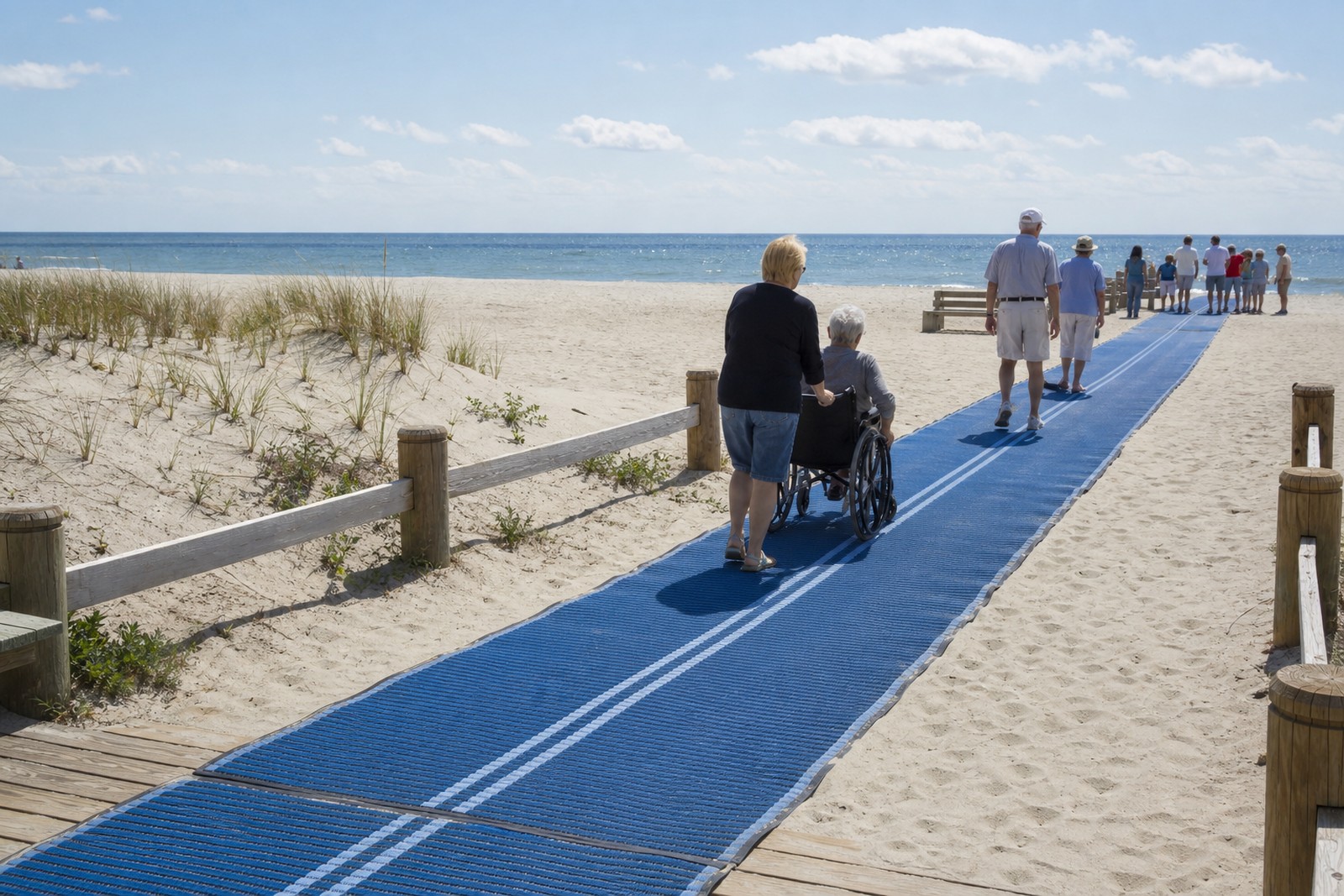
Give a visitor-centre editor three answers
| Field | What to establish with the named operator |
|---|---|
| Land arrival | Where to park or be dropped off, which entrance to use and how to reach the ramp. |
| Mat service | Whether the mat is installed for the intended period, where it ends today, and where there is room to stop and return. |
| Bathing-chair assistance | Whether that site offers the required service, who provides the equipment and trained assistance, and how a visitor asks about availability. |
For example, a hotel guest may be happy to stay at the dry viewing area even if the chair service is unavailable. Another guest may choose a different entrance because the outing depends on assistance. A single “accessible” tick gives the hotel no basis for explaining those choices. A verified entrance description and separate current contact allow the guest to decide.
Give the field team a simple way to report a change to the editor. Include the site, affected leg, time checked, revised destination and next information source. Prepare the live message in clear Portuguese and any other communication formats the service offers. A seasonal notice or a previously raised flag cannot supply that operational update.
Commission the equipment for the service actually offered
For a site adding matting, ask the buyer to state the selected width, required installed coverage, ramp connection, end treatment, compatible spares, seasonal handling and operator responsibilities. If the service also includes a bathing chair, specify its own configuration, authorised conditions, assistance and return arrangements. Keep quotations and acceptance records for those deliverables identifiable.
Use the general procurement brief to compare supplied sections, joints and installation work. Use the local entrance record to decide what the visitor can be told once the work is complete. At handover, ask a colleague to describe an outing using only the proposed listing: where the person starts, how far the mat reaches, and who can confirm the separate bathing service. Beach mat specification and procurement brief