
A pool wheelchair suits approved deck-and-ramp access; a floating chair suits approved buoyant access when that service forms part of the brief. Those are different jobs. Select each against its route, support plan, and written use limits.
For a hotel pool, the decision turns on whether guests stay on a deck and ramp or receive supervised buoyant access. Ask the supplier for model-specific documents before a quote becomes a purchase order.
What does a pool wheelchair actually need to do?
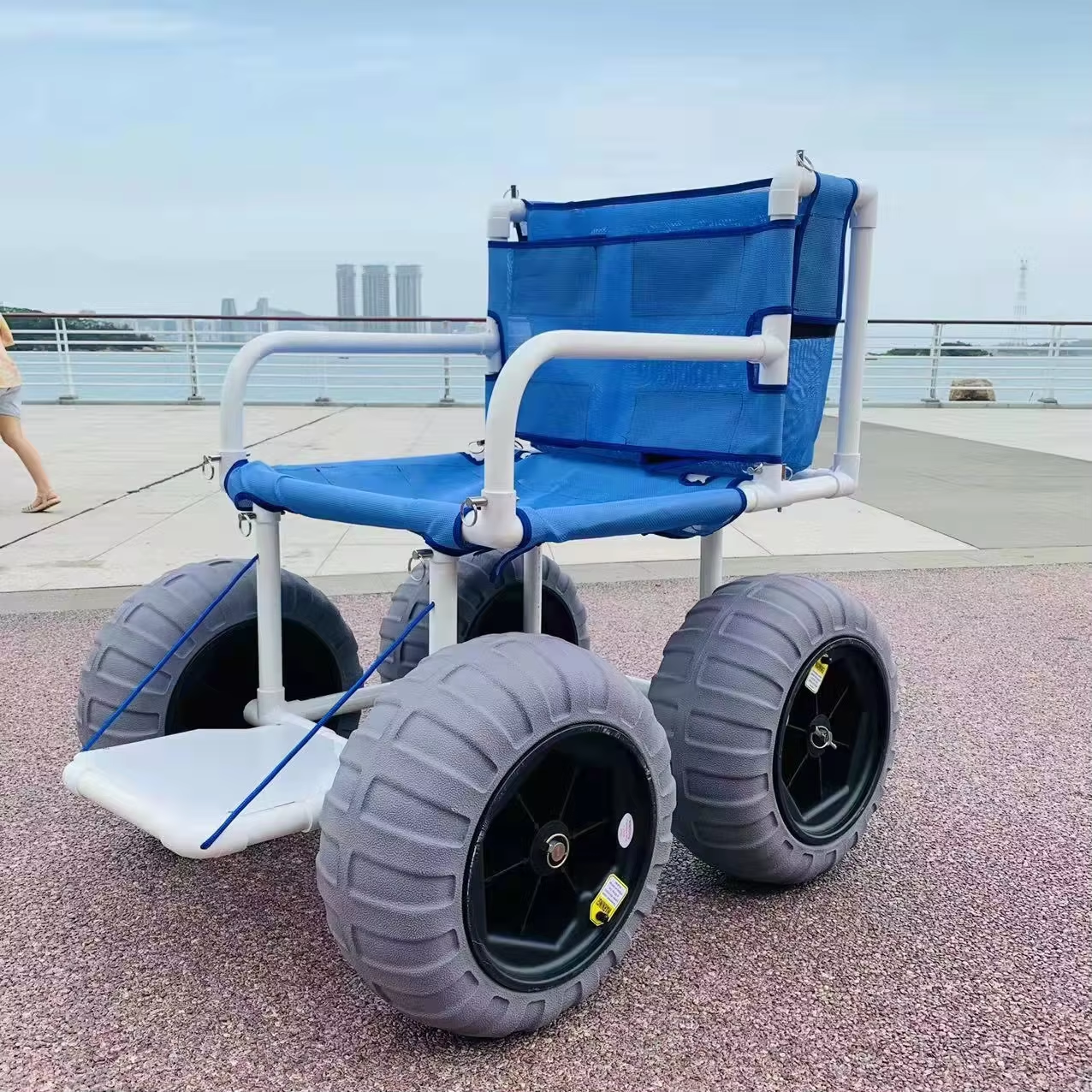
A pool wheelchair needs a grounded access role: moving a user across approved wet-area routes, ramps, and transfer points under a defined care plan.
Define the grounded access brief
Pool buyers often use one label for several products. A chair designed for a wet deck may need stable seating, a clear push position, drainable materials, and a route that staff can control. A facility should write its actual route before it compares frame photos.
Start with the boundary. Ask your team to name the last dry point, transfer location, ramp, and storage spot. That small exercise prevents a deck chair from being treated like a water craft.
- Mark every surface from changing room or vehicle through the pool gate.
- Record who pushes, who assists a transfer, and who checks the chair afterward.
- Separate “wet deck,” “ramp,” and “water entry” as three procurement labels.
Put the job into a buyer screen
Use this screen in a specification meeting. A missing answer stays open rather than turning into a guess.
| Buyer question | Grounded-chair check | Stop signal |
|---|---|---|
| Where will it travel? | Deck, ramp, and transfer route named | Water use is assumed from a photo |
| Who controls movement? | Staff role and handoff recorded | No responsible operator |
| What support is needed? | Seat, belt, foot support, and transfer plan | Fit remains unreviewed |
| What happens afterward? | Rinse, dry, inspect, and store | No care owner |
Key takeaway: Send a one-page route brief with every model request.
How does a floating chair differ from poolside equipment?
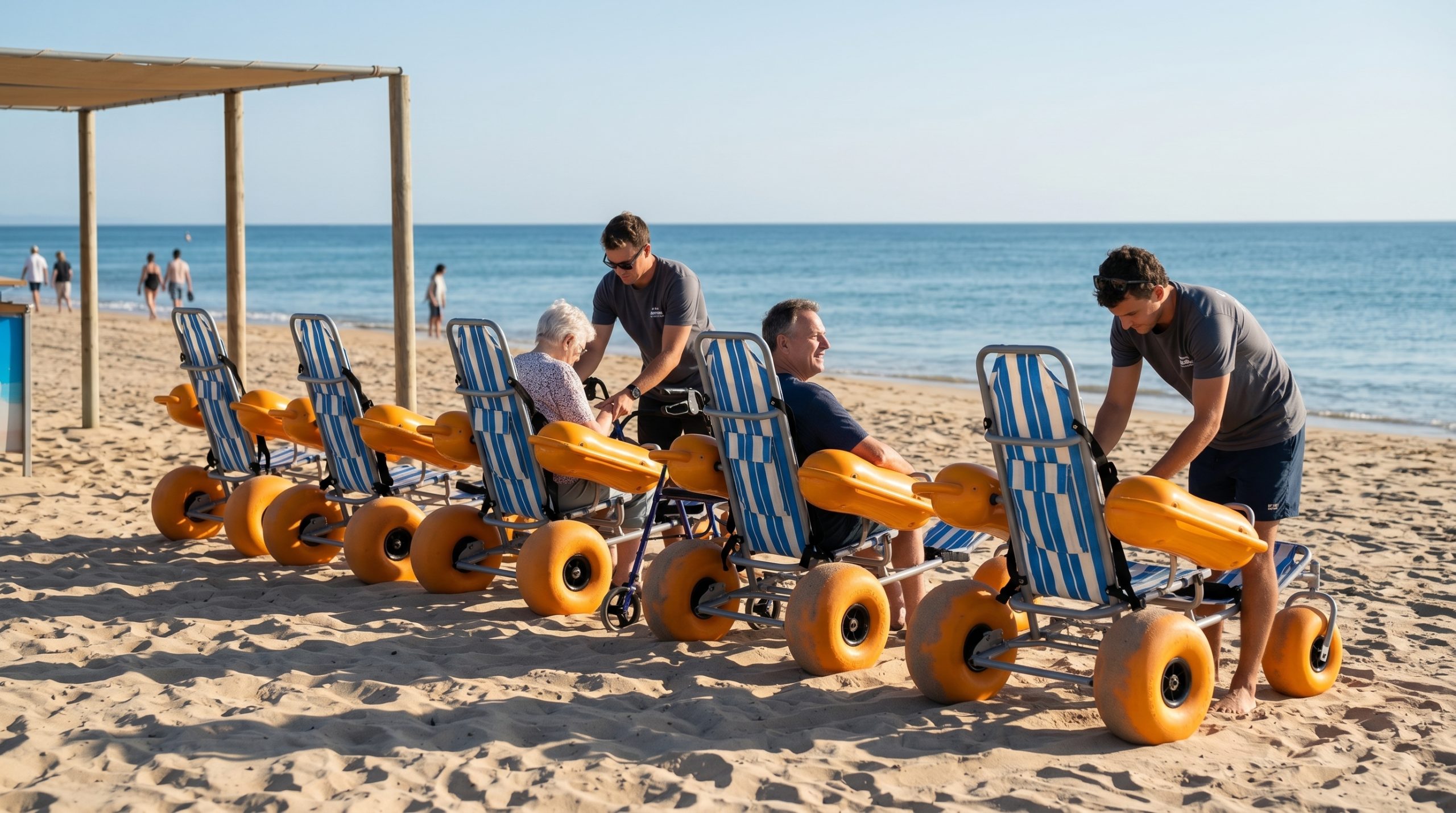
A floating chair adds buoyant components and a water-access purpose, so its approval, restraint, supervision, and exit conditions need separate evidence.
Separate buoyancy from wet-surface access
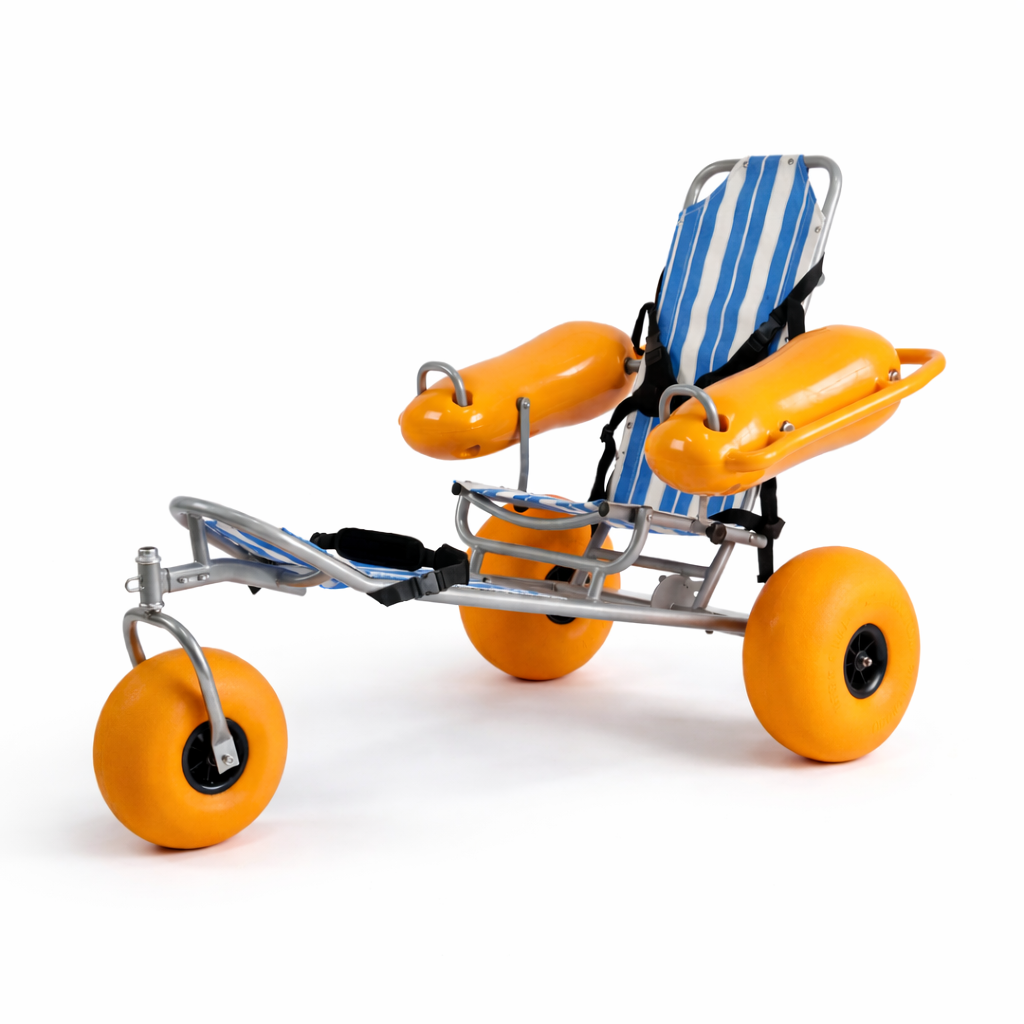
Visible floats can show that a design was built around buoyant support, yet they do not establish safe use for every person or setting. A floating model may be intended for calm, assisted entry, but a wave, tide, or crowded lane can change the risk picture quickly.
The split becomes clear here. Put “ground travel” and “buoyant access” on separate lines in your purchase file. Ask the supplier to state which model, configuration, user position, and water setting each line covers.
- Ask whether the model has written water-use instructions.
- Check who must remain within reach during entry and exit.
- Record any water, weather, or facility boundaries supplied by the maker.
Compare evidence, not appearance
Use the floating beach wheelchair category to list buoyant components and document questions, then request the selected model’s files.
| Feature or document | Poolside chair | Floating chair |
|---|---|---|
| Primary route | Decks, ramps, and transfer areas | Ground route plus approved water access |
| Buoyant parts | Not assumed | Must be identified in model documents |
| Supervision | Facility transfer and route roles | Water entry, in-water, and exit roles |
| Approval question | Wet-area route | Exact water conditions and configuration |
Key takeaway: Require model-specific water instructions before comparing prices.
Which water setting will your program serve?
Choose according to your setting: dry pool perimeter, ramp, calm entry zone, or changing beach edge.
Map the route and the water boundary
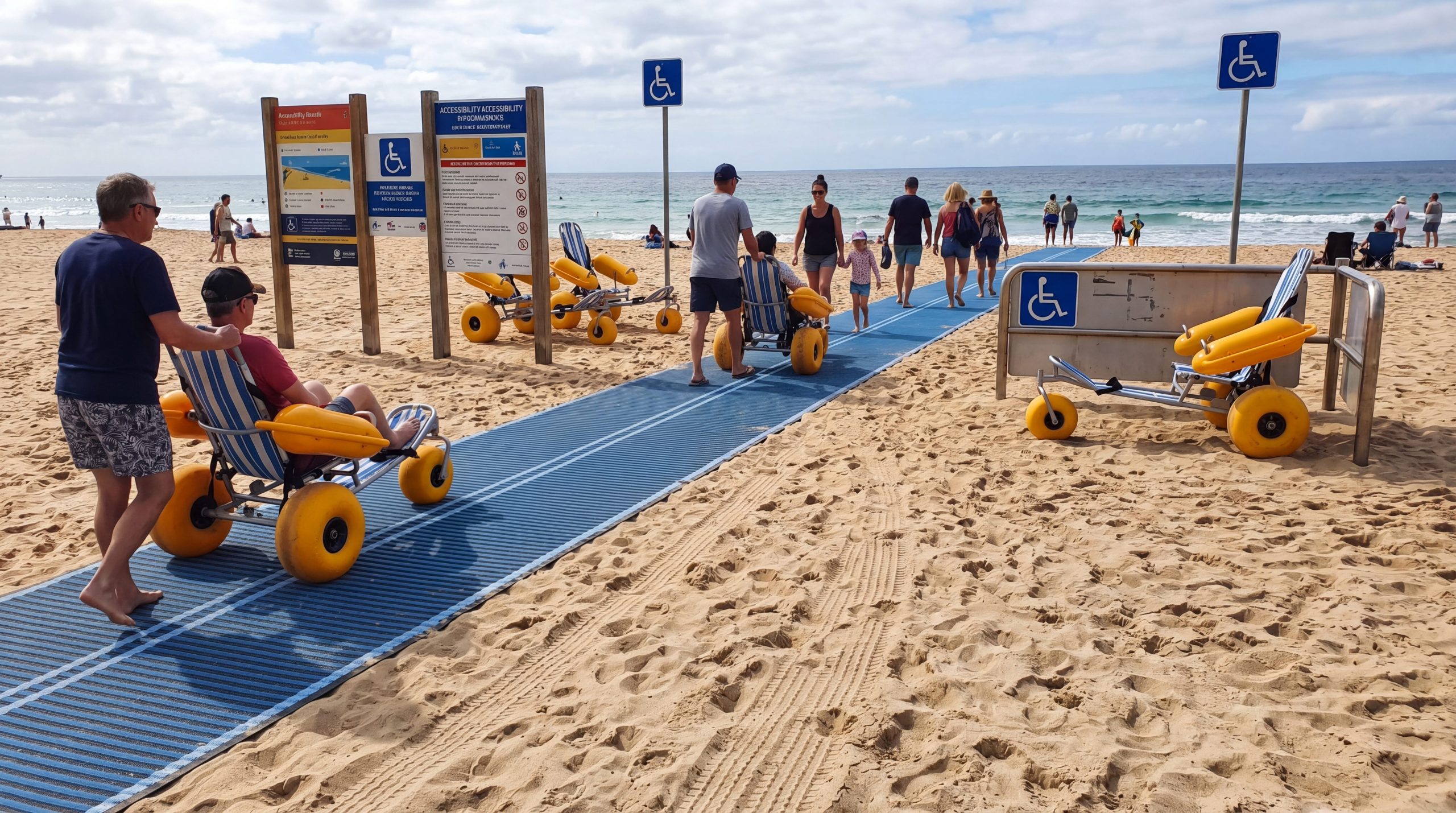
A resort pool may have a predictable deck and fixed ramp. A public beach adds soft sand, a tide line, uneven ground, and changing crowd flow. A buyer needs a route map that reaches the actual handoff point, not a broad statement such as “for pool use.”
Walk the difficult five metres. Inspect the narrowest turn, surface join, ramp landing, and place where helpers must stand. That short section often sets the configuration more firmly than a long marketing description.
- Record width, turning room, and surface transitions at each access point.
- Mark where wet footwear or loose sand may affect staff control.
- Note a sheltered waiting area and a clear exit route.
Match route evidence to model evidence
Use the all-terrain beach wheelchair page to compare ground-route layouts, then keep water approval in a separate model file.
| Setting | Evidence to request | Procurement decision |
|---|---|---|
| Dry pool perimeter | Route width and surface guidance | Grounded chair shortlist |
| Wet deck and ramp | Wet-area approval and staff roles | Confirm route configuration |
| Calm water edge | Water boundary and exit plan | Review floating model |
| Open beach edge | Sand route plus water limits | Consider a coordinated system |
Key takeaway: Attach a marked route sketch to every supplier request.
Which user and support needs shape chair selection?
User fit, transfer support, and staff capacity shape selection more than a product label such as “pool” or “floating.”
Treat seating as a system
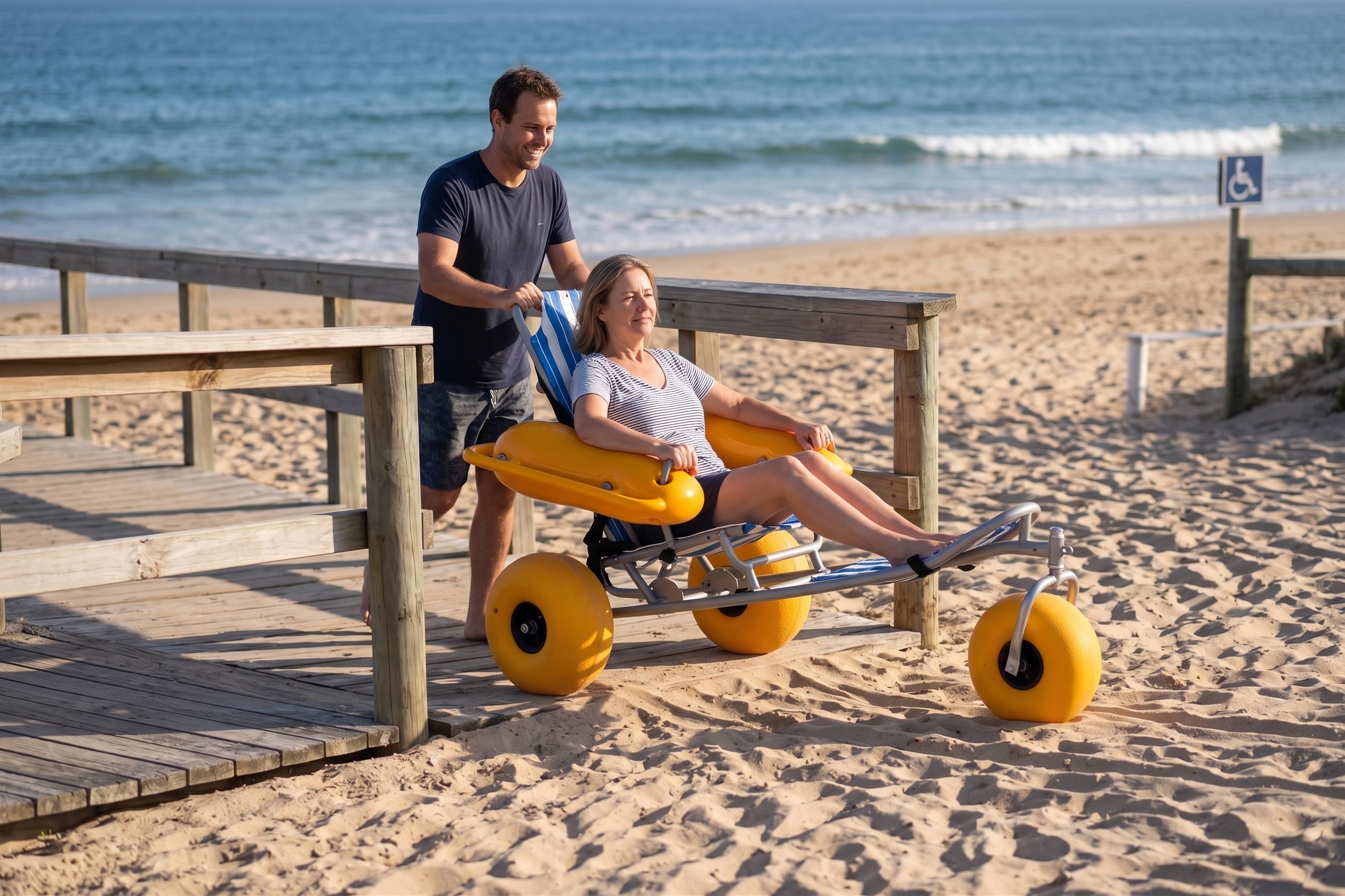
A chair should hold the planned posture and support the intended transfer method under the maker’s instructions. Seat width, back support, belt placement, foot support, and handholds interact. Ask a qualified seating or care professional about individual needs rather than infer suitability from a catalogue photograph.
WHO guidance frames wheelchair provision around assessment, fitting, training, and follow-up by trained personnel.
Look past the seat cover. Ask who will assess fit, who will brief attendants, and what happens if posture or the transfer plan changes. A floating configuration adds a water boundary; it does not remove individual assessment.
- Record the user’s transfer method and required assistance.
- Confirm belt and foot-support placement from model documentation.
- Identify users who need head, trunk, or leg support review.
Connect support evidence with route evidence
Compare transport handling with the lightweight beach wheelchair range, then request water approval and fit evidence for your selected model.
| Support question | Evidence a buyer needs |
|---|---|
| Transfer | Named method and trained helper |
| Seated position | Model fit information and professional review |
| Restraint | Instructions for placement and inspection |
| Change in condition | Reassessment or alternate access plan |
Key takeaway: Make fit review a purchase gate for each user group.
How can you verify water-use approval?
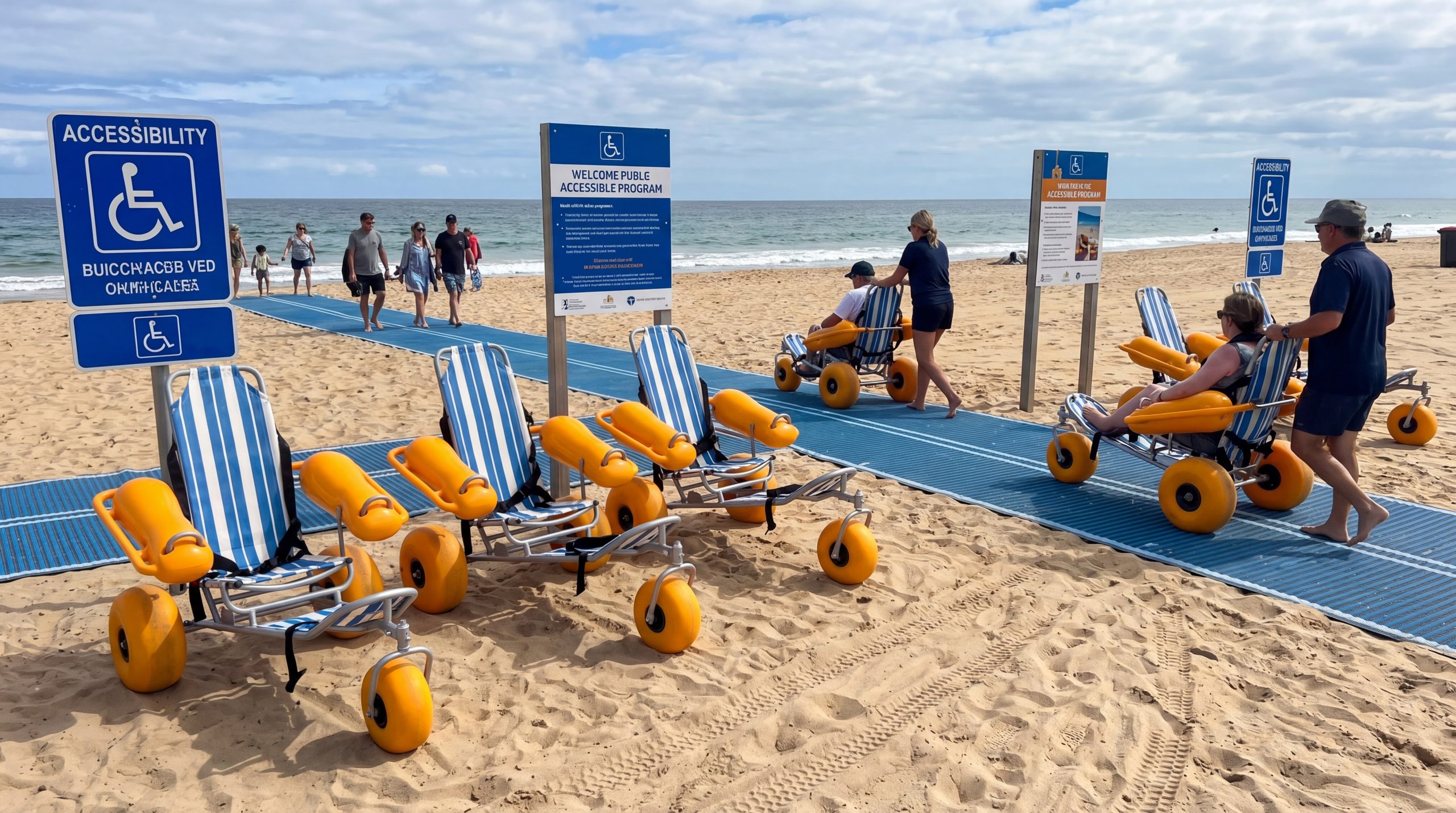
Verify water use with model-specific written instructions, configuration details, and a supplier response that addresses your exact setting.
Build a document request
A buyer should not fill gaps with assumptions about chlorine, salt water, depth, waves, or user position. Request the current manual, configuration notes, cleaning guidance, and restrictions for the exact model.
Make paper do the heavy lifting. A clear request lets procurement, risk, and operations review one answer. It also gives a distributor something useful to pass along with every unit.
- Request the model name, revision date, and applicable configuration.
- Ask which water settings are excluded.
- Record supervision and exit duties in the operating file.
Use a simple approval matrix
Use the new floating beach wheelchair page to frame category questions, then request supplier approval for your selected model.
| Check | Pass evidence | If missing |
|---|---|---|
| Water purpose | Written model statement | Hold water-use decision |
| Configuration | Parts and setup named | Ask for clarification |
| Conditions | Boundaries and exclusions stated | Do not infer permission |
| Care | Rinse, dry, and inspection guidance | Request maintenance file |
Key takeaway: Hold the deposit until its model document pack is complete.
What should a buyer inspect on frame, floats, and restraints?
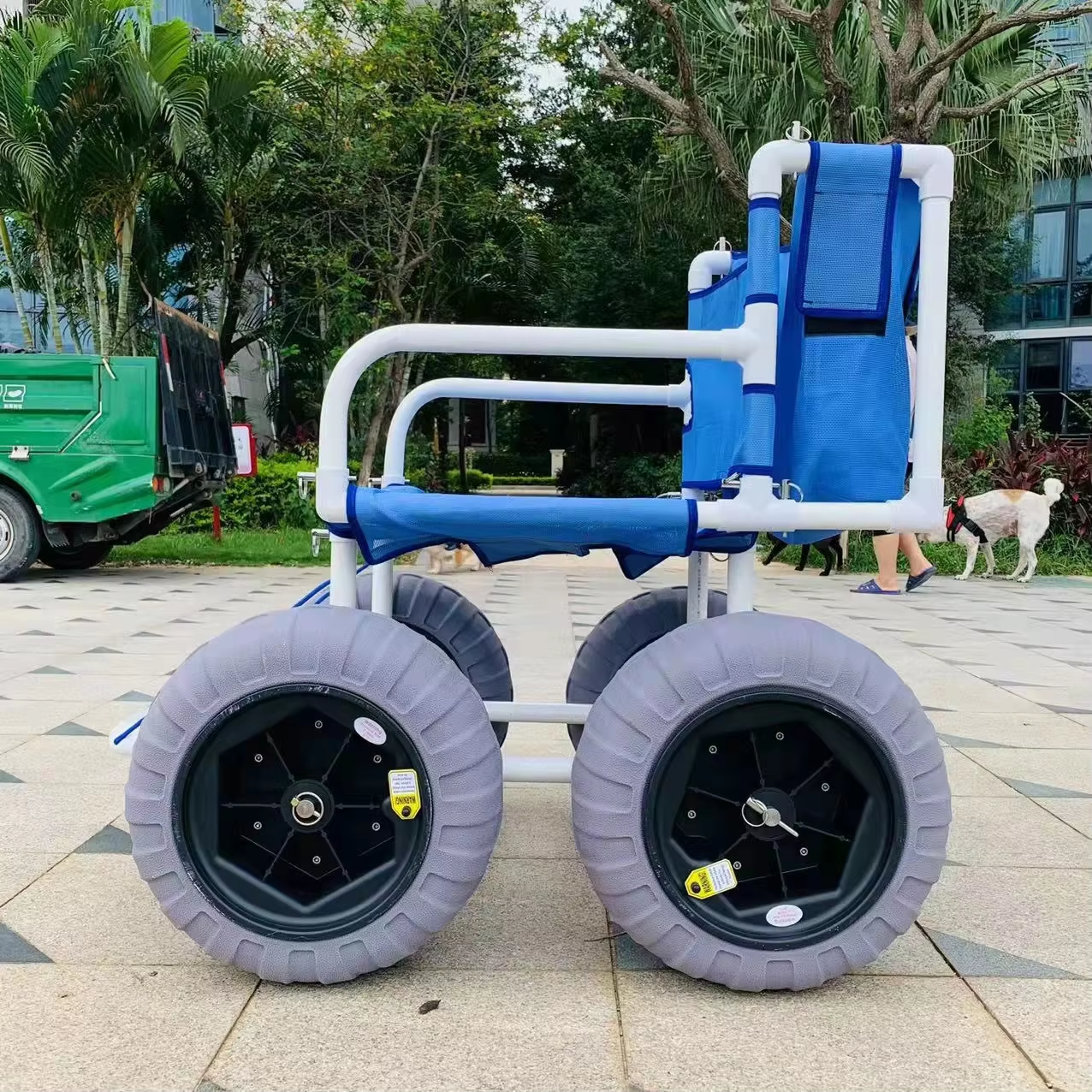
Inspect frame joints, wheels, buoyant parts, restraints, and contact surfaces as a complete configuration rather than as isolated features.
Check visible interfaces and service points
Photos can show a frame layout, float position, strap path, and wheel arrangement. They cannot prove material grade, load rating, corrosion performance, or compatibility with a user. Ask for labelled drawings, replacement-part identification, and inspection points that staff can recognize without specialist tools.
Follow every connection. Trace where a belt meets a frame, where a float attaches, and where a wheel turns. Those interfaces deserve clear ownership because small missing parts can stop an entire fleet.
- List every removable part and its storage location.
- Identify pinch, snag, and loose-hardware checks from the manual.
- Ask how damaged floats or straps are taken out of service.
Turn inspection into a quote requirement
Pair the accessible beach mat route plan with a separate chair-hardware approval line.
| Assembly | Buyer check | Evidence requested |
|---|---|---|
| Frame and joints | No unexplained movement or damage | Inspection points |
| Wheels and hubs | Correct assembly identity | Parts list |
| Floats | Secure attachment and condition | Configuration drawing |
| Belts and supports | Correct placement and replacement path | Manual section |
Key takeaway: Add an inspection card to the purchase package.
Which cleaning and storage plan belongs in the purchase?
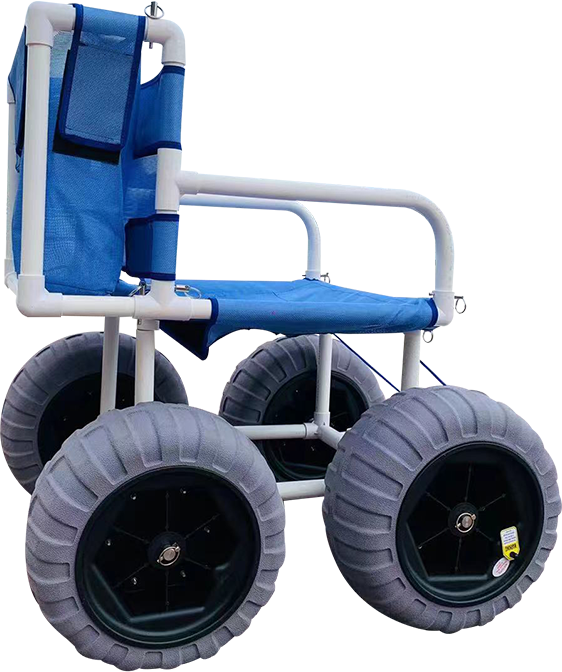
Buyers should fund a rinse, drying, inspection, and storage plan that matches salt, chlorine, sand, and daily turnover.
Plan the after-use handoff
Water exposure creates work after a guest leaves. Sand can collect around wheels and joints; salt or pool chemicals can affect parts if the maker’s care routine is ignored. The purchase file should assign cleaning, drying, inspection, and storage to named roles.
Count the minutes after service. Ask staff where a wet chair goes, who rinses it, how it dries, and when it returns to the booking pool. If nobody owns that sequence, uptime is only an assumption.
- Provide a ventilated storage place away from guest traffic.
- Keep clean and uninspected units visibly separate.
- Record missing belts, loose fittings, or damaged buoyant parts.
Put care responsibilities in writing
Use the applications overview for use-setting questions, then attach model care documents to selected chairs.
| Care stage | Responsible role | Release condition |
|---|---|---|
| Rinse | Assigned operator | Sand and residue addressed |
| Dry | Storage team | Chair is dry before storage |
| Inspect | Trained checker | Defects recorded and cleared |
| Release | Supervisor or booking desk | Unit status is visible |
Key takeaway: Assign care, storage, and release roles before opening bookings.
How should a hotel or beach operator plan staffing?
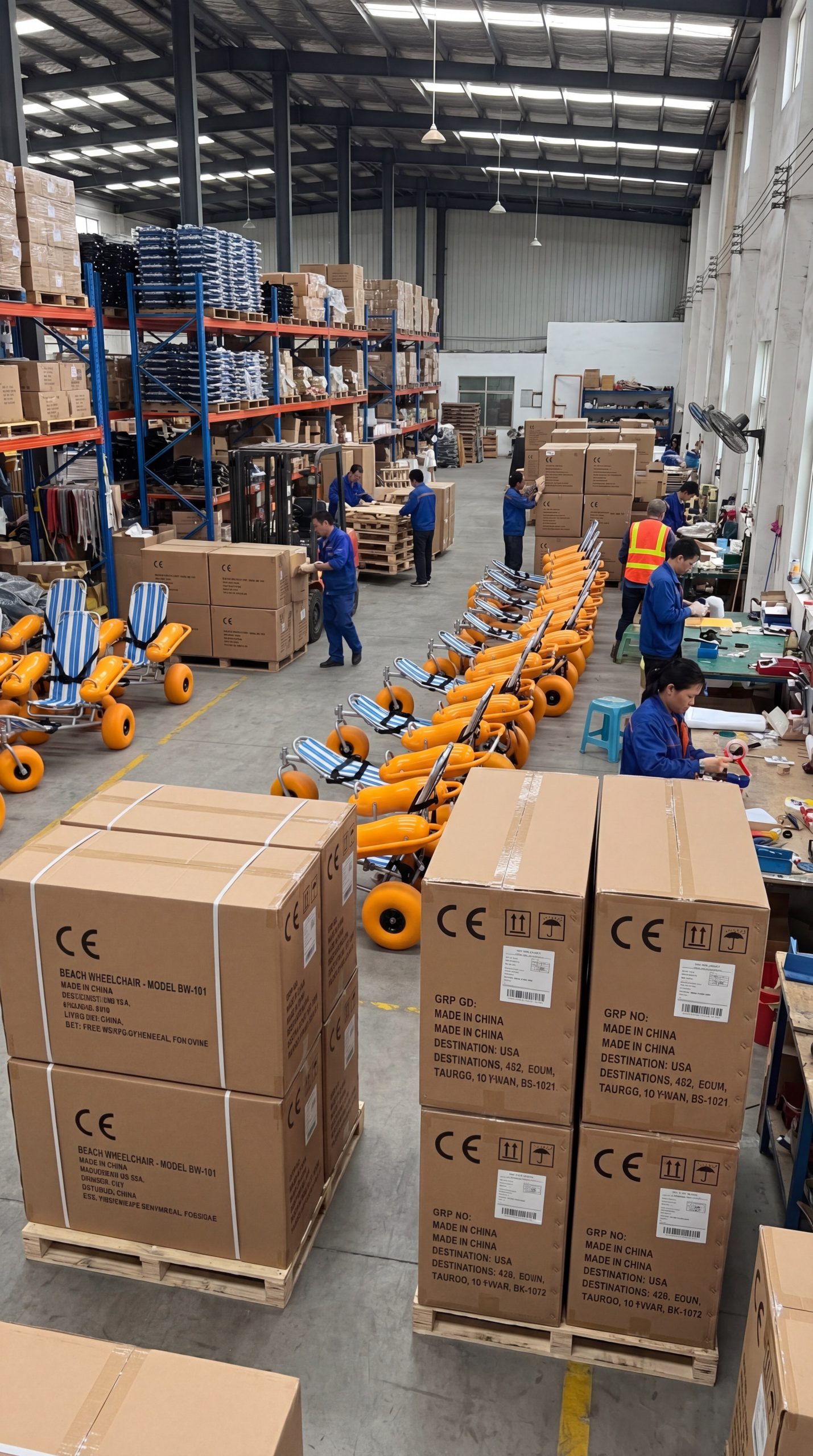
Plan staffing around transfers, route control, water supervision, cleaning, and handover records rather than around chair count alone.
Assign distinct roles
One person may handle several roles in a small program, but responsibilities still need names. A booking checker may not be trained for a transfer. A staff member who pushes across a deck may not be assigned to water supervision. Role clarity prevents a floating chair from becoming an unsupervised promise.
Name the handoff. Write who greets the user, confirms fit, controls the route, supervises approved water access, and closes the equipment record.
- Brief staff on model limits and stop conditions.
- Use a handover note for belts, foot support, and accessories.
- Keep a route alternative for closures or changing conditions.
Tie staffing to the service model
Review beach accessibility projects when drafting service roles, then map staffing and local rules for your own site.
| Service moment | Owner | Record |
|---|---|---|
| Booking | Coordinator | User and route needs |
| Fit and transfer | Trained attendant | Configuration check |
| Ground route | Route operator | Surface and stop points |
| Water access | Named supervisor | Conditions and exit |
Key takeaway: Rehearse staff roles before a person sits down.
How should you compare a fleet quote?
Compare a fleet quote by usable service, evidence, replacement support, and staff workload, not by unit price alone.
Build a like-for-like request
Ask each supplier to quote the same configuration, document set, spare-part list, training scope, packaging, and delivery assumptions. A low line item can hide missing belts, unclear water permissions, or a service gap after arrival.
Put the quiet costs on the page. Include storage, inspection time, staff training, replacement parts, and a backup unit where service continuity matters.
- Request model identifiers for every line item.
- Separate grounded and floating configurations.
- Ask which parts are replaceable through normal support.
Use decision weights without inventing scores
Keep the matrix qualitative unless your team has verified data. A procurement group can mark each row “confirmed,” “open,” or “not applicable.”
| Quote area | Confirmed answer |
|---|---|
| Intended use | Ground, water, or both with limits |
| Documentation | Manual, care, and parts records |
| Service | Contact route and response ownership |
| Fleet operation | Training, inspection, and storage plan |
Key takeaway: Reject any quote with unresolved water permission.
What is the next step before ordering?
Before ordering, send one evidence-led brief that names the route, user group, water boundary, staffing plan, and documents you need.
Send a focused request
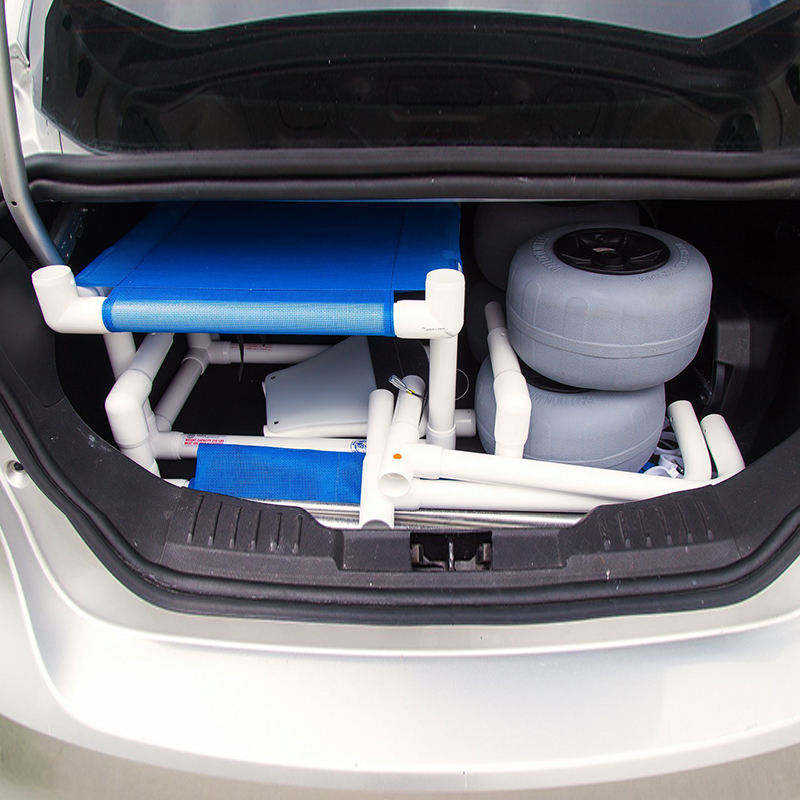
A useful inquiry is short enough for a supplier to answer line by line. Attach a route sketch, photos of access points, expected service pattern, and the distinction between grounded and buoyant use. Ask for model-specific documents.
Make the next email decisive. Request confirmation of fit, approved setting, staff duties, care work, replacement parts, and any unresolved limits. If a water answer remains vague, keep that option out of the order.
- State whether water entry is required or excluded.
- Identify the route’s tightest turn and surface change.
- Ask for manuals and configuration records before deposit.
Keep the decision auditable
Store the brief, supplier answers, selected configuration, and staff sign-off in one project folder. For a direct equipment conversation, contact us with your route and service brief.
Key takeaway: Order only after a named reviewer closes every evidence row.
Q1: Can a pool wheelchair enter the water? A grounded pool wheelchair should enter water only with maker approval for that exact model, configuration, and setting. A wet-deck design does not grant immersion permission.
Q2: Does a floating chair work in rough surf? No assumption is safe; use only conditions stated by the maker and facility, with trained supervision and a defined exit plan.
Q3: Does a photo prove a chair is pool certified? No. A photo shows visible form, while certification or approval requires a current model document from the responsible supplier or authority.
Q4: What should a hotel request before buying? Request the manual, water-use limits, fit guidance, care routine, replacement-part list, staff roles, and a written response for your mapped route.
Q5: Should a small facility buy grounded and floating chairs? Only when its service brief needs both jobs and staff can support each one; otherwise select the narrower configuration and document its boundary.