
Plan a coastal camp’s beach cart around two loads: what the group needs at the activity and what comes back when it finishes. A tub that takes a water cooler and a sealed activity kit on the way out may be needed for wet equipment on the way back. Work out where the lunch supplies go before assigning that same cart to collect beach-cleanup gear.
Start at the cupboard where the kit is packed
Put the actual containers beside the cart. Identify the largest item, the heaviest one when full and anything that must stay dry or separate. Weigh supplies in their loaded containers if necessary. Count the ice and drinks inside a cooler as part of the cargo. Check that the lid closes and the cooler sits securely at the bottom of the tub without pinching other supplies against the rim.
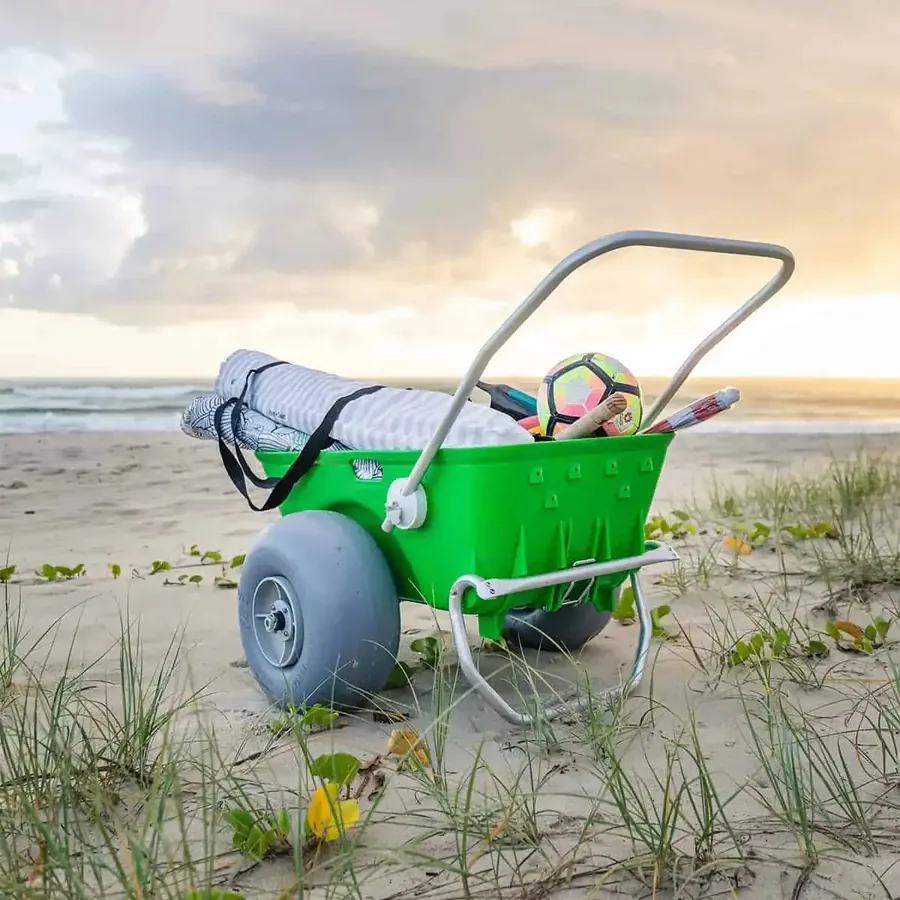
Ary Beach’s standard two-wheel cargo cart has a molded tub described as 60 cm wide and 35 cm deep, a U-shaped handle and a stand for loading. The listed cargo rating is 75 kg. The usable space near the bottom may differ from the width at the rim, so try the camp’s rigid containers in the supplied cart. Confirm the figures for any custom order. Campers and staff travel separately from the cargo. Manufacturer’s tub dimensions and cargo rating
Follow the supplies through the narrow part of camp
The stores door, kitchen service corridor and last gate onto the sand can determine which cart works. The standard molded cart is listed at 86 cm across the wheels. Measure the usable gap when the gate is open and look at the turn immediately beyond it. A wide beach is no help if the loaded cart cannot get out of the kitchen yard.
Walk the return when other groups are likely to be on the path. The morning equipment run can use a clear entrance that fills with families at lunchtime. Agree on a place at the activity where the cart can stand clear of the group and a second place to pack up if the normal return entrance closes. Staff should know who can authorize that change and where the loaded cart is expected back.
An afternoon activity with two different return loads
Suppose the morning program sends one tub cart with sealed drinks and clean supplies to a shore shelter. Later, a volunteer group wants the same cart for a litter collection. Sketch the sequence before either group leaves camp:
- Deliver the clean supplies and identify the sheltered place the activity leader will keep them.
- Decide who will return the empty cart and when. Include the walk back from the shelter in the allocation.
- Give the cleanup group a separate, suitable container for collected material and an agreed disposal destination. Apply the camp’s handling procedure for anything unsuitable to collect.
- Allow cleaning and drying after that run before assigning the cart to clean supplies again.
If both groups need the cart during the same period, move one delivery earlier, use a second suitable unit or change the activity timetable. Spell out the load and return time on the camp equipment sheet. That gives the next leader enough information to plan the afternoon without assuming a cart left at the shelter is already back in the stores.