
Start with the cooler you intend to send, packed with drinks, ice and its lid shut. Set it beside the picnic boxes and shade kit. Which item has to come off first? If staff have to put a food box on the sand to reach the picnic blanket, the load needs rearranging before anyone pulls the wagon out of the store.
Check the cooler against the deck
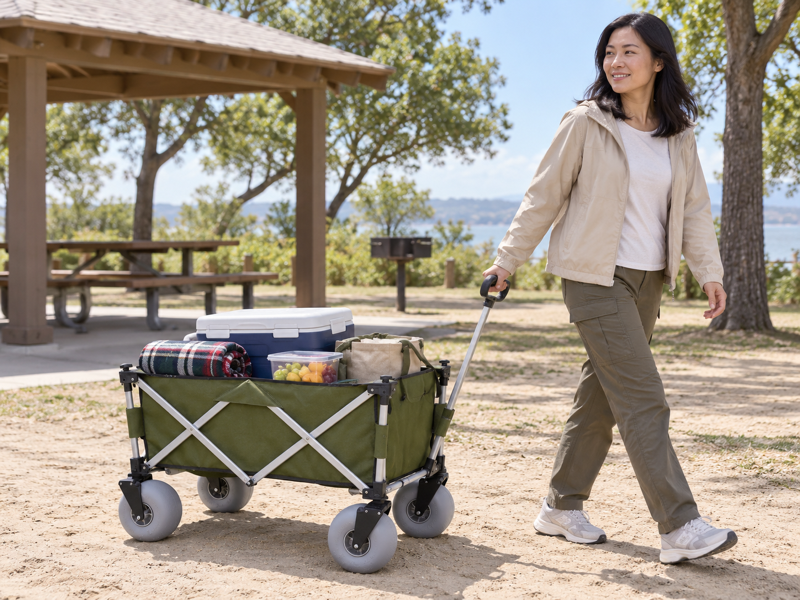
The green fabric picnic wagon pictured here has its own load label and usable bed dimensions. Measure inside its fabric sides with the frame fully open, then check the rating for that specific wagon. If the cooler needs a rigid deck, compare it with a separate configuration: Ary Beach lists a 29.5 × 16 inch deck and a 220 lb maximum load for its four-wheel folding cart with two balloon wheels and two front swivel casters. The quick-fold 30021-SIS has a 20 × 14 inch shelf and a separate rating. The word “wagon” on a booking does not identify which cart a guest will receive. Check the actual unit and order sheet before quoting its dimensions or capacity. Manufacturer’s folding cart comparison
Consider a fictional cooler with a base measuring 18 × 15 inches. On paper it fits within the four-wheel deck outline when the 18-inch side runs along the deck. The 15-inch dimension already exceeds the other model’s listed 14-inch shelf width in that orientation. Try the closed cooler on the actual deck. Basket rails, projecting hinges and the space for hands to lift it out can reduce the useful area. Weigh the rest of the packed goods and include any detachable ties travelling with them.
Pack for the first stop and the meal
A picnic delivery may stop twice: first to set up shade, then to leave food and drinks at the tables. Label the gear for each stop and keep the essential first item within reach. Folded poles need an approved way to travel that leaves the handle, moving wheels and operator’s view clear. If the long item conflicts with the cooler lid or cannot be secured, send it separately.
- For setup, keep the blanket and table kit accessible without unloading the cooler. Decide who receives them while the cart is parked.
- For serving, carry food in the venue’s designated closed containers. The catering team sets the temperature controls for the food. A storage bag on the cart supplies no temperature guarantee.
- For the return, agree who collects empty containers and waste. Use separate suitable containers for used items and clean supplies. Reserve time to clear and clean the cart before another food delivery.
Trial the last few metres to the table
Walk the chosen entrance and look at where the firm path ends. Check how the actual wagon steers on paving and how its leading wheels cross the final surface change. Try the empty cart first and then a representative goods load under the site’s handling arrangements. Watch for a bag shifting into a wheel, a projecting shade pole or a turn that puts a table between the operator and the unloading point. The wagon carries goods. Arrange a separate mobility service for someone who needs help reaching the picnic.
If a group moves lunch to a different shelter, check that entrance, turning space and the empty return before redirecting the cart. For a route with several deliveries, use the gear-cart handoff plan to keep the cart moving without losing track of the picnic kit.