
A missing shade frame is easiest to trace when someone knows which journey it actually made. For a delivery involving a storeroom, a service vehicle and a beach crew, assign the cart and the cargo separately at each handoff. The cart might return to the store while the gear stays on the beach for the afternoon.
Decide which parts of the journey need wheels
Start with the kit laid out as the sender will issue it. Count closed bags and identify any long item or small fittings pouch separately. Agree a dry handoff point at the beach and the name of the person expecting the equipment there. Look at the two pedestrian legs: the storeroom door to the vehicle and the authorized unloading bay to the final destination. The model that fits a narrow hotel service aisle may still be a poor choice for a long stretch of loose sand.
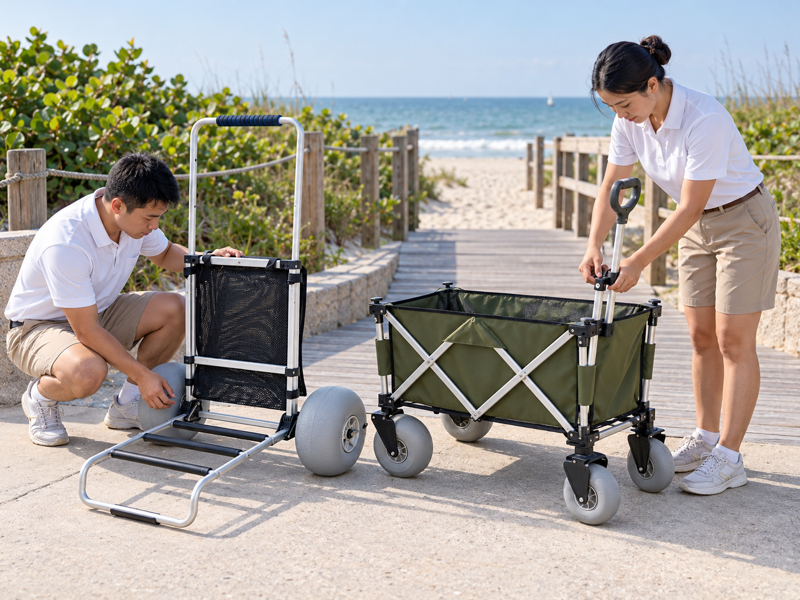
For example, the quick-fold 30021-SIS has a shelf, mesh and cooler bags and a chair rack. The four-wheel deck model has a different carrying surface and handle. Both configurations use balloon wheels and front swivel casters. Choose the model whose actual cargo area and approved securing method accept the kit. The removable bag is part of the count if it travels independently. Check every configuration against its own rating. Folding cart equipment comparison
Keep track of what crosses the van door
Imagine a crew sending six folded beach chairs in two marked bundles, a shade frame and one hardware pouch. The pouch can travel inside a named bundle if the packer records where it is and the receiver knows where to look. If a single suitable cart cannot contain the entire shipment, book a second run and identify what stays behind.
| Handoff | What the receiving person checks |
|---|---|
| Store to driver | Two chair bundles containing six chairs in total, one shade frame and one pouch. Record how the goods travel and whether the cart travels too. |
| Van to shore crew | Retrieve the numbered bundles and confirm the hardware pouch arrived. Use the vehicle operator’s loading and restraint arrangements for the cargo journey. |
| Shore crew to activity lead | Name the receiving place and confirm what remains there. If setup reveals a short count, contact the driver before the van starts its next job. |
| Activity close to store | List the returned goods and the location of the cart separately. Record a missing item even if the cart itself is back. |
For the road leg, decide whether the empty cart is secured separately or a destination cart will meet the vehicle. Do not infer that a loaded folding cart can be carried as a secured vehicle load merely because it rolls to the door. This plan moves equipment only.
Keep the last delivery from blocking the return
If a shuttle will occupy the unloading bay later, the daytime drop-off may be unavailable at pack-up. Agree on an alternative with the venue and walk the return leg from the activity site. Tell the collecting driver the bay name, time and contact. If the route cannot support another cart movement in that window, use a different collection time or a nearer checked handoff.
A simple final count locates the problem quickly: both chair bundles are in the store, the shade frame remains with the activity lead, the storekeeper has counted the pouch and signed for it, and the cart is drying by the service entrance. The next crew now knows what it can issue and what it still needs to collect.