
A manual off road wheelchair fits a beach program only when route evidence, propulsion method, and complete configuration match daily work. “Off-road” alone does not prove loose-sand suitability, a slope limit, a load rating, or water approval. This guide covers manual routes, controls, seating review, care, and procurement. Motorized and tracked equipment sits outside scope.
What Does “Manual Off-Road” Mean for Procurement?
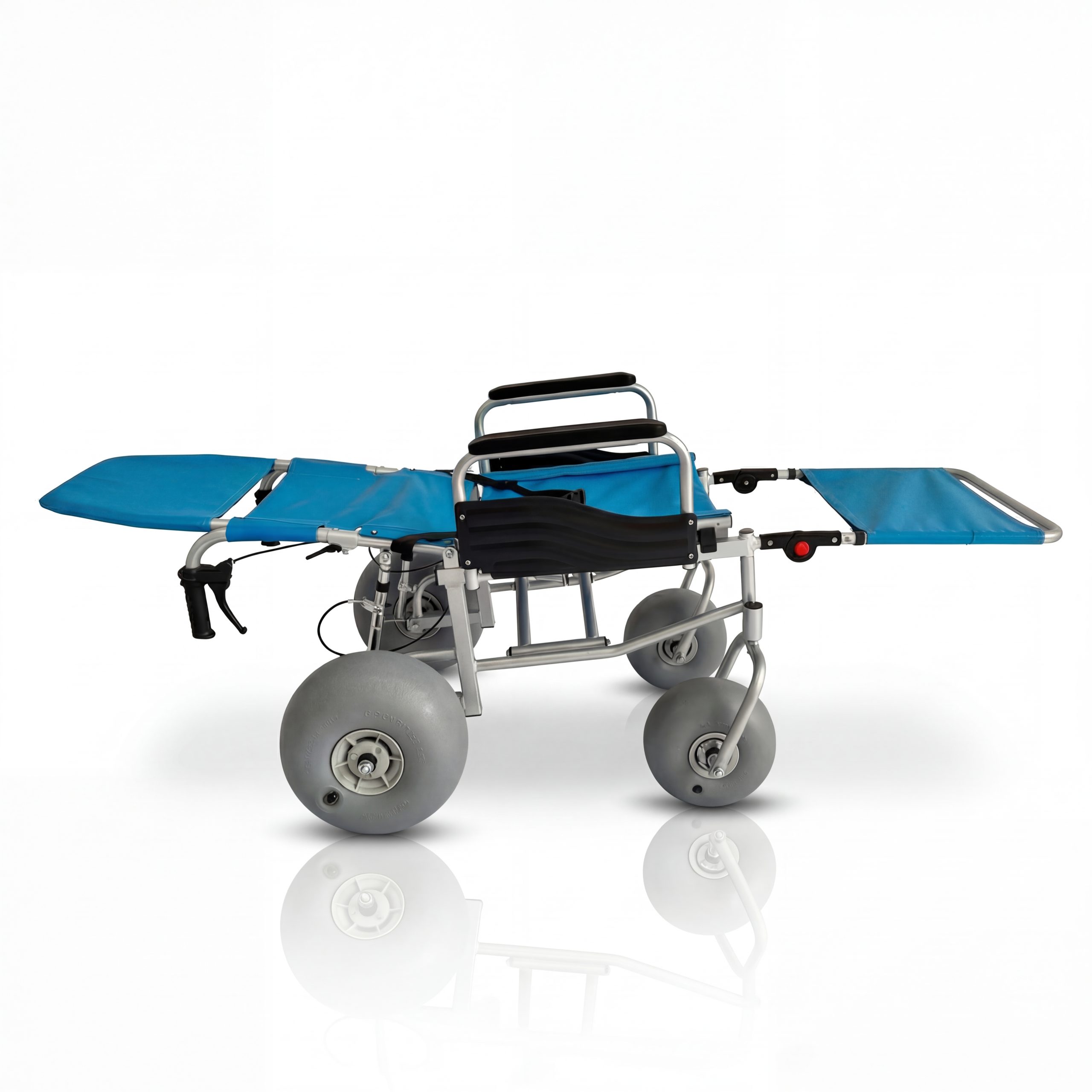
“Manual off-road” should describe a chair moved by a person through a documented route, with a named configuration and operating method. It should not act as a performance rating or a shortcut for beach approval. A manual chair may be pushed by an attendant or moved through another documented method. The supplier must describe its controls.
Define the manual scope
Ask for plain descriptions instead of broad labels. Record who moves the chair, where hands go, which parts control movement, and what conditions require a hold. Do not add a motor, tracked module, or conversion assumption to a manual comparison.
The scope line keeps a quote honest: compare a named manual method with a named route.
- State attendant push, user propulsion, or another documented method.
- Name chair configuration, wheel positions, handles, brakes, and supports.
- Exclude powered or tracked features unless a separate brief requests them.
- Ask which route surfaces the supplier has documented for this model.
- Record unknowns instead of filling gaps with “off-road” wording.
Ask whether an accessory changes operating method or chair identity.
Buyer check: does “manual” describe actual work?
| Procurement point | Evidence to request | Decision rule |
|---|---|---|
| Propulsion | Named manual method and operator | Match staffing plan |
| Configuration | Model, revision, wheels, and supports | Reject mixed records |
| Route scope | Documented surfaces and conditions | Do not infer beach approval |
| Exclusions | Motorized and tracked scope marked out | Keep quote comparable |
Key takeaway: Put one manual operating method beside a model name in every quote request.
Which Route Surfaces Should Buyers Map?
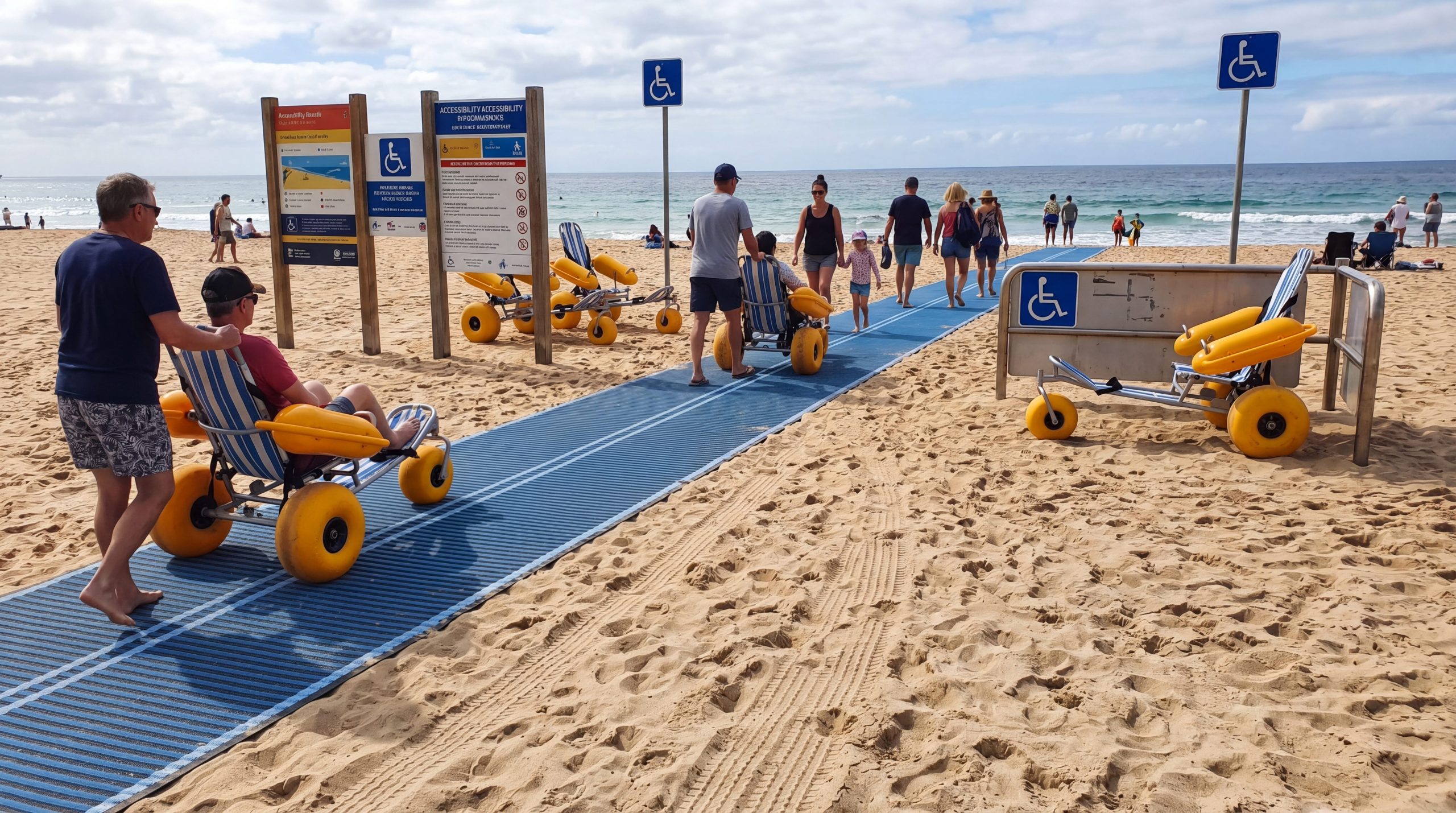
Buyers should map every surface between storage and service point, including firm paths, loose sand, mat edges, wet margins, ramps, and uneven crossings. A route map gives a manual chair a real operating question. “All-terrain” cannot answer how staff manage each surface or handoff.
Build a route worksheet
Walk the site with operations, accessibility, and maintenance staff. A professional assessor should handle individual seating questions. Operations should record available space, staffing, communication, storage, and cleaning points.
A route drawing beats a broad terrain label: mark every place where a manual method could change.
- Record surface order from storage bay through the public access point.
- Mark mat edges, soft patches, wet zones, thresholds, and tight turns.
- Note where an attendant needs room for handles or brakes.
- Record weather, tide, or crowd conditions only when your program tracks them.
- Identify a hold area for a chair with uncertain condition.
The accessible beach mat page can support a path conversation. It does not prove every chair crosses a mat edge or reaches water safely.
Buyer check: does each surface have an owner?
| Surface or point | Site evidence | Owner or response |
|---|---|---|
| Firm path | Width, clearance, and handoff space | Operations |
| Loose sand | Observed route and attendant plan | Supplier plus site team |
| Mat edge | Access layout and crossing method | Site manager |
| Wet margin | Written approval and supervision | Hold without approval |
Key takeaway: Walk the complete route with an empty chair when local procedure permits it, then record observations.
How Should Teams Compare Wheel and Frame Layouts?
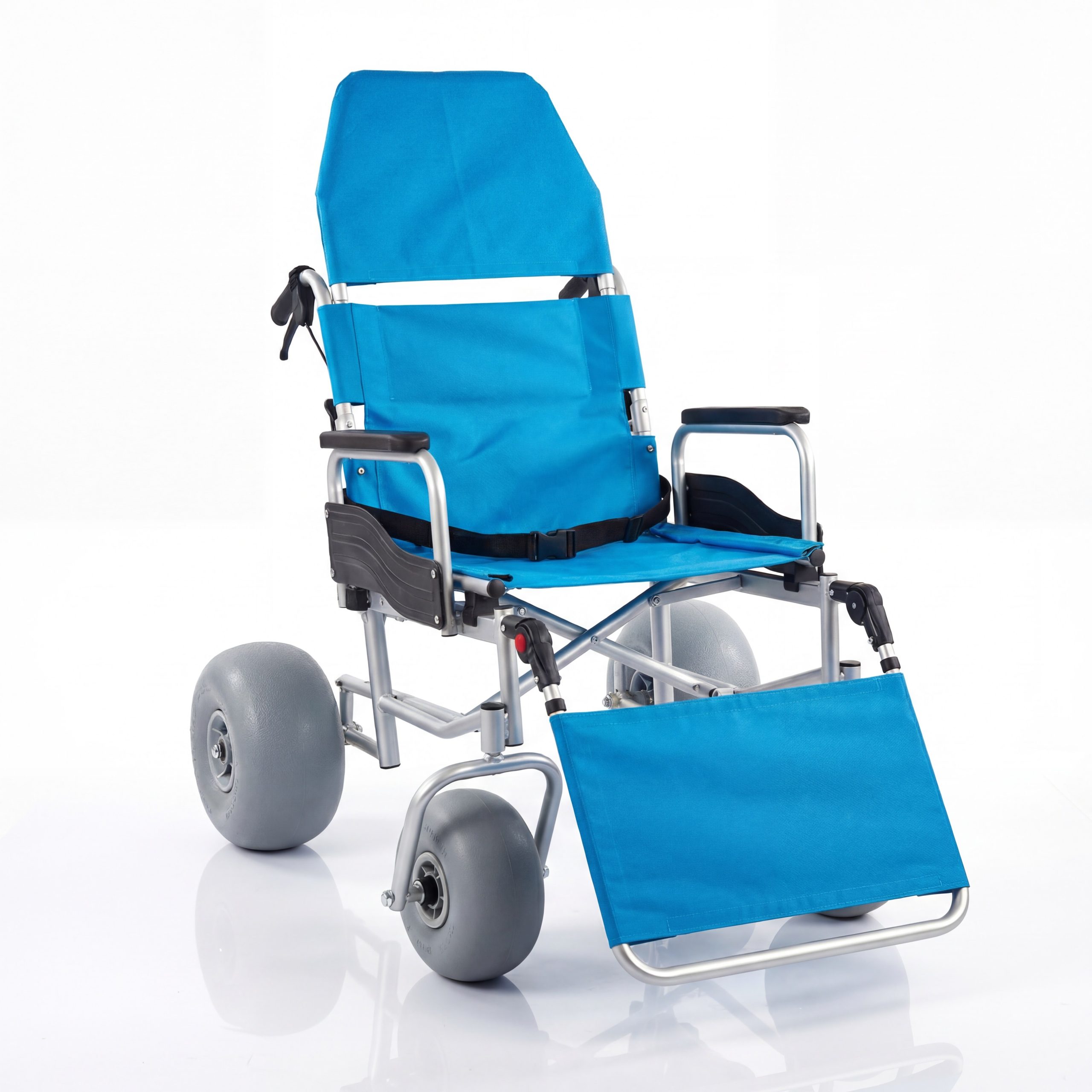
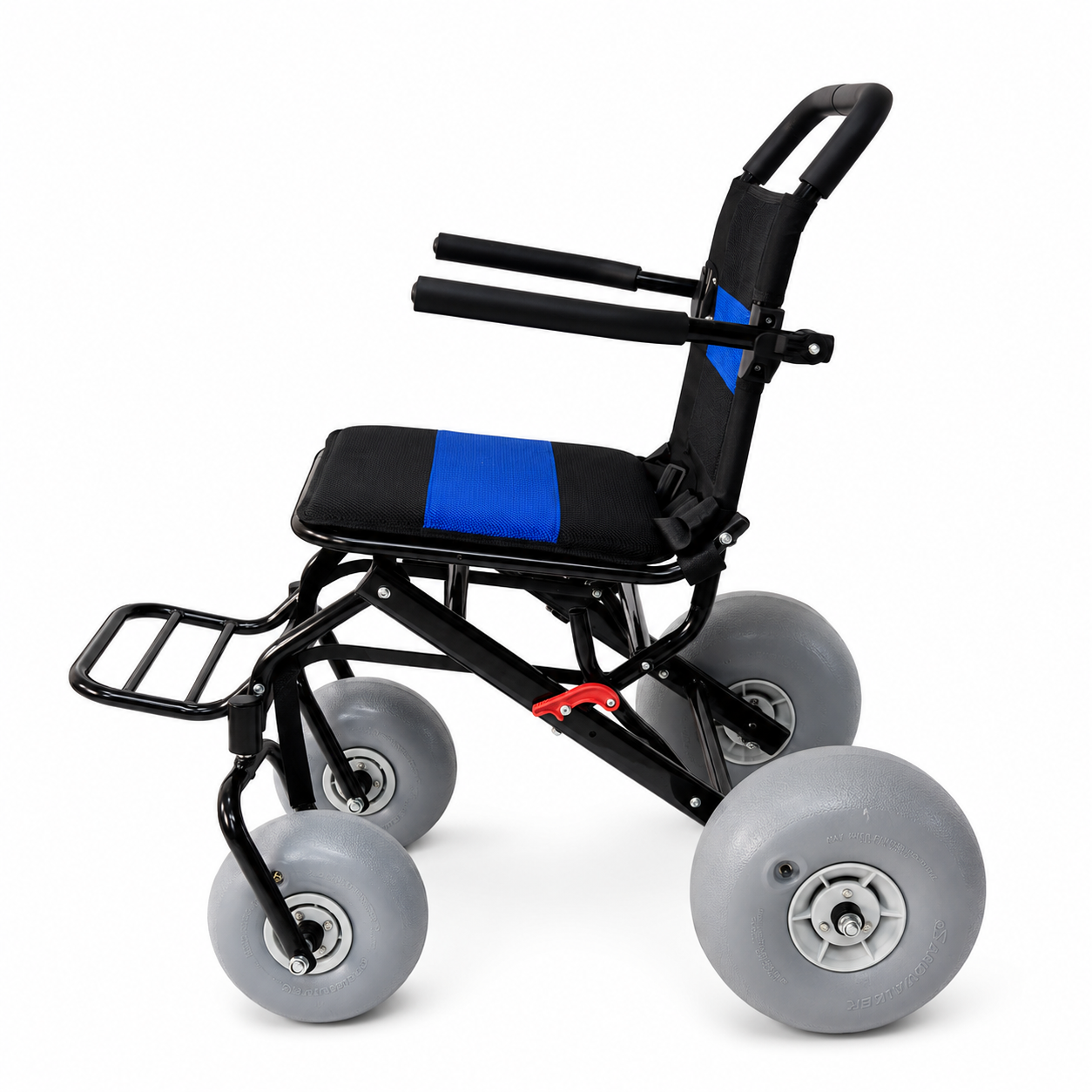
Teams should compare wheel and frame layouts as complete systems, not as isolated tire shapes or wheel counts. Position, hub identity, axle interface, frame clearance, foot support, and attendant grip can affect how a manual chair fits a route. A photo can show layout; it cannot prove turning effort, surface limit, load rating, or slope behavior.
Record visible and documented geometry
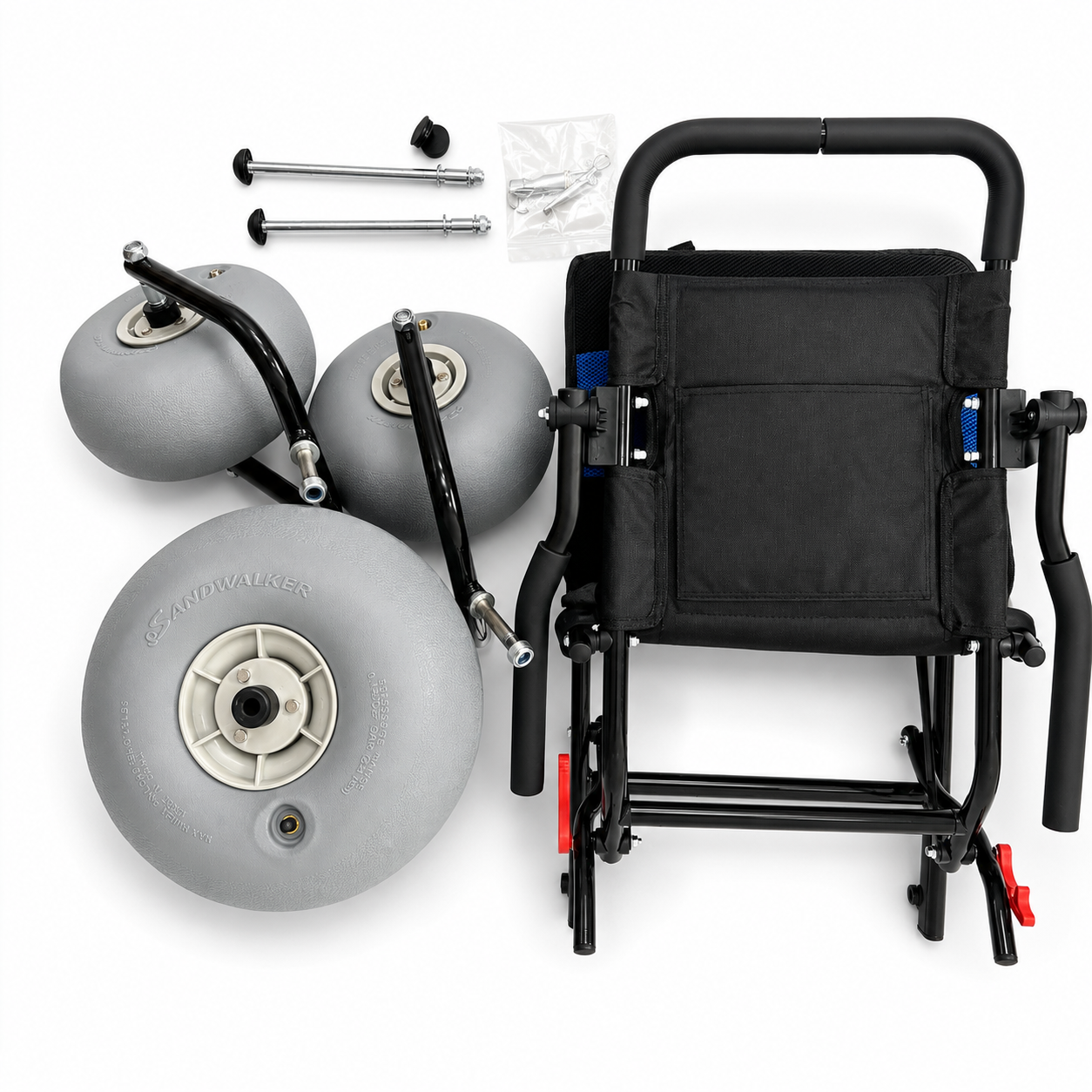
Ask the supplier for a current drawing and wheel-system description. Keep front and rear positions named. If a quote uses different wheels or supports, treat that as a new configuration until the supplier confirms compatibility.
The wheel count is only a starting point: review every contact point that affects manual handling.
- Name front and rear wheel positions when layouts differ.
- Record hub, axle, spacer, and fastener identity without copying fitting values.
- Note foot support, side rails, handles, and brake controls.
- Ask which parts are included, optional, or supplied separately.
- Keep a visual observation separate from a tested route result.
Use the beach wheelchair catalogue for family context; current model drawings control configuration.
Buyer check: does the layout record close the gap?
| Layout item | Evidence | Buying response |
|---|---|---|
| Wheel positions | Drawing and part identity | Match front and rear records |
| Hub and axle | Assembly description | Ask for exact compatibility |
| Clearance | Current drawing or sample view | Review against route space |
| Supports | Included component list | Price only matched scope |
Key takeaway: Compare complete wheel-and-frame records rather than treating “off-road” as a wheel specification.
What Role Does Attendant Control Play?
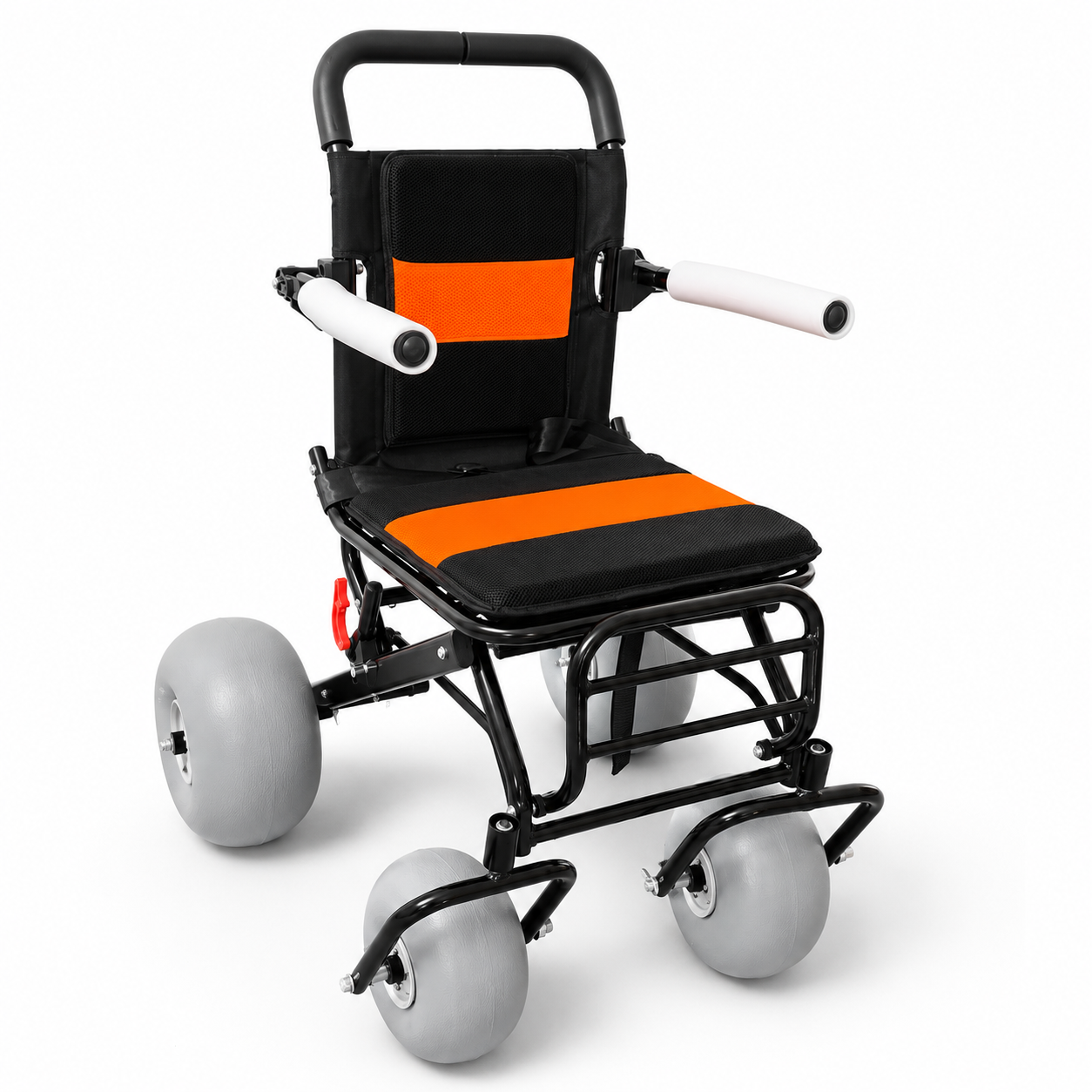
Attendant control determines whether a manual chair fits staffing, communication, and route procedures. Handles, brake controls, grips, and support locations must be identified before staff training. Their presence in a photo does not establish a safe technique, a slope limit, or permission for a particular route.
Turn controls into named tasks
Ask who pushes, who stops, who communicates with the rider, and who can place a chair on hold. Use current instructions for any control operation. The Ary Beach Wheelchair user manual page can provide document context; exact model files control practice.
Control becomes useful only when a person owns it: connect every handle, brake, and handoff with training.
- Name the operator for each route stage.
- Record communication signals and stop rules from local procedure.
- Demonstrate controls with an empty chair when permitted.
- Keep riders out of a trial until qualified staff approve the method.
- Record any control that remains unclear or configuration-dependent.
The WHO wheelchair provision guidance links assessment, fitting, training, and follow-up with trained personnel. It does not prove chair suitability.
Buyer check: can the team run the handoff?
| Control point | Evidence to record | Action |
|---|---|---|
| Push handle | Location and operator role | Include in training |
| Brake control | Current instruction and release rule | Hold if unclear |
| Communication | Local signals and escalation | Add to route plan |
| Staff coverage | Named people per shift | Confirm before launch |
Key takeaway: Name a trained operator for every manual control before treating a chair as route-ready.
How Can a Team Test a Manual Chair Without Overclaiming?
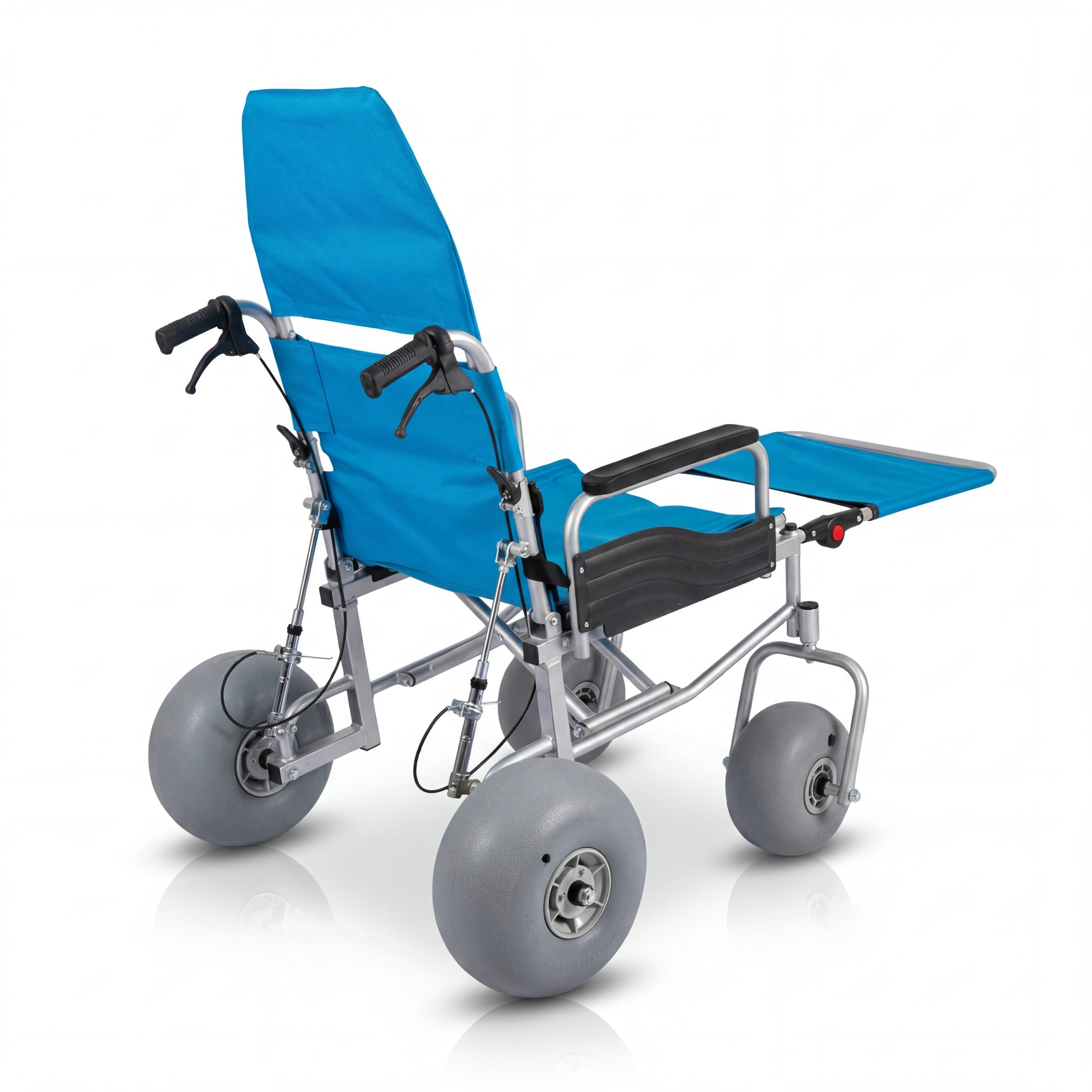
A team can test a manual chair by observing an approved empty-chair route, recording conditions, and separating observations from rider suitability. A short site trial cannot create a universal terrain rating or prove comfort, capacity, slope performance, or water approval.
Set a controlled observation
Use a defined route, named staff, good visibility, and current instructions. Keep the chair identity attached to notes and photos. If a route condition falls outside the documented scope, pause rather than improvise.
A trial should produce observations, not marketing language: write what staff saw and under which conditions.
- Record surface, weather, staffing, chair configuration, and route length.
- Observe movement, stopping, turning, clearance, and handoffs as allowed.
- Note sand, water, debris, or crowd conditions that affect the result.
- Keep individual seating decisions with a qualified professional.
- Record any fault, uncertainty, or change in chair status.
The applications page can frame operations; it cannot replace a site observation or professional assessment.
Buyer check: does the trial report stay bounded?
| Trial item | Record | Claim boundary |
|---|---|---|
| Route | Surface and conditions | Applies only to observed route |
| Chair | Model and configuration | No transfer across models |
| Staff | Named operator and roles | No universal technique claim |
| Outcome | Observation and hold points | No rating invented from one trial |
Key takeaway: Approve only the observed route and configuration, not a general “off-road” promise.
Which Records Separate Off-Road Evidence from Beach Claims?
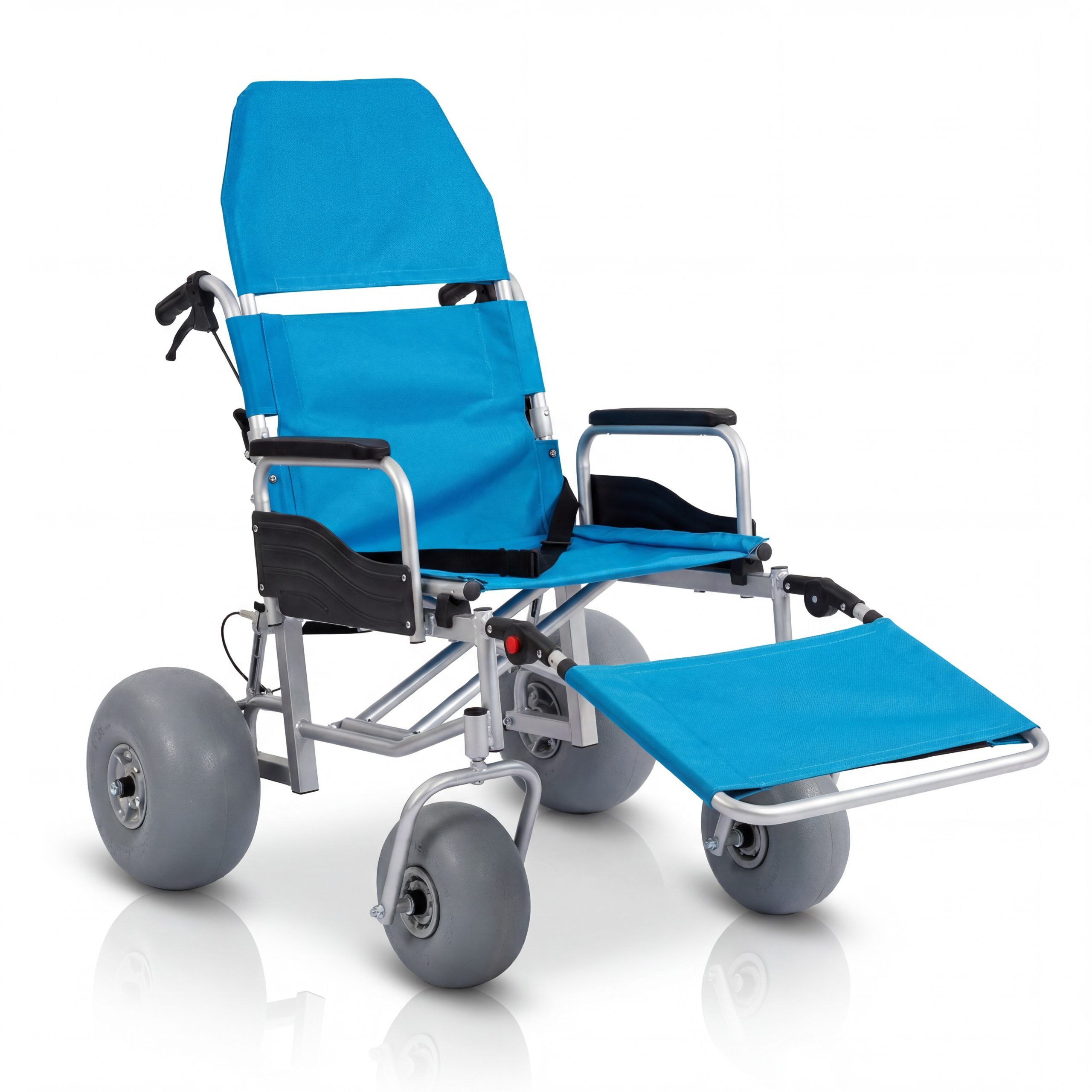
Records separate off-road evidence from beach claims when each statement names a source, model, condition, and responsible owner. A supplier’s route note, drawing, manual, sample observation, and care record serve different jobs. None should be merged into one unsourced terrain promise.
Use an evidence register
Create one register for every shortlisted chair. Mark whether information comes from a drawing, manual, sample, site observation, professional review, or supplier approval. Keep open items visible through purchasing and handoff.
A source label keeps similar words from becoming the same claim: “observed” and “approved” are not interchangeable.
- Product identity: model, revision, and supplied configuration.
- Route evidence: surface, condition, staff method, and observation date.
- Service evidence: controls, training, care, and release owner.
- Professional evidence: individual seating or transfer decision.
- Approval evidence: unusual configuration or water-use response.
Use the projects page as project context, then request records for your own location. A pictured deployment does not prove the same route, staffing, or configuration applies elsewhere.
Buyer check: can each statement be traced?
| Statement type | Source | Status if source is missing |
|---|---|---|
| Model feature | Drawing or manual | Do not quote as fact |
| Route observation | Site trial record | Limit to observed conditions |
| Seating decision | Qualified professional | Keep outside sales copy |
| Water use | Written model approval | Do not authorize |
Key takeaway: Keep “observed,” “documented,” and “approved” as separate fields in the buying file.
How Do Seating and Foot Support Affect Route Planning?
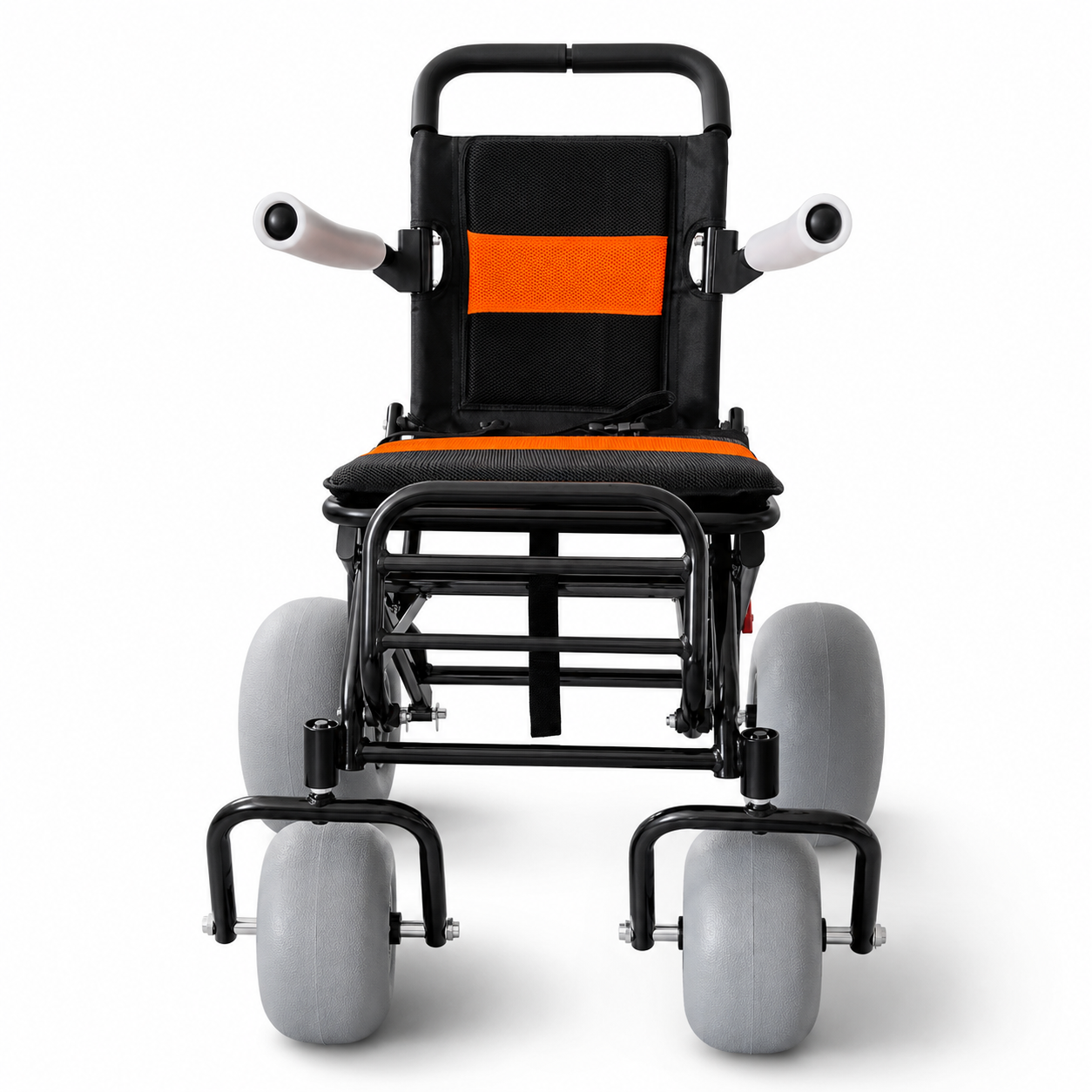
Seating and foot support affect route planning because they influence transfer space, rider positioning, clearance, and staff handoffs. A manual chair’s visible seat, belt, arm support, or foot platform does not prove fit for a person or route. Individual decisions need a qualified professional and the exact configuration record.
Connect chair records with professional review
Give an assessor the full chair identity, support list, route worksheet, and planned operating method. Keep procurement focused on whether a supplier can provide the requested configuration and records. Do not ask a photo to answer a clinical question.
Fit lives in the handoff: a support part matters only when its owner and use are documented.
- Name seat, back, arm, belt, and foot-support components.
- Record transfer space, attendant position, and route clearances.
- Ask which support parts move, detach, or require separate storage.
- Keep rider-specific decisions outside generic product copy.
- Add an escalation path for uncertainty or discomfort reports.
The lightweight beach wheelchair page can provide family context. A quote needs exact support scope and professional review.
Buyer check: does seating evidence reach operations?
| Seating point | Evidence | Operational action |
|---|---|---|
| Seat and back | Configuration record | Match sample and quote |
| Foot support | Included parts and care | Train staff on handoff |
| Transfer space | Site observation and assessment | Adjust route plan |
| Rider decision | Qualified professional record | Do not infer from image |
Key takeaway: Send the same chair-and-route file to procurement, operations, and a qualified assessor.
How Should Programs Plan Care After Sand or Water?
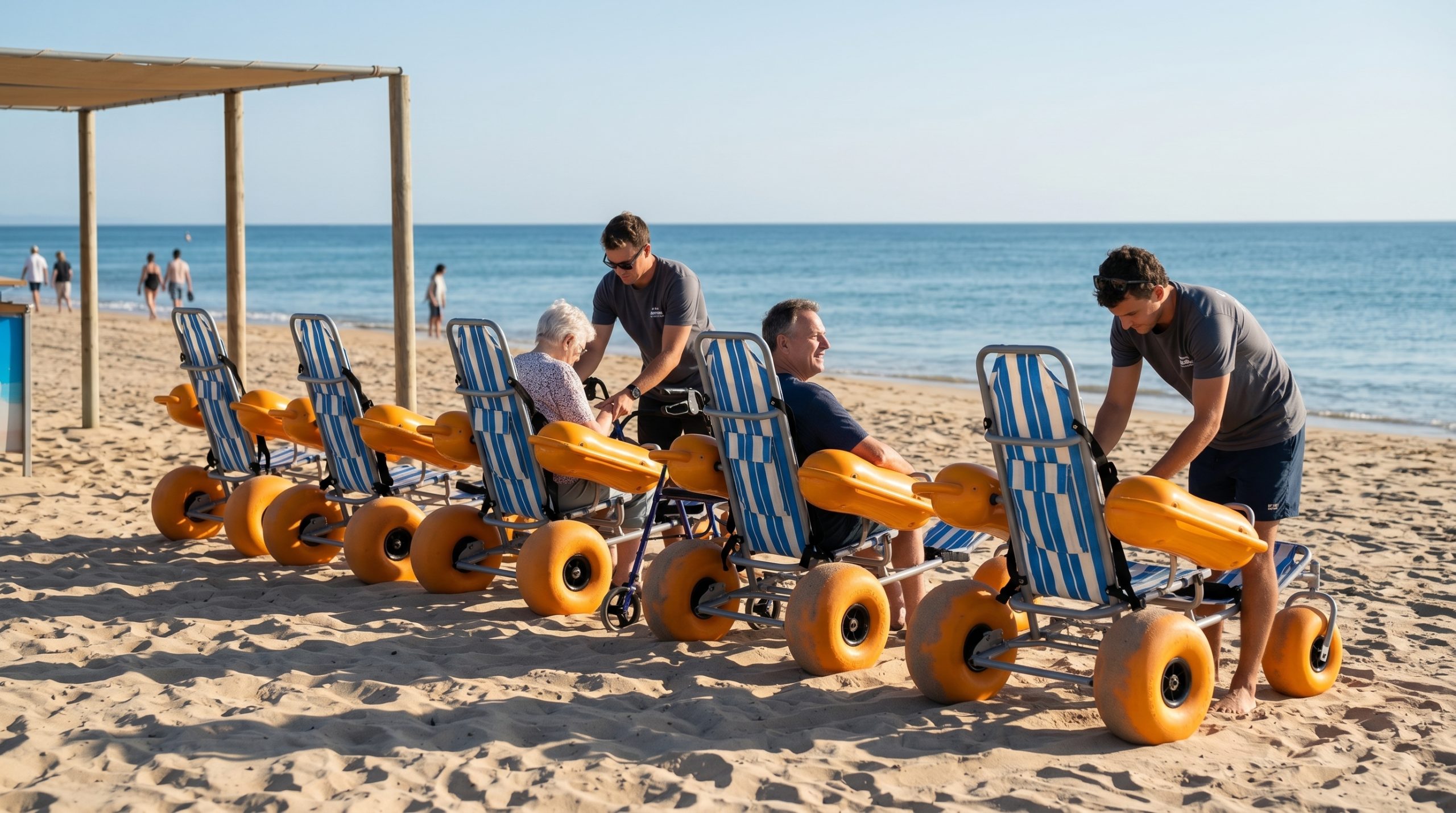
Programs should plan care as a status-controlled loop after sand or water exposure: receive, clean, dry, inspect, record, and release. A chair is not ready merely because visible sand has been removed. Current supplier instructions govern products, tools, drainage, and hold conditions.
Build the return-to-service flow
Assign one place for dirty returns and another for clean equipment. Keep chairs with unclear condition outside active rotation. Record the model and wheel configuration so staff do not apply a generic checklist to a different chair.
Care closes the route loop: every exposure needs a named release decision.
- Remove loose sand under the current care method.
- Follow supplier guidance for water exposure and approved cleaners.
- Dry fabric, frame, wheels, hubs, and supports as instructed.
- Inspect visible damage, missing parts, and movement before release.
- Record chair status, owner, date, and open action.
Do not infer corrosion resistance, service life, or water approval from a photograph. Ask the supplier which configuration and care method a quote covers.
Buyer check: does care produce a release status?
| Care stage | Record | Release result |
|---|---|---|
| Return | Chair identity and exposure | Enter cleaning flow |
| Cleaning | Method and operator | Continue when complete |
| Inspection | Visible condition and open faults | Hold uncertainty |
| Release | Named approver and date | Return to active stock |
Key takeaway: Make “ready,” “cleaning,” and “hold” visible chair statuses rather than informal messages.
Which Questions Expose a Route-to-Chair Mismatch?
Questions expose a route-to-chair mismatch when they force a supplier and site team to name conditions, roles, records, and boundaries. A buyer should ask the same questions for every chair while tying answers to its proposed configuration.
Ask before approval
Use direct questions in the quote review. If a response relies on a photo or a broad label, request a drawing, manual, or controlled observation instead.
A mismatch shows up in unanswered details: pause comparison when an answer changes a route plan.
- Which exact chair, wheel layout, and support package are quoted?
- Which surfaces and conditions are documented for that configuration?
- Who pushes, stops, communicates, cleans, and releases the chair?
- Which changes require supplier approval or professional review?
- What happens when a wheel, support, or control is unclear?
The beach walker page may separate walking-aid questions from wheelchair procurement. Do not use its image or label as proof of rider transport.
Buyer check: what answer should stop the order?
| Warning sign | Missing evidence | Response |
|---|---|---|
| “All-terrain” only | Route and condition record | Ask for bounded evidence |
| Similar photo | Exact model identity | Hold comparison |
| Unnamed operator | Manual control plan | Confirm staffing |
| Water request | Written approval | Do not authorize |
Key takeaway: Stop a quote when route, operator, configuration, or approval evidence remains unnamed.
What Should a Manual Beach Wheelchair Quote Include?
A manual beach wheelchair quote should include exact identity, configuration, route scope, operator method, support package, care records, professional-review path, and release ownership. A clean quote lets a resort, municipality, rental operator, or distributor compare responsibilities.
Use a buyer-ready quote request
Ask suppliers to answer the same list. Keep motorized and tracked equipment outside this brief. Ask for written boundaries when water use, unusual support, or a changed wheel layout appears.
A good quote carries the handoff: make every promised item traceable from purchase through service.
- Model, revision, wheel layout, support parts, and included accessories.
- Documented manual method and operator responsibilities.
- Route evidence, sample-review plan, and professional-assessment path.
- Care, storage, inspection, replacement, and release records.
- Open questions, approval owners, and hold conditions.
For a project conversation, contact us with route notes, staffing details, and the configuration evidence you need.
Keep the next action concrete
Send your route worksheet with a quote request. Ask for a matched manual configuration, review its sample within written limits, and assign care ownership before ordering.
Q1: Does “off-road” prove a wheelchair works on loose sand? No. It is a label until route evidence names surfaces, conditions, and configuration.
Q2: Can a manual off-road chair be compared with powered or tracked equipment? Not within this brief. Those systems need separate operating, service, and approval records.
Q3: Should a short site trial create a terrain rating? No. A trial records observed conditions; it cannot create a universal rating.
Q4: Who should review individual seating and transfer suitability? A qualified professional should review those questions using the exact chair and route information.
Q5: What should happen when a supplier cannot identify the quoted wheel layout? Pause the quote until model, wheel positions, parts, and compatibility records are clear.