A lightweight beach wheelchair combines balloon wheels with a compact frame so travel teams, rental operators, and families can move and store beach mobility equipment with less handling burden. A guest may reach a hotel ready for the shore, while staff find that the available chair is too bulky for the vehicle, difficult to lift, or awkward to store near the access point. That delay can turn a simple outing into a chain of transfers, extra labor, and uncomfortable waiting. A lighter setup addresses the problem through portable geometry, a short deployment routine, sand-ready tires, and a realistic plan for who loads, unfolds, guides, and cleans the chair.
What Makes a Lightweight Beach Wheelchair Portable?
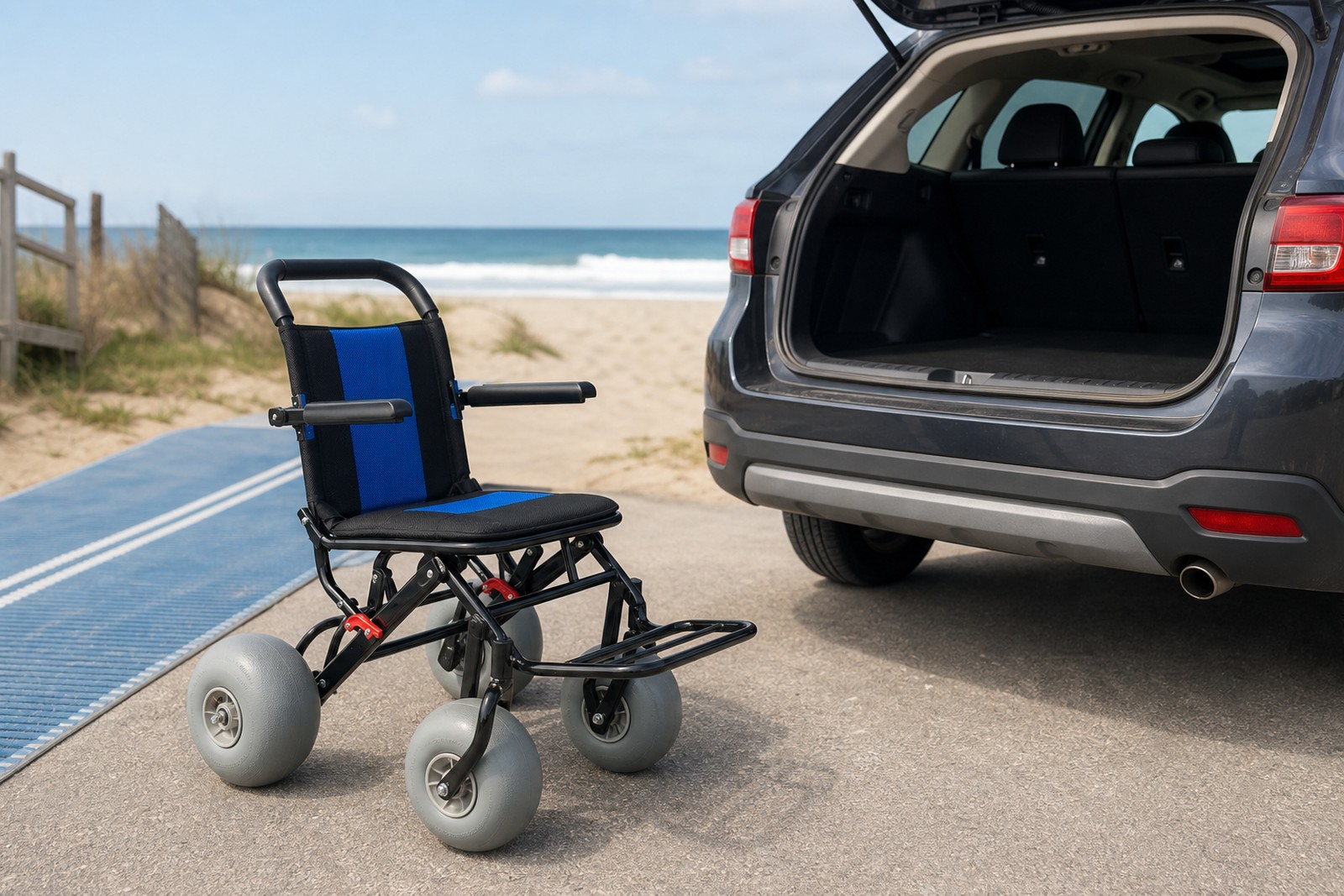
A lightweight beach wheelchair uses a compact frame, folding points, and removable or easy-handling parts to reduce transport and storage demands. It gives you a defined mobility tool, but the result still depends on user fit, route conditions, and trained support.
Which design details affect portability?
Look at the whole package: Frame size, wheel removal, folding sequence, and grip locations all shape how easy the chair is to move off the beach. A low listed weight alone does not describe loading effort.
- Compact folded footprint.
- Clear wheel attachment points.
- Accessible lifting grips.
- Few loose parts to track.
Why does portability matter to operators?
Every transfer adds work: Rental teams may move a chair between a store room, vehicle, boardwalk, and beach several times a day. A compact setup can shorten those transitions and free space for other access equipment.
Key Takeaway: Portability is the combined result of weight, folded size, and a simple handling sequence.
| Portable Feature | Operational Value |
|---|---|
| Folding frame | Uses less storage space |
| Removable parts | May simplify loading |
| Clear grips | Supports planned handling |
This comparison helps buyers look past one weight number.
Why Does Lower Handling Weight Matter?
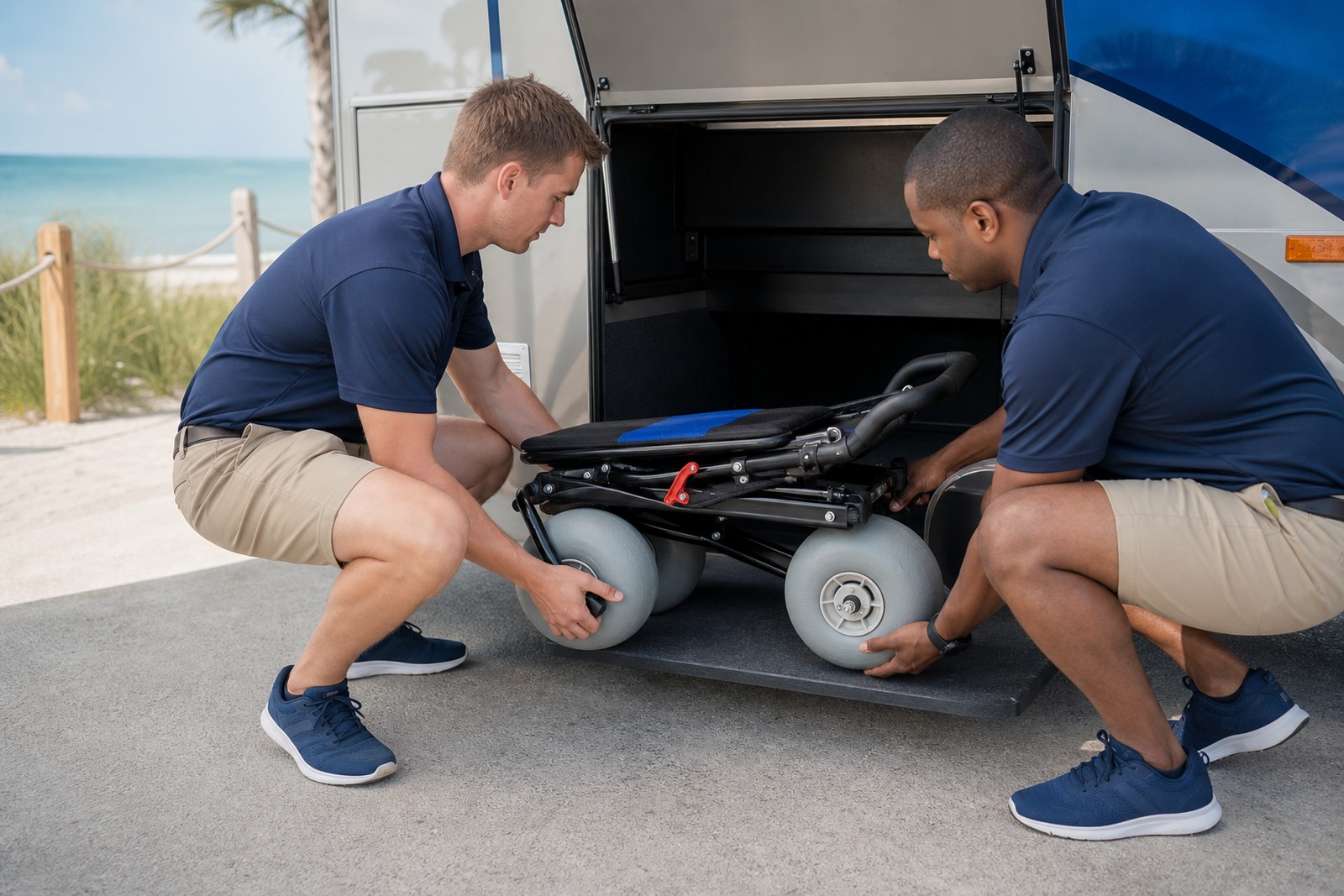
A lightweight beach wheelchair can reduce staff strain and make repeated loading, unloading, and setup easier when teams follow safe handling practice. It gives you a defined mobility tool, but the result still depends on user fit, route conditions, and trained support.
Where does staff effort appear?
Count every movement: The chair may be lifted into a vehicle, carried over a curb, turned in a store room, and positioned for transfer. Each movement should be included in the operating review.
- Vehicle loading.
- Storage rack placement.
- Wheel installation.
- Positioning at the transfer area.
Does light always mean easy?
There is more to the answer: An awkward shape can still be hard to handle even when the chair weighs less. Grip height, balance, folded dimensions, and staff training all influence the real effort.
Key Takeaway: Lower weight helps most when the shape and workflow also support safe handling.
| Handling Factor | Question to Ask |
|---|---|
| Weight | Can staff lift it safely? |
| Balance | Does it stay controlled? |
| Size | Does it fit the vehicle? |
The table keeps handling tests close to daily reality.
How Does It Fit Travel and Vehicle Use?
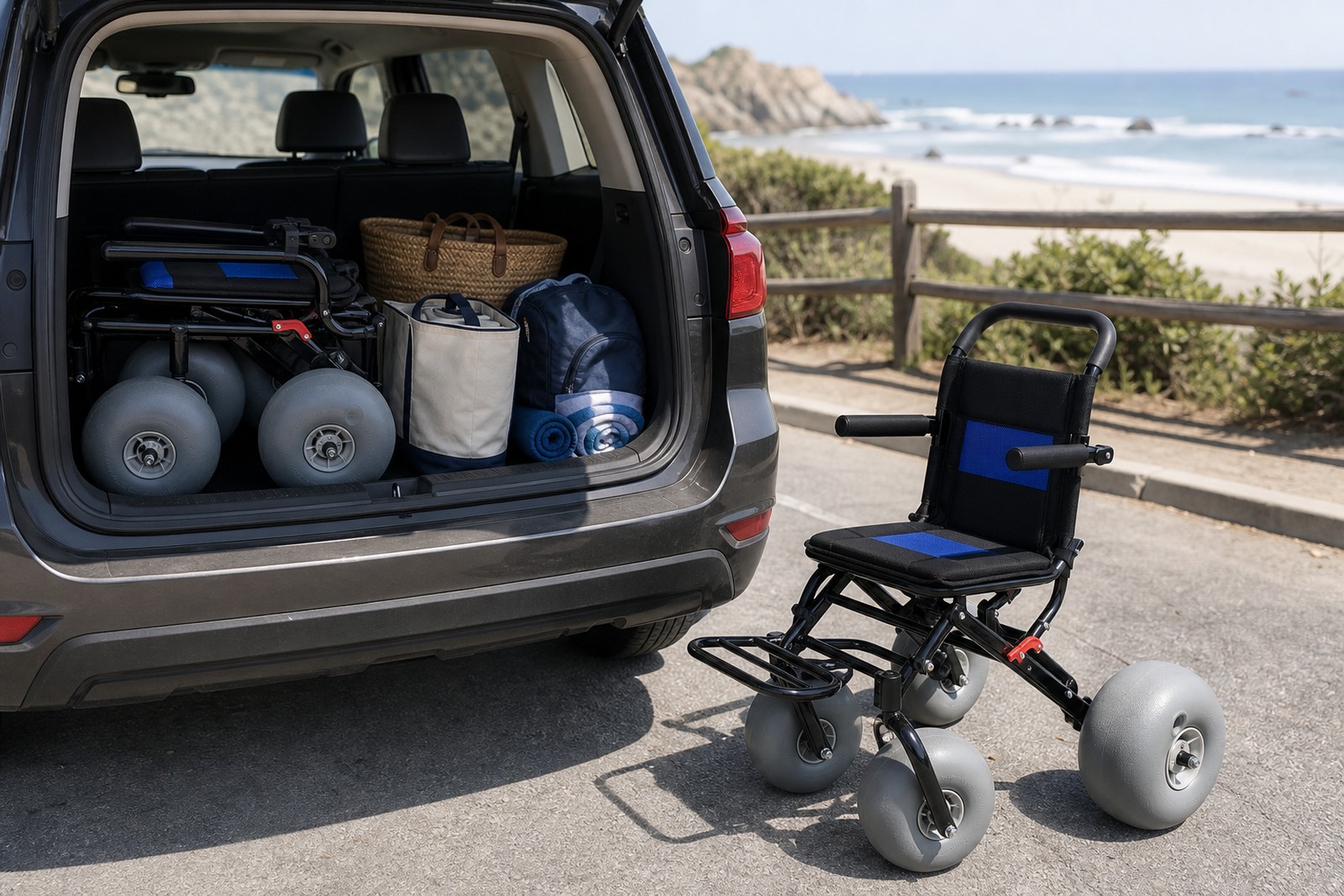
A lightweight beach wheelchair fits travel best when its folded dimensions, wheel system, and loading steps match the available vehicle and staff. It gives you a defined mobility tool, but the result still depends on user fit, route conditions, and trained support. For example, the Padre Island guidance shows why sites define local transport and device limits.
What should you measure first?
Measure before the trip: Check the cargo opening, usable floor area, lift height, and space needed for other luggage or equipment. A quick paper measurement can prevent a failed loading test.
- Cargo door width and height.
- Flat floor dimensions.
- Lift-over height.
- Space for secured components.
How should parts be secured?
Small details protect the trip: The lightweight travel project shows why folded parts and wheels need a defined place. Use straps or padded zones so the chair cannot move into passengers or fragile cargo.
Key Takeaway: Vehicle fit should be confirmed with measurements and a real loading trial.
| Vehicle Check | Desired Result |
|---|---|
| Opening | Chair passes without forcing |
| Cargo floor | Parts lie stable |
| Restraint | No movement in transit |
This test prevents portability claims from failing at the cargo door.
Can It Still Perform on Soft Sand?
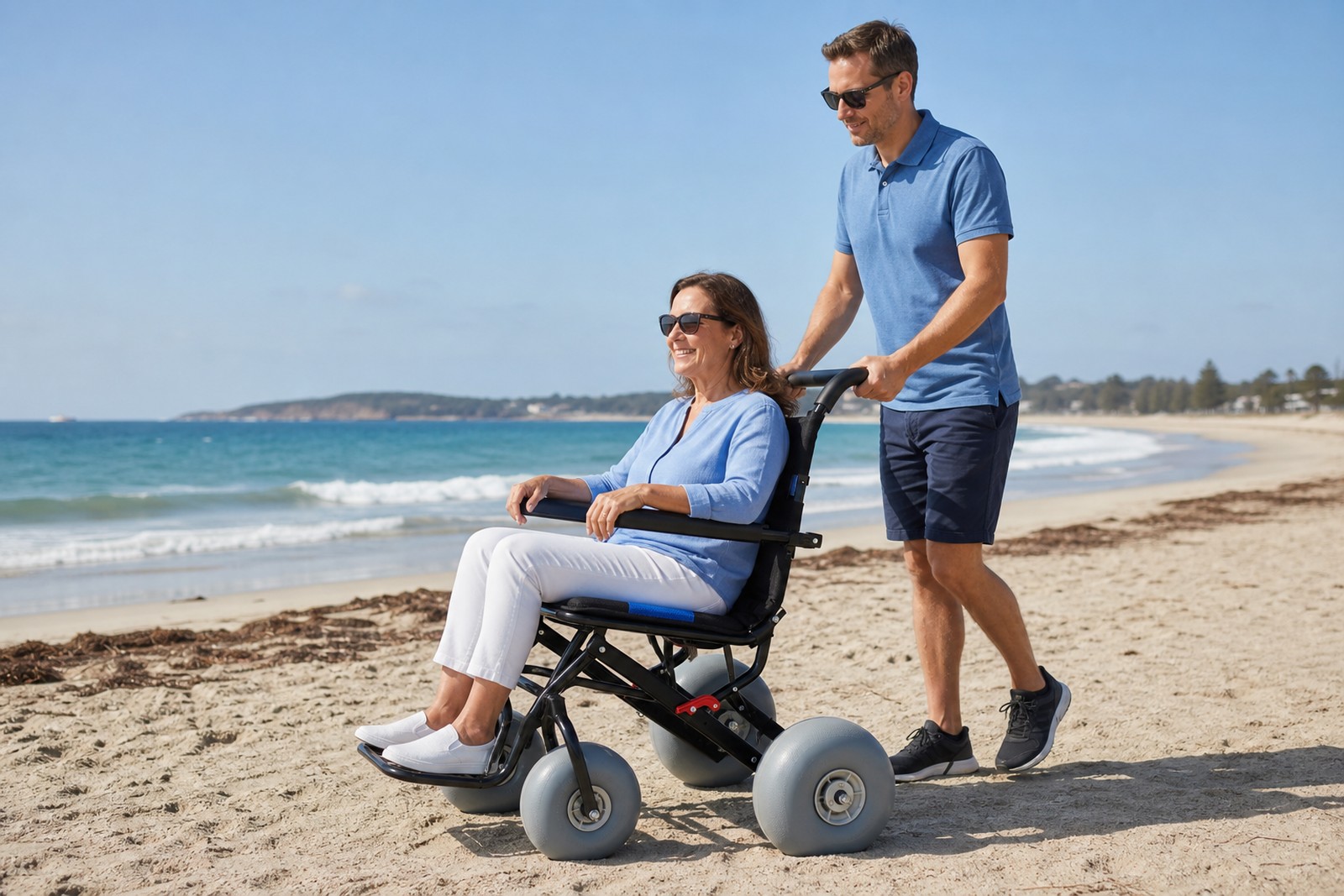
A lightweight beach wheelchair can perform on soft sand when broad wheels spread load and the attendant follows a steady, low-resistance route. It gives you a defined mobility tool, but the result still depends on user fit, route conditions, and trained support.
What creates sand mobility?
The wheels do most of the ground work: Balloon tires reduce sinking compared with narrow wheelchair tires, while a stable frame carries the seat above ruts. Slow turns keep the wheels from digging into one point.
- Wide low-pressure tire profile.
- Balanced wheel placement.
- Steady forward pace.
- Broad turns instead of pivots.
What conditions raise effort?
Watch the route, not just the chair: Deep dry sand, side slopes, crowded paths, and long distances can increase pushing force. Test the actual beach zone before promising a service time.
Key Takeaway: A portable chair still needs the right wheel profile and route for soft sand.
| Sand Condition | Likely Effort |
|---|---|
| Packed | Lower |
| Loose and level | Moderate |
| Loose side slope | High or unsuitable |
The pattern shows how quickly terrain can change handling demand.
Who Is This Chair Best Suited For?
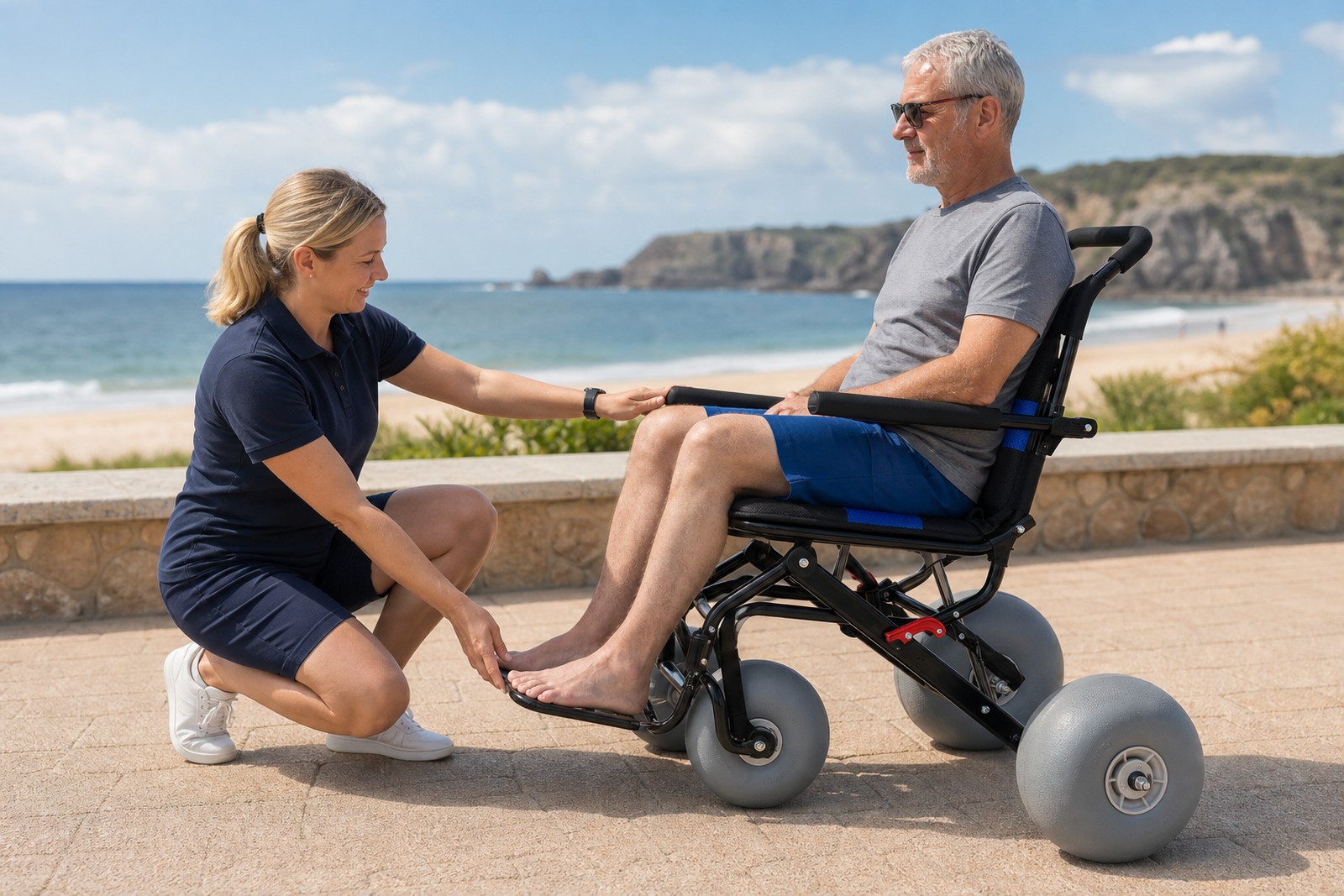
A lightweight beach wheelchair is best suited to users whose seating and support needs match the chair and to teams that value frequent transport or compact storage. It gives you a defined mobility tool, but the result still depends on user fit, route conditions, and trained support.
What user factors need review?
Fit comes before convenience: Check seat dimensions, posture, transfer method, foot support, and any positioning needs with the user. A chair that stores well still has to provide a comfortable supported ride.
- Seat width and depth.
- Back and arm support.
- Foot placement.
- Preferred transfer method.
What trip factors matter?
Plan around the complete day: The accessible beach equipment checklist can help teams review weather, route, shade, transfers, and cleaning supplies before departure. This reduces last-minute improvisation.
Key Takeaway: The best match balances user fit with the transport needs of the team.
| Match Area | Review Point |
|---|---|
| User | Posture and transfer |
| Trip | Route and duration |
| Team | Handling capacity |
This three-part match keeps portability from outranking comfort.
How Quickly Can Staff Set It Up?
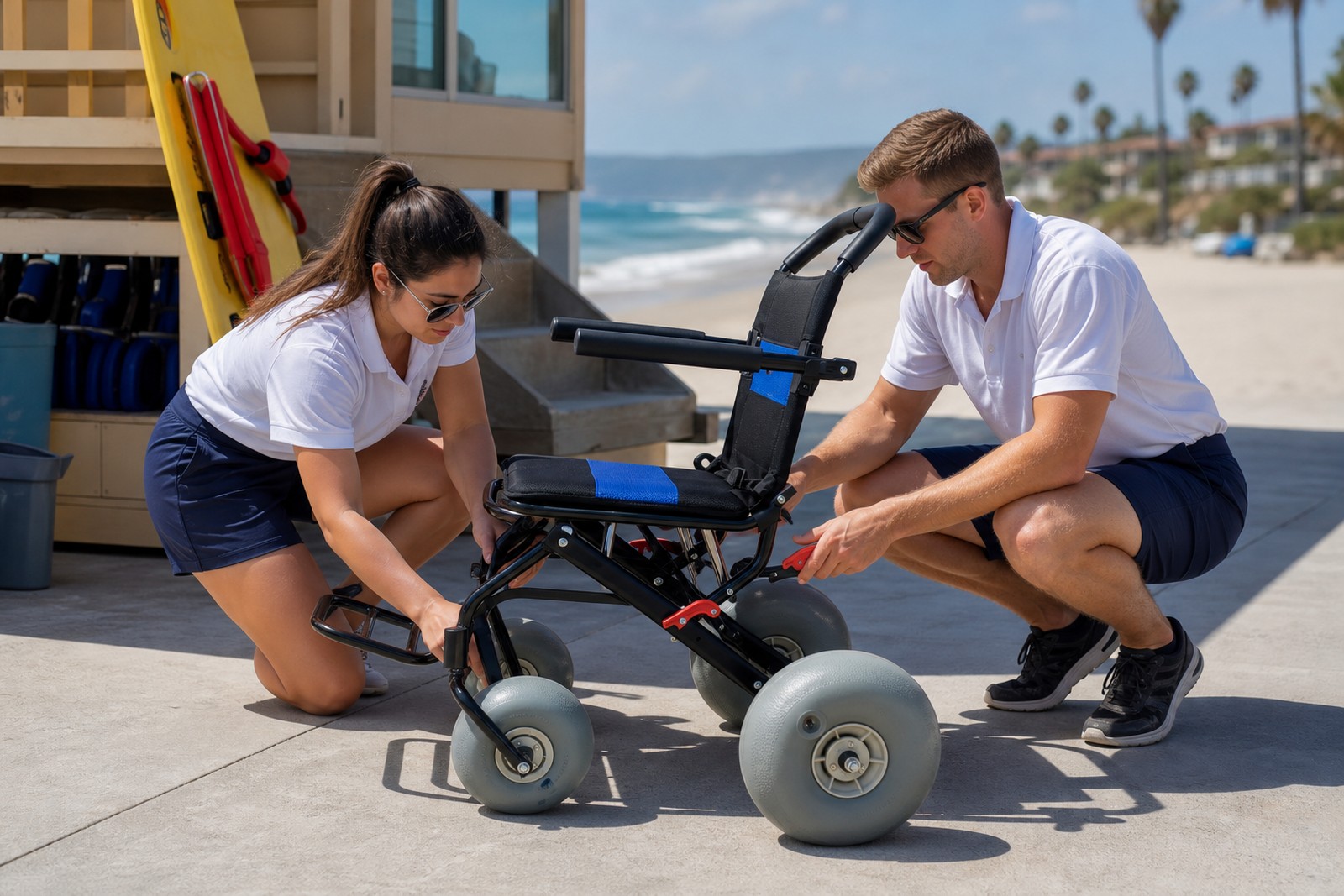
A lightweight beach wheelchair can be set up efficiently when staff follow one documented sequence for unfolding, wheel attachment, locking, and inspection. It gives you a defined mobility tool, but the result still depends on user fit, route conditions, and trained support.
What belongs in the setup sequence?
Use a fixed order: Lay out the chair on firm ground, open the frame, attach or check the wheels, lock each mechanism, and inspect the seat before transfer. One person should call out the steps during training.
- Open the frame fully.
- Confirm wheel attachment.
- Engage every frame lock.
- Inspect seat and supports.
How can managers reduce errors?
Practice under real conditions: Run setup drills near the actual storage and loading areas, then note any step that causes confusion. A short visual checklist can stay with the chair.
Key Takeaway: A repeatable setup is faster because staff do not have to guess.
| Setup Stage | Pass Check |
|---|---|
| Frame | Fully open and locked |
| Wheels | Secure with no play |
| Seat | Ready before transfer |
The sequence gives new staff a clear way to confirm readiness.
What Pre-Use Safety Checks Are Needed?
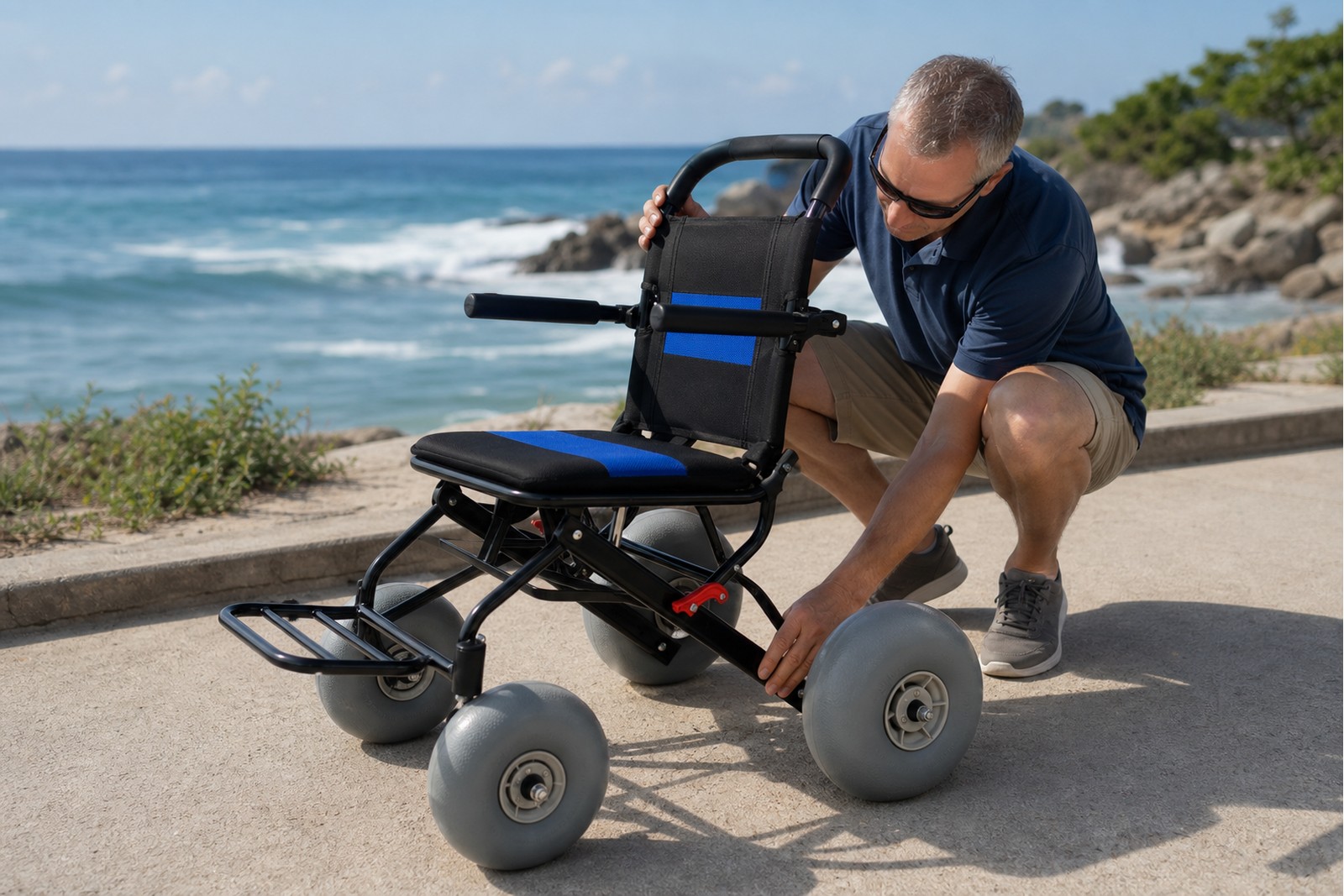
A lightweight beach wheelchair needs checks of frame locks, wheels, seat supports, brakes, foot platform, and route conditions before a passenger transfers. It gives you a defined mobility tool, but the result still depends on user fit, route conditions, and trained support.
How long should the check take?
Keep it short and complete: A one-page checklist can cover the highest-risk points without slowing service. Staff should perform it after transport because folding and loading can disturb attachments.
- Frame lock engagement.
- Wheel security and condition.
- Seat, arm, and foot supports.
- Brake and handle response.
When should the chair stay in storage?
Use a clear stop rule: Do not use the chair when a lock is uncertain, a wheel is damaged, the route is unsafe, or trained staff are unavailable. Record the reason so the next shift knows what must be fixed.
Key Takeaway: A post-transport inspection catches problems before the guest is seated.
| Area | Stop Signal |
|---|---|
| Lock | Does not engage fully |
| Wheel | Damage or loose attachment |
| Route | Unsafe surface or obstruction |
This table supports consistent decisions across staff changes.
How Should You Compare Beach Chair Options?
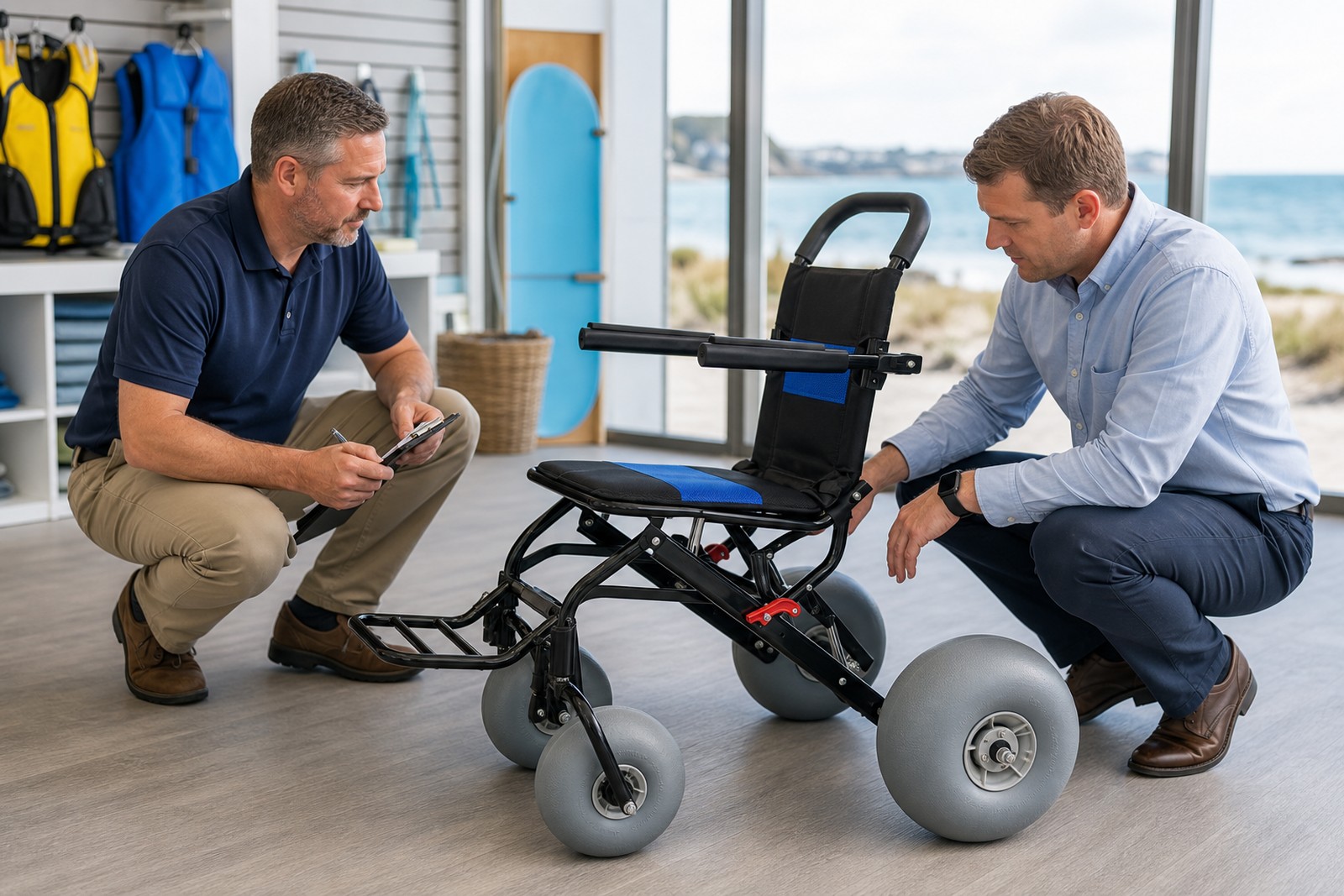
A lightweight beach wheelchair should be compared by user fit, folded size, sand performance, setup time, handling demand, and care needs. It gives you a defined mobility tool, but the result still depends on user fit, route conditions, and trained support.
What should a trial include?
Test the real workflow: Move the chair from storage to a vehicle, deploy it on firm ground, cross the intended sand route, and return it for cleaning. Record time, staff count, and any awkward step.
- Storage-to-vehicle movement.
- Loading and unloading.
- Soft-sand handling.
- Rinse and return routine.
Which product family fits the program?
Use the site as the filter: A broader beach wheelchair range may include dry-sand, floating, and portable options. Compare them against the program’s main destination rather than choosing one chair for every coastal task.
Key Takeaway: A realistic trial reveals more than a specification sheet alone.
| Option Type | Primary Use |
|---|---|
| Lightweight | Frequent transport |
| All-terrain | Dry-sand routes |
| Floating | Managed water entry |
The comparison separates portability from water-use or heavy-route needs.
How Do You Clean and Store the Chair?
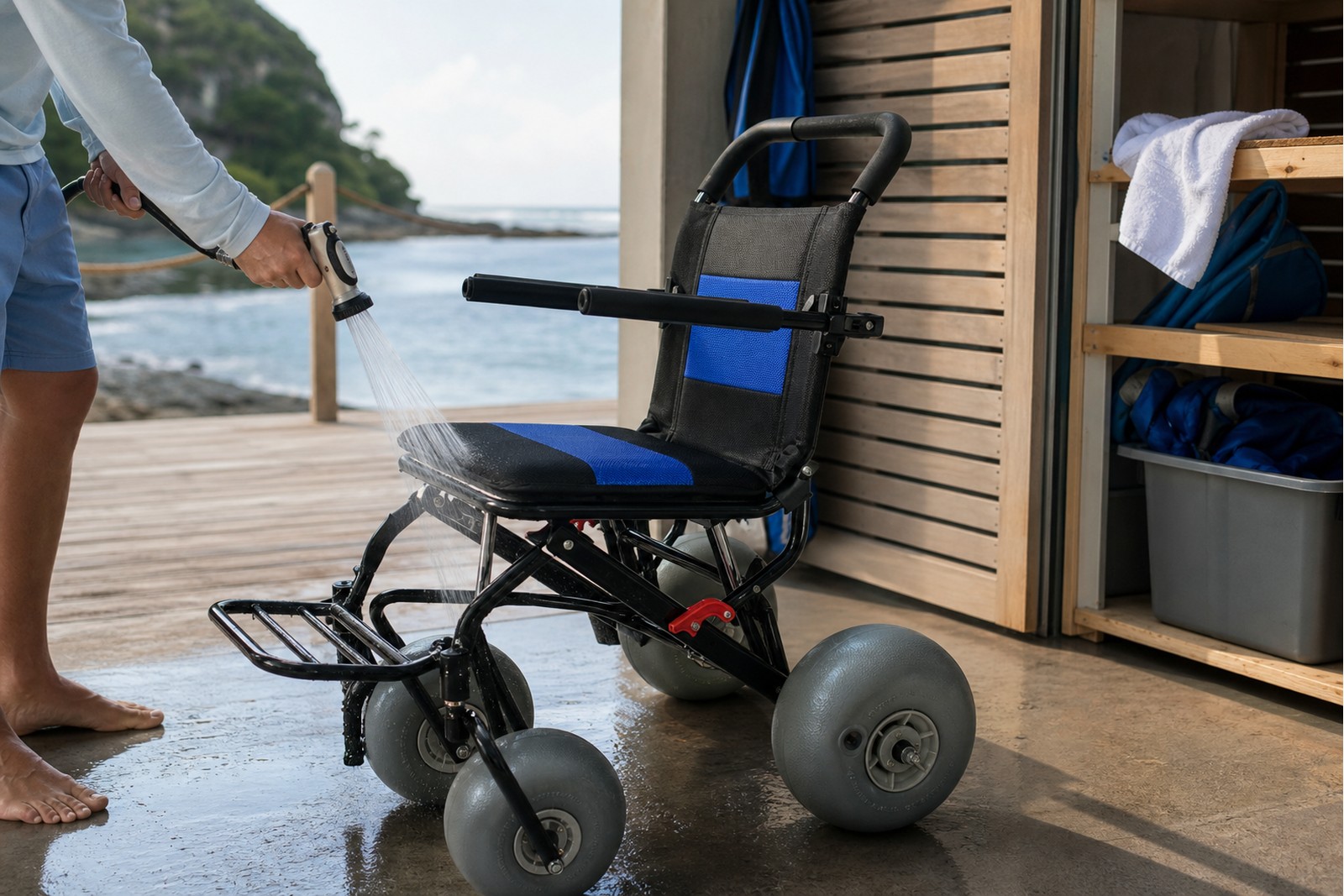
A lightweight beach wheelchair needs sand removal, fresh-water rinsing after coastal exposure, full drying, and compact storage with parts secured. It gives you a defined mobility tool, but the result still depends on user fit, route conditions, and trained support.
What should happen after each outing?
Close the loop before storage: Brush loose sand away, rinse coastal residue with fresh water, inspect moving points, and dry fabric and frame surfaces. Do not pack damp parts tightly for long periods.
- Remove loose sand.
- Rinse salt-exposed areas.
- Dry seat and frame.
- Log damage or missing parts.
How should removable parts be organized?
Give every part a home: Use a labeled bin, rack, or padded case for wheels, pins, and accessories. Keep the checklist with the stored chair so the next team can verify that the set is complete.
Key Takeaway: Organized storage protects both portability and readiness.
| Care Step | Purpose |
|---|---|
| Rinse | Remove coastal residue |
| Dry | Reduce trapped moisture |
| Organize | Prevent missing parts |
The routine keeps a compact chair from becoming a scattered kit.
How Can You Build a Better Travel Program?
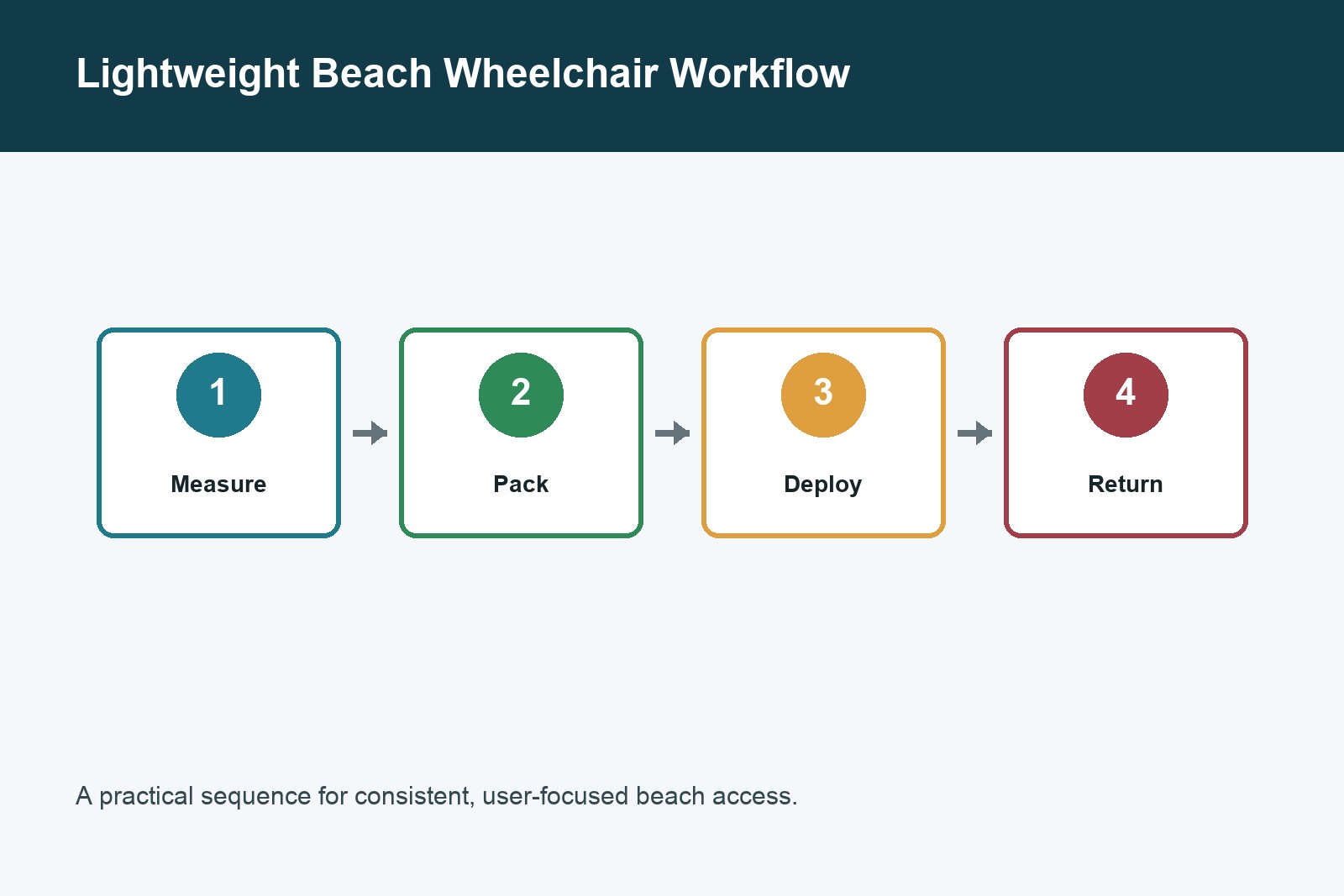
A lightweight beach wheelchair supports a better travel program when equipment fit, vehicle space, staffing, route planning, and guest communication are designed together. It gives you a defined mobility tool, but the result still depends on user fit, route conditions, and trained support.
What should the operating plan contain?
Write down the handoffs: Name who books the chair, loads it, checks it, assists the guest, cleans it, and reports wear. Clear ownership keeps a portable product available when demand rises.
- Booking and confirmation.
- Vehicle and loading plan.
- Guest transfer support.
- Return, cleaning, and records.
What should you do before launch?
Run one complete rehearsal: Follow the trip from the storage room to the sand and back, then adjust the slow points. You can contact us today to discuss product fit and a practical travel workflow. Coastal mobility should travel with the guest instead of ending where transport becomes inconvenient.
Key Takeaway: A strong travel program connects portable equipment with clear human responsibility.
| Program Piece | Success Signal |
|---|---|
| Chair | Fits user and cargo space |
| Team | Knows each handoff |
| Route | Tested before the booking |
This final check turns portability into dependable service.
FAQ
Can I put a lightweight beach wheelchair in an SUV?
Often yes. Confirm the folded dimensions, cargo opening, wheel removal steps, and safe restraint points before the first trip.
What’s the best tire type for soft sand?
Broad balloon tires are usually the right choice. They spread weight and reduce the digging action created by narrow standard wheelchair tires.
How do I know if the chair is light enough for staff?
Run a handling trial. Use the real storage room, vehicle, staff count, and loading height rather than relying on product weight alone.
Can I use a portable beach chair in the ocean?
Only if it is rated for water use. Many lightweight dry-sand chairs are not floating chairs, so check the product instructions before water entry.