
An all-terrain beach wheelchair is built with broad balloon wheels, a supportive seat, and an attendant-controlled frame so a facility can move guests across surfaces that stop a standard wheelchair. A family may arrive at a public beach, follow the paved route to its end, and then face a long strip of loose sand with no practical way forward. That break in the route frustrates the guest, puts staff under pressure, and can turn a well-funded access program into a promise that works only on paper. The right chair closes that dry-sand gap through better weight distribution, a planned route, trained attendants, and a care routine suited to coastal use.
What Makes an All-Terrain Beach Wheelchair Different?
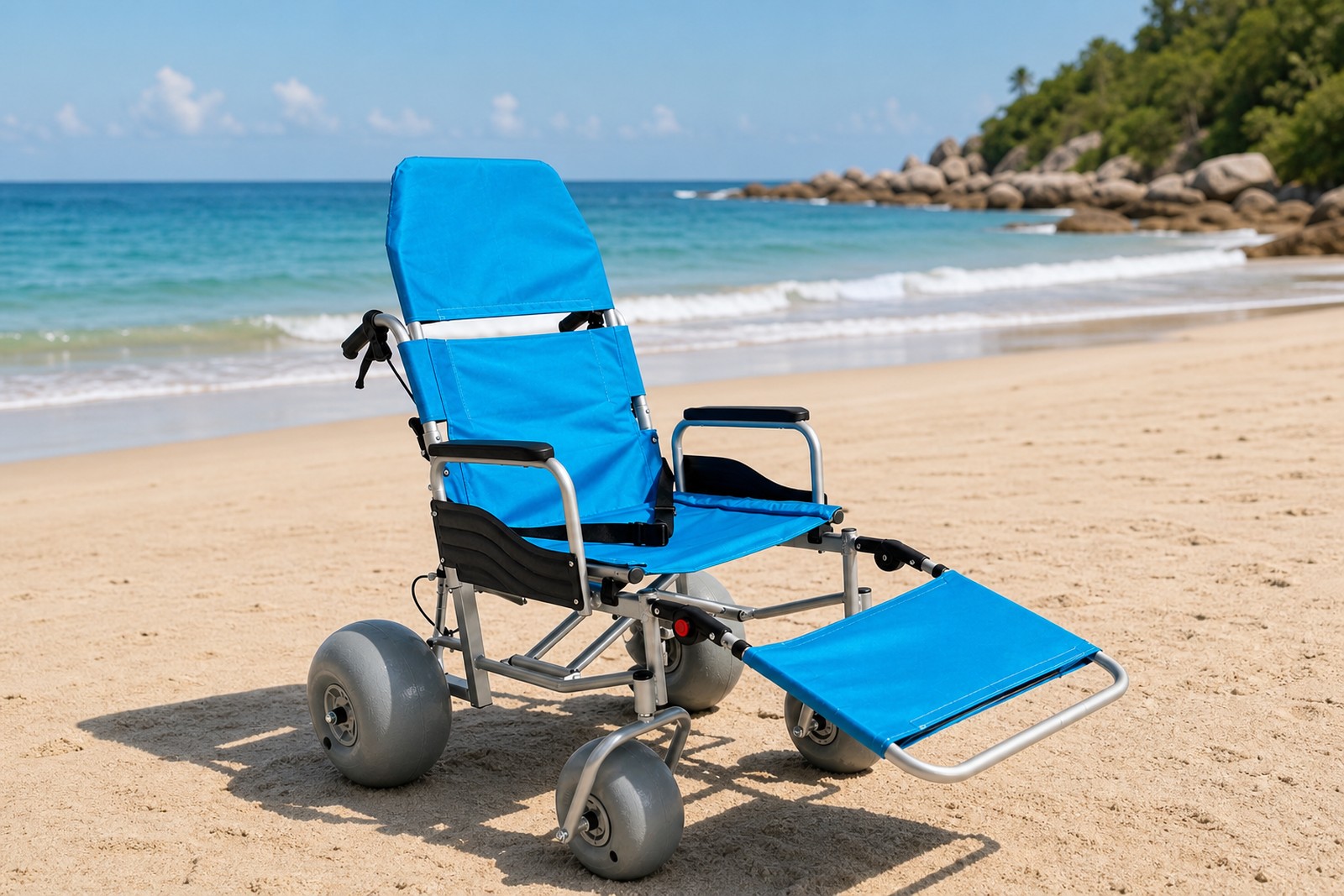
An all-terrain beach wheelchair uses large low-pressure wheels and an attendant-guided frame to spread load across soft sand. It gives you a defined mobility tool, but the result still depends on user fit, route conditions, and trained support.
Which parts change sand performance?
Start with the contact points: Wide wheels reduce the pressure concentrated in one small area, while the chair frame keeps the passenger supported above uneven ground. Buyers should judge the complete system rather than treating wheel size as the only measure.
- For example, balloon wheels spread the load.
- Also, a supportive seat steadies posture.
- In addition, push handles give attendants control.
- Next, a footrest keeps legs clear.
Why does a normal wheelchair stop?
The reason is mechanical: Narrow tires cut into loose sand and create drag with every turn. A beach model lowers that resistance, but staff still need to choose a firm route and avoid steep side slopes.
Key Takeaway: The product works because wheel width, seating, and attendant control act together.
| Design Area | Buyer Check |
|---|---|
| Wheel profile | Wide and suited to loose sand |
| Seat support | Stable for the intended user |
| Control | Clear attendant grip and braking |
This comparison keeps the purchase discussion tied to real movement.
Why Do Public Beaches Use This Chair?
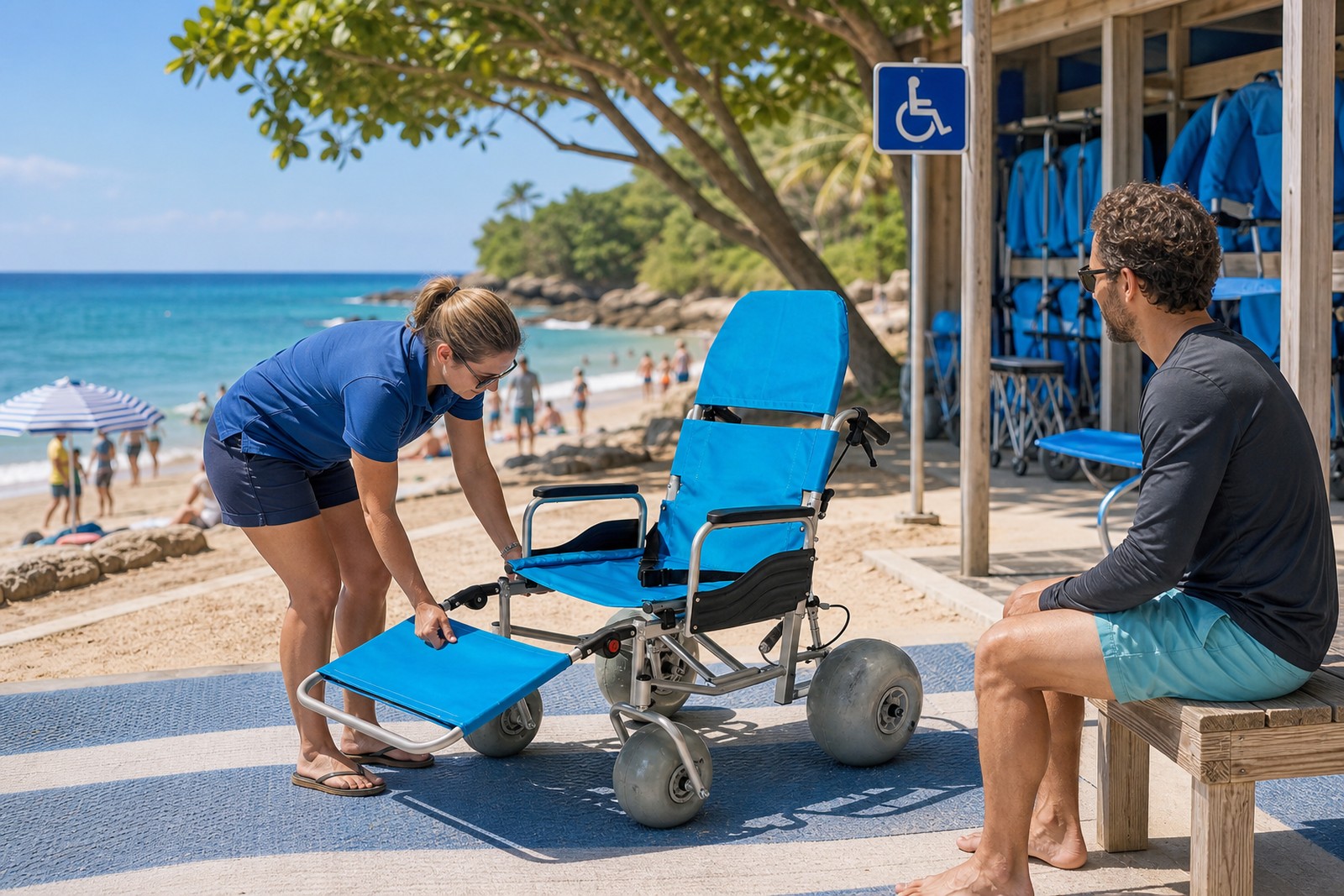
An all-terrain beach wheelchair gives public beaches a repeatable way to extend mobility from paved access points onto dry sand. It gives you a defined mobility tool, but the result still depends on user fit, route conditions, and trained support.
What does it add to public service?
Think beyond the equipment shed: A chair becomes useful when visitors can request it, staff can prepare it, and the route is visible from arrival to the beach zone. That operating flow supports a more consistent public service.
- For example, a clear booking or walk-up process.
- Also, marked pickup and return points.
- In addition, staff who can explain the route.
- Next, storage near the access zone.
How can managers plan daily use?
A simple routine goes far: The rental program model shows why handoff, inspection, and return steps deserve as much attention as the chair itself. Managers can assign each step to a named role before peak hours begin.
Key Takeaway: A public chair program succeeds when visitors can find, request, and use it without confusion.
| Program Step | Operational Aim |
|---|---|
| Request | Easy for visitors to understand |
| Handoff | Clear staff responsibility |
| Return | Inspection before storage |
This view turns a single purchase into a workable public service.
How Does the Chair Move Across Soft Sand?
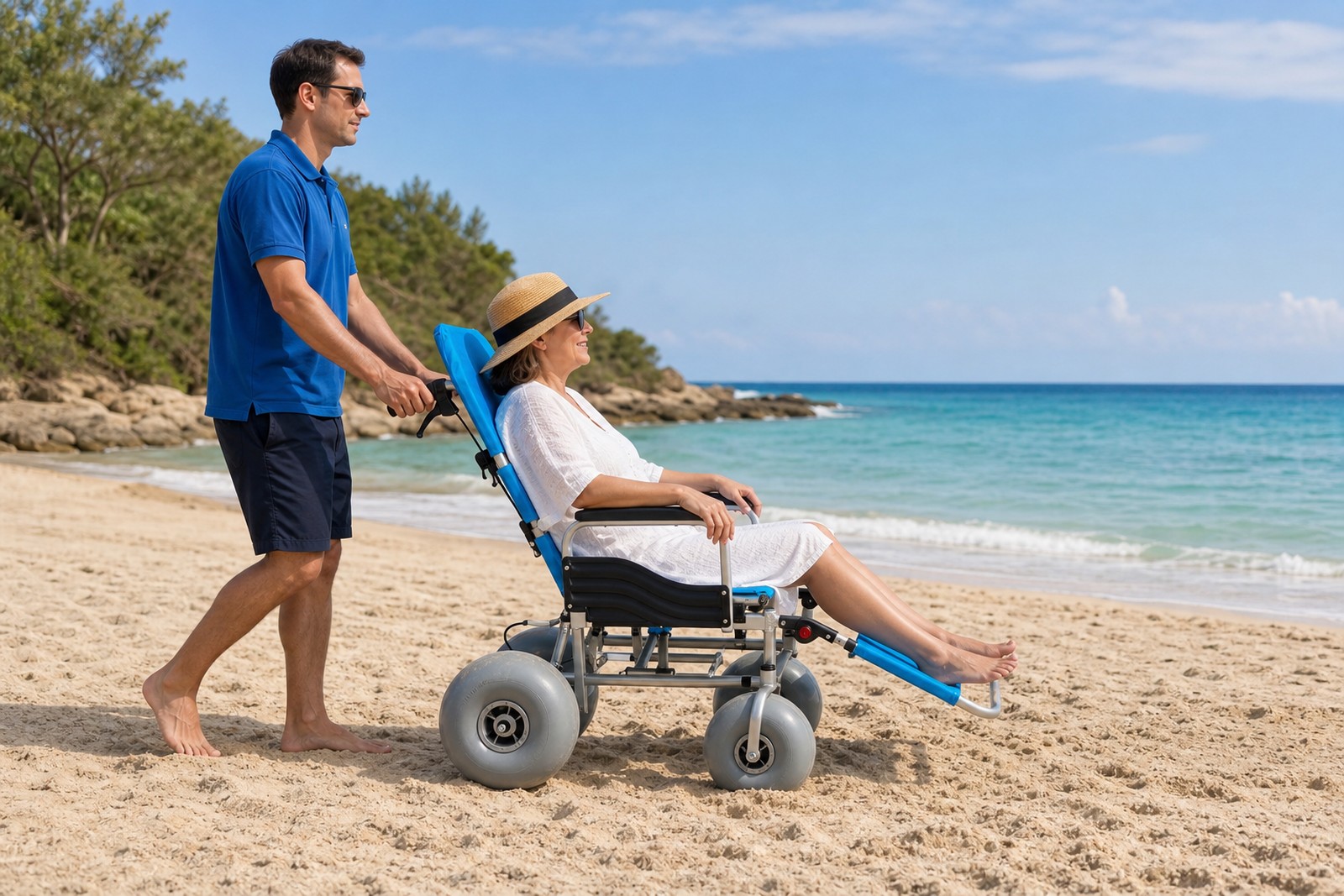
An all-terrain beach wheelchair moves across soft sand by spreading weight through broad tires and reducing the digging action caused by narrow wheels. It gives you a defined mobility tool, but the result still depends on user fit, route conditions, and trained support.
What should attendants do first?
Here is the practical starting point: Choose the firmest available line, keep momentum steady, and turn gradually rather than pivoting in place. Short route checks save effort before the passenger is seated.
- For example, scan for compacted sand.
- Also, avoid sharp turns on loose slopes.
- In addition, move at a calm walking pace.
- Next, pause before changing direction.
What terrain still needs caution?
There is a clear boundary: Very steep dunes, deep ruts, rocks, and waterlogged drop-offs can still overwhelm a sand-ready chair. Use the beach route planning guide to connect equipment choice with the real site.
Key Takeaway: Broad wheels reduce sand resistance, but route choice still controls effort and comfort.
| Surface | Handling Note |
|---|---|
| Packed sand | Usually lower effort |
| Dry loose sand | Use steady forward movement |
| Side slope | Avoid where practical |
The pattern shows why a short route survey belongs in every shift.
Who Can Benefit From This Beach Wheelchair?
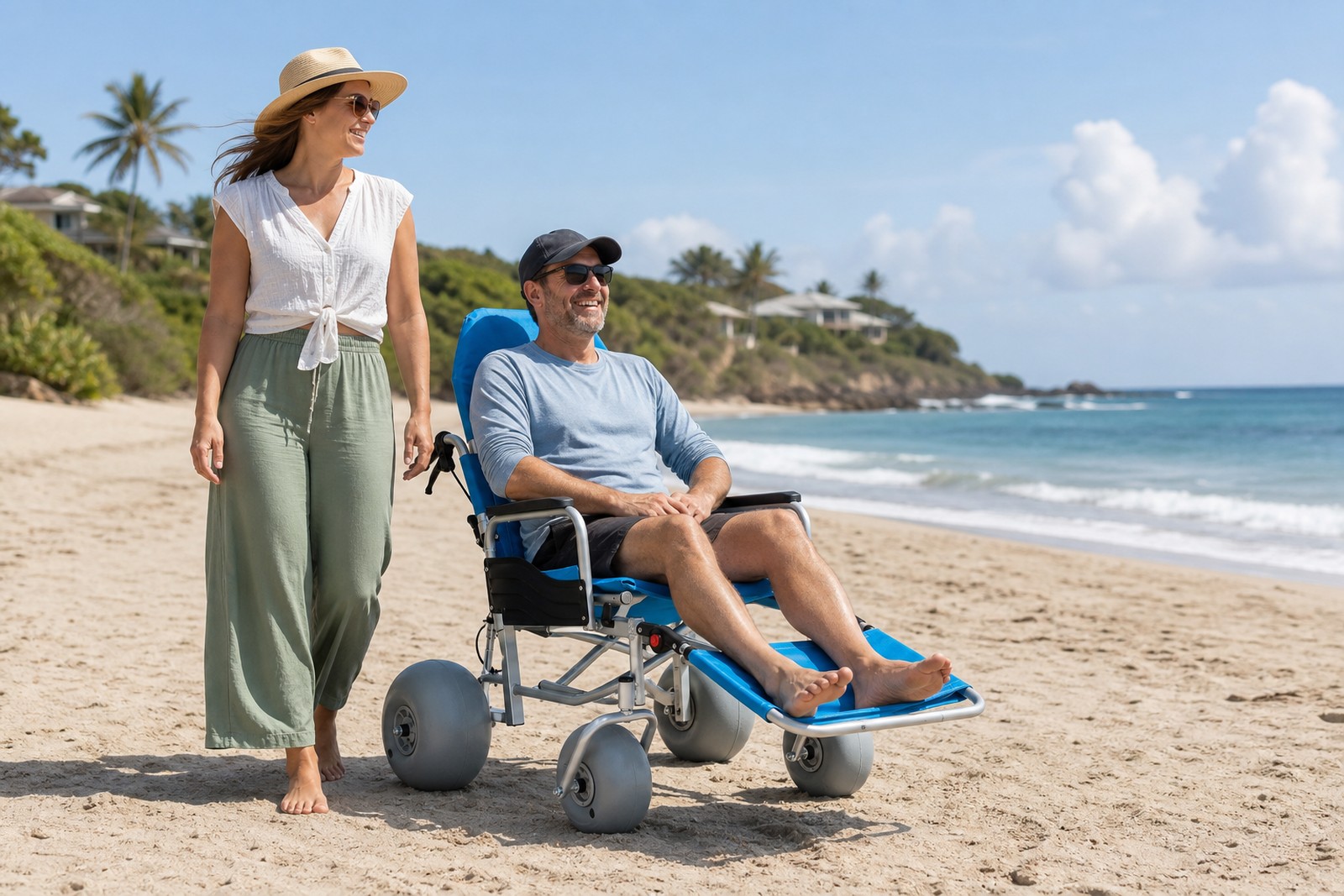
An all-terrain beach wheelchair can support adults, seniors, and visitors with limited mobility when the seat, route, and assistance plan fit the individual. It gives you a defined mobility tool, but the result still depends on user fit, route conditions, and trained support.
What should staff ask the guest?
Begin with a respectful conversation: Ask how the person prefers to transfer, what support feels comfortable, and whether a companion will stay nearby. These questions keep the user in control of the experience.
- For example, preferred transfer method.
- Also, comfort with attendant support.
- In addition, seating and foot support needs.
- Next, desired beach destination.
Can one chair fit every user?
The honest answer is no: Body size, posture, transfer needs, and route conditions vary. Procurement teams should review product dimensions and operating guidance before assigning a chair to a specific user.
Key Takeaway: Matching the chair to the person is more respectful than forcing one setup on everyone.
| User Factor | Staff Response |
|---|---|
| Transfer | Agree on the method first |
| Posture | Check seat and foot support |
| Destination | Confirm the route is suitable |
This quick match helps staff avoid rushed decisions at the sand edge.
How Should You Plan the Accessible Route?
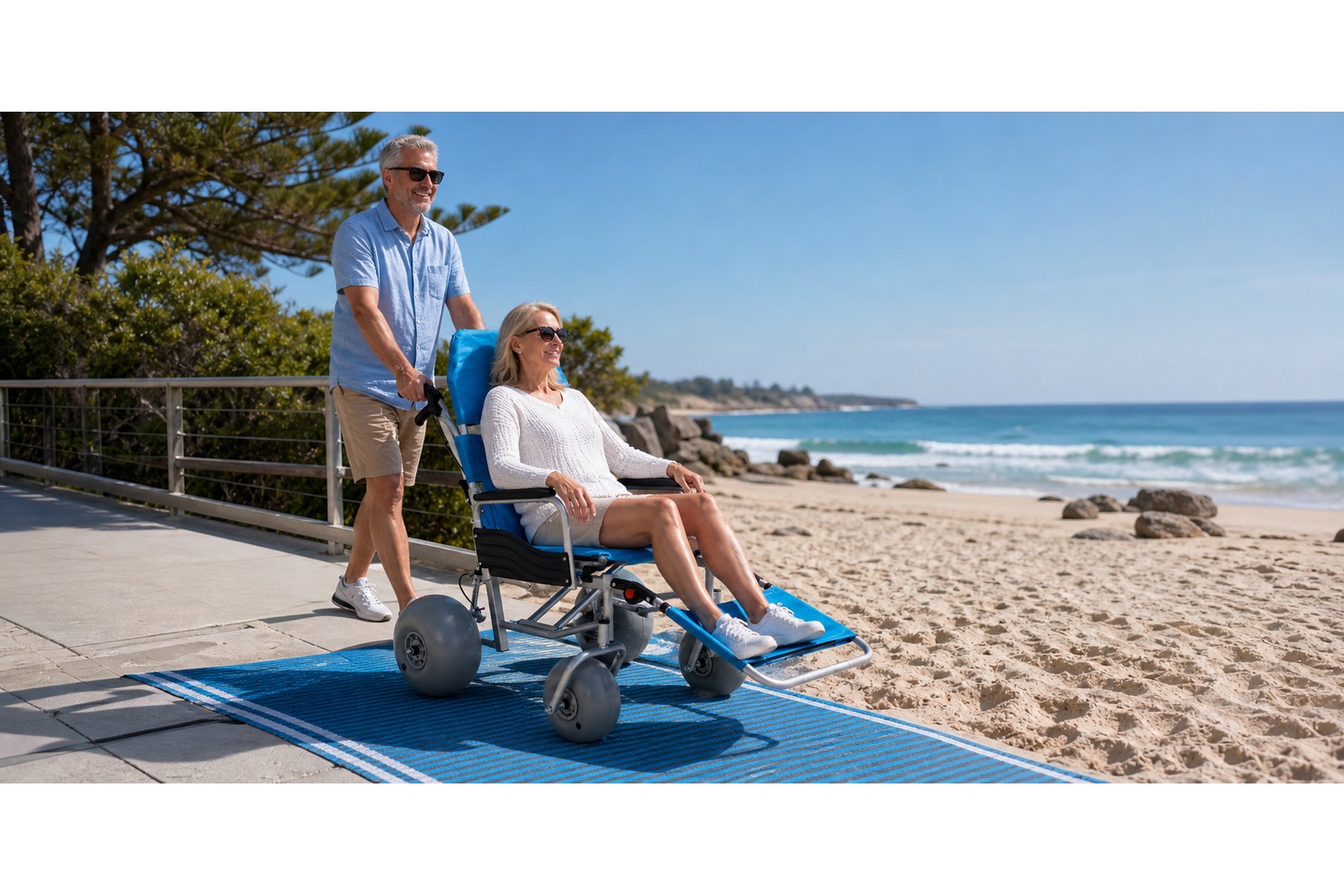
An all-terrain beach wheelchair works best on a continuous route that joins parking, firm paths, transfer space, soft sand, and the chosen beach area. It gives you a defined mobility tool, but the result still depends on user fit, route conditions, and trained support. For example, the Padre Island beach wheelchair guidance shows why each site must define its own route and operating limits.
Where should the route review begin?
Start where the visitor arrives: A route that looks short from the shoreline may still include curbs, tight gates, uneven ramps, or crowded storage points. Walk the full path with staff before opening the service.
- For example, accessible parking or drop-off.
- Also, a firm approach path.
- In addition, space for a calm transfer.
- Next, a clear destination on the sand.
Where do access mats help?
This is the useful connection: A mat can reduce effort on a busy approach while the chair handles loose sand beyond the mat. The two tools solve different parts of the same route and should be planned together.
Key Takeaway: Continuous access matters more than one strong piece of equipment.
| Route Zone | Preferred Condition |
|---|---|
| Arrival | Level and easy to identify |
| Transfer | Firm with enough turning room |
| Beach | Shortest practical sand line |
The table reveals where small route gaps can block the entire experience.
What Safety Checks Belong Before Each Trip?
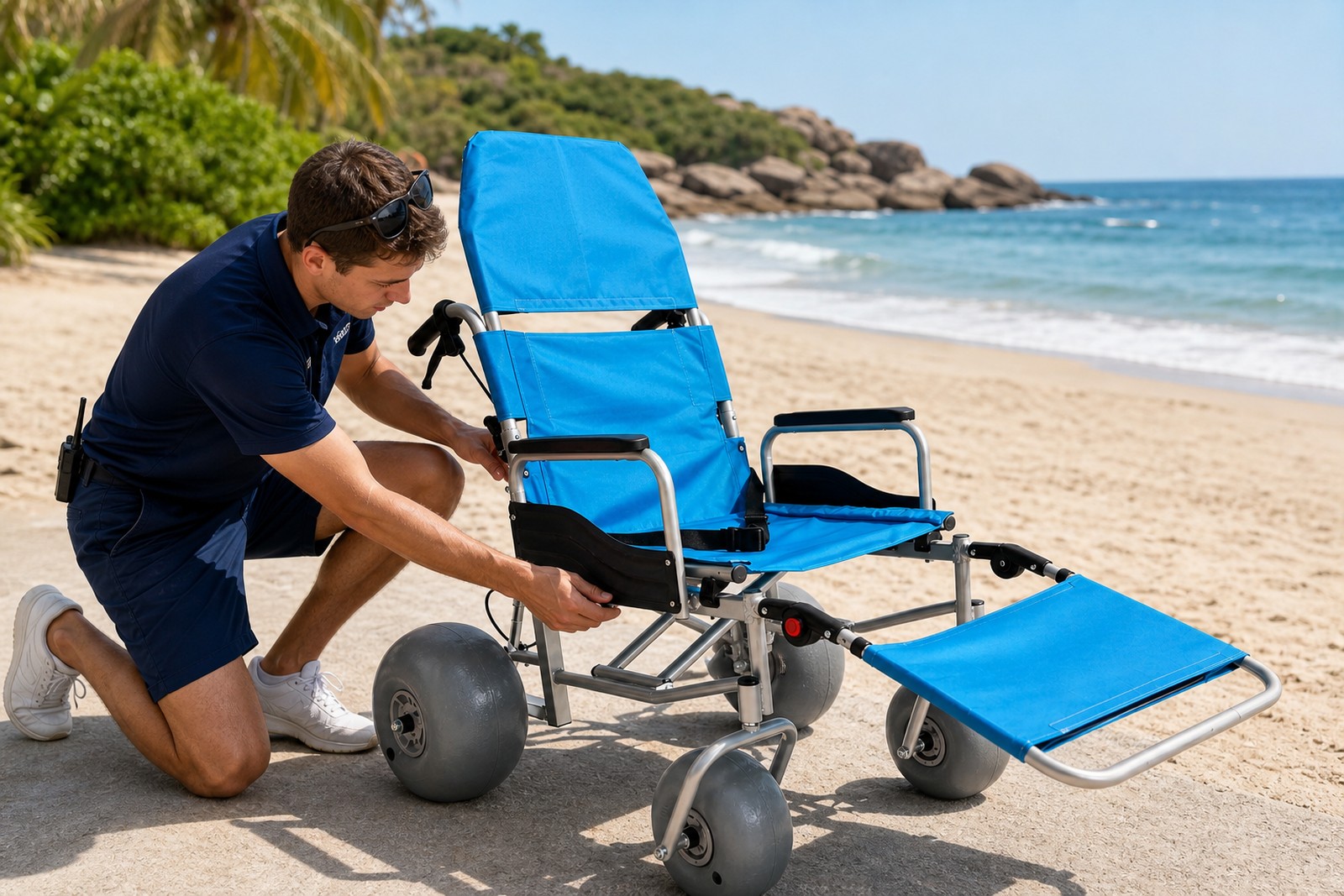
An all-terrain beach wheelchair needs a short pre-use check covering wheels, frame joints, seat supports, brakes, route conditions, and passenger comfort. It gives you a defined mobility tool, but the result still depends on user fit, route conditions, and trained support.
What should the equipment check cover?
Use the same order every time: A repeatable sequence helps staff notice loose hardware, damaged fabric, low tire condition, or sand trapped near moving parts. Record faults and remove the chair from service when safe control is uncertain.
- For example, wheel condition and attachment.
- Also, frame locks and visible fasteners.
- In addition, seat, belt, and footrest condition.
- Next, brakes and attendant handles.
What should stop a trip?
Use a firm pause rule: Stop when the route has unsafe slopes, severe heat, storm conditions, damaged equipment, or too few trained staff. A calm delay is better than improvising with a passenger already seated.
Key Takeaway: A two-minute check protects the guest, the staff team, and the equipment.
| Check | Pause Signal |
|---|---|
| Chair | Loose or damaged part |
| Route | Hazard cannot be bypassed |
| Staff | No trained attendant available |
This gives every team member the same basis for a go-or-pause call.
How Should Staff Handle Turns and Slopes?
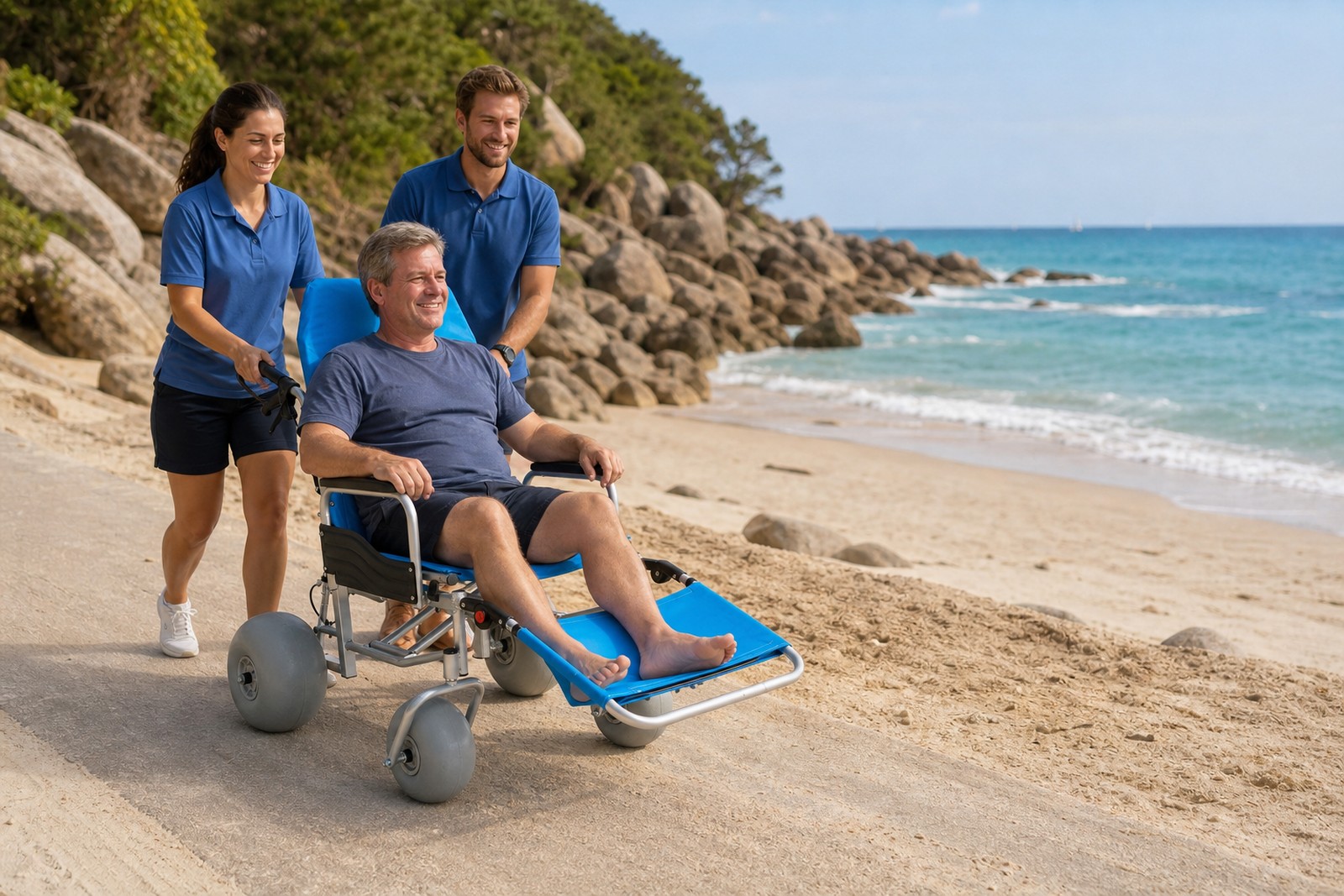
An all-terrain beach wheelchair should be guided through wide turns and approached straight on gentle slopes whenever site conditions allow. It gives you a defined mobility tool, but the result still depends on user fit, route conditions, and trained support.
How do attendants keep movement smooth?
Slow inputs work better: Keep both hands on the control points, warn the passenger before changing direction, and avoid sudden pivots. On loose sand, a broad arc usually requires less force than a tight turn.
- For example, explain the movement first.
- Also, use broad turning arcs.
- In addition, keep the chair facing the slope.
- Next, add a second attendant when needed.
When is extra help appropriate?
Set the threshold before use: Long routes, mild gradients, busy public areas, or heavier loads may justify a second trained attendant. Written local rules make that choice consistent across shifts.
Key Takeaway: Controlled movement comes from planned technique, not force.
| Terrain Move | Handling Method |
|---|---|
| Turn | Use a broad arc |
| Gentle slope | Approach straight |
| Busy route | Use a spotter |
These methods reduce abrupt movement and make staff effort more predictable.
How Do You Store and Transport the Chair?
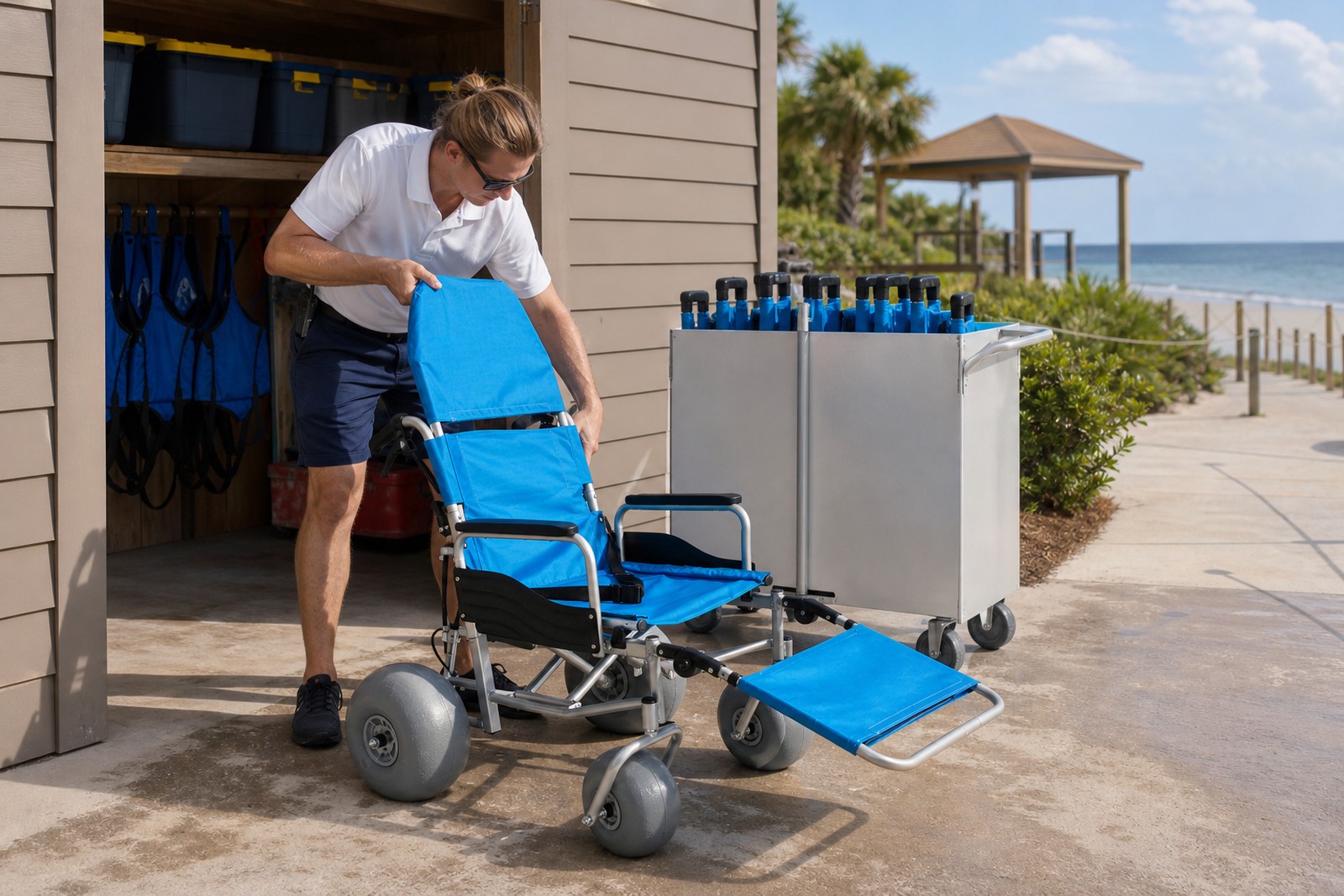
An all-terrain beach wheelchair should be transported with its folding parts secured and stored clean, dry, and protected from long exposure to sun and salt. It gives you a defined mobility tool, but the result still depends on user fit, route conditions, and trained support.
What should happen before transport?
Prepare the chair in stages: Remove loose sand, lock or fold moving parts according to the product instructions, and protect the frame from cargo movement. Staff should use safe lifting practice and enough people for the chair’s actual weight.
- For example, brush away sand before loading.
- Also, secure folding sections.
- In addition, protect wheels from sharp cargo.
- Next, use team lifting when required.
What makes a good storage area?
Look for a practical location: Choose a ventilated, shaded space close enough to the service route for quick deployment. Keep rinsing tools, inspection records, and small maintenance supplies nearby.
Key Takeaway: Good storage shortens setup time and slows avoidable coastal wear.
| Storage Factor | Preferred Setup |
|---|---|
| Moisture | Dry before long storage |
| Sun | Use a shaded area |
| Access | Near the service point |
The best storage room supports both protection and fast daily use.
How Do You Maintain It After Coastal Use?
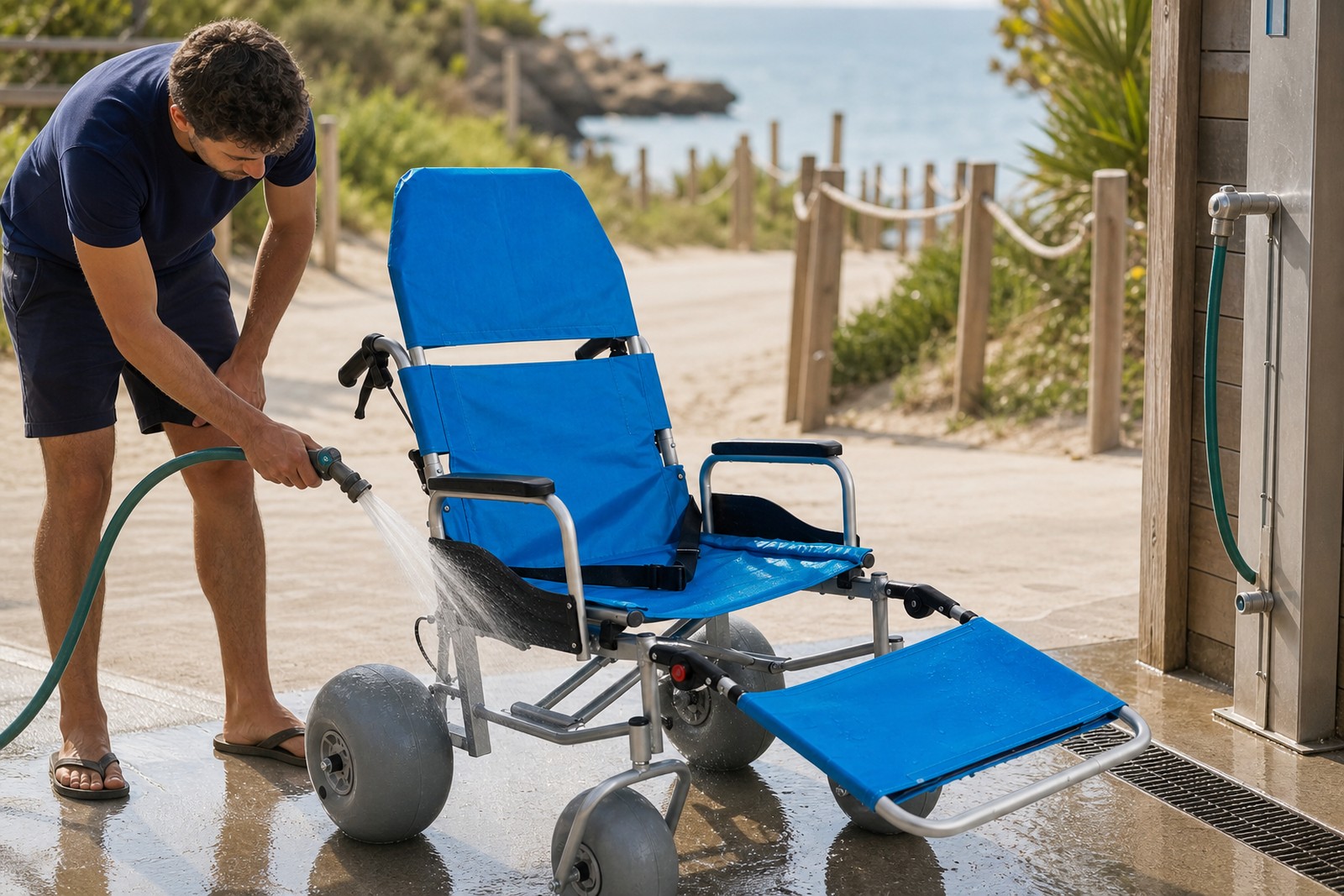
An all-terrain beach wheelchair needs fresh-water rinsing, drying, hardware checks, and scheduled inspection after repeated exposure to sand or salt. It gives you a defined mobility tool, but the result still depends on user fit, route conditions, and trained support.
What belongs in the after-use routine?
Make care part of the return process: Rinse the wheels, lower frame, joints, and fabric contact areas with fresh water when coastal residue is present. Allow the chair to dry before it stays in enclosed storage.
- For example, rinse salt and sand.
- Also, dry fabric and frame surfaces.
- In addition, check fasteners and locks.
- Next, record wear or repair needs.
How often should deeper checks happen?
Usage sets the schedule: A busy rental site may need daily visual checks and a recurring technical review. The coastal maintenance guide can help managers shape a written routine around local exposure.
Key Takeaway: Regular rinsing and records reduce surprise downtime during busy periods.
| Care Task | Typical Trigger |
|---|---|
| Fresh-water rinse | After coastal exposure |
| Visual check | Before and after use |
| Service review | By schedule or wear |
The sequence makes care easier to assign and audit.
How Do You Choose the Right Program Setup?
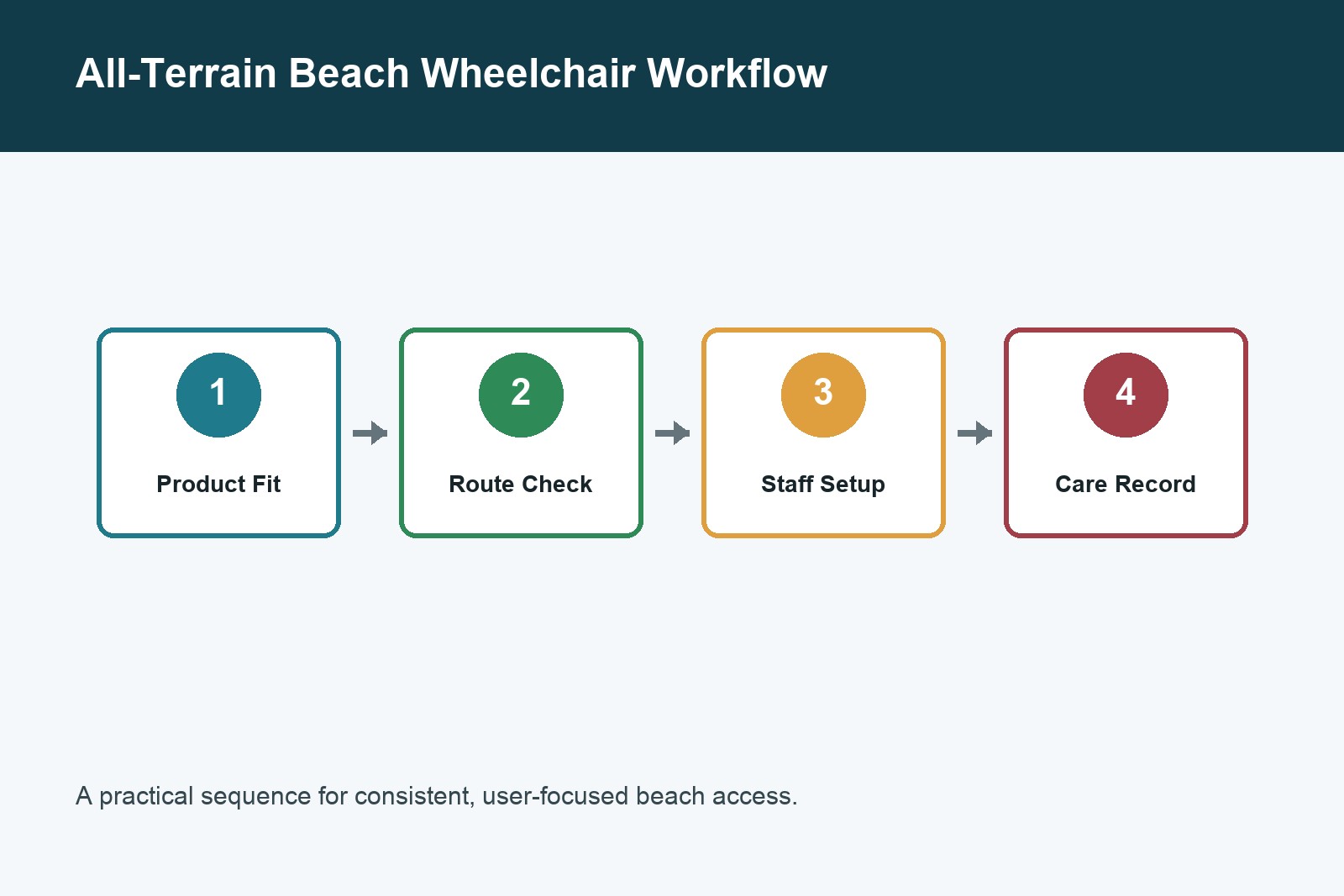
An all-terrain beach wheelchair should be selected as part of a complete program that matches users, route length, staffing, storage, and expected daily demand. It gives you a defined mobility tool, but the result still depends on user fit, route conditions, and trained support.
What should a buyer compare?
Bring operations into the purchase: Compare how each option fits the site rather than ranking products by one feature. Ask the staff who will transport, clean, store, and hand over the chair to join the review.
- For example, user and transfer needs.
- Also, soft-sand route length.
- In addition, staffing and training capacity.
- Next, cleaning and storage space.
What should happen next?
Turn the review into action: Map the route, list operating roles, and test the handoff before launch. You can contact us today to discuss how a chair, path, and staff routine can work as one coastal access system. Our industry should measure beach access by real participation, not by how close a paved path reaches the sand.
Key Takeaway: A complete program solves mobility, staff workflow, and equipment care together.
| Decision Area | Planning Question |
|---|---|
| Product | Does it fit the user and terrain? |
| People | Who handles each step? |
| Place | Where are transfer and storage zones? |
This final view keeps the project centered on a usable visitor experience.
FAQ
Can I use an all-terrain beach wheelchair in water?
Usually no. A dry-sand all-terrain chair should only enter water when its manufacturer specifically approves that use; a floating model is designed for a different task.
What’s the best route for soft sand?
The shortest firm route is usually best. Favor packed sand or an access mat, avoid steep side slopes, and inspect changing beach conditions before each trip.
How do I know if a guest needs two attendants?
Use a site rule. Route length, gradients, user support needs, chair weight, and staff capability should guide whether a second trained person joins.
Can I store the chair outdoors?
Only with proper protection. Long exposure to salt, moisture, and sun can speed wear, so a dry shaded storage area is a better operating choice.