
A lightweight beach wheelchair becomes practical when its route, staff handoffs, vehicle movement, storage, and care routine fit the way a resort or park actually works. A compact frame alone does not create a reliable service. Teams still need to know where the chair will wait, who checks it, how it reaches the beach, and what happens after return. Give purchasing, facilities, transport, and guest-service staff one route, handoff, and care record. Base it on observable actions and written model guidance, not broad performance claims. That shared record also helps managers review the service after busy periods.
Why does a lightweight beach wheelchair need a plan?
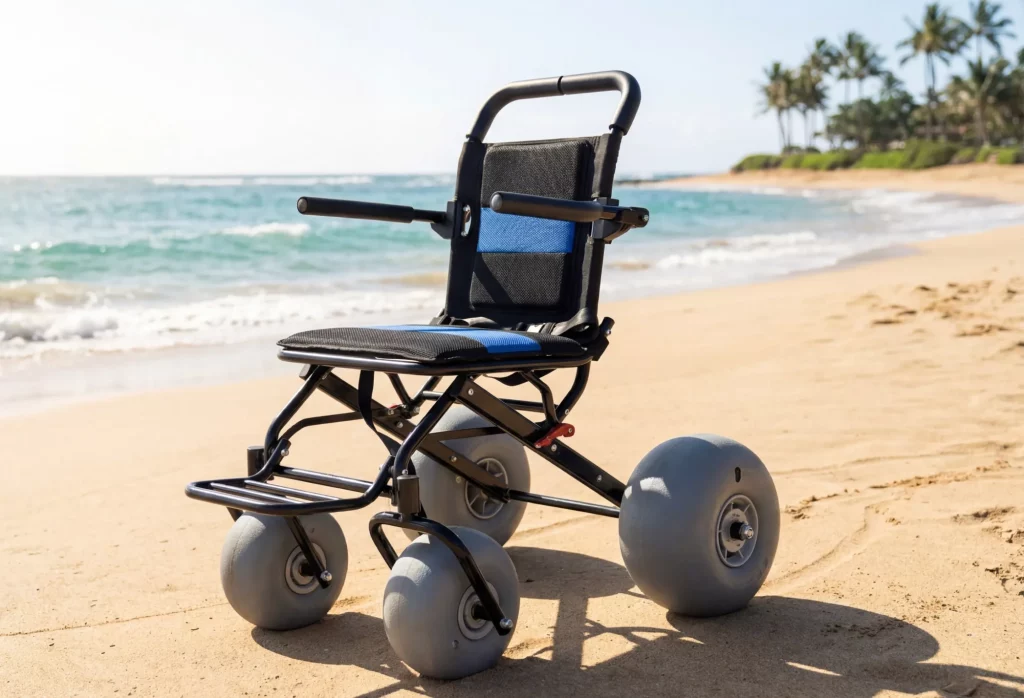
A lightweight beach wheelchair needs a deployment plan because daily value depends on where the chair starts, who prepares it, which route it follows, and how it returns. Without those decisions, staff may spend time searching for equipment, clearing a path, or guessing who owns the next step. A short plan gives every shift the same operating frame.
Map the service from storage to the guest meeting point, beach route, care area, and return bay. Name the role responsible at each point. The plan should fit local staffing and opening hours rather than copy a generic checklist. Use plain language that staff can follow during a busy period without needing a long briefing.
What belongs in the deployment overview?
Start with the service loop: one page can show locations, roles, route limits, and the record used after each session.
- Name the storage and staging points.
- Assign the shift owner for route readiness.
- Define the return and care sequence.
Key Takeaway: A deployment plan turns a lightweight product into a repeatable staff service.
| Review item | Team note |
|---|---|
| Service point | Assigned role |
| Route action | Local limit |
| Return task | Record used |
Walk the full loop with the shift team.
Which routes suit a lightweight beach wheelchair?
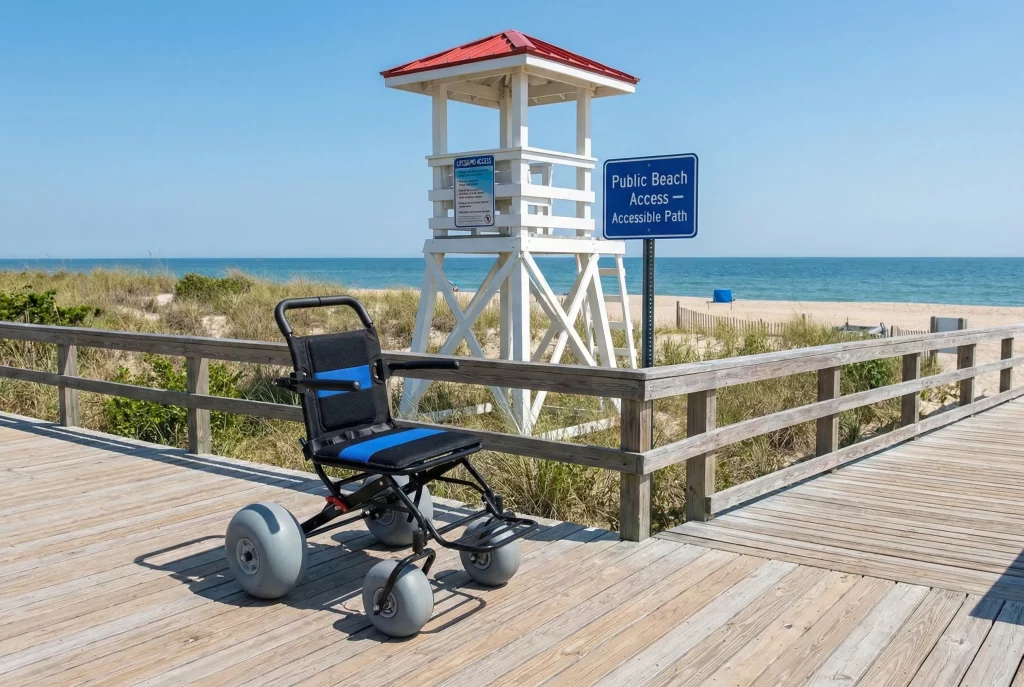
A lightweight beach wheelchair suits routes where staff can move from storage to the intended beach zone through clear gates, ramps, paths, and turning areas. The route should match the written model guidance and the team’s handling procedure. Separate paved access, boardwalk sections, compact sand, loose sand, and vehicle areas in the route note. At selected sites, Cape Cod National Seashore pairs beach approach mats with beach wheelchairs.
The beach wheelchair collection can help teams compare product categories, but the site walk still decides the operating path. Review pedestrian flow, door positions, narrow corners, and places where the chair may wait. Add a stop rule for any route condition that falls outside the local procedure.
How can staff describe route suitability?
Use observable language: record the surface, available space, travel direction, and staff action instead of relying on a broad rating.
- Mark gates and narrow corners.
- Name each surface zone.
- Choose a safe pause and return point.
Key Takeaway: A suitable route has known surfaces, working space, and an agreed staff response.
| Review item | Team note |
|---|---|
| Route zone | Observed condition |
| Working space | Staff action |
| Stop point | Return choice |
Recheck the route when site layouts change.
How should teams stage the chair before service?
A lightweight beach wheelchair should be staged in a clean, visible location close to its deployment route, with condition and staff ownership confirmed before service begins. Staging should not block fire routes, guest movement, deliveries, or access to other equipment. The assigned staff member needs enough space to complete a visual check and prepare the chair under written guidance. If the route uses a beach access mat, include its start and end points in the staging check.
Use a fixed staging window rather than leaving the chair out all day. Record where keys, straps, covers, or model-specific items are kept. A simple status card can show whether the chair is available, awaiting care, or held for review. This reduces verbal guessing and helps the next shift understand the current state.
What should the pre-service check cover?
Keep it short and visible: a pre-service check should confirm condition, route status, assigned staff, and the planned return time.
- Check visible condition against the model guide.
- Confirm the route and weather procedure.
- Record the staff owner and service status.
Key Takeaway: Good staging puts the chair, route, staff role, and status record in one working area.
| Review item | Team note |
|---|---|
| Staging item | Status |
| Route note | Staff response |
| Service owner | Shift record |
Review the staging card before each session.
What should staff check at each handoff?
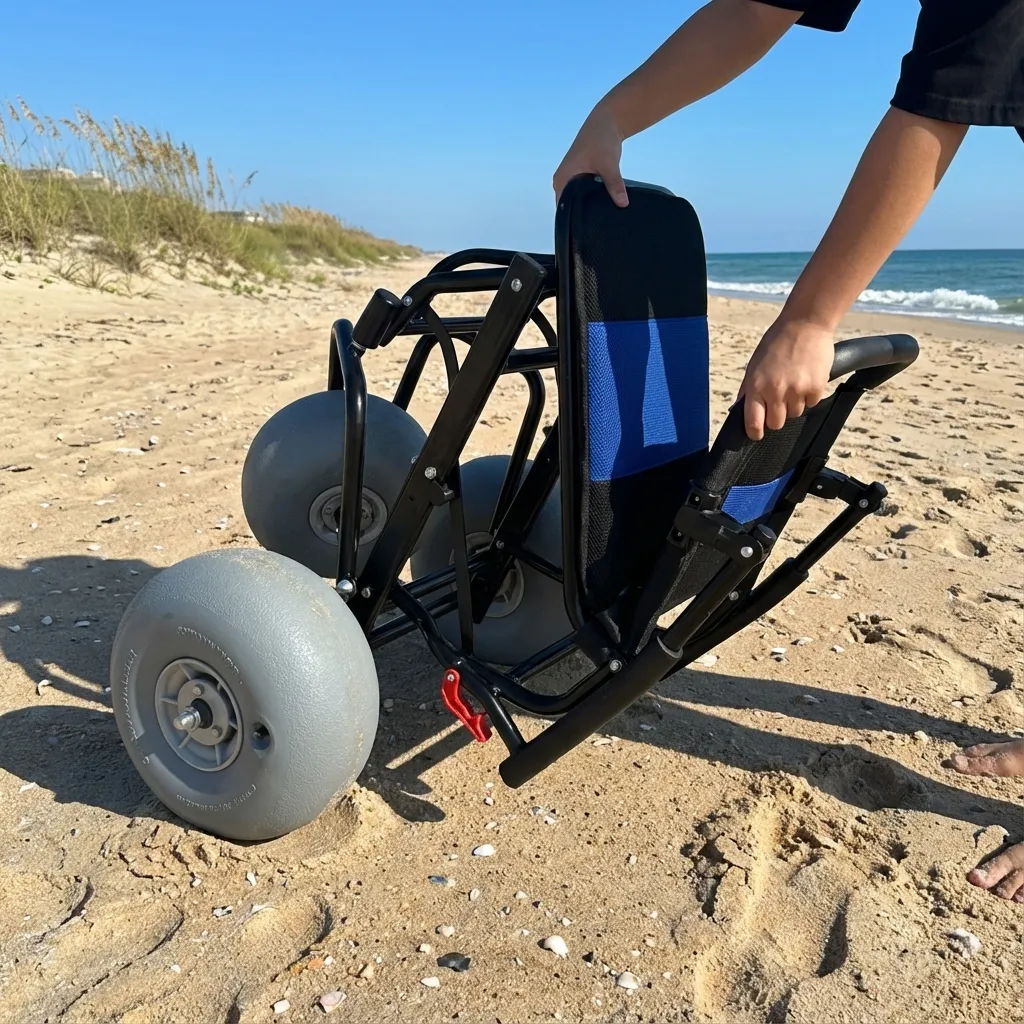
A lightweight beach wheelchair handoff should cover location, visible condition, route status, assigned staff, planned use, and any open care question. The next person should not need to reconstruct the prior shift from memory. A brief written handoff also gives managers a record when equipment moves between storage, transport, beach service, and care areas.
Use the same handoff fields for every shift. Avoid long narratives unless a condition needs detail. A status such as available, in service, awaiting care, or held for review can sit beside a short factual note. The receiving staff member should acknowledge the handoff and ask about any route or condition change before accepting responsibility.
How can a handoff remain concise?
The core idea is ownership: state what changed, what remains open, and who now holds the next action.
- Confirm location and service status.
- Note any route or condition change.
- Name the receiving staff member.
Key Takeaway: A useful handoff transfers facts and responsibility, not just the chair.
| Review item | Team note |
|---|---|
| Handoff field | Current fact |
| Open action | New owner |
| Acceptance | Time and initials |
Sample handoff records during supervisor reviews.
How can loading and unloading stay practical?
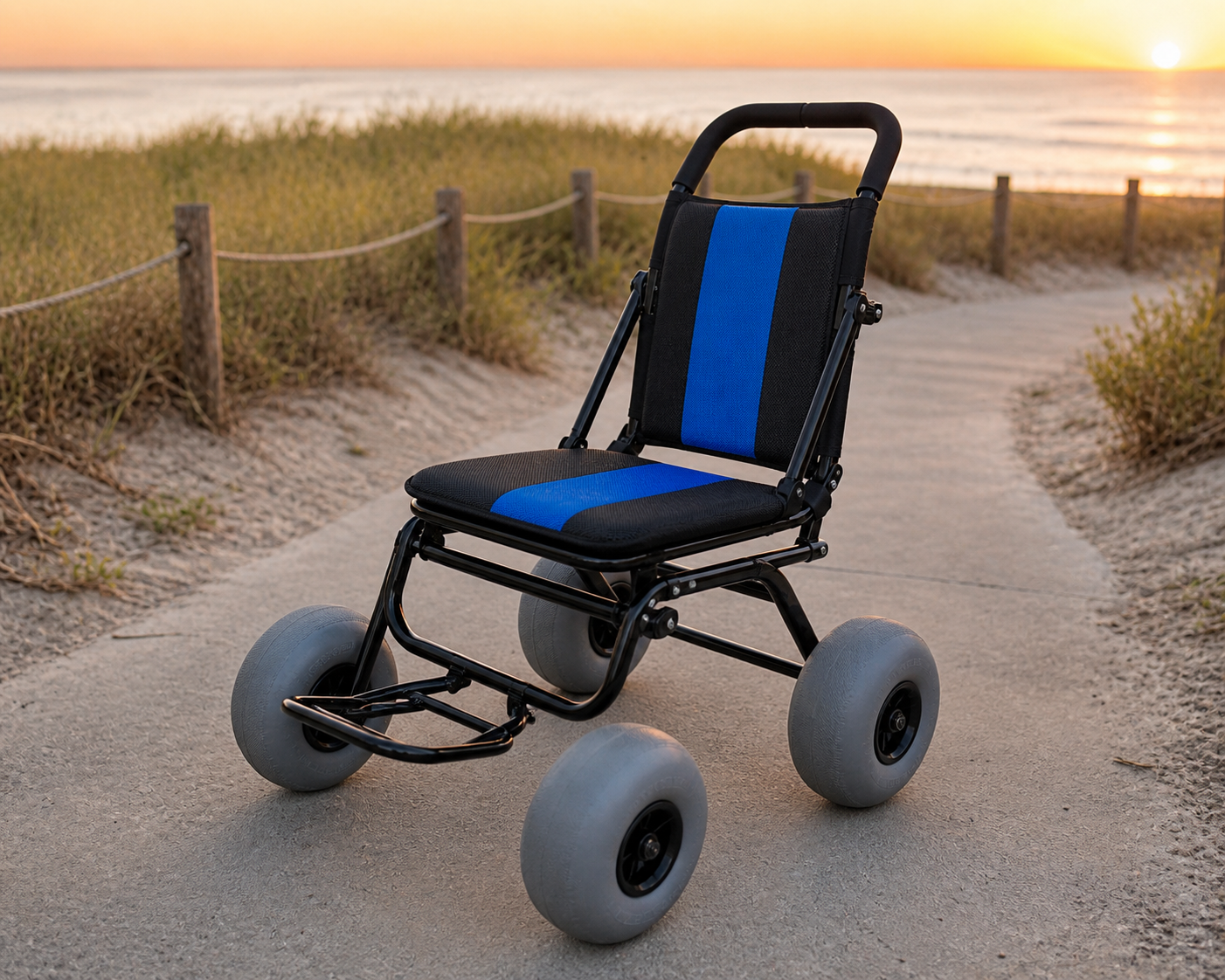
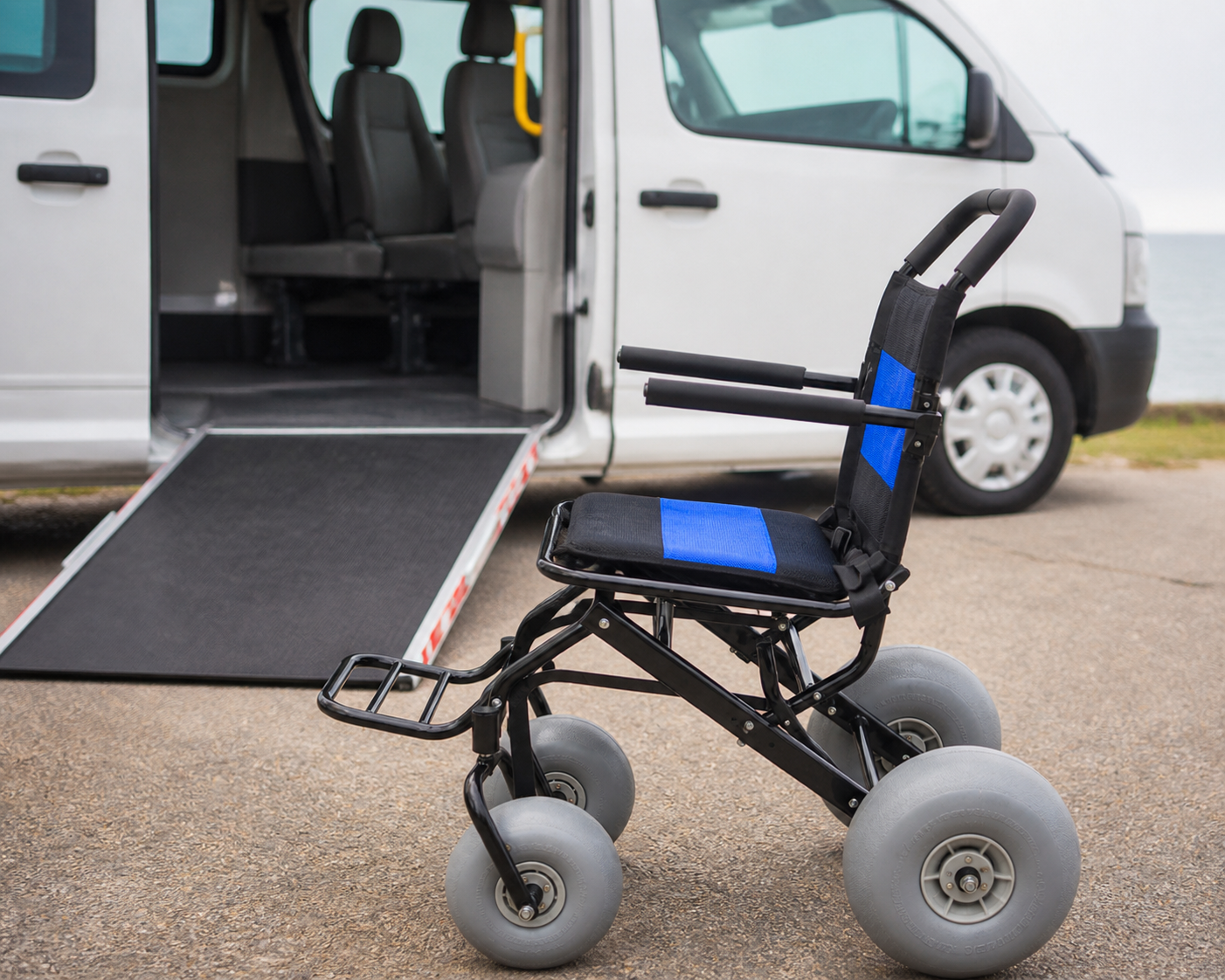
A lightweight beach wheelchair can stay practical during loading when the vehicle, ramp, doorway, lifting policy, and staff roles have been reviewed together. The sequence should follow workplace rules and written product guidance. Do not assume that a compact chair fits every vehicle or that one person can manage each movement without a site-specific check.
Use the portable beach wheelchair application for related planning ideas, then rehearse with the actual vehicle and assigned team. Check floor space, tie-down procedures, ramp position, door swing, and the place where staff stand. Record model dimensions from the supplier document rather than measuring a marketing image.
What should the vehicle rehearsal produce?
Turn movement into a sequence: each action needs a position, a role, and a clear point where staff pause if the path is blocked.
- Map the approach to the vehicle.
- Assign ramp and door responsibilities.
- Record securement questions for written reply.
Key Takeaway: A vehicle rehearsal should create a safe local sequence backed by model-specific information.
| Review item | Team note |
|---|---|
| Movement step | Staff position |
| Vehicle point | Available space |
| Open question | Document owner |
Repeat the rehearsal after vehicle changes.
Which storage details keep the workflow orderly?
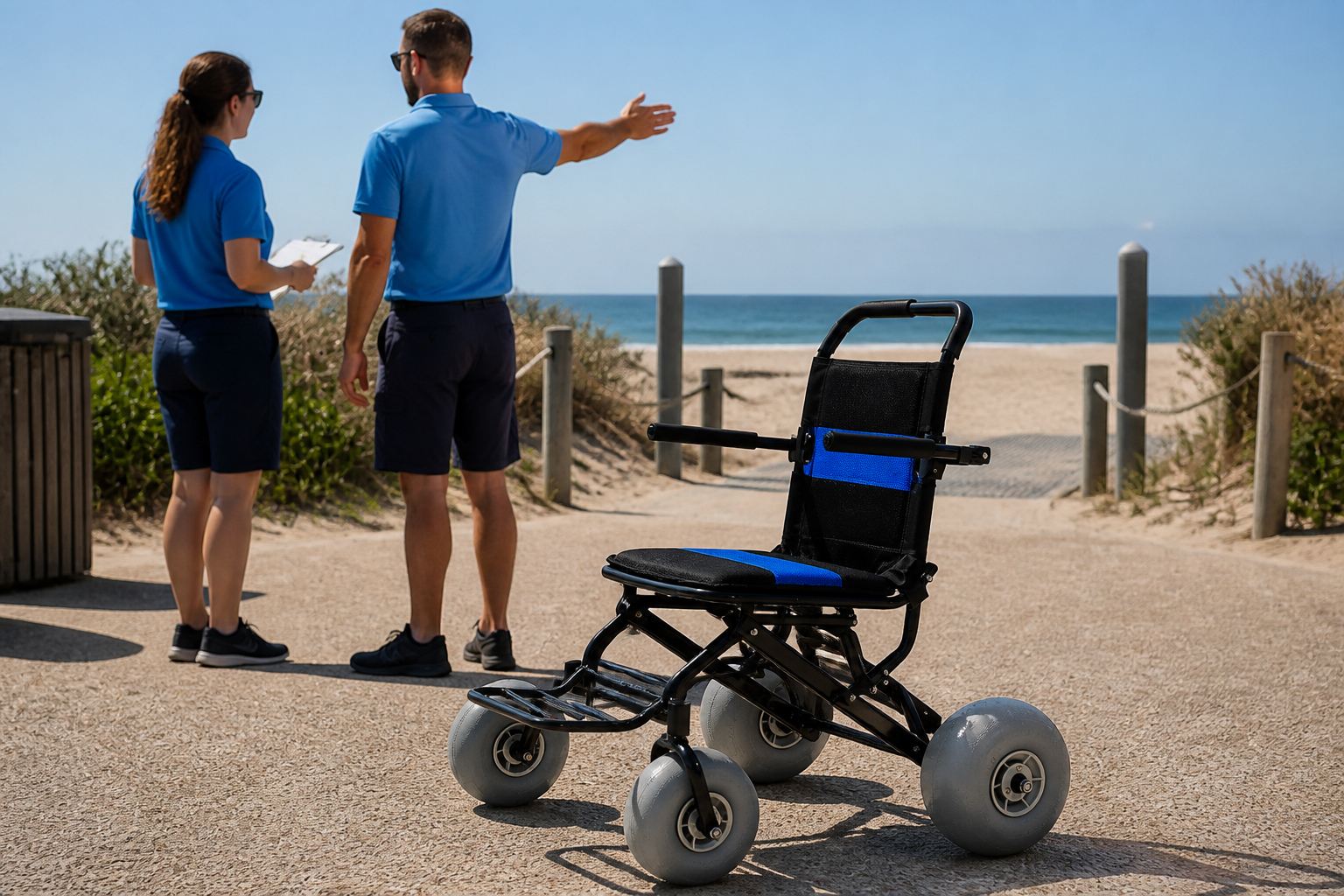
A lightweight beach wheelchair storage area should keep the chair dry, visible to assigned staff, protected from clutter, and close to the planned deployment route. The space needs room for inspection and care without blocking other operations. Storage status should also tell staff whether the chair is available, awaiting a task, or held for review.
Choose a named bay rather than a flexible corner that changes each week. Mark where related items belong and keep the route to the door free. If the chair folds or separates under model instructions, record the approved storage configuration. Do not rely on staff memory for loose accessories or inspection items.
How can storage ownership stay clear?
A labelled bay solves several problems: it connects equipment location, status, accessories, and the person responsible for the next shift check.
- Assign one storage bay and route.
- Label accessory locations.
- Display current service status.
Key Takeaway: Orderly storage gives each shift a known starting point and a visible equipment status.
| Review item | Team note |
|---|---|
| Storage element | Assigned place |
| Status marker | Meaning |
| Shift check | Named owner |
Include the bay in routine site walks.
How should a team plan routine cleaning?
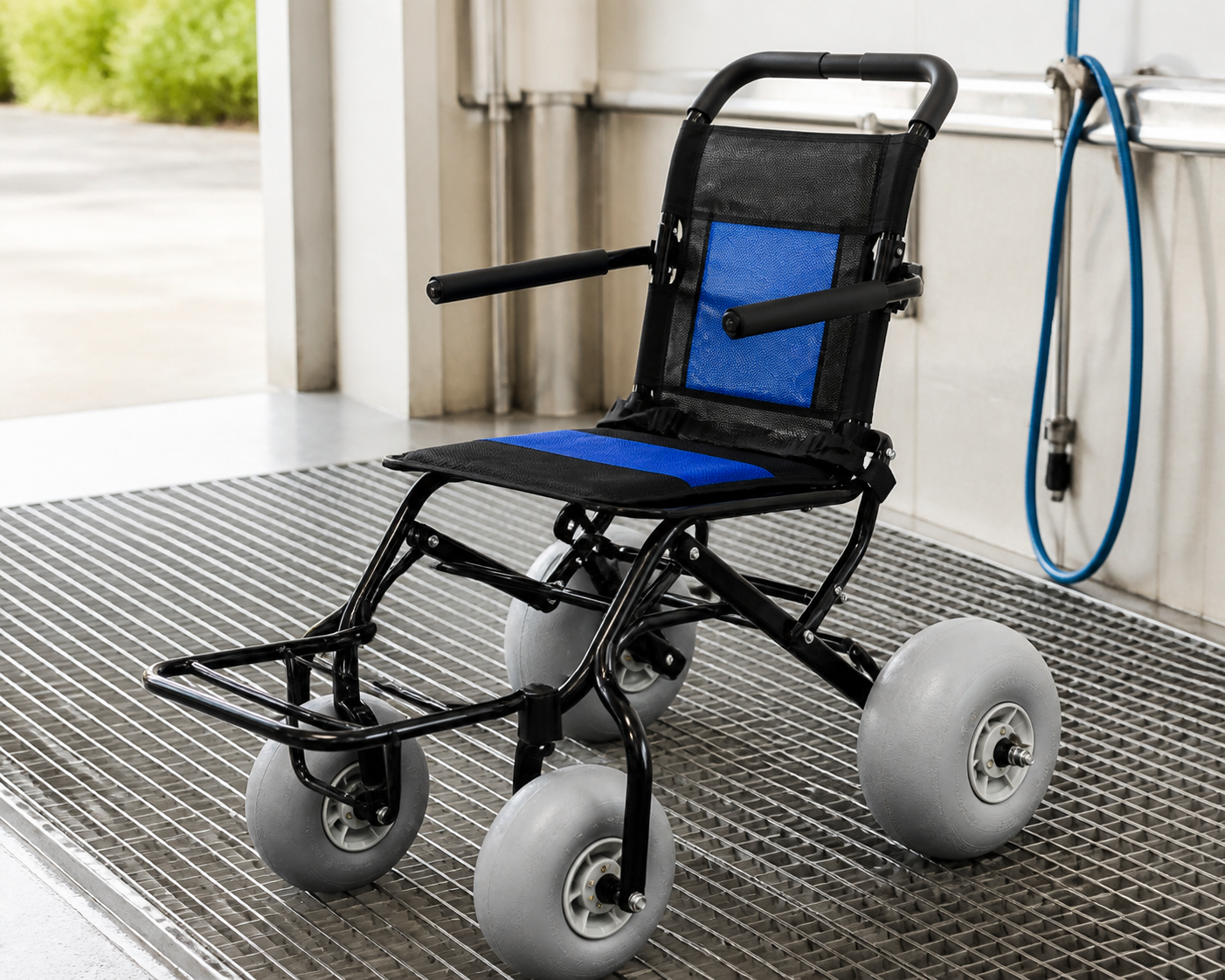
A lightweight beach wheelchair cleaning routine should follow written model guidance and fit the site’s return area, water source, drying time, inspection space, and staff schedule. Separate routine care from repair work. Staff should know which surfaces they may clean, which observations require escalation, and when the chair must remain out of service. The beach wheelchair user manual can frame questions, but follow the instructions for the exact unit.
Place the care checklist where the chair returns. Use short actions for loose debris removal, approved rinsing, drying, visual checks, and status updates. Record the time and person completing the routine. If staff see damage, missing hardware, unusual movement, or a conflict with the instructions, they should stop and notify the equipment owner.
What makes the care checklist usable?
Write for the person doing the task: each line should state one approved action and one way to record completion or a concern.
- Follow model-specific cleaning guidance.
- Dry and inspect in the assigned area.
- Change service status when a concern appears.
Key Takeaway: A care checklist should guide routine actions and route concerns to the right owner.
| Review item | Team note |
|---|---|
| Care action | Completion record |
| Condition concern | Service status |
| Escalation | Equipment owner |
Use care records to plan supervisor checks.
What surface joins need a closer route review?
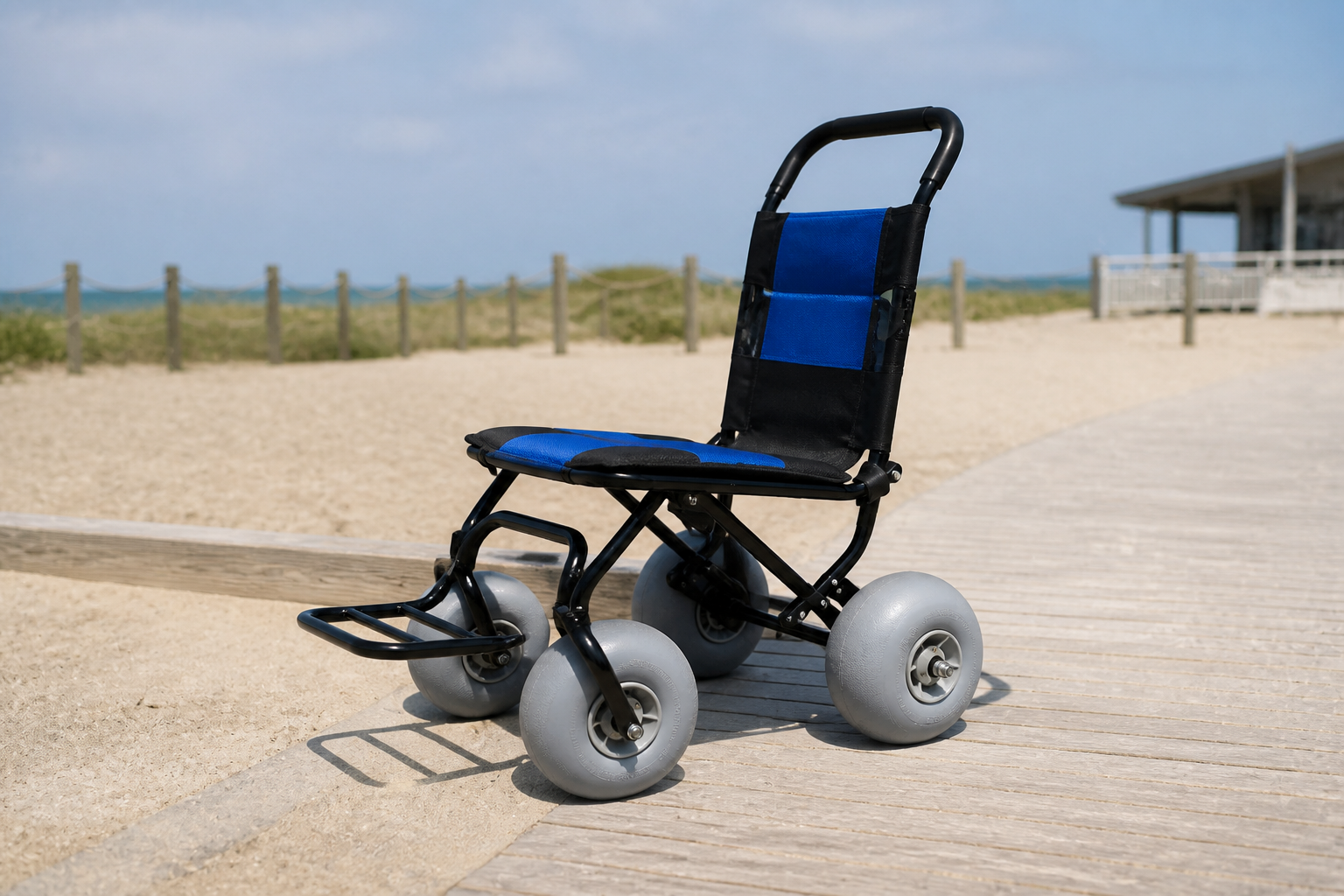
A lightweight beach wheelchair needs closer review at ramps, thresholds, boardwalk edges, drainage strips, compact-sand boundaries, turning bays, and other surface joins. These points may change the handling task even when the wider route looks open. Staff should observe the outbound and return directions because available space and approach angles may differ. For longer loose-sand stretches, compare an all-terrain beach wheelchair in a separate trial.
Record each join with a photo, location, and action note if local policy allows. The note should state how staff approach, where they pause, and when they stop the service. Avoid inventing a maximum slope or clearance. Use measured site dimensions and supplier-confirmed product information where a numeric decision is needed.
How should route joins be documented?
Focus on repeatability: another staff member should be able to find the same point and follow the same local response.
- Name and photograph the route join.
- Describe approach and return directions.
- Add a stop rule for changed conditions.
Key Takeaway: Surface joins deserve their own route notes because they can change staff positioning and working space.
| Review item | Team note |
|---|---|
| Join location | Approach note |
| Available space | Staff position |
| Changed condition | Stop action |
Revisit join notes after site maintenance.
How can inventory notes support daily readiness?
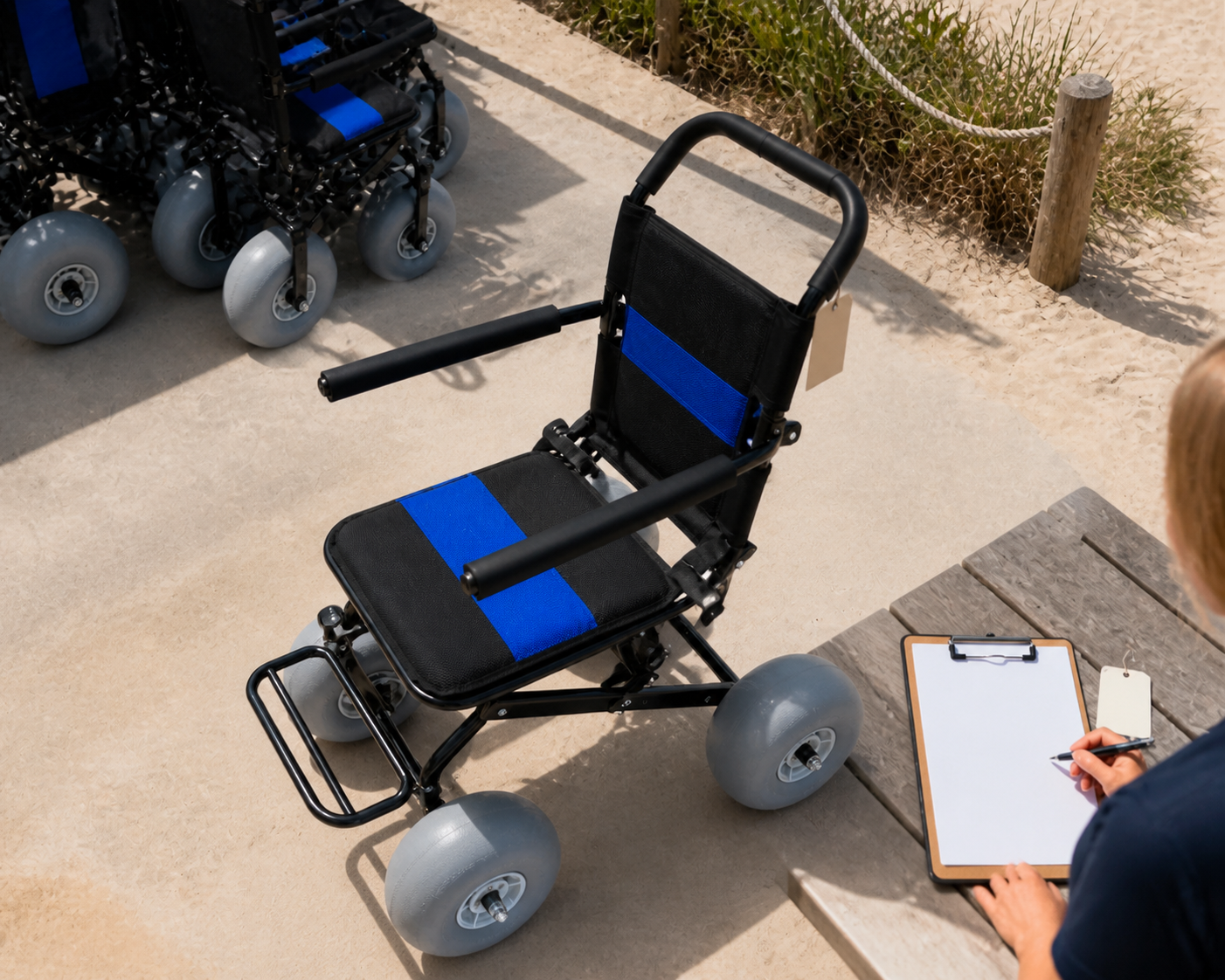
A lightweight beach wheelchair inventory note can support daily readiness by showing location, service status, assigned route, care completion, accessory status, and open follow-up. The note should be brief enough for shift use yet precise enough for a supervisor to understand why the chair is available or held.
The lightweight travel project page offers related background for mobile use. Keep local records tied to the actual model and property. Use a unique equipment reference, avoid copying old status text, and close resolved items so staff do not carry stale warnings into a new shift.
Which fields belong in the inventory record?
The record should answer five questions: where the chair is, what its status means, who checked it, which route applies, and what action remains open.
- Use a unique equipment reference.
- Record status and last check time.
- Link open actions with an owner.
Key Takeaway: A concise inventory record lets shifts share equipment facts without relying on verbal memory.
| Review item | Team note |
|---|---|
| Inventory field | Current entry |
| Open action | Owner |
| Status change | Time and reason |
Archive closed notes under the local record policy.
What should operations teams do next?
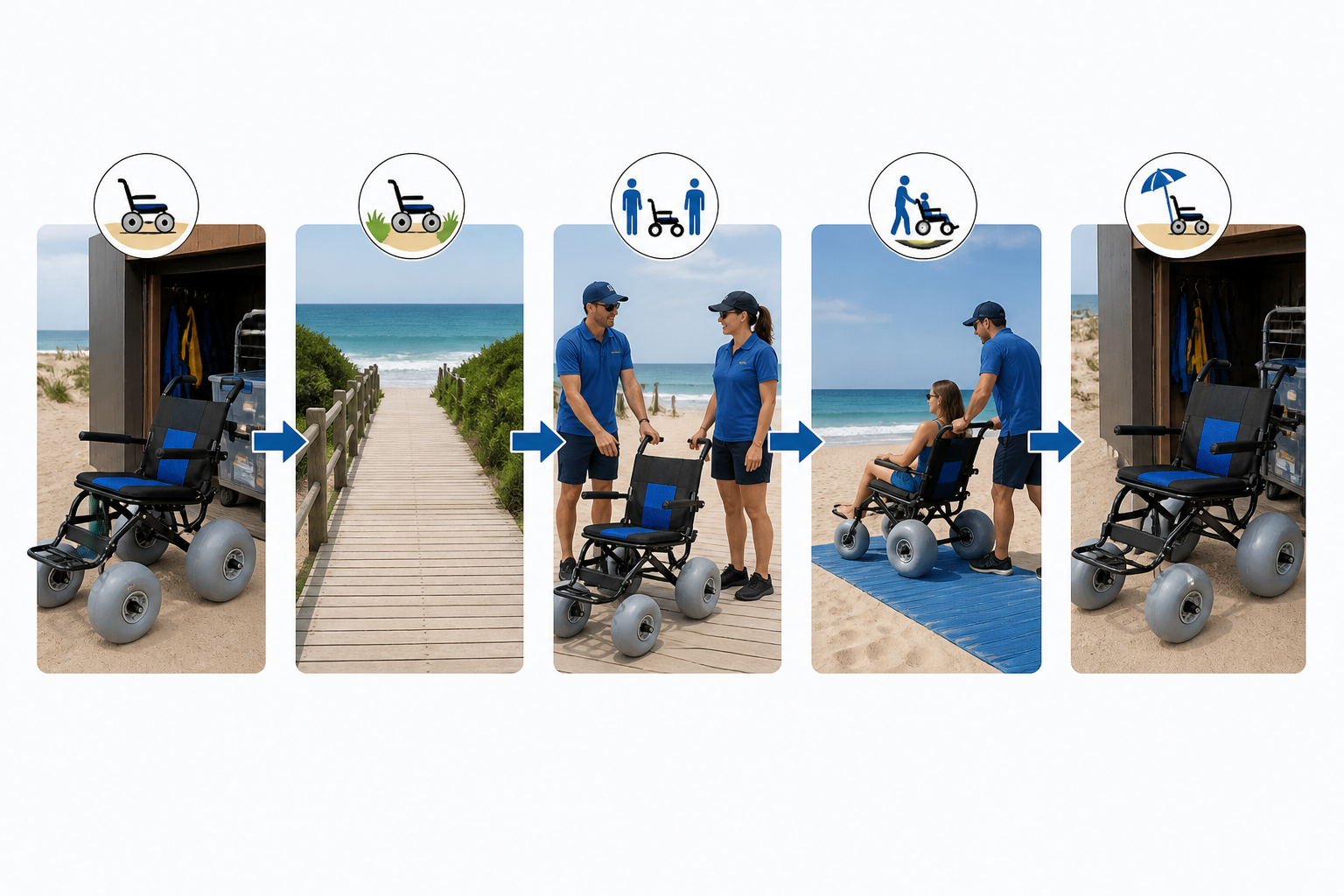
A lightweight beach wheelchair operations team should rehearse the full service loop, close open model questions, approve the route, place care instructions at the return area, and train each assigned role before offering the service. The final plan should fit the site’s staffing and transport rules while keeping unsupported claims out of guest-facing language.
Hold a short review with facilities, transport, guest service, and the equipment owner. Use the route map, handoff form, care record, and inventory status as the agenda. If the team needs model details or quotation support, contact us with the planned route and operating context so the reply can address a precise use case.
How can rollout approval remain practical?
Connect every approval to evidence: the route, staff role, care task, and model document should each have a named owner and current version.
- Approve the route and stop rules.
- Train every assigned shift role.
- Schedule a post-rollout record review.
Key Takeaway: Rollout approval should connect the chair with route, people, care, and live service records.
| Review item | Team note |
|---|---|
| Approval area | Supporting record |
| Role owner | Training status |
| Review date | Named supervisor |
Use early service notes to refine local procedures.
FAQ for project teams
Can I stage the chair outdoors all day?
Only if the approved local plan allows it. Review site exposure, security, public access, and model care guidance before choosing an outdoor staging period.
What is the best handoff format for busy shifts?
Use a short status record. Include location, condition, route status, assigned person, and any open action that the receiving staff member accepts.
How do I know if our vehicle routine works?
Rehearse it with the actual vehicle. Use the assigned team, written product information, ramp procedure, and local lifting rules before approving the sequence.
Can cleaning staff decide that a chair is ready?
Only under the approved role plan. The procedure should name who completes care, who changes service status, and who reviews a concern.