
The best all-terrain beach wheelchair plan connects the real beach route with staff handling, storage, care, and purchasing records before an order moves ahead. Resort and park teams often see a strong product photo yet still lack answers about loose sand, boardwalk joins, vehicle access, or shift ownership. A structured site review solves that gap. It gives operations, facilities, purchasing, and guest-service teams one practical way to compare local needs without relying on broad performance claims. The result should be a documented service plan that shows where the chair will travel, who will handle it, how it will return, and which supplier details need written confirmation.
Why should an all-terrain beach wheelchair plan start on site?
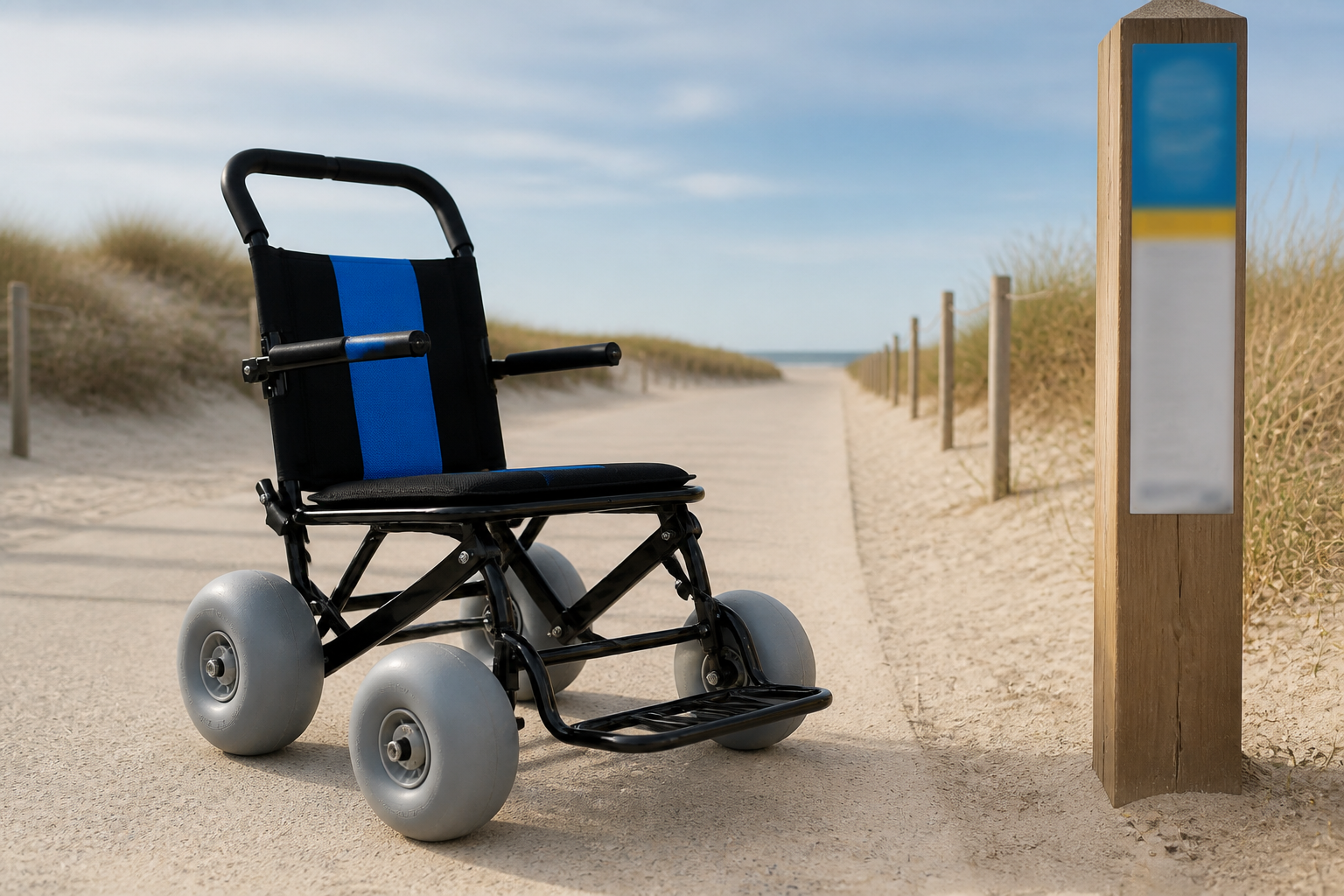
An all-terrain beach wheelchair plan should start on site because the route controls how staff will stage, guide, pause, and return the chair. Walk from storage to the intended beach zone during a normal operating period. Note loose sand, narrow gates, sharp turns, boardwalk edges, drainage channels, and places where public traffic may reduce working space. The National Park Service mobility-device list includes all-terrain manual chairs at some parks, but each site needs its own route review.
Bring the people who own each part of the service loop. Facilities staff can describe access limits, guest-service staff can explain busy periods, and purchasing staff can record questions that need a written supplier reply. Keep observations factual. A route note should describe what the team saw, where it happened, and which operating action may need a local rule.
How can a site team capture useful route evidence?
Here is the workable approach: use one route sheet for the outbound path and another for the return path. Photos may support the record, but a short written note gives the next reviewer usable context.
- Name each surface and route join.
- Mark a safe pause area for staff.
- Record the date and operating conditions.
Key Takeaway: A site walk turns a product discussion into a route-based operating decision.
| Review item | Team note |
|---|---|
| Route segment | What staff observed |
| Pause point | Why space works |
| Follow-up | Who will confirm it |
Compare the route notes before the supplier discussion.
Which routes suit an all-terrain beach wheelchair?
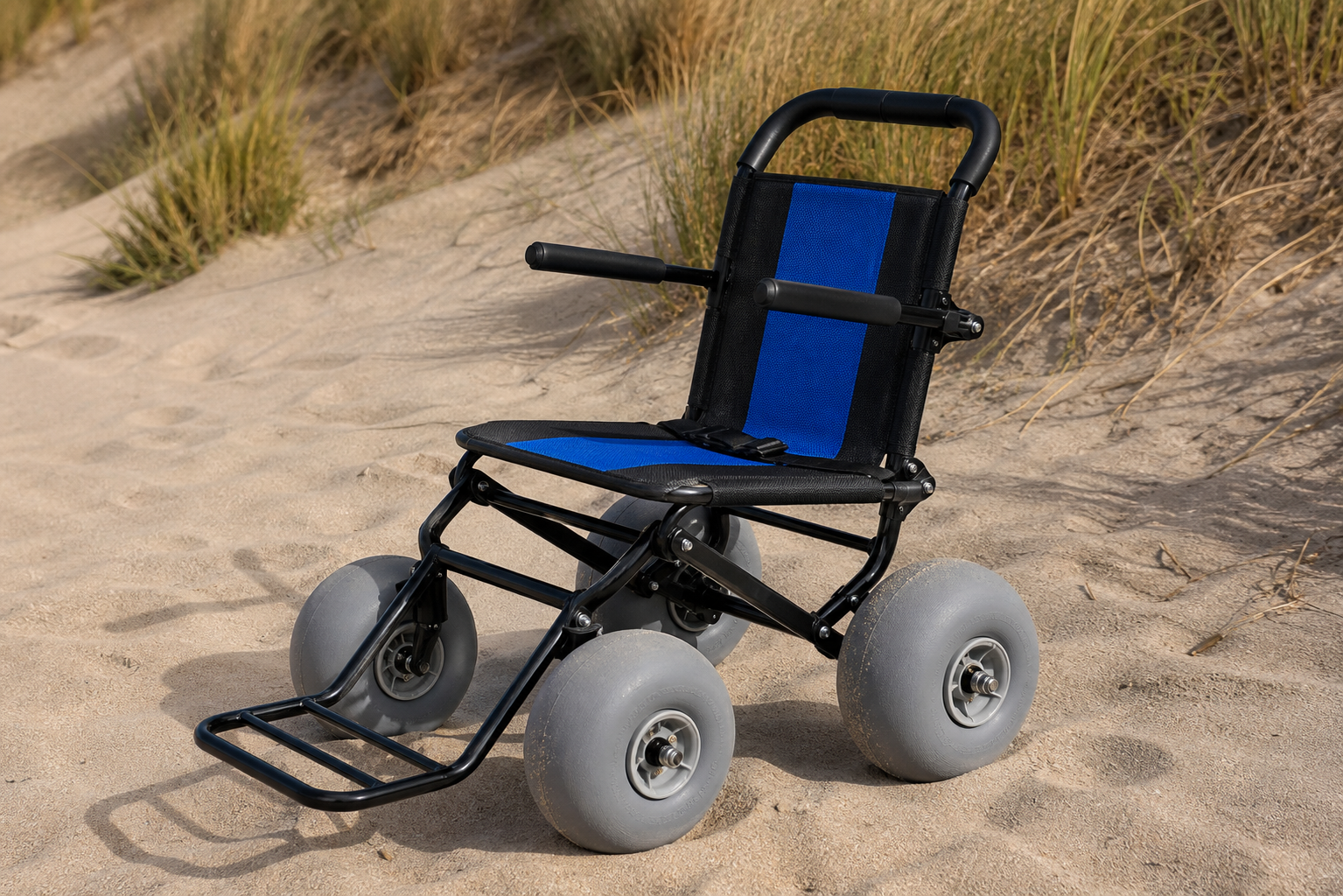
An all-terrain beach wheelchair suits routes where staff can maintain control, see the travel line, and reach a defined service area without improvised lifting. Treat the route as a chain of surface zones rather than one stretch of sand. Dry sand, compacted sand, paving, ramps, timber decking, and turning bays can each change the handling task. Where a beach access mat meets loose sand, include that join in the trial route.
Review route width, slope direction, cross traffic, and return access. The same beach may present a different working path after an event setup or a change in pedestrian flow. A team does not need invented capability data to make a sound local choice. It needs a repeatable observation method and a stop rule for conditions outside its service plan.
What route questions belong in the operating plan?
A useful rule of thumb: describe the action that staff can see and control. Avoid vague labels such as easy or difficult unless the note also states the surface, direction, and staff response.
- Where does loose sand begin?
- Can the chair turn without blocking access?
- Which stop can staff use if the route changes?
Key Takeaway: A suitable route has defined zones, visible limits, and a planned return path.
| Review item | Team note |
|---|---|
| Surface zone | Local handling note |
| Turn area | Available working space |
| Stop rule | Action staff will take |
Use this map during the on-site trial.
How should buyers review seating and support points?
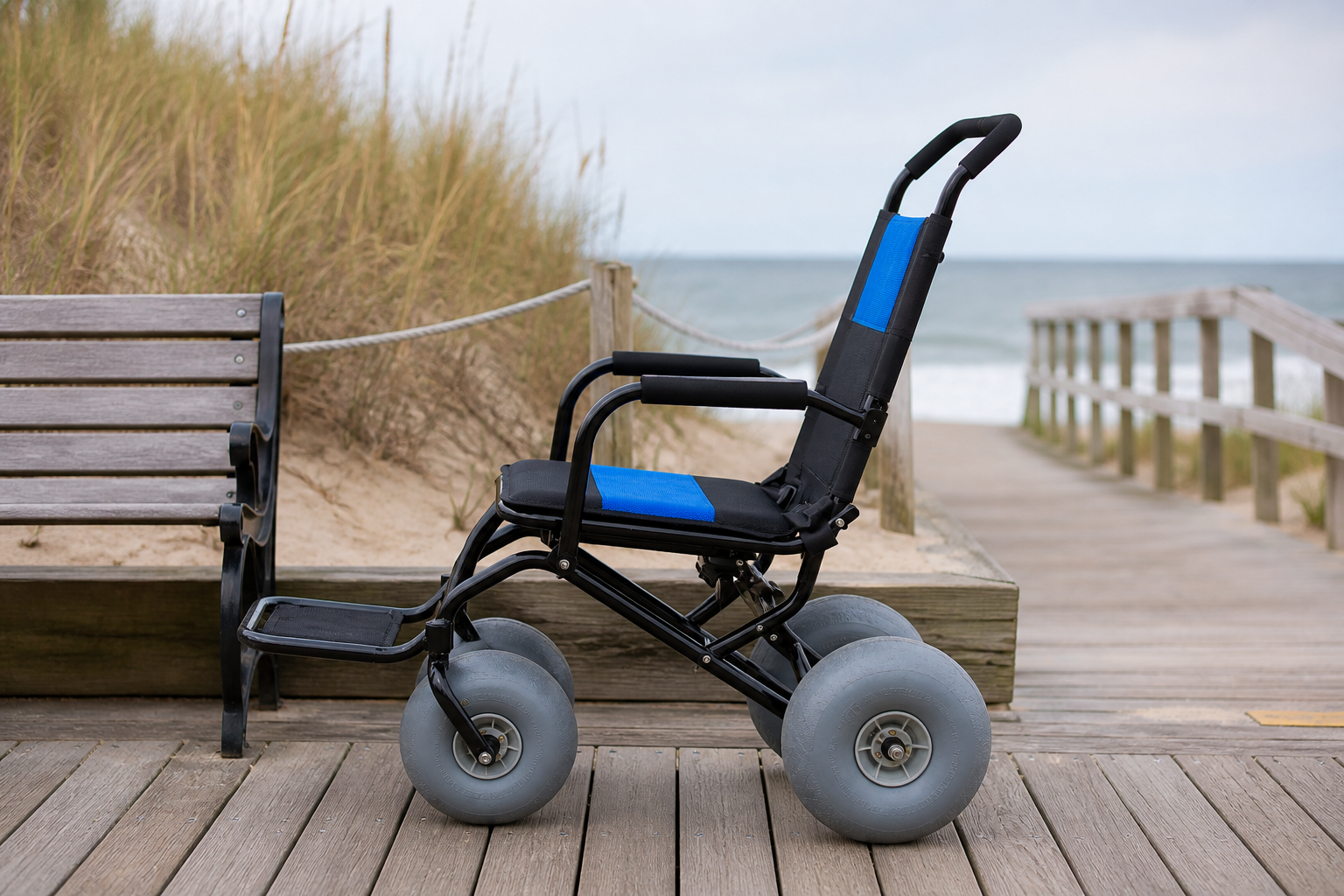
An all-terrain beach wheelchair should be reviewed through its seat, back, arm supports, foot support, fastening points, and cleaning access. Buyers should look at how these parts fit the planned service routine rather than treating comfort as a single visual feature. Shared-use equipment also needs a clear preparation and post-use check for each session.
Use the beach wheelchair range to frame product-category questions, then return to the local route and staff process. Ask how each contact surface will be checked, which adjustments are available on the quoted model, and where the team will record a concern. Request written product details for any feature that affects the operating plan.
Which seating details should appear on the review sheet?
The useful distinction is simple: separate visible construction details from supplier-confirmed specifications. Staff can record what they inspect locally while purchasing keeps model-specific claims in the quotation file.
- List each user contact surface.
- Note the foot support and arm layout.
- Assign a condition check before use.
Key Takeaway: A seating review works best when physical details and written specifications stay in separate records.
| Review item | Team note |
|---|---|
| Contact area | Local check |
| Model detail | Supplier document |
| Concern | Escalation owner |
Match every question with a record owner.
Who should handle the chair during a site trial?
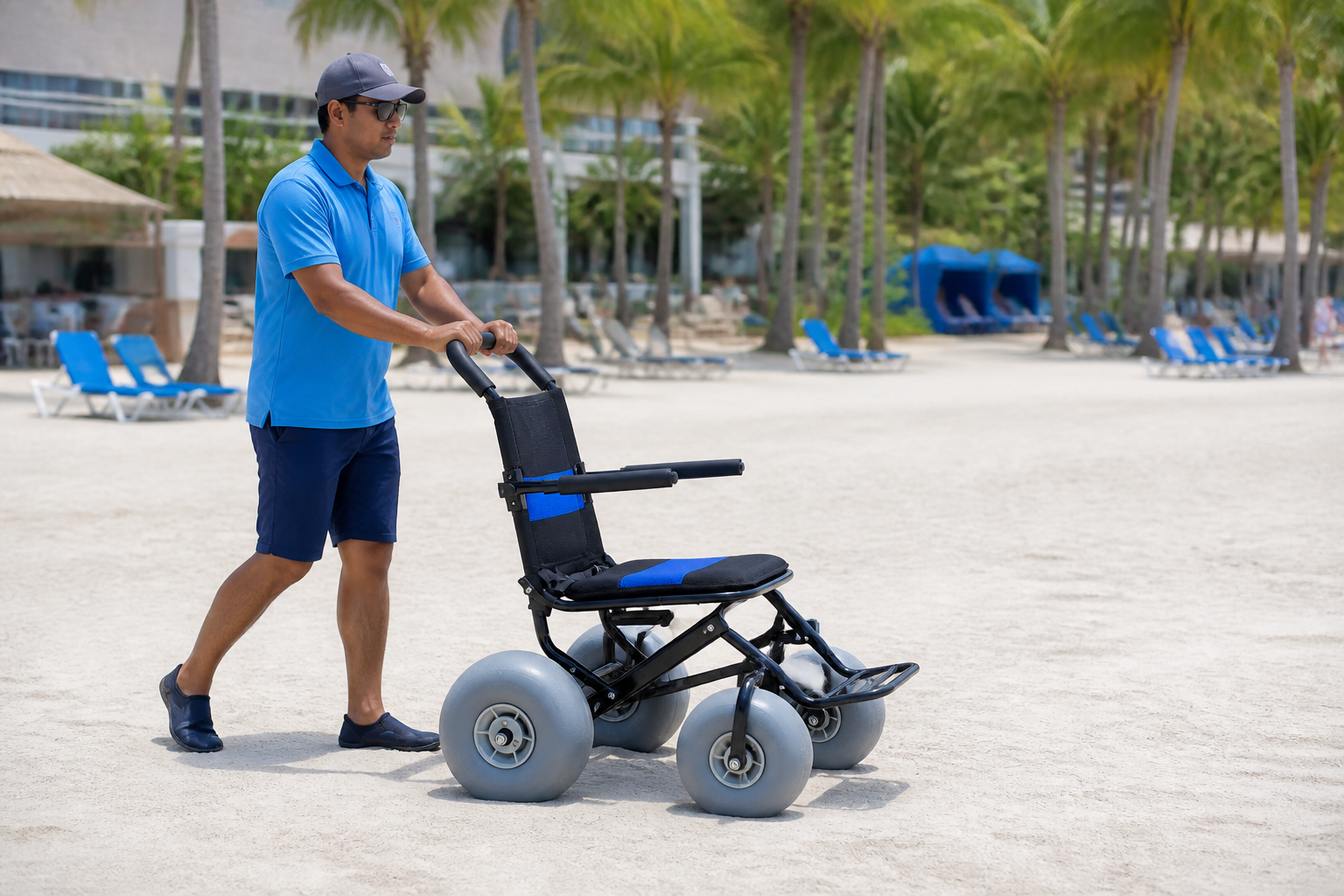
An all-terrain beach wheelchair trial should involve the staff who will prepare, guide, return, clean, and store the chair. Their hands-on notes reveal whether the planned procedure fits a real shift. A purchasing representative may watch the trial, but operations staff should own the route actions and describe any point that feels unclear.
Review the beach wheelchair user manual before the session, then compare its model guidance with local rules. Run an empty-chair rehearsal before any user-facing service. The rehearsal should cover hand positions, verbal cues, pause points, route limits, and the return sequence without turning the exercise into a performance test.
How can the trial stay focused and repeatable?
Keep the session grounded: give each participant one role and one observation task. A short debrief works better when comments refer to a named route point or action.
- Assign a lead attendant and observer.
- Rehearse the outbound and return paths.
- Log questions before changing the procedure.
Key Takeaway: The people who run the service should shape the handling procedure during the trial.
| Review item | Team note |
|---|---|
| Trial role | Observation focus |
| Route point | Staff action |
| Open question | Written follow-up |
Revise the procedure from specific trial notes.
What frame and wheel details need a closer review?
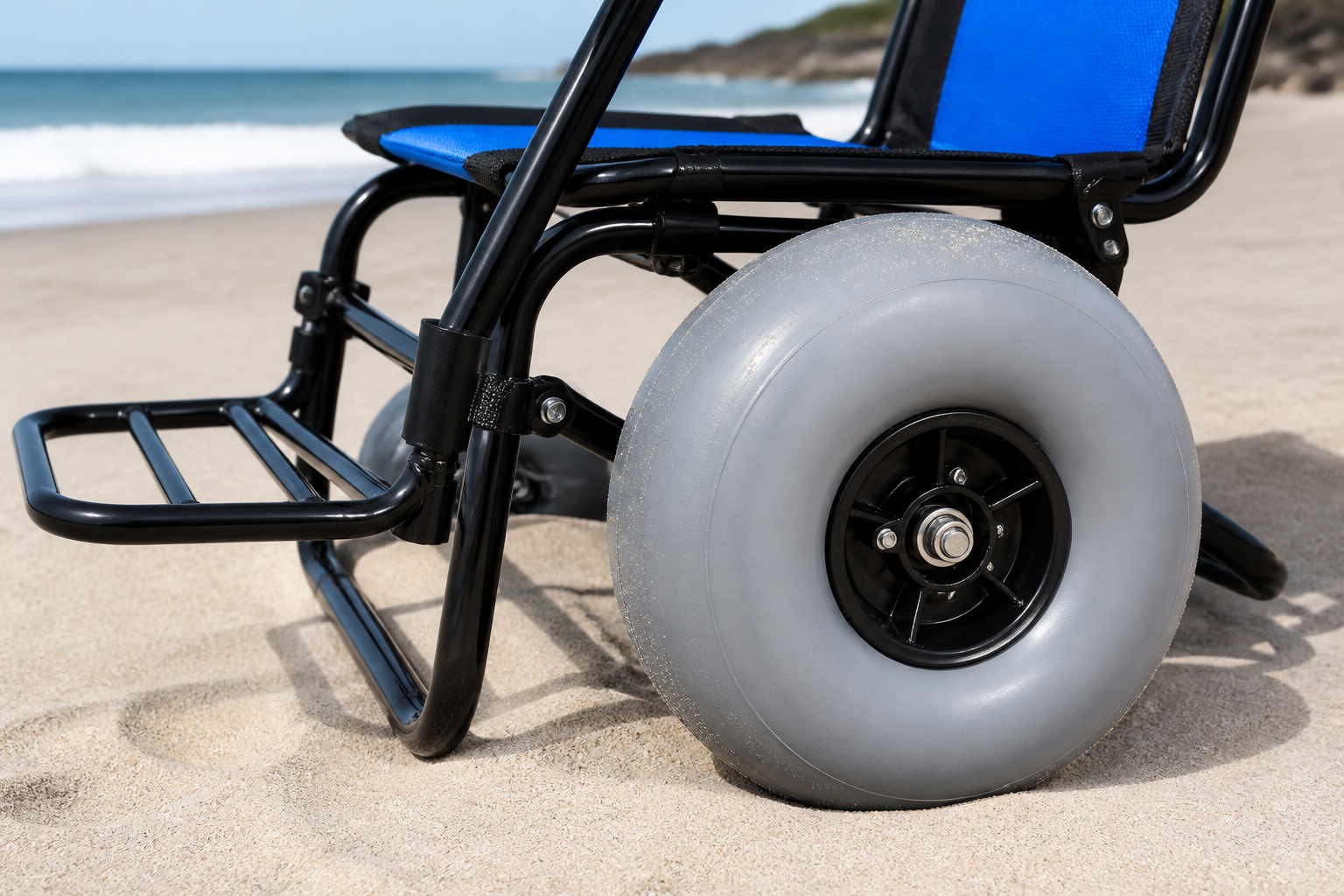
An all-terrain beach wheelchair needs a close review of balloon tires, hubs, axles, frame joints, fasteners, finish, foot support, and visible attachment points. This inspection should connect each component with the planned route and care area. It should not claim a service life or load rating unless the supplier provides that information in writing.
Look for access around parts that staff will rinse, dry, inspect, or remove under the stated model instructions. Ask how replacement parts are identified and whether diagrams use the same model name as the quotation. A photo record can help purchasing compare the delivered unit with approved documents without turning visual appearance into a technical specification.
How should component questions be organized?
This keeps the review tidy: group questions by component, document source, and local care action. That structure makes gaps visible without adding unsupported claims.
- Match wheel and hub names with a diagram.
- List fasteners staff can inspect visually.
- Record parts that need supplier guidance.
Key Takeaway: A component review should link visible parts with written model information and local care tasks.
| Review item | Team note |
|---|---|
| Component | Document source |
| Visible check | Staff record |
| Supplier question | Reply status |
Close each open item before order approval.
How should transport and storage shape the order?
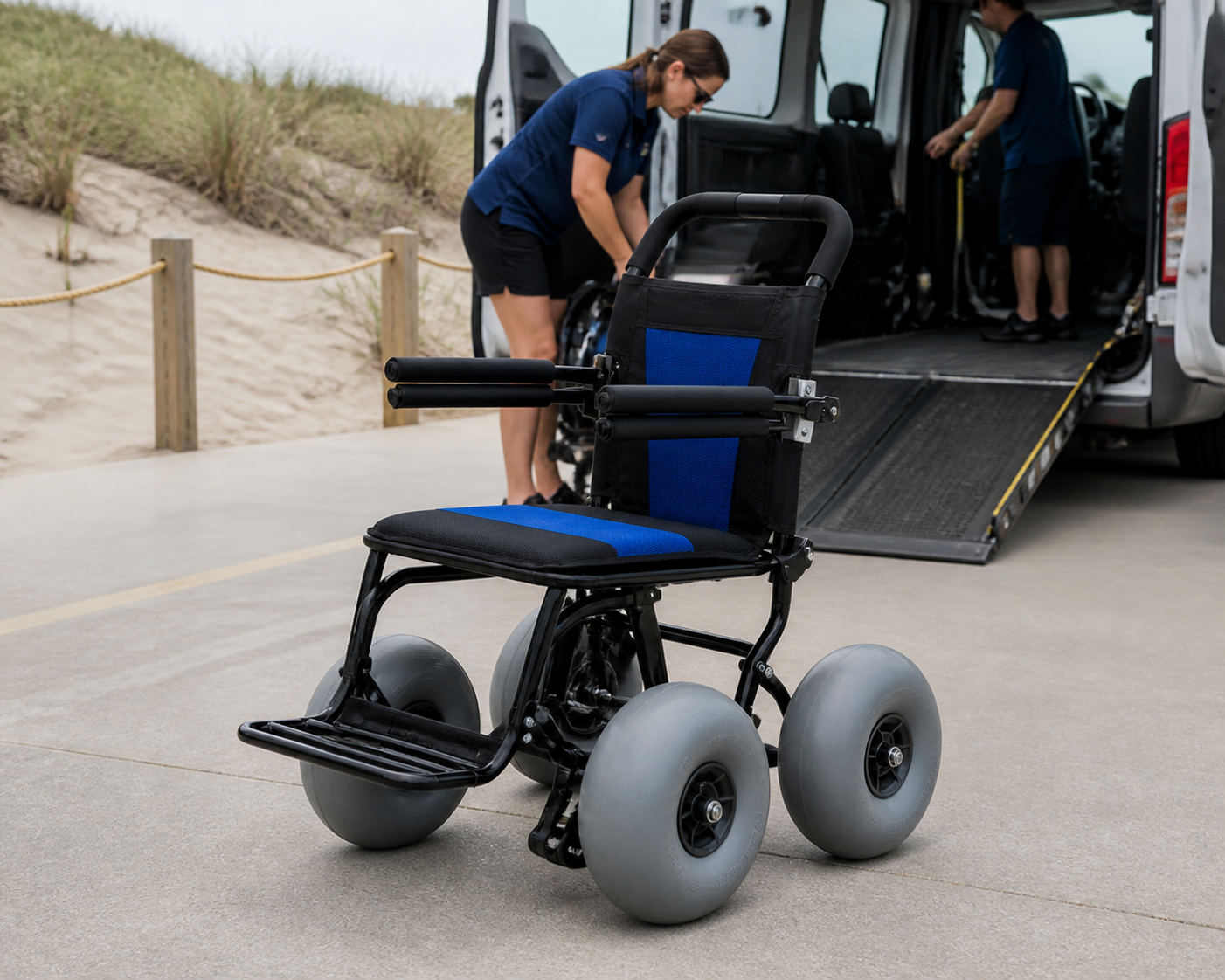
An all-terrain beach wheelchair order should reflect the actual vehicle path, doorway sizes, ramp access, storage bay, and staff available for movement. A chair that reaches the beach but does not fit the service route can create avoidable handling work. Measure the narrow points and compare them with written product dimensions from the quoted model. Compare a lightweight beach wheelchair if loading limits dominate the service plan.
Rehearse the path with a safe stand-in footprint or the trial unit. Check where staff will open doors, position a ramp, turn near a wall, and leave space for other equipment. Storage planning should also cover ventilation, drainage, security, and a clear inspection area. Keep all dimensions tied to a named source and date.
Which measurements belong in the transport file?
The numbers need context: a width alone has little value unless the record states the doorway, vehicle, or storage point it describes.
- Measure the narrowest route point.
- Record vehicle and ramp clearances.
- Mark the storage inspection space.
Key Takeaway: Transport and storage checks should use named locations and supplier-confirmed product dimensions.
| Review item | Team note |
|---|---|
| Measured point | Available space |
| Product dimension | Source document |
| Route action | Assigned staff |
Test the complete movement path before sign-off.
What care routine fits a coastal operating site?
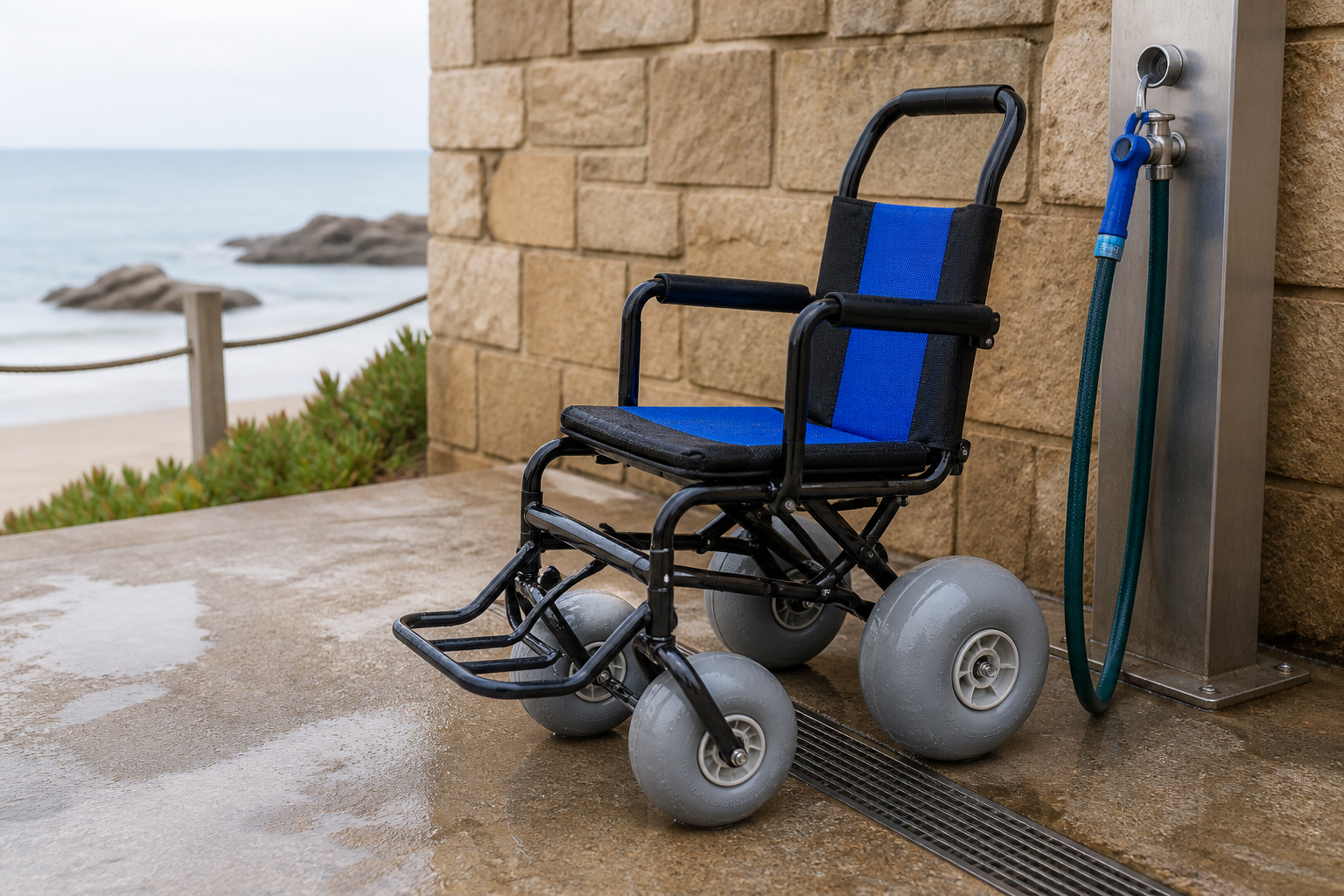
An all-terrain beach wheelchair care routine should follow the model instructions and fit the site’s return area, water access, drying space, inspection time, and record system. Staff need a short sequence they can complete after a normal session. The plan should state which observations trigger removal from service and who receives the report.
Separate routine cleaning from repair decisions. Staff may remove loose sand, rinse approved surfaces, dry the chair, and complete a visual check only within the written product guidance. Damage, unusual movement, missing parts, or unclear instructions should move to the designated equipment owner rather than invite an improvised fix.
How can care tasks stay consistent across shifts?
A short sequence helps: place the checklist where the chair returns and use plain action verbs that a new staff member can follow.
- Remove loose debris in the care zone.
- Follow the approved rinse and drying steps.
- Log any condition that changes service status.
Key Takeaway: A care routine needs a defined location, a written sequence, and a stop rule for concerns.
| Review item | Team note |
|---|---|
| Care step | Approved action |
| Condition note | Service status |
| Escalation | Equipment owner |
Audit a sample of return records each week.
Which supplier records should a buyer request?
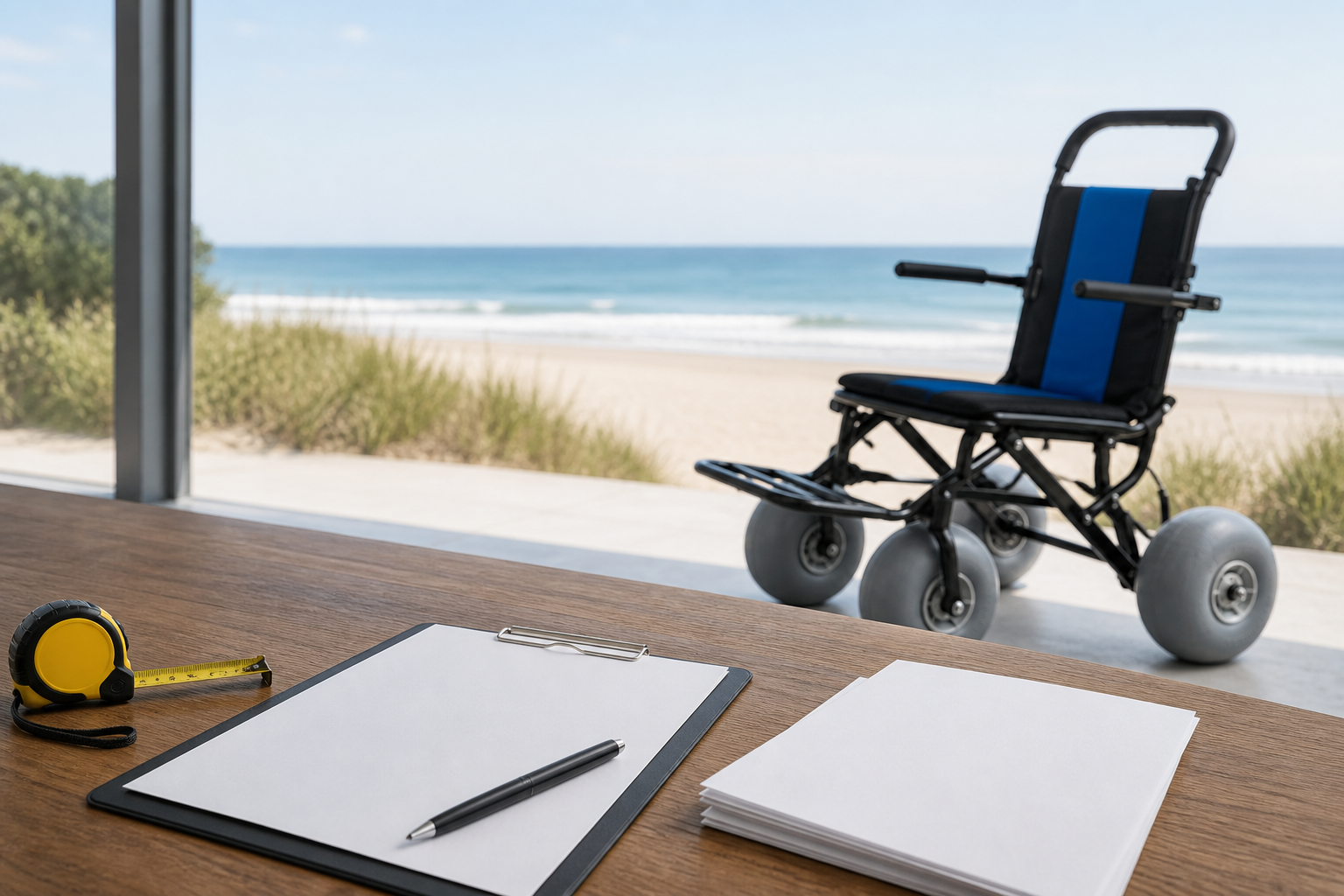
An all-terrain beach wheelchair buyer should request the exact model specification, dimensions, operating instructions, parts list, care guidance, warranty terms, and quotation details that apply to the proposed unit. These records let purchasing and operations work from the same version. They also reduce ambiguity when a delivery, training question, or spare-part request reaches a different contact.
Ask the supplier to identify revision dates and model codes where available. Keep marketing material separate from documents used for acceptance. Do not assume a claim from a related product applies to the quoted chair. The purchasing file should show who approved each document and which questions remain open before the order decision.
How should the document register be maintained?
A clean register saves time: use one row per document and record its model reference, revision, owner, and approval status.
- Request model-specific operating guidance.
- Log parts and care documents by revision.
- Keep open questions beside the related file.
Key Takeaway: A document register protects the team from mixing product versions or relying on broad marketing copy.
| Review item | Team note |
|---|---|
| Document | Model and revision |
| Internal owner | Approval status |
| Open point | Supplier reply date |
Review the register at the purchasing gate.
How can a pilot guide the purchasing decision?
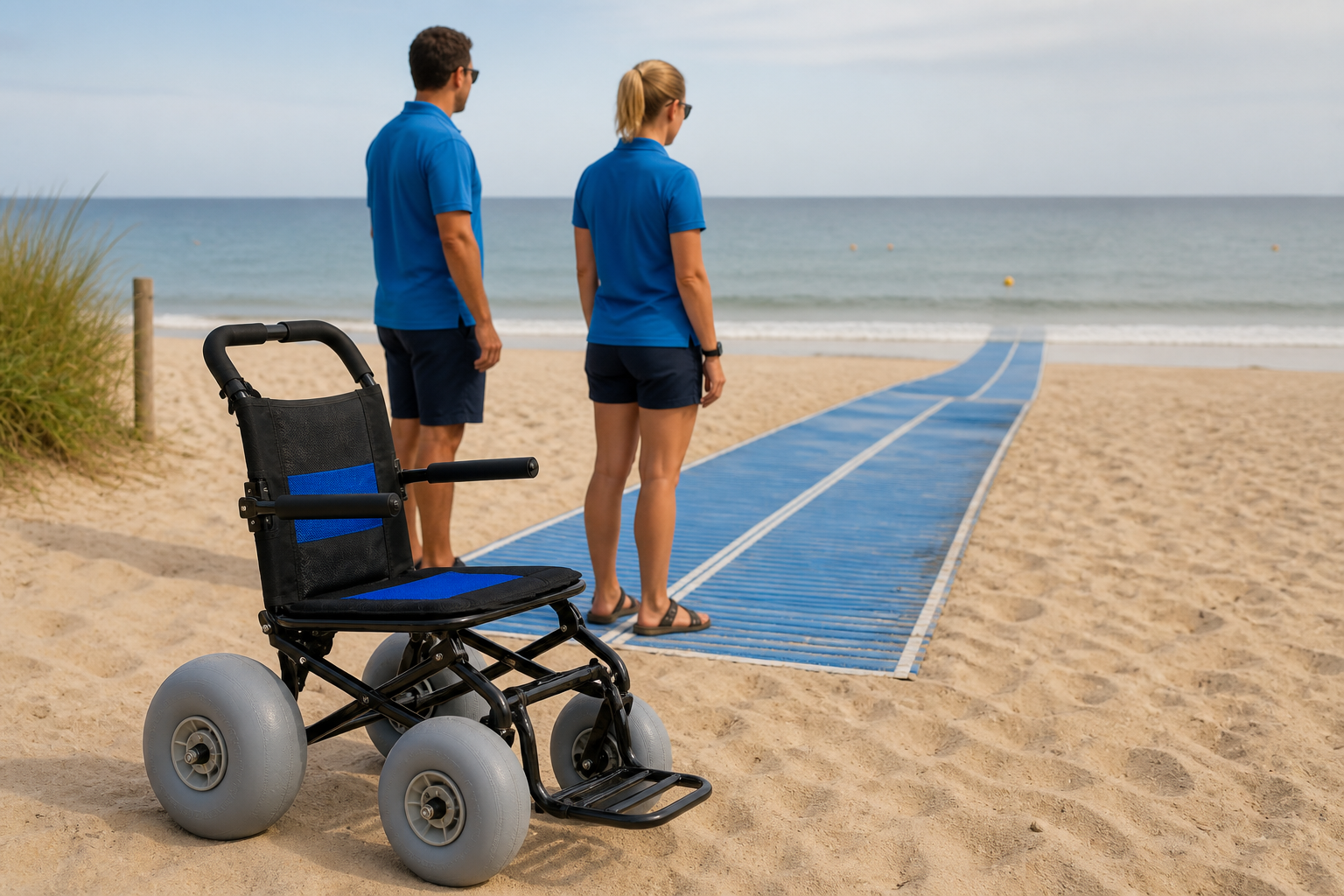
An all-terrain beach wheelchair pilot can guide the purchasing decision when it uses the intended route, named staff roles, written observation criteria, and a fixed debrief format. The pilot should test the service process rather than invent performance thresholds. It can reveal route gaps, unclear handoffs, storage conflicts, or document questions before a wider rollout. If water entry is also planned, trial a floating beach wheelchair under its own policy and instructions.
Use a relevant all-terrain beach wheelchair project page for background, then keep acceptance criteria local. Set the review window, define who may change the procedure, and freeze the record after sign-off. If conditions fall outside the planned route, pause and document the reason instead of forcing the session to continue.
What should the pilot debrief produce?
The debrief needs decisions: each observation should become an accepted action, an assigned follow-up, or a documented reason for no change.
- Compare route notes across pilot sessions.
- Resolve handling and storage questions.
- Record the approval owner and date.
Key Takeaway: A pilot adds value when observations lead to owned actions and a traceable decision record.
| Review item | Team note |
|---|---|
| Observation | Decision |
| Assigned action | Owner and date |
| Approval | Recorded outcome |
Use unresolved items to shape the next supplier call.
What should the purchasing team do next?
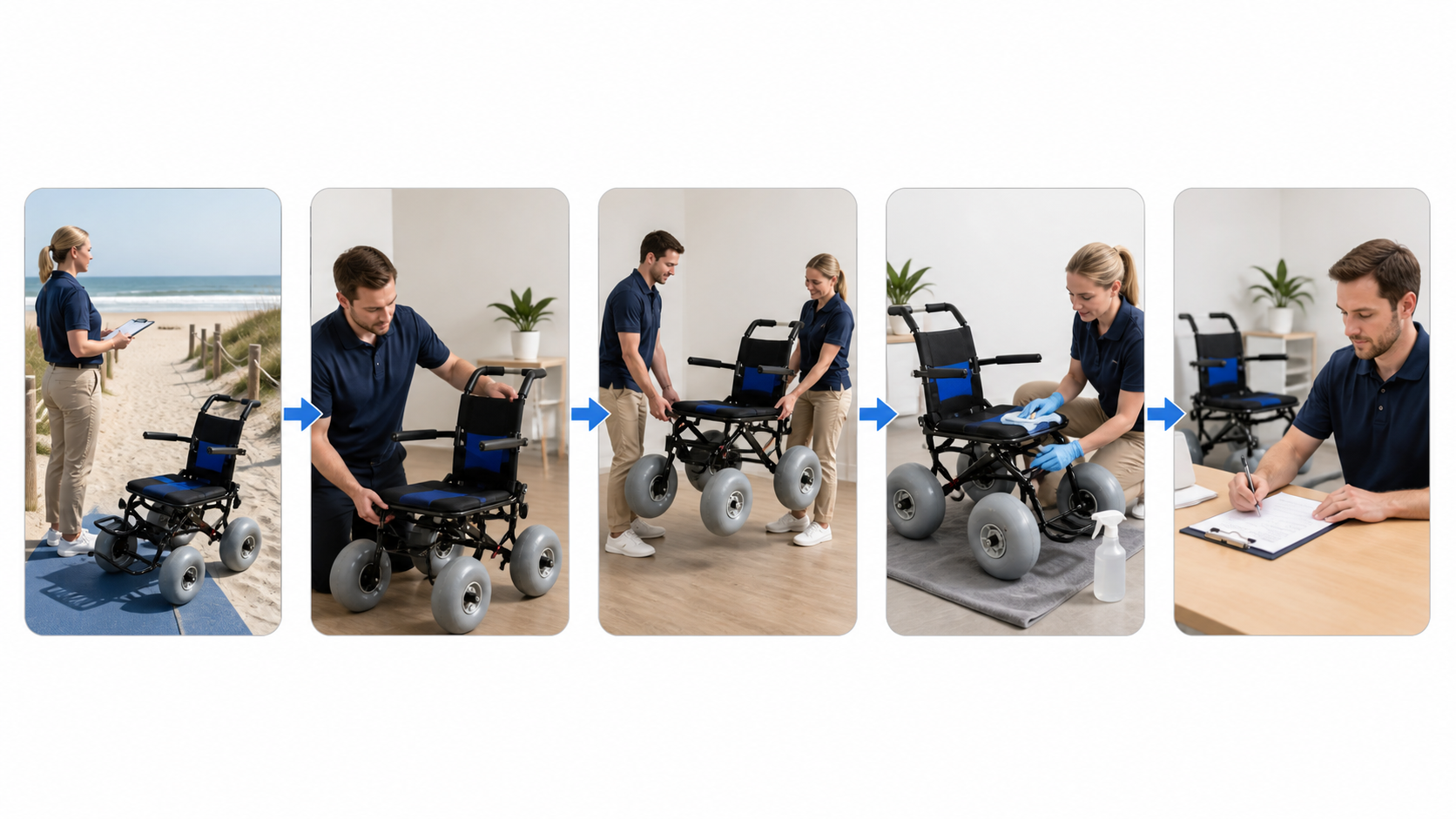
An all-terrain beach wheelchair purchasing team should combine the route map, trial notes, care plan, storage checks, supplier documents, and approval record into one decision file. That file should show why the proposed model fits the local service process without adding claims that the team has not verified. It should also name the owner for delivery review and staff preparation.
Hold a short cross-team meeting with a fixed agenda: open questions, document status, route readiness, care ownership, and approval authority. If the team needs model information or a quotation discussion, contact us with the site notes and planned operating context. A precise request usually receives a more useful reply than a broad request for the best chair.
How can the final approval stay practical?
One last check matters: confirm that every approval item points to a route note, supplier document, or named operating owner.
- Close unresolved product questions.
- Name the delivery acceptance owner.
- Schedule staff preparation before service.
Key Takeaway: The purchasing file should connect product choice with route, people, care, and written evidence.
| Review item | Team note |
|---|---|
| Approval item | Supporting record |
| Operating owner | Next action |
| Delivery check | Planned date |
Approve only the version shown in the decision file.
FAQ for project teams
Can I compare chairs without an on-site trial?
Yes, for an early shortlist. A final operating decision still benefits from a route review and a hands-on session with the staff who will manage the chair.
What is the best record for route observations?
Use a dated route sheet. Add named surface zones, pause points, staff actions, and open questions so another reviewer can follow the same path.
How do I know if supplier information matches our model?
Check the model code and revision. Ask the supplier to confirm that each specification, manual, parts list, and care document applies to the quoted unit.
Can staff repair a concern during a trial?
No, not without approved guidance. Pause the trial, record the condition, and send the issue to the equipment owner or supplier contact named in the procedure.