
The best beach wheelchair vs transport chair guide separates purpose-built sand mobility from compact attendant transport on firm indoor or paved routes. Both devices may use a seat, handles, foot support, and a companion operator. However, those shared features do not make their routes interchangeable. For example, treating them as substitutes may create a service gap at the boardwalk edge. However, treating them as unrelated may hide a practical paired workflow. Compare wheels, support, staff work, transport, care, and supplier evidence against that route. Leave personal fit decisions with the site’s qualified professionals.
How do the two chair types differ?
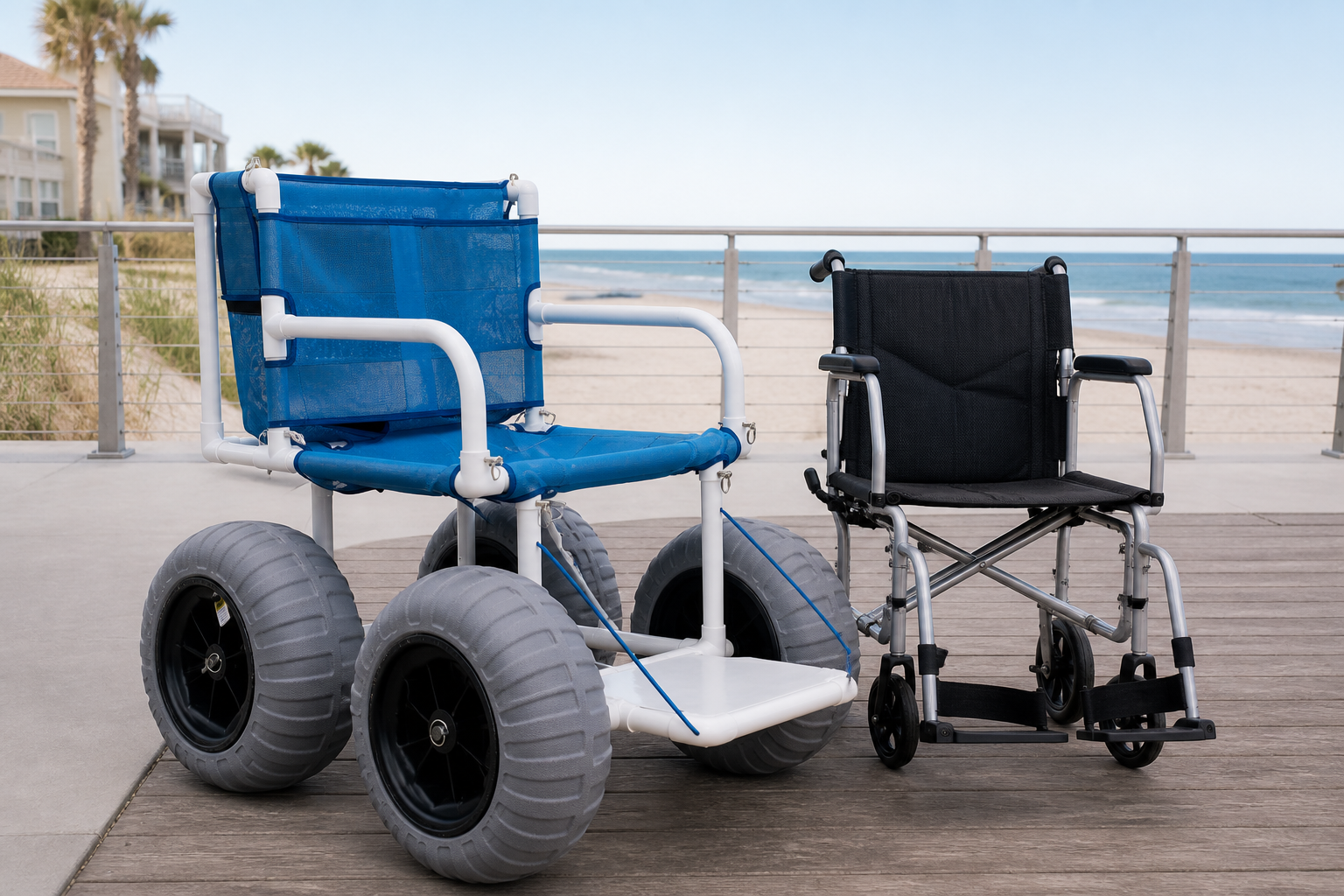
A beach wheelchair vs transport chair comparison starts with route purpose: the beach chair is built around wide wheels for soft ground, while the transport chair normally serves firm, smooth routes with a compact attendant-pushed layout. Shared seating does not erase that difference. If water entry belongs in the service, evaluate a floating beach wheelchair as a separate device.
Then write a one-sentence job statement for each device. The beach chair may start near a boardwalk and continue across sand; the transport chair may connect parking, lobby, or paved paths. Supplier instructions and local policy still control actual use, so avoid extending either job beyond documented limits.
How should buyers state each equipment job?
Start with the route, not the label:
A clear job statement names surface, distance, operator, boarding point, and destination. It also states where the device must stop.
- Name the approved start and end points.
- Describe the surface between those points.
- Record the device boundary and handoff point.
Key Takeaway: Purpose becomes clear when each chair has its own route statement.
| Area | Buyer question | Record |
|---|---|---|
| Beach chair | Which soft-ground route is planned? | Route |
| Transport chair | Which firm route is planned? | Route |
| Handoff | Where do jobs change? | Zone |
Place both route statements on one page so overlaps and gaps are visible.
Why do wheel layouts change sand use?
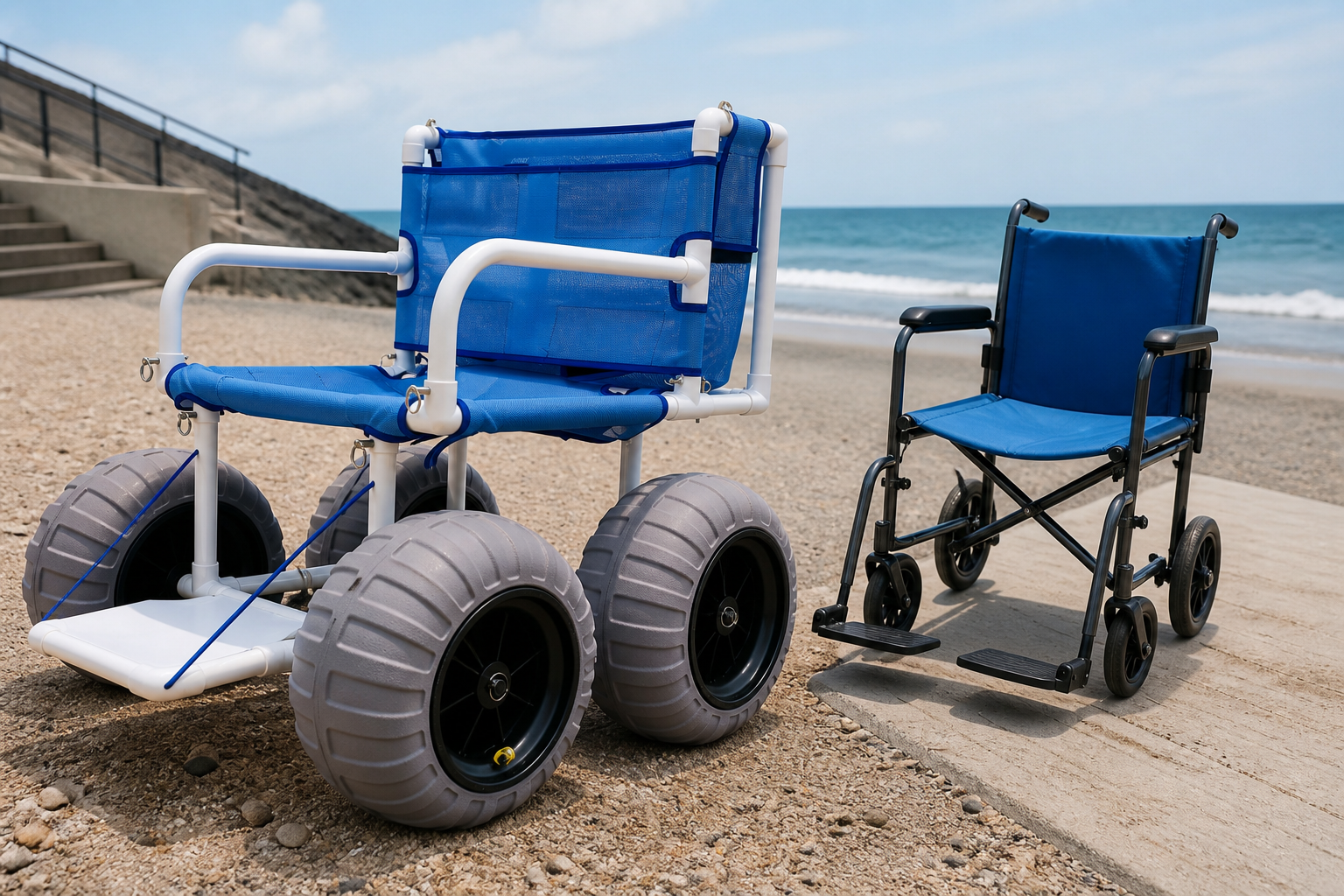
A beach wheelchair vs transport chair wheel review shows why route surfaces matter: wide balloon-style tires spread contact across soft sand, while small narrow wheels suit firm surfaces and can dig into loose ground. Buyers should verify each model through documents and site trials.
Use a close product check to record wheel count, width, hub access, turning layout, and any supplier care instructions. Do not invent traction, load, or push-force numbers. If the site crosses deep sand or rough coastal ground, compare the route with an all-terrain beach wheelchair before setting an equipment boundary.
What should a wheel review record?
The visible difference is only the opening clue:
Pair photos with drawings, instructions, and an empty-chair route check. The record should say what was observed without turning one session into a broad rating.
- Record wheel layout and visible contact profile.
- Match care points with supplier instructions.
- Test only the approved route and condition.
Key Takeaway: Wheel geometry supports a route decision when evidence and site observations agree.
| Area | Buyer question | Record |
|---|---|---|
| Profile | Wide or narrow contact? | Photo |
| Route | Firm or soft surface? | Map |
| Care | What does the supplier require? | Instruction |
Use the table to explain why a device stops where the route surface changes.
Which operator roles fit each device?
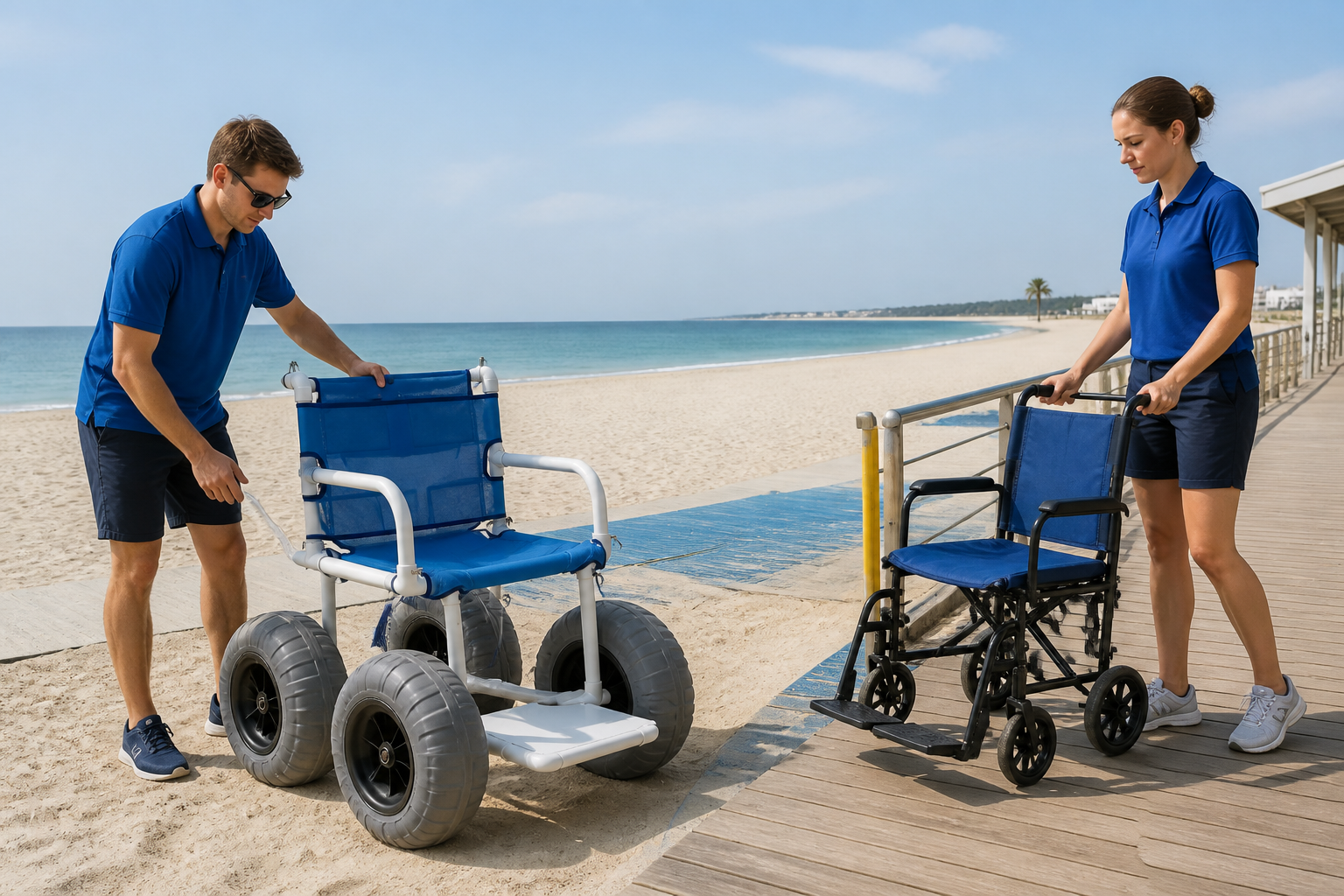
A beach wheelchair vs transport chair operator plan should assign separate handling routines because wheel layout, turning space, route length, and care needs differ. A staff member who knows one device still needs the approved routine for the other.
Map pickup, inspection, boarding position, movement cues, stop points, return, and care for both chairs. Record where two roles meet at a handoff. Practice with empty equipment before any service exercise, then follow site policy and supplier instructions for later stages.
How can teams prevent role confusion?
The handoff deserves its own script:
Name who speaks with the guest, who positions each chair, who checks the route, and who closes the equipment record after return.
- Assign one owner for each movement stage.
- Use separate handling cards for both devices.
- Practice the handoff at the real route boundary.
Key Takeaway: Clear role cards stop shared handles and seats from creating false assumptions.
| Area | Buyer question | Record |
|---|---|---|
| Beach route | Who operates the beach chair? | Role |
| Firm route | Who operates the transport chair? | Role |
| Handoff | Who leads communication? | Script |
Observe one normal shift and revise any role that depends on an unavailable person.
How should route conditions guide choice?
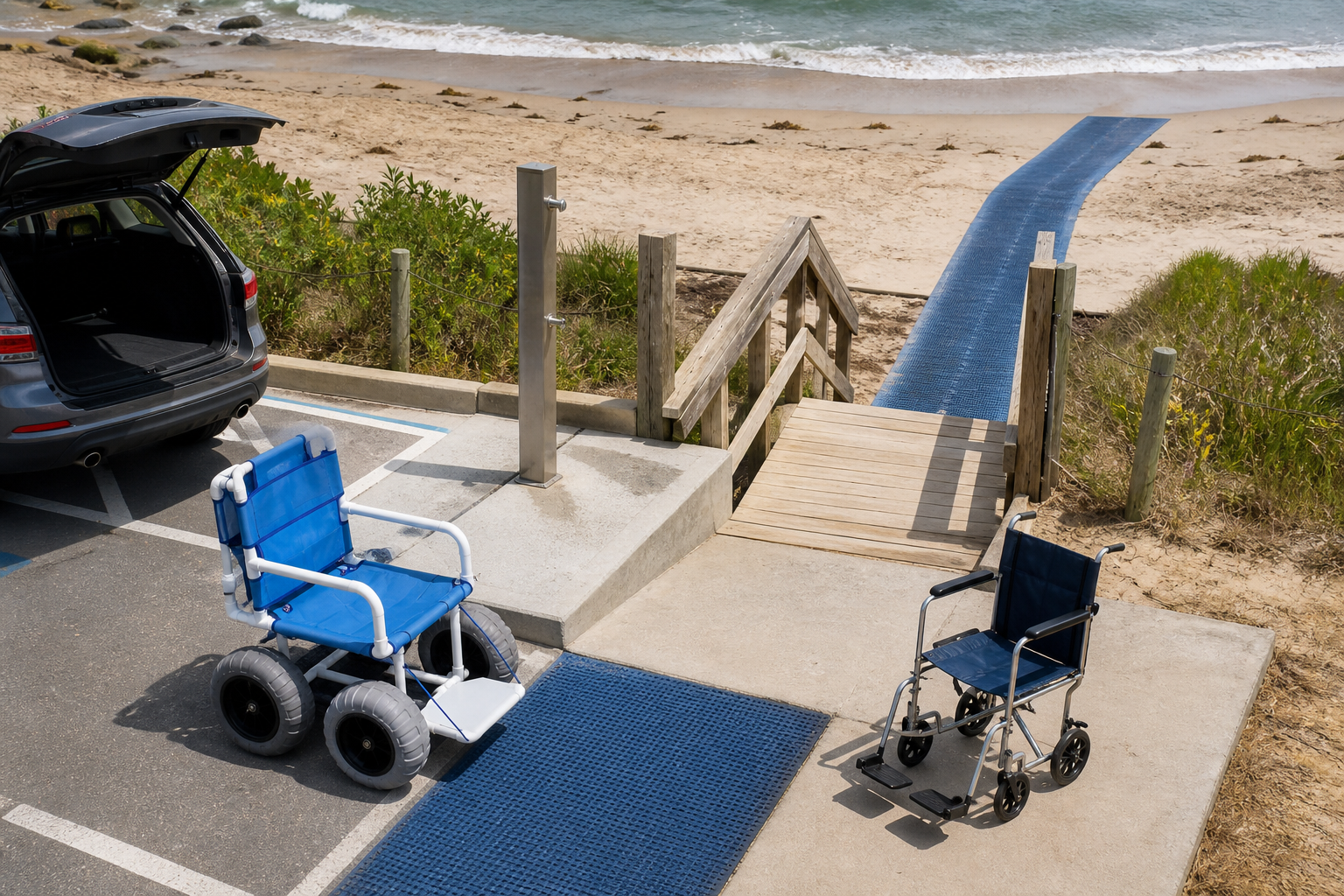
A beach wheelchair vs transport chair route choice should follow surface changes, turning areas, stopping zones, and staff coverage rather than a general mobility label. So draw the route before comparing product features. One National Park Service loan program separates beach-chair use from parking-area transfers.
Include accessible parking, lobby or rental point, boardwalk, beach access mat, loose sand, and any water boundary that the site manages. A firm mat may extend a transport chair route only when the model instructions and site policy permit it; it does not make the chair a sand device.
What makes a route map usable?
Keep boundaries visible:
Use colors or symbols for surface classes, but avoid claims about speed or effort. Add a device icon only where its approved route applies.
- Mark every surface change and narrow turn.
- Show boarding, pause, and handoff zones.
- Attach the supplier instruction used for each boundary.
Key Takeaway: A route map turns an equipment comparison into a site service plan.
| Area | Buyer question | Record |
|---|---|---|
| Firm | Which chair is approved? | Boundary |
| Mat | What does policy permit? | Boundary |
| Sand | Which chair continues? | Boundary |
Walk the map with frontline staff and correct any boundary that cannot be followed during a normal shift.
What seating and support questions matter?
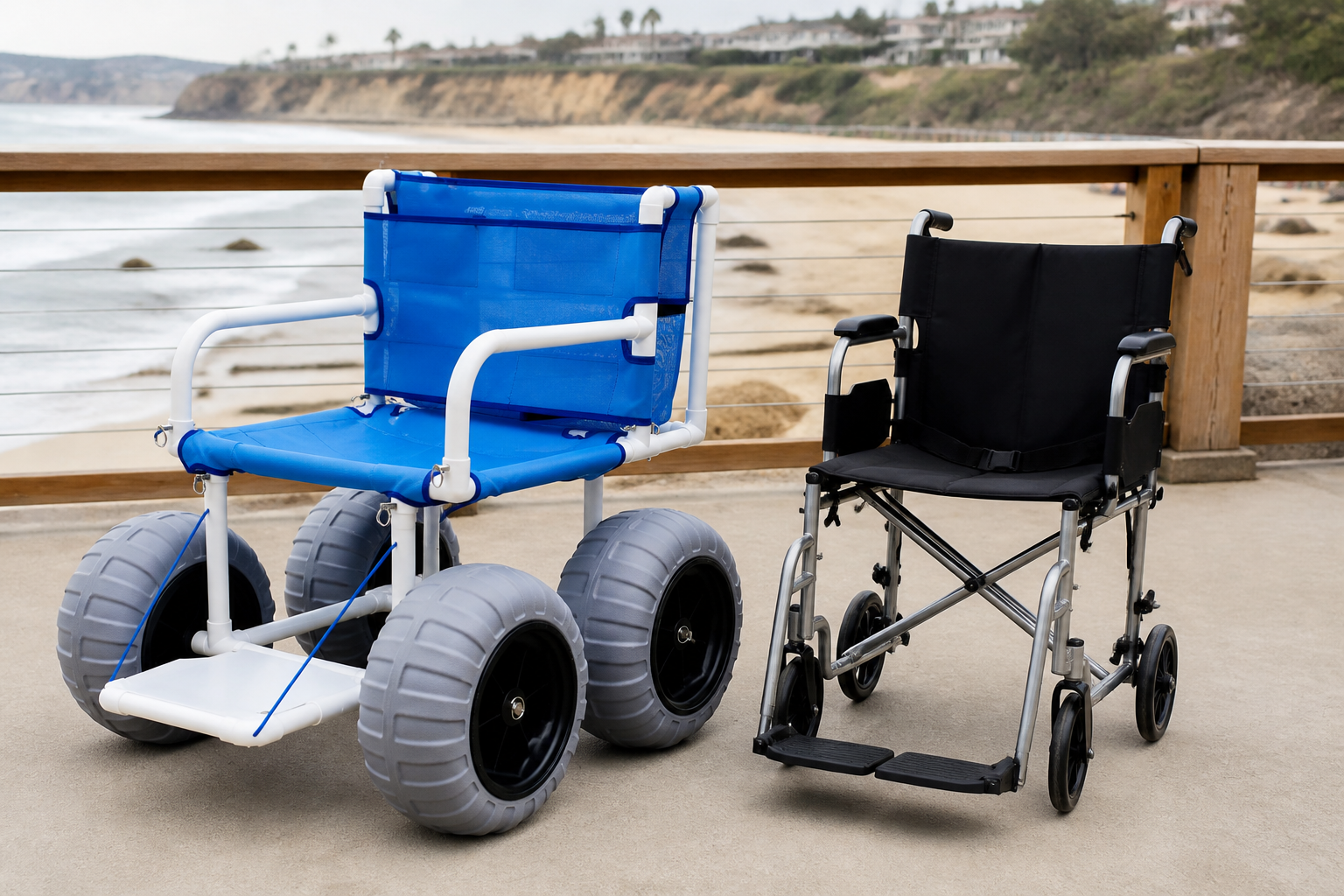
A beach wheelchair vs transport chair support review should compare documented seat, back, arm, foot, and restraint features without assuming that similar seating serves the same person or route. Personal support decisions need qualified input.
Procurement can request drawings, adjustment instructions, and cleaning guidance. Operations can define which checks staff perform and when service pauses for referral. Keep private personal information outside the general buyer comparison and record only the approved process.
How should shared-use programs divide responsibility?
The boundary protects both service and privacy:
Buyers verify product records, trained staff follow site policy, and qualified advisers handle needs beyond that policy. Supplier claims do not replace individual review.
- Compare support features through model documents.
- List adjustments permitted for frontline staff.
- Define a respectful referral path for other needs.
Key Takeaway: Support review needs a product file and a clear decision boundary.
| Area | Buyer question | Record |
|---|---|---|
| Product | What features are documented? | Drawing |
| Staff | What checks are approved? | Policy |
| Referral | When does another review begin? | Path |
Use the table to keep purchasing notes separate from personal support records.
How do transport and storage needs differ?
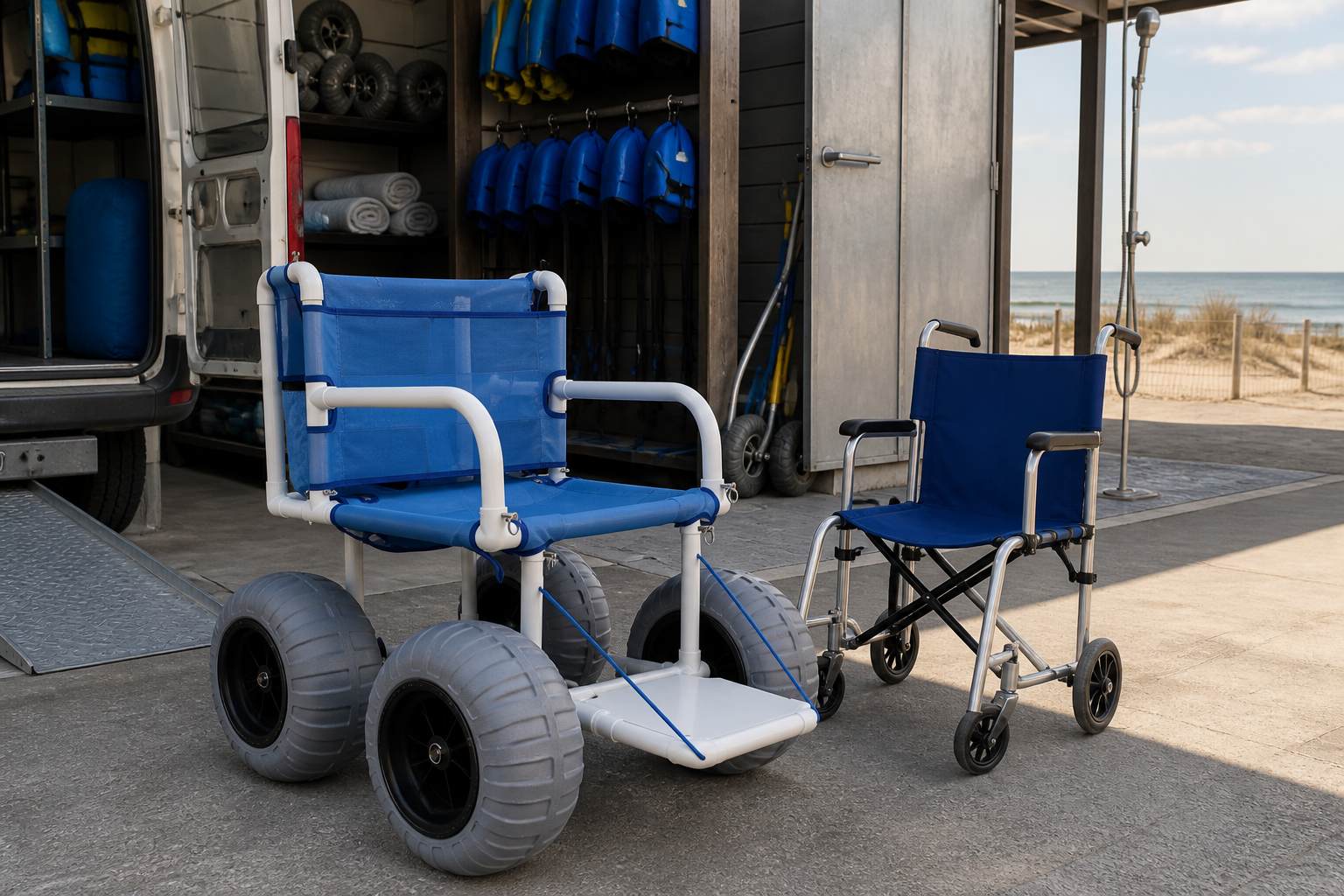
A beach wheelchair vs transport chair storage comparison should account for real wheel width, frame shape, permitted disassembly, loose parts, drying space, and the daily lift path. Compact appearance does not prove a device will fit the buyer’s workflow. A lightweight beach wheelchair also deserves a loading trial when vehicle space is tight.
Measure the actual service door, vehicle opening, aisle, shelf, and protective cover. A transport chair may fold into a narrow space, while a beach chair may need a broader bay and parts management. The site’s portable beach wheelchair application can prompt questions, yet ordered-model drawings remain the evidence source.
What should the storage trial test?
Stage the whole move:
Run pickup, doorway passage, vehicle loading, unloading, care, drying, and return. Use only lifting and disassembly methods allowed by supplier instructions.
- Measure clear openings and turning space.
- Keep detached parts labeled and grouped.
- Reserve dry space after coastal use.
Key Takeaway: Storage approval should reflect the complete shift routine for each device.
| Area | Buyer question | Record |
|---|---|---|
| Door | Does the device clear safely? | Measure |
| Vehicle | How is it moved and secured? | Procedure |
| Bay | Can it dry without blocking access? | Layout |
Compare the staged result with staffing limits before accepting either storage plan.
Which care demands belong in the plan?
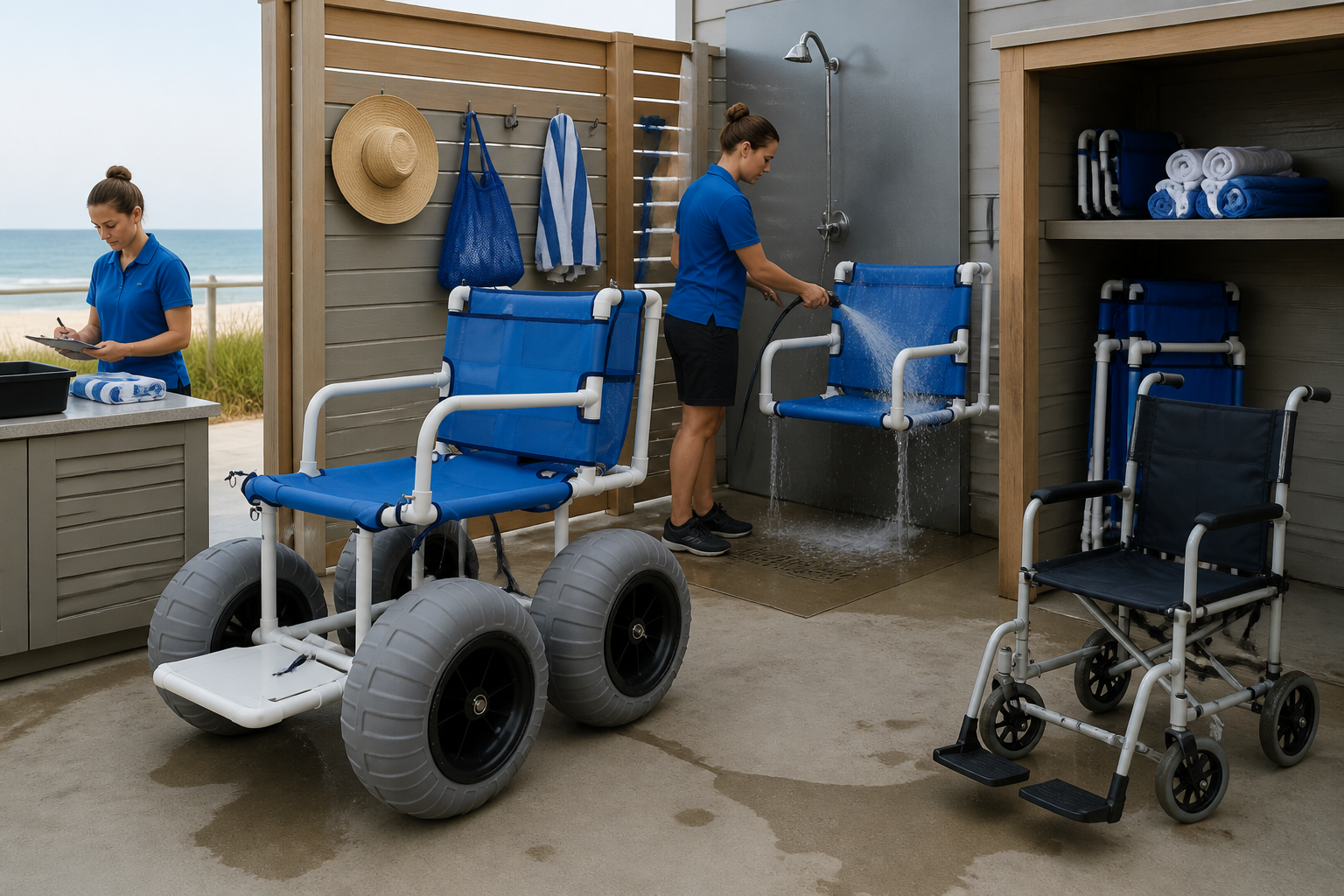
A beach wheelchair vs transport chair care plan should follow each supplier’s instructions and the route exposure each device receives. Sand and salt contact may create work for the beach chair that a firm-route transport chair does not share.
Write separate inspection, cleaning, drying, reporting, and storage cards. Do not copy intervals or chemical choices from one model to another. Staff should record damage, loose movement, or missing parts and hold equipment under the site’s approved process until review.
How can teams keep care instructions distinct?
Color coding can help without replacing words:
Give each device its own card, storage zone, parts list, and owner. Match every step with a model-specific instruction.
- Post model-specific care cards at the work area.
- Separate loose parts and inspection records.
- Create one hold-and-report path for both devices.
Key Takeaway: Care becomes reliable when shared policy points to separate model instructions.
| Area | Buyer question | Record |
|---|---|---|
| Inspect | Which model check applies? | Card |
| Clean | What method is documented? | Instruction |
| Store | Where does each device dry? | Zone |
Audit a completed shift record and fix any step that uses generic language.
What evidence should suppliers provide?
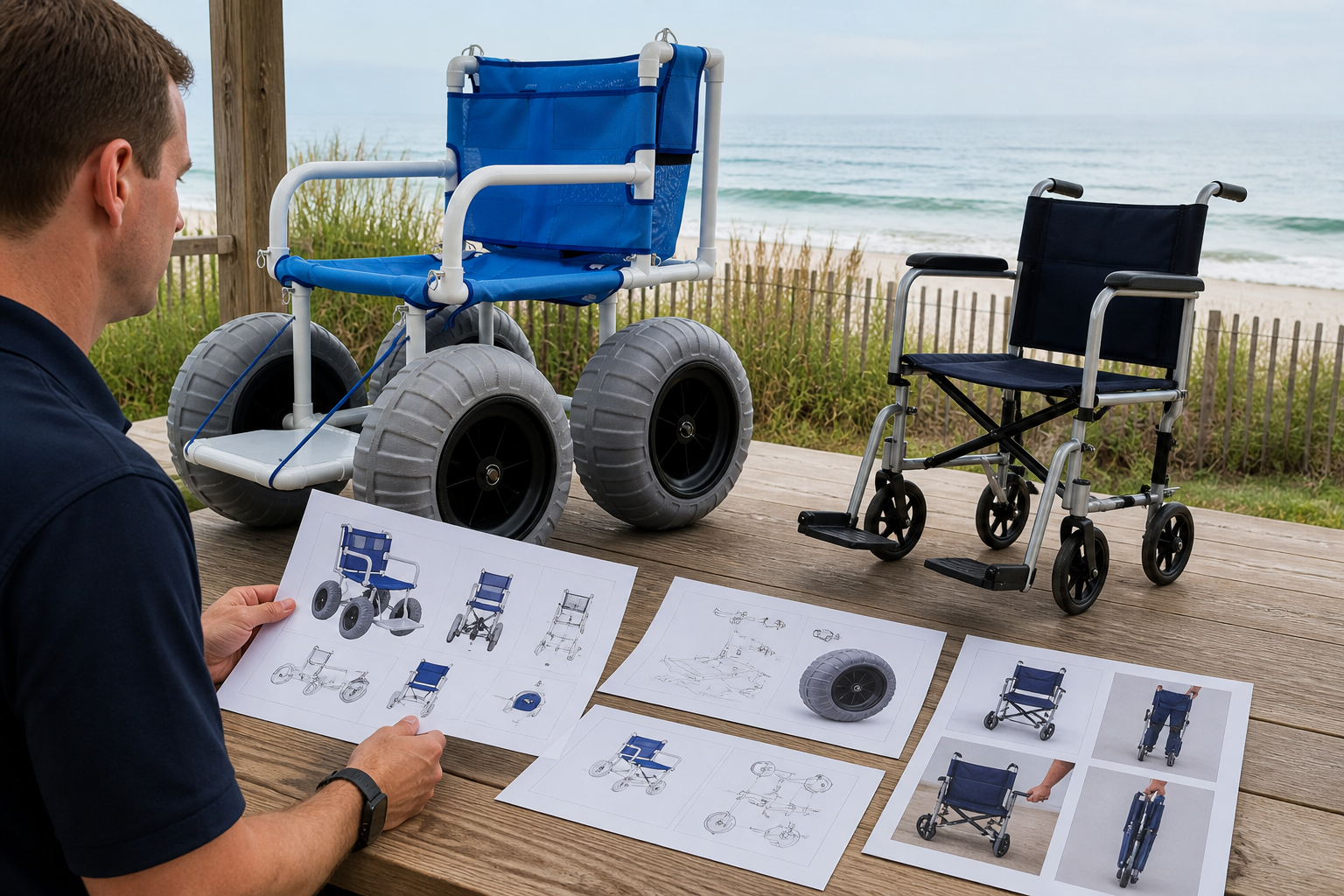
A beach wheelchair vs transport chair supplier comparison should use model-specific drawings, instructions, materials, parts references, packing information, and written answers to route questions. A shared product category is not evidence. Use the supplier overview to frame questions, then request evidence for the exact model.
Check revision dates and model codes across every file. Request clarification when a photo, drawing, parts list, or instruction refers to a different version. Keep unsupported marketing statements outside the acceptance record and avoid filling document gaps with buyer assumptions.
How should buyers compare unlike document sets?
Use the same index for both:
Create common fields for model, revision, route scope, care, parts, and open questions. The source documents may differ, yet the comparison method stays stable.
- Index each file by model and revision.
- Match component names across related records.
- Close route questions through written responses.
Key Takeaway: A common evidence index makes missing records visible without forcing false equivalence.
| Area | Buyer question | Record |
|---|---|---|
| Use | What route is documented? | Instruction |
| Care | What method is documented? | Care file |
| Parts | Can items be traced? | List |
Share the index with operations so buyer questions reflect daily work.
When should a site use both chair types?
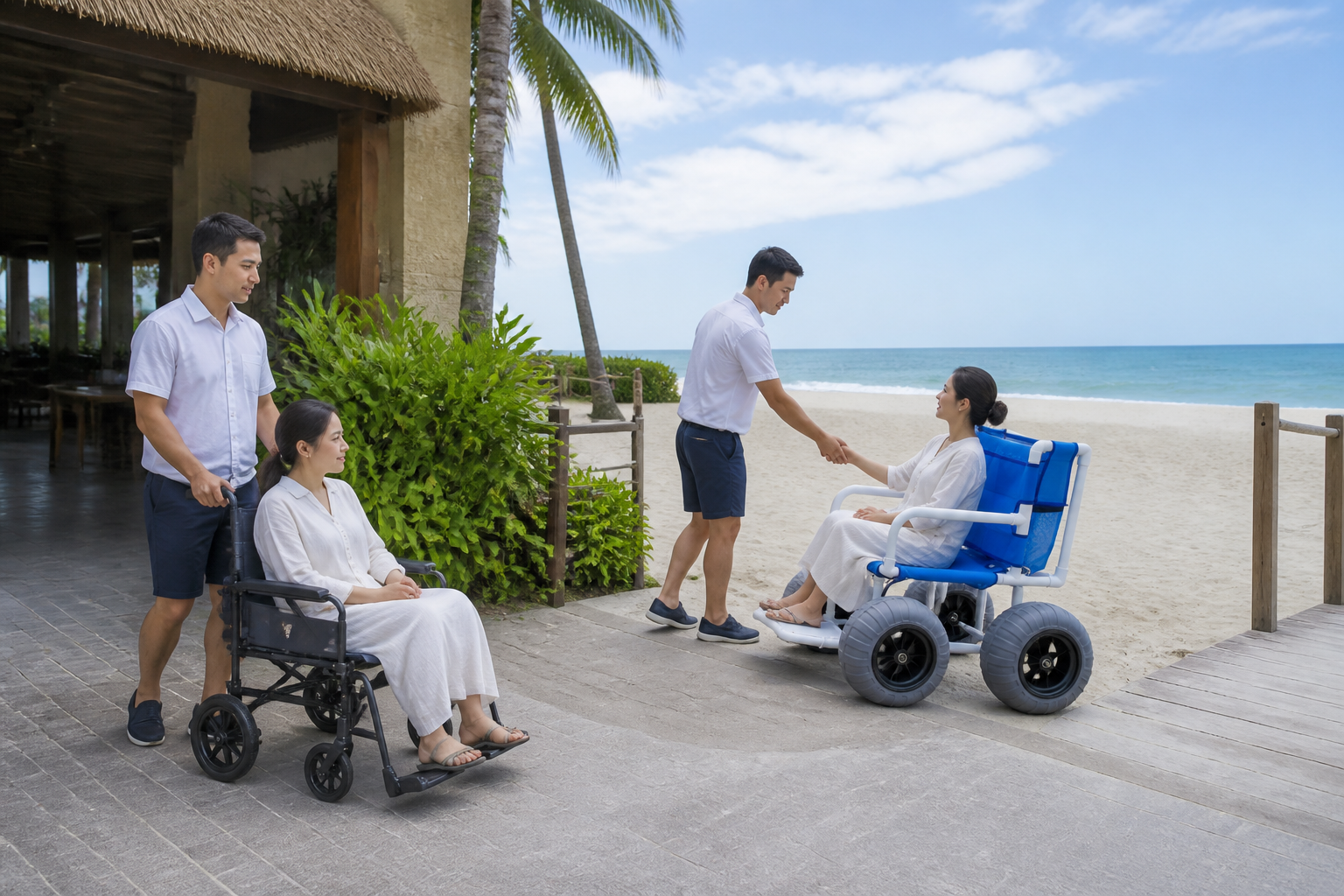
A beach wheelchair vs transport chair plan may support both devices when a site has a firm arrival route and a separate sand route, provided the handoff follows approved fit, staffing, privacy, and operating procedures. Buying both does not remove the need for clear boundaries.
Map the full visitor path and decide whether a transfer between devices belongs in the service model. If it does, involve qualified advisers, protect privacy, and train staff under written policy. Some sites may instead use one device for the whole approved route or redesign the access path.
How should a paired workflow be reviewed?
The handoff is the central decision:
Check location, space, staff coverage, communication, equipment positioning, and a dignified pause option. If the site cannot support the process, record a different service boundary.
- Mark the exact handoff zone on the route map.
- Assign communication and equipment owners.
- Test the workflow under normal staffing.
Key Takeaway: Two devices help only when the route and handoff operate as one planned service.
| Area | Buyer question | Record |
|---|---|---|
| Arrival | Which device covers the firm route? | Plan |
| Handoff | What process is approved? | Policy |
| Sand | Which device continues? | Plan |
Use a witnessed rehearsal to decide whether the paired route belongs in normal service.
What should the decision record include?
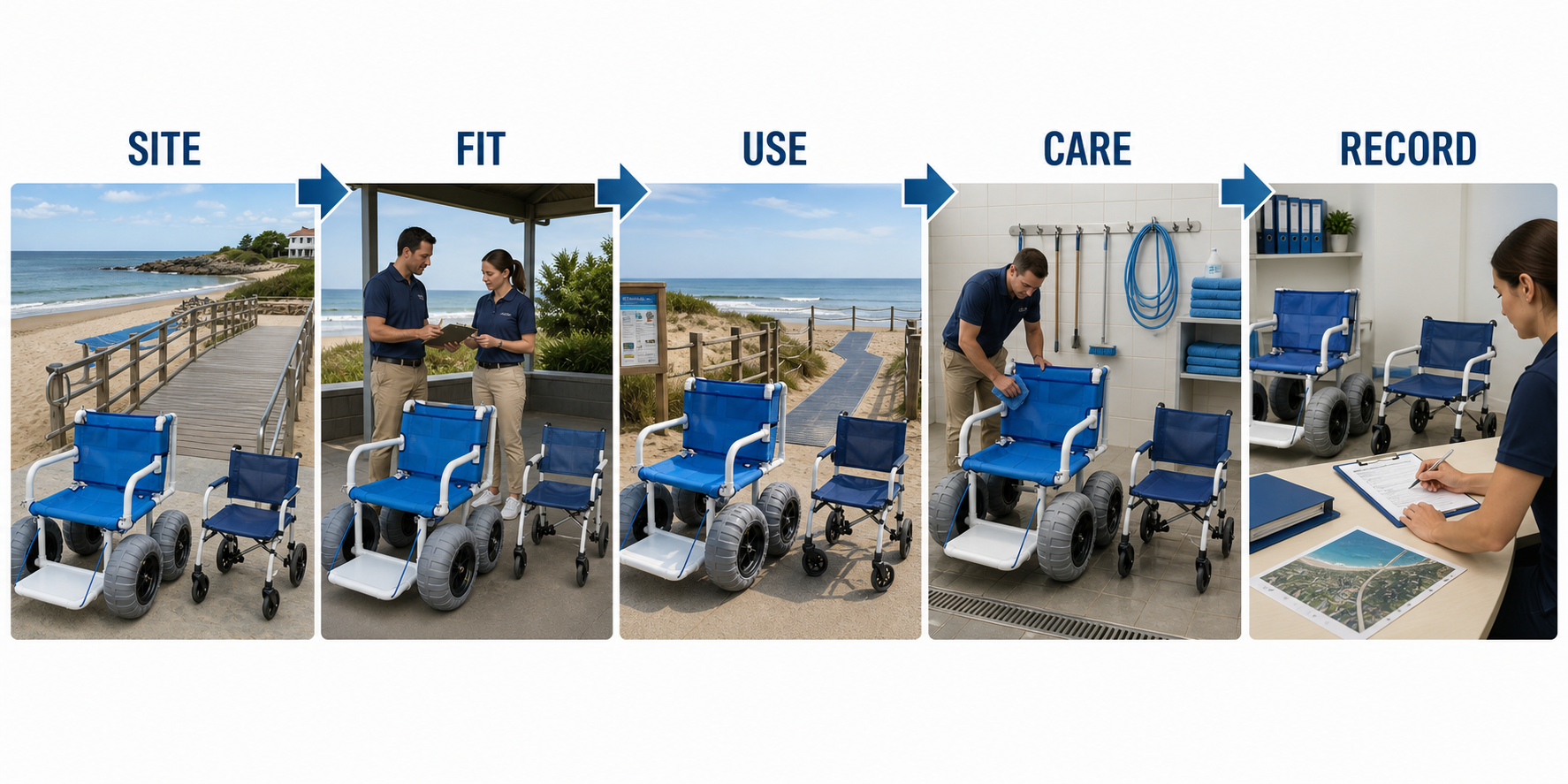
A beach wheelchair vs transport chair decision record should state each device’s approved route, support process, operator role, storage plan, care instructions, supplier evidence, handoff rule, and open action. This keeps later delivery and training tied to the buyer’s actual comparison.
Point every acceptance item to a source file or site observation. Do not repeat claims without evidence. Buyers who need model drawings or help framing route questions can contact us today after organizing surfaces, staffing, storage, and service boundaries.
How can buyers close the comparison?
A short signed record works best:
Keep one page for the decision and a linked index for evidence. Give operations and service teams access before delivery.
- State the approved job for each device.
- Record every handoff and stop boundary.
- Assign delivery, setup, and briefing owners.
Key Takeaway: The signed record should explain both the choice and the operating boundary.
| Area | Buyer question | Record |
|---|---|---|
| Choice | Which device covers each route? | Decision |
| Boundary | Where does each job stop? | Map |
| Handoff | Who owns setup and training? | Owner |
Use the record during delivery inspection and revise it if the route or staffing changes.
FAQ
Can I use a transport chair on loose sand?
Usually no. Small narrow wheels commonly sink, and actual use must stay within the model instructions and site policy.
What’s the best device for a boardwalk and sand route?
The best choice follows the full route. Some sites use a beach chair across both approved zones, while others plan a documented handoff.
How do I know if a handoff between chairs is suitable?
A qualified review helps. Check space, staffing, fit process, privacy, communication, and written policy before adding a transfer.
Can both chairs share one care card?
No. Shared reporting rules may work, but inspection, cleaning, parts, and storage steps should point to each model’s instructions.
What records should I keep after purchase?
Keep drawings, instructions, parts lists, delivery checks, role cards, route maps, care records, and written supplier answers.