
Teams simplify lightweight beach wheelchair deployment by defining one short route, one lifting method, and one handoff routine before daily service begins. Portable equipment can still create delays when folding points, vehicle space, staging zones, or staff roles remain unclear. A written workflow turns those details into a calm sequence from storage through return. This B2B guide covers route mapping, folding checks, team lifting, vehicle handoffs, beach staging, pre-use review, changing conditions, turnaround, and deployment records for resort, park, rental, and event teams.
The next useful comparisons are beach wheelchair fleet management and beach walker maintenance checklist.
For broader destination-level context, consult the UN Tourism accessibility publications and guidelines. Apply local requirements and current product documents to the specific project.
What should a deployment plan define before opening?
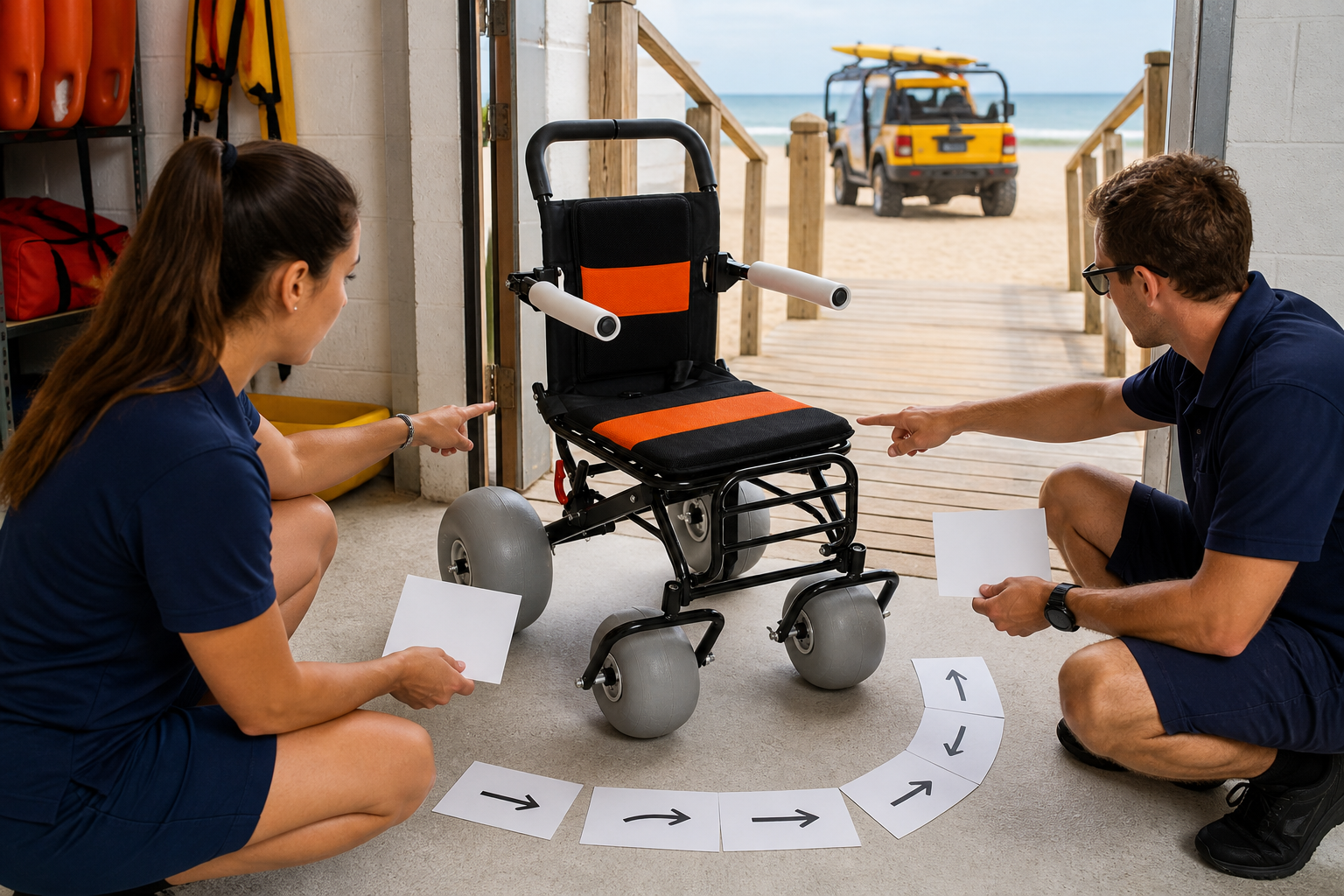
Lightweight beach wheelchair deployment should define each movement from storage, folding, lifting, loading, staging, handoff, return, cleaning, and final status. Portable equipment often crosses several work areas and may involve different staff. A sequence prevents the chair from arriving without a clear route or returning to storage while still wet. Link the sequence with the portable travel application so equipment choice and handling flow support the same service goal.
Write the complete movement sequence
Here’s the practical point: Write actions in the order staff perform them and assign one owner at each handoff. Keep the plan short enough for a shift briefing. Local product instructions, site policy, and staff handling rules remain the authority for physical use and lifting decisions.
- Name each movement
- Assign each handoff
- Mark each hold point
Key Takeaway: A complete movement sequence prevents gaps between storage, transport, and guest service.
| Checkpoint | Working choice |
|---|---|
| Stage | Named output |
| Storage | Ready chair |
| Return | Recorded status |
Read the sequence aloud and remove any step that lacks an owner or visible completion cue.
How can teams map the shortest workable route?
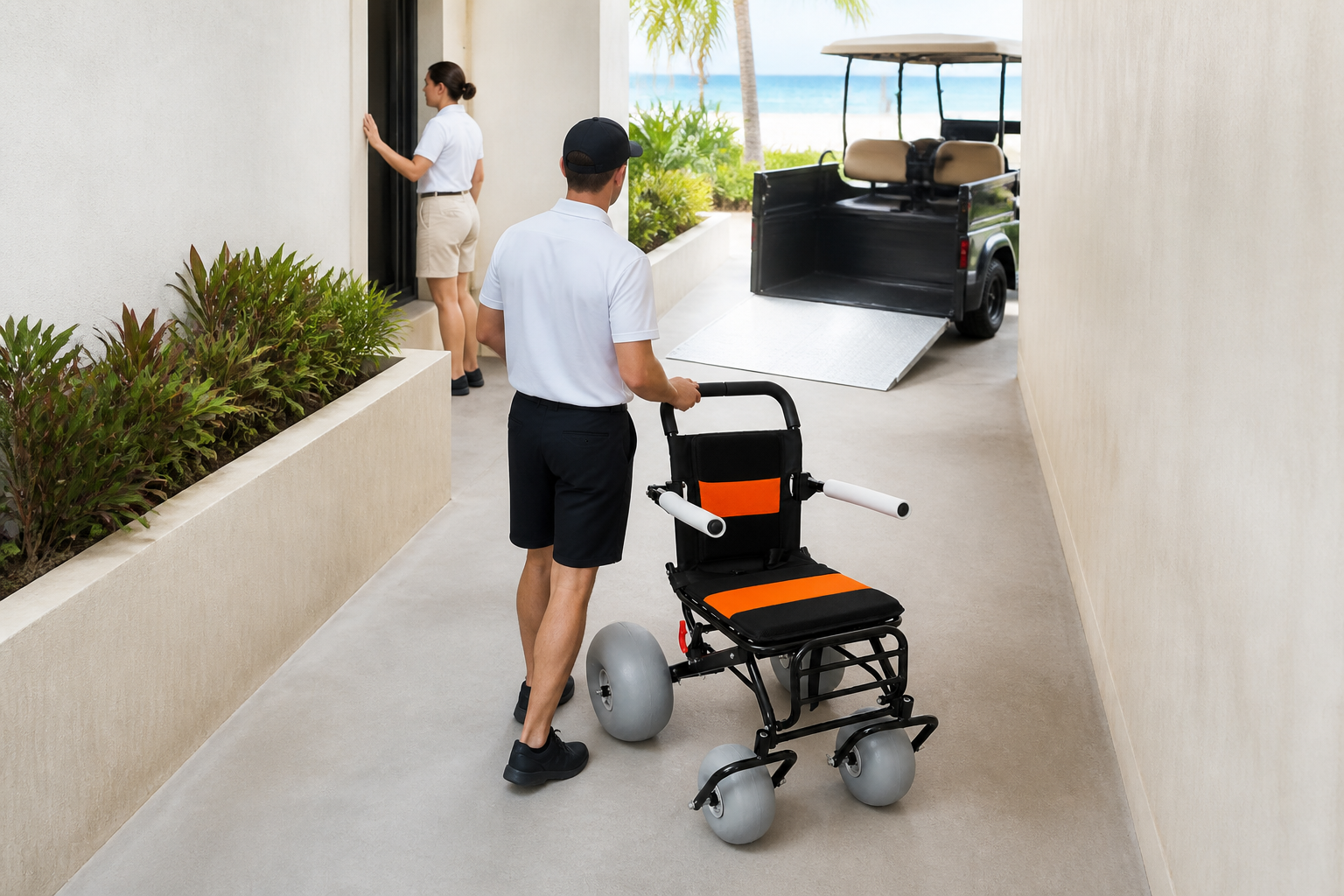
Lightweight beach wheelchair deployment works best on a mapped route that limits unnecessary lifting, tight turns, door conflicts, and repeated surface changes. Walk from storage to vehicle, then from arrival point to staging and return. Note door widths, curb edges, crowded corridors, loose equipment, and places where staff must change grip. A shorter route may not be workable if it lacks turning space or crosses a busy guest lane.
Measure movement before service
The useful move: Draw the route with movement arrows and mark only operational pause points. Staff can run a dry trial with the chair before live service and adjust where the vehicle parks or where unfolding happens. Avoid claiming that a route meets a legal standard without a qualified local review.
- Walk every segment
- Mark grip changes
- Test turning space
Key Takeaway: A dry route trial reveals handling friction before it reaches a guest handoff.
| Checkpoint | Working choice |
|---|---|
| Route point | Working question |
| Door | Clear width |
| Turn | Room for chair |
Repeat the route with normal service gear so bags or cleaning tools do not create a hidden obstacle.
Which folding checks belong before transport?
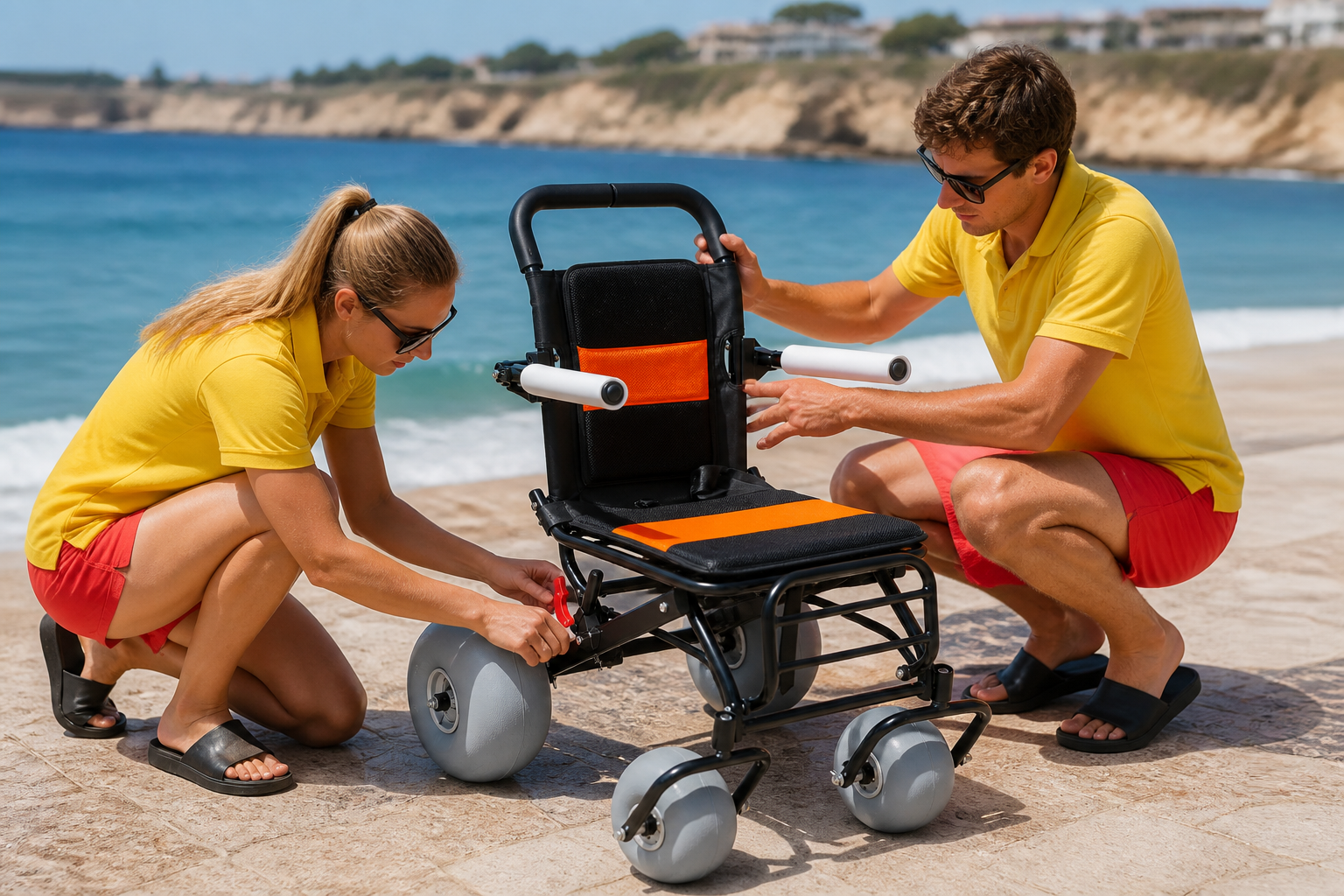
Lightweight beach wheelchair deployment needs a folding check that confirms the chair is empty, clean, dry enough for handling, and free from loose accessories before staff close the frame. Staff should follow product instructions and keep hands clear of moving joints. A loose strap, trapped fabric edge, or unrestrained accessory can complicate folding and loading. The check should also confirm that the folded unit will stay stable during the planned hand carry and vehicle placement.
Inspect folding points before lifting
A practical detail: Use a spoken call between staff during folding: clear, moving, and locked. Those words can fit local practice without adding a long form. If the latch or frame does not move as expected, stop and place the chair on hold rather than forcing the mechanism.
- Clear loose items
- Protect moving joints
- Confirm folded stability
Key Takeaway: A calm folding check protects the chair and gives lifters a predictable load shape.
| Checkpoint | Working choice |
|---|---|
| Check | Visible result |
| Seat area | Clear |
| Folded frame | Stable |
Watch a dry folding trial from both sides and note any point where hands enter a moving joint area.
How should staff lift and load the chair?
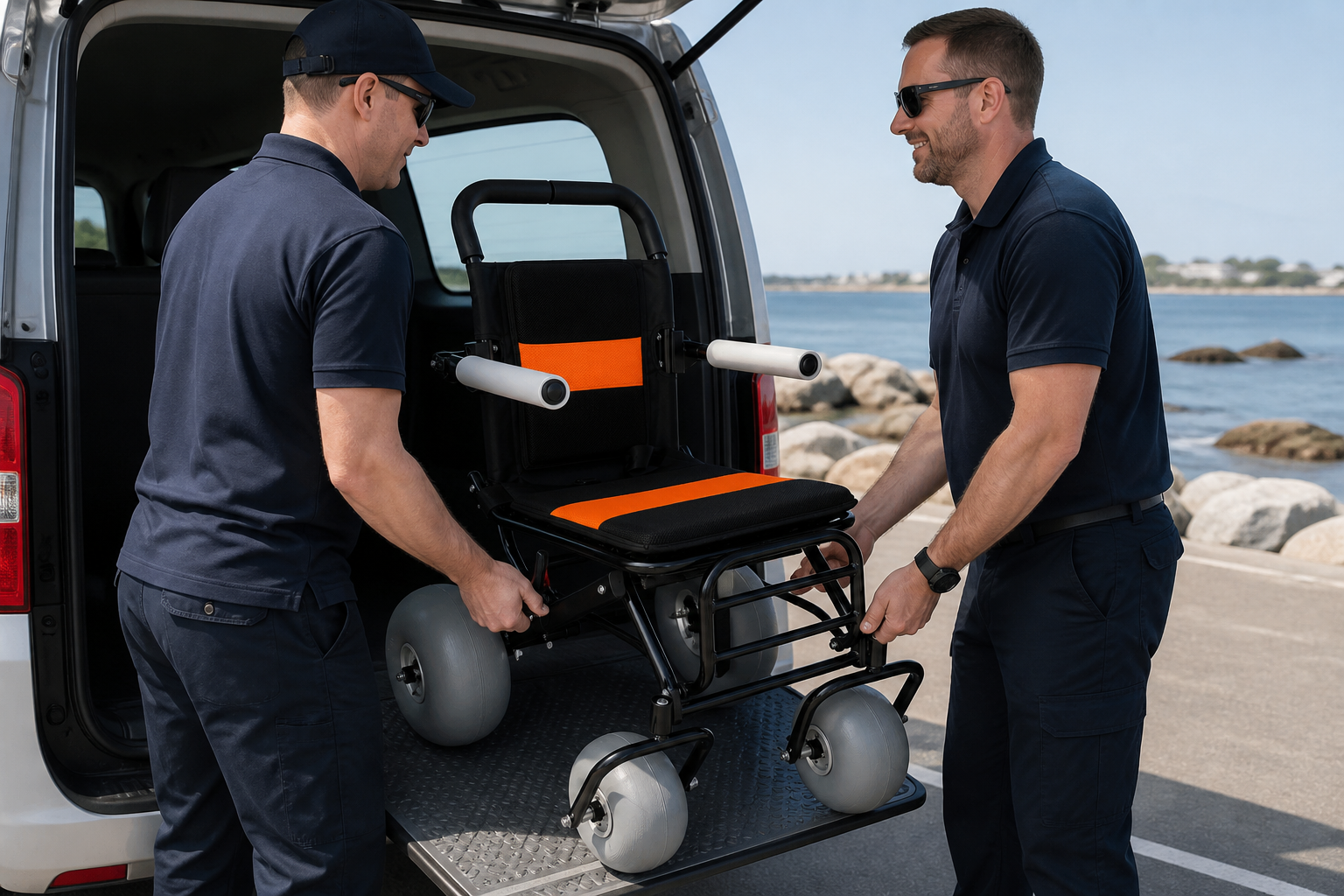
Lightweight beach wheelchair deployment should use grip points named by product instructions, a clear team command, and a vehicle space prepared before lifting begins. Weight alone does not define a suitable lift. Frame shape, folded balance, doorway height, staff reach, and floor conditions also matter. Teams should follow local manual-handling policy and stop when the task differs from the practiced method. Nobody should improvise a grip on a moving or removable part.
Use planned grips and clear commands
Here’s the working method: Clear the path, open the vehicle, place protective supports, confirm the lead caller, and lift only after each handler replies. The lead can control pace through doorways and call a pause if balance changes. This short exchange keeps the lift coordinated without rushing.
- Prepare vehicle space
- Confirm approved grips
- Use one lead caller
Key Takeaway: A prepared load space and shared commands make the handling task more predictable.
| Checkpoint | Working choice |
|---|---|
| Lift cue | Team action |
| Ready | Confirm grips |
| Pause | Stop together |
Practice with an empty chair and normal vehicle position before using the method during service.
What should a vehicle handoff include?
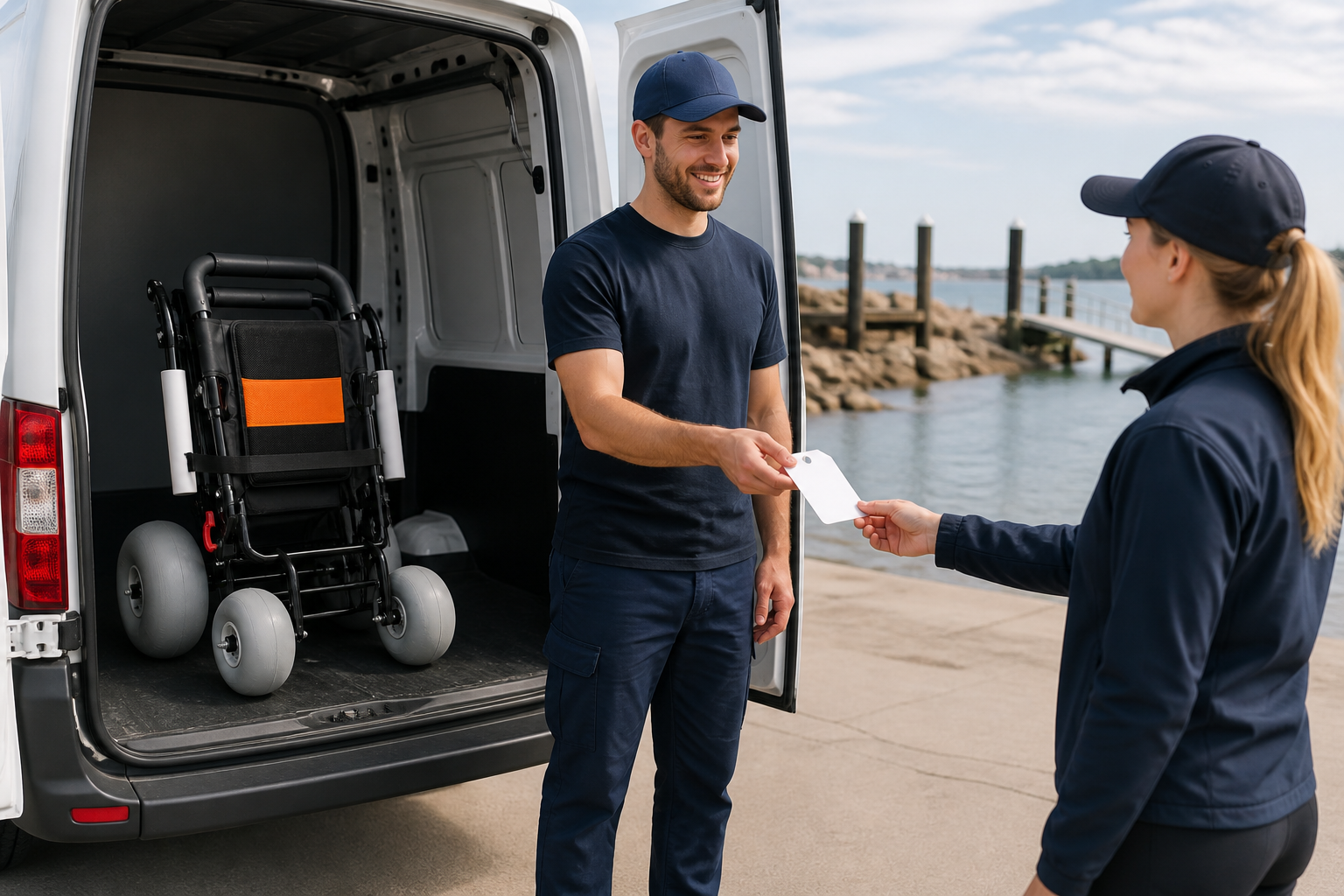
Lightweight beach wheelchair deployment needs a vehicle handoff that confirms the folded chair position, movement restraint, route destination, and receiving staff member. A chair placed loosely among beach gear can shift or become difficult to remove. Follow vehicle policy and product instructions for restraint and orientation. Keep cleaning liquids, sharp objects, and heavy loose equipment away from fabric and frame parts. The receiving person should know where unloading will occur.
Secure the load and pass responsibility
The short answer: Treat loading and unloading as two linked tasks. The sending staff member states chair status and destination, while the receiver confirms arrival space and unloading support. The travel project example offers context for portable service planning.
- Confirm chair status
- Secure movement
- Name the receiver
Key Takeaway: A clear vehicle handoff keeps equipment status intact across team and location changes.
| Checkpoint | Working choice |
|---|---|
| Handoff item | Confirmation |
| Load position | Stable |
| Receiver | Named |
Review the handoff at both vehicle doors and check whether the same status message reaches the receiving team.
How can teams stage the chair near sand access?
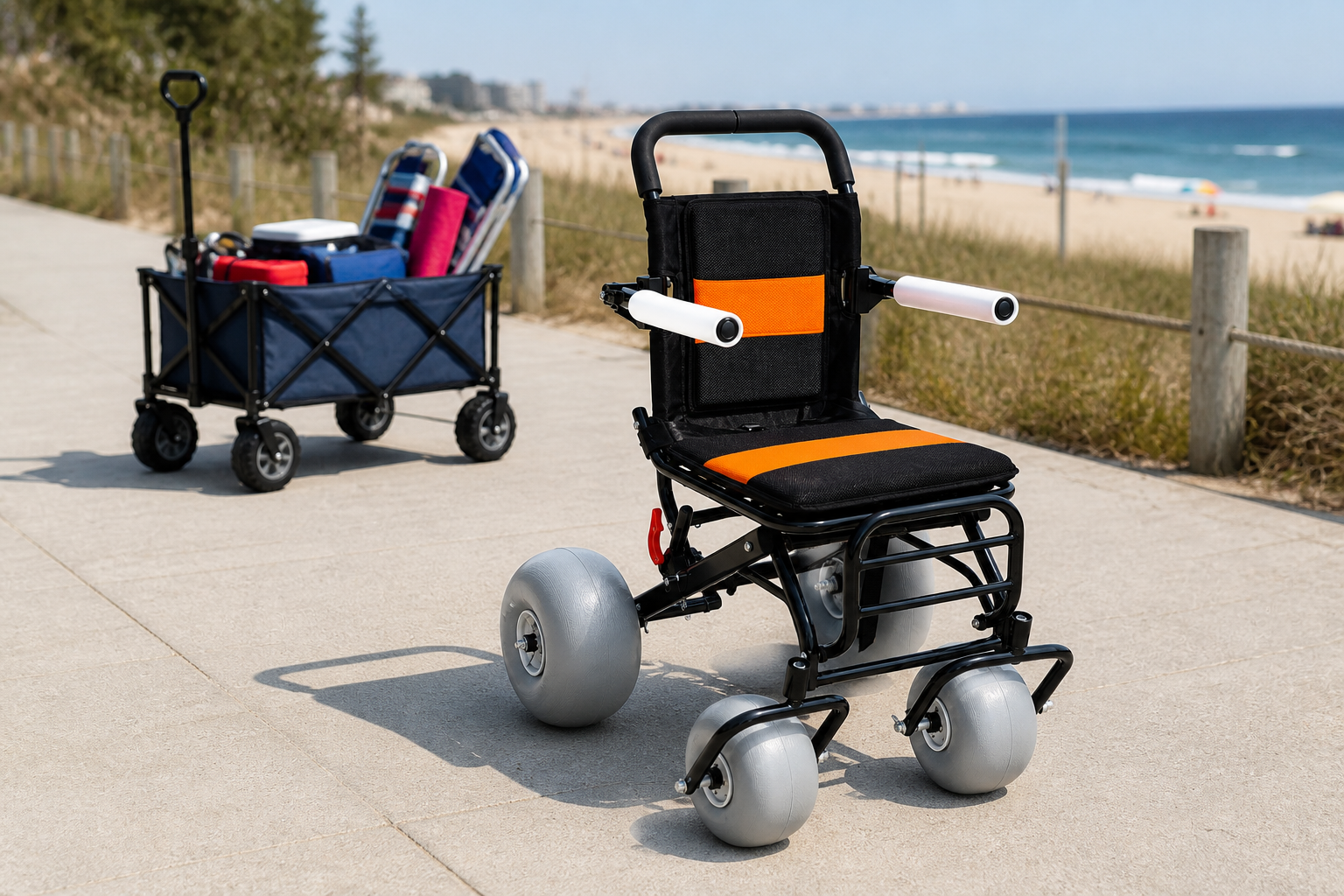
Lightweight beach wheelchair deployment should stage the open chair on a stable, dry point near the checked route with space for inspection and guest conversation. Staging directly in a crowded walkway or on loose sloping sand can create avoidable handling. The point should separate arriving equipment from ready equipment and keep the planned return lane open. A shade or weather plan may also matter under local operating policy.
Choose a dry and visible staging point
Here’s the practical setup: Unfold the chair according to product instructions, complete the pre-use check, and place transport materials outside the guest area. Staff should know where the chair will wait if conditions pause service. Keep the staging zone simple and free from promotional signs that distract from the handoff.
- Pick stable ground
- Keep return lane open
- Separate transport gear
Key Takeaway: A well-placed staging point links transport activity with a calm guest handoff.
| Checkpoint | Working choice |
|---|---|
| Staging need | Working cue |
| Ground | Stable and dry |
| Lane | Clear return |
Stand where the guest will arrive and check whether staff can inspect the chair without blocking the route.
Which pre-use checks support a smooth handoff?
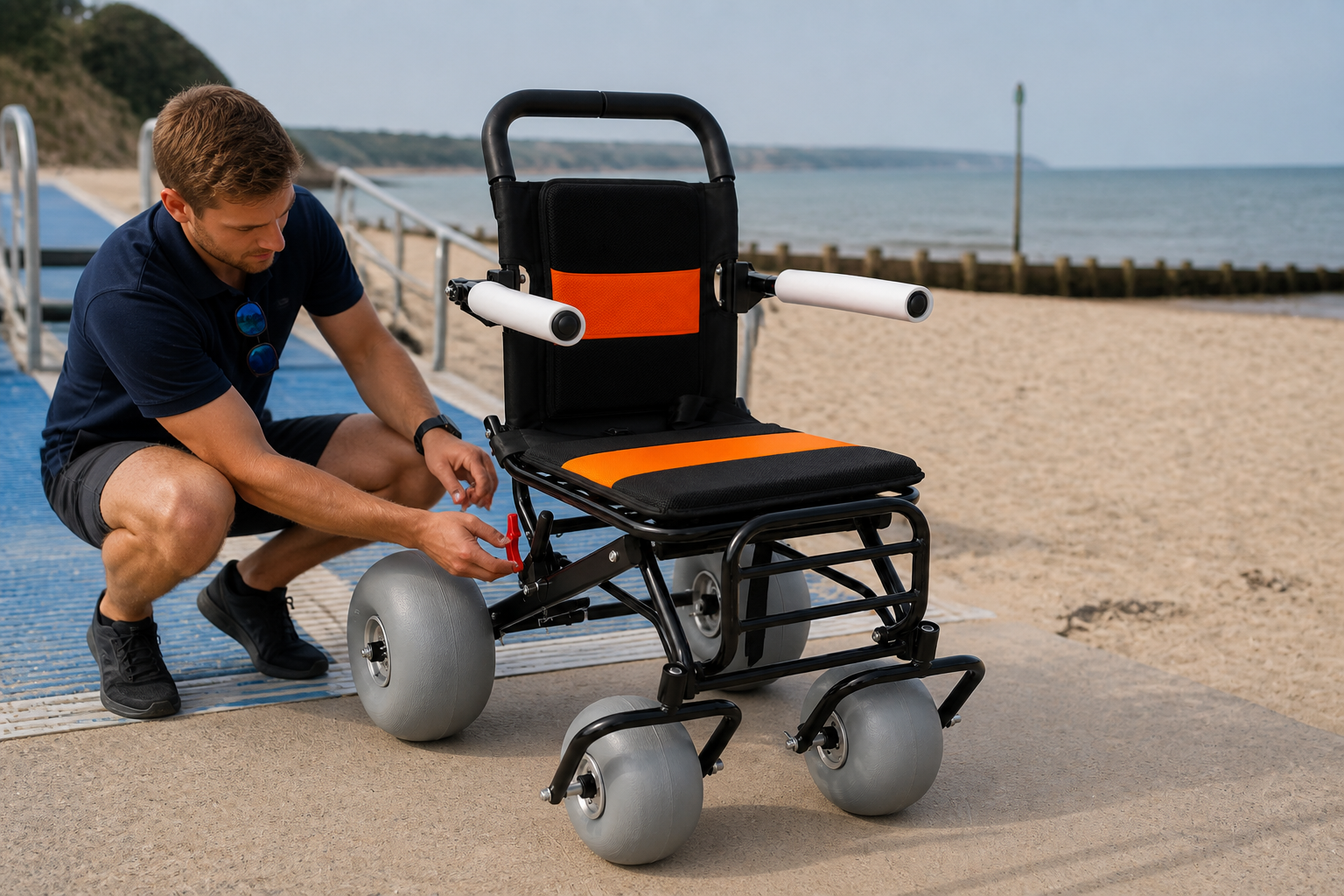
Lightweight beach wheelchair deployment needs a pre-use review of frame position, folding latch, wheel attachment, seat and back fabric, arm supports, and visible cleanliness. Transport can change how a strap lies or how a removable part sits even when the chair looked ready in storage. Staff should inspect after unfolding and before the guest arrives. The equipment manual can sit beside local checklists as a reference source.
Check every reopened component
This part matters: Use a consistent walk-around and keep the chair still until each checkpoint receives a clear pass or hold decision. Do not skip the review because the same chair served earlier that day. Any unexpected movement, damage, or missing part stops the handoff pending service review.
- Check folding latch
- Check four wheels
- Check seating fabric
Key Takeaway: A post-transport inspection confirms that the deployed chair is ready in its current setup.
| Checkpoint | Working choice |
|---|---|
| Component | Decision |
| Latch | Pass or hold |
| Seat and wheels | Pass or hold |
Run the same walk-around after a dry transport trial and compare it with the storage inspection.
How should staff respond to changing beach conditions?
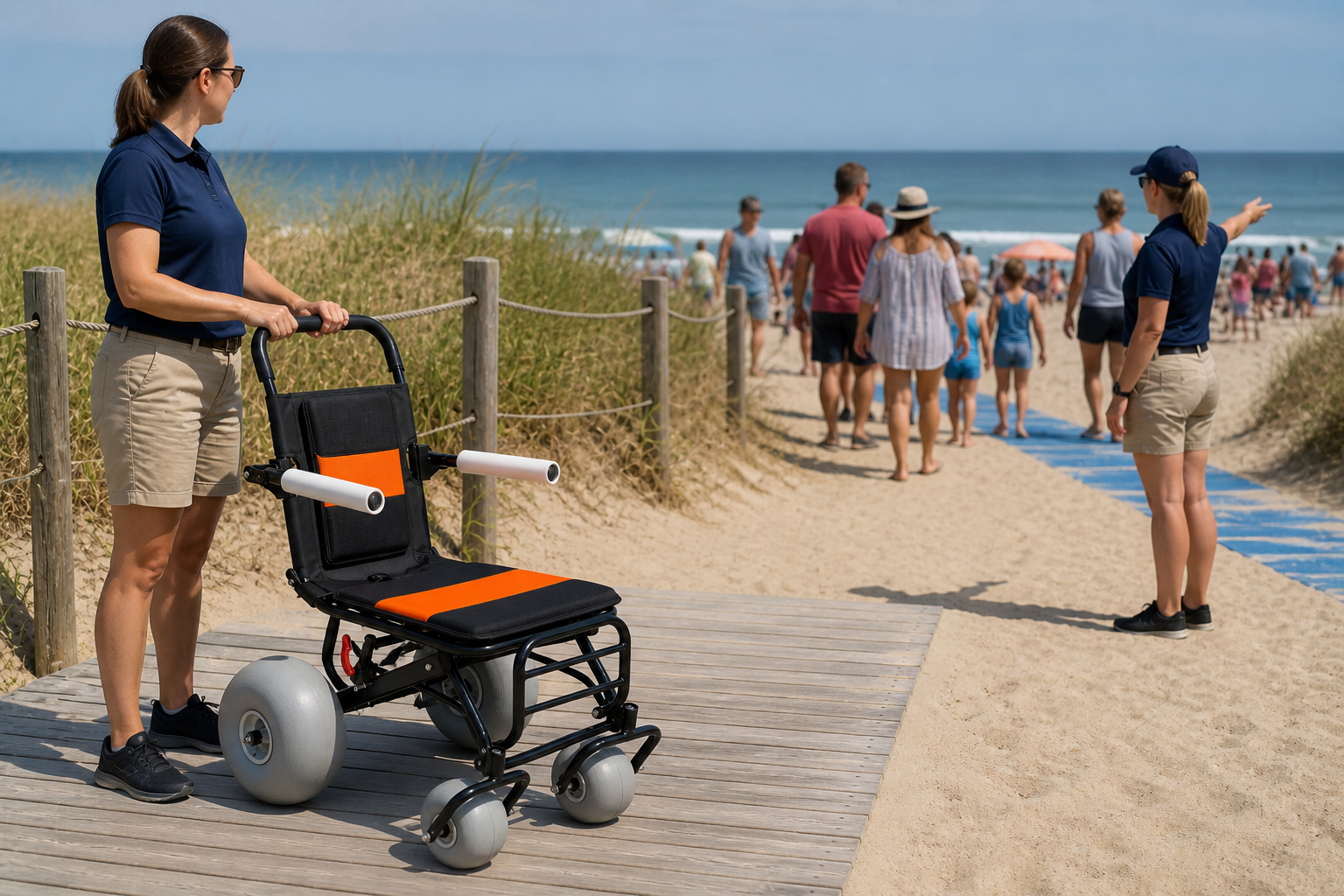
Lightweight beach wheelchair deployment should pause when weather, tide, crowding, surface condition, or temporary work changes the checked route. A portable chair can move quickly, which makes a clear pause rule valuable. Staff should not extend service into an unchecked area because the original route becomes busy or blocked. The shift lead can review another route under local policy or reschedule the handoff without making unsupported safety promises.
Pause deployment when the route changes
What’s the working response?: Stop at the staging point, protect the guest from rushed decisions, and confirm chair status while the route receives another check. If service cannot continue, return the chair through the planned workflow. Record the route change so later shifts understand why deployment paused.
- Stop at staging
- Recheck route
- Record the change
Key Takeaway: A visible pause rule gives staff permission to protect the service plan when site conditions shift.
| Checkpoint | Working choice |
|---|---|
| Change | Response |
| Blocked route | Pause and check |
| Crowded lane | Hold at staging |
Use a short scenario drill so staff can practice the pause message without blaming the guest or the equipment.
What turnaround routine works between guests?
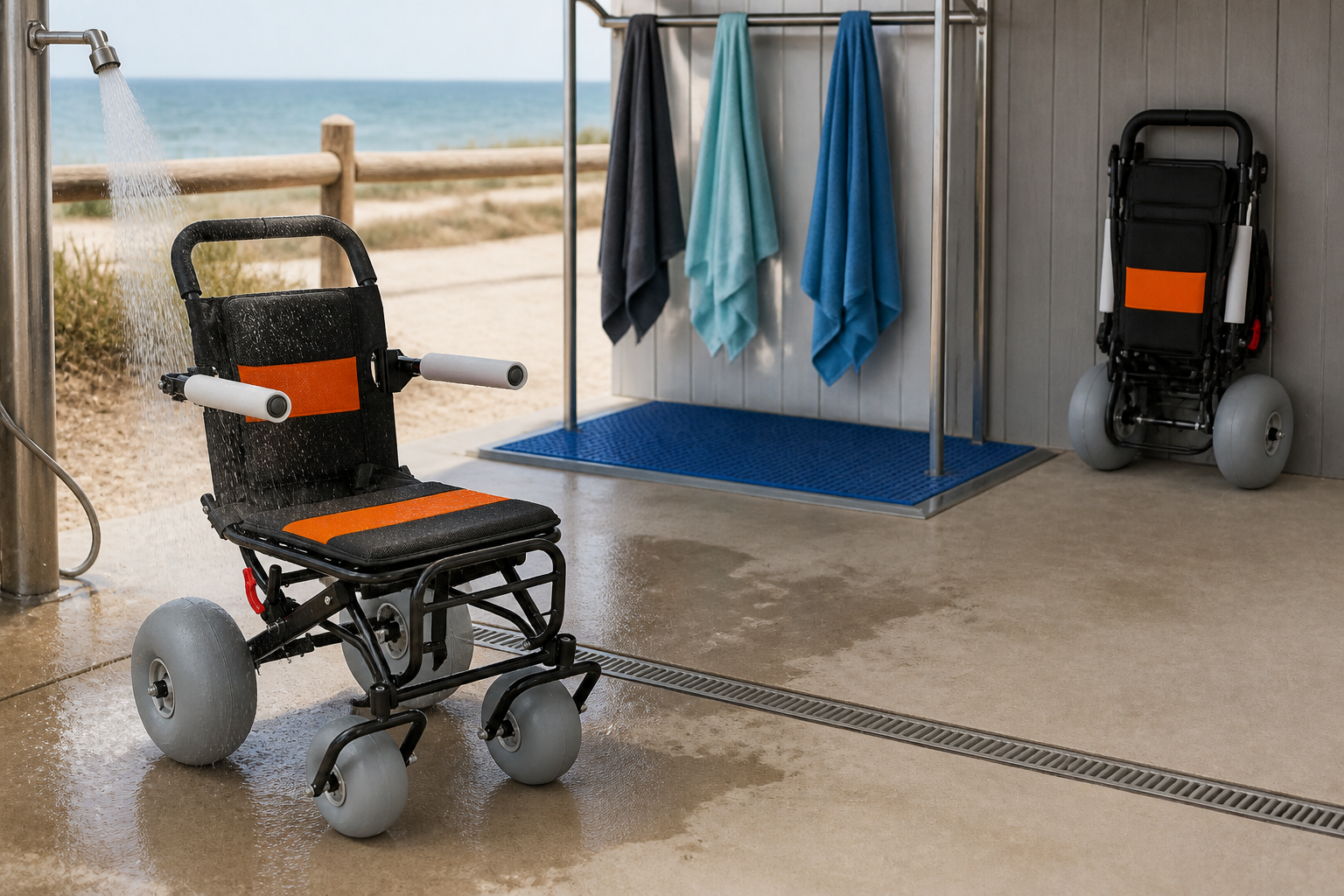
Lightweight beach wheelchair deployment needs a turnaround routine that records return, removes loose sand, follows fresh-water cleaning guidance, dries the chair, and confirms status before another release. Portability can tempt teams to fold and load immediately after return. That choice can hide moisture, sand, or a loose part inside the folded frame. Move the chair through a visible cleaning and drying point before it reenters transport or storage. Product instructions should control any cleaning method.
Close each deployment before reopening
The useful sequence: Receive, clean, dry, inspect, record, then fold or restage. Keep wet and ready chairs apart, and move any fault to held status. This sequence lets the next team receive a known chair condition rather than inheriting an unfinished return.
- Record the return
- Clean before folding
- Confirm next status
Key Takeaway: Turnaround ends only when the next status and responsible person are clear.
| Checkpoint | Working choice |
|---|---|
| Stage | Output |
| Drying | Visible moisture cleared |
| Inspection | Ready or held |
Follow one chair from return through restaging and remove any point where its status becomes unclear.
Which deployment records help teams improve?
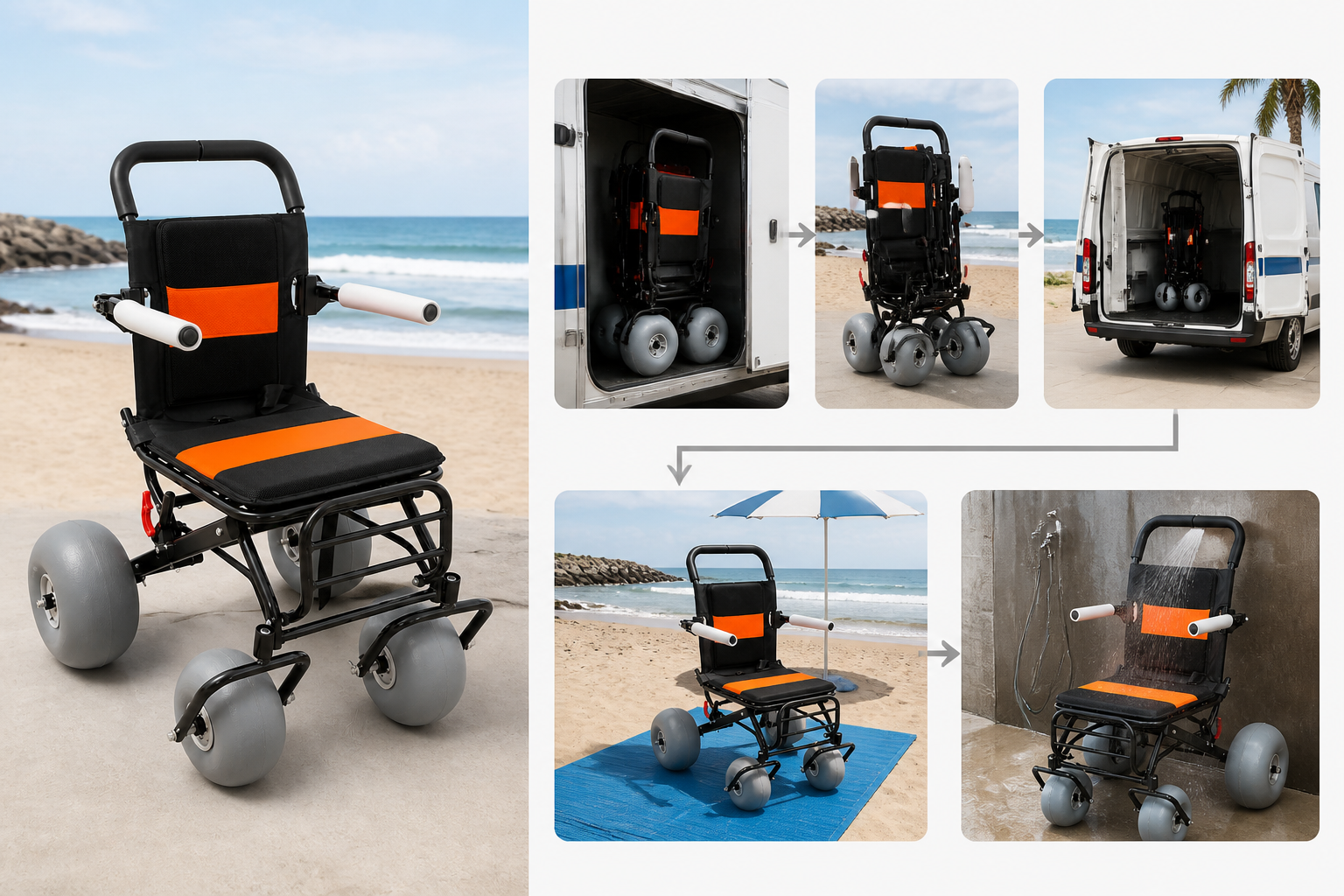
Lightweight beach wheelchair deployment records should capture release, return, route change, handling exception, cleaning status, hold reason, and the next responsible role. Managers do not need a dense form for every movement. They need enough detail to see repeated delays, unclear vehicle handoffs, or chairs returning to storage before drying. Keep personal guest information out of the operational record unless protected local policy requires it.
Record movement and exceptions
Here’s the review loop: Group events by stage, choose one workflow change, brief the team, and watch whether the same exception returns. Avoid invented targets or unsupported productivity claims. The record exists to guide a visible action such as moving staging, preparing cargo space earlier, or clarifying a handoff.
- Log each exception
- Group by stage
- Assign one response
Key Takeaway: Short event records help teams improve the deployment sequence without guessing.
| Checkpoint | Working choice |
|---|---|
| Event | Possible action |
| Loading delay | Prepare cargo area |
| Wet return | Change drying flow |
Use this object-based flowchart as a discussion aid rather than a performance scorecard.
Closing Guidance
A simple deployment workflow begins before staff touch the chair. Map the route, prepare the vehicle space, confirm lifting roles, stage near checked access, and close each return with cleaning and a status record. Teams building a portable access service can contact us today with questions about their route, storage room, or handling flow.
FAQ
Can I deploy a lightweight chair with one staff member?
Maybe, but local handling rules and the chair’s instructions should decide. Use team lifting whenever the planned task calls for more than one person.
What’s the best place to stage the chair?
Choose a dry point near the checked access route with room for inspection, guest conversation, and safe staff movement.
How do I know if the vehicle space works?
Run a dry trial with the folded chair, protective supports, and normal service gear before accepting a live booking.
Can I leave the chair folded between bookings?
Yes, when product instructions allow it and the folded unit stays dry, stable, identified, and outside busy aisles.
What should staff record after deployment?
Record release and return time, route changes, cleaning status, any hold reason, and the person responsible for the next action.