
A better beach wheelchair fleet management plan gives every chair a clear role, service window, inspection point, and accountable record. Coastal teams often own capable equipment yet lose usable hours through vague handoffs, scattered reservations, rushed cleaning, or storage choices that hide faults. A practical fleet plan fixes that friction with short routines staff can repeat during a busy day. This article maps a B2B operating model for resorts, public beaches, parks, and rental teams. It focuses on service boundaries, inventory roles, route checks, guest handoffs, cleaning, rotation, and records without inventing capacity claims or site results.
For procurement context, use beach wheelchair weight capacity together with lightweight beach wheelchair deployment.
For broader destination-level context, consult the UN Tourism accessibility publications and guidelines. Apply local requirements and current product documents to the specific project.
How should teams define a fleet service model?
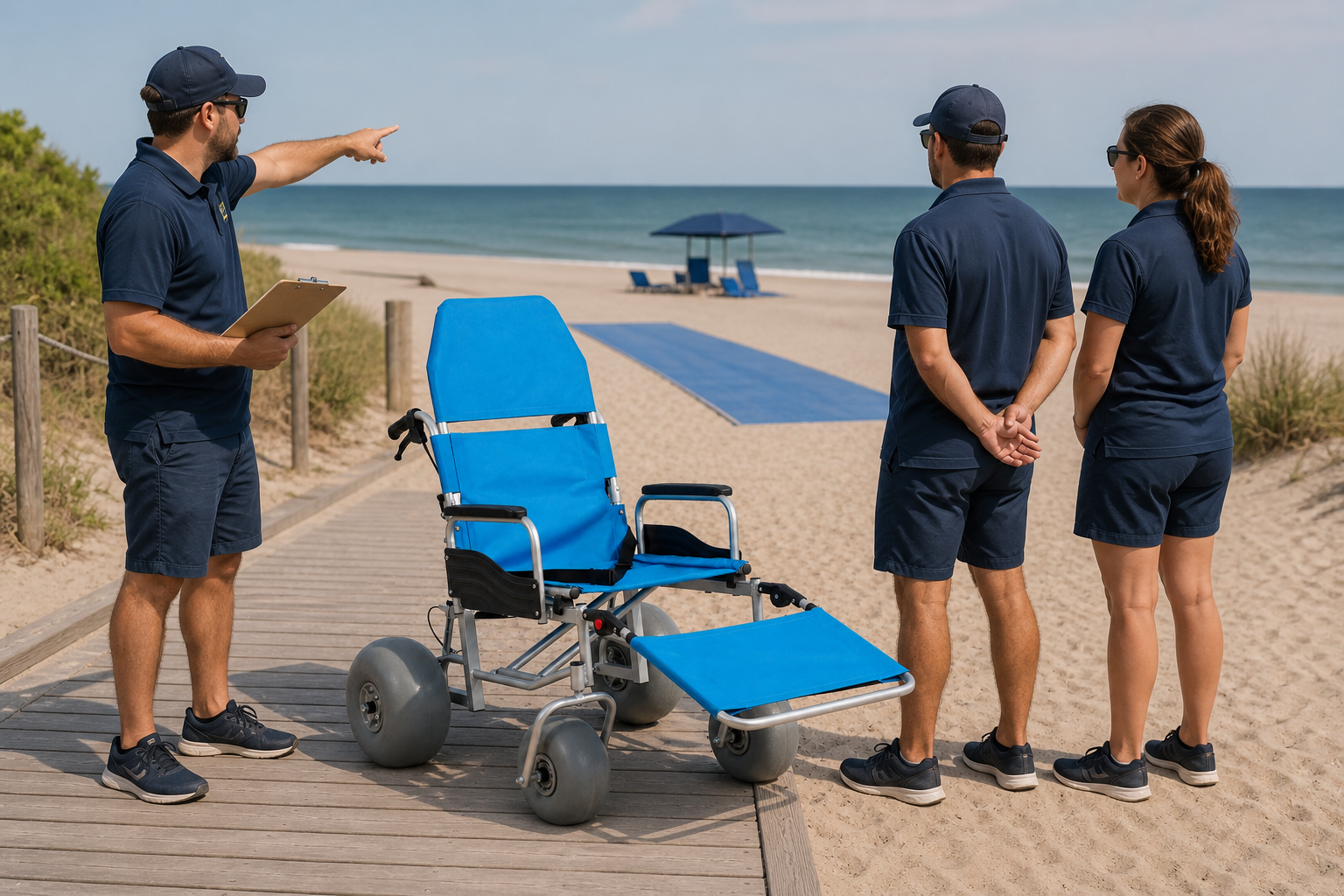
Beach wheelchair fleet management starts with a written service model that names where service begins, where it ends, and who controls each release. A resort may stage chairs near a concierge desk while a public beach may use a staffed access point. Those settings need different booking windows, return points, and escalation paths. Write the boundary in plain language, then connect it with a project planning overview so procurement and daily operations share one picture.
Set a clear operating boundary
Here’s the practical point: A short model beats a thick binder nobody opens. Name the service area, operating hours, attendant rule, weather pause authority, and person who can place a chair on hold. Staff can then answer common guest questions without improvising policy during a handoff.
- Mark one release point
- Name one shift owner
- Post one pause rule
Key Takeaway: A service boundary gives staff a shared decision frame and keeps equipment movement visible.
| Checkpoint | Working choice |
|---|---|
| Service area | Mapped route |
| Release control | Named owner |
| Pause authority | Shift lead |
Use this table as a prompt for the operating brief, then test each line during an opening walk.
Which chair roles belong in a mixed fleet?
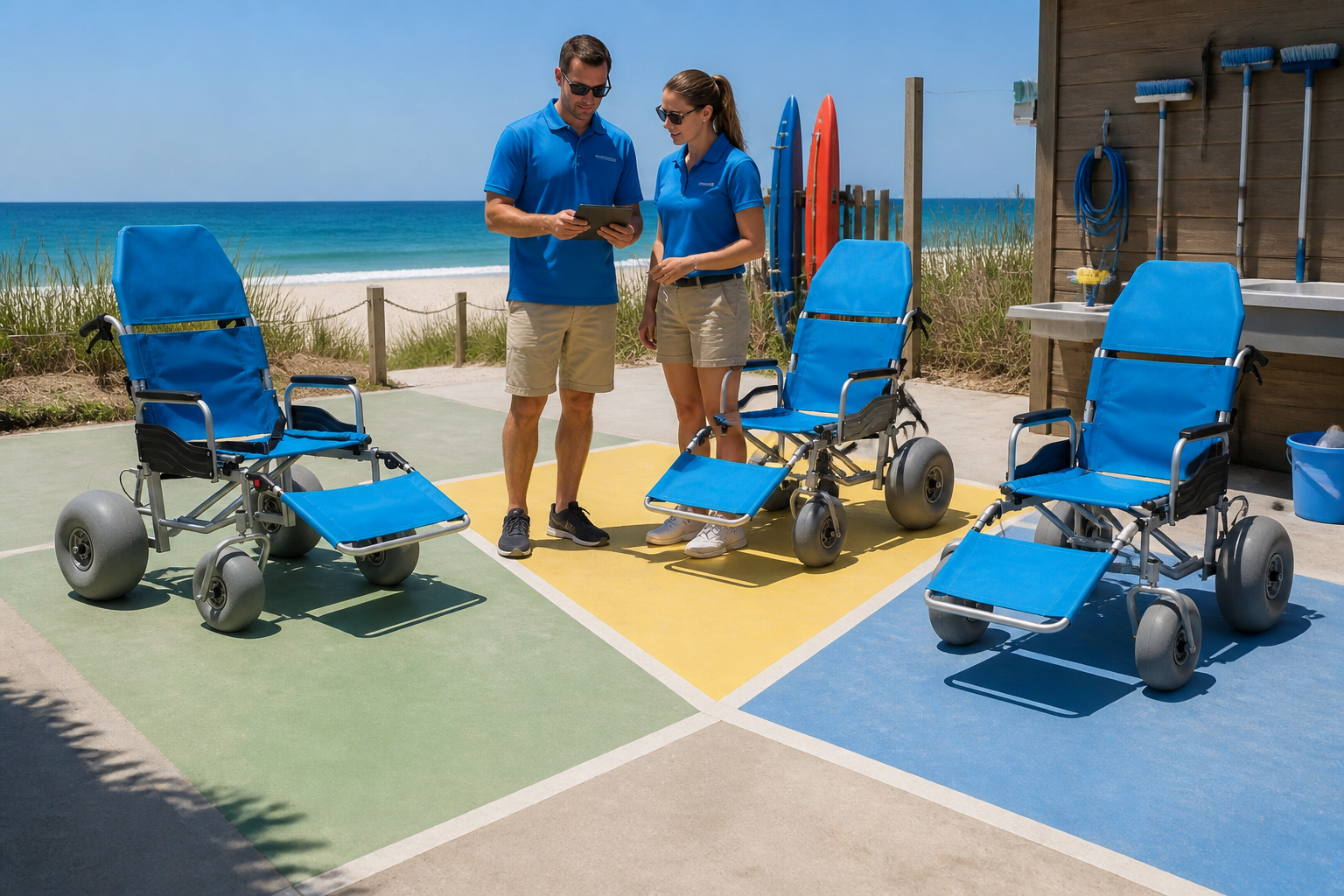
Beach wheelchair fleet management works better when each chair receives a route role instead of being treated as interchangeable stock. One route may cover compact staging near a hotel while another crosses deeper sand under attendant control. A mixed fleet can assign chairs by terrain, folding needs, guest handoff style, and storage footprint. The equipment portfolio helps teams compare product categories without forcing one chair into every task.
Match each chair role with a route
The useful move: Create role cards based on visible use conditions rather than unsupported performance promises. A role card can say boardwalk-to-sand, short assisted route, quick vehicle loading, or backup unit. That wording helps staff select a suitable chair while keeping final judgment with trained local operators.
- Name the normal route
- Record the handling style
- List the storage bay
Key Takeaway: Role labels reduce random selection and make rotation decisions easier during busy service periods.
| Checkpoint | Working choice |
|---|---|
| Role | Working cue |
| Primary | Normal route |
| Backup | Held nearby |
Compare role cards against real route conditions and remove wording that staff cannot verify on site.
How many chairs should each location stage?
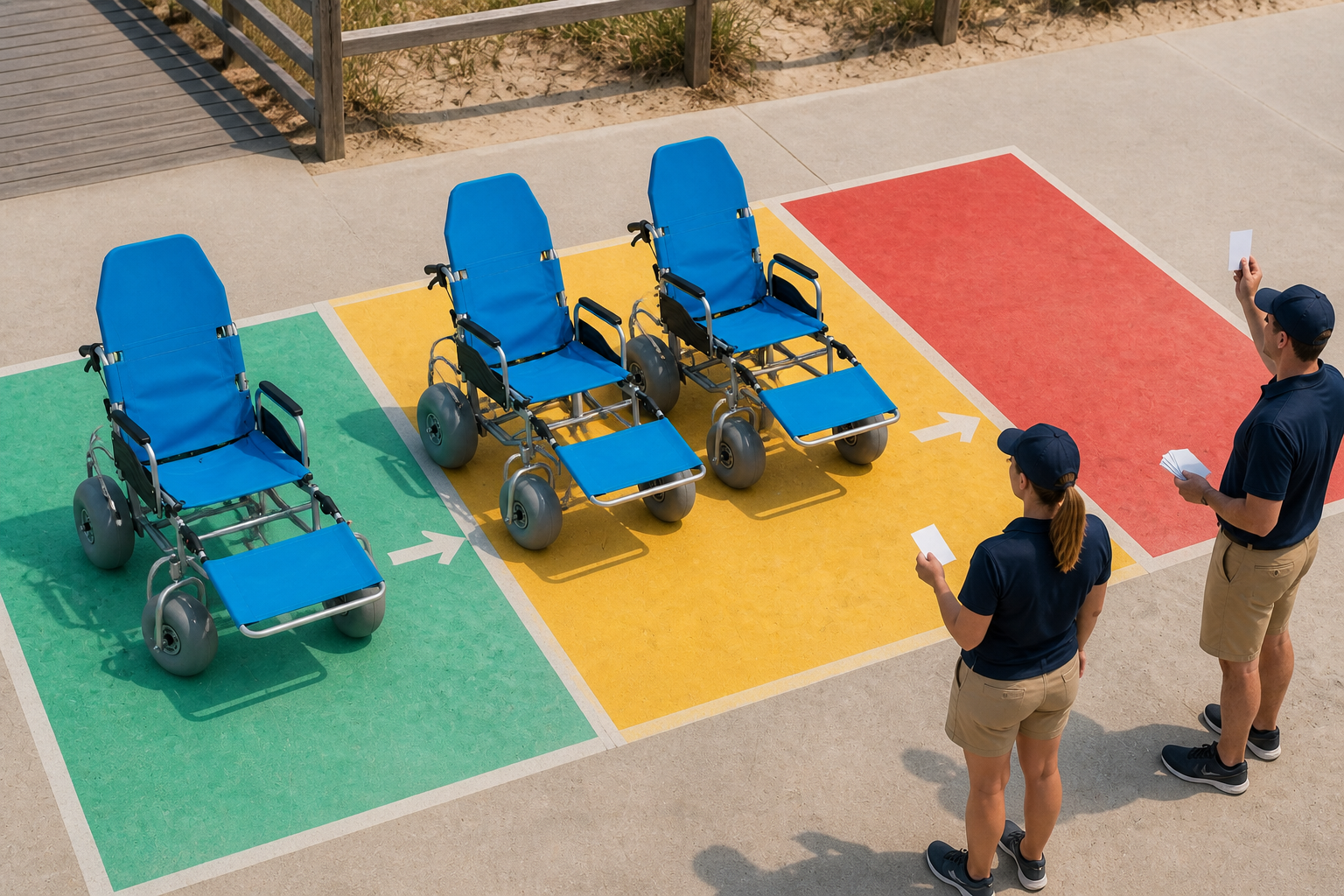
Beach wheelchair fleet management should set staging levels from observed bookings, walk-up requests, turnaround time, and backup needs rather than a guessed universal ratio. Track demand by service block and note when chairs sit idle, return late, or wait for cleaning. A busy weekend may need a different ready count from a quiet weekday. Managers can review several comparable operating days before changing fleet placement, which protects against reacting to one unusual event.
Use observed service pressure
What changes daily?: Build a simple staging band with ready, reserve, and held status. Ready units can serve booked or walk-up users, reserve units cover a delay, and held units stay outside service pending a documented decision. This band shows real capacity without publishing invented utilization figures.
- Count ready units
- Count reserve units
- Log held reasons
Key Takeaway: Observed pressure gives managers a defensible basis for moving chairs between locations.
| Checkpoint | Working choice |
|---|---|
| Status | Meaning |
| Ready | Available now |
| Reserve | Delay cover |
Review the status mix beside request patterns, then adjust one location at a time.
What intake checks should happen before service?
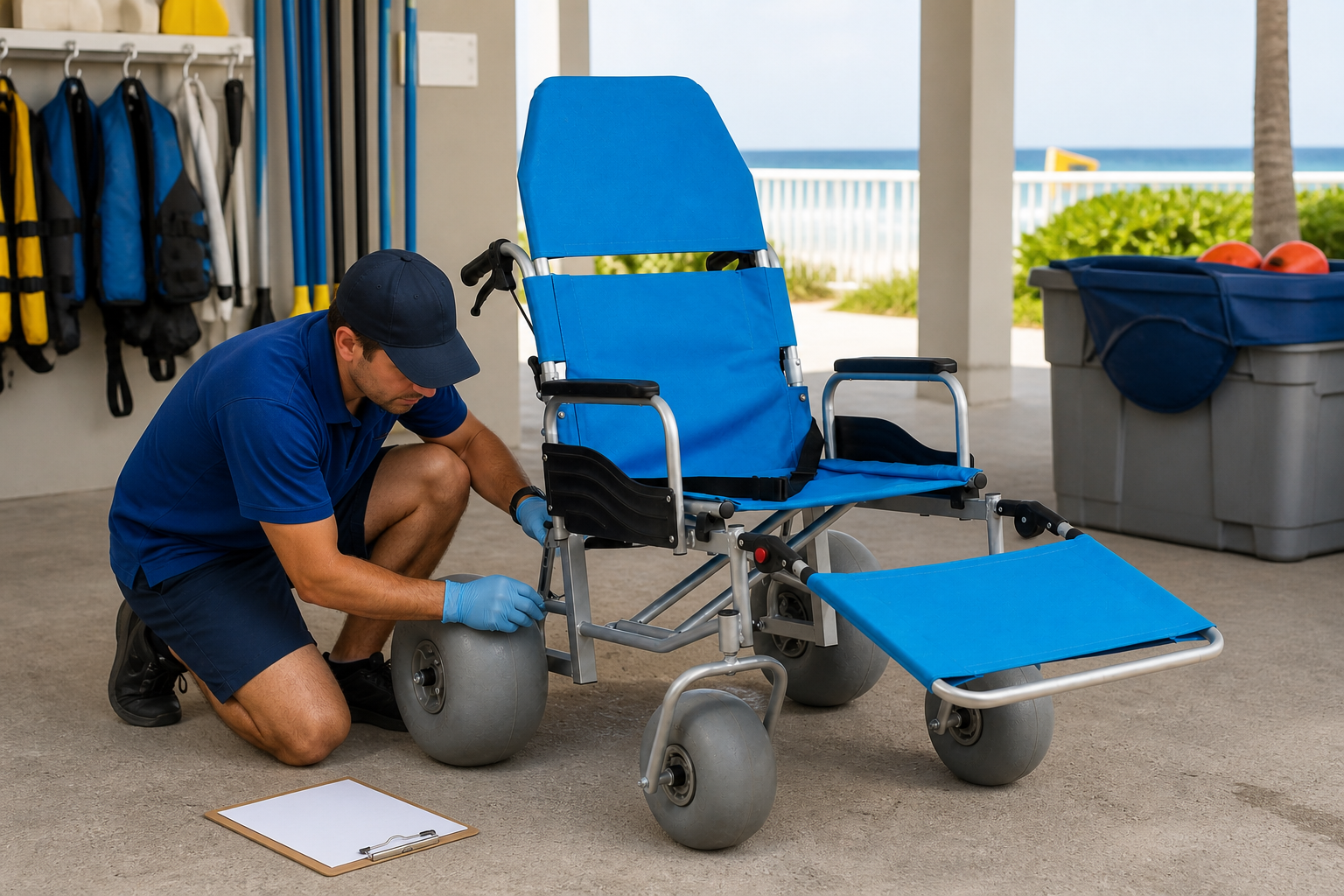
Beach wheelchair fleet management needs an opening check that confirms visible frame condition, wheel attachment, seating, restraints, foot support, and cleanliness before release. Staff should use the same sequence each day so skipped steps stand out. The check is not a repair manual and should not hide local safety policy. It gives operators a repeatable way to notice a loose part, damaged fabric, trapped sand, or incomplete prior cleaning before a guest arrives.
Create a short opening inspection
Here’s the working method: Walk around the chair in one direction, touch each listed checkpoint, and record only pass, hold, or service review. A short physical sequence is easier to repeat than a long form organized by department. Any unclear condition moves the chair out of ready status.
- Walk one direction
- Touch each checkpoint
- Mark one status
Key Takeaway: A consistent opening sequence catches visible problems before they become handoff delays.
| Checkpoint | Working choice |
|---|---|
| Checkpoint | Status |
| Frame and seat | Pass or hold |
| Wheels and support | Pass or hold |
Watch one staff member perform the sequence and remove any checkpoint that cannot be observed clearly.
How should reservations and walk-ups share inventory?
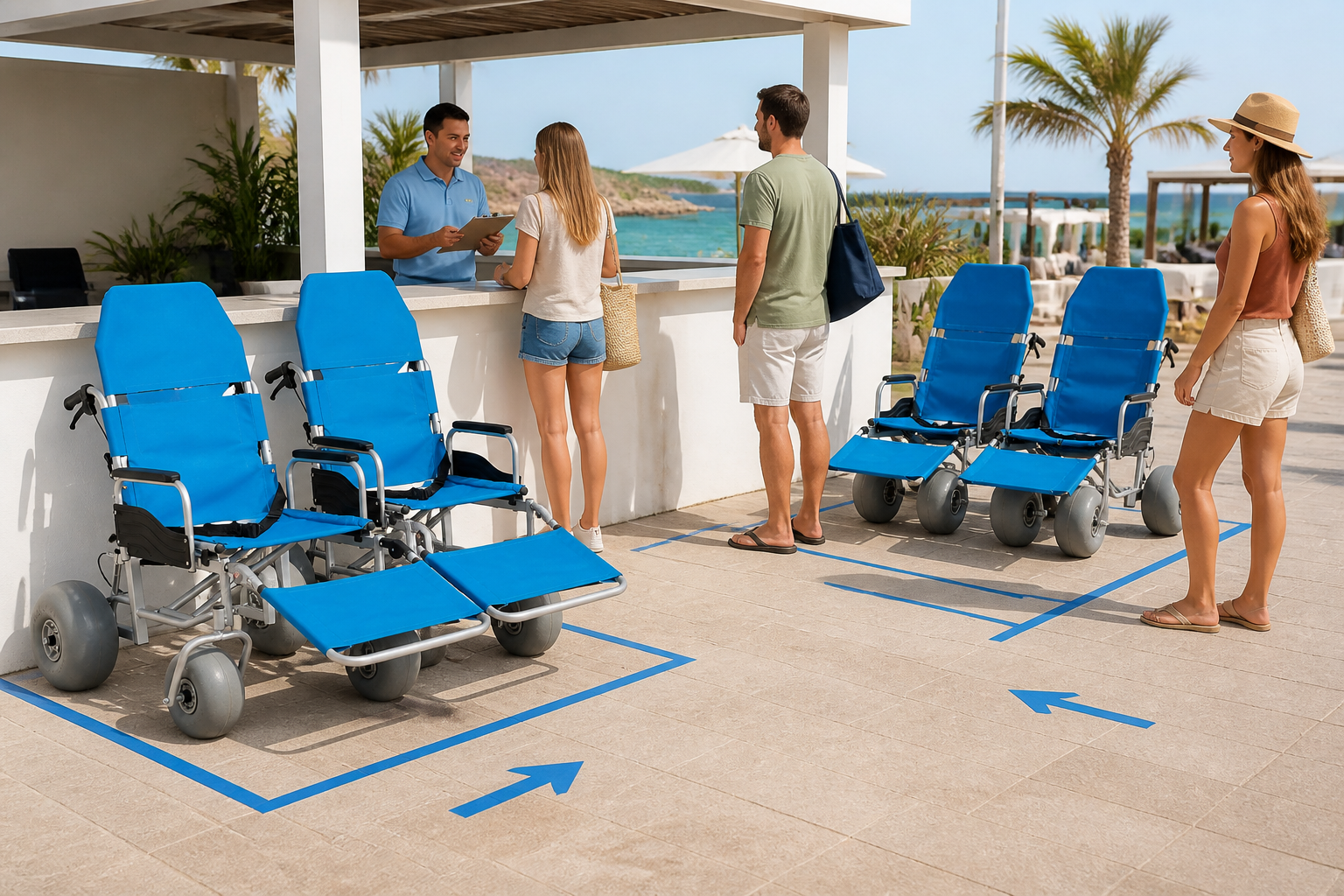
Beach wheelchair fleet management can balance reservations and walk-ups by assigning release windows, grace periods, and a visible reserve rule. Holding every chair all day for later bookings can block access, while releasing every unit can undermine confirmed handoffs. Teams need a time-based rule that fits local staffing and route duration. The rule should explain when a reserved chair returns to general availability and who may approve an exception.
Protect bookings without freezing stock
The short answer: Use a shared schedule that shows only operational details needed by staff, then pair it with physical ready and reserved zones. Keep private guest details outside public-facing labels. A rental fleet application can help teams frame this workflow around real service points.
- Set release windows
- Define a grace period
- Name exception authority
Key Takeaway: A time-based rule protects confirmed service while keeping unused equipment active.
| Checkpoint | Working choice |
|---|---|
| Request | Inventory action |
| Booked | Hold by window |
| Walk-up | Use ready stock |
Compare scheduled handoffs with idle periods and revise the grace period only when the log supports a change.
Which route checks belong in daily operations?
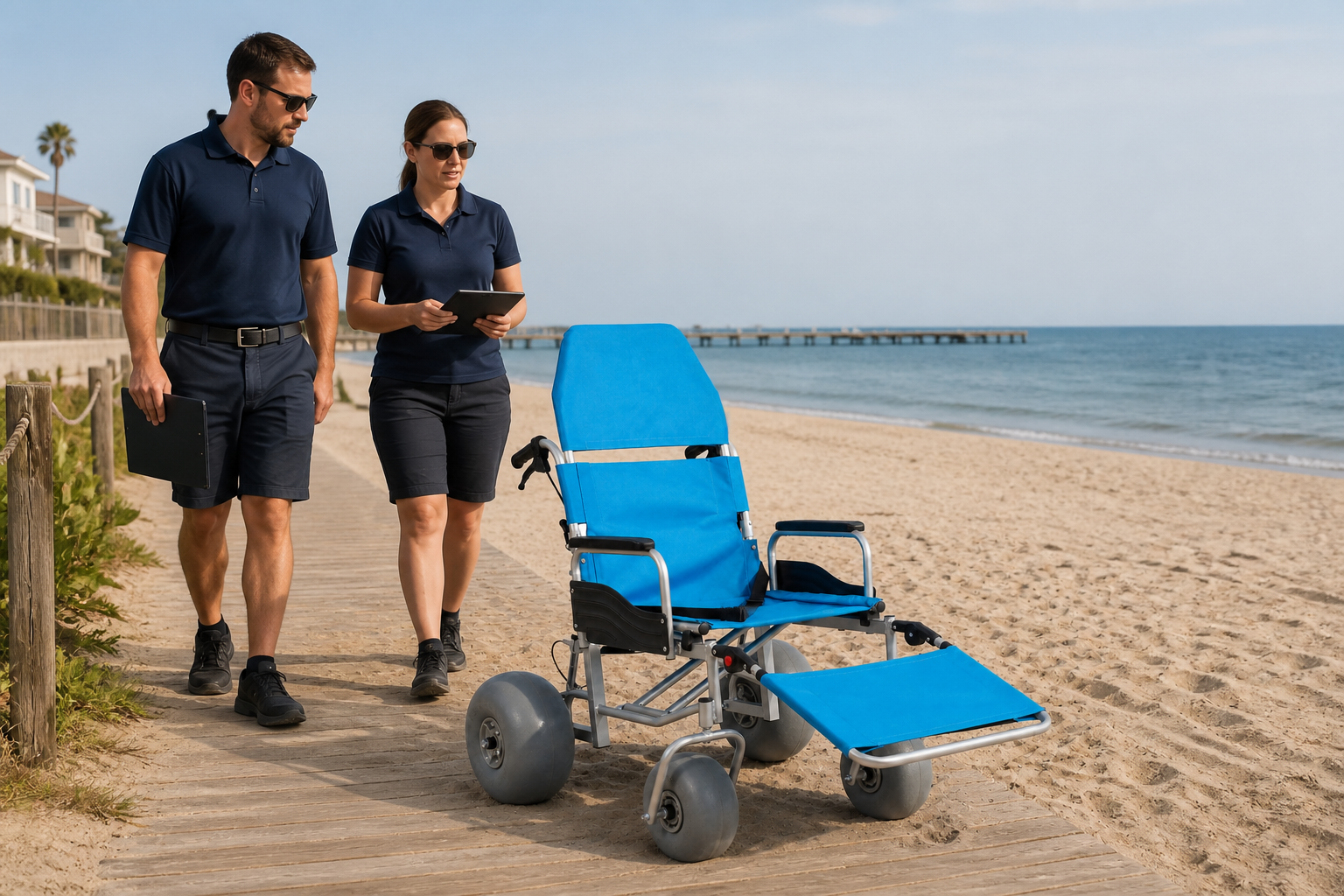
Beach wheelchair fleet management should include a daily route walk that checks access width, surface changes, temporary obstacles, turning space, and the planned return path. A suitable chair cannot fix a blocked gate, steep temporary edge, crowded service lane, or storage cart left across an access point. Staff should inspect the complete service path before opening and repeat the walk after notable site changes. Record the condition without claiming the route meets a legal standard.
Walk the route before release
A practical detail: Assign the walk to a role rather than a person’s memory. The route checker can carry a short card, take local photos under site policy, and report any pause condition to the shift lead. This makes the route part of fleet readiness, not a separate facilities issue.
- Check route width
- Spot temporary barriers
- Confirm return space
Key Takeaway: Route readiness and chair readiness belong in the same opening decision.
| Checkpoint | Working choice |
|---|---|
| Route point | Working check |
| Gate | Clear passage |
| Turn area | Open space |
Walk the route at normal service pace and note where staff must stop, turn, or change grip.
How should staff handle guest handoffs?
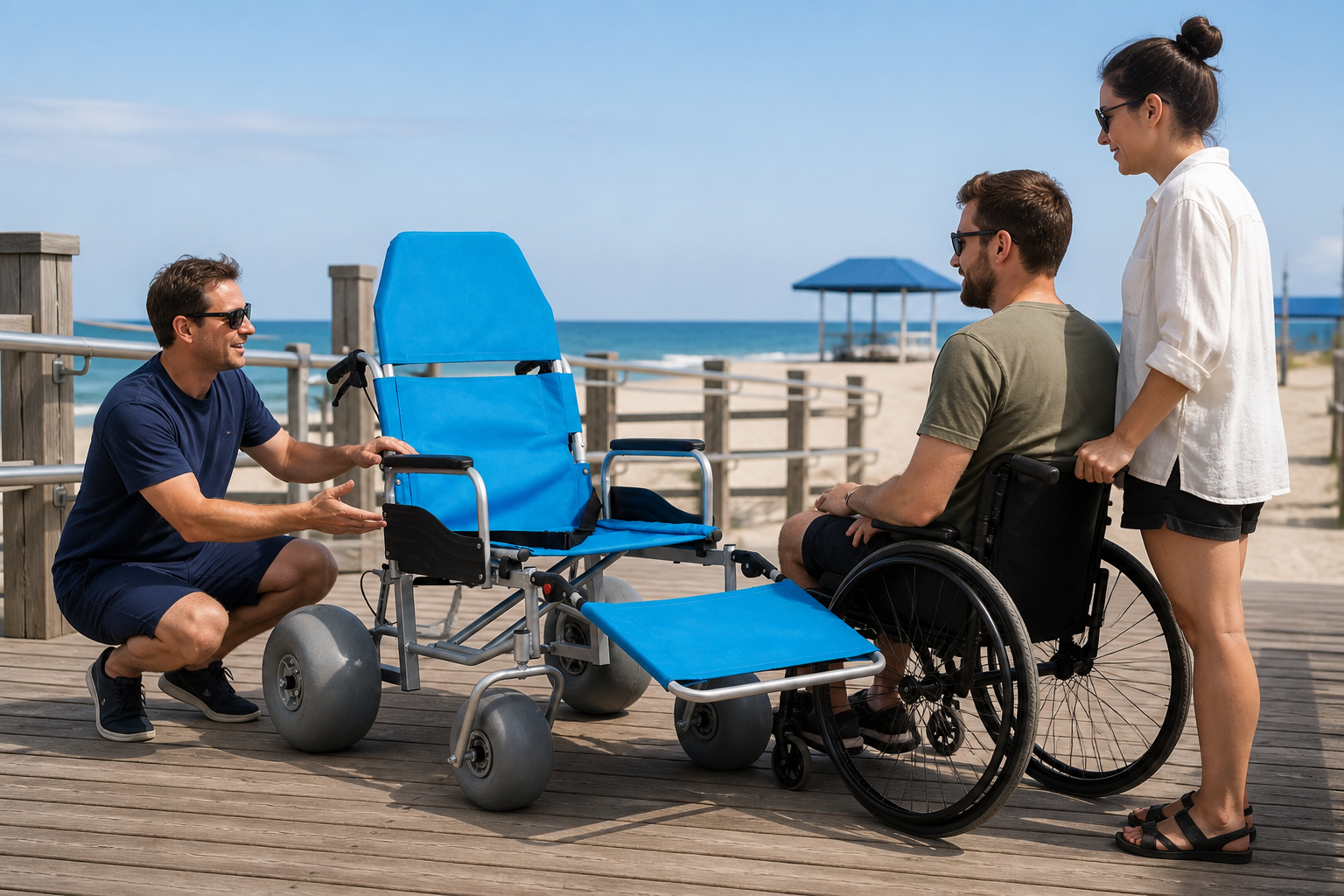
Beach wheelchair fleet management needs a calm handoff that confirms chair status, route plan, operator role, user preferences, and return point without rushing the guest. Staff can explain controls and visible supports in plain language, then ask whether any setup feels uncomfortable before movement. They should avoid medical advice and avoid promising access beyond checked routes. A consistent handoff protects dignity while giving attendants a shared start and return plan.
Use one calm handoff sequence
This part matters: Keep the conversation short enough for daily service yet flexible enough for questions. One staff member leads while another handles equipment only when local policy calls for it. The guest should hear who controls movement, where the route ends, and how the team will pause if conditions change.
- Confirm operator role
- State the route
- Agree on pause cues
Key Takeaway: A respectful handoff joins equipment readiness with clear human communication.
| Checkpoint | Working choice |
|---|---|
| Handoff item | Plain cue |
| Route | Start and return |
| Pause | Agreed signal |
Observe a practice handoff and remove jargon that a guest may not recognize.
What cleaning cycle keeps turnaround predictable?
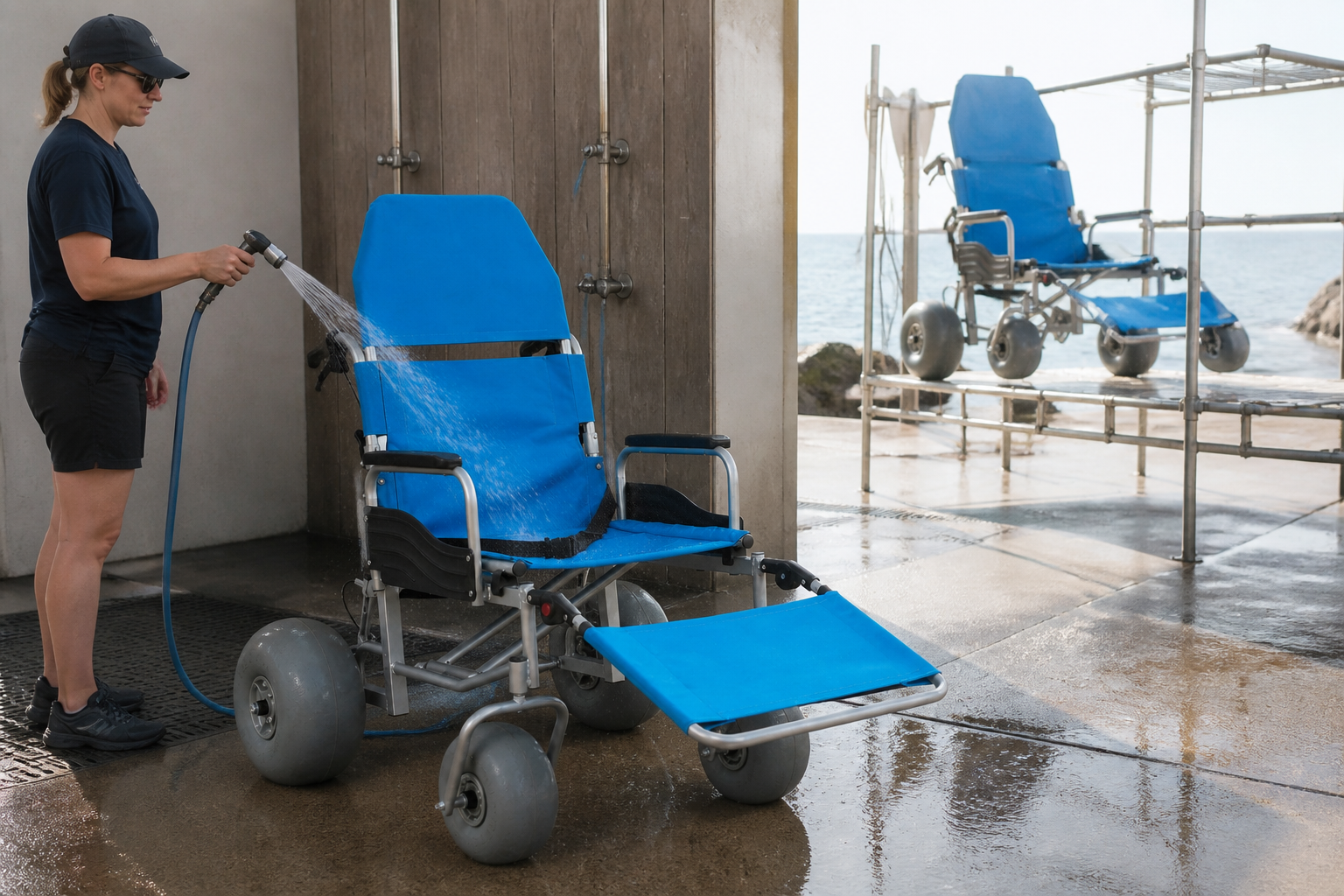
Beach wheelchair fleet management becomes more predictable when every return moves through visible receive, fresh-water rinse, drying, inspection, and ready stages. Mixing wet chairs with ready stock hides status and can move sand back into clean areas. A one-way workflow helps staff see where each chair sits without asking around. Local product instructions should control cleaning agents and service methods, while the daily plan controls location and responsibility.
Separate return, rinse, dry, and ready zones
Here’s the practical sequence: Place tools near the cleaning point, keep blank status tags protected from water, and return a chair only after visible moisture and sand checks. If a part needs closer review, move the chair to held status rather than extending the cleaning line with an informal repair.
- Receive returned chair
- Rinse and dry
- Inspect before ready
Key Takeaway: A one-way cleaning cycle turns chair status into something staff can see at a glance.
| Checkpoint | Working choice |
|---|---|
| Zone | Chair state |
| Rinse | Cleaning active |
| Ready | Released by check |
Follow one returned chair through the cycle and time only the waiting points, not staff performance claims.
How should teams store and rotate each chair?
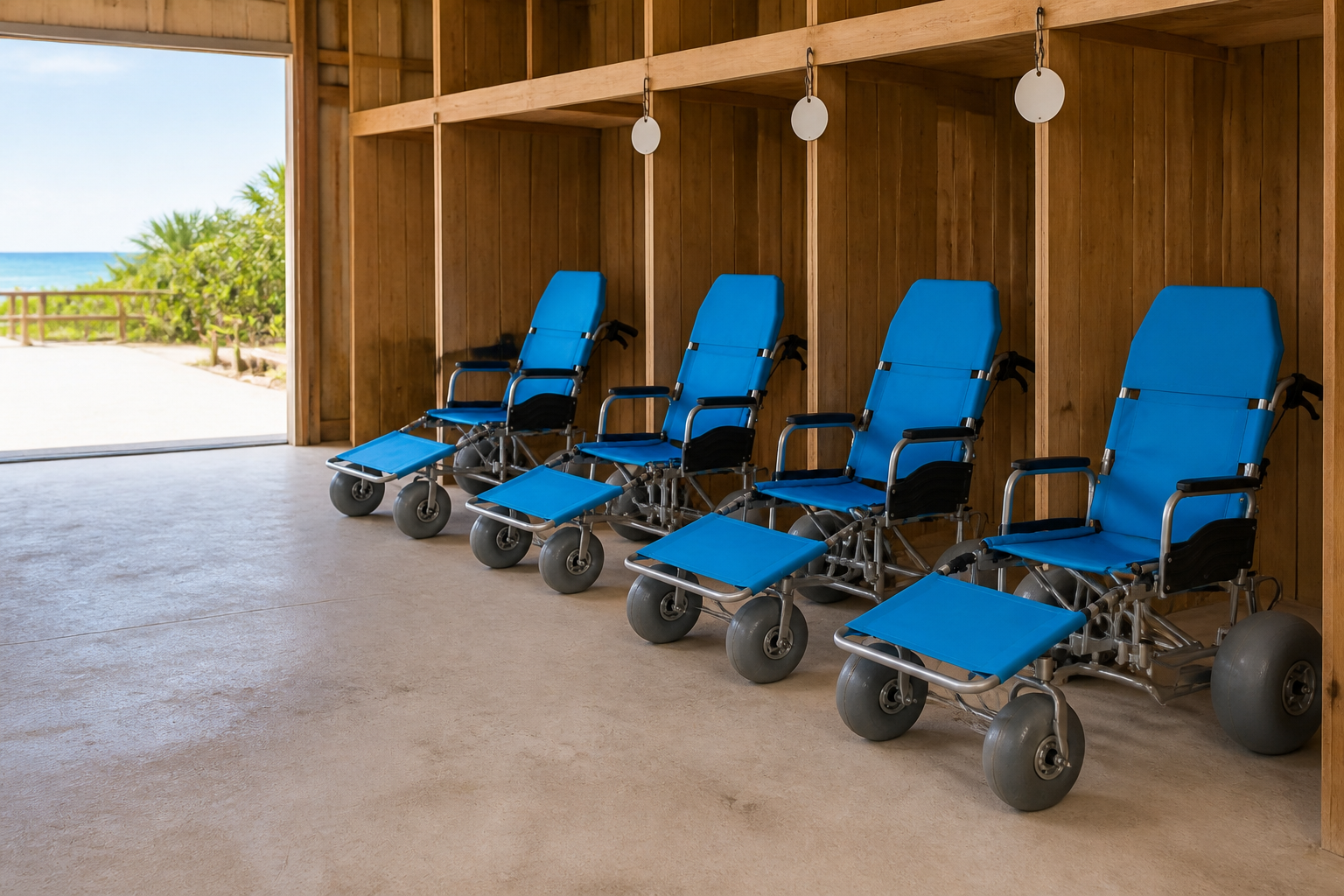
Beach wheelchair fleet management should give every chair a dry, ventilated bay and a simple rotation marker that prevents one unit from carrying every busy shift. Storage should keep aisles open, protect fabric from avoidable contact, and let staff inspect wheels and frame joints without moving several chairs. Rotation can follow last-used or next-ready dates rather than an abstract ranking. The method should stay simple enough for every shift to maintain.
Assign bays and rotate use
The useful habit: Return chairs to assigned bays only after cleaning and status review. Place held equipment in a separate area with the reason recorded. A visible rotation card can point staff toward the next suitable unit while still allowing route role and guest needs to guide final selection.
- Assign one bay
- Separate held stock
- Rotate ready units
Key Takeaway: Good storage keeps status visible and gives every chair a fair service rotation.
| Checkpoint | Working choice |
|---|---|
| Storage cue | Purpose |
| Assigned bay | Fast location |
| Rotation card | Balanced use |
Stand at the storage entrance and check whether every chair status can be understood without moving equipment.
Which records support better fleet decisions?
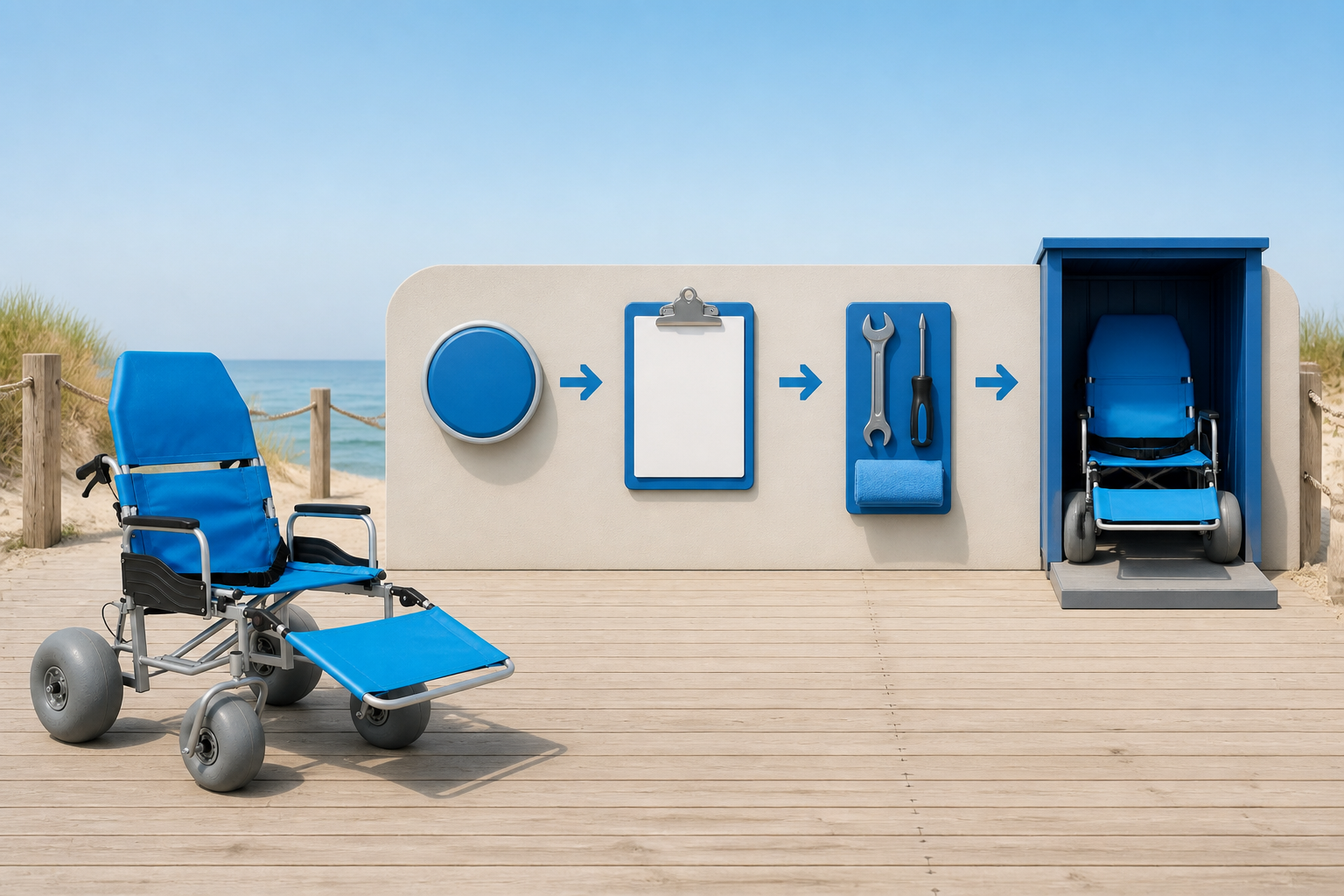
Beach wheelchair fleet management needs concise records for release, return, cleaning, hold reasons, service decisions, and recurring route interruptions. A record should answer a working question rather than collect data for its own sake. Managers can spot repeated downtime, crowded handoff windows, or chairs that stay idle because of role mismatch. Keep personal guest data outside operational logs unless local policy explicitly requires protected handling.
Track events that change an action
Here’s the decision loop: Record the event, review patterns on a fixed cadence, choose one change, and watch whether the same issue returns. Avoid turning a short log into a performance dashboard filled with invented targets. Clear events and accountable actions give managers enough evidence for practical adjustments.
- Record status changes
- Group repeat events
- Assign one action
Key Takeaway: Useful records connect a visible event with a named operational response.
| Checkpoint | Working choice |
|---|---|
| Record | Decision use |
| Hold reason | Service action |
| Route delay | Route review |
Use this flowchart as a discussion aid: event, review, action, and follow-up without numerical claims.
Closing Guidance
A dependable fleet plan joins equipment roles, route checks, staff handoffs, cleaning, storage, and records into one repeatable rhythm. Start with one location, watch where delays appear, and revise only the checkpoint causing that delay. Teams planning a new coastal access program can contact us today with their route, storage, and service questions.
FAQ
Can I use one checklist for every chair in the fleet?
Yes, for shared checkpoints. Add a short model-specific block for folding parts, wheel fittings, foot platforms, or other visible differences.
Fleet review checkpoints
What’s the best way to separate ready and held chairs?
Use clearly marked physical zones. Pair each zone with a matching status in the daily log so staff see the same answer in both places.
How do I know if fleet size matches demand?
Compare reservation gaps, walk-up refusals, turnaround delays, and idle periods across several operating days before changing inventory.
Can I rotate chairs without a software platform?
Yes. A dated paper card or shared sheet can support rotation when staff update it at every release and return.
What should happen when a fault appears?
Remove that chair from active service. Record the fault, mark its status, and return it only after the responsible person documents the service decision.