
A lifeguard post may need fresh drinking water for staff, dry stationery and signage before the afternoon shift. These are ordinary stores deliveries. Have the aquatic supervisor identify the post, approved goods, receiving contact and a suitable delivery window. A cargo cart can move those goods while staff at the post continue their assigned duties.
Build the request from what the post will use
Give the receiving team a list short enough to check at the post. Include the item, pack size, stock remaining, requested quantity and any specified storage conditions. Confirm whether the request is for the active post, a backup store or the next day’s opening kit. Similar-looking cases can belong in different places.
A hypothetical request calls for two sealed cases of staff water for the active post and one for a locked reserve. One trip may suit those three cases if their actual mass, containment and route allow it. Label the reserve case and verify who has the key. If nobody can open the reserve, leave that case in its approved store or agree on a later trip. Recording all three as delivered to the active post would overstate its available stock.
The supervisor controls which routine goods the service can carry. Medical stock, specialist equipment and supplies subject to separate readiness or storage procedures stay within the arrangements of the relevant programme. A utility-cart run is for cargo. It does not carry people or give a supply runner authority to perform emergency duties.
Protect the working side of the station
Agree on an approach and unloading point that preserve the view, the exit used by on-duty staff and access for authorised vehicles. Take the walk at the intended delivery time. A service strip that is clear at opening may fill with queues, beach furniture or another team’s equipment by noon. Ask the post which approach can be used if the preferred one is occupied.
A runner should know where to wait outside the operational area. When the supervisor pauses routine movement or the approach is needed for another purpose, move to that agreed point and await instructions. Arrange deliveries around existing staffing. If the only receiver is on a duty that prevents them from leaving, reschedule or nominate another authorised person.
Match the cart to the goods
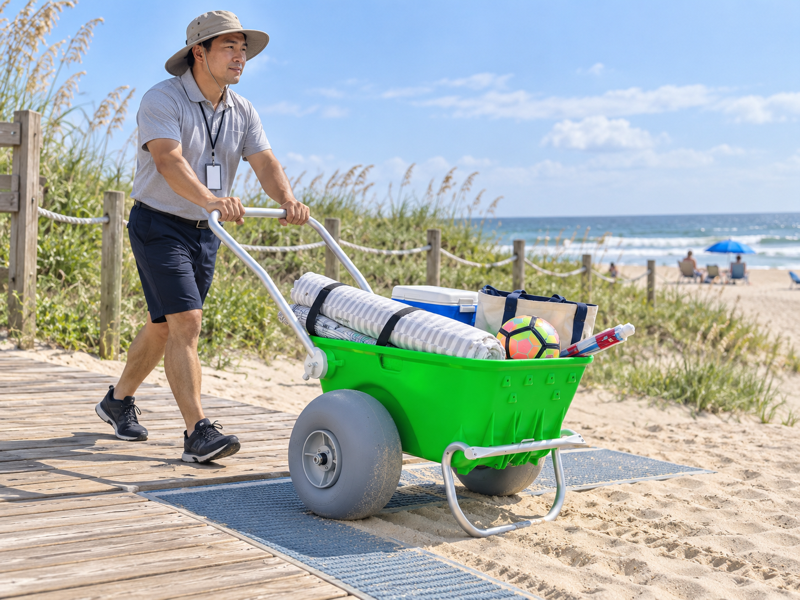
The standard beach cargo cart has a rigid tub on two balloon wheels. The open tub does not itself keep supplies dry. Select closed containers appropriate to the goods, check their actual loaded mass and protect paperwork separately from wet returns. Stay within the order specification and handling arrangement for the route. A high stack can obstruct the runner’s view even when it is within the cargo rating.
If the cart is held for a wheel or handle fault, check whether the next shift can receive a later delivery or another checked cart can serve the post. The cart inspection guide covers the equipment decision. The aquatic supervisor decides whether a station can operate under its own procedures with an item outstanding.
Give the next shift a useful stock count
At the post, the receiver checks actual quantities and confirms the storage location. Return a damaged or wet pack under the site’s supply procedure and record what the operator took back. If a substitute was offered, note who accepted it. A tick beside “afternoon restock” does not say that one case is still at the depot.
At changeover, tell the next supervisor what is at the post, what was placed in reserve and which request remains open. A missing routine delivery and the readiness of emergency equipment are different questions. Each belongs with the person responsible for checking it.