
A lake can have a sheltered swimming cove and an exposed boat launch within the same park. A floating beach wheelchair may suit the cove on a calm day while passing wakes make the launch unsuitable. Choose a particular entry and exit for the session. For the AY-ST-V1.0, the manufacturer describes supervised use in controlled, shallow, calm water where trained attendants can keep their footing. Floating wheelchair operating conditions
Walk from the transfer point to the exit
Start where the visitor will leave their usual mobility device. Follow the wheels over every change of surface to the proposed sitting area, then walk back. At a lake, a drop in water level can expose a strip of soft mud below a previously firm shore. A ramp may still reach the water while the bottom beyond it becomes difficult for an attendant to stand or turn on.
Ask the staff member who would accompany the visitor to identify where they could keep control on the way in and remain on secure footing on the way out. Include the return to the transfer point. A dock can be a good place to enjoy the view, but a clear path to its edge does not establish a suitable way to launch or recover this chair.
Check the actual flotation equipment
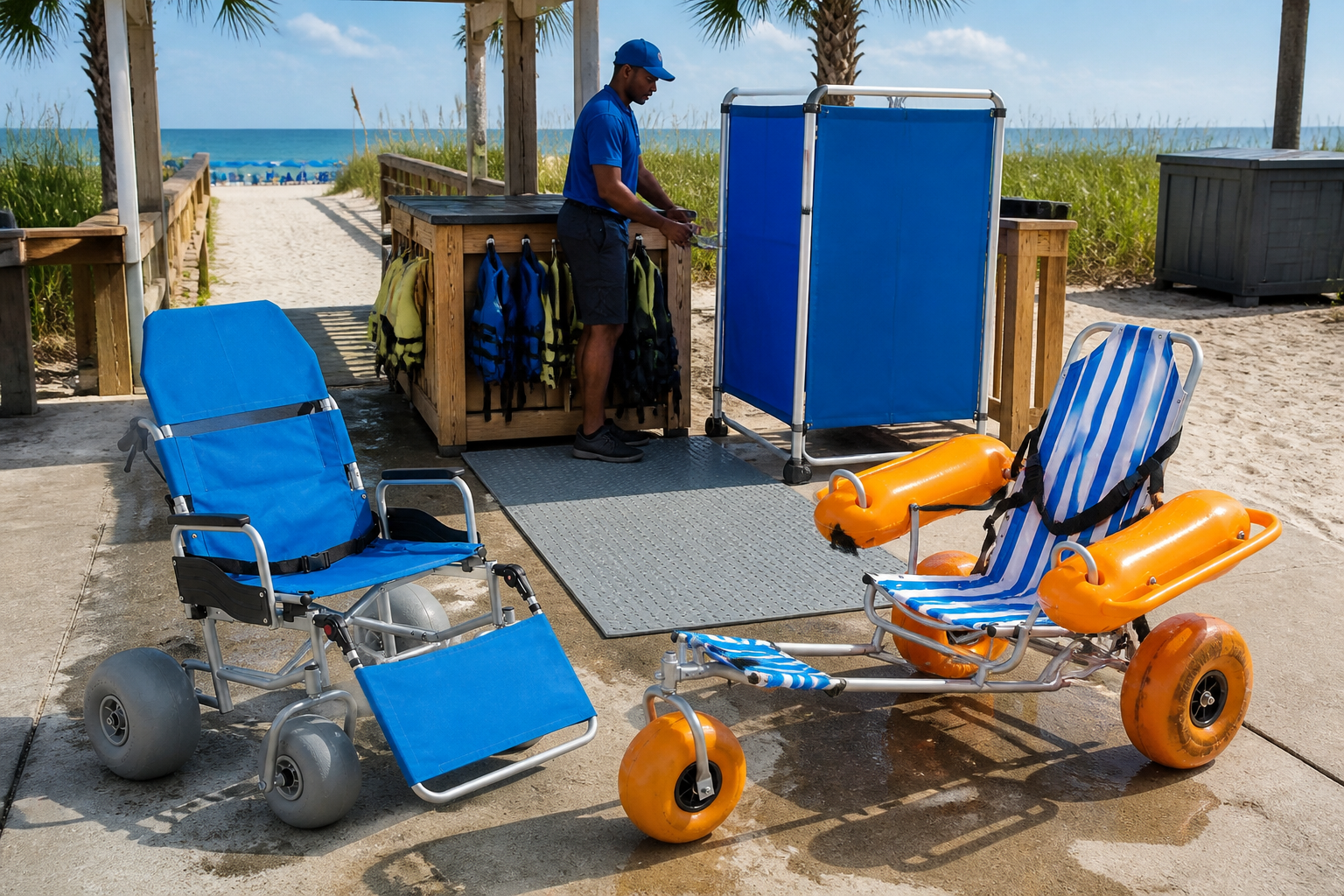
The AY-ST-V1.0 has an aluminum-alloy frame, three inflatable PVC wheels and two detachable inflatable PVC armrests. Page 3 of the manual identifies the armrests, front and rear wheels, seat belt and three-stage backrest. Pages 4–5 show where the assemblies attach. Check the supplied chair against those drawings, particularly after seasonal storage or transport. Corrected AY-ST-V1.0 manual
Inspect both armrests for surface damage, unexplained loss of air and insecure fixings. Check each wheel and its retention, then the seat, belt and backrest connections. Use the applicable instructions for the fitted inflatable component. If one armrest is soft again after the last inspection, set the chair aside and have the cause assessed before the next guest uses it. An empty roll along a path can reveal wheel rub. It cannot confirm that a flotation component will perform in water.
Decide what the lake supports today
| What staff find at the selected entry | Practical choice for that visit |
|---|---|
| Protected calm water, stable footing and a usable exit | Offer water access only within the chair instructions and the site operator’s approved supervised arrangements. |
| Boat wakes reach the chosen shore or wind starts moving the water across the entry | Keep the water portion closed there. Offer a suitable sitting area on land or reassess a separately approved entry. |
| A change in lake level exposes mud, submerged debris or an uncertain bottom | Keep the chair out of that entry until the operator can establish suitable footing and a return route. |
| The chair passes inspection, but the trained attendant or required local water-safety arrangements are unavailable | Tell the visitor what land service is available and when they can ask again about water access. |
Before the guest transfers, show them the intended destination, where their usual chair will be available afterward and how to ask the attendant to return. A lifeguard service and a trained wheelchair attendant have different jobs. Establish who will assist the guest throughout the session and what local support is available if the planned exit changes. The closure plan for a floating wheelchair service can help staff communicate a change after a booking has been made.
Leave time to return
Suppose the morning cove is calm but boat activity begins before the next booking. Staff should reassess the entry before promising the same water outing to a second guest. The afternoon visit might instead end at a lakeside picnic area reached by a suitable land route. Give the visitor that destination and the assistance available when they make their choice.
After the outing, inspect the chair where the shore was soft enough to leave grit around its wheels and attachments. Follow the model’s cleaning and drying instructions, return detachable parts to the same unit and keep a suspect component with the chair for service. Floating-chair storage and care