
An island municipality may have to choose between keeping one public beach mat route open throughout the service season and opening a second entrance that depends on the same crew and spares. Give elected members the service each budget would buy. Show the journeys residents and day visitors can make, the municipality’s commitments and what happens to each entrance while the island waits for a replacement.
Start the comparison where residents arrive
Map a resident’s trip from the local bus stop, accessible parking or a nearby neighborhood as well as the trip from the passenger ferry. Walk the return through both connections. A beach close to the ferry terminal can be an awkward choice for local users if the public path from town ends at steps. Ask the transit operator, harbor staff and the municipal beach crew to verify the part each controls.
For each candidate beach, mark the destination the mat can reach, whether a visitor can turn there, and who can maintain the approach. Include the landowner’s permission and any seasonal or environmental limits. Don’t count two entrances as interchangeable because they appear close on a map. Record the transport link, hours, beach destination and return arrangements at each.
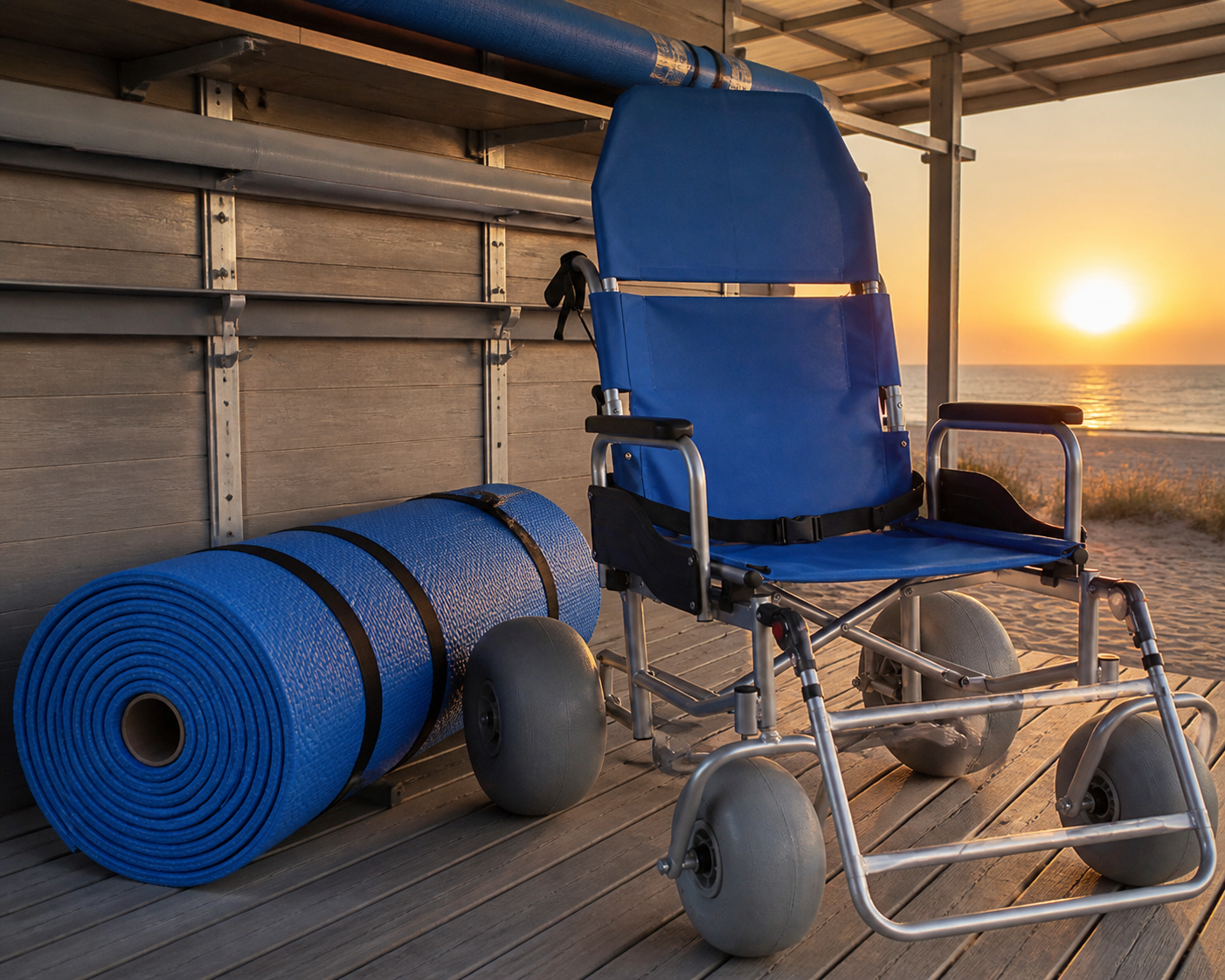
Put service options into the municipal budget
Prepare an estimate for one maintained approach and another for any second site. Show separate lines for sections and end treatments, off-island freight, delivery from the quay, installation, local crew time, storage and likely renewal. Obtain an actual quote for the chosen sections and connectors. Anchor or connection arrangements for a different island’s beach cannot establish what the local authority will allow on this site.
| Council’s choice | Question to answer in the budget paper |
|---|---|
| One full-season route | Which residents and visitors can reach it on public transport, and which neighborhoods would still lack a practical trip? |
| A second seasonal entrance | Which staff and parts would it share with the first, and could both sites be inspected on the busiest shift? |
| Local stock of route-critical components | Which verified compatible parts can the municipal crew replace, and how long would each site otherwise wait for delivery or supplier service? |
| A contingency for interrupted freight | What limited service, accessible alternative or temporary closure can the duty supervisor authorize and fund? |
The island mat freight plan covers cargo dimensions, handling and the receiving point. For a municipal budget, turn that shipping information into a service decision. Compare the delivered cost of a spare with the public access lost during a plausible delay, using actual supplier lead times and the island’s recent delivery records.
Decide which service survives a missed sailing
Suppose the town has two installed entrances and a single spare transition compatible with both. One site loses the connection needed for its only step-free approach. At the other, the crew has identified wear but has verified the route is still usable under its operating criteria. The supervisor can propose issuing the spare to the closed route, set a recheck at the second and obtain a confirmed delivery date. If the second condition worsens, reassess it on site. A priority list cannot keep a damaged route open.
Keep the stock register with the local custodian, and identify a deputy who can issue parts when freight staff or contractors are off island. Give the municipal information desk a contact for each live closure and a date for its next update. Use the town’s emergency plan for removal, evacuation decisions or restrictions during a storm.
When the service returns to committee, distinguish days lost to ferry disruption from days lost to missing local authority, staff, stock or storage. That record lets members decide whether another purchase, an operating budget change or a different public entrance would give the island a more dependable service.