Municipalities purchasing inclusive water access equipment must prioritize durable materials, strict safety protocols, and long-term maintenance requirements before finalizing any procurement contract. Local governments face distinct procurement challenges when trying to satisfy growing public demand for accessible parks while managing strict municipal liability and tight capital budgets. Investing in a floating beach wheelchair allows cities to provide safe outdoor recreation for citizens of all physical abilities, transforming standard coastlines into inclusive destinations. However, procurement officers must look beyond the initial purchase price to evaluate storage, lifeguard training, and operational risk management. This professional analysis outlines the critical technical parameters, regulatory guidelines, and operating procedures that public works departments must evaluate to support a successful, long-term municipal investment.
How does a floating beach wheelchair work?
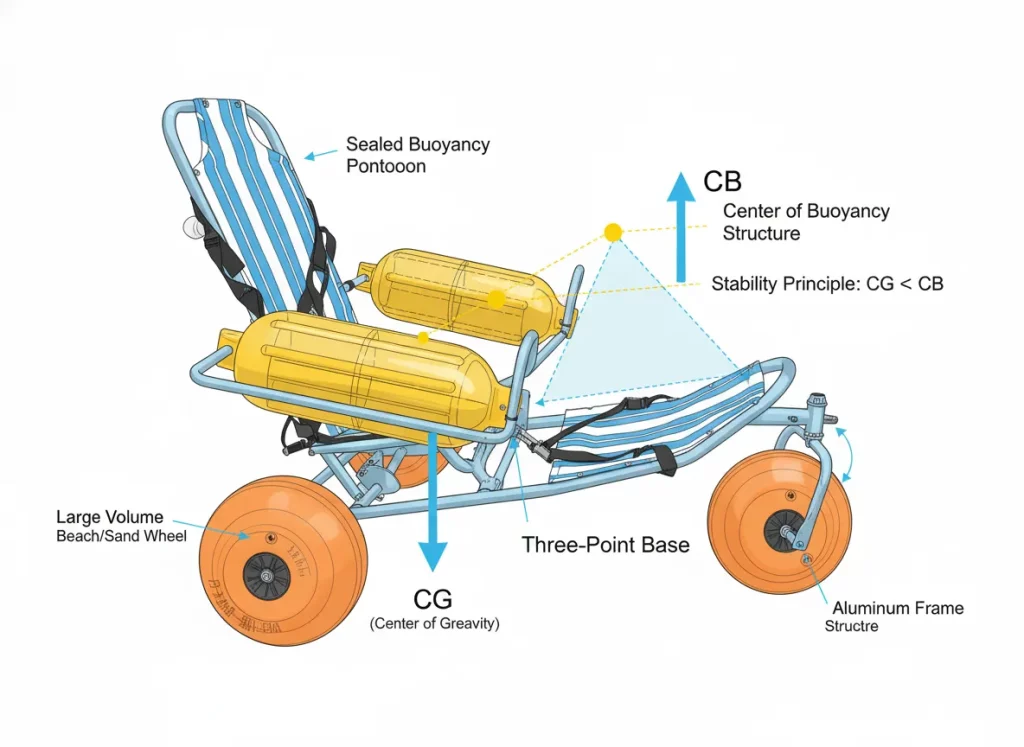
For example, a floating beach wheelchair works by combining buoyancy from specialized flotation armrests with low-pressure balloon wheels that traverse soft sand without sinking. This dual-action design allows a user to move seamlessly from dry sand directly into calm waters while remaining safely seated. Municipalities must understand that this specialized floating beach wheelchair operates as a hybrid transport vehicle, requiring a rolling transition on land and flotation stability in water. The vehicle relies on displacement principles to keep the passenger upright and comfortable during water transition.
What mechanical systems support movement?
However, the mechanical operation depends on three primary integrated systems that work in unison to manage the physical challenges of seaside environments.
- For example, low-pressure balloon tires absorb shock and roll over soft sand.
- Also, twin flotation chambers function as buoyed armrests to maintain balance in the water.
- Next, the lightweight aluminum chassis resists salt corrosion while providing high structural strength.
Consider this carefully: Local topography directly impacts mechanical wear, meaning dry loose dunes require wider tire configurations than damp packed tidal zones.
What buoyancy principles govern safe flotation?
Meanwhile, the device maintains flotation by displacing a volume of water equal to the combined weight of the user and the frame. Twin flotation chambers may support lateral stability within the model’s documented water limits.
| Buoyancy Component | Engineering Specification | Functional Benefit |
|---|---|---|
| Side Flotation Chambers | Twin orange sealed tubes | Prevent lateral capsizing in water |
| Balloon Wheels | Three pressurized chambers | Provide additional baseline buoyancy |
| Main Chassis | Silver lightweight aluminum | Reduces general draft in shallow zones |
As a result, the following structural matrix illustrates how these engineering metrics translate directly into reliable field performance.
Key Takeaway: Evaluating physical buoyancy limits helps municipal purchasing managers select models that protect citizens while minimizing municipal liability during water activities.
Who operates the floating beach wheelchair?
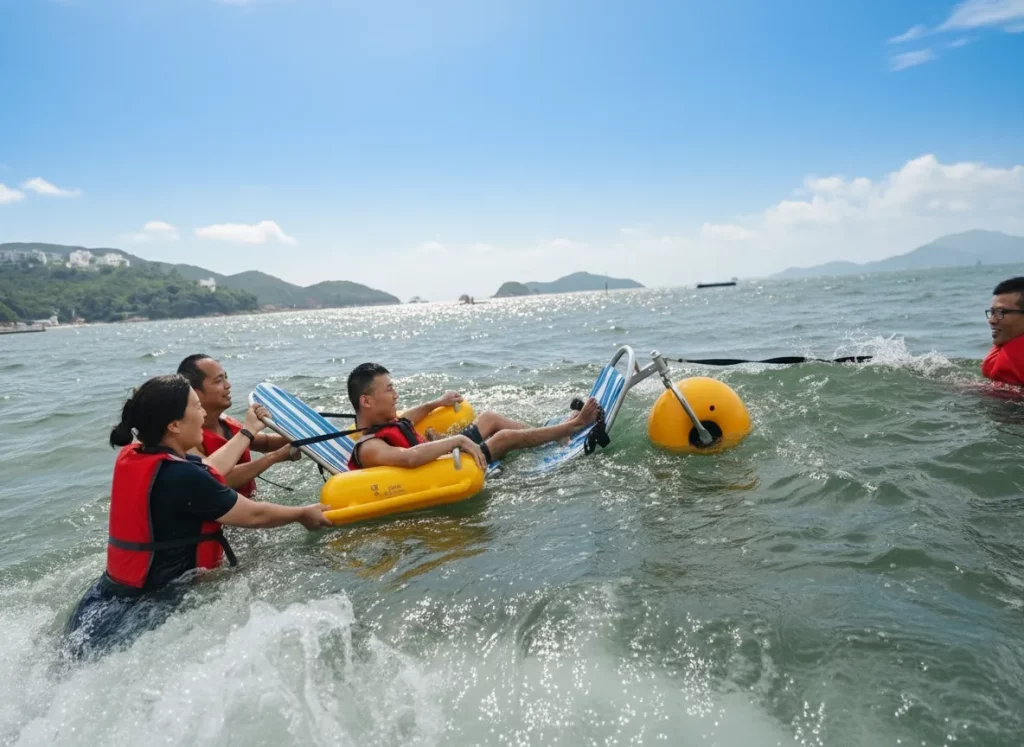
A municipal operating plan should assign a capable attendant whose training matches the route, user, chair, and approved activity. The device is not designed for independent operation by the occupant due to water dynamics and steering requirements. Every municipal deployment plan must mandate that a qualified attendant guides the floating beach wheelchair through the sand and into the water.
What qualifications must attendants possess?
Attendants must undergo specific operational training to manage the equipment safely in public zones.
- In practice, basic water safety training or lifeguard certification.
- For example, physical capability to manage up to three hundred pounds on sand slopes.
- Also, knowledge of the quick-release restraint system for emergency transfers.
What matters next? Cities must formalize these operator requirements into standard operating protocols.
How does supervisor training reduce city risks?
Structured training courses for park staff minimize the likelihood of operational accidents in tidal zones. Proper safety instruction helps personnel identify rip currents and unsafe wave patterns before they pose a threat.
| Training Domain | Key Instruction Point | Risk Mitigated |
|---|---|---|
| Water entry | Maintain rear-first entry position | Nose-diving into sand bars |
| restraint usage | Quick release mechanisms | Entrapment during sudden swells |
| Coastline monitoring | Tidal pattern evaluation | Drifting into deep channels |
These training guidelines establish a clear baseline for safe daily operations at public beaches.
Key Takeaway: A documented training plan gives municipal staff a shared response for changing coastal conditions and stop decisions.
Where can a floating beach wheelchair go?
A floating beach wheelchair can safely traverse soft sandy beaches, flat coastal shorelines, shallow lakefronts, and zero-entry public water parks. Selecting the correct venue for your floating beach wheelchair makes certain that users remain safe while enjoying public aquatic spaces. Rocky terrains, steep drop-offs, and heavy surf zones must be strictly avoided to prevent accidents. Municipal teams should also review their duties under ADA Title II guidance and obtain local accessibility advice where needed.
Which water environments are safest?
Not all water bodies are appropriate for floating equipment. Selecting the right environment prevents waterlogged wheels and steering difficulties.
- Next, calm lakes with negligible current or wave action.
- In practice, protected ocean bays and inlets shielded from open sea swells.
- For example, zero-depth entry pools at municipal aquatic centers.
For designated zones: Operating exclusively in designated calm zones protects the integrity of the flotation chambers from sudden impact.
What land surfaces should be avoided?
While balloon tires handle soft sand well, specific geological formations can damage the low-pressure polyurethane exterior. Avoid sharp rocks, jagged oyster beds, and steep concrete retaining walls.
| Terrain Type | Impact on Equipment | Operational Hazard |
|---|---|---|
| Sharp Gravel | Punctures low-pressure tires | Sudden loss of rolling capability |
| Mud / Silt | High suction on wheel surfaces | Attendant physical exhaustion |
| Steep Dunes | Accelerated downhill rolling | Loss of steering control |
The physical terrain data below assists recreation departments in selecting viable launch locations.
Key Takeaway: Mapping approved pathways secures public equipment from damage while providing a smooth, predictable journey for the rider.
Why fund a floating beach wheelchair program?
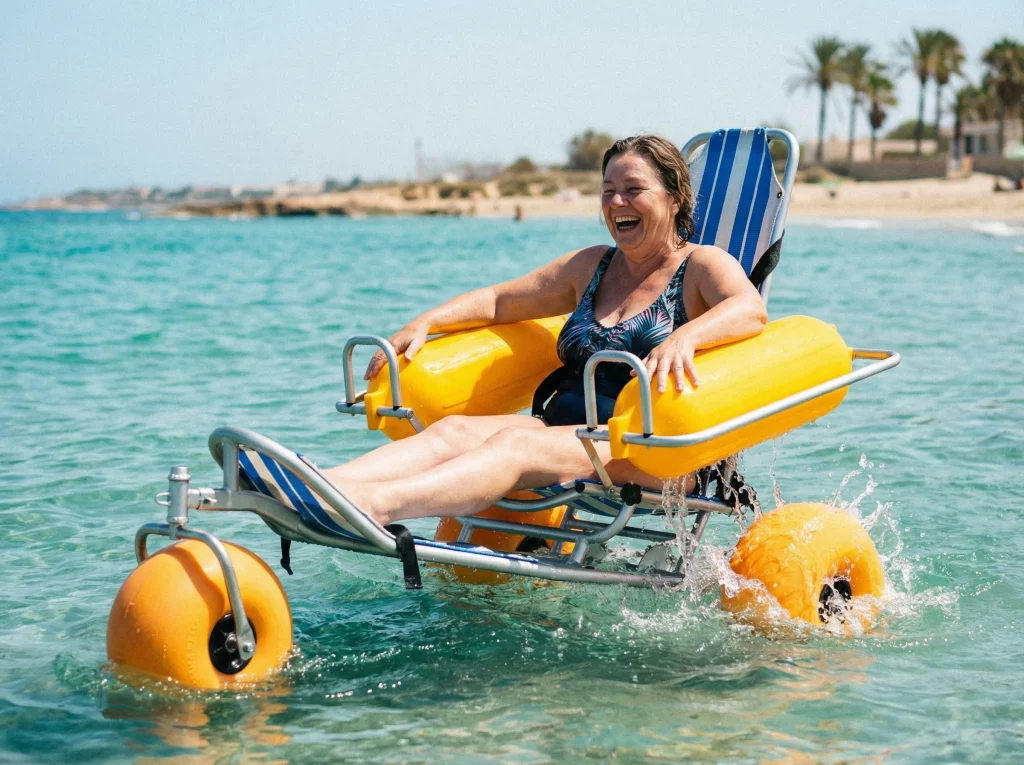
Funding a floating beach wheelchair program fulfills federal accessibility mandates, drives local inclusive tourism, and provides equitable recreational opportunities for all residents. Many cities face intense public demand to make their shorelines accessible, especially as community foundations offer matching grants to support adaptive recreation. Introducing a municipal floating beach wheelchair program transforms a standard public park into an award-winning inclusive space.
How does the program support legal compliance?
Municipalities must address accessibility standards to avoid civil rights complaints and litigation.
- Also, demonstrates active compliance with state and federal disability rights legislation.
- Next, complements permanent wooden boardwalks and temporary roll-out access mats.
- In practice, establishes clear inclusive pathways from parking spaces directly to the surf.
Consider this critical factor: Proactive investments in adaptive equipment are far more cost-effective than defending public access lawsuits.
What economic benefits do cities gain?
Inclusive parks attract traveling families who prioritize accessible infrastructure for their relatives. This increased foot traffic directly supports local seaside businesses, restaurants, and hotels.
| Economic Driver | Municipal Benefit | Community Impact |
|---|---|---|
| Inclusive Tourism | Attracts non-local families | Increases local lodging tax revenue |
| Civic Partnerships | Grants from local foundations | Reduces direct taxpayer funding |
| Public Relations | Positive community press | improves municipal reputation |
Analyzing these economic indicators reveals that accessibility investments generate sustained value for coastal communities.
Key Takeaway: Securing funding through community grants allows cities to resolve accessibility challenges while expanding local tourism and commercial activity.
What is a floating beach wheelchair made of?
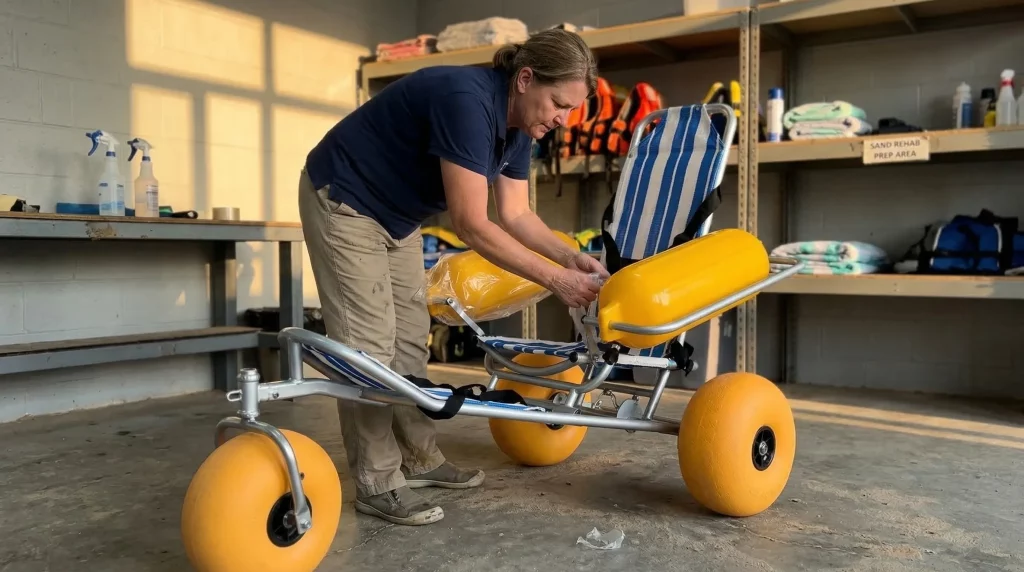
A floating beach wheelchair is constructed from high-grade silver aluminum, buoyant twin orange flotation armrests, three low-pressure orange balloon tires, and a striped blue-and-white mesh seat. When purchasing a floating beach wheelchair, procurement officers must verify that the raw materials can handle daily commercial-use outdoor use. using marine-grade metals prevents structural failure and extends the operational lifespan of the asset.
Why is silver aluminum preferred?
The frame material should meet the model’s documented load, corrosion, and handling requirements.
- For example, resists corrosion from saltwater exposure much better than carbon steel.
- Also, maintains a cool surface temperature even under direct hot sunlight.
- Next, provides a lightweight structure that is easy for lifeguards to push.
For material review: Ask the supplier for alloy, coating, corrosion-test, inspection, and care documentation for the exact model.
How do synthetic fabrics perform?
The striped blue-white seat is woven from durable, quick-drying synthetic fabric that resists mold, mildew, and tearing. This breathable mesh allows water to drain rapidly when exiting the surf.
| Material Component | Specific Material | Primary Engineering Reason |
|---|---|---|
| Main Chassis | Silver T6 Aluminum | Lightweight strength and rust resistance |
| Seating Fabric | Striped blue-white mesh | Rapid drainage and UV resistance |
| Side Buoys | Orange molded plastic | High-visibility and positive buoyancy |
The technical material breakdown below highlights how these components resist harsh marine environments.
Key Takeaway: Specifying high-quality, corrosion-resistant materials during procurement reduces long-term maintenance costs and supports years of reliable community service.
How safe is a floating beach wheelchair?
A floating beach wheelchair is generally safe when operated according to established safety guidelines, which mandate a trained attendant, calm water conditions, and proper restraint use. Every public deployment of a floating beach wheelchair must include mandatory safety briefings for both the lifeguard staff and the users. The inclusion of a secure safety restraint prevents users from slipping forward during transition over waves.
What safety rules must be enforced?
Operating rules must be clearly displayed at every rental station or public access point.
- In practice, a designated attendant should maintain the control required by the model and municipal procedure during water use.
- For example, use is limited to calm water conditions without heavy surf or strong undertows.
- Also, all users must wear the integrated body restraint during transport.
For daily operation: Neglecting these simple operational rules increases safety risks and compromises the integrity of the adaptive recreation program.
How do lifeguard patrols improve safety?
Stationing these units near active lifeguard towers makes certain that emergency response times remain rapid if water conditions change suddenly.
| Operational Rule | Action Required | Safety Outcome |
|---|---|---|
| Attendant Control | Maintain grip on rear push handles | Prevents chair from drifting |
| Depth Limitation | Keep water level below passenger chest | Prevents submersion risk |
| Regular Inspection | Check tire pressure and restraint buckles | Identifies mechanical wear |
The following protocols form the foundation of a successful, zero-accident beach accessibility program.
Key Takeaway: Enforcing strict operational safety rules protects users from water hazards while safeguarding the municipality against liability claims.
How to store a floating beach wheelchair?
Storing a floating beach wheelchair requires a secure, weather-resistant outdoor locker or utility shed located near the beach access ramp. When managing a fleet of floating beach wheelchair units, cities must design dedicated storage solutions that allow easy access for lifeguards while keeping the public from tampering with the chairs after hours. Proper storage directly extends the life of the balloon tires and synthetic fabrics.
What are the storage facility specs?
A proper storage facility should protect the equipment from coastal elements and secure it against unauthorized use.
- Next, constructed from rust-free treated wood, commercial-use plastic, or galvanized steel.
- In practice, equipped with a secure commercial-grade padlock or keyless entry system.
- For example, designed with double-wide doors to accommodate the wide wheel track.
Keep this in mind: Placing the locker directly adjacent to the boardwalk saves staff from pushing the heavy equipment across long distances before shift changes.
How to prepare the chair for storage?
Before locking the unit away, maintenance personnel must follow a basic shutdown routine to preserve the materials.
| Review Area | Practical Guidance | Operational Note |
|---|---|---|
| Water conditions | Use only calm, controlled, designated zones | Confirm against the model manual |
| User fit | Confirm the model instructions and restraint adjustment | Confirm against the model manual |
| Attendant control | Maintain hands-on supervision throughout use | Confirm against the model manual |
This post-shift routine makes certain that the equipment remains in peak operating condition for the next user.
Key Takeaway: Building a dedicated, locked storage facility close to the sand protects the city’s investment from vandalism and accelerated weather wear.
What path does a floating beach wheelchair need?
A floating beach wheelchair needs a wide, firm, unobstructed path consisting of either permanent wooden boardwalks or specialized non-slip roll-out access mats. Integrating these pathways with a floating beach wheelchair program creates a seamless journey for individuals with mobility challenges. Without a stable pathway, pushing a loaded chair through deep, loose dunes becomes physically exhausting for attendants. Document each transition, including any accessible beach mat, as a separate route segment.
What materials make the best pathways?
Selecting the right pathway materials supports compliance with ADA guidelines while resisting coastal storm surges.
- Also, roll-out polyester mesh mats that sit directly on top of loose sand.
- Next, composite wooden boardwalks that resist rotting and warping.
- In practice, interlocking plastic tiles that can be with less effort repositioned after storms.
This is the key point: Roll-out mesh mats are highly popular because they can be rolled up and stored during winter months to prevent storm damage.
How do pathways improve beach safety?
Creating a straight, dedicated pathway reduces the time required to transport a passenger from the parking lot to the water.
| Pathway Option | Durability Level | Installation Effort |
|---|---|---|
| Roll-out Polyester Mats | High UV resistance | Low (temporary anchors) |
| Composite Wood Boardwalk | Extremely durable | High (requires foundation) |
| Interlocking Tiles | Moderate durability | Medium (snap-together segments) |
This performance matrix outlines the structural options available for municipal coastal infrastructure.
Key Takeaway: Installing a stable access pathway materially reduces the physical effort required to push the chair, making the beach accessible to everyone.
What parts fit a floating beach wheelchair?
The standard parts that fit a floating beach wheelchair include a corrosion-resistant silver aluminum frame, twin orange flotation armrests, three low-pressure balloon wheels, and a quick-release restraint. Using manufacturer-approved components supports model fit and keeps service records aligned with your floating beach wheelchair. A clear understanding of the parts diagram helps public works mechanics perform routine safety inspections.
What are the core technical specs?
Each component must meet precise engineering specifications to support water safety and physical durability.
- For example, frame: Silver anodized aluminum tubing for greater rust prevention.
- Also, wheels: Three puncture-resistant, low-pressure orange polyurethane balloon tires.
- Next, flotation: Twin commercial-use orange plastic buoys that act as armrests.
For parts control: Using manufacturer-approved parts keeps fit, service records, and model documentation aligned.
How do you handle wheel replacement?
Polyurethane balloon wheels must be kept at a low pressure to roll effectively over soft sand.
| Review Area | Practical Guidance | Operational Note |
|---|---|---|
| Water conditions | Use only calm, controlled, designated zones | Confirm against the model manual |
| User fit | Confirm the model instructions and restraint adjustment | Confirm against the model manual |
| Attendant control | Maintain hands-on supervision throughout use | Confirm against the model manual |
The technical components detailed below are critical for keeping the mobility equipment operating smoothly.
Key Takeaway: using authentic manufacturer parts for repairs protects passenger safety and maintains the validity of municipal liability insurance policies.
Why buy a floating beach wheelchair now?
A municipal purchase should follow an accessibility review, documented public need, route assessment, procurement rules, operating plan, lifecycle budget, and legal advice. One chair does not resolve every access obligation, so define the program limits before approving funds.
How does this solve municipal challenges?
Municipalities frequently struggle to balance the need for inclusive public infrastructure with strict budget constraints and liability concerns.
- In practice, resolves accessibility compliance challenges at popular municipal beaches.
- For example, mitigates safety liabilities through a highly stable, double-buoy design.
- Also, reduces equipment turnover costs by using rust-free silver aluminum.
What is the practical result? Cities that act today establish themselves as leaders in civic responsibility and forward-thinking urban planning.
Are you ready to transform your waterfront?
Improving shoreline access requires coordinated routes, equipment, staff, communication, maintenance, and periodic program review.
Take the first step toward making your city’s beaches inclusive for every citizen and contact us today to discuss your procurement requirements, secure pricing proposals, and review municipal case studies. By choosing to build an inclusive coastline, your community opens up a world of shared outdoor experiences where the physical boundary between land and water disappears for everyone.
| Launch Priority | Practical Action |
|---|---|
| Product fit | Confirm user needs, route, and water conditions |
| Staff readiness | Train attendants and document stop rules |
| Long-term care | Plan rinsing, inspection, and secure storage |
This final check connects procurement decisions with reliable daily operations.
Key Takeaway: A successful program pairs suitable equipment with trained staff, documented operating limits, and dependable aftercare.
Frequently Asked Questions
Can I use the floating beach wheelchair without an attendant? No, not under this municipal operating approach; assign the attendant required by the model and local procedure. Because open water environments have unpredictable currents, wind patterns, and sand shifts, an active operator must remain in control of the rear push handles to prevent the passenger from drifting or tipping.
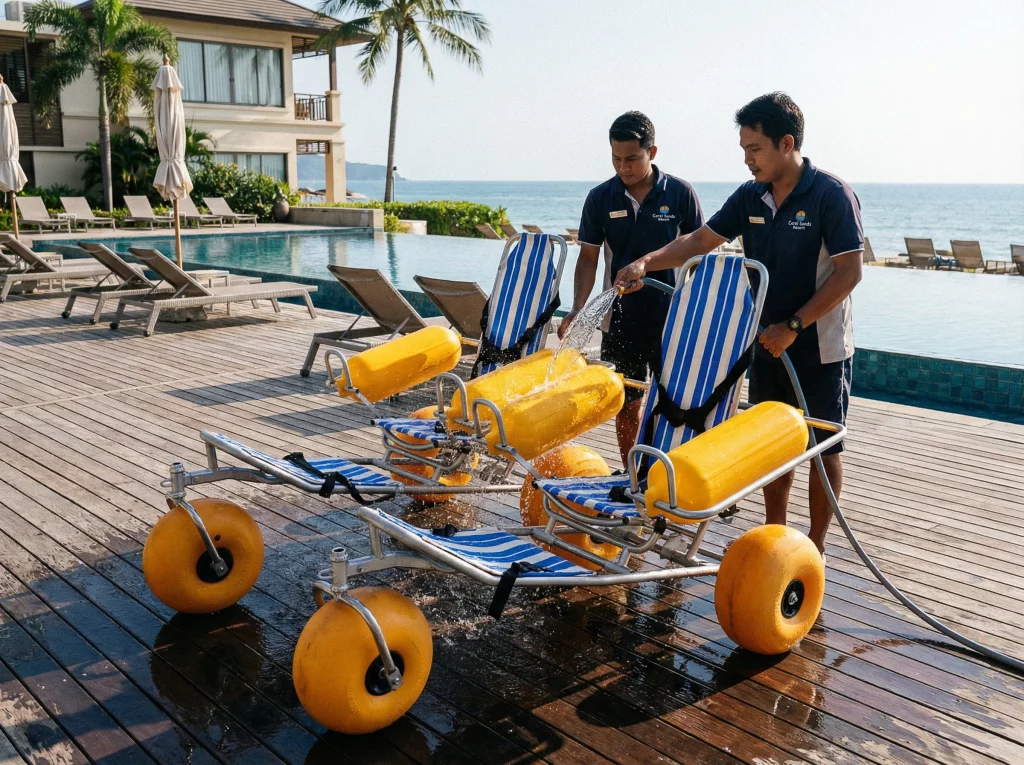
What’s the best way to clean the aluminum frame and fabric? A thorough fresh water rinse is the clear best method for cleaning the chair after every use. Spraying down the silver aluminum frame, the orange flotation buoys, and the striped mesh fabric removes abrasive sand and corrosive salt residue, which prevents premature wear and structural degradation.
Can I inflate the balloon tires with a standard high-pressure pump? Do not use a high-pressure source unless the exact tire documentation permits it. Balloon-wheel pressure varies by model, so use a compatible gauge and pump while following the stated pressure limit.
Can I operate the floating chair in rough ocean waves? No, the chair must only be used in calm water conditions, shallow swimming zones, or protected bays. Heavy surf, strong currents, and breaking waves present significant safety hazards that can overwhelm the operator and put the passenger at risk.