
A useful floating beach wheelchair comparison separates dry-sand transport, shoreline approach, and supervised water-entry goals before buyers compare frames, wheels, flotation parts, staffing, storage, and care. The phrase beach wheelchair can cover products with different service boundaries. A chair that moves across dunes may stop at the waterline, while a floating design may support an approved water program under trained supervision. Resort and park teams need a shared decision record that states which job they are buying, where that job begins, and where it stops. Use site observations and supplier evidence rather than assumed performance figures. Refer individual support decisions to qualified professionals.
What should the comparison define?
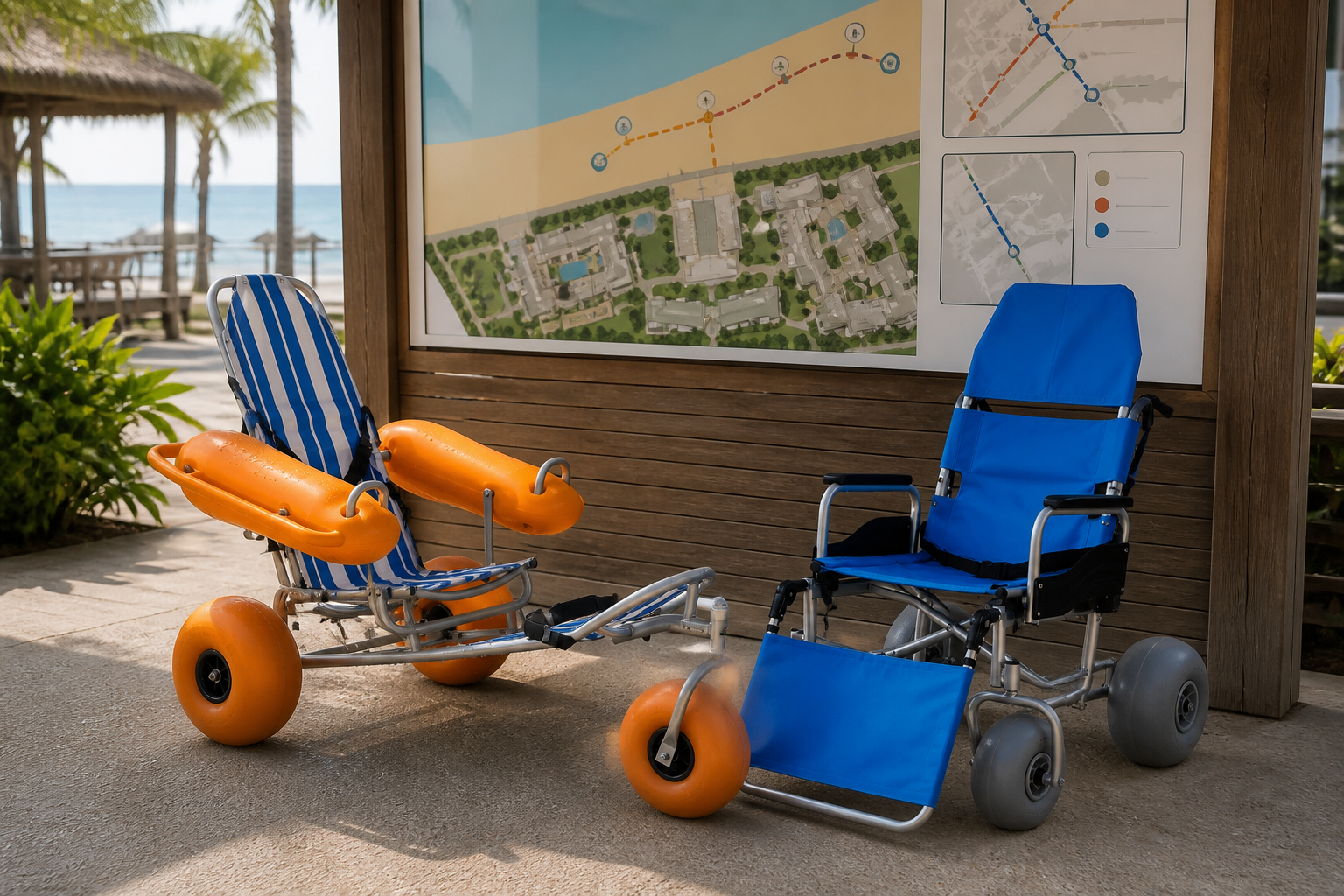
A floating beach wheelchair comparison should define dry-sand travel, shoreline approach, supervised water entry, route limits, operator roles, and care boundaries before product features are ranked. Without that scope, buyers may compare two products that solve different site jobs. A floating-chair resort project can raise useful workflow questions, but it cannot set your operating limits.
Write a service statement for each planned zone and name the evidence source behind it. Include boarding position, route surface, stopping point, supervision, return, and care. Keep personal fit decisions within the site's qualified process rather than turning a product comparison into a medical judgment.
How can buyers set a clear scope?
Use one sentence per service zone:
A concise scope states device, surface, operator, destination, and stop boundary. It also identifies any handoff to another piece of equipment.
- Separate dry-sand and water-entry goals.
- Name operator coverage for each zone.
- Record the boundary where service stops.
Key Takeaway: A defined scope keeps unlike products from being ranked as if they perform the same job.
| Area | Buyer question | Record |
|---|---|---|
| Sand | What route is planned? | Scope |
| Water | What program is planned? | Scope |
| Boundary | Where does each job stop? | Map |
Read the scope aloud with operations staff and remove any phrase that cannot be checked on site.
How do sand and water goals differ?
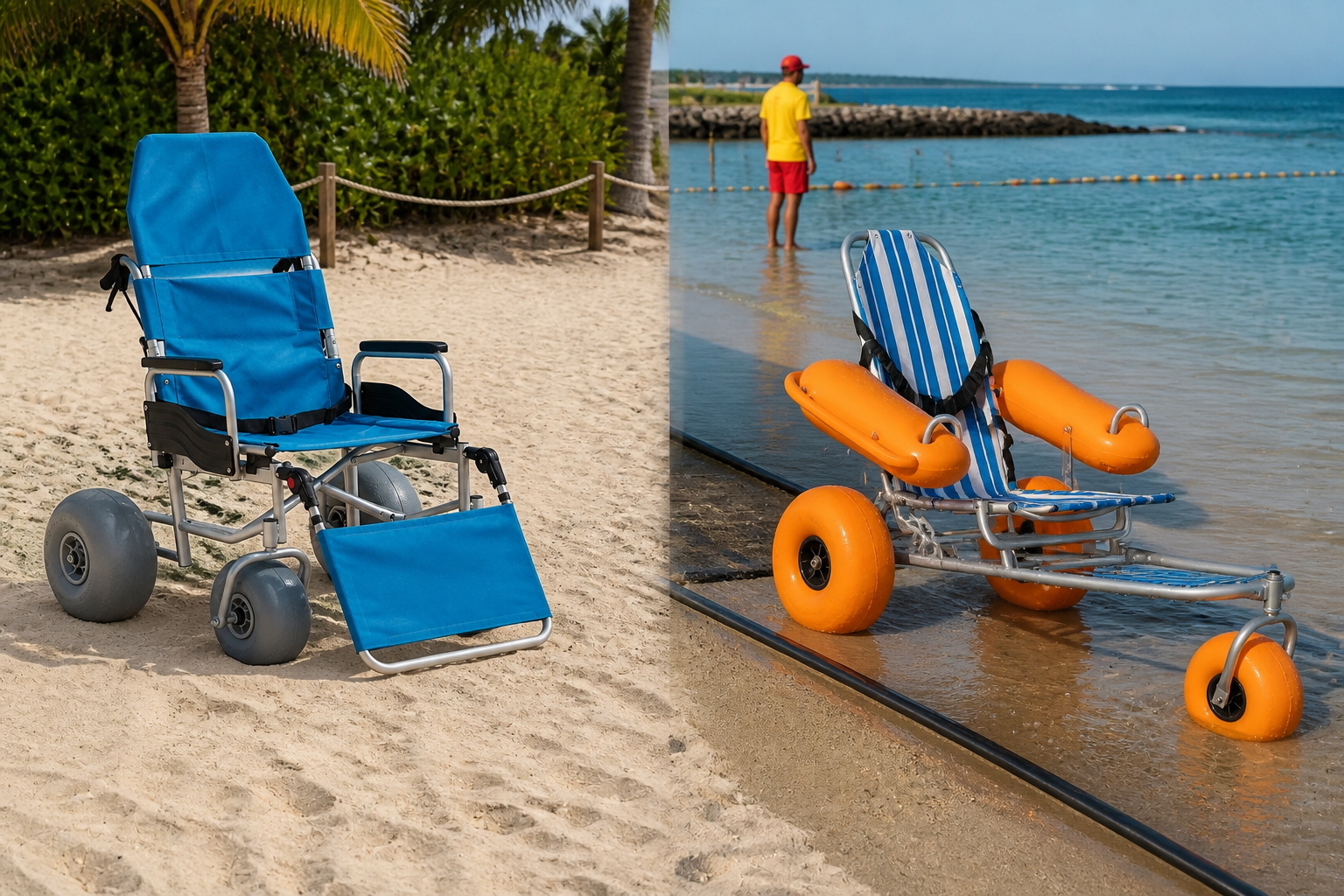
A floating beach wheelchair comparison should treat dry-sand access and water entry as separate operating goals because route surface, buoyancy features, staff coverage, environmental checks, and care steps can change. One beach label cannot replace those details. Compare the wider beach wheelchair range before treating water entry as a standard feature.
Map the dry route with the intended all-terrain beach wheelchair job in mind, then map the water program through its own policy and supplier instructions. A buyer may approve one product, both products, or a narrower service after reviewing the actual site.
What route questions reveal the difference?
The stop point tells a large part of the story:
Ask whether the service ends at a viewing zone, reaches wet sand, or includes an approved water-entry activity. Add operator and care questions for each answer.
- Mark dry sand, wet sand, and water boundaries.
- State which device serves each approved zone.
- Attach the policy and supplier instruction used.
Key Takeaway: Sand and water goals belong in separate rows even when one route connects them.
| Area | Buyer question | Record |
|---|---|---|
| Dry sand | Does service cross loose ground? | Map |
| Shoreline | Where is the stopping zone? | Marker |
| Water | Is a supervised program approved? | Policy |
Use this table during a route walk so the purchase team sees where equipment jobs diverge.
Which flotation details merit evidence?
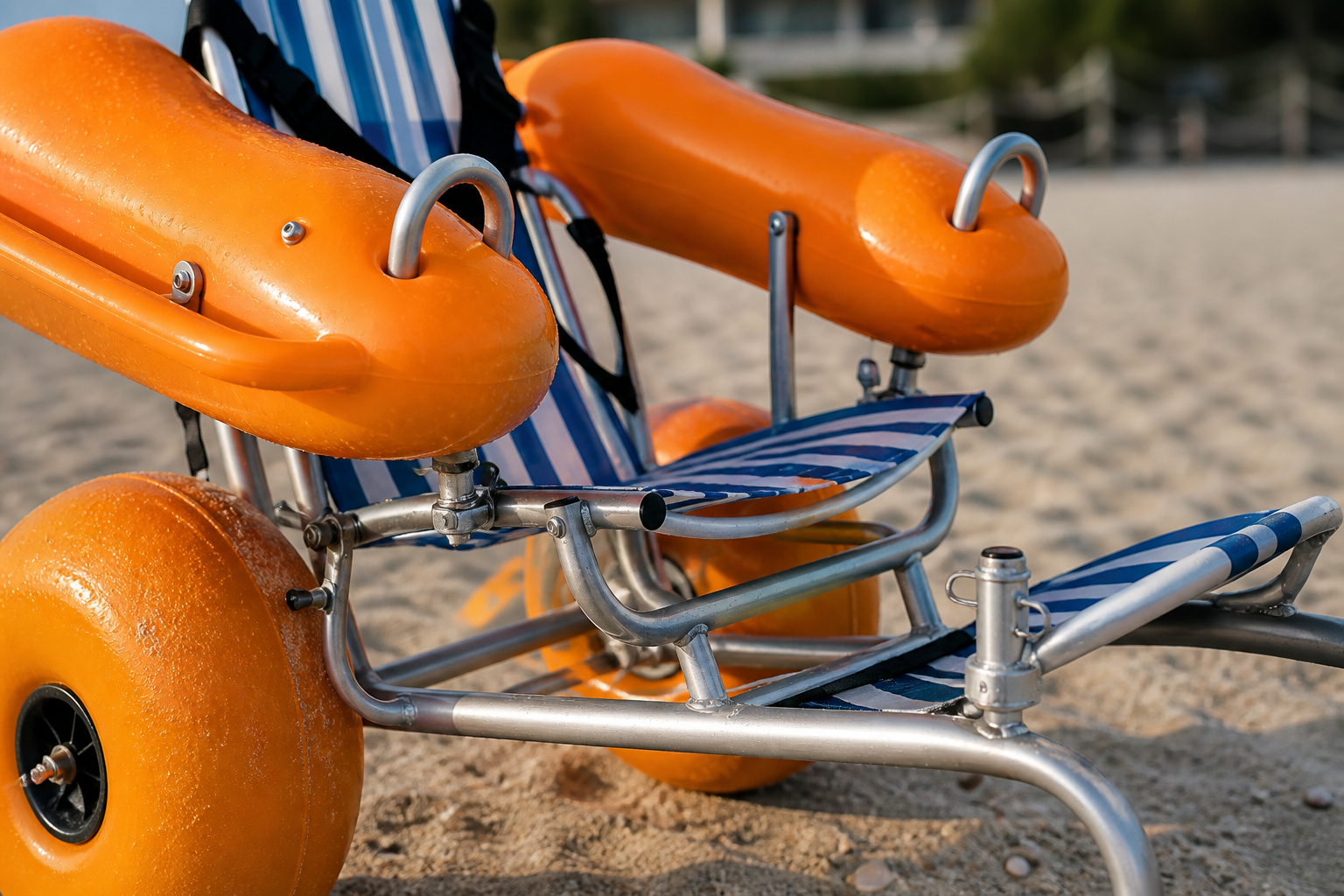
A floating beach wheelchair comparison should ask for written evidence on buoyant components, wheel construction, attachment points, seating materials, restraints, inspection, and use limits. Visual size or bright color does not prove flotation behavior.
Request model drawings, instructions, component descriptions, and any test material the supplier can provide. Confirm that model references match across documents. Keep unsupported water depth, capacity, stability, or wave claims outside the buyer record.
How should buyers review flotation records?
Trace every claim to a source:
Build a short evidence index for each buoyant part and its attachment. Send missing or mixed-model references back for written clarification.
- Match each buoyant component to a drawing.
- Record inspection points and use limits.
- Keep test records linked to the exact model.
Key Takeaway: Flotation review is credible when component, model, instruction, and evidence all match.
| Area | Buyer question | Record |
|---|---|---|
| Arm float | How is it described and checked? | Document |
| Wheel | What role is stated? | Document |
| Attachment | What inspection applies? | Instruction |
Use blank evidence cells as supplier questions rather than filling them with visual guesses.
How should wheel and frame geometry be checked?
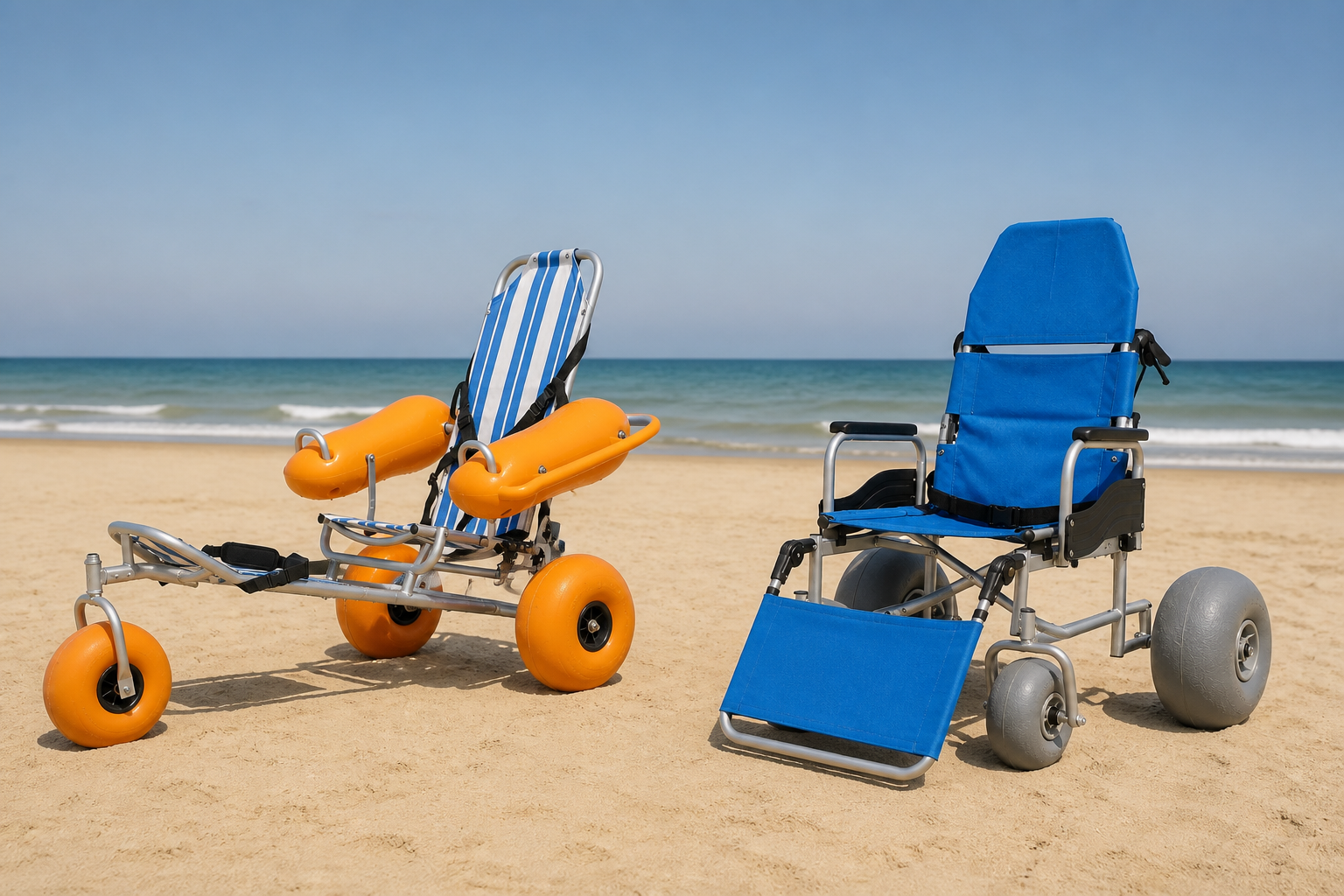
A floating beach wheelchair comparison should check wheel count, wheel position, frame length, turning layout, arm structure, foot support, and attendant contact points against each route. Geometry shapes handling questions but does not create a performance rating by itself.
Use product-faithful photos and drawings to prepare an empty-chair trial. Record approach, straight tracking, turn space, stop position, and storage movement under supplier instructions. Do not alter components during evaluation or infer undocumented limits from appearance.
What belongs in the geometry sheet?
Keep observation separate from judgment:
Describe what is visible, identify the source drawing, then record the matching site check. This gives suppliers a fair way to answer questions.
- Capture front, side, and operator views.
- Match wheel and frame points with drawings.
- Link each geometry note to a route task.
Key Takeaway: Geometry matters when the buyer can connect a visible feature with a documented site need.
| Area | Buyer question | Record |
|---|---|---|
| Wheel layout | What does the drawing show? | View |
| Frame | Which route task is affected? | Check |
| Operator point | Where are hands placed? | Instruction |
Review the sheet before the trial so staff observe the same features in the same order.
What operator coverage does water access need?
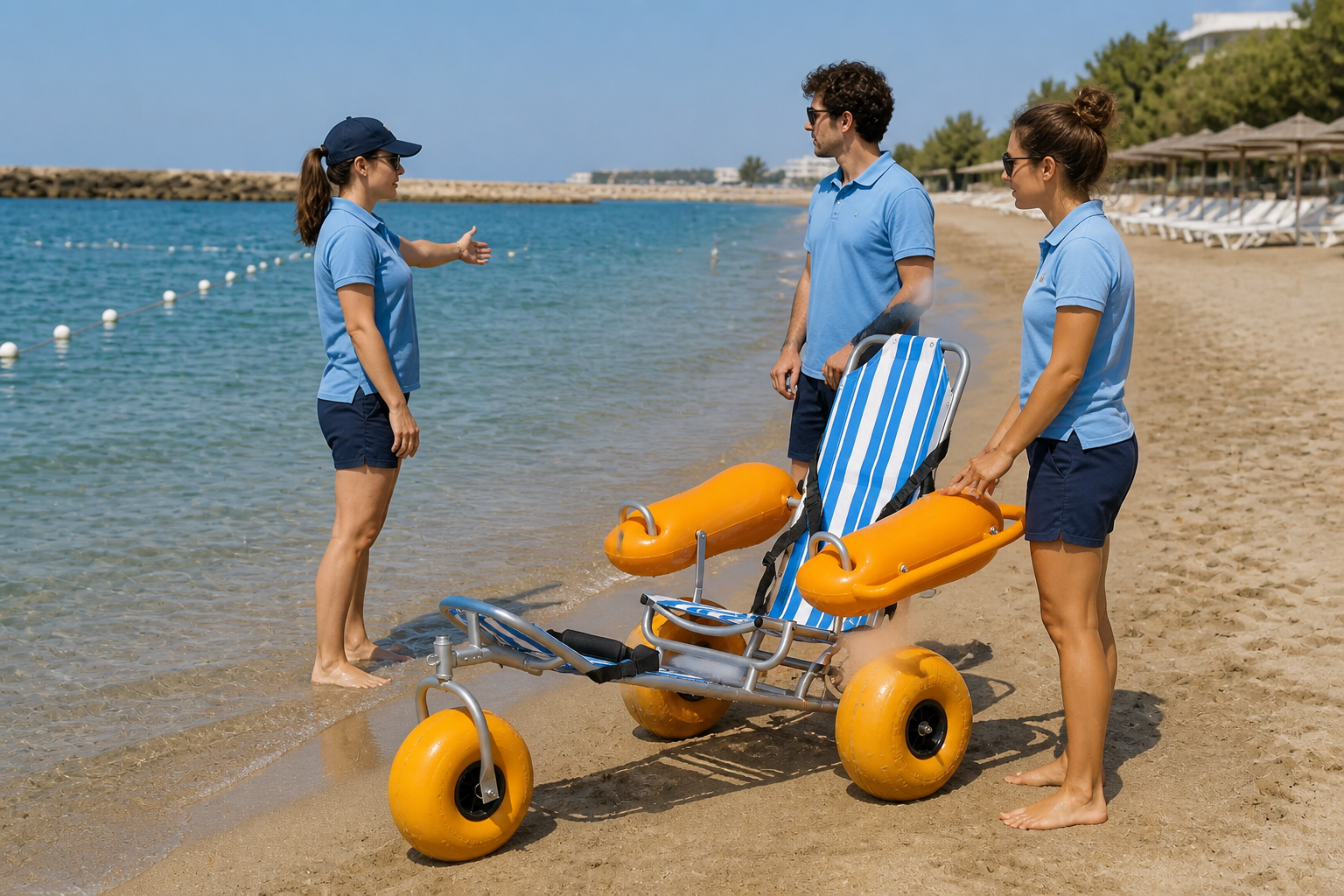
A floating beach wheelchair comparison should include the site's approved operator coverage for shoreline and water activities, since a dry-sand attendant routine may not cover environmental checks, communication, spotter roles, or water-program boundaries.
Build the routine from supplier instructions, local policy, and qualified advice. Practice with an empty chair before any user exercise. The floating wheelchair water-park application can prompt planning questions, but it cannot replace a site-specific operating procedure.
How can teams test staffing realism?
Run the rehearsal with normal shift coverage:
Track who checks conditions, who leads movement, who communicates, who watches the boundary, and who coordinates return and care.
- Assign route lead, spotter, and communication roles.
- Define stop cues and exit cues in writing.
- Record when the activity must be paused.
Key Takeaway: Water access belongs in the offer only when normal staffing can follow the approved routine.
| Area | Buyer question | Record |
|---|---|---|
| Check | Who reviews conditions? | Role |
| Entry | Who leads movement? | Role |
| Exit | Who coordinates return? | Role |
Compare the rehearsal roster with busy-shift staffing before approving the service.
How should boarding points shape the choice?
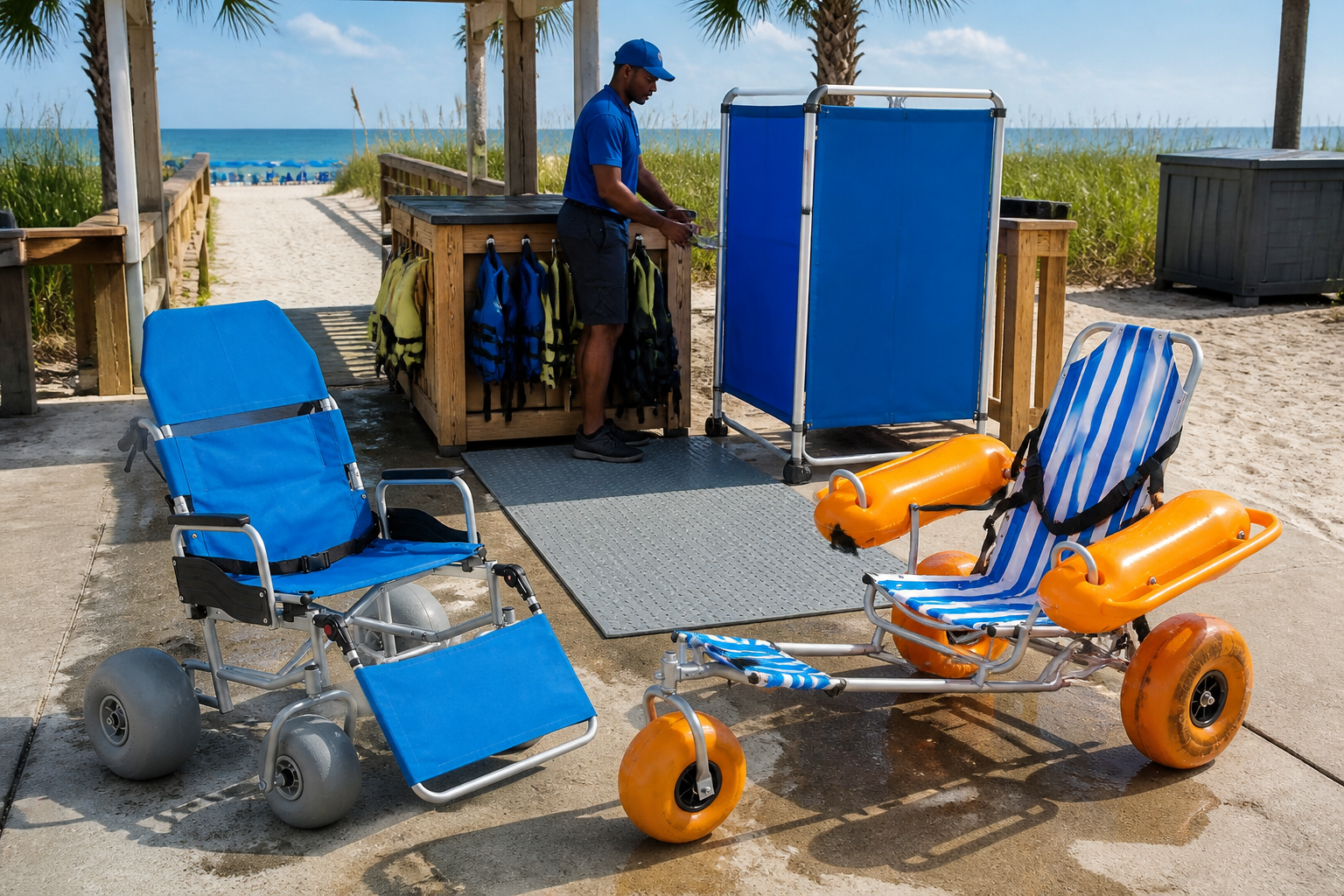
A floating beach wheelchair comparison should treat boarding location, equipment positioning, turning space, privacy, staff access, and route continuation as part of the product choice. A chair that suits the route still needs a workable start point.
Map space for the device, operator, support person, and any approved transfer equipment without blocking the public path. If the route includes a beach access mat, record where it begins, ends, and meets the boarding zone. Refer individual support decisions to qualified professionals.
What makes a boarding zone workable?
Space and process must agree:
Stage empty equipment in the planned positions and walk through approach, communication, setup, departure, and return. Stop if normal staff cannot keep the zone clear.
- Mark device and staff positions on a floor plan.
- Protect privacy without blocking route visibility.
- Record the approved handoff or transfer process.
Key Takeaway: A boarding zone supports service only when layout, staffing, privacy, and policy fit the same plan.
| Area | Buyer question | Record |
|---|---|---|
| Space | Can equipment turn and park? | Layout |
| People | Can roles work without crowding? | Rehearsal |
| Policy | Is the process approved? | Record |
Use the layout during a normal operating period to find conflicts that an empty beach may hide.
Which transport and storage limits matter?
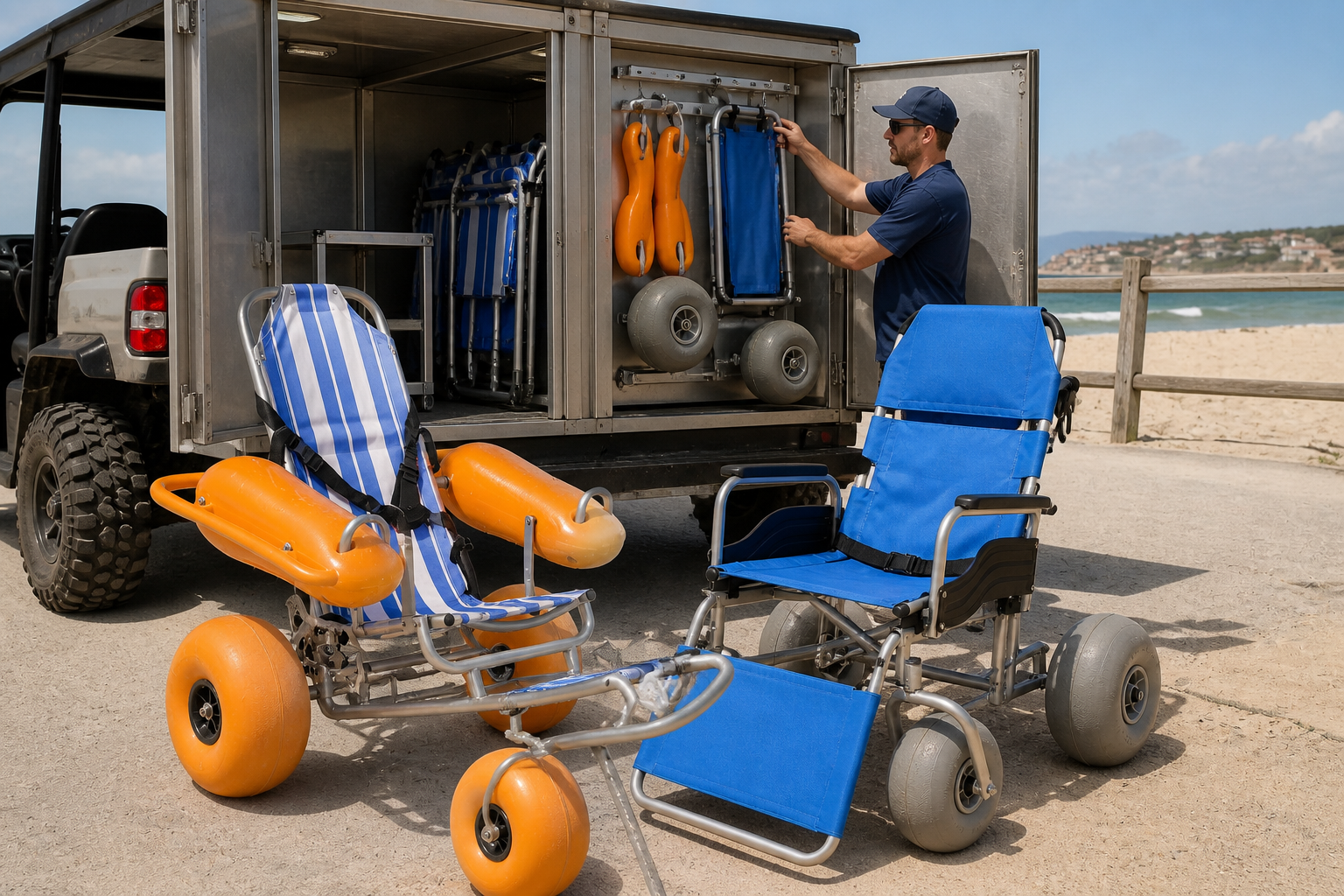
A floating beach wheelchair comparison should verify vehicle openings, lifting method, permitted disassembly, storage footprint, loose-part control, and drying space for each model. Buoyant parts and long frames can change the daily movement plan.
Measure actual doors, corners, racks, and vehicle space. Ask suppliers how components detach, lock, and store, then stage the complete move with trained staff. Include the return path from water care, since wet equipment may need a different bay from a dry-sand chair.
How can a physical trial prevent surprises?
Move every part through the real path:
Use the planned covers, carts, racks, and labels. Keep loose items grouped by model and never use an unapproved lifting point.
- Measure the narrowest opening and turn.
- Test only documented disassembly steps.
- Reserve labeled dry space for each model.
Key Takeaway: Transport approval needs the complete movement and drying routine for the exact model.
| Area | Buyer question | Record |
|---|---|---|
| Vehicle | Does the full load fit? | Trial |
| Parts | Can loose items stay grouped? | Rack |
| Drying | Is clear space available? | Bay |
Ask facilities and operations staff to sign the same trial note before purchase.
What care routine follows saltwater use?
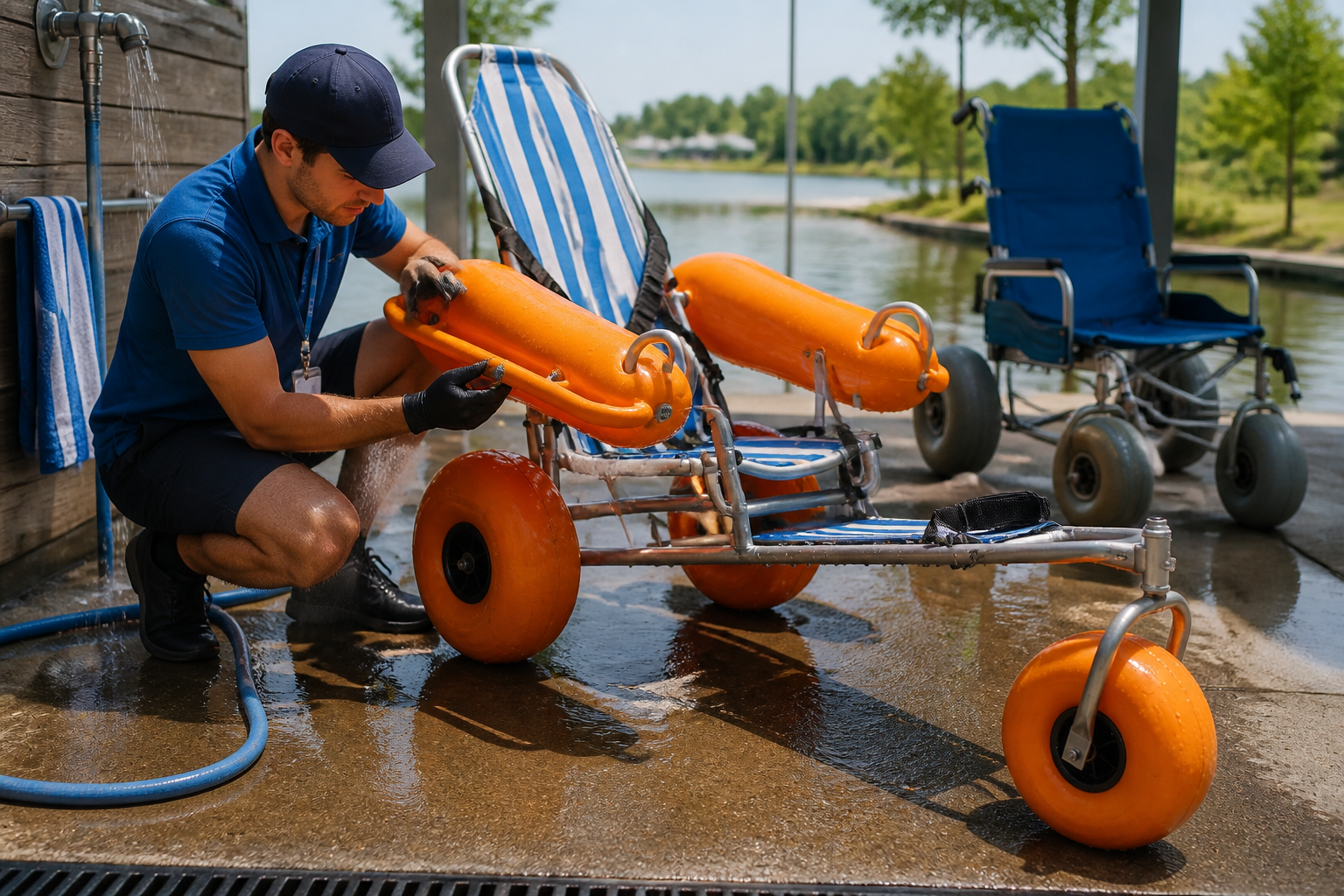
A floating beach wheelchair comparison should include model-specific post-use inspection, fresh-water care, drying, reporting, and storage instructions because saltwater exposure creates a different workflow from dry-sand service. Supplier guidance should control the method. Use the beach wheelchair user manual to prepare questions, then obtain instructions for the exact model.
Set up water, drainage, inspection light, drying space, and a record station before service begins. Do not invent chemical products or intervals. Staff should document damage, unusual movement, fabric wear, or missing hardware and follow the site's hold-and-report process.
How can care become part of procurement?
Price is only one line in the decision:
Record the work area, staff time category, document set, parts route, and storage need without inventing costs. This gives buyers a realistic operating picture.
- Match every care step with a model instruction.
- Assign inspection, rinse, dry, and storage owners.
- Link damage reports with parts identification.
Key Takeaway: A water-capable product needs an approved care workflow ready at delivery.
| Area | Buyer question | Record |
|---|---|---|
| Inspect | What points are documented? | Card |
| Care | What method is stated? | Instruction |
| Store | Where will drying finish? | Bay |
Use a rehearsal to verify that care can finish before the next planned service window.
How can a site trial compare options?
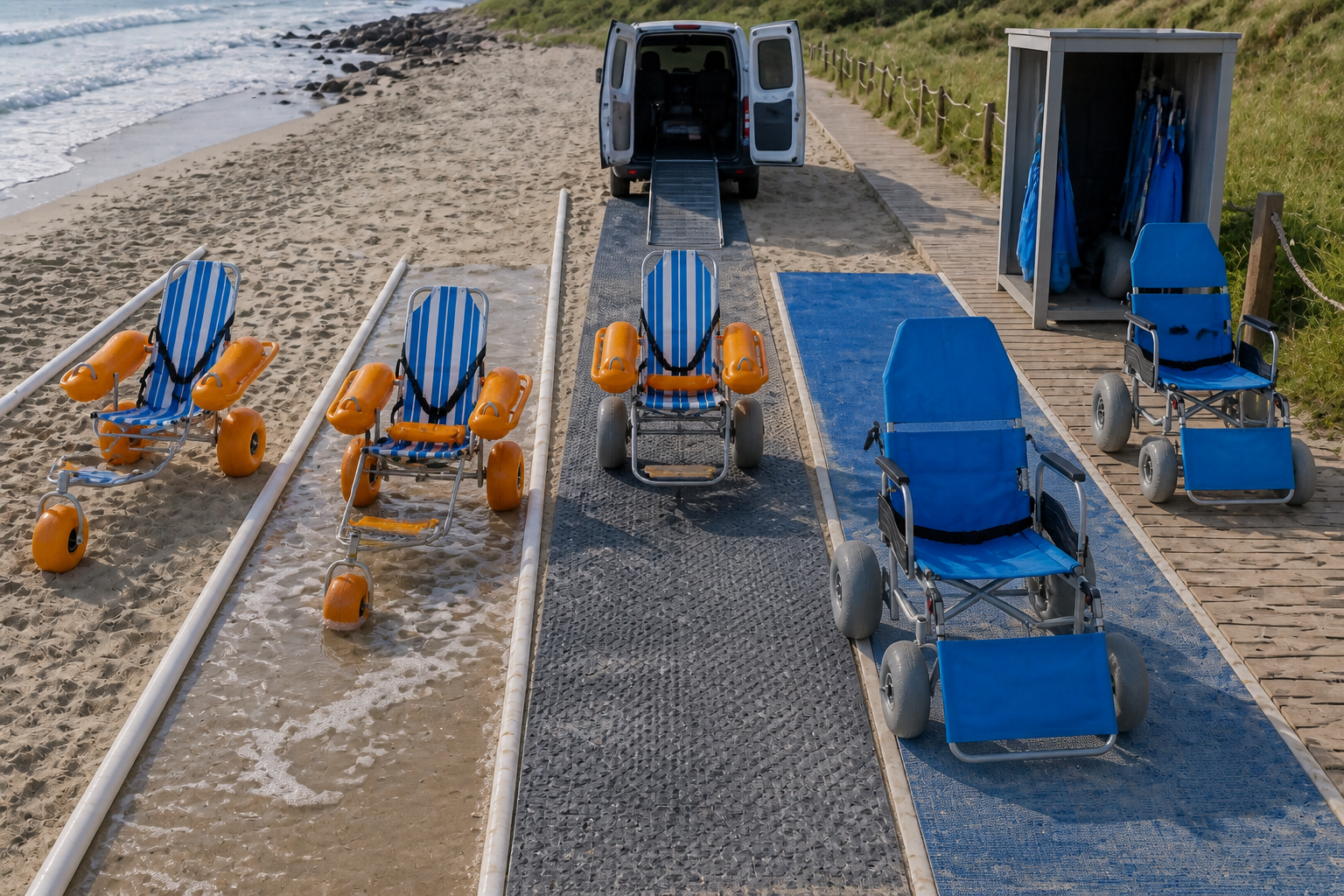
A floating beach wheelchair comparison trial should use separate dry-sand and water-program checks, then compare route fit, staffing, storage, care, and evidence against the written scope. One combined score can hide a service boundary. For U.S. coastal sites, NOAA tide predictions help schedule a shoreline trial. Staff must still assess actual conditions.
Use pass, revise, and stop outcomes for each stage. Start with empty-chair handling and follow site policy for any later user evaluation. Record surface condition, operator role, instruction used, and reason for each outcome. A floating wheelchair resort project may prompt workflow questions without supplying local trial results.
What should the scorecard avoid?
Do not turn observations into invented metrics:
Plain notes, source references, and photos can support a site decision. Avoid universal ratings, unsupported rankings, or numbers created from one session.
- Score each service zone separately.
- Record the condition and instruction behind each result.
- Send open technical questions to suppliers in writing.
Key Takeaway: A site trial compares fit with the planned job; it does not prove broad product performance.
| Area | Buyer question | Record |
|---|---|---|
| Pass | Did the stage meet the written check? | Evidence |
| Revise | Can route or workflow change? | Action |
| Stop | Does the option leave scope? | Decision |
Compare the completed rows with the opening scope and close every mismatch before approval.
What should procurement teams record?
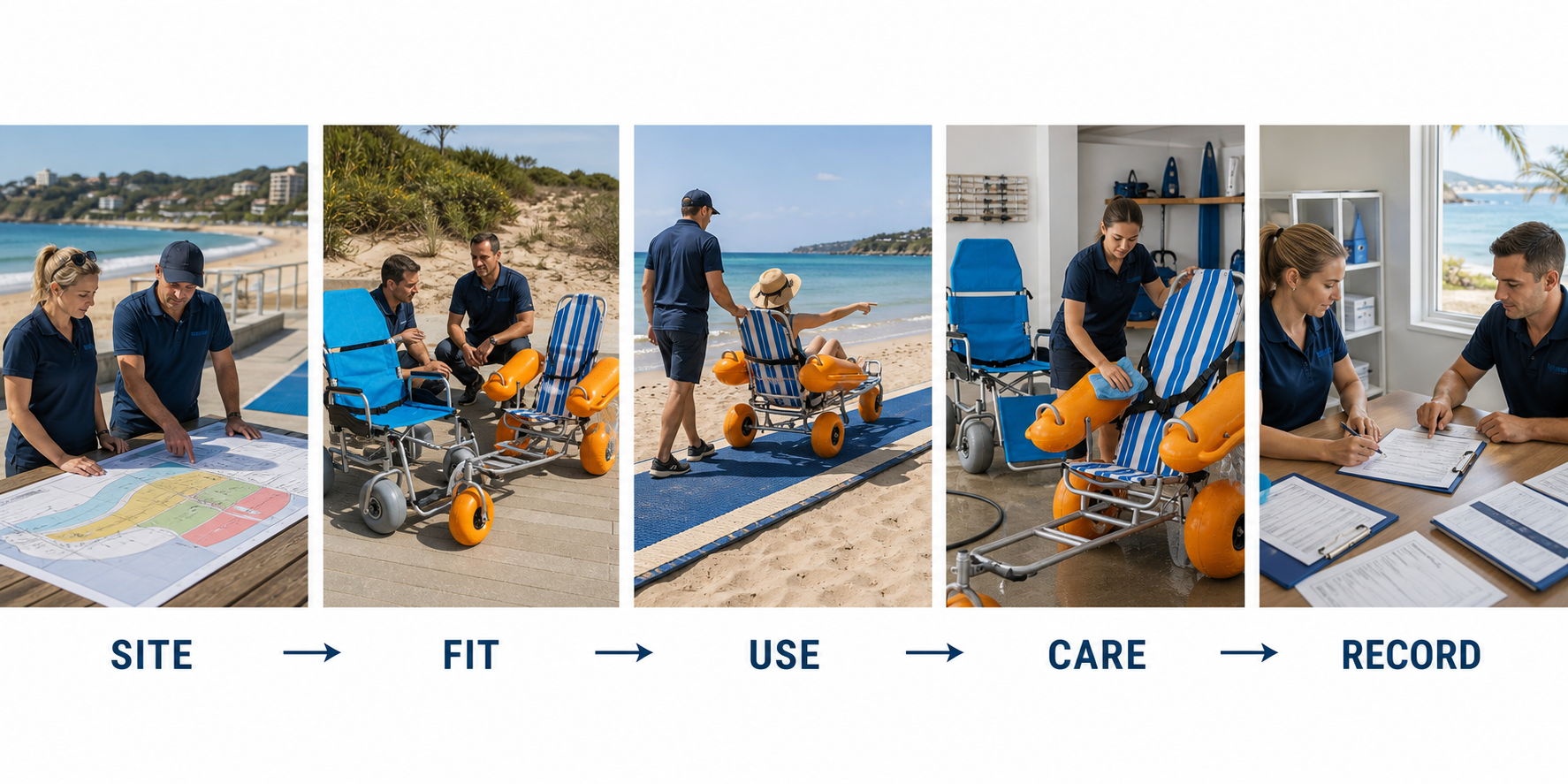
A floating beach wheelchair comparison record should state the approved service zone, route boundary, boarding process, operator coverage, storage plan, care method, supplier evidence, trial result, and open action for each option. This turns a product review into an operating handoff.
Point each acceptance item to a source document or site observation and keep unsupported claims out. If the team needs model drawings, samples, or written answers before signing, contact us today with the sand route, water boundary, staffing, storage, and care questions already organized.
How can teams close the comparison file?
Keep approval short and evidence traceable:
Use one signed decision sheet linked to a document index, route map, role card, trial note, and care plan. Share it before delivery.
- State which service zone each model covers.
- List every boundary and pause condition.
- Assign delivery, setup, and briefing owners.
Key Takeaway: The final record should explain both the chosen model and the service it will not provide.
| Area | Buyer question | Record |
|---|---|---|
| Zone | What service is approved? | Scope |
| Evidence | What supports the choice? | Index |
| Handoff | Who owns delivery setup? | Owner |
Use the signed sheet during delivery inspection and reopen it if routes, policies, or staffing change.
FAQ
Can I use every floating chair on rough surf?
No. Water use must stay within the exact model instructions, site policy, environmental checks, and trained supervision.
What's the best way to compare a floating and sand chair?
The best method separates dry-sand and water goals, then compares routes, operators, storage, care, and evidence for each job.
How do I know if my site can support water access?
A site review helps. Check policy, staffing, boarding space, environmental limits, qualified advice, supplier instructions, and an empty-chair rehearsal.
Can one care plan cover both models?
Only at a high level. Each model still needs its own inspection, care, parts, drying, and storage instructions.
What should I ask a supplier before a sample trial?
Ask for drawings, instructions, model references, component descriptions, parts routes, care guidance, and written answers to site questions.