
The best manual beach wheelchair buying plan compares route conditions, seating fit, attendant work, transport, cleaning, and supplier records before a shared-use order. A resort or public beach may face dry sand, a boardwalk edge, tight storage, several operators, and guests with different support needs during one shift. Picking from a catalog photo alone leaves those operating questions unanswered. A stronger plan starts with a site walk, turns each observation into a checkable requirement, and asks suppliers for evidence that matches real use. Build that record from site observations and supplier documents, not broad product promises.
What jobs should the chair perform?
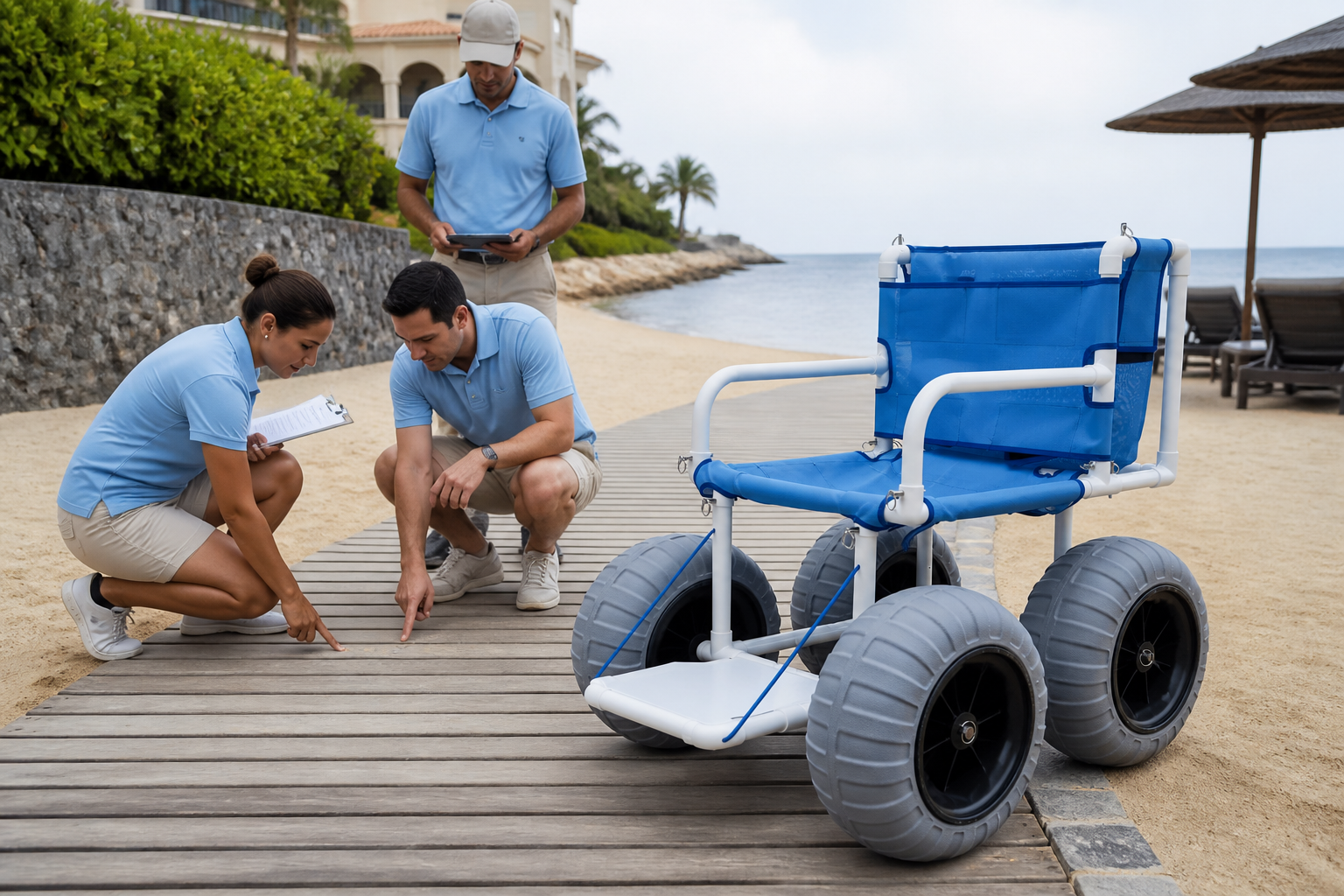
A manual beach wheelchair should perform a defined set of site jobs rather than serve as a vague accessibility purchase. Buyers need to name where it starts, who pushes it, where a guest boards, which surfaces it crosses, and where each trip ends. A floating beach wheelchair needs a separate review if water entry is in scope.
A chair used for short escorted trips from a rental hut faces a different workflow from one moved between event zones. Write down trip frequency, handoff points, cleaning location, and storage return. That list keeps procurement tied to real work while giving operators a clear way to test a sample.
How can teams define the operating brief?
Here is the practical starting point:
Build the brief around observable tasks. Keep medical judgments with qualified professionals and ask the supplier only for product information it can document.
- Map the normal start and end points for each trip.
- Name the attendant role and any handoff between teams.
- Record cleaning, drying, and storage after each shift.
Key Takeaway: A buying brief works when every requirement links to a real site task.
| Area | Buyer question | Record |
|---|---|---|
| Route | Where will trips start and end? | Site map |
| Operator | Who handles each stage? | Role note |
| Reset | Where will care happen? | Work area |
Use this table during a site walk so each answer comes from an observed condition.
Which terrain should buyers map?
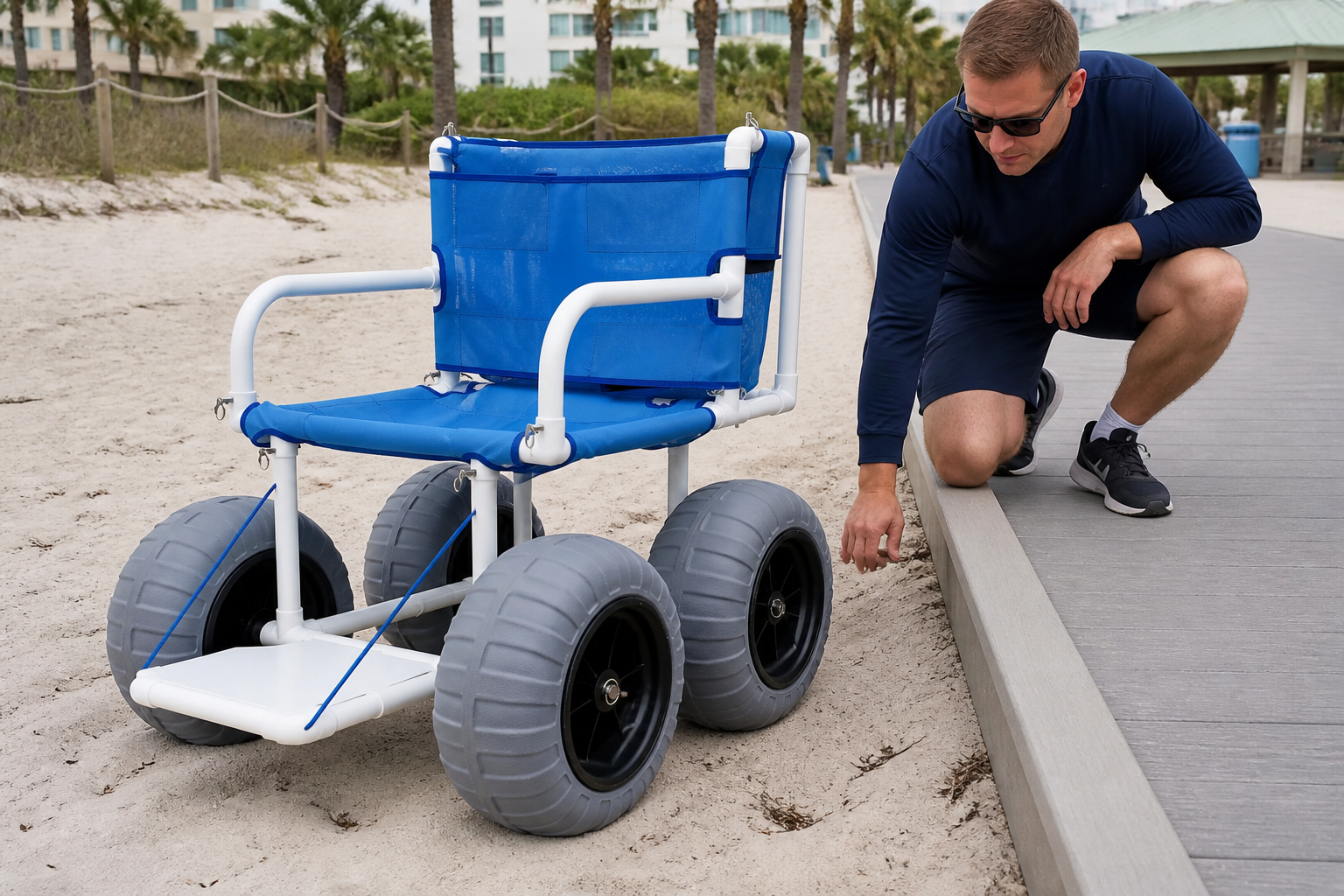
A manual beach wheelchair needs a terrain map that separates firm access surfaces, packed sand, loose sand, slopes, and the planned stopping zone. Each surface changes turning space and attendant effort, so a single label such as beach use does not describe the route well enough. At some beaches, Cape Cod National Seashore uses approach mats alongside beach wheelchairs.
Walk the path at the same operating hours the team expects to serve guests. Note bottlenecks, drainage channels, soft patches, and places where staff can pause without blocking traffic. If a route includes rough ground beyond sand, compare the observation with the intended use of an all-terrain beach wheelchair before approving a model.
How should route findings become purchase checks?
The decision hinge is simple:
Convert each terrain change into a sample test. Ask operators to approach, turn, stop, and return while the chair remains empty during early handling checks.
- Mark surface changes and narrow turning areas.
- Note slopes, cross-fall, and loose sand pockets.
- Set a clear route boundary for normal service.
Key Takeaway: A terrain map gives a supplier and buyer the same operating picture.
| Area | Buyer question | Record |
|---|---|---|
| Firm path | Can the chair track cleanly? | Handling note |
| Loose sand | Can staff keep a steady line? | Trial note |
| Turning zone | Is there clear space? | Site photo |
Read the rows from top to bottom during a sample trial and flag any route that needs another device.
How should seating fit be reviewed?
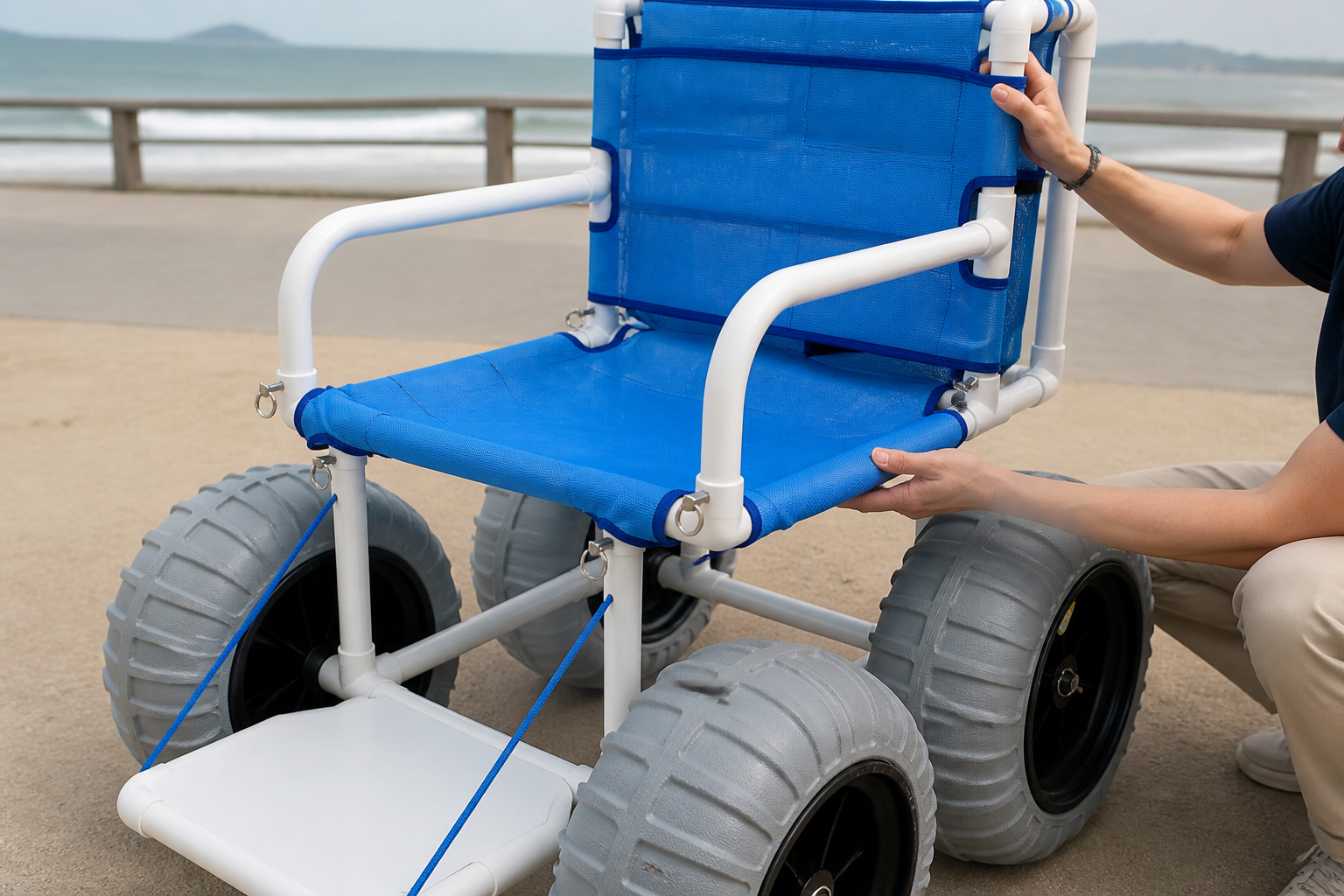
A manual beach wheelchair fit review should compare the supplier's documented seat, back, arm, foot, and restraint details with the buyer's approved user-support process. Product fit cannot be inferred from wheel size or a wide product photo.
Ask for drawings and adjustment instructions, then route personal fit questions through a qualified assessor when a guest needs individualized support. Shared-use programs also need a refusal and referral process for cases outside their approved range. Keep that process respectful, private, and easy for frontline staff to follow.
What belongs on a shared-use fit sheet?
A useful distinction helps here:
Separate product dimensions from a person's support needs. Procurement can verify documented features while trained staff handle individual fit decisions under the site's policy.
- List seat, back, arm, and foot support documents.
- Record which adjustments staff may make.
- Define when staff must pause and refer a request.
Key Takeaway: Fit review needs product evidence plus a clear boundary for personal support decisions.
| Area | Buyer question | Record |
|---|---|---|
| Seat system | What does the drawing show? | Drawing |
| Adjustment | What may staff change? | Instruction |
| Referral | When must service pause? | Policy |
Use the table as a handoff between purchasing, operations, and the site's qualified adviser.
What operator workflow needs testing?
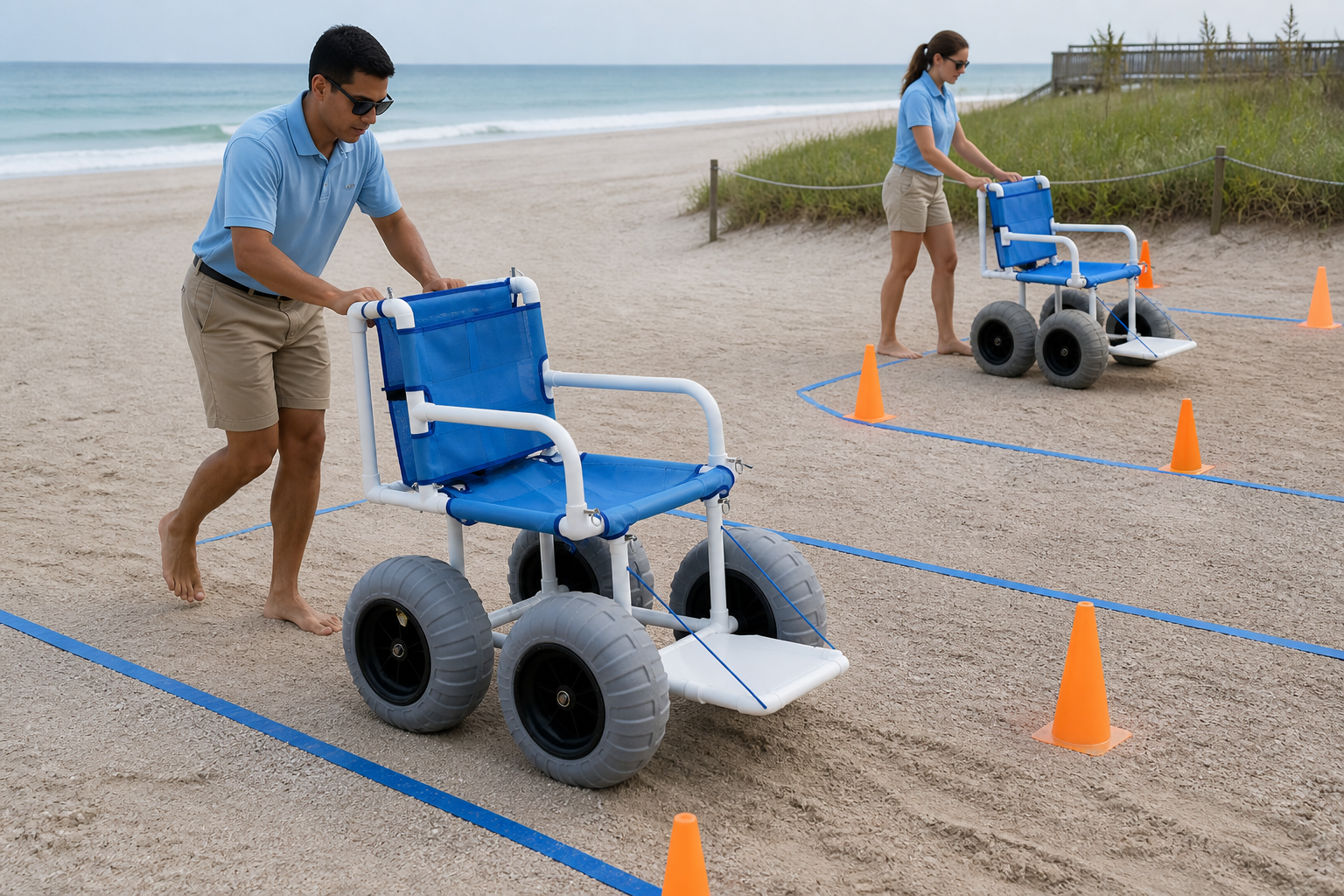
A manual beach wheelchair operator workflow needs an empty-chair handling trial that covers pickup, inspection, approach, boarding position, travel, pause points, return, and care. The trial should reflect normal staffing rather than a special demonstration crew.
Invite staff from more than one shift and observe where instructions feel unclear. Record hand placement, communication cues, turning method, and parking position using supplier instructions and site policy. The goal is a repeatable routine, not a claim that every route or guest can be served in the same way.
How can a trial reveal hidden work?
Watch what happens between the obvious steps:
Small handoffs often create delay or confusion. Track who brings the chair, who checks it, who speaks with the guest, and who returns it to care.
- Run the full trip with an empty chair before guest use.
- Use agreed communication cues at stops and turns.
- Record any step that needs two trained staff members.
Key Takeaway: A trial is valuable when it exposes workload and handoff gaps before an order.
| Area | Buyer question | Record |
|---|---|---|
| Pickup | Who releases the chair? | Owner |
| Route | Which cues guide movement? | Script |
| Return | Who completes care? | Sign-off |
Compare trial notes across shifts and keep the more demanding normal case in the buying record.
Which frame and wheel details merit review?
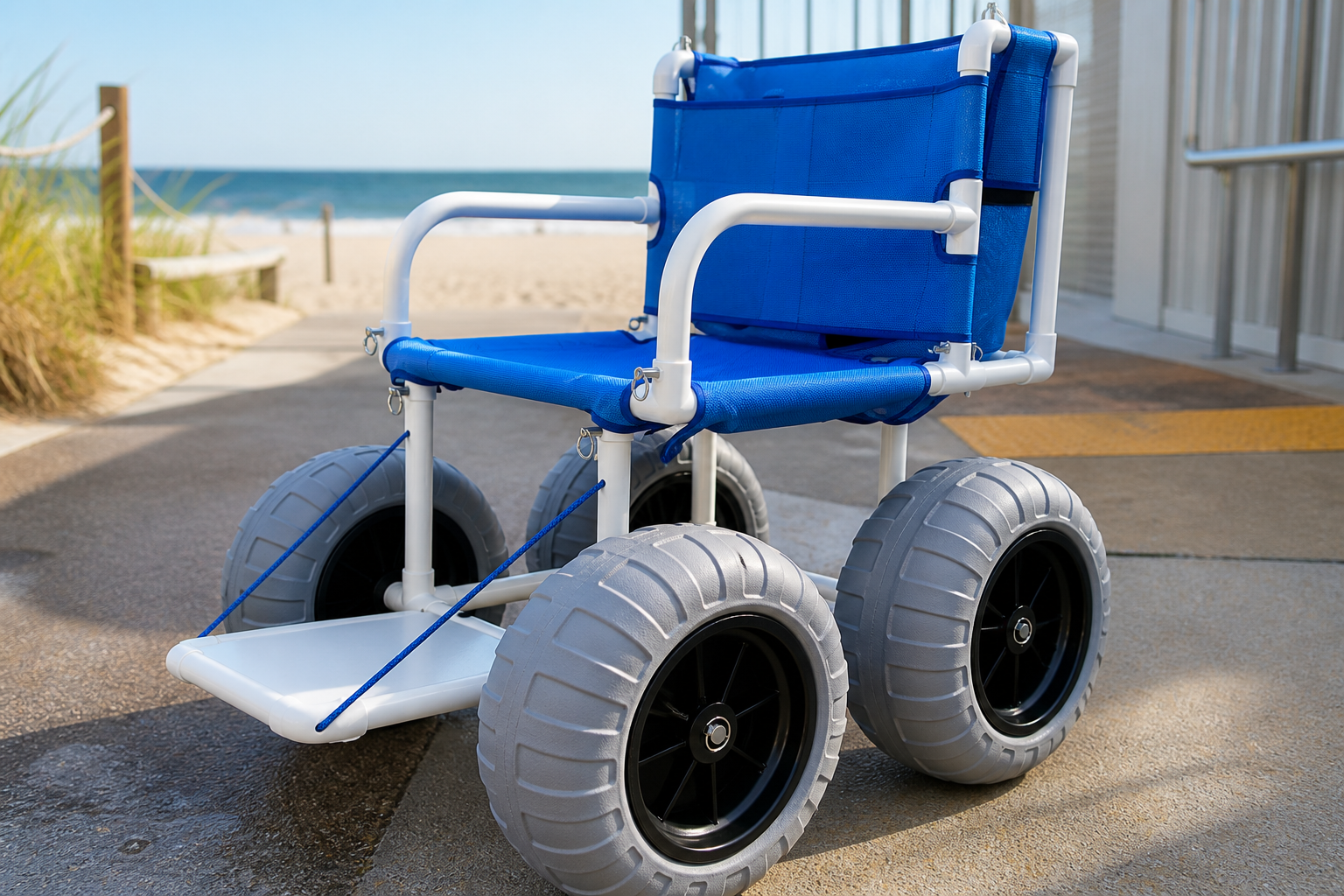
A manual beach wheelchair frame and wheel review should focus on documented materials, joint layout, tire construction, axle access, fabric attachment, and replaceable wear parts. Buyers should avoid assigning durability ratings that a supplier has not supported.
Compare close photos, drawings, parts lists, and care instructions against the local salt, sand, storage, and transport routine. Look for access to cleaning points and ask how worn items are identified. The visible design can guide questions, but a photo alone cannot prove service life or a performance limit.
What evidence should support a component choice?
This is where evidence earns its place:
Request material names, part references, care steps, and replacement routes in writing. Keep marketing language outside the acceptance sheet unless a test report backs it.
- Match each component to a supplier document.
- Ask how wear appears during routine inspection.
- Confirm how replacement parts are identified and ordered.
Key Takeaway: Component review should end with traceable records, not visual guesses.
| Area | Buyer question | Record |
|---|---|---|
| Frame | What material is documented? | Data sheet |
| Wheel | How is care described? | Care note |
| Wear part | How is it ordered? | Parts list |
Use missing records as follow-up questions rather than filling gaps with assumptions.
How should transport and storage be planned?
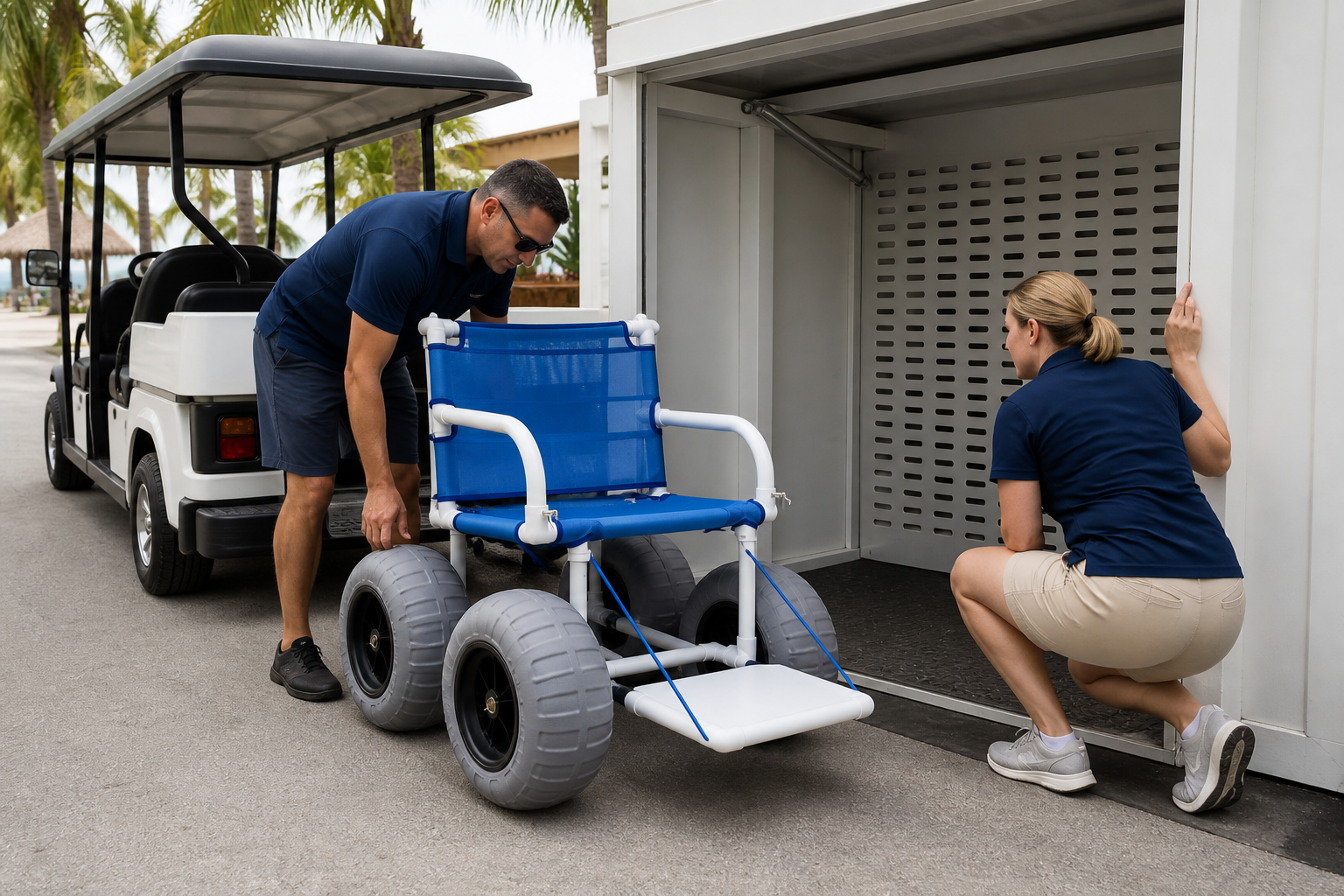
A manual beach wheelchair transport plan should verify the buyer's actual vehicle, lift path, doorway, storage bay, and assembly routine before purchase. A chair can fit a route yet create daily trouble if it cannot move through the service area. If a beach access mat forms part of the service, record where its route begins and ends.
Measure clear openings and usable storage space with the exact accessories planned for service. Ask the supplier which parts detach, how they lock, and what lifting method its instructions permit. If compact movement drives the purchase, compare the route with a lightweight beach wheelchair rather than assuming one frame style suits every facility.
What should a physical fit check include?
A tape measure is only part of the answer:
Stage the complete move from storage shelf to vehicle and back. Include doors, ramps, corners, protective covers, and the space needed for drying.
- Measure the narrowest doorway and vehicle opening.
- Test permitted disassembly with trained staff.
- Reserve dry space for the chair and loose parts.
Key Takeaway: Transport approval needs a full movement trial, not a single folded dimension.
| Area | Buyer question | Record |
|---|---|---|
| Door | What is the clear opening? | Measurement |
| Vehicle | How is the chair secured? | Procedure |
| Storage | Can parts dry and stay grouped? | Layout |
Walk through the table with facilities staff before the purchase team signs its fit check.
What care routine fits coastal use?
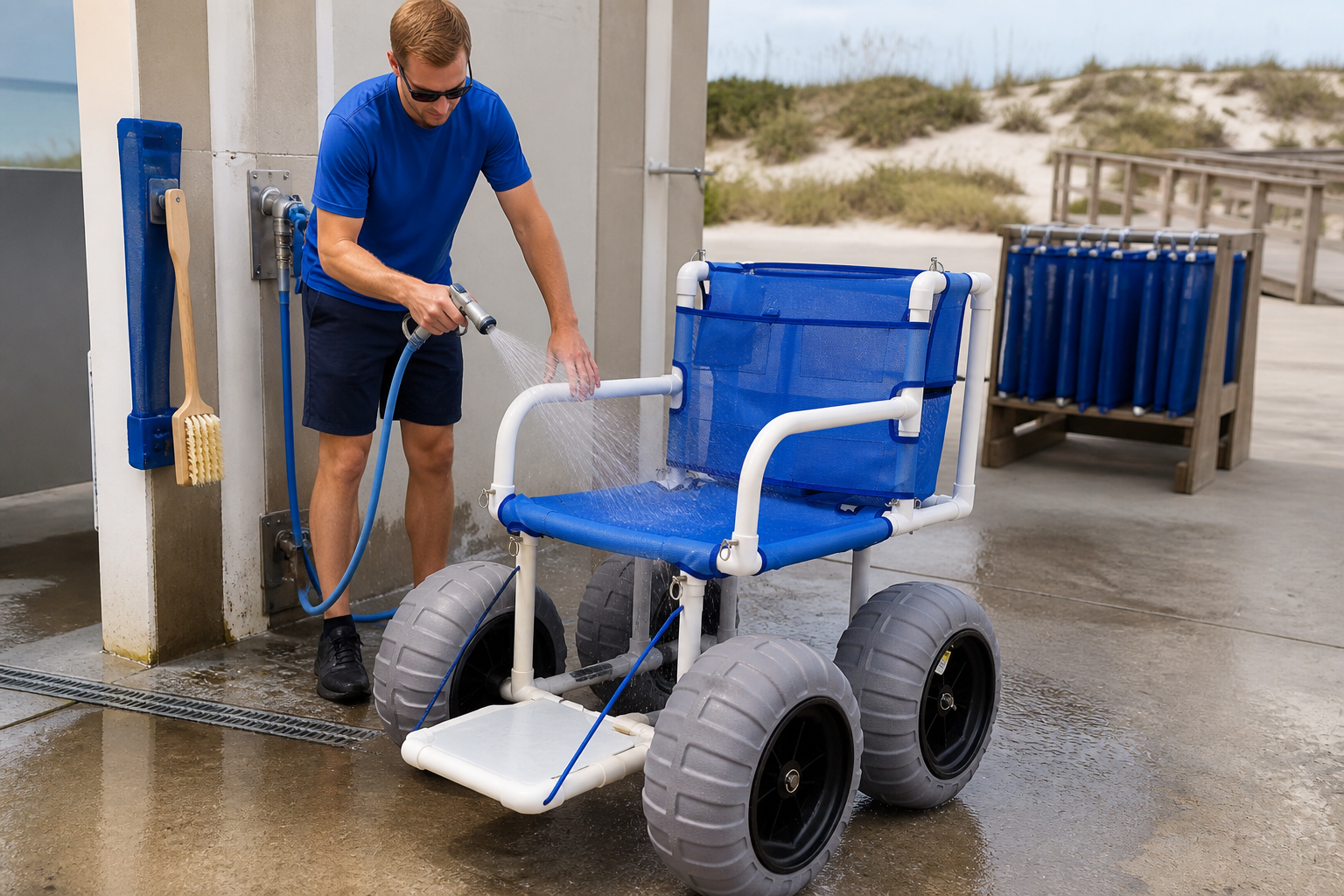
A manual beach wheelchair care routine should follow supplier instructions while assigning clear owners for inspection, rinsing, drying, and storage after coastal use. A generic note to clean after use leaves too much room for missed steps.
Set up the care area before delivery and verify water access, drainage, drying space, and a place for inspection records. Staff should never invent chemical choices or service intervals. Request written guidance, keep it near the work area, and log any damage or unusual movement for review before the chair returns to service.
How can teams make care repeatable?
The routine needs visible ownership:
Give each stage an owner, a trigger, and a simple record. Train staff to pause use when the supplier's inspection criteria are not met.
- Place supplier care instructions at the work station.
- Assign inspection, rinse, dry, and storage ownership.
- Create a clear hold-and-report path for damage.
Key Takeaway: Coastal care works when the work area, owner, and record are ready before service begins.
| Area | Buyer question | Record |
|---|---|---|
| Inspect | What condition triggers a hold? | Check sheet |
| Rinse | Who completes the step? | Owner |
| Dry | Where does the chair remain? | Bay |
Use a short shift audit to find missed handoffs without adding unsupported care rules.
Which supplier documents should buyers request?

A manual beach wheelchair supplier file should contain product drawings, use instructions, care guidance, parts identification, packing details, and written responses to site-specific questions. Buyers need documents that remain available after the sales call ends.
Ask for revision dates and match model references across the file. A user manual can help frame the request; the site's beach wheelchair user manual page also shows the kind of operating information a buyer may want to discuss. Do not treat a web page as a substitute for the documents tied to the ordered model.
How should the document set be checked?
Consistency matters more than volume:
Cross-check model names, part references, images, and care language. Send mismatches back for written clarification before approval.
- Record document title, date, and model reference.
- Match parts language across drawings and lists.
- Keep written answers beside the final purchase record.
Key Takeaway: A smaller consistent document set beats a large folder with mixed model references.
| Area | Buyer question | Record |
|---|---|---|
| Drawing | Does the model match? | Revision |
| Instructions | Are use and care covered? | File |
| Parts | Can each item be identified? | Reference |
Have operations staff read the same file so document gaps appear before delivery.
How can a pilot trial reduce purchase risk?
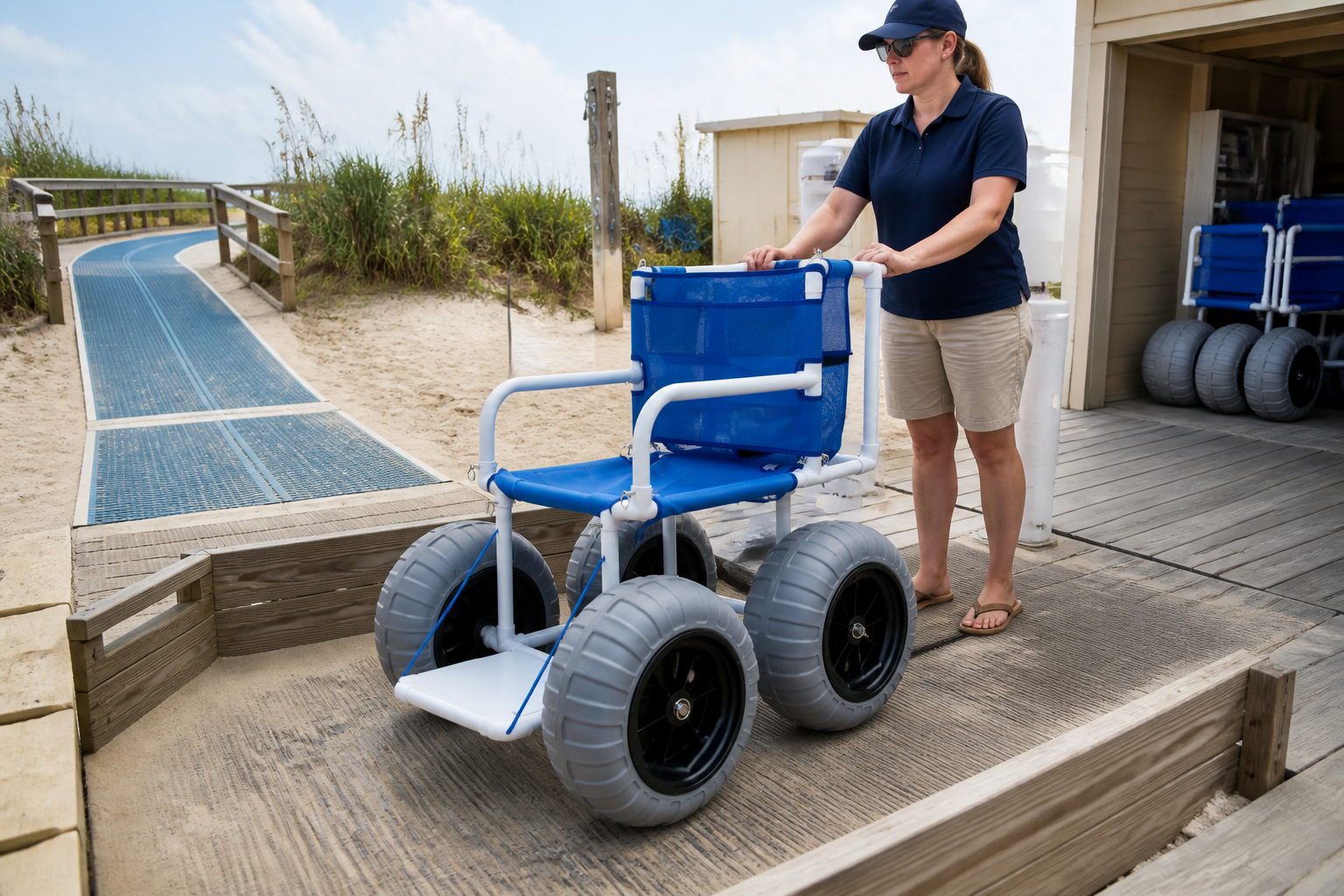
A manual beach wheelchair pilot trial can reduce purchase risk by testing the buyer's route, staff workflow, storage, and care process before a larger order. The trial should use agreed observations instead of informal impressions. The all-terrain rental project can prompt handoff questions, but local trial notes must drive approval.
Set pass, revise, and stop outcomes for each stage. Keep the chair empty during early route and handling tests, then follow the site's approved process for any later user evaluation. Record weather, surface condition, staff role, and supplier instruction used, since those details explain why results may differ between sessions.
What should the pilot scorecard capture?
Keep the scorecard plain and checkable:
Use short observation fields and attach photos only when they help explain a site condition. Do not turn one trial into a universal performance claim.
- Test route, handling, care, and storage as one workflow.
- Record site conditions and the instruction used.
- Route unresolved results back to the supplier in writing.
Key Takeaway: A pilot supports a site decision; it does not create a broad product rating.
| Area | Buyer question | Record |
|---|---|---|
| Pass | Did the stage meet the written check? | Evidence |
| Revise | Can the workflow change? | Action |
| Stop | Does the model need review? | Owner |
Compare the scorecard with the buying brief and close every open item before scaling the order.
What should the final buying decision record?
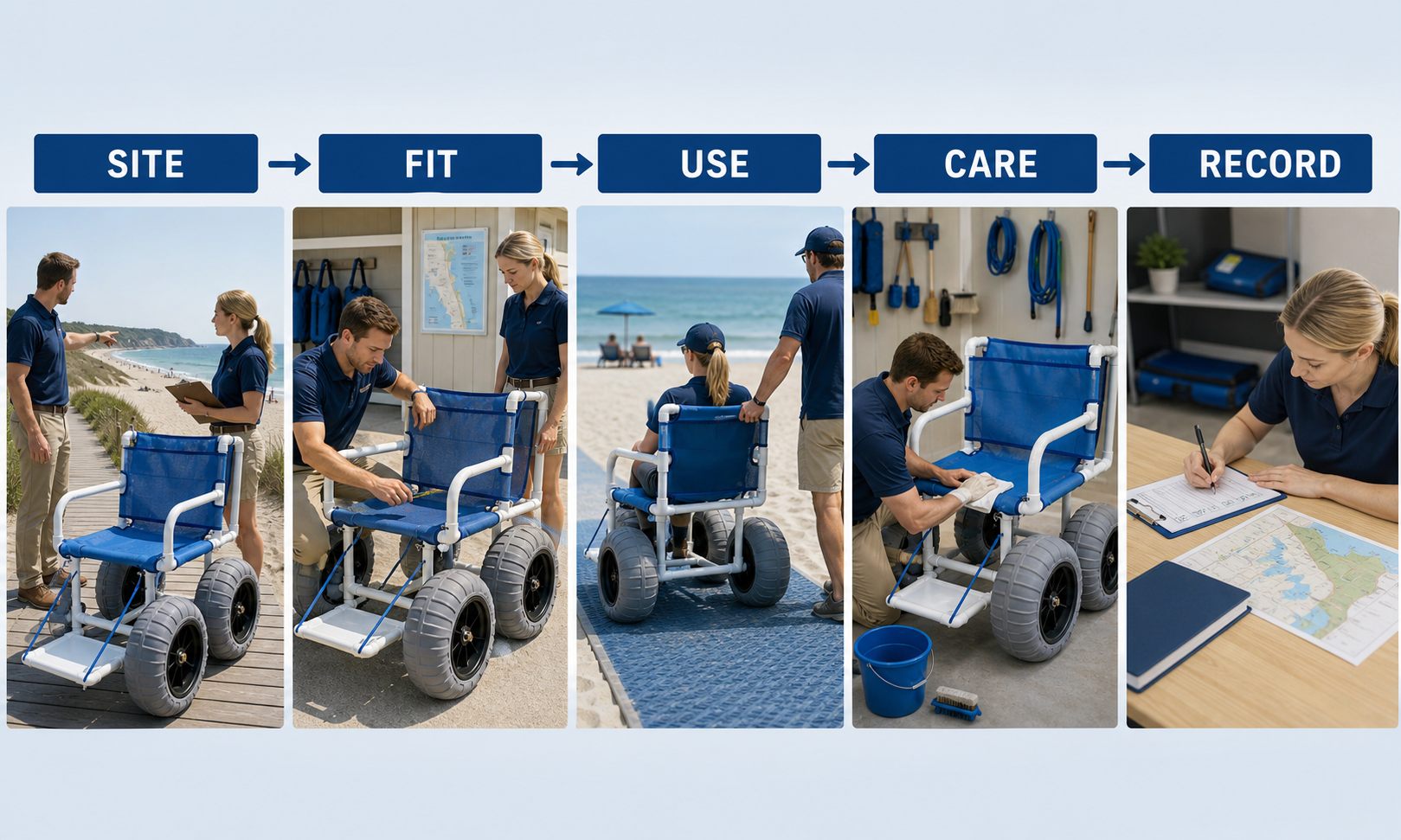
A manual beach wheelchair final decision should record the approved site job, route, fit process, operator workflow, transport method, care plan, supplier evidence, pilot result, and any service boundary. That record gives delivery inspection and staff setup a stable reference.
Name the owner for each open action and state which evidence supports approval. Keep unsupported claims out of the decision. If the buying team needs drawings, samples, or a model-specific discussion before signing, contact us today with the route and operating questions already organized.
How can teams close the purchase file?
The closeout should be easy to audit:
Use one approval sheet that points to source documents rather than copying claims into several files. Give operations and service teams access before delivery.
- List the approved use case and service boundary.
- Link every acceptance check to its source record.
- Assign delivery, setup, and staff briefing owners.
Key Takeaway: A complete decision record turns procurement work into a usable operating handoff.
| Area | Buyer question | Record |
|---|---|---|
| Scope | What use is approved? | Brief |
| Evidence | Which records support approval? | Index |
| Handoff | Who owns delivery setup? | Owner |
Use the approved sheet during delivery inspection and reopen it when the site changes.
FAQ
Can I buy one manual chair for every beach route?
No. Route surfaces, slopes, turning space, staffing, storage, and supplier instructions can point to different equipment or service boundaries.
What's the best way to compare samples?
The best method uses the same written route, empty-chair handling tasks, care steps, and evidence fields for each sample.
How do I know if shared seating fit is suitable?
A documented fit process helps. Compare product drawings with site policy and refer personal support questions to a qualified professional.
Can I rely on a product photo for frame review?
No. Photos can shape questions, yet materials, limits, care, and parts need written supplier records.
What should happen after approval?
Delivery inspection comes next. Match the received chair, documents, parts, and setup against the signed buying record before service.