
Before ordering a rack for collapsible beach carts, put one of the site’s own carts into its approved empty storage position. Include the wheels, fixed handle, bag or rack if they stay fitted. Measure the widest, tallest and longest points and trace the turn from the storeroom door to the bay. A folded frame that fits on a shelf may still be impossible to bring down with another cart parked in front.
Measure the folded unit, including its projections
The Ary Beach range includes a four-wheel deck model, the quick-fold 30021-SIS and a two-wheel mesh-sling design. The manufacturer describes a flat fold on the sling model. It lists 32 × 29 × 44 inches for the quick-fold model as its product size. The range table does not give that number as its folded storage envelope. Obtain the folded dimensions for the supplied configuration or measure a sample with the items that will remain attached. Folding cart model specifications
For illustration, suppose a rack has 150 cm of usable length and a particular folded cart measures 32 cm thick when parked as its supplier allows. Four such units would occupy 128 cm before any dividers or handling space. The remaining 22 cm needs to accommodate the actual dividers, wheel projections missed in the first measurement and the space to retrieve a unit. Try removing the middle cart without moving an entire row. If the arrangement requires lifting or stacking, verify the rack capacity, permitted storage orientation and handling arrangements before adopting it.
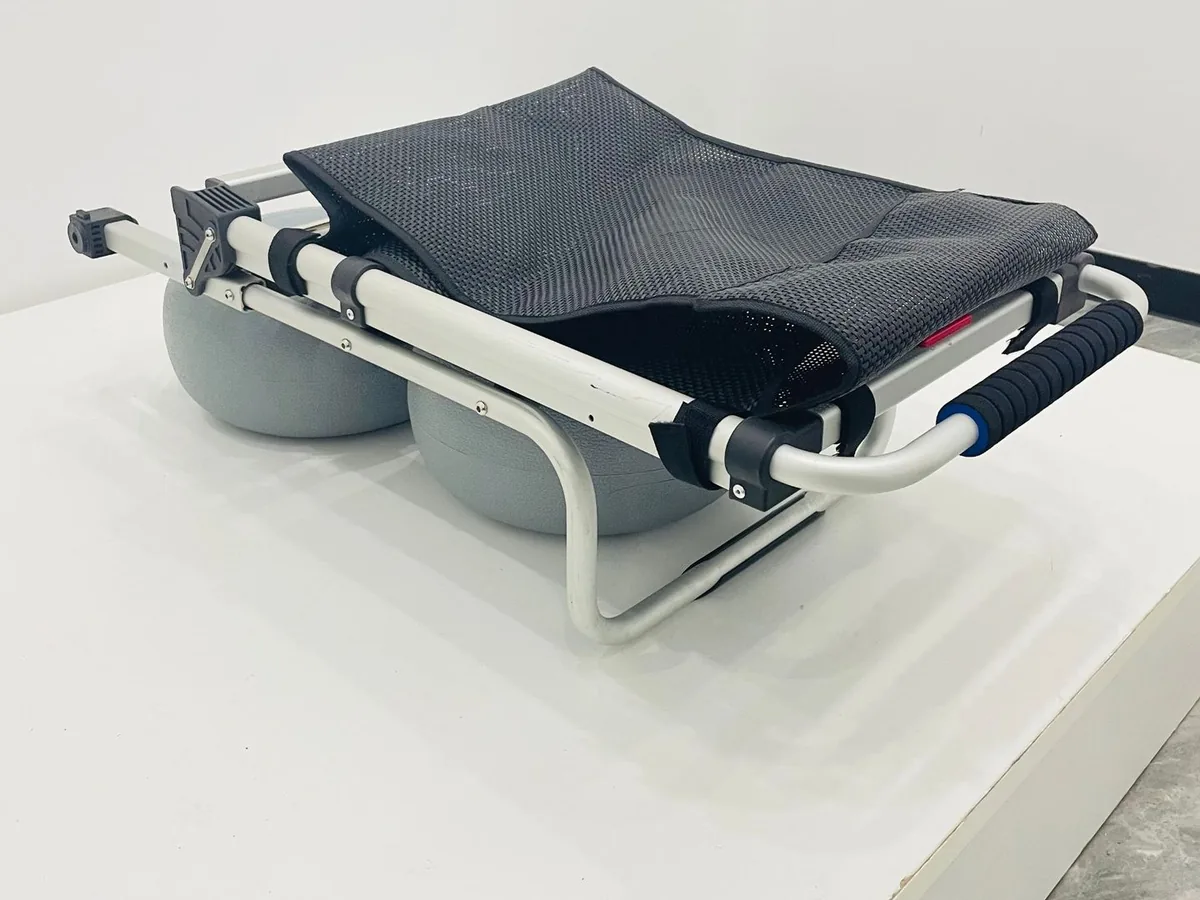
Decide when a returned cart can be folded away
Empty pockets and baskets and account for loose straps, pump or other supplied items. Use the specified cleaning method and let the deck and fabric dry before closing damp layers together. Keep a drying space close to the return area. Otherwise the dampest cart tends to get pushed behind the others just when the store is being locked.
A strap tail trapped near a hinge can stop a frame from reaching its normal stored position. If the empty cart stops early, inspect for a visible obstruction within the supplier’s instructions and keep hands clear of the mechanism. Never use another cart or the rack as a press. Set aside a unit that still binds, moves unevenly or has damaged hardware, and attach its own asset number to the report. The folding lock and hinge inspection gives the next checker the context.
Store the equipment for the next opening shift
Use shelf or bay labels that distinguish stored, drying and awaiting attention. Keep loose items assigned to the cart they fit. A box of unmarked locks or straps leaves the next team guessing how the unit was configured when it last worked. Protect fabric and wheels from sharp shelf edges and follow the supplier’s storage guidance for the supplied materials.
For an extended closure, leave the cart ID, last condition, outstanding work and location of the accessories together. At reopening, retrieve and open one of the actual stored carts in a clear area before promising the row for bookings. Check that its frame and locks open normally and that the store exit still clears the deployed cart.