
A Western Australian beach-wheelchair program needs equipment, freight, spares and operating plans suited to long distances, strong sun, wind, salt and widely separated service sites. A regional team can wait weeks for a replacement part while a city program may share stock across nearby beaches. Planning a beach wheelchair Western Australia service around location and support keeps one small fault from ending access for a whole season.
We manufacture beach mobility equipment for export buyers. Also, this guide concentrates on decisions you can confirm in writing. It covers users, chair categories, routes, remote delivery, bookings, staff, storage, weather, maintenance and supplier checks without inventing local rules or product performance.
What Is a Beach Wheelchair Western Australia Program?
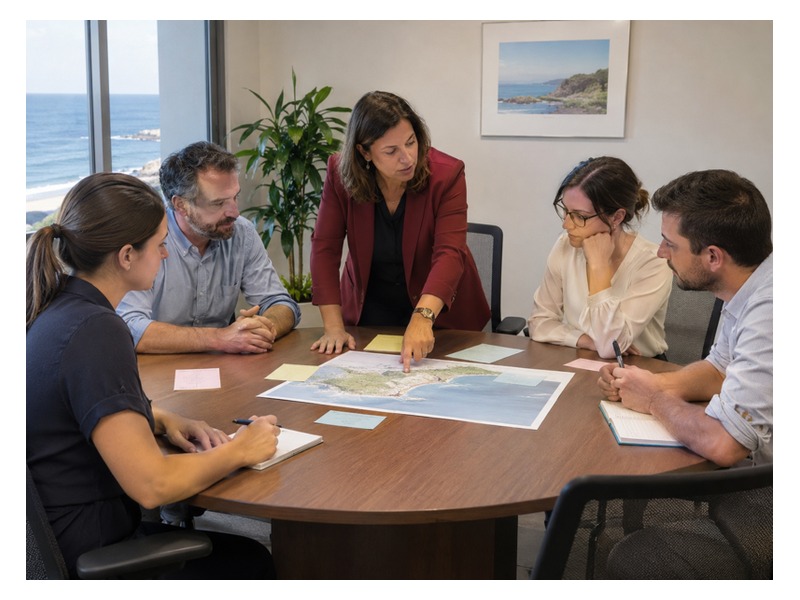
A beach wheelchair Western Australia program combines specialised mobility equipment with a route, booking method, handover, care routine and support plan. Councils, community venues, tourism operators and accommodation providers may run one. Guests need current details about where equipment sits, when it is available and what support the service asks them to arrange.
What makes the service complete?
Also, the service begins with pre-arrival information rather than chair collection. Use this test: every stage should have a clear owner and a usable backup. Review current public accessibility guidance before launch.
- Equipment matched to land or documented water activity
- Route from arrival point to beach
- Booking, handover and return process
- Cleaning, inspection and repair records
- Closure and guest-notification procedure
How should responsibilities be assigned?
Also, record ownership across council, venue and maintenance partners. Regional programs also need a contact who can make decisions when the usual manager is away.
| Task | Owner to name |
|---|---|
| Bookings | Venue or service desk |
| Handover | Trained local staff |
| Route checks | Site operations |
| Parts and repairs | Fleet owner or service contact |
This structure keeps shared programs from losing tasks between organisations.
Key Takeaway: Build the chair into a documented service with local ownership and a support backup.
Who Uses Beach Wheelchair Western Australia Equipment?
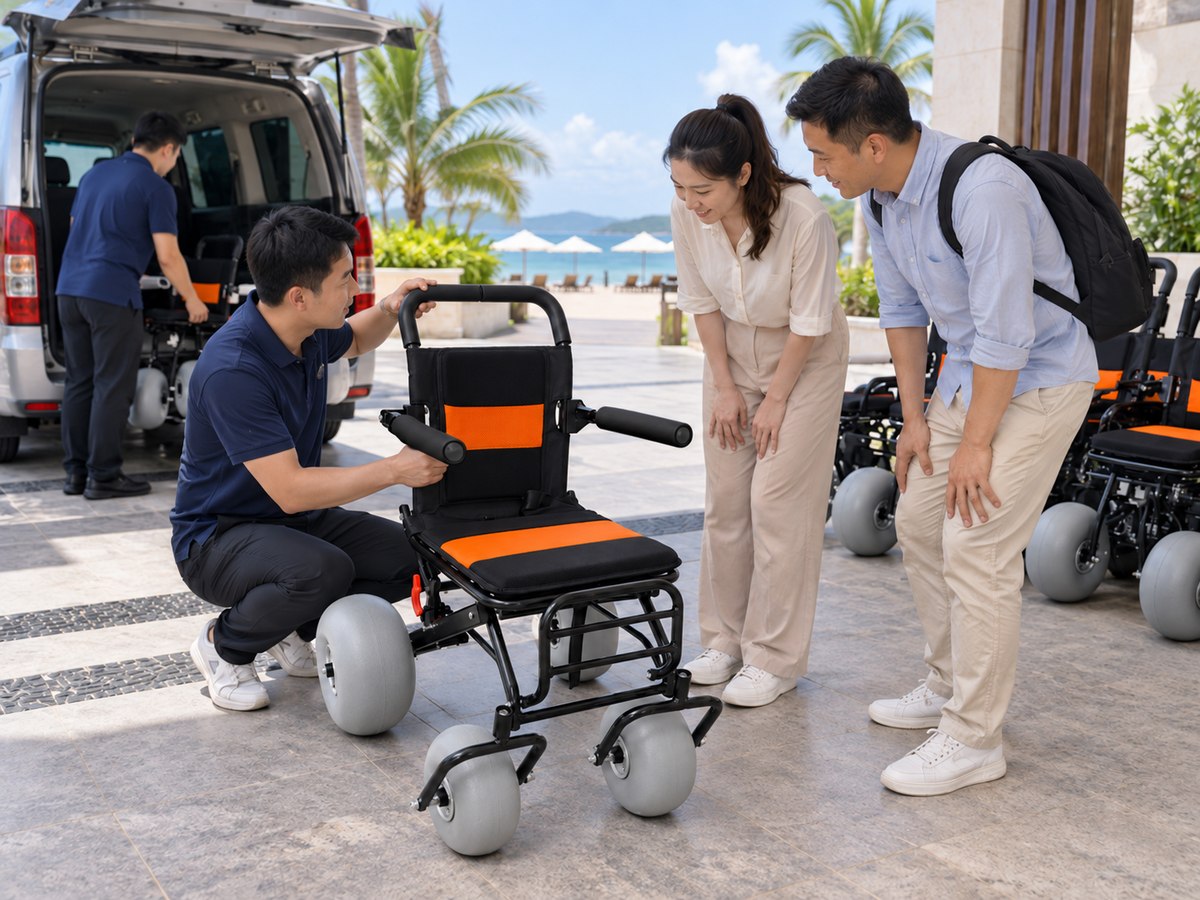
A beach wheelchair Western Australia service may support wheelchair users, older travellers, people with temporary mobility limits and guests who cannot cross sand with their usual aid. Some visitors travel with a support person while others ask what venue staff can provide. Ask about the planned activity and preferred help rather than making assumptions.
What should staff discuss before arrival?
Also, keep questions practical and tied to service delivery. The guest knows their needs: staff contribute accurate route and equipment information.
- Intended beach and route
- Chair category requested
- Support-person arrangements
- Collection and return timing
- Need for a firm-ground trial
What should remain outside staff advice?
Personal fit, transfers and clinical concerns may need the guest’s support person or a qualified health professional. Staff should use current model documents for equipment facts.
| Question type | Response source |
|---|---|
| Route surface | Current site record |
| Chair controls | Supplier manual |
| Personal positioning | Guest and qualified adviser |
| Booking support | Local service procedure |
However, clear limits let staff help confidently without extending beyond training.
Key Takeaway: Combine user-led communication with accurate route, chair and service information.
Which Beach Wheelchair Western Australia Type Fits?
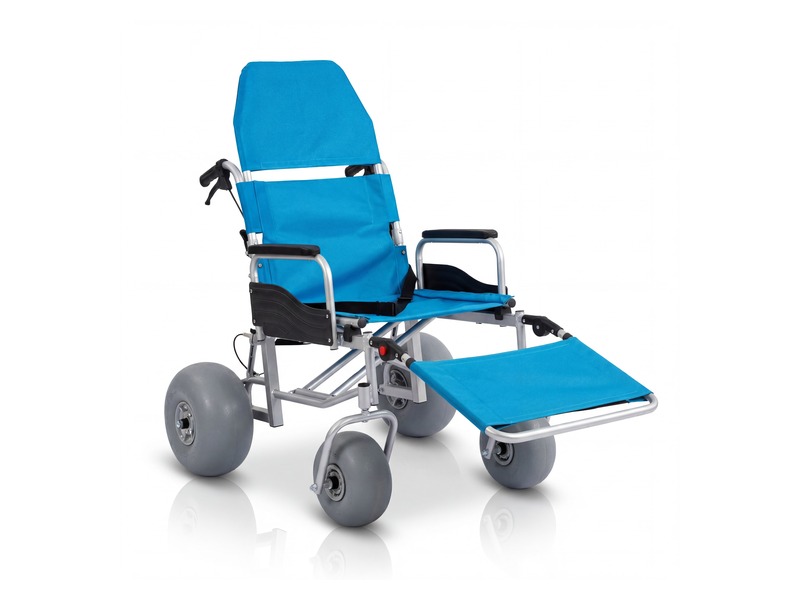
The right beach wheelchair Western Australia type depends on terrain, planned activity, transport, storage and available support. A land chair crosses sand, while a floating chair serves a different supervised water role. Folding chairs or beach walkers may fit other users and operating settings.
How do buyers separate chair categories?
Also, write the intended activity before asking for a quote. Category comes before features: a wide wheel does not document a land chair for water use.
- Land chair for boardwalks, matting and sand
- Floating chair for documented supervised water sessions
- Folding chair for vehicle transport or compact storage
- Beach walker for ambulant users needing stability
What evidence should support selection?
Compare current manuals, dimensions, intended use, wheel layout, packing, maintenance and spare parts. Ask the supplier to explain any unclear limit in writing.
| Evidence | Selection use |
|---|---|
| Manual | Confirms operation and limits |
| Specification sheet | Supports size review |
| Packing details | Supports transport planning |
| Spare list | Supports regional uptime |
Written evidence helps buyers defend the choice and train staff consistently.
Key Takeaway: Choose a chair category from the activity, then verify model details in current documents.
How Does Distance Affect Beach Wheelchair Western Australia?

Western Australia’s long transport distances affect a beach wheelchair Western Australia order through freight cost, delivery timing, packaging, spare stock and service response. A remote venue cannot assume that a missing part will arrive quickly. Buyers should confirm where freight responsibility ends and how damage claims are handled.
What belongs in a regional freight brief?
Also, give suppliers the exact destination, access limits and receiving arrangements. A postcode is not the whole delivery plan: remote handoffs can involve several carriers.
- Final delivery address and contact
- Quantity, packing dimensions and handling needs
- Depot collection or site delivery requirement
- Seasonal road or receiving constraints
- Inspection process at arrival
How should delivery be checked?
Photograph packaging before opening, compare parts with the order and record damage promptly under agreed terms. Keep manuals and part lists with local staff.
| Delivery stage | Check |
|---|---|
| Before dispatch | Packing and address confirmed |
| At receipt | Packages counted and inspected |
| During assembly | Parts match documents |
| After setup | Controls and route trial completed |
Still, an arrival checklist creates evidence if a regional shipment needs support.
Key Takeaway: Plan the whole freight handoff and inspect delivery before equipment enters service.
Where Should Beach Wheelchair Western Australia Routes Run?
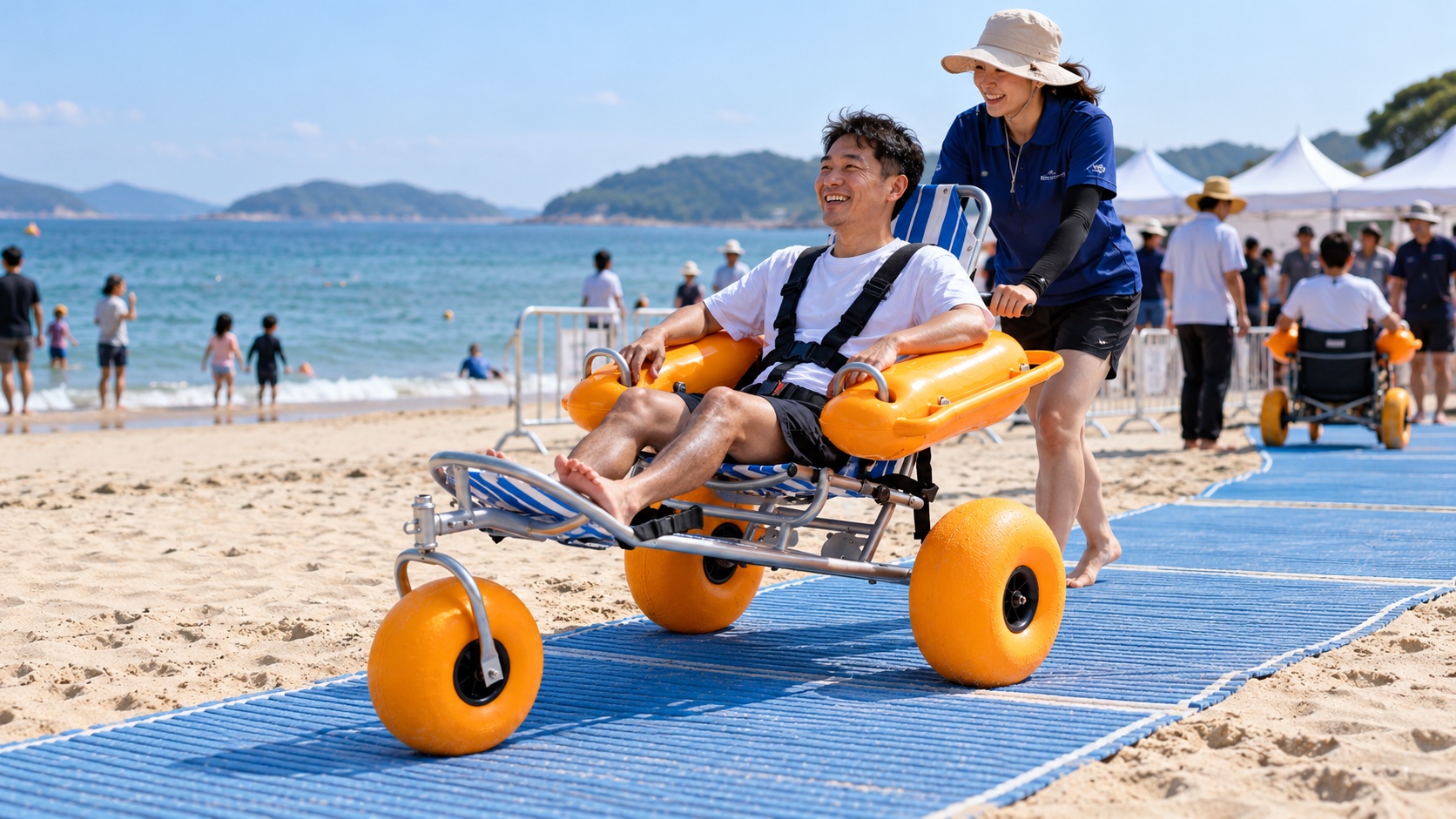
A beach wheelchair Western Australia route should connect accessible parking or drop-off with toilets, change facilities, equipment collection and the designated beach zone. Sand-capable wheels cannot remove steps, locked gates or steep or damaged slopes. Route notes should state surfaces, distances and seasonal changes.
What should a route audit record?
Also, walk the route with site and guest-service staff under realistic conditions. Check the full chain: a good beach entry is useless when the collection door has a step.
- Parking, drop-off and public transport link
- Gate width, slopes and turning areas
- Boardwalk, matting and soft-sand distance
- Shade, toilets and change facilities
- Return route under changing tide or wind
How should regional sites publish details?
Provide a map, collection contact, hours, route photos and known limitations. Update information after erosion, storms, construction or seasonal matting changes.
| Published detail | Planning value |
|---|---|
| Surface and distance | Helps support-person planning |
| Facility location | Supports personal care needs |
| Collection point | Reduces arrival confusion |
| Closure notice | Avoids unnecessary travel |
Accurate detail matters more when guests have driven a long distance to reach the site.
Key Takeaway: Describe the full route and update it whenever coastal or site conditions change.
How Should Beach Wheelchair Western Australia Booking Work?
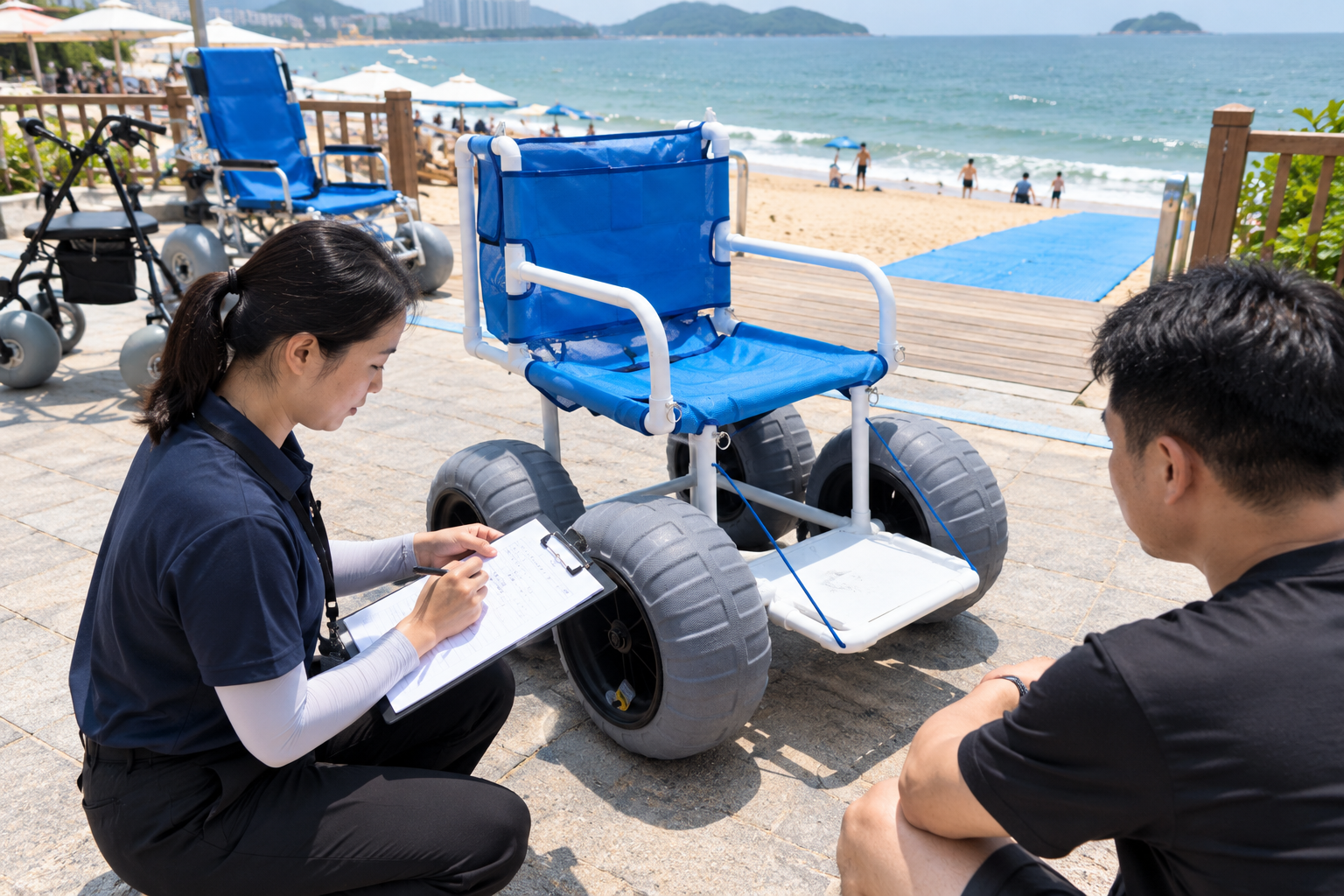
A beach wheelchair Western Australia booking process should confirm location, chair category, collection time, support expectations and closure communication. Regional guests may build an entire trip around one booking. Give them a direct contact path and avoid promising assistance that local staffing cannot provide.
Which booking details matter most?
Also, collect only information needed to organise the service. Clarity beats a long form: guests need a firm answer about availability and handover.
- Site and chair selected
- Date, time and return plan
- Support-person arrangement
- Contact for travel-day updates
- Weather or fault cancellation method
How can a small team manage availability?
Also, use one calendar and one controlled source for website, phone and in-person advice. Block maintenance periods as firmly as guest bookings.
| Booking control | Benefit |
|---|---|
| Single calendar | Limits double booking |
| Confirmation message | Sets collection expectations |
| Maintenance block | Protects inspection time |
| Closure update | Reaches travelling guests |
One reliable system is better than several channels with different information.
Key Takeaway: Confirm availability and closure communication clearly, especially for guests travelling between regions.
What Staff Support Beach Wheelchair Western Australia?
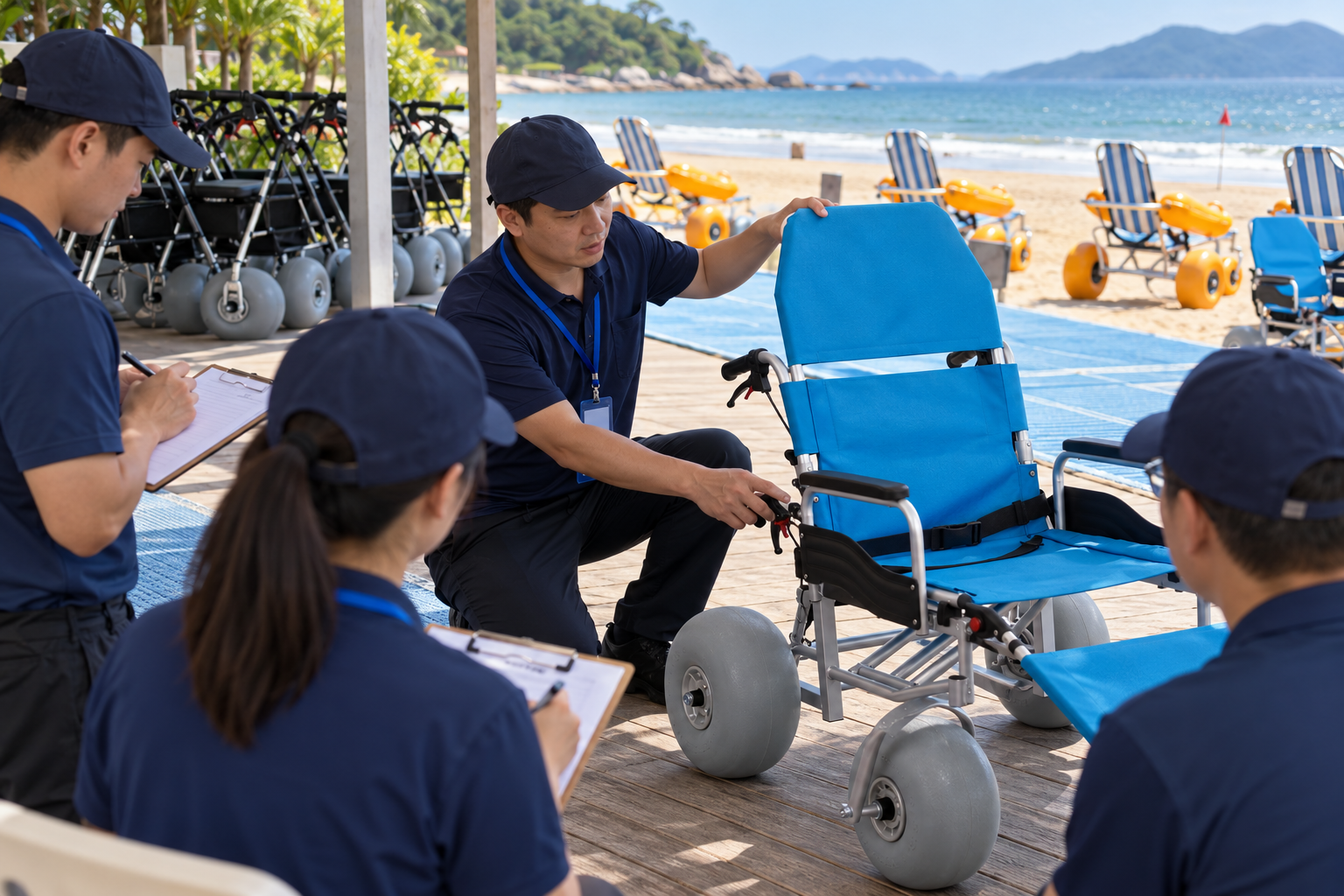
A beach wheelchair Western Australia service needs trained people for booking, handover, route checks, care and fault escalation. Remote sites should plan around leave, turnover and seasonal rosters. Staff should explain the chair and local process while respecting guest-led assistance preferences.
What should training cover?
Also, use the exact model manual and local route rather than a generic video alone. Practise before demand rises: seasonal staff need time with an empty chair.
- Controls and documented terrain
- Respectful communication and assistance boundaries
- Route hazards and weather triggers
- Cleaning, inspection and storage
- Fault isolation and incident reporting
How can a regional site retain knowledge?
Also, keep a short procedure, current manual, supplier contact and training record where duty staff can find them. Name a backup trainer or manager.
| Knowledge item | Storage need |
|---|---|
| Current manual | Available at handover point |
| Local procedure | Version controlled |
| Training record | Updated after staff changes |
| Support contacts | Available during operating hours |
Written local knowledge protects continuity when experienced staff are unavailable.
Key Takeaway: Train on the exact chair and preserve local knowledge for roster and seasonal changes.
How Is Beach Wheelchair Western Australia Equipment Protected?
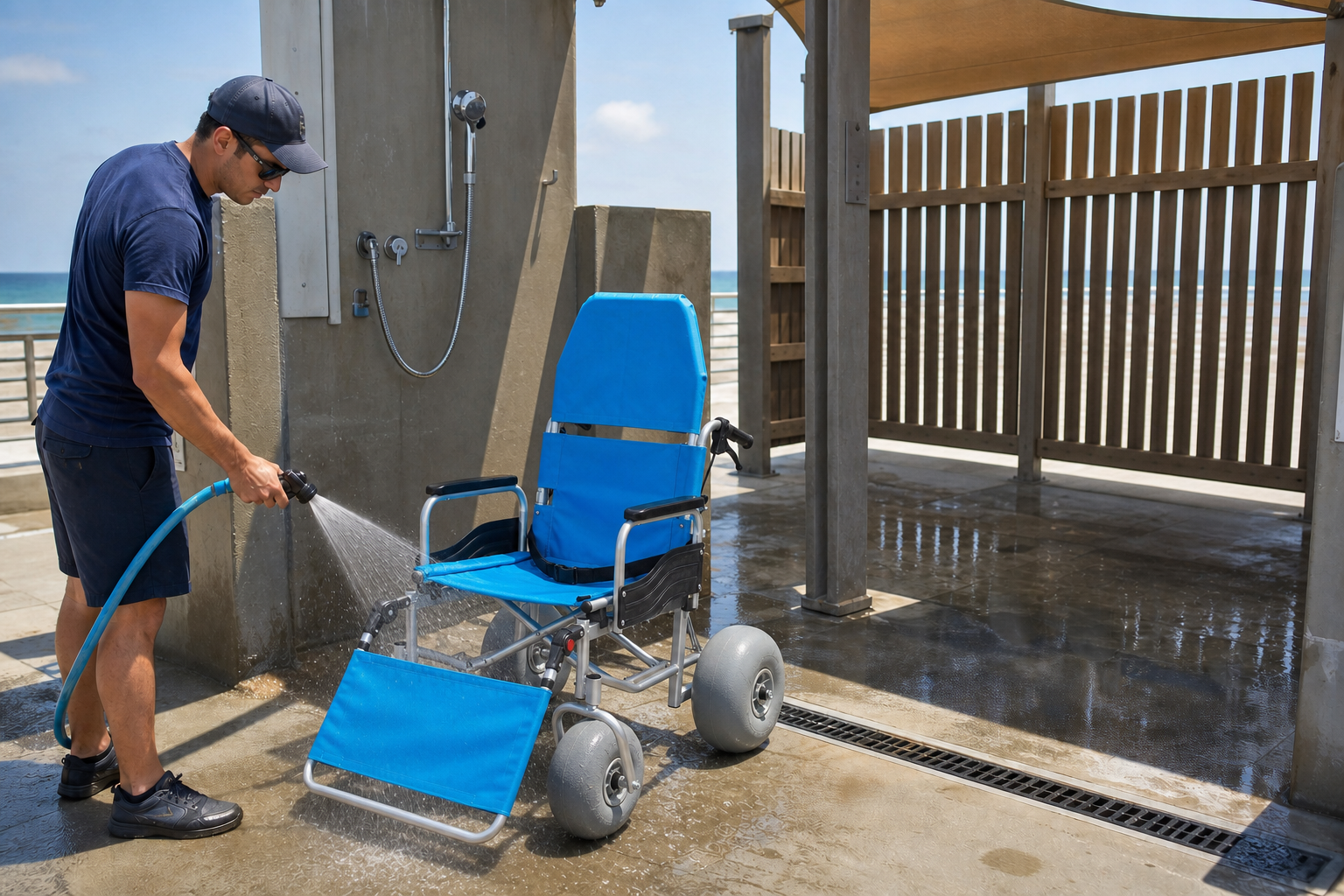
A beach wheelchair Western Australia unit should be cleaned as directed, dried fully and stored in a shaded, ventilated and secure area. Strong sun, blowing sand, salt and moisture continue working on equipment after guests leave. Regional sites also need enough spares to cover delivery delays.
What should happen after use?
Also, build the routine from the current manual and site exposure. Do not store a wet chair and hope: drying needs time and airflow.
- Remove sand without damaging components
- Rinse with fresh water as directed
- Dry frame, fabric and straps in shade
- Inspect wheels, fasteners and contact points
- Record faults before the next booking
What belongs in a regional spare kit?
Also, use verified part numbers, fleet size, fault history and lead times. Store parts securely with the tools and instructions authorised for local work.
| Spare input | Planning purpose |
|---|---|
| Supplier lead time | Sets reorder point |
| Freight frequency | Sets buffer stock |
| Wear record | Identifies priority parts |
| Fleet size | Guides quantity |
For example, a small verified stock can keep access open while a larger shipment moves across the state.
Key Takeaway: Combine shaded storage and disciplined care with spare stock based on regional lead times.
When Should Beach Wheelchair Western Australia Pause?
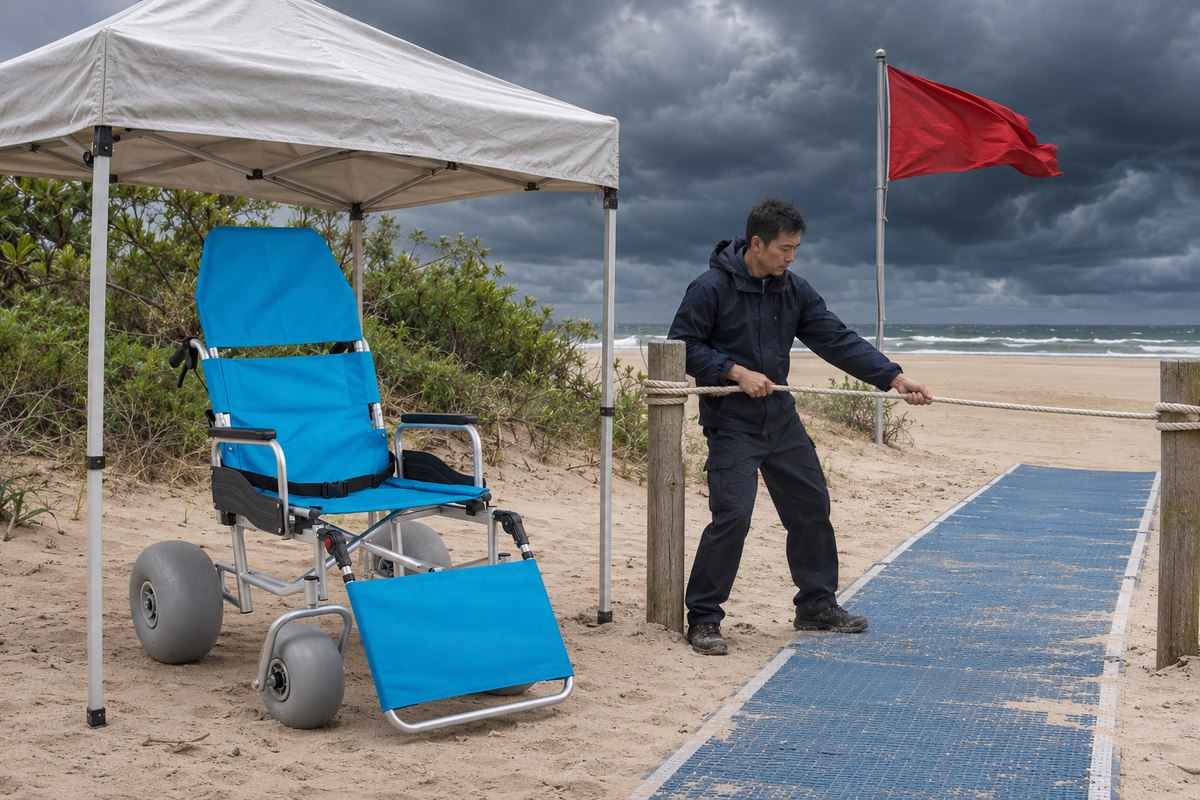
A beach wheelchair Western Australia service should pause when heat, strong wind, storms, smoke, surf, route damage, equipment faults or staffing make the activity unsupported. Conditions differ across the coastline, so each site needs local triggers. Land and water chair services require separate decisions.
What should duty staff monitor?
Also, use official warnings and local observations within the organisation’s procedure. The route can change between checks: windblown sand and erosion alter effort and access.
- Heat and exposed surfaces
- Strong wind and blowing sand
- Storm, lightning or smoke alerts
- Surf and tide for documented water activity
- Route damage or missing trained staff
How should a closure be communicated?
Also, stop bookings, contact affected guests, secure equipment and update public channels. Record the reason and reopening check.
| Closure action | Reason |
|---|---|
| Notify booked users | Supports travel changes |
| Update website or phone | Limits new commitments |
| Secure chair | Stops unauthorised use |
| Log reopening check | Supports consistent decisions |
Early communication matters when the next available service may be far away.
Key Takeaway: Use local pause triggers and notify travelling guests as soon as conditions change.
Who Supplies Beach Wheelchair Western Australia Fleets?
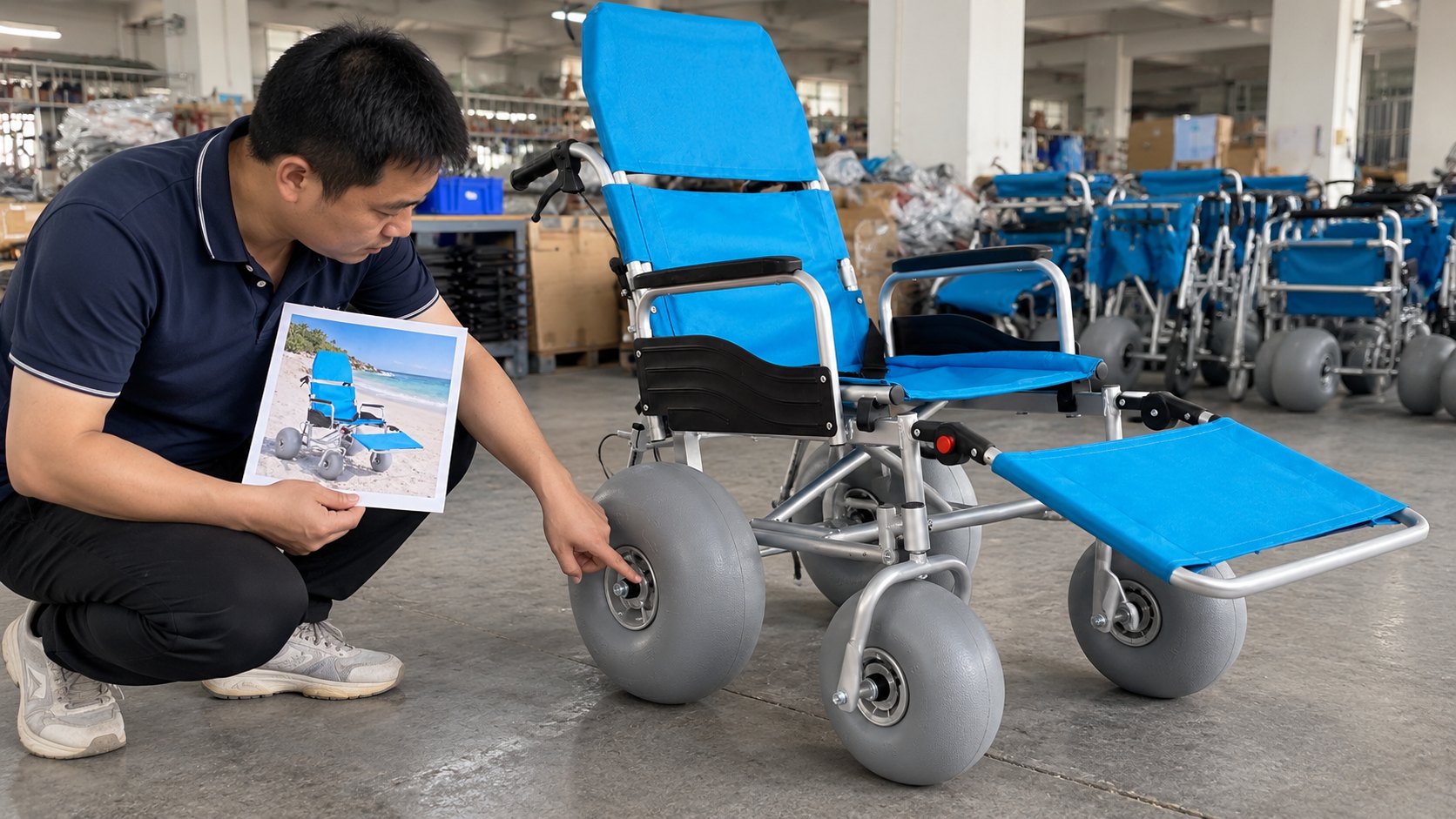
A beach wheelchair Western Australia supplier should provide current documents, confirm intended use, explain packing and identify spare parts before an order. Buyers should compare landed scope, not just unit price. Ask how support works for a regional site and what information is needed for a correct replacement part.
What should every proposal contain?
Also, send one site brief to each supplier and keep answers in writing. Missing details are costs in disguise: vague freight or parts terms can delay launch.
- Model, manual and specification sheet
- Intended-use confirmation
- Packing and freight responsibility
- Spare-parts list and lead-time guidance
- Warranty terms and support contact
How should buyers approve the choice?
Also, score proposals against the same document, freight, support and lifecycle criteria. Record assumptions separately and resolve them before purchase.
| Criterion | Evidence to review |
|---|---|
| Suitability | Manual and intended-use statement |
| Delivery | Written freight scope |
| Continuity | Spare list and lead times |
| Support | Warranty and contact process |
This method gives procurement teams a decision they can explain and operate.
Key Takeaway: Select suppliers through written use, freight, spare and support evidence suited to your location.
Final Thoughts
Western Australian buyers should review equipment choice with distance, routes, bookings, staff knowledge, climate, storage and spare supply. A clear local procedure matters whether the service sits at a city beach or a remote coastal town. Planning may reduce avoidable downtime and gives guests clearer information before travelling.
If you are planning a fleet or replacing older equipment, contact us today with your site, destination, route and operating needs. We can share available model documents and discuss packing or spare options for your review. Our view is direct: beach access should remain workable after the delivery truck has gone.
FAQ
Can I operate one chair across several regional beaches?
Yes, if transport, bookings, cleaning and responsibility are practical at every site. Check that moving the chair does not create long gaps in availability.
What’s the best chair for soft Western Australian sand?
In fact, a land chair with sand-suitable wheels is a common starting category. Confirm the exact model’s intended terrain and fit information in current documents.
How do I know if we need spare parts on site?
Compare likely wear, supplier lead times, freight frequency and seasonal demand. A remote program may choose a larger buffer than a site near a service centre.
Can I use a land chair in coastal water?
No, not unless the exact manual permits that use. Land and floating chairs belong to different operating categories.
How do I know if our route information is current?
Still, date each internal check and repeat it after storms, erosion, construction or seasonal matting changes. Update public details whenever access changes.