
A Queensland beach-wheelchair program can operate more predictably when buyers review chair type, route and operating rules against local heat, humidity, salt, storms and seasonal demand. A council, surf club or resort may have equipment, yet guests can still face a failed visit when booking details are stale or a damaged access path remains open online. Treating a beach wheelchair Queensland program as a complete service helps teams plan equipment, people, care and closures together.
We manufacture beach mobility equipment for commercial buyers. Also, this guide keeps the focus on decisions your team can verify. It covers chair categories, coastal conditions, routes, bookings, staff roles, weather, maintenance, budgets and supplier documents without making legal or medical claims.
What Is a Beach Wheelchair Queensland Program?

A beach wheelchair Queensland program gives people with mobility needs a defined service for reaching sand or designated water areas through documented equipment and procedures. It may be run by a council, surf club, resort, park or community partner. A program can publish where, when and how each chair is intended to be used.
What belongs in the program?
Also, the chair sits inside a wider access chain that begins before arrival. The working test is simple: can a guest plan the full visit without guessing? Review current public accessibility guidance before launch.
- Equipment matched to documented terrain
- Booking and collection details
- Step-free route information
- Staff or volunteer responsibilities
- Cleaning, inspection and closure procedures
How do partners divide the work?
Also, record which organisation owns bookings, storage, maintenance, route checks and guest updates. Shared programs need one current source of information.
| Program task | Named owner needed |
|---|---|
| Booking | Council, club or venue |
| Handover | Trained service team |
| Route check | Site or beach operations |
| Repairs | Equipment owner or contractor |
Written ownership can limit the chance that routine duties fall between organisations.
Key Takeaway: Treat a Queensland chair program as an access service with named owners, not as unattended equipment.
Who Uses a Beach Wheelchair Queensland Service?
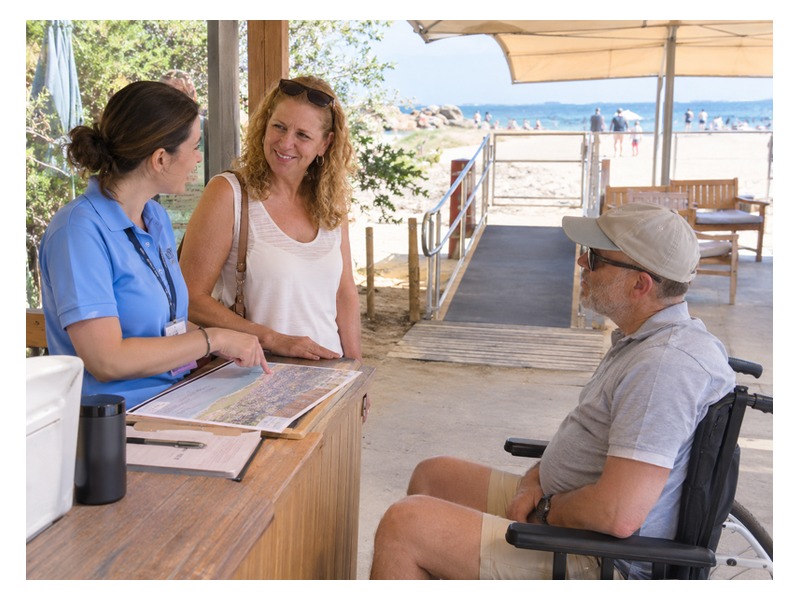
A beach wheelchair Queensland service may support wheelchair users, older visitors, people with temporary injuries and guests whose mobility changes on sand. Some people arrive with experienced support while others need a clear demonstration. Staff should ask how each guest prefers help and avoid assumptions about transfer or handling needs.
What should booking staff ask?
Also, questions should help the team arrange the right service, not assess a person’s diagnosis. Start with the activity: where does the guest want to go and what support will attend?
- Intended route and chair category
- Preferred collection time
- Support-person availability
- Need for a firm-ground trial
- Communication or arrival needs
Where do staff boundaries sit?
Staff may explain equipment and site procedures when trained. However, personal transfer and fit decisions can require a support person or health professional. State those boundaries before arrival.
| Guest need | Appropriate response |
|---|---|
| Route detail | Provide current site information |
| Chair operation | Use the supplier manual |
| Personal fit | Refer to documented dimensions |
| Clinical concern | Suggest qualified advice |
However, clear boundaries support respectful service and can limit hurried decisions at the beach.
Key Takeaway: Ask about the planned activity and preferred support while keeping staff inside documented roles.
Which Beach Wheelchair Queensland Type Should You Buy?
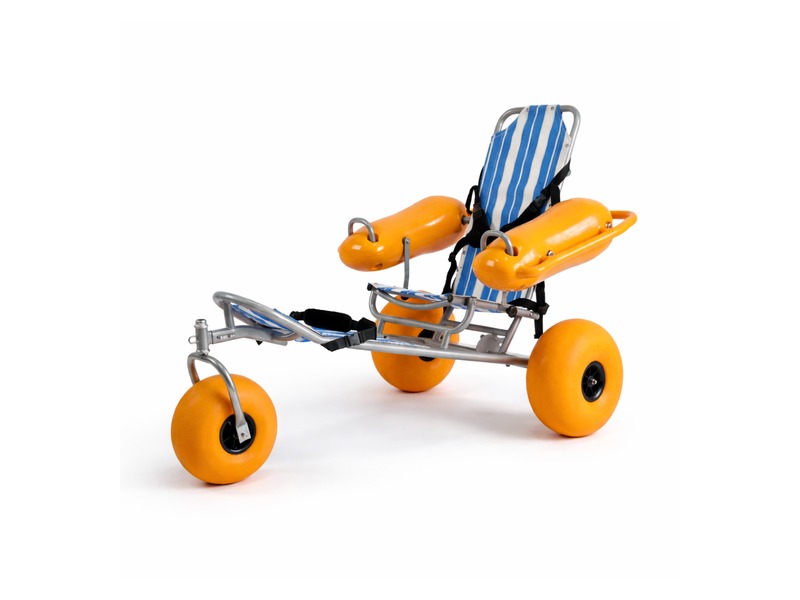
A beach wheelchair Queensland type should be reviewed against whether the program stays on land, enters a documented supervised water area, travels between sites or serves ambulant users. A land chair and floating chair serve different activity categories. Buyers should confirm each model’s intended use in current documents.
How do chair categories differ?
Also, choose the activity category before comparing features or appearance. This decision sets the rules: water use changes supervision, weather and emergency planning.
- Land chair for matting, boardwalks and sand
- Floating chair for documented supervised water activity
- Folding chair for transport or restricted storage
- Beach walker for ambulant users needing support
What should a model comparison include?
Compare dimensions, user guidance, wheel layout, packing, care instructions, spare parts and written use limits. Avoid assuming that wide wheels make every chair suitable for water.
| Comparison item | Reason |
|---|---|
| Intended use | Separates land and water roles |
| Manual | Supports training and handover |
| Dimensions | Helps fit review |
| Spare list | Supports uptime |
A disciplined comparison protects the program from buying one chair for incompatible tasks.
Key Takeaway: Select a chair category from activity and documents before comparing optional features.
How Does Queensland Climate Affect Beach Wheelchair Queensland?
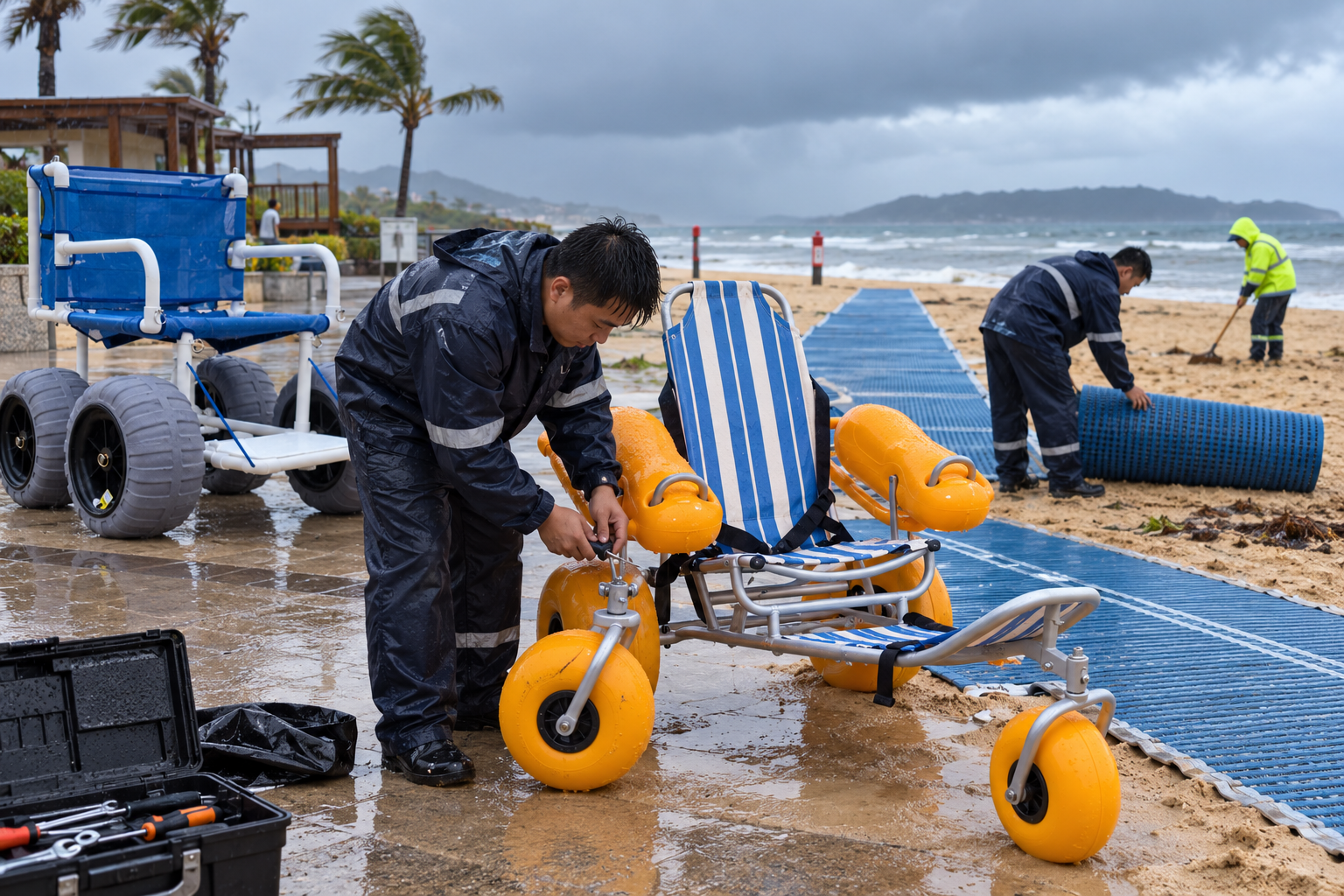
Queensland heat, strong sun, humidity, salt spray and heavy rain affect a beach wheelchair Queensland fleet even when chairs are used correctly. Fabric, fasteners, wheels and labels need regular checks. Storage and drying routines matter because damp gear can remain wet long after a brief rinse.
Which exposures need planned controls?
Also, review conditions at each site rather than applying one statewide assumption. Coastal wear is cumulative: small lapses after every use become a larger repair later.
- UV exposure during use and storage
- Salt and sand on moving parts
- Humidity around fabric and straps
- Heavy rain, storm debris and flooding
- Hot surfaces during guest handover
How should storage respond?
Use a shaded, ventilated and secure area with enough room for drying and inspection. Keep equipment away from standing water and direct sun when off duty.
| Climate factor | Operating response |
|---|---|
| Strong sun | Shade equipment between bookings |
| Humidity | Dry fully with airflow |
| Salt | Follow fresh-water rinse guidance |
| Storms | Inspect routes and stored equipment |
As a result, these controls should appear in the routine rather than depend on one careful employee.
Key Takeaway: Build shade, drying, rinsing and storm checks into normal fleet care.
Where Should a Beach Wheelchair Queensland Route Start?
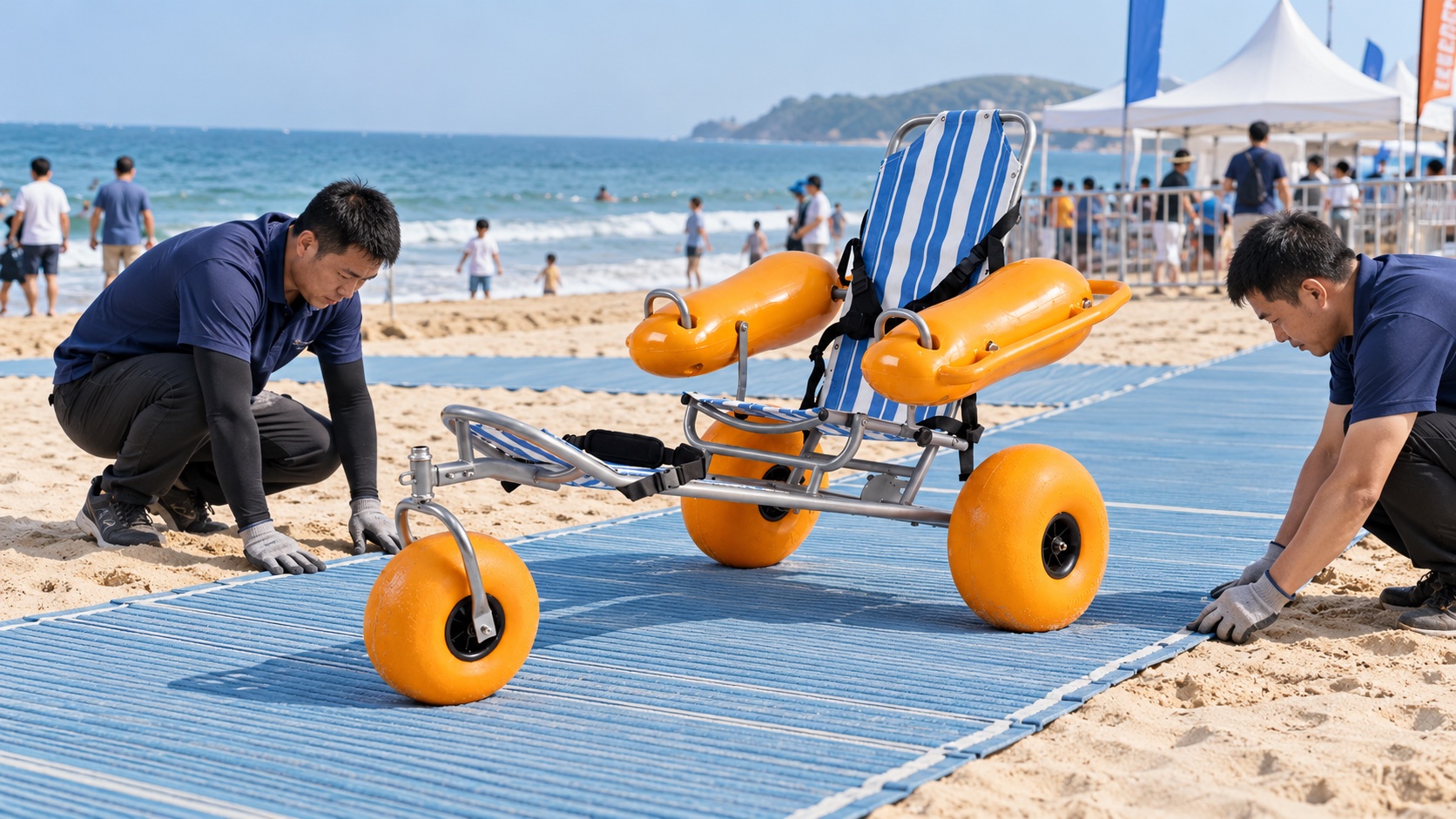
A beach wheelchair Queensland route should start at accessible parking or drop-off and connect to reception, toilets, change facilities and the beach entry. Sand capability does not remove barriers such as steps, locked gates or narrow turns. Route information should describe real surfaces and distances.
What should a site walk record?
Also, walk the path under realistic conditions with staff who manage grounds and guest service. Look beyond the sand: arrival and amenities can affect whether the planned visit works.
- Parking and drop-off layout
- Step-free path and gate access
- Matting, boardwalk and soft-sand length
- Toilets, change areas and shade
- Emergency vehicle or retreat route
How should route details reach guests?
Publish a current map, surface notes, collection point and operating times. Update the page when construction, erosion or storm damage changes access.
| Route information | Guest value |
|---|---|
| Surface description | Helps support planning |
| Distance | Sets effort expectations |
| Facility location | Supports personal care planning |
| Closure update | May avoid wasted travel |
Specific route details are more useful than a broad claim that a beach is accessible.
Key Takeaway: Document the complete path from arrival through facilities to the designated beach area.
How Should Beach Wheelchair Queensland Bookings Work?
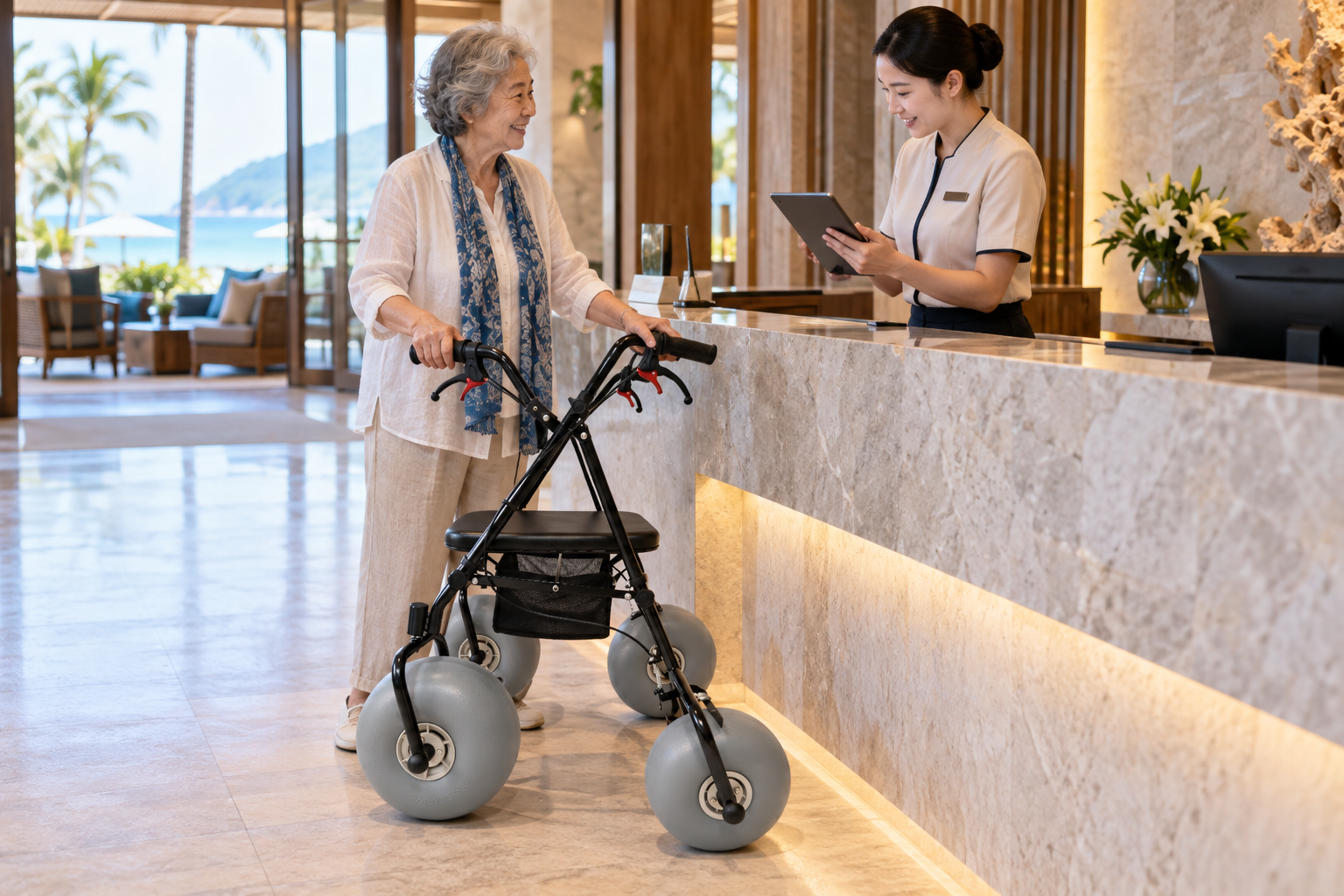
A beach wheelchair Queensland booking system should show chair category, location, hours, availability, support expectations and weather rules before confirmation. Guests need an easy way to ask a question that the form does not cover. Online, phone and in-person messages should match.
What details reduce booking failures?
Also, confirm the activity and service boundaries rather than collecting broad personal information. A clear confirmation earns trust: it tells guests what will happen next.
- Chair and site selected
- Booking and return period
- Collection contact and location
- Support-person expectations
- Cancellation and weather update method
How can teams keep information current?
However, assign one role to update the website, booking tool and reception script after closures or equipment faults. Date internal route checks even if that date is not public.
| Information point | Update trigger |
|---|---|
| Website | Seasonal hours or route change |
| Booking form | Chair or policy change |
| Confirmation | Weather or collection change |
| Reception script | Live availability change |
One controlled message limits conflicting advice across partners and channels.
Key Takeaway: Give guests one accurate booking path and keep every public channel aligned.
What Staff Training Supports Beach Wheelchair Queensland?
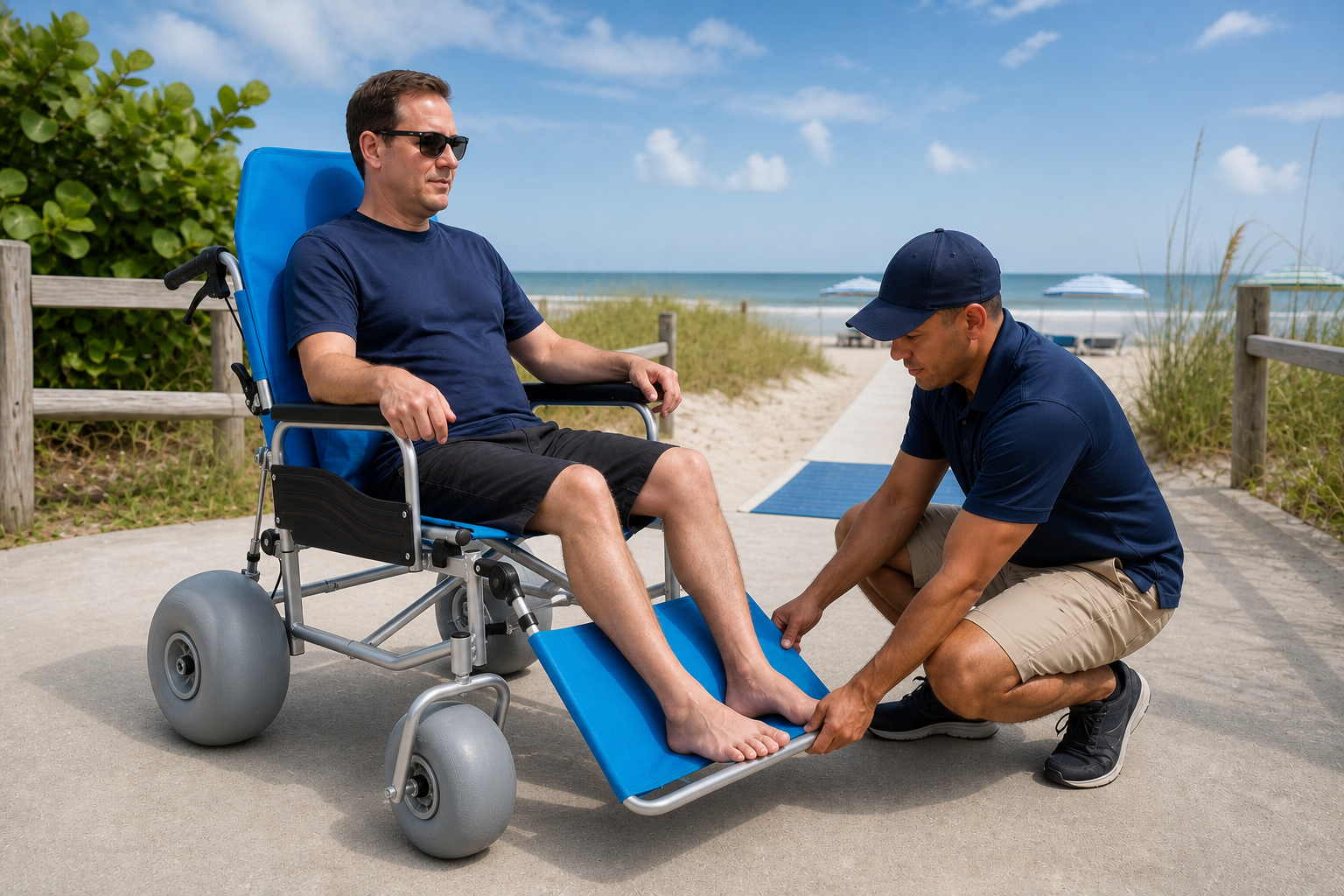
A beach wheelchair Queensland program needs staff or volunteers who can explain documented use, inspect equipment, communicate respectfully and apply local closure rules. Training should use the exact manual for each model. A generic chair demonstration may miss controls or limits that differ.
What belongs in a practical session?
Also, practise on firm ground with an empty chair before working through the documented route. Confidence needs a boundary: staff should know what they are trained to do and when to stop.
- Controls, wheels and adjustment points
- Handover and user-led communication
- Pushing posture and route hazards
- Water-use boundaries where relevant
- Fault isolation and incident reporting
How should refresher training run?
Also, refresh after roster turnover, equipment changes, long seasonal closures or a recorded issue. Keep attendance and version details with program records.
| Training trigger | Response |
|---|---|
| New model | Model-specific session |
| New staff | Supervised practice |
| Route change | Updated site walk |
| Incident or fault | Review procedure and evidence |
Short, repeated practice works better than relying on an old induction memory.
Key Takeaway: Train on the exact chair and route, with clear assistance and stop-work boundaries.
When Should Beach Wheelchair Queensland Use Pause?
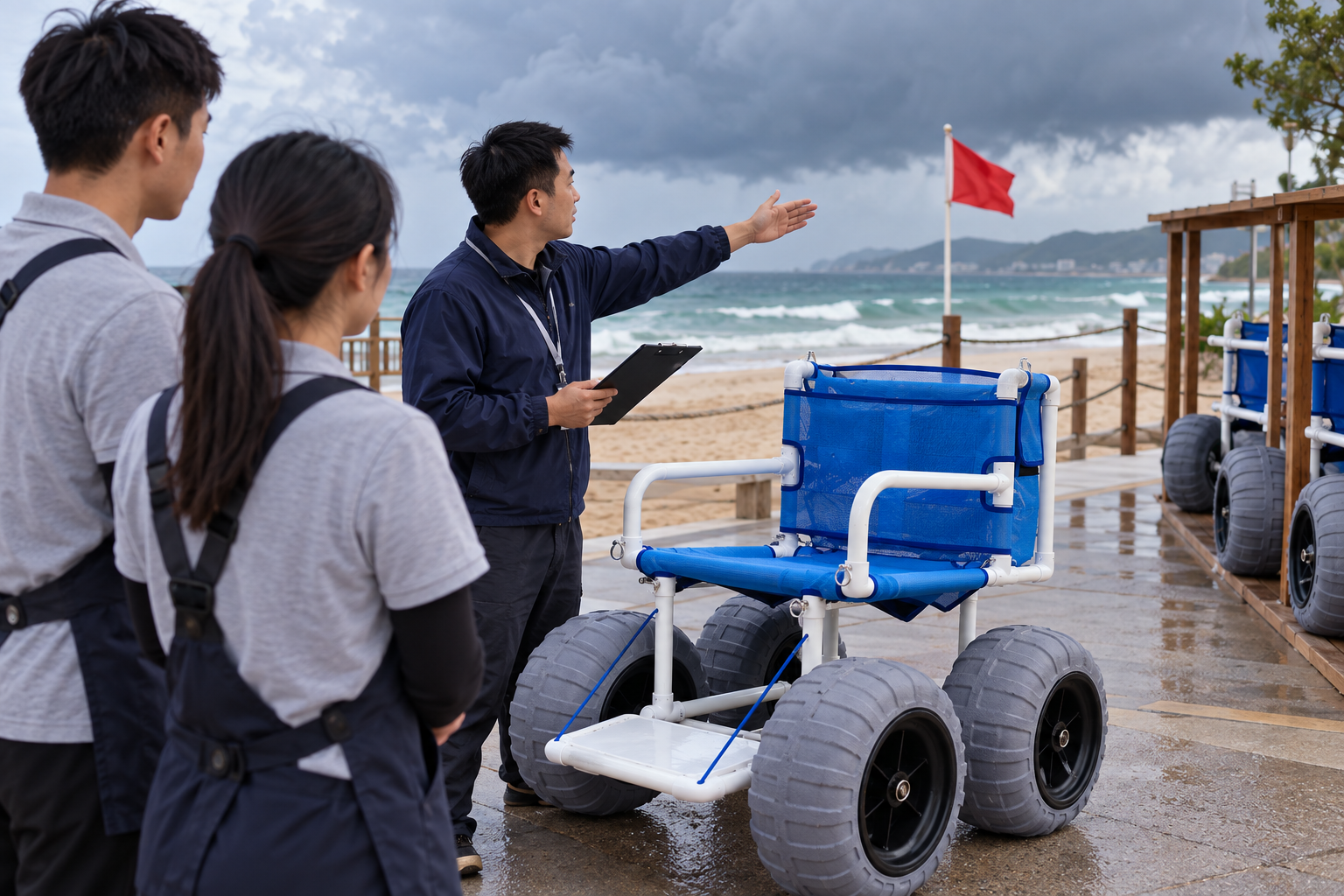
A beach wheelchair Queensland operator should set pause rules within local procedures and model guidance. Possible triggers include storms, lightning, heat, smoke, surf conditions, route damage, equipment faults or staffing gaps. Land and water services need separate documented decisions.
What conditions need active monitoring?
Also, use official local warnings and site observations within your organisation’s procedure. Conditions can change fast: a morning route check cannot cover an afternoon storm.
- Severe weather and lightning
- Heat or poor air conditions
- Surf and tide concerns for water programs
- Erosion, debris or damaged matting
- Missing trained staff or faulty equipment
What should happen after a pause?
Also, stop new bookings, contact affected guests and update public information. Offer a new time or documented land-only alternative only when the program has verified it.
| Pause action | Purpose |
|---|---|
| Secure chair | Limits use during a pause |
| Notify guests | Supports new plans |
| Update channels | Stops conflicting advice |
| Log reason | Supports later review |
For example, prompt, respectful communication can preserve confidence even when conditions cancel access.
Key Takeaway: Use category-specific pause rules and communicate closures before guests travel.
How Do You Maintain a Beach Wheelchair Queensland Fleet?
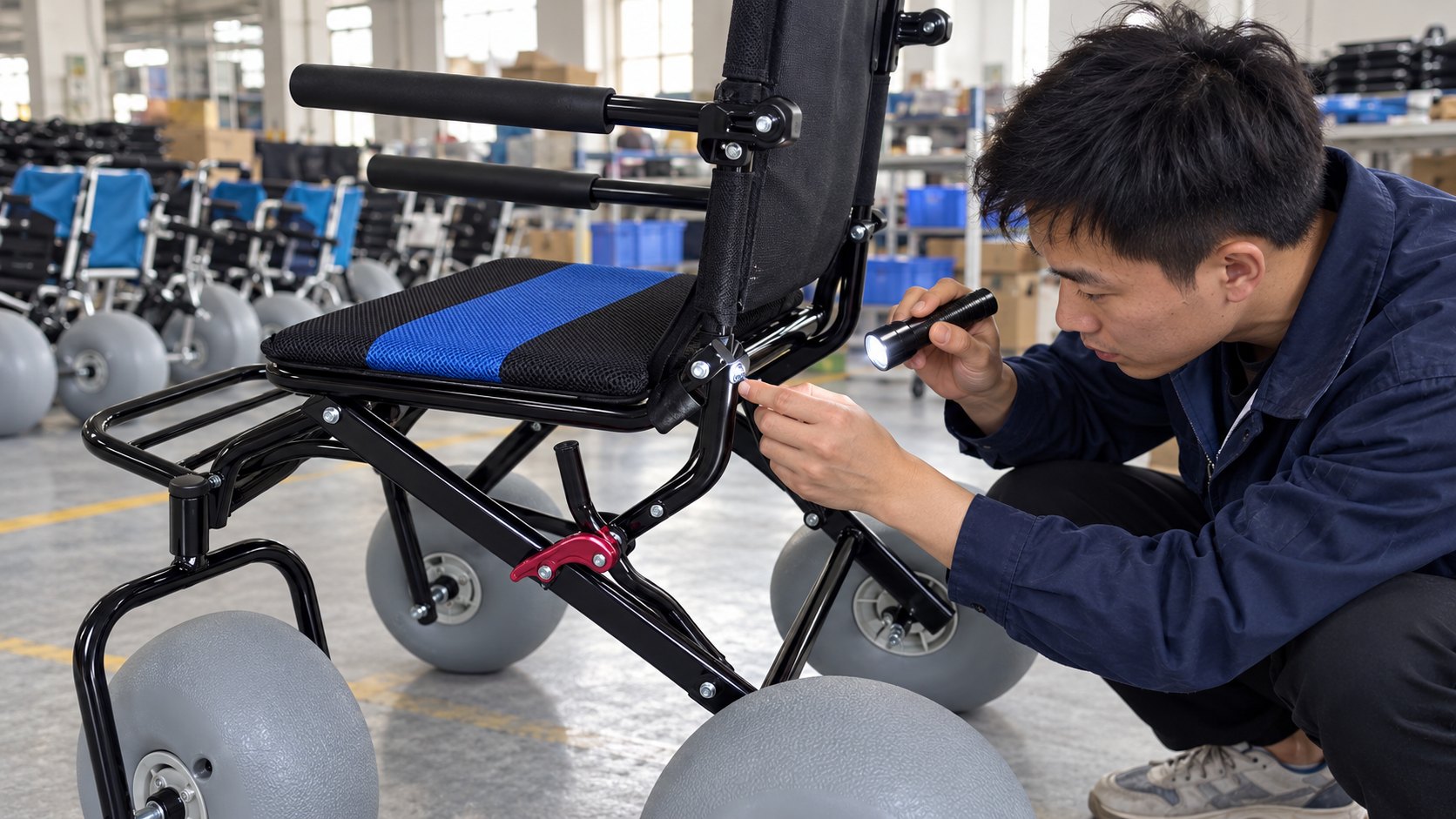
A beach wheelchair Queensland fleet stays available through fresh-water care as directed, full drying, routine inspection and early spare-parts orders. Salt and sand should not remain on moving areas between bookings. Remove faulty equipment from service until an authorised repair is complete.
What does the routine cover?
Also, build the checklist from each model’s manual and your site exposure. Small records have real value: they show recurring faults before a busy period.
- Rinse and clean after use as directed
- Dry frame, fabric and straps in shade
- Inspect wheels, fasteners and contact points
- Record damage, missing parts and repairs
- Check labels and manuals remain readable
How should spares be planned?
Also, consider fleet size, shipping time, regional location and normal wear. Keep verified part numbers rather than ordering from appearance alone.
| Spare-planning input | Decision supported |
|---|---|
| Lead time | Reorder point |
| Fault history | Priority parts |
| Fleet size | Stock quantity |
| Seasonal demand | Timing of orders |
Planned stock reduces the chance that a simple wear item closes the program.
Key Takeaway: Link maintenance records with verified spare numbers and reorder timing.
How Do You Buy a Beach Wheelchair Queensland Fleet?
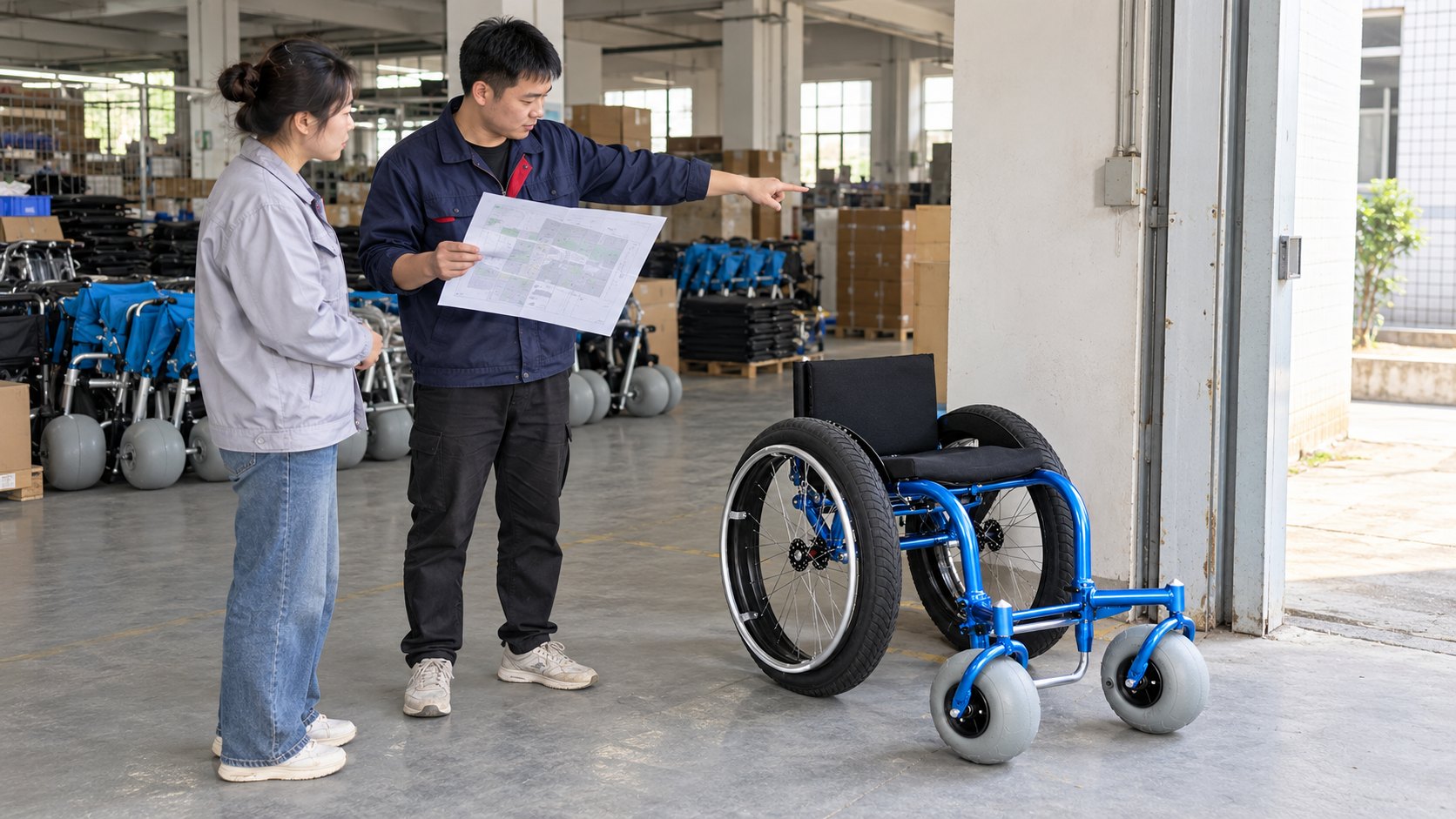
A beach wheelchair Queensland buyer should give suppliers a site brief, chair category, delivery location, expected demand and document requirements. Compare landed scope rather than unit price alone. Regional delivery, storage setup, training time and spares all affect the operating budget.
What should a request include?
Also, ask every supplier for the same written information and record exclusions. Comparable quotes need comparable questions: missing freight or parts details can distort the result.
- Current manual and specification sheet
- Intended-use confirmation
- Packing and freight responsibility
- Spare-parts list and support contact
- Warranty terms and lead-time guidance
How should the fleet launch?
Also, check delivered items against the order, train staff, test the documented route and review early bookings. Do not market water use unless the exact model and program documents support it.
| Launch stage | Check |
|---|---|
| Delivery | Quantity, parts and documents |
| Training | Staff can explain and care for chair |
| Route trial | Barriers and effort recorded |
| Service review | Booking gaps corrected |
A staged launch turns procurement documents into a working service.
Key Takeaway: Buy against one written brief and launch through delivery, training, route and service checks.
Final Thoughts
Queensland programs involve more than sand-capable wheels. Chair category, coastal exposure, routes, booking information, staff roles, weather rules, maintenance and spares should be reviewed together. Those controls can help councils, clubs, resorts and community partners give guests clearer expectations.
If your team is comparing land, floating or folding equipment, contact us today with your site, route, storage and freight needs. We can provide available model documents and discuss packing or spare options for review. We believe dependable beach access starts with honest information and a service that still works after launch day.
FAQ
Can I use any beach chair in Queensland water?
No. Water use depends on the exact chair category, manual, site conditions and supervised program rules.
What’s the best chair for Queensland soft sand?
For example, a land chair documented for sand may be a starting category. Confirm the exact model’s intended terrain and fit information before ordering.
How do I know if a Queensland beach route works?
Walk the route from parking through facilities to the beach and record surfaces, slopes, gates and distances. Check it again after storms or works.
Can I run bookings through a surf club partner?
Yes, if responsibilities for bookings, handovers, maintenance, closures and guest updates are written and current.
How do I know if coastal maintenance is adequate?
Still, maintenance is adequate when staff follow model guidance, record checks, isolate faults and reorder verified parts before service stops.