
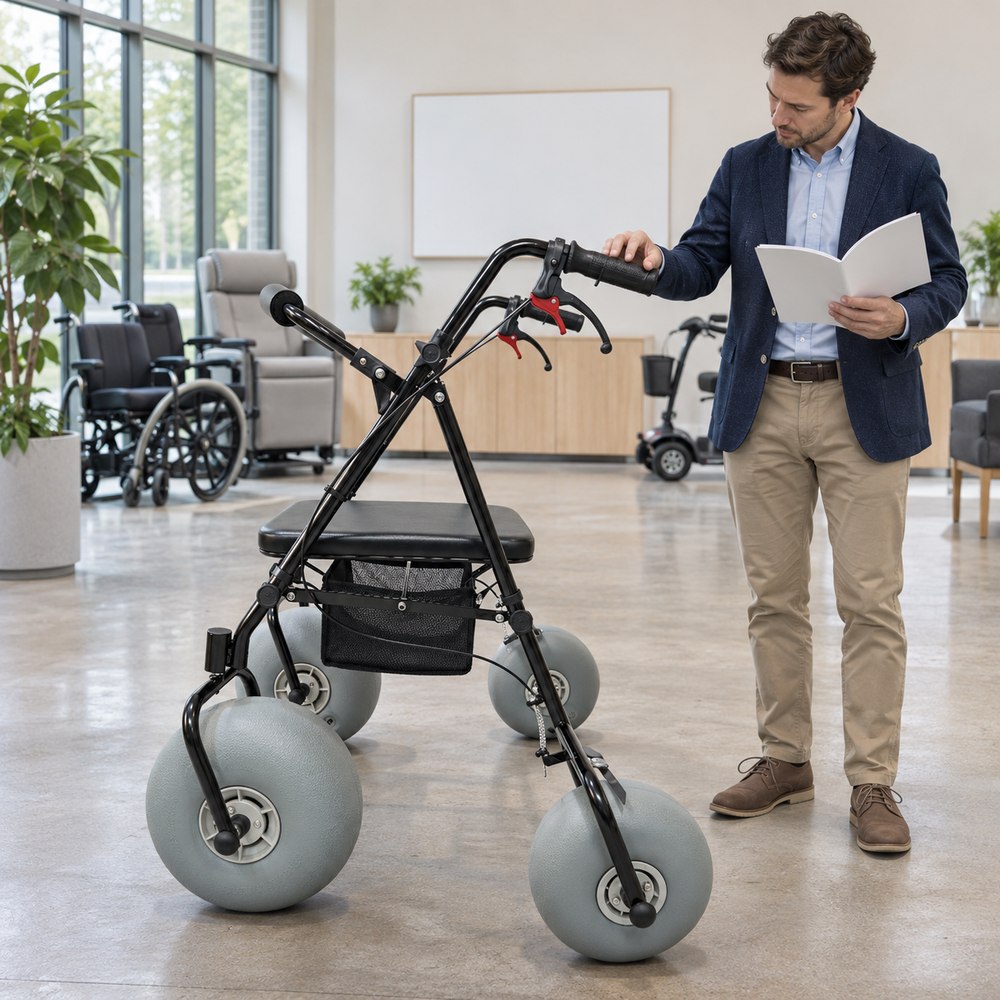
A beach walker helps an ambulant user cross sand and uneven coastal ground with more support than a standard indoor mobility aid can provide. A guest may walk confidently on paving, reach the end of a boardwalk and then lose stability as narrow wheels sink. Choosing a beach walker Australia model through a careful fit, route and trial process helps buyers avoid treating every walking difficulty as the same problem.
We manufacture beach mobility equipment for individual and commercial buyers. Also, this guide stays within practical purchasing and operating decisions. It explains users, wheel function, fit, terrain, support, care, budgets and supplier documents without offering personal medical advice or unverified product claims.
What Is a Beach Walker Australia Mobility Aid?
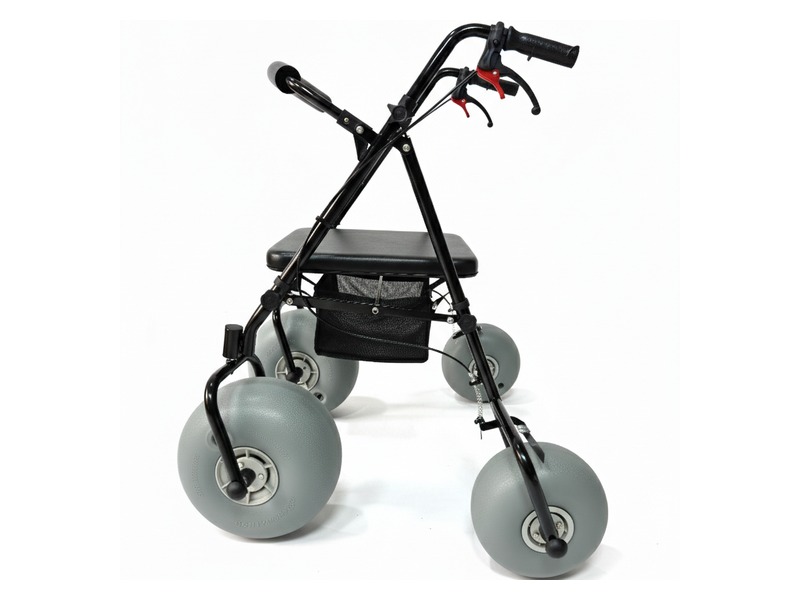
A beach walker Australia mobility aid is a support frame intended for ambulant users who can walk but need added stability on documented outdoor surfaces. It is not a wheelchair and is not intended to carry a seated passenger across the beach. Some models include a seat for resting, but intended use should be based on current documents.
How does it differ from an indoor walker?
Also, sand presents sinking, drag and uneven loading that small hard wheels handle poorly. The category matters: a familiar indoor shape does not prove beach suitability. Review current public accessibility guidance before launch.
- Wider wheels or tyres for soft surfaces
- Outdoor frame and contact materials
- Braking or control arrangement suited to the model
- Space and posture designed for supported walking
How does it differ from a beach wheelchair?
However, a walker supports someone who remains ambulant, while a beach chair carries a seated user and normally needs a helper. Buyers should not substitute one after a short phone description.
| Equipment | Primary role |
|---|---|
| Beach walker | Supports walking over suitable terrain |
| Land beach chair | Carries a seated user across sand |
| Floating chair | Supports documented supervised water access |
| Access mat | Creates a firmer shared route |
Separating these roles helps buyers ask the right fit and support questions.
Key Takeaway: Choose a beach walker only for an ambulant user whose needs and route match that equipment category.
Who May Use a Beach Walker Australia Model?
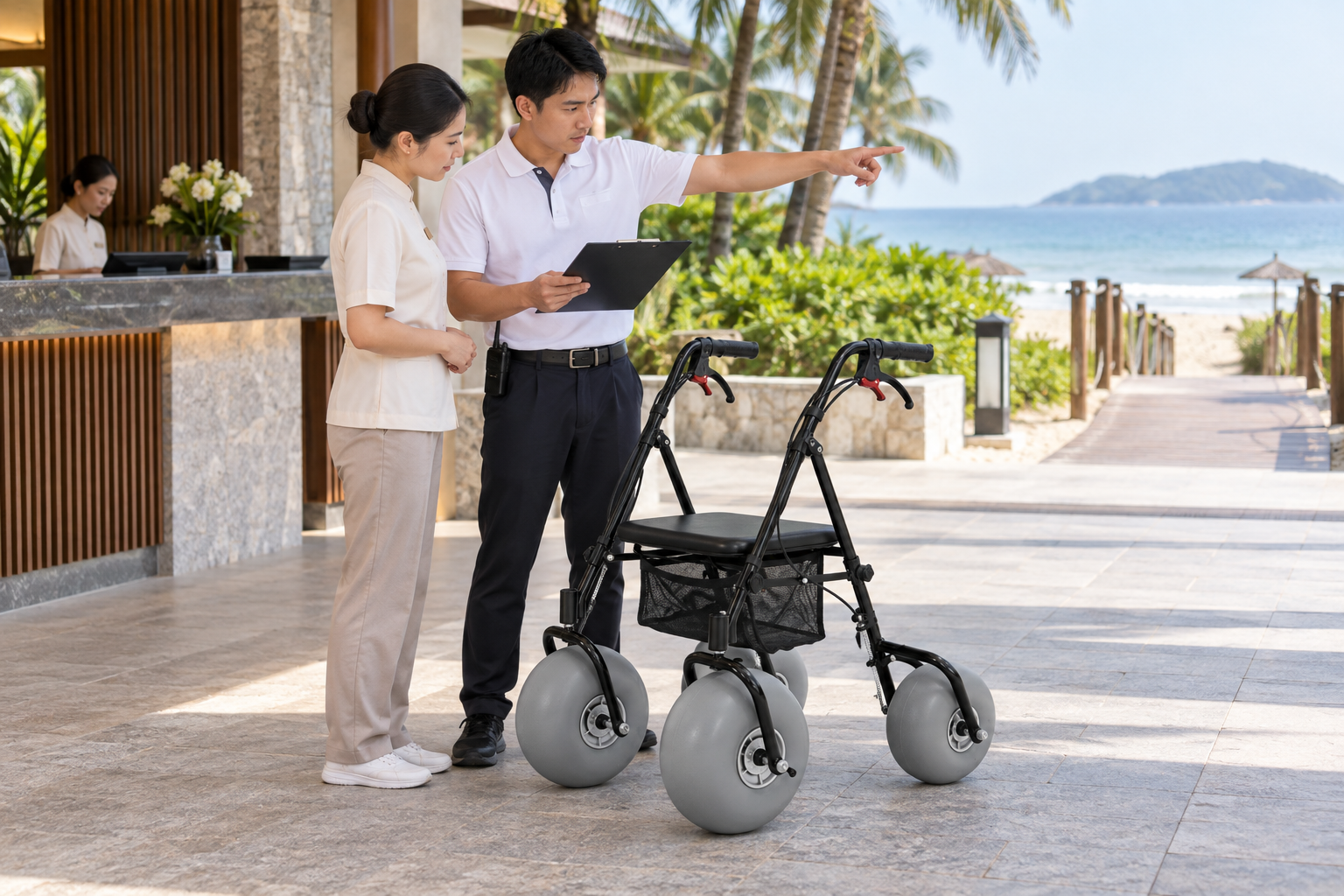
A beach walker Australia model may suit an older adult or another ambulant person who needs stability and rest support on suitable coastal ground. It will not suit every balance, strength, endurance or positioning need. A user with uncertainty should discuss the choice with a qualified health professional and review the exact model documents.
What questions clarify the user’s goal?
Also, start with the activity, current aid and expected support rather than a demographic label. Ask what success looks like: a short firm-sand walk differs from a long soft-sand outing.
- Which surfaces and distances are planned?
- Does the user need a seat for rests?
- Can the user control the walker and brakes?
- Will a companion attend?
- Can a supervised trial happen before purchase?
When might another category fit better?
A seated beach chair may be more suitable when the user cannot safely walk the route or needs continuous seated support. Access matting may also remove the sand barrier for an existing aid.
| User situation | Category to review |
|---|---|
| Ambulatory with support | Beach walker |
| Needs seated transport | Land beach chair |
| Uses own chair on a set path | Access mat |
| Plans water access | Purpose-built water chair program |
However, this comparison starts a fit discussion; it does not replace personal assessment.
Key Takeaway: Match the aid to walking ability, route and support rather than choosing from appearance.
How Does a Beach Walker Australia Move on Sand?
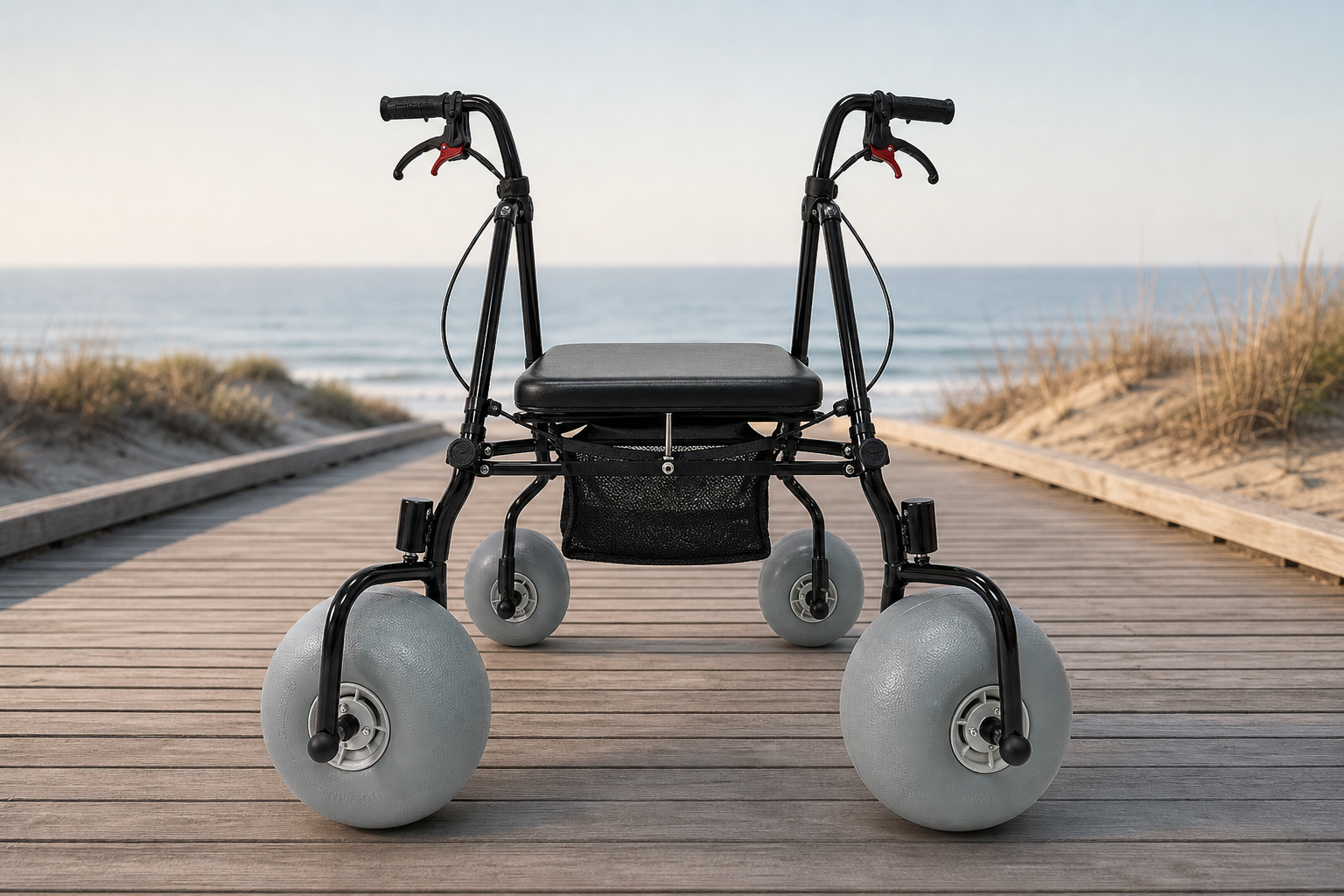
A beach walker Australia uses wheels and geometry intended for documented outdoor terrain. Firm wet sand may offer less rolling resistance than deep dry sand. Meanwhile, local slope and debris can also affect effort. Users should follow the manual and trial the route with suitable supervision.
Why do wheel width and pressure matter?
Also, wider contact can spread load over more sand, while wheel setup affects drag and steering. Small adjustments have consequences: use only the pressure or setup stated for the model.
- Wheel width and diameter
- Documented inflation or maintenance method
- Front-wheel tracking and turning behaviour
- Sand depth and moisture
- User weight transfer during walking
Which surfaces need extra caution?
Deep dry sand, cross slopes, loose shells, steep paths and washed-out entries can reduce control. A route that worked last week may change after wind or tide.
| Surface | Planning response |
|---|---|
| Firm sand | Trial normal walking effort |
| Deep dry sand | Shorten route or use firmer path |
| Cross slope | Seek a flatter line |
| Debris or erosion | Pause and reassess route |
Route selection can change the experience more than pushing harder through a poor line.
Key Takeaway: Use the firmest suitable route and keep wheel setup within current model guidance.
Which Beach Walker Australia Features Need Review?
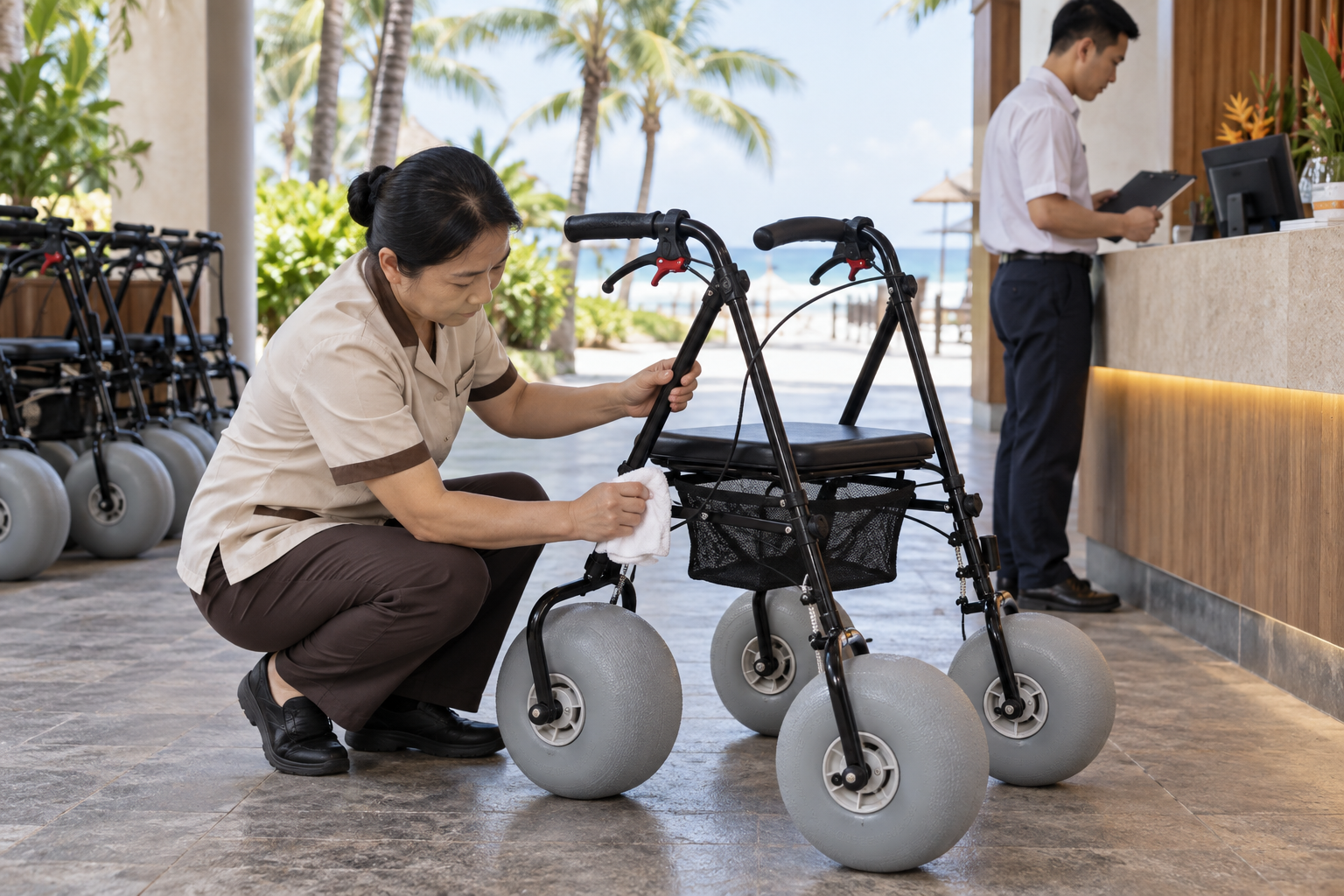
A beach walker Australia buyer should review handle adjustment, brakes, wheel layout, frame dimensions, resting seat, folding method and maintenance access. Feature value depends on the user and operating setting. Commercial fleets may also need replaceable contact parts and clear training documents.
Which controls affect daily use?
Also, the user should be able to reach and operate controls without awkward posture. A feature list is not a fit test: controls need hands-on review where practical.
- Handle range and grip shape
- Brake location and operating force
- Wheel tracking and turning space
- Seat and rest arrangement
- Folding locks or transport points
Which details matter to commercial buyers?
Councils, resorts and hire programs need durable identification, cleaning access, spare parts and a consistent handover process. Ask how adjustments are reset between users.
| Feature area | Buyer question |
|---|---|
| Adjustment | Can staff set it consistently? |
| Brakes | Can users and staff check function? |
| Folding | Does it suit storage and transport? |
| Spares | Are part numbers and guidance available? |
As a result, this review turns marketing features into operational requirements.
Key Takeaway: Judge features through fit, control and serviceability rather than quantity.
How Should a Beach Walker Australia Fit Be Checked?
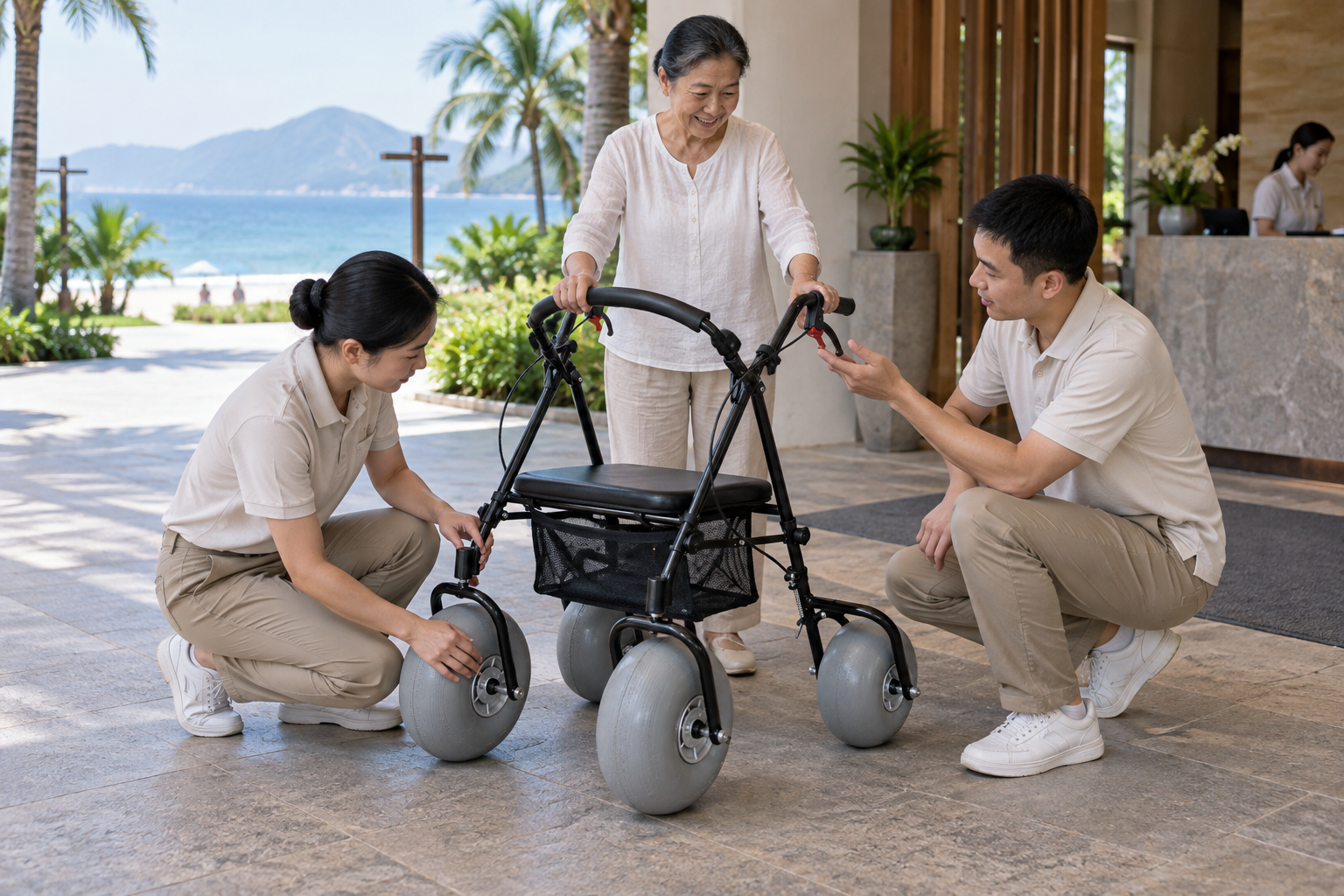
A beach walker Australia fit check should happen on a flat, firm surface before the user enters sand. Review documented dimensions, handle position, posture, control reach and braking. A qualified health professional can advise where balance, pain, endurance or other personal factors affect the choice.
What should happen before a sand trial?
Also, read the current manual and confirm that adjustments lock as intended. Do not rush this stage: sand adds resistance that can hide a poor setup until the user tires.
- Confirm model and current documentation
- Set handles within documented range
- Check brake operation and wheel condition
- Practise turning, stopping and resting
- Agree on companion or supervisor role
How should a trial progress?
Move from firm ground to a short, level coastal route and stop if control or comfort changes. Record settings without claiming that one trial proves suitability for every condition.
| Trial stage | What to observe |
|---|---|
| Flat surface | Posture and control reach |
| Firm sand | Steering and braking |
| Short route | Endurance and rest needs |
| Return route | Control under fatigue |
A gradual trial gives the user and adviser better evidence than a quick showroom turn.
Key Takeaway: Check fit and controls on firm ground, then progress through a short supervised route.
Where Can a Beach Walker Australia Be Used?
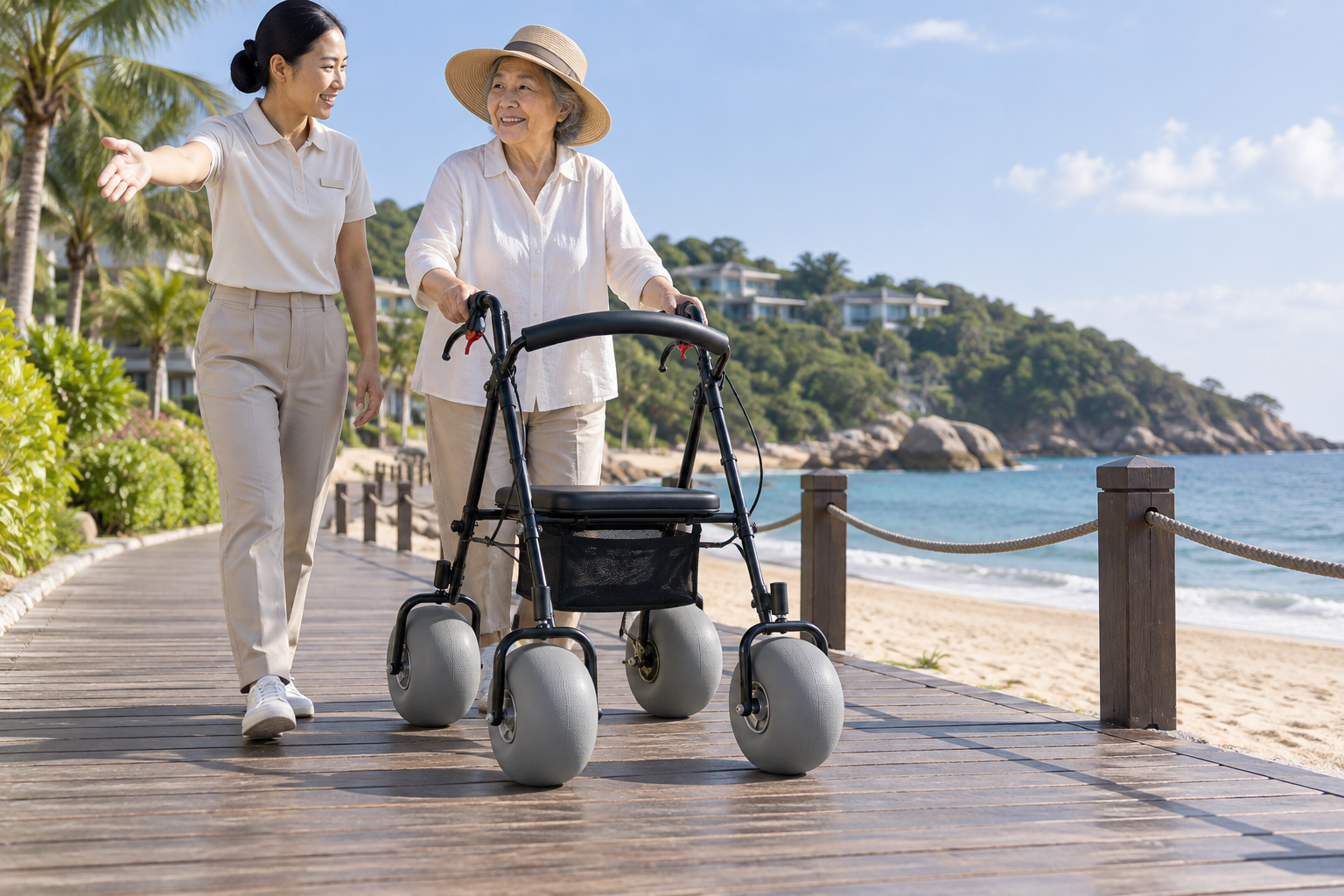
A beach walker Australia should be considered only for terrain documented for the exact model and reviewed against the user’s ability. Possible routes may include boardwalks, access matting, firm sand and selected uneven paths. Water, steep slopes and deep loose sand require separate review and may be outside intended use.
How do you plan a usable route?
Also, walk from parking or accommodation through gates, facilities and the beach entry. The weak link may be inland: a kerb or narrow gate can stop the outing before sand begins.
- Step-free arrival and turning space
- Toilets, shade and seating
- Boardwalk or mat condition
- Firm-sand access and return path
- Distance between rest points
What changes the route during a visit?
For example, wind, tide, erosion, crowds and maintenance work can alter surfaces or available space. Users and support people need a simple retreat option.
| Route change | Response |
|---|---|
| Windblown soft sand | Move to firmer line or shorten trip |
| Cross-slope erosion | Avoid affected section |
| Crowded entry | Wait or use another documented point |
| Damaged matting | Report and stop using that path |
Current route information helps users decide before they commit energy to the trip.
Key Takeaway: Plan the complete route and keep an easy return option as conditions change.
What Support Does a Beach Walker Australia User Need?
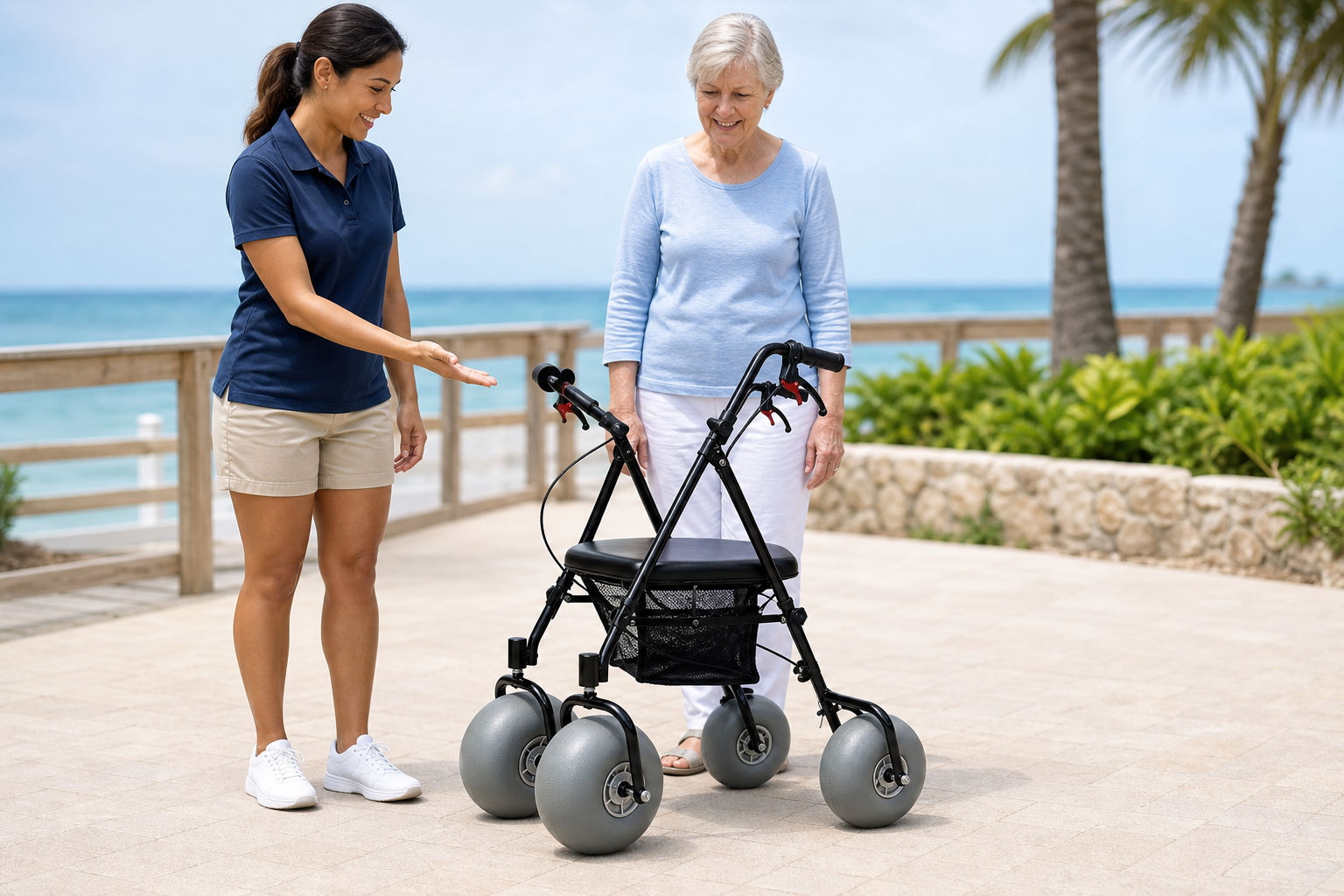
A beach walker Australia user may need no physical help, close supervision or active companion support depending on the person, terrain and model guidance. Helpers should ask before touching the aid. Commercial staff should know the boundary between equipment demonstration and personal mobility assistance.
How should companions assist?
Also, agree on words for stopping, turning and returning before entering sand. Support should not fight the user: unexpected pulling can disturb balance.
- Walk where the user requests
- Keep the route clear and watch surface changes
- Avoid grabbing the frame without agreement
- Carry small items if they affect control
- Stop early when fatigue or control changes
What should hire staff explain?
Also, use a repeatable handover covering adjustments, brakes, documented terrain, return time, cleaning expectations and fault reporting. Do not promise personal assistance beyond the service scope.
| Handover item | Reason |
|---|---|
| Controls | Supports documented operation |
| Route limits | Clarifies intended use |
| Support roles | Sets expectations |
| Fault contact | Allows quick response |
A concise handover gives users clear information without taking control away from them.
Key Takeaway: Let the user direct assistance and keep commercial handovers within documented equipment roles.
How Do You Maintain a Beach Walker Australia?
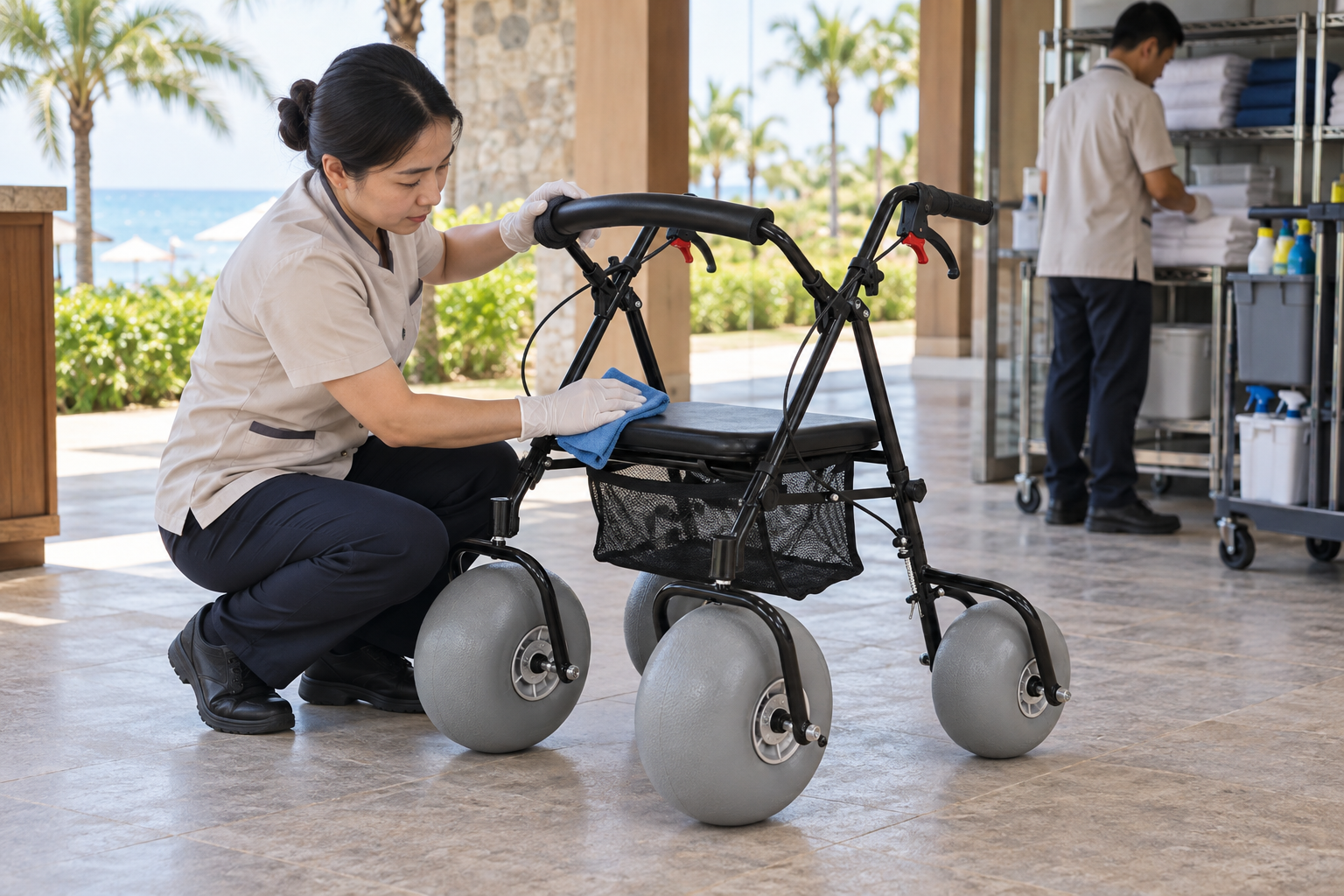
A beach walker Australia should be cleaned as directed after coastal use, dried fully and checked for wheel, brake, frame, fastener and fabric faults. Sand and salt can interfere with moving parts. Commercial operators should log each check and remove faulty equipment from hire until authorised repair.
What belongs in routine care?
Also, use the exact manual rather than a general mobility-aid checklist. A clean frame can still hide a fault: operate brakes and locks during inspection.
- Remove sand without forcing it into joints
- Rinse only as directed
- Dry in shade with airflow
- Test brakes, wheels and folding locks
- Record wear, damage and missing parts
How should spare parts be planned?
Also, keep verified part numbers, supplier contacts and lead times. Fleet buyers should use fault records to set reorder points.
| Maintenance record | Decision supported |
|---|---|
| Brake fault | Service or part replacement |
| Wheel wear | Stock priority |
| Loose fastener | Inspection frequency |
| Fabric damage | Cleaning or replacement review |
Meanwhile, records turn isolated repairs into evidence for future buying and care decisions.
Key Takeaway: Test moving controls during each inspection and order only verified replacement parts.
What Does a Beach Walker Australia Program Cost?

A beach walker Australia budget may include equipment, freight, fitting support, storage, cleaning time, spare parts and staff handovers. Individual buyers may compare purchase with occasional hire. Commercial buyers need a lifecycle view across demand, maintenance and downtime.
Which costs should buyers list?
Also, separate setup from recurring work and leave unknown items marked for confirmation. Unit price is only one line: a missing spare can create a longer and costlier service gap.
- Walker and freight
- Trial or professional advice where needed
- Storage and transport accessories
- Spare parts and repairs
- Cleaning, inspection and staff time
How can proposals be compared fairly?
Also, ask each supplier for the same model documents, delivery scope and spare information. Compare what arrives and what remains the buyer’s responsibility.
| Cost group | Evidence needed |
|---|---|
| Equipment | Model and included items |
| Freight | Written delivery endpoint |
| Service | Warranty and support terms |
| Continuity | Spare list and lead times |
This format makes incomplete quotes easier to recognise before an order.
Key Takeaway: Compare full ownership and service costs, not the walker price alone.
Where Should You Buy a Beach Walker Australia?
A beach walker Australia should be bought from a supplier who provides current documentation, written dimensions, intended-use guidance and spare-part support. A local mobility professional can help with personal fit and trials. Factory-direct discussion may suit fleets, repeat orders or commercial packing needs.
What should you request before purchase?
Also, give the supplier the user context or commercial service plan without asking them to make unsupported clinical decisions. Good evidence travels with the product: keep documents after delivery.
- Current manual and specifications
- Adjustment and control information
- Intended terrain and use boundaries
- Packing, freight and assembly details
- Spare-parts list and support contact
How should delivery and launch be checked?
Also, inspect the equipment against the order, complete fit or staff training, test controls on firm ground and record the documented route. Resolve damage or missing documents before use.
| Launch stage | Check |
|---|---|
| Receipt | Parts and condition match order |
| Setup | Adjustments and locks work |
| Trial | User controls aid on firm ground |
| Service start | Route and care records ready |
A careful launch connects a purchasing decision with real-world operation.
Key Takeaway: Buy from documented evidence, then complete fit, control and route checks before use.
Final Thoughts
A beach walker can support an ambulant user across suitable sand. However, wheel size alone does not decide success. User fit, control reach, route, companion role, maintenance, storage and supplier documents all matter. Commercial programs also need consistent handovers and a clear line between equipment guidance and personal assistance.
If you are comparing walkers or a wider beach-access equipment mix, contact us today with your planned users, route and purchasing needs. We can share available model information and discuss packing or spare options for review. We believe beach mobility equipment should match the person and path rather than force every visitor into one solution.
FAQ
Can I use a beach walker if I normally use a rollator?
Possibly, but familiar use of a rollator does not prove that a beach model suits your balance, controls or route. Review the exact model with a qualified adviser where needed.
What’s the best beach walker for soft sand?
In fact, a suitable option depends on the user’s fit, control and documented terrain needs. Compare wheel design and documents, then trial the walker on a short supervised route.
How do I know if the handles fit correctly?
Check the model’s adjustment range and the user’s posture on firm ground. A health professional can advise when personal mobility factors affect setup.
Can I sit on a beach walker seat anywhere?
No. Follow the exact model instructions and use a stable surface documented for resting.
How do I know if the walker needs repair?
Still, stop use when brakes, wheels, locks, frame or contact parts show a fault or unusual movement. Record the issue and use authorised repair guidance.