
A beach wheelchair staff training plan turns product instructions, site rules, route checks, guest communication, cleaning, and service holds into observed practice. Staff should rehearse where the chair is stored, staged, handed over, returned, and checked. Managers should define each role and use the real route. Records should show who is ready for each task. These ten questions help teams keep training clear across shifts and locations.
What roles should staff training define?
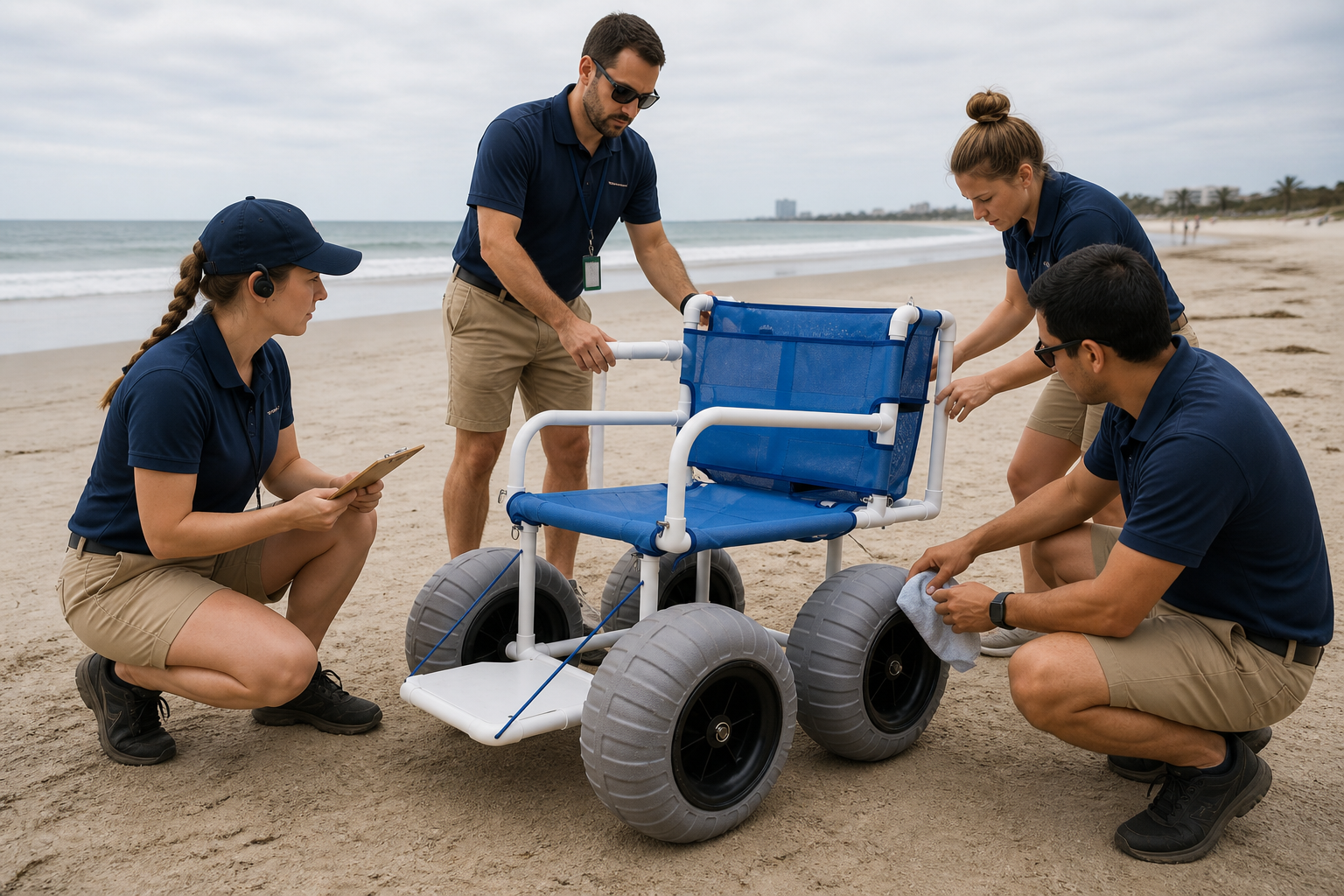
Beach wheelchair staff training should define who opens, stages, briefs, handles, cleans, records, holds, and releases each chair. Clear roles prevent a task from falling between shifts and stop unauthorized staff from making technical decisions. A small site may combine roles, but the responsibilities still need names.
ADA.gov guidance on effective communication tells covered entities to consider each person’s usual communication method and train staff accordingly. Local requirements and legal advice may still differ.
For beach, resort, water park, rental, and parks operations leaders, staff examine opening checker, handoff lead, and hold and release authority against current product guidance and site policy. Any unclear point goes to the role authorized to decide, keeping the current service state visible.
Authorize tasks by role
Here is the working point: Map every service task to a role and state how that role gains authorization. The assigned role records the role, training version, observation, and approval. If a task has no authorized owner, the item or service moves out of the ready flow until the named owner documents what happens next. Then, record status clearly for the next shift.
- Check opening checker
- Confirm handoff lead
- Record hold and release authority
Key Takeaway: Role-based authorization gives each staff member a clear operating boundary.
| Review point | Working response |
|---|---|
| Observe | Record the current condition |
| Decide | Assign the next action and owner |
Next, rehearse this task on the real route and fix unclear wording.
Which product parts should staff identify?
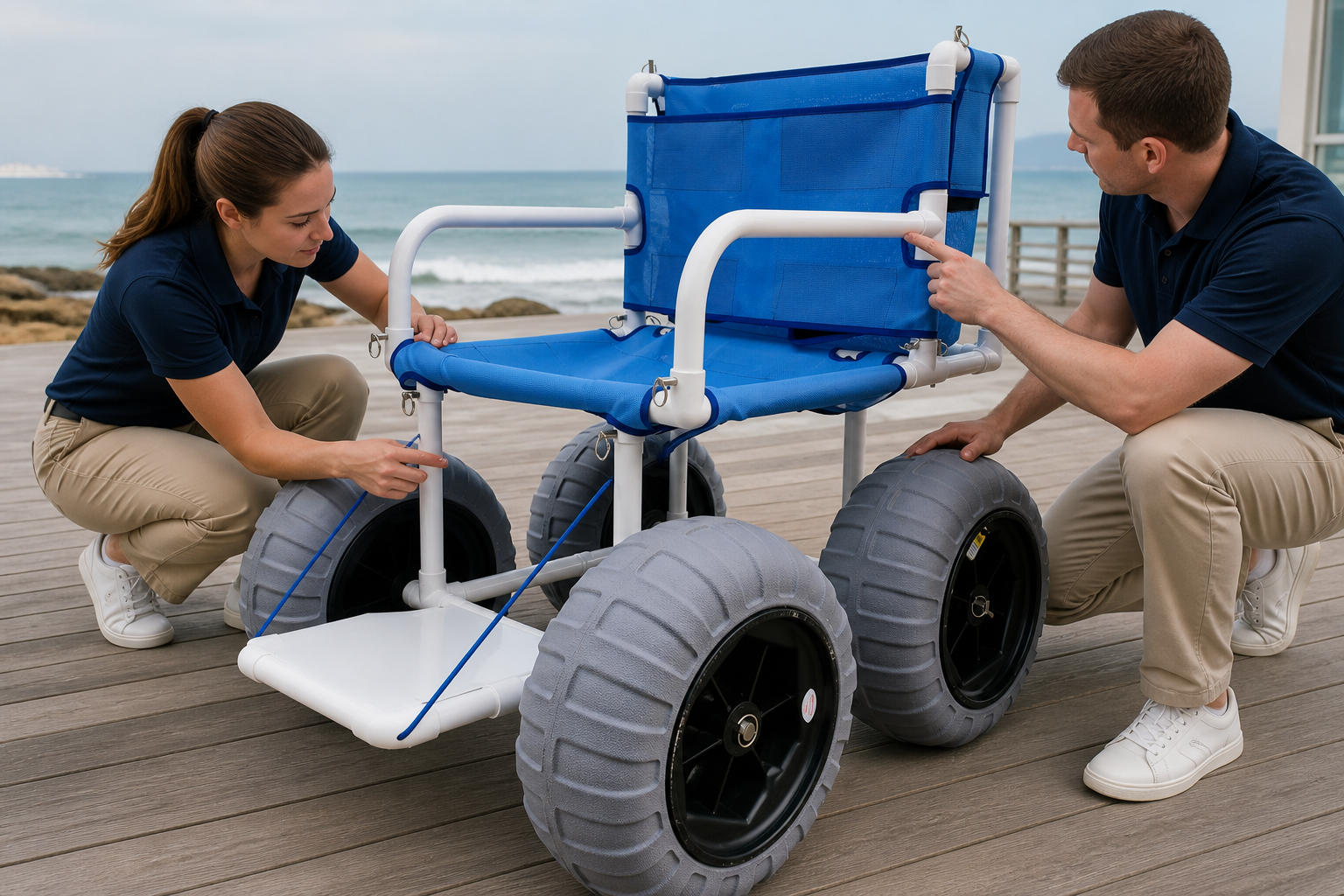
Beach wheelchair staff training should teach staff to identify the parts they inspect, handle, clean, or discuss. For the reference chair, that includes the white tube frame and joints, blue mesh seat and back, curved arm rails, suspended foot platform, cords, push points, and four balloon wheels. Product documents control the accepted names and care instructions.
For mixed-terrain service, compare the training chair with the current all-terrain beach wheelchair documents before using shared checklists.
For beach, resort, water park, rental, and parks operations leaders, staff examine frame and joints, seat and foot support, and wheels and push points against current product guidance and site policy. Any unclear point goes to the role authorized to decide, keeping the current service state visible.
Teach visible product anatomy
What should staff see: Pair each named part with one observable check and one source document. The assigned role records the product version, source, and clarification owner. If a part differs from the training image or its instruction is unclear, the item or service moves out of the ready flow until the named owner documents what happens next. Next, leave a clear note for the next shift.
- Check frame and joints
- Confirm seat and foot support
- Record wheels and push points
Key Takeaway: Visible anatomy gives staff precise language for checks and fault reports.
| Review point | Working response |
|---|---|
| Observe | Record the current condition |
| Decide | Assign the next action and owner |
Then, watch staff identify each part and correct vague instructions.
How should teams practice opening inspections?
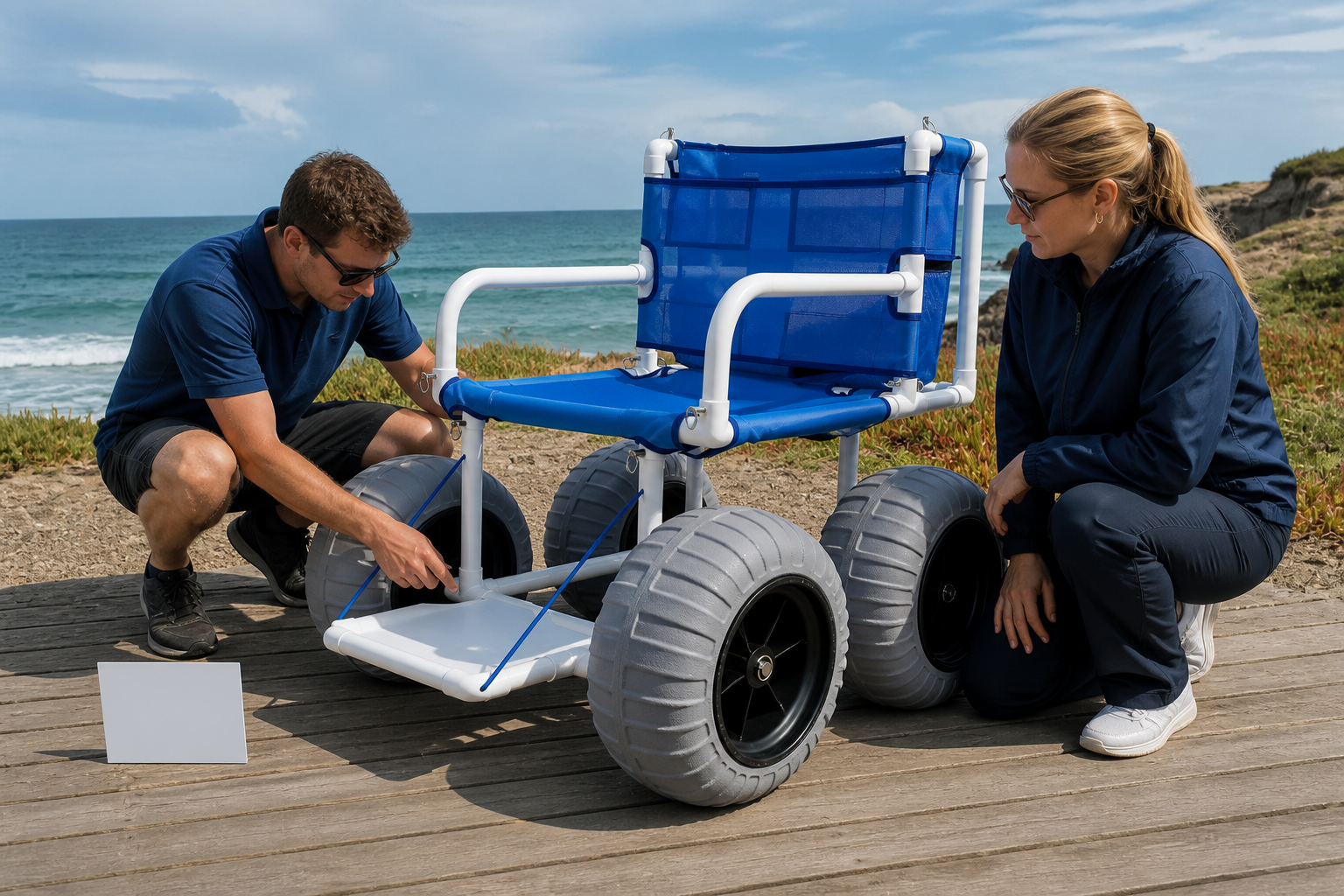
Beach wheelchair staff training should use a consistent physical sequence for opening inspection. Staff can move around the chair in one direction while checking visible frame condition, joints, wheel attachment, seating, foot support, restraints if fitted, cleanliness, and current status. The checklist should complement product instructions. Use the beach wheelchair product overview to separate shared checks from model-specific ones.
For beach, resort, water park, rental, and parks operations leaders, staff examine touch each checkpoint, compare with ready standard, and set pass or hold status against current product guidance and site policy. Any unclear point goes to the role authorized to decide, keeping the current service state visible.
Use one repeatable walk-around
Use this field cue: Demonstrate the sequence, let the trainee repeat it, and correct skipped actions at once. The assigned role records the chair identity, status, issue, and owner. If damage, looseness, missing parts, contamination, or uncertainty appears, the item or service moves out of the ready flow until the named owner documents what happens next. Meanwhile, keep the physical status aligned with the record.
- Check touch each checkpoint
- Confirm compare with ready standard
- Record set pass or hold status
Key Takeaway: A physical inspection sequence makes missed checkpoints easier to spot.
| Review point | Working response |
|---|---|
| Observe | Record the current condition |
| Decide | Assign the next action and owner |
Afterward, observe the full inspection and record skipped checks.
What handling skills need supervised practice?
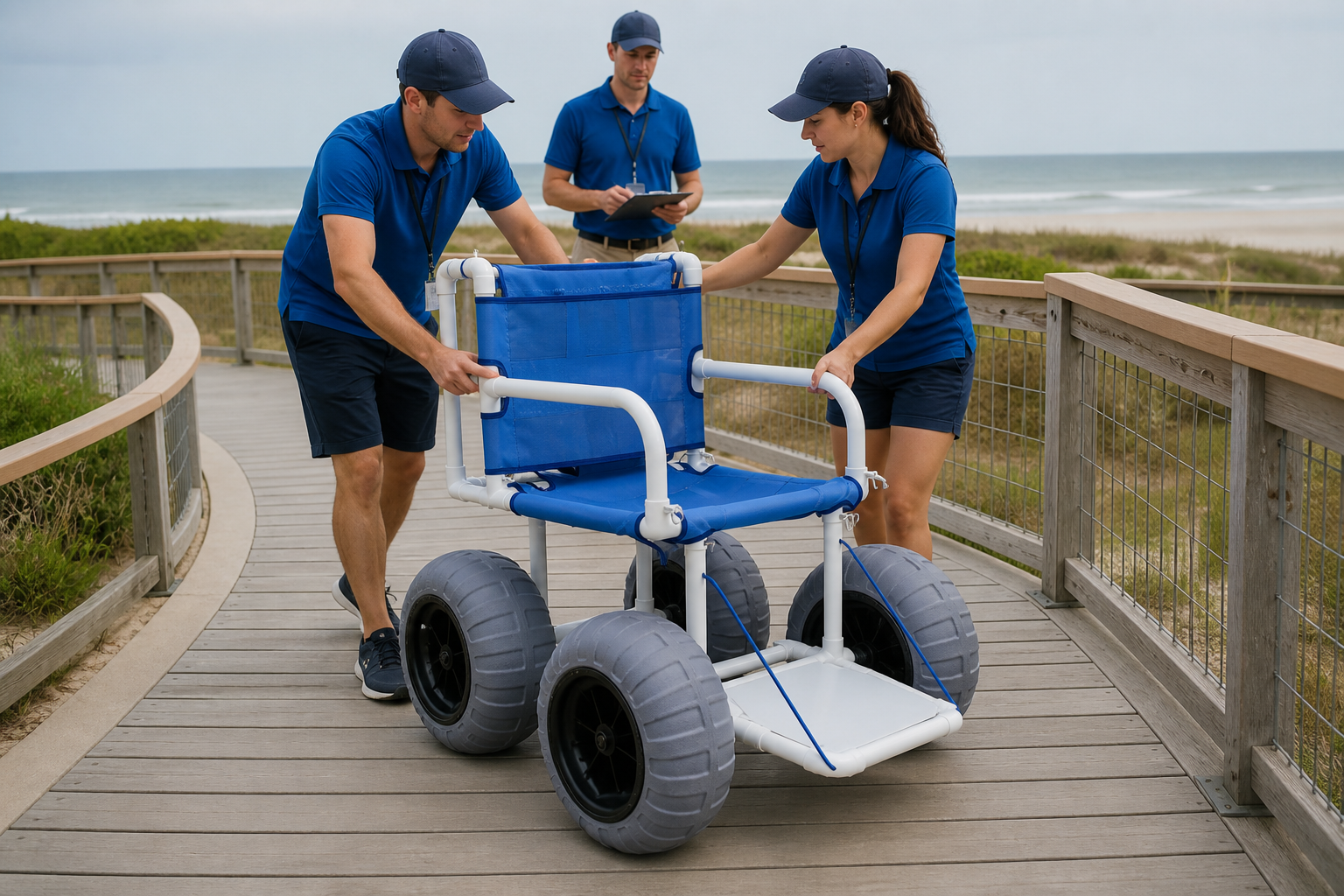
Beach wheelchair staff training should include supervised practice for every approved movement task. Storage removal, doorway travel, team lifting if allowed, push positions, turning, slope approach, staging, guest handoff, return, and bay placement should match local policy and product guidance. Practice should begin without a guest.
For beach, resort, water park, rental, and parks operations leaders, staff examine body and hand position, clear communication, and controlled stop and turn against current product guidance and site policy. Any unclear point goes to the role authorized to decide, keeping the current service state visible.
Practice the real movement tasks
The practical test: Demonstrate slowly, rehearse on the real route, and stop whenever the working cue is unclear. The assigned role records the practiced route, role, observation, and follow-up. If the task exceeds staff authorization or site conditions change, the item or service moves out of the ready flow until the named owner documents what happens next. Afterward, record what changed and who owns the next action.
- Check body and hand position
- Confirm clear communication
- Record controlled stop and turn
Key Takeaway: Supervised route practice turns written handling cues into visible behavior.
| Review point | Working response |
|---|---|
| Observe | Record the current condition |
| Decide | Assign the next action and owner |
Meanwhile, coach handling on actual doors, turns, and surfaces.
How should staff explain a guest handoff?
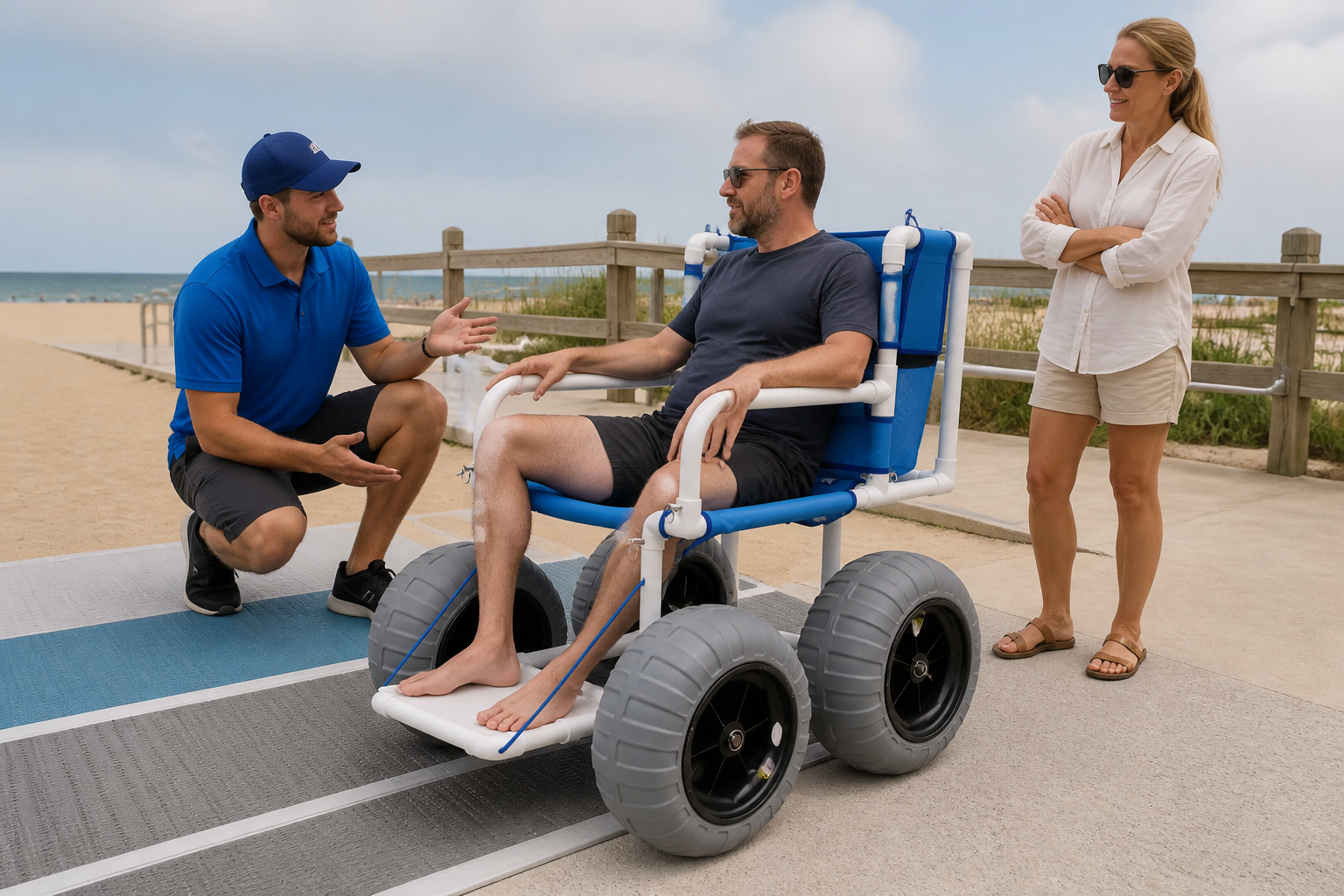
Beach wheelchair staff training should teach a short guest handoff that explains equipment, route, roles, and pause cues. Staff can introduce themselves, confirm the arrangement, describe relevant supports in plain language, invite preferences and questions, name the checked route, and avoid medical advice. The guest should know who controls movement and how to pause.
A water-entry service needs a separate handoff for the floating beach wheelchair, including supervision and water limits.
For beach, resort, water park, rental, and parks operations leaders, staff examine plain product explanation, route boundary, and agreed communication cue against current product guidance and site policy. Any unclear point goes to the role authorized to decide, keeping the current service state visible.
Teach a respectful conversation
Keep the response simple: Role-play the conversation with common questions and let the trainee respond without jargon. The assigned role records the agreed handoff, route, and responsible role. If the service arrangement, route, or guest preference remains unclear, the item or service moves out of the ready flow until the named owner documents what happens next. Also, leave enough detail for staff who were not present.
- Check plain product explanation
- Confirm route boundary
- Record agreed communication cue
Key Takeaway: A respectful handoff joins clear communication with current equipment readiness.
| Review point | Working response |
|---|---|
| Observe | Record the current condition |
| Decide | Assign the next action and owner |
Also, listen to the handoff and correct unclear language.
Which route checks belong in training?
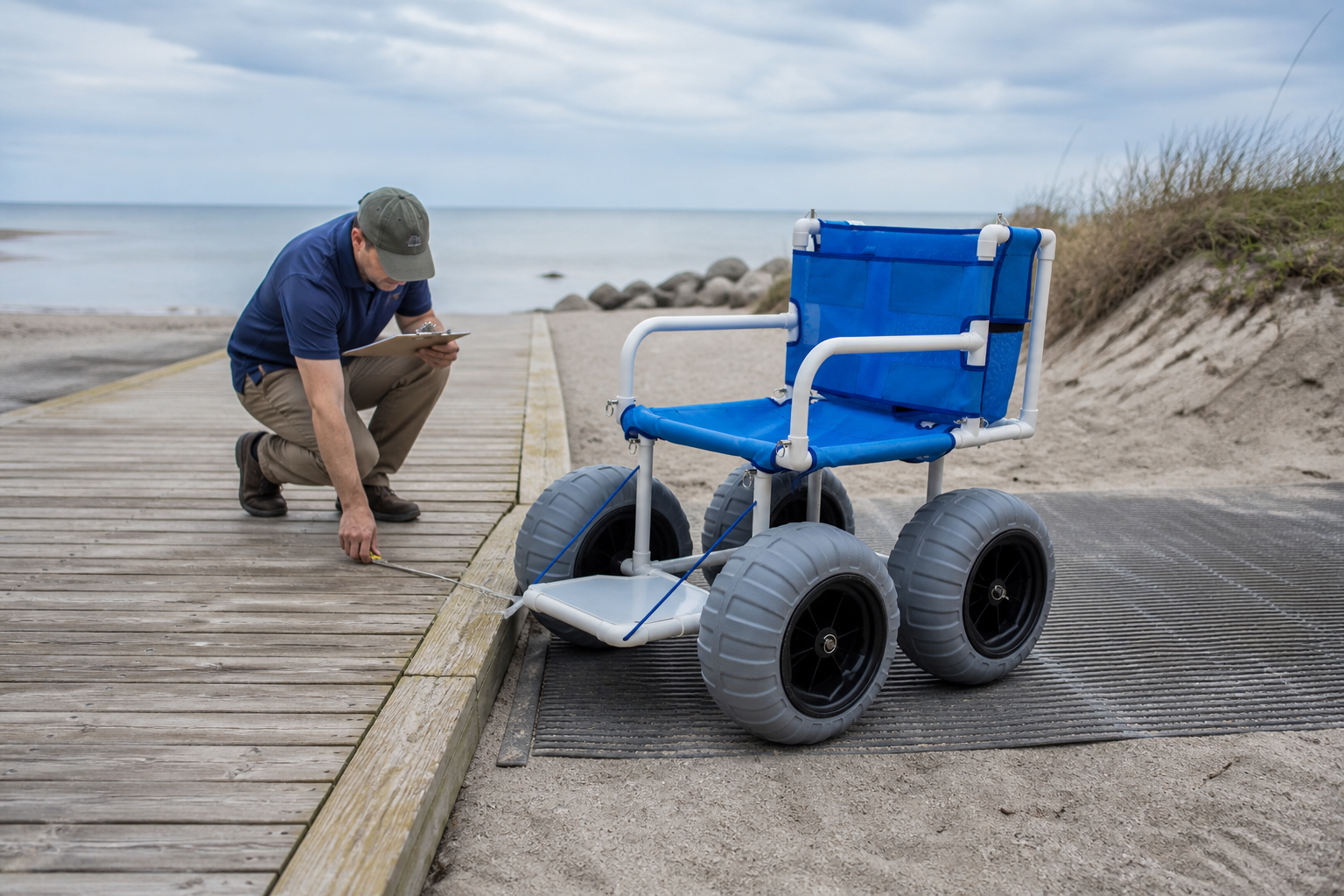
Beach wheelchair staff training should cover storage exits, gates, boardwalks, sand changes, turn areas, water boundaries, temporary barriers, and the return path. A ready chair cannot make a blocked or changed route ready. Staff need to know who walks the route, what conditions trigger a pause, and how the service state reaches the reservation or handoff team.
If the service includes ambulatory visitors, keep the beach walker route and training record separate from wheelchair procedures.
Include each accessible beach mat, boardwalk join, soft-sand section, and turnaround point in the route walk.
For beach, resort, water park, rental, and parks operations leaders, staff examine access clearance, surface and weather change, and return path against current product guidance and site policy. Any unclear point goes to the role authorized to decide, keeping the current service state visible.
Train staff on the complete route
This is the operating move: Walk the route at operating pace and rehearse a pause report to the shift lead. The assigned role records the check time, condition, decision, and communication. If the route no longer matches the approved service boundary, the item or service moves out of the ready flow until the named owner documents what happens next. As a result, the next shift can act without guessing.
- Check access clearance
- Confirm surface and weather change
- Record return path
Key Takeaway: Route training makes site readiness part of the equipment decision.
| Review point | Working response |
|---|---|
| Observe | Record the current condition |
| Decide | Assign the next action and owner |
Next, walk the route and revise any unusable instruction.
How should staff respond to a service hold?
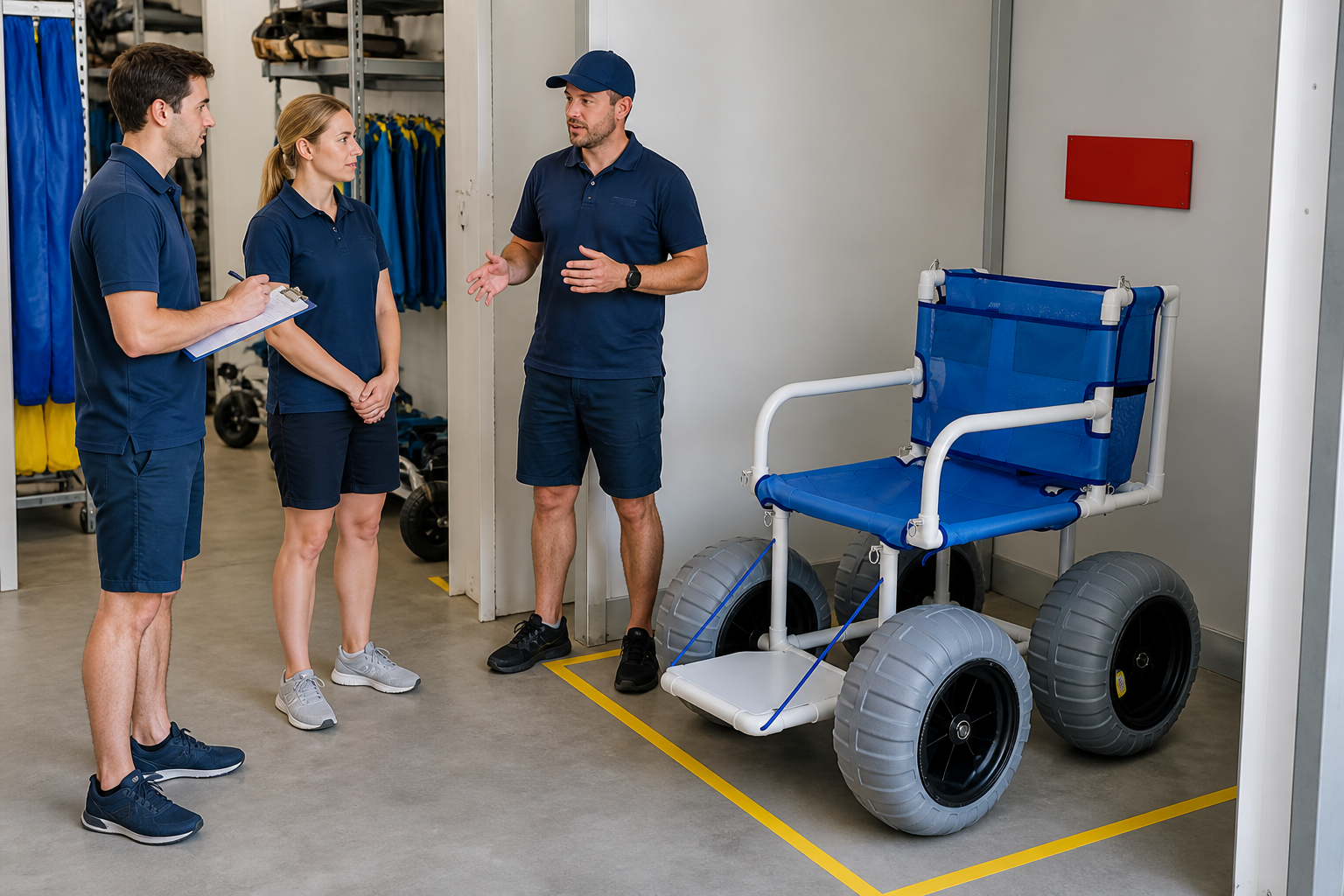
Beach wheelchair staff training should teach staff to remove an unclear chair or route from ready service. A hold is a controlled operating state, not a technical diagnosis. Staff should stop release, mark status, move equipment to the designated zone when appropriate, report the observable condition, and wait for authorized disposition.
For beach, resort, water park, rental, and parks operations leaders, staff examine stop release, separate held equipment, and report observable facts against current product guidance and site policy. Any unclear point goes to the role authorized to decide, keeping the current service state visible.
Teach stop, mark, move, and report
Watch the handoff: Rehearse common hold scenarios and ask the trainee to choose the correct owner. The assigned role records the condition, time, location, reporter, and next owner. If any visible condition or missing information prevents a confident ready decision, the item or service moves out of the ready flow until the named owner documents what happens next. Then, match the written status with the equipment tag.
- Check stop release
- Confirm separate held equipment
- Record report observable facts
Key Takeaway: A clear hold process keeps uncertainty out of guest handoffs.
| Review point | Working response |
|---|---|
| Observe | Record the current condition |
| Decide | Assign the next action and owner |
Then, rehearse the service hold until each role acts correctly.
What cleaning and drying steps need practice?
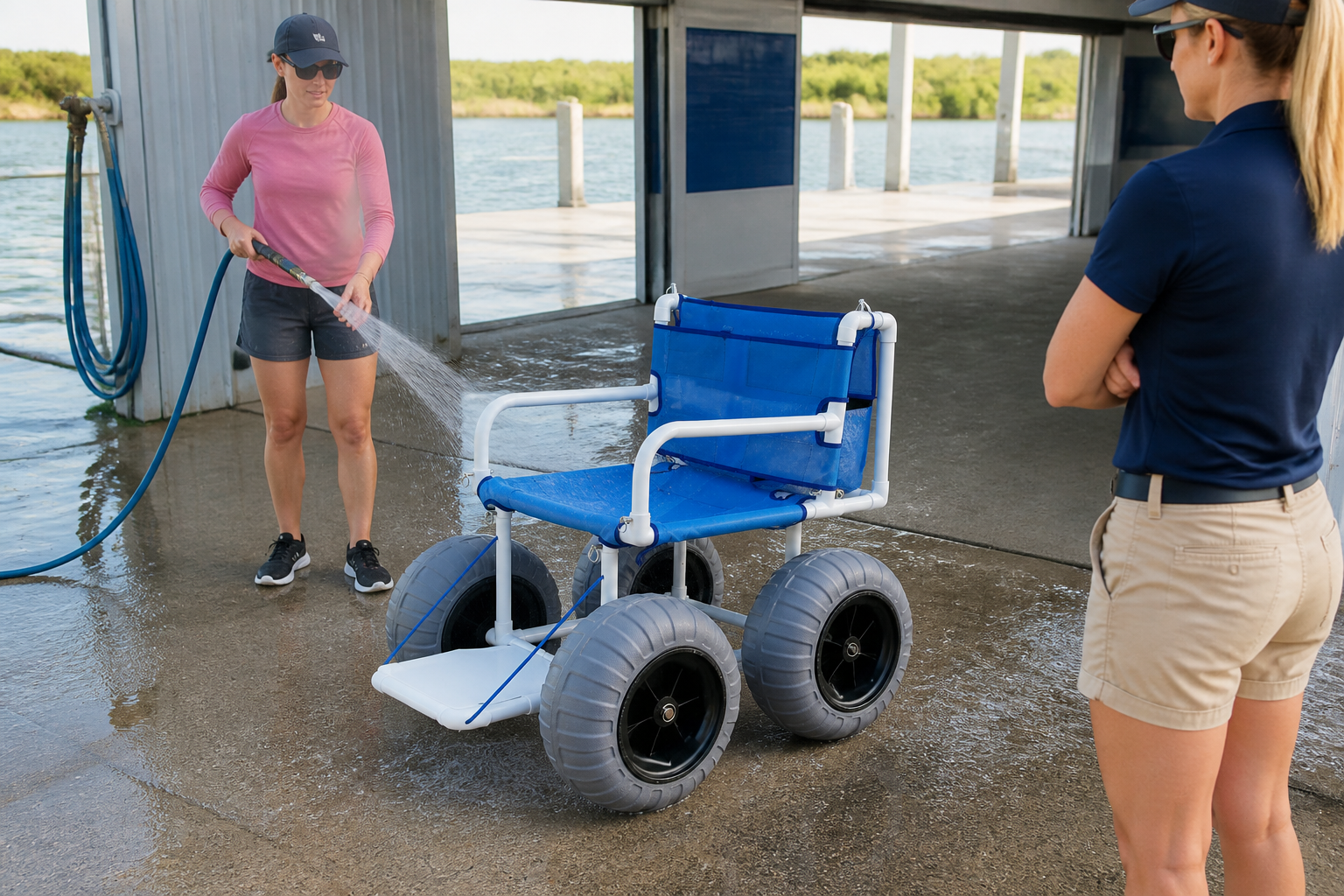
Beach wheelchair staff training should include return, rinse, cleaning, drying, inspection, and ready-zone placement. Staff should follow product instructions for materials and methods while the site workflow controls the physical zones and record. Wet or sandy equipment should not blend into ready stock.
Use the site’s beach wheelchair cleaning guidance only after matching it with the selected model’s current manual.
For beach, resort, water park, rental, and parks operations leaders, staff examine return status, approved care sequence, and dry and ready check against current product guidance and site policy. Any unclear point goes to the role authorized to decide, keeping the current service state visible.
Train the complete care flow
Use one clear rule: Follow one chair through the one-way care area and observe handoffs between roles. The assigned role records the care completion, status, and any hold reason. If care instructions are unavailable or the chair remains wet, dirty, or unclear, the item or service moves out of the ready flow until the named owner documents what happens next. Next, record any cleaning, damage, or service hold.
- Check return status
- Confirm approved care sequence
- Record dry and ready check
Key Takeaway: A practiced care flow makes chair status visible between shifts.
| Review point | Working response |
|---|---|
| Observe | Record the current condition |
| Decide | Assign the next action and owner |
Afterward, watch the cleaning sequence and record missed steps.
How can supervisors verify staff readiness?
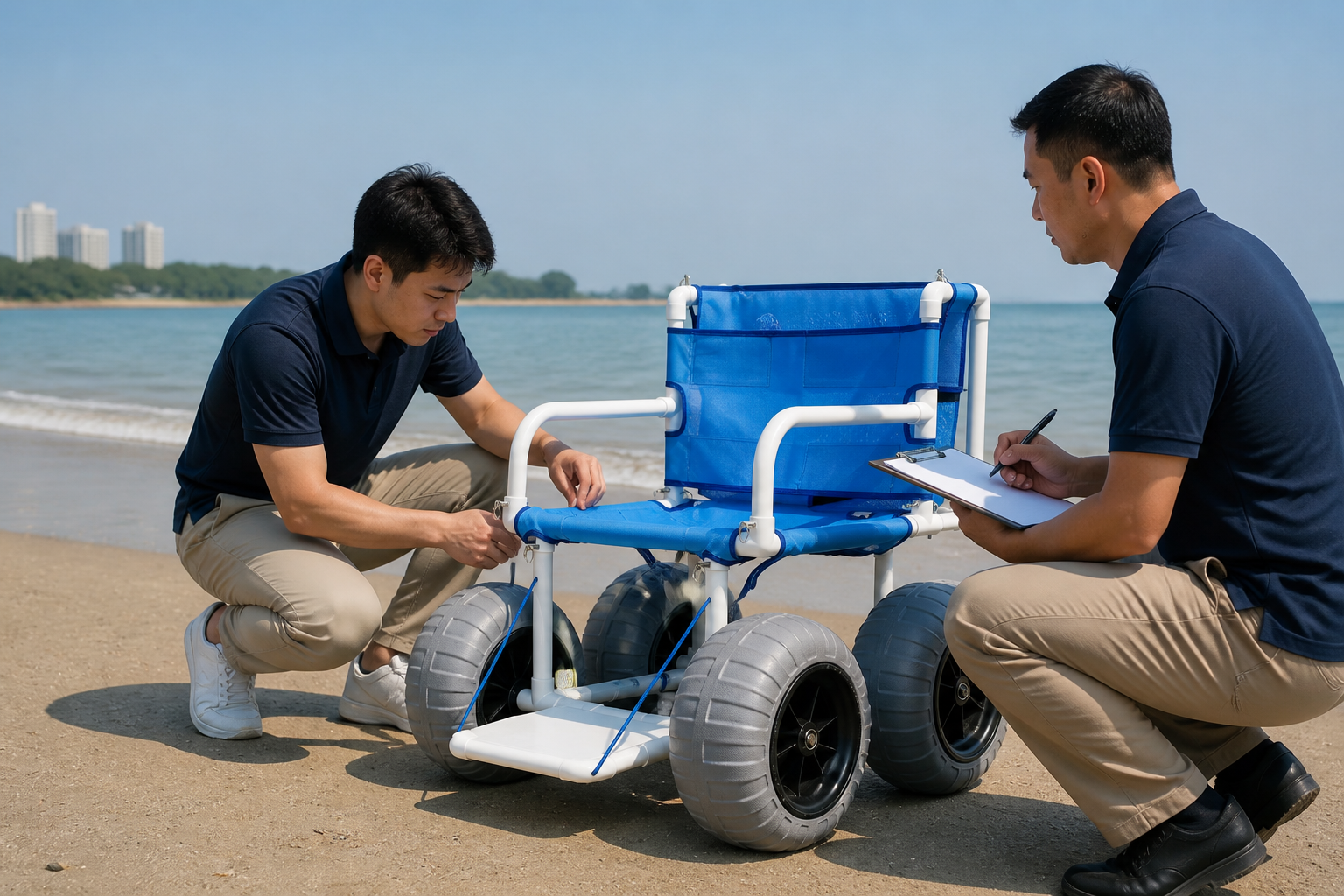
Beach wheelchair staff training should verify readiness through direct observation and clear decision criteria. A quiz can check recall, but authorization should also cover product identification, route check, handling, communication, cleaning, records, and the response to an unclear condition. Staff can be authorized by role rather than for the full program.
For beach, resort, water park, rental, and parks operations leaders, staff examine correct task sequence, clear guest language, and appropriate hold response against current product guidance and site policy. Any unclear point goes to the role authorized to decide, keeping the current service state visible.
Observe the complete assigned task
Make the status visible: Observe a normal scenario and one controlled exception, then record approve, coach, or reassess. The assigned role records the observed version, decision, coach, and review date. If the trainee skips a required action or works beyond the assigned role, the item or service moves out of the ready flow until the named owner documents what happens next. Meanwhile, keep the active procedure version with the record.
- Check correct task sequence
- Confirm clear guest language
- Record appropriate hold response
Key Takeaway: Direct observation ties authorization to the work staff will perform.
| Review point | Working response |
|---|---|
| Observe | Record the current condition |
| Decide | Assign the next action and owner |
Meanwhile, observe the full task before authorizing the role.
Which records keep training current?
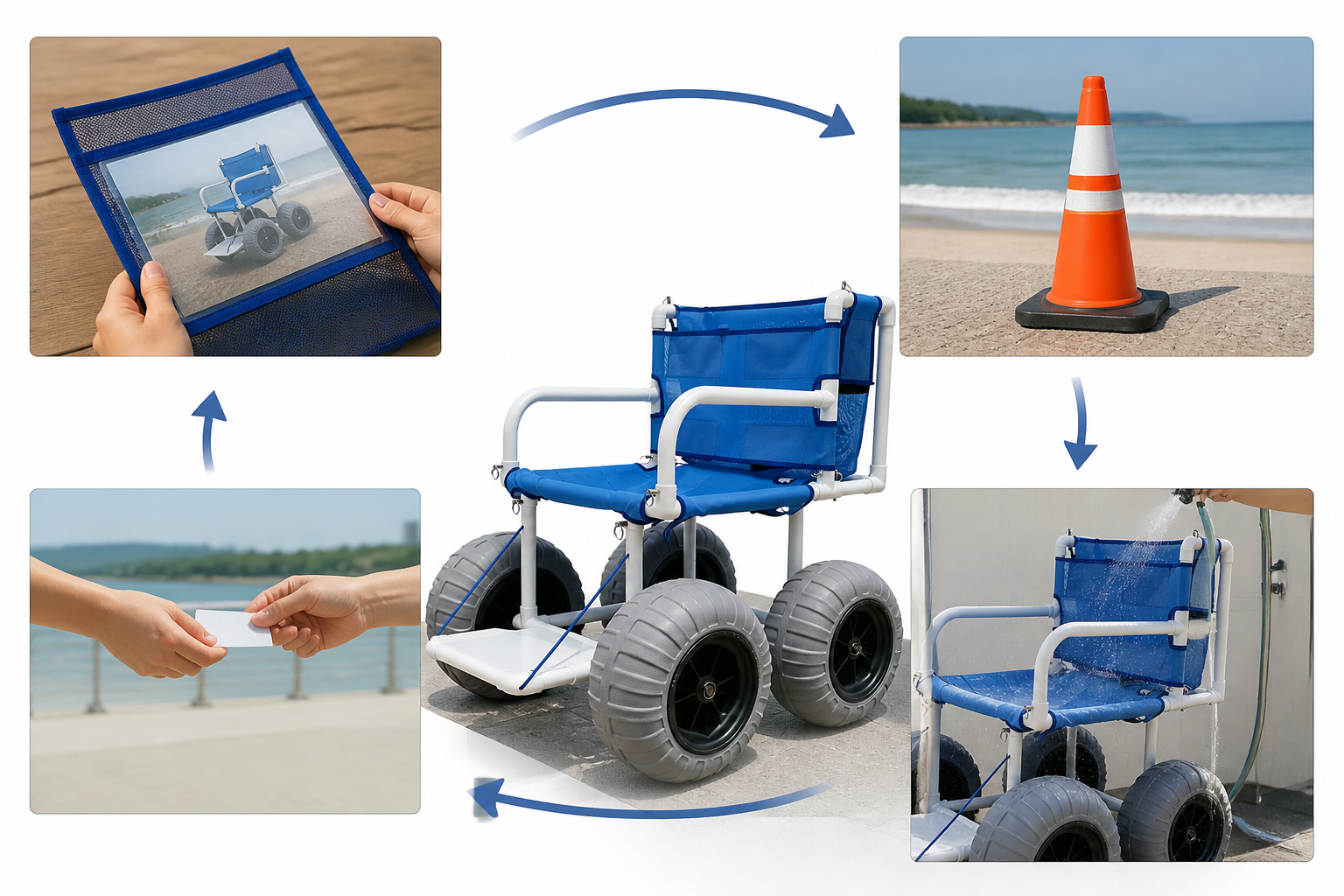
Beach wheelchair staff training should track role authorization, procedure version, observation date, coaching action, and reassessment. Records help managers see who may perform each task and who needs a briefing after a product, route, or policy change. They should stay concise and follow local staff-data policy. Short product videos can support demonstrations when supervisors compare them with the current chair and instructions.
For beach, resort, water park, rental, and parks operations leaders, staff examine authorized role, procedure version, and review trigger against current product guidance and site policy. Any unclear point goes to the role authorized to decide, keeping the current service state visible.
Link records to procedure versions
Close the decision loop: Record the training event, connect it to the current procedure, and reopen it after a relevant change. The assigned role records the change, affected roles, briefing, and new decision. If staff authorization no longer matches the active task or procedure, the item or service moves out of the ready flow until the named owner documents what happens next. Finally, close the handoff before staff leave the area.
- Check authorized role
- Confirm procedure version
- Record review trigger
Key Takeaway: Version-linked records keep authorization aligned with current operations.
| Review point | Working response |
|---|---|
| Observe | Record the current condition |
| Decide | Assign the next action and owner |
Finally, review records after each relevant procedure change.
Beach Wheelchair Staff Training FAQs
Can I train every staff member for every role?
You can, but role-based training is often clearer. Authorize each person only for the tasks they have practiced and demonstrated.
What’s the best place for handling practice?
Use the real storage, staging, and checked route under controlled conditions so staff see the actual doors, turns, surfaces, and cleaning area.
How do I know if a staff member is ready?
Observe the complete task. Readiness comes from correct actions, clear communication, and an appropriate response to an unclear condition.
Can training replace the product manual?
No. The product instructions remain the technical source, while the training plan shows how local roles apply them.
What happens after a procedure changes?
Brief affected staff and observe the revised task again. Update the training record with the new version and authorization decision.
Closing perspective
A better training plan connects product knowledge with real route checks, respectful handoffs, supervised handling, care routines, service holds, and clear records. Managers can observe each task, correct the working cue, and authorize staff only for the roles they have demonstrated. Teams preparing an access program can contact us today with their product and workflow questions.