
A beach wheelchair service gives an Australian holiday park a way to carry guests from an accessible route across sand. A family may book an accessible cabin, arrive. Then, find that a standard chair stops where paving meets soft sand. A planned beach wheelchair for holiday parks Australia service can bridge that gap through equipment, booking, staff roles and a care routine.
We manufacture beach mobility equipment, so this guide focuses on decisions a park team can repeat. It covers users, chair types, routes, bookings, staff roles, storage, weather, budgets and suppliers.
What Is Beach Wheelchair for Holiday Parks Australia Service?
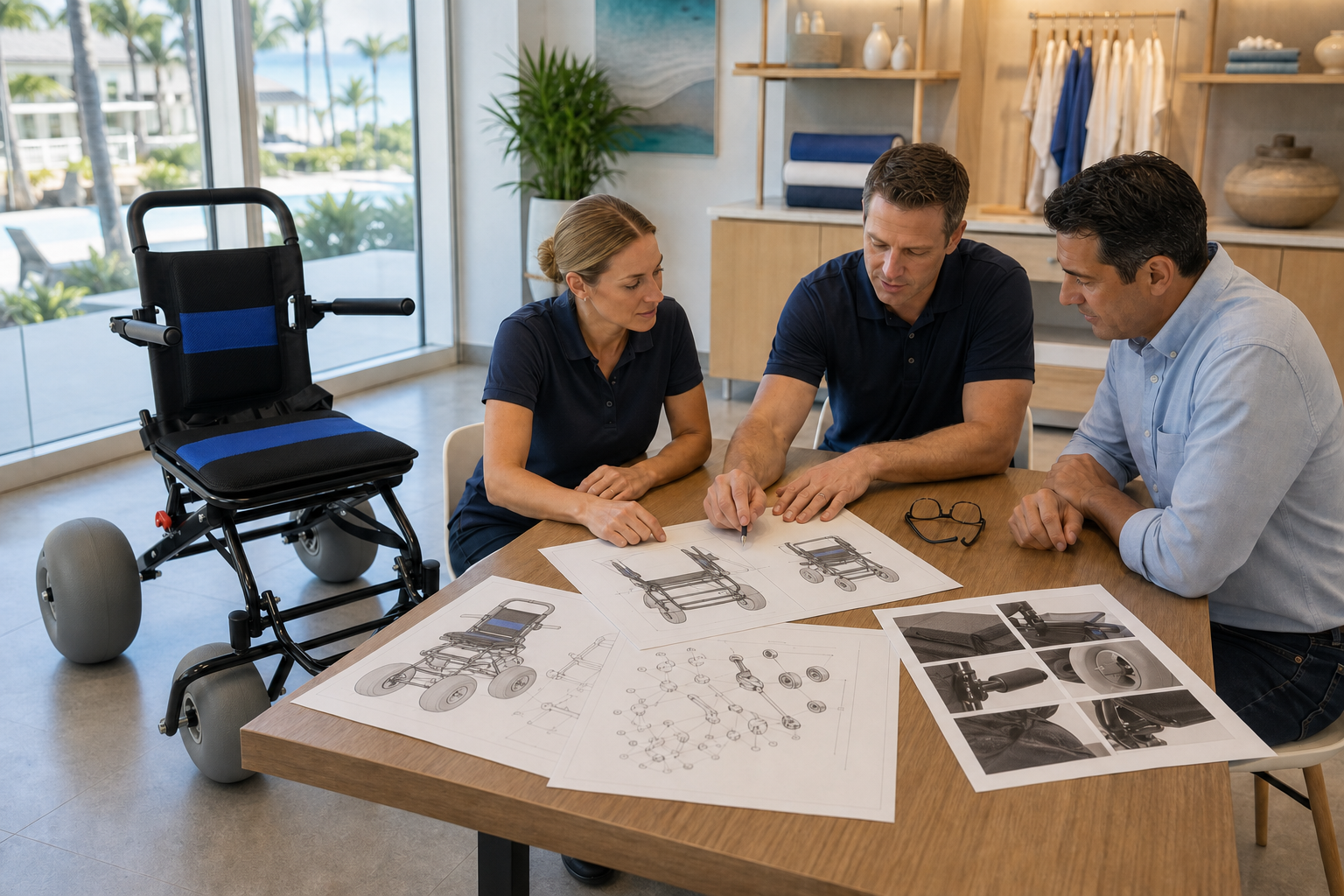
A beach wheelchair for holiday parks Australia service combines a sand-capable chair with a defined route, booking process, staff handover and maintenance plan. Equipment alone does not create access. Guests need accurate information before arrival and a practical way to collect, use and return each chair.
What does the service include?
Also, the service begins at reception and ends after cleaning and inspection. Here is the practical point: every handoff needs an owner, even when chair use remains guest-led. Review current public accessibility guidance before launch.
- A suitable chair and current user manual
- A mapped route from parking or accommodation
- Booking, collection and return instructions
- Cleaning, inspection and repair records
How does the service fit park operations?
Also, treat it like other bookable guest equipment, with boundaries around transfers and beach conditions. A short operating sheet helps reception, grounds and duty staff give the same answer.
| Service element | Park responsibility |
|---|---|
| Booking | Record time, user needs and contact details |
| Handover | Explain controls and documented use |
| Return | Check condition and missing parts |
| Care | Rinse, dry, inspect and log |
This division makes gaps visible before a guest encounters them.
Key Takeaway: Build a complete service around the chair rather than treating equipment purchase as the finish line.
Who Needs Beach Wheelchair for Holiday Parks Australia Access?
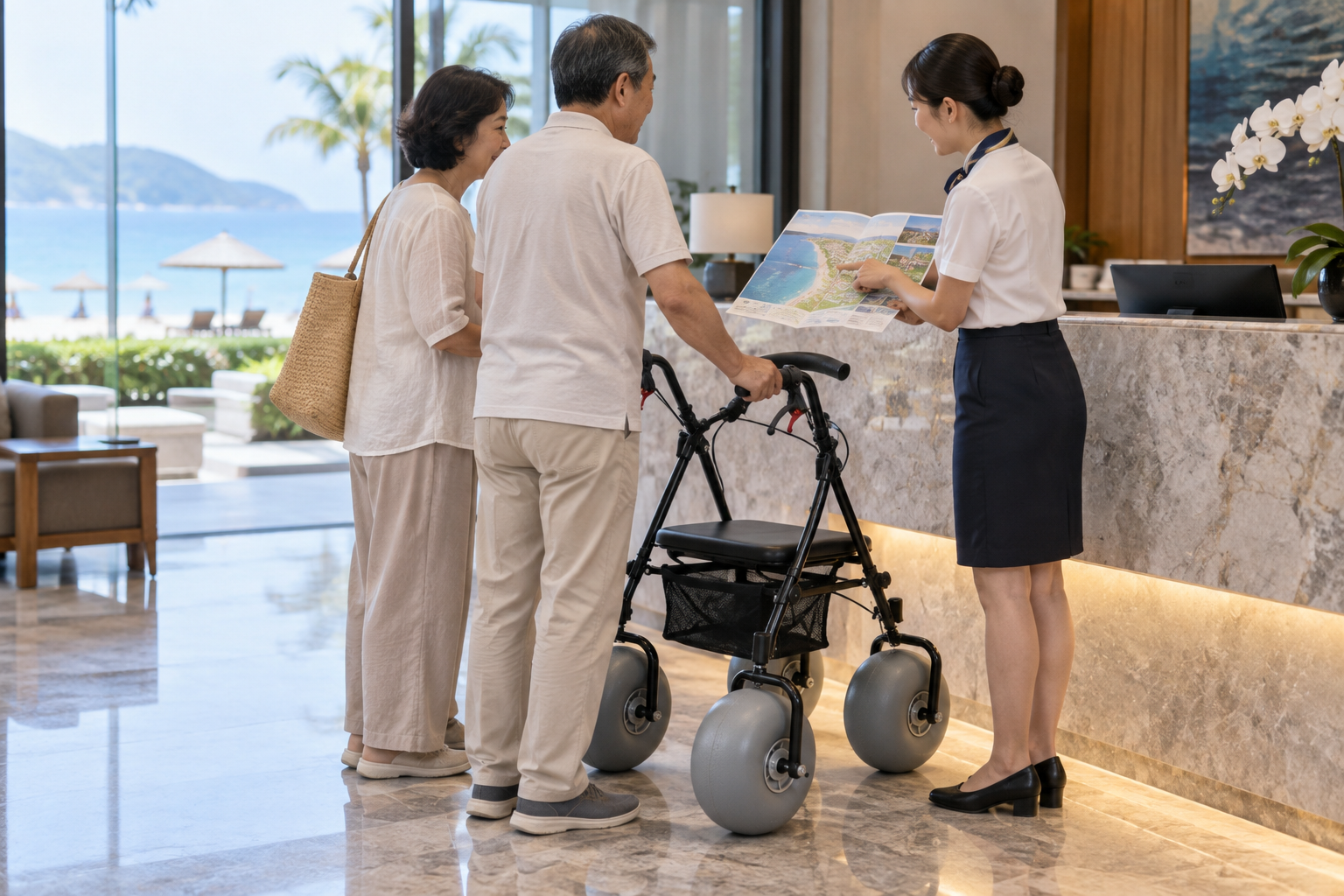
A beach wheelchair for holiday parks Australia program may serve wheelchair users, older travellers, people recovering from injury and guests whose walking range changes on sand. Needs differ widely, so staff should ask what support works instead of guessing from appearance. A companion or support worker may also need route and handling information.
Which guests may benefit?
Also, guests benefit when sand, distance or uneven ground blocks an activity they could otherwise enjoy. The useful question is: what barrier does this person want the park to remove?
- Full-time wheelchair users travelling with support
- Guests who can walk short distances but not across sand
- Older visitors who need stable seated transport
- Families planning access for a mixed-ability group
What should staff ask before booking?
Ask about intended terrain, preferred assistance, transfer arrangements and companion availability. Do not offer clinical advice; direct personal fit questions to a qualified health professional and the current equipment manual.
| Booking question | Why staff ask it |
|---|---|
| Which route will you use? | Confirms terrain suitability |
| Will a support person attend? | Clarifies pushing and transfer roles |
| Do you need a trial? | Allows a firm-ground check |
| What time suits you? | Avoids rushed handovers |
However, these questions improve planning without turning reception staff into mobility assessors.
Key Takeaway: Ask about the guest’s route and preferred support, then stay within documented staff responsibilities.
Which Beach Wheelchair for Holiday Parks Australia Model Fits?
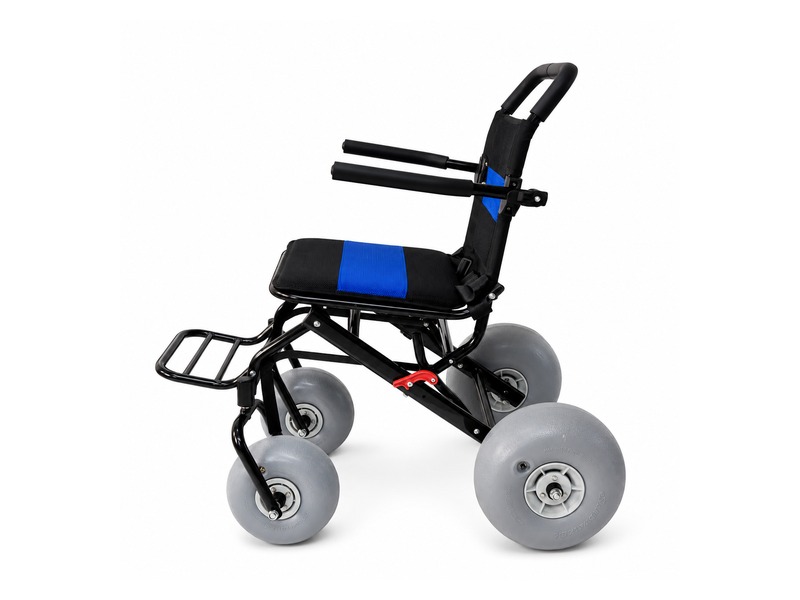
A beach wheelchair for holiday parks Australia model should be selected against the planned activity, route, storage space and helper arrangement. A land chair is intended for documented sand use. A floating chair serves a different purpose, so parks should describe the two categories separately.
Which chair category matches each activity?
Also, start with where the guest will go, not with colour or appearance. That choice changes everything downstream: training, storage, cleaning and weather rules all follow intended use.
- Land chair for boardwalks, matting and sand
- Floating chair only for documented, supervised water use
- Folding chair where vehicle or storage space stays tight
- Beach walker for ambulant users who need support
Which documents should buyers compare?
Request a current manual, written specifications, maintenance guidance, spare-parts list and packing details. Compare only documented features rather than assumptions drawn from photographs.
| Document | Buying use |
|---|---|
| User manual | Confirms intended operation |
| Specification sheet | Checks size and fit factors |
| Spare-parts list | Plans service continuity |
| Packing information | Checks freight and storage |
Current documents give staff a clearer basis for service planning after delivery.
Key Takeaway: Select equipment from intended use and current documents, not from a generic beach-chair label.
How Should Beach Wheelchair for Holiday Parks Australia Routes Work?
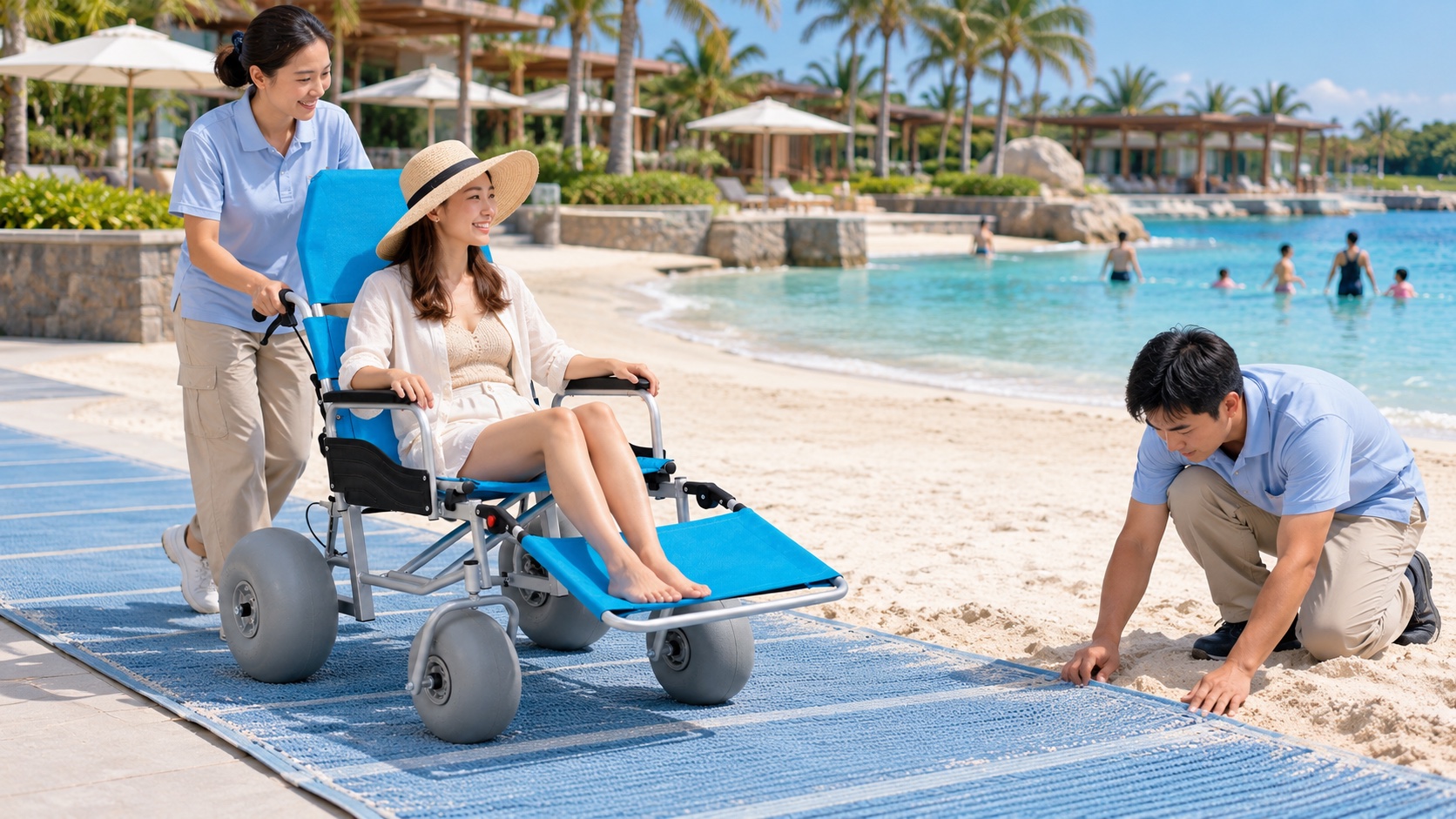
A beach wheelchair for holiday parks Australia route should connect parking, reception or accessible accommodation with a designated beach entry using the firmest practical surfaces. The chair may cross sand, yet additional soft sections may increase effort for helpers. Shade, rest points and clear wayfinding also shape the guest experience.
What should a route review cover?
Also, walk the route with operations and grounds staff during realistic conditions. A chair cannot fix a broken path: narrow gates, steep edges and blocked turning areas still stop progress.
- Surface changes and soft-sand distance
- Gates, kerbs, slopes and turning space
- Accessible toilets and change facilities
- Shade, drinking water and rest points
How can parks document the route?
Use a simple map with photos of surface changes and collection points. Then, update it after works or storm damage. Publish limitations plainly so guests can decide whether the route meets their needs.
| Route zone | Check |
|---|---|
| Arrival | Parking and drop-off access |
| Park interior | Step-free path and gate width |
| Beach entry | Boardwalk, matting and sand depth |
| Shoreline area | Firm ground and retreat route |
For example, a route record turns vague access claims into information guests can use.
Key Takeaway: Map the whole trip from arrival to beach, including barriers that a sand chair cannot remove.
How Should Beach Wheelchair for Holiday Parks Australia Booking Run?
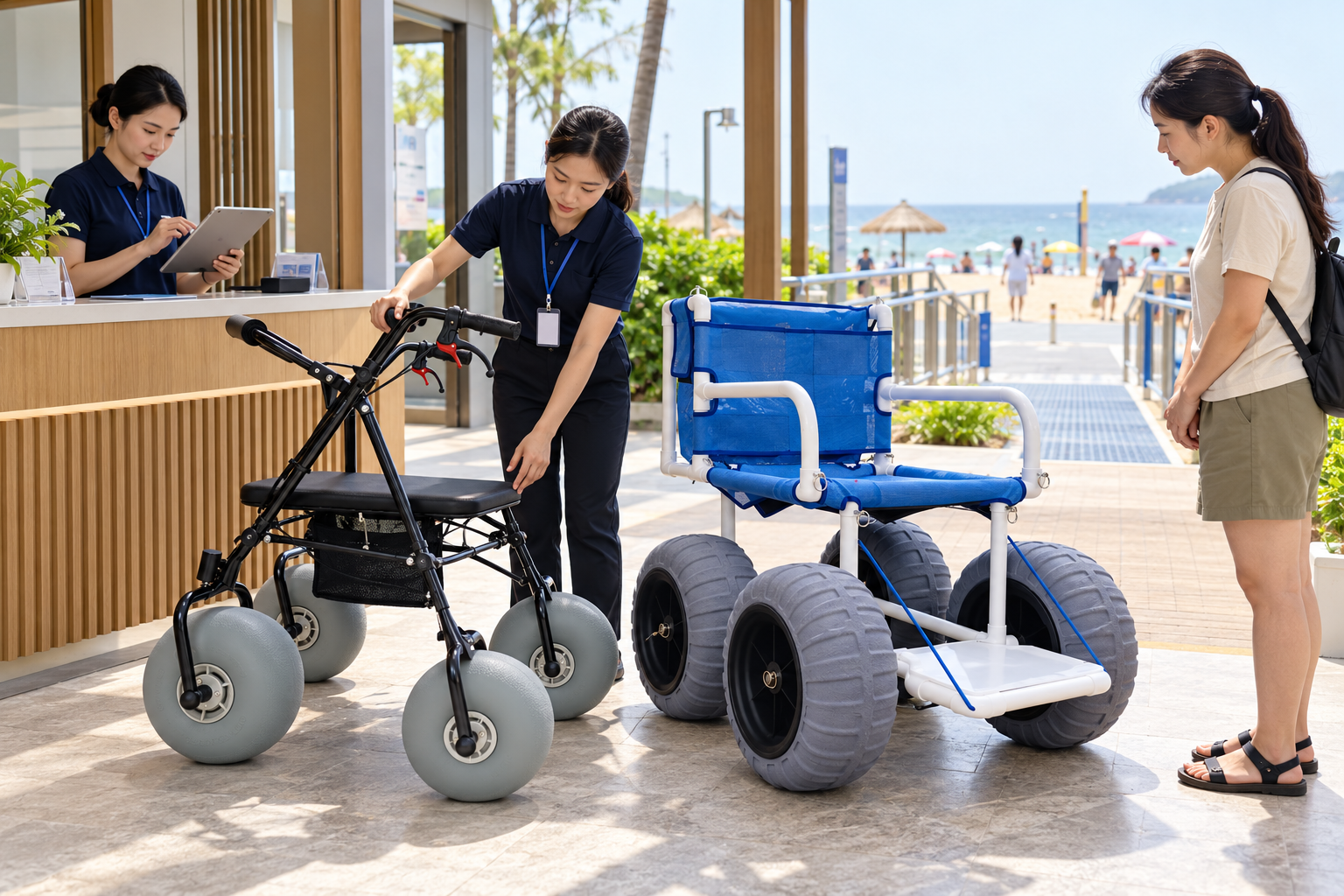
A beach wheelchair for holiday parks Australia booking process should state availability, collection point, time limits, support expectations and cancellation rules before confirmation. Guests should not need several phone calls to find basic details. Offer a direct contact path for needs that a standard form cannot capture.
What belongs in the booking record?
Also, keep only information required to organise the service and handle it under park privacy procedures. The booking should reduce surprises: it should not promise assistance the roster cannot provide.
- Guest contact and booking period
- Chair category requested
- Planned route or activity
- Handover time and return location
- Agreed support and transfer boundaries
How should availability be communicated?
Show operating hours, advance-booking needs, seasonal limits and weather closures wherever guests plan their stay. Keep website, confirmation email and reception script aligned.
| Channel | Message to keep current |
|---|---|
| Website | Equipment, route and hours |
| Confirmation | Booking and collection details |
| Reception | Live availability and closures |
| Park map | Route and return point |
Aligned messages can reduce the chance that an online promise becomes a disappointing arrival.
Key Takeaway: Make booking details specific, consistent and honest about staff support and operating limits.
What Staff Run Beach Wheelchair for Holiday Parks Australia?
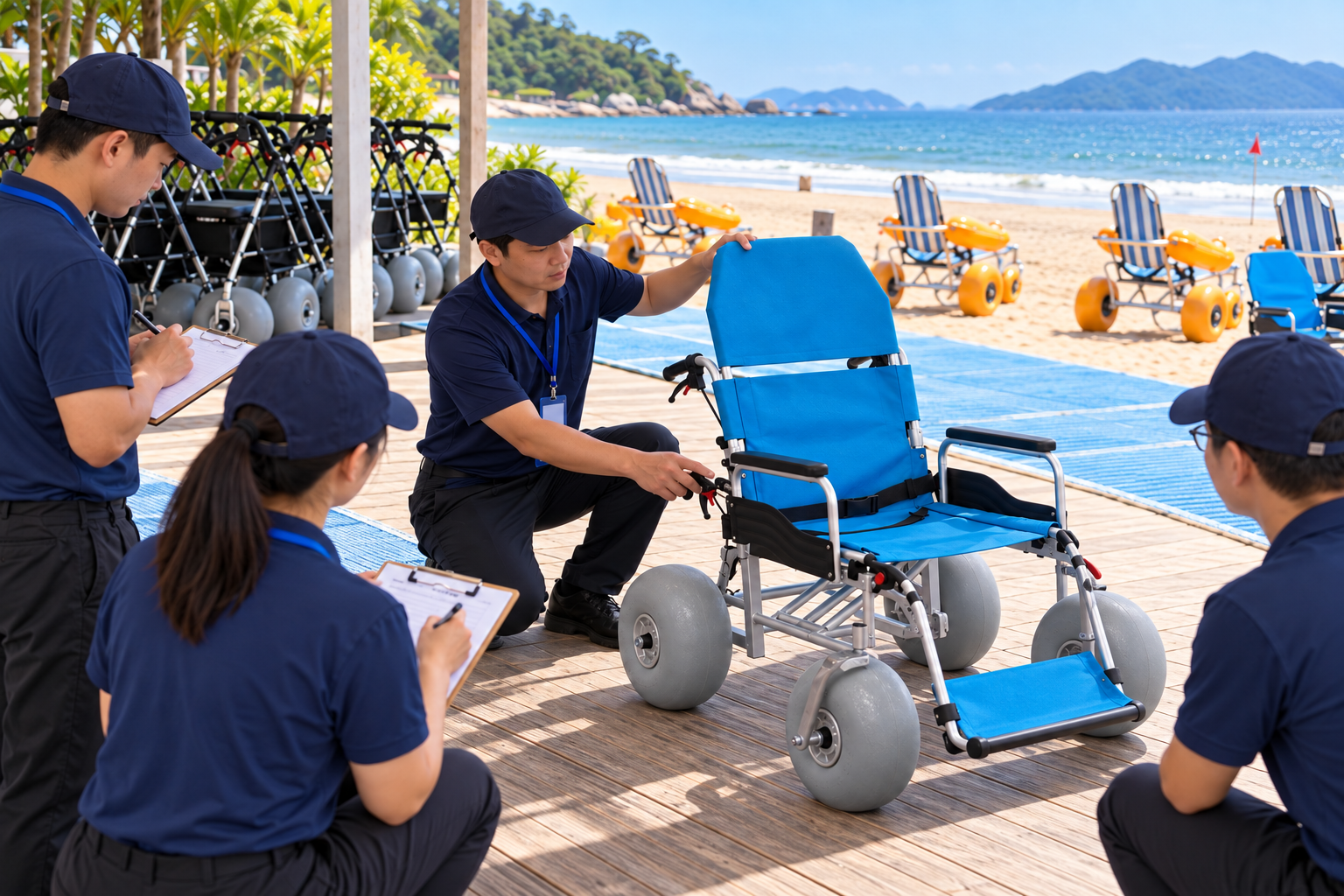
A beach wheelchair for holiday parks Australia service needs named roles for booking, handover, route checks, cleaning and repair escalation. One employee may hold several roles in a small park. However, the duties should still appear in writing. Staff should ask guests how they prefer assistance and avoid untrained transfers.
What should staff training cover?
Also, use the supplier manual and park procedure for hands-on training with an empty chair before guest use. Keep the boundary clear: staff confidence does not replace a guest’s own support plan.
- Chair controls and documented terrain
- Documented pushing technique and helper communication
- Handover script and use boundaries
- Cleaning, inspection and fault reporting
- Weather closure and emergency contacts
Who owns each daily task?
Also, assign the task to a role rather than a person’s name, which keeps the system working across roster changes. Record who may remove a faulty chair from service.
| Task | Typical owner |
|---|---|
| Booking | Reception |
| Route check | Grounds or duty staff |
| Handover | Trained guest-service staff |
| Fault decision | Duty manager |
Clear ownership limits the chance that everyone assumes someone else completed a check.
Key Takeaway: Train staff on equipment and communication, then define who owns every recurring task.
How Is Beach Wheelchair for Holiday Parks Australia Stored?
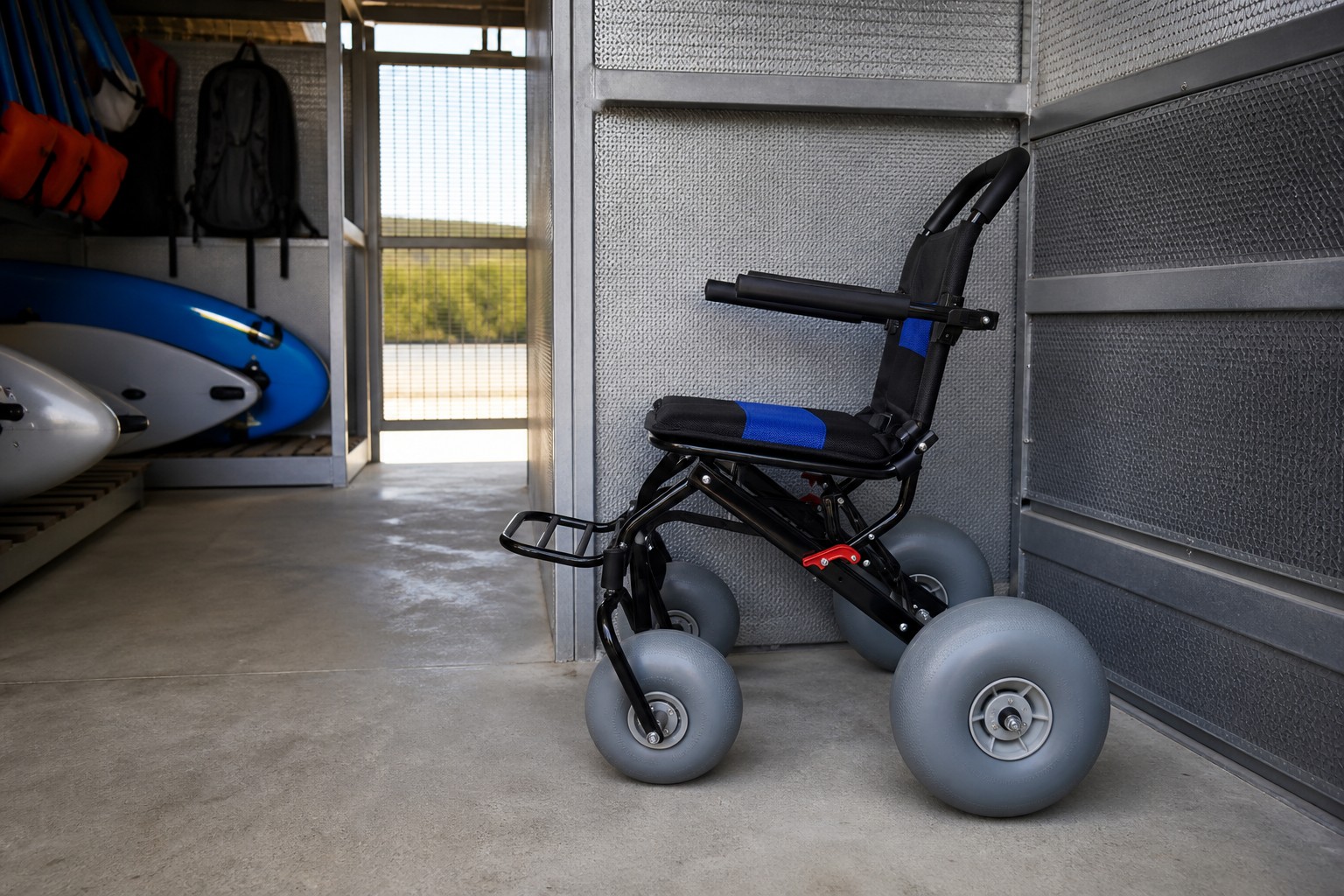
A beach wheelchair for holiday parks Australia unit should be rinsed with fresh water, dried and stored in a shaded, ventilated and secure area after use. Salt, trapped sand, damp fabric and strong sun shorten service life. Storage should sit near the handover route without blocking other access.
What care routine works after use?
Also, follow the current manual and log any fault before the chair returns to availability. A quick rinse is not the whole job: hidden sand and wet straps deserve attention.
- Remove visible sand without damaging parts
- Rinse as directed by the manufacturer
- Dry fabric and frame in shade
- Check wheels, fasteners and straps
- Record faults and isolate equipment with unresolved faults
What should a spare plan include?
Also, base stock on supplier lead times, fleet size and parts most exposed to routine wear. Keep part numbers and reorder contacts with the maintenance record.
| Spare category | Planning reason |
|---|---|
| Wheels or tyres | Sand and puncture exposure |
| Straps and fabric parts | Frequent guest contact |
| Fasteners | Loss during cleaning or service |
| Manual and labels | Consistent staff guidance |
A documented spare plan may reduce downtime caused by a routine wear item.
Key Takeaway: Rinse, dry, inspect and store each chair under cover, with planned spares ready for routine wear.
When Should Beach Wheelchair for Holiday Parks Australia Close?
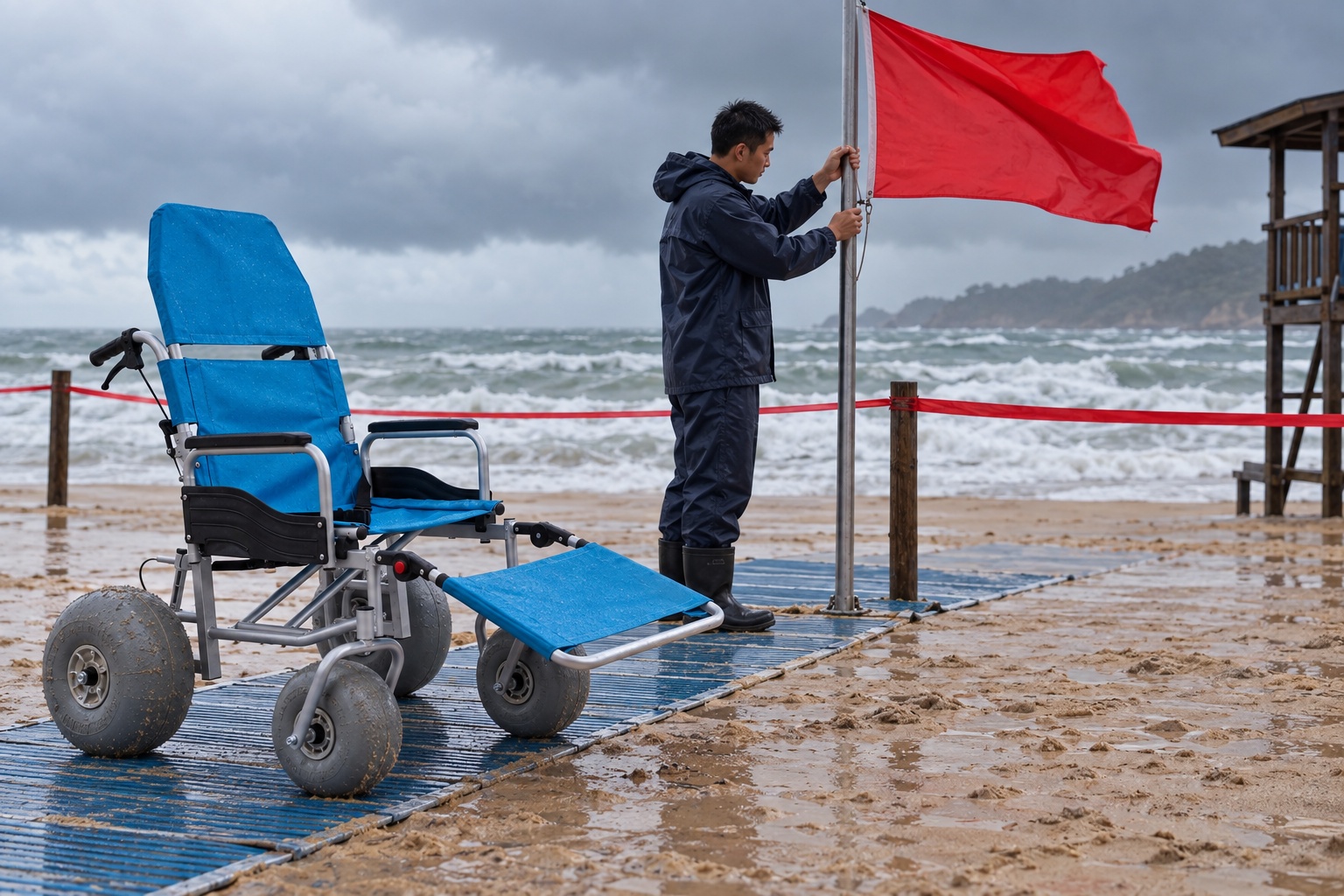
A beach wheelchair for holiday parks Australia operator should define pause conditions within local procedures and model guidance. Those conditions may include weather, surf, heat, smoke, route damage, equipment faults or staffing gaps. Guests need a prompt update plus a practical alternative where the operator has verified one.
Which conditions need a fresh decision?
Also, check conditions at opening and again when weather shifts. Use a trigger, not a hunch: written thresholds and responsible roles lead to steadier decisions.
- Storm warnings or lightning
- Damaged matting, boardwalks or access gates
- Extreme heat or poor air quality
- High surf for any water-based activity
- Insufficient trained staff for the promised service
How should a closure be handled?
Also, contact booked guests, update reception and digital channels, then record the reason. Offer a new time, land-only route or other accessible park activity if that option genuinely works.
| Closure step | Purpose |
|---|---|
| Stop bookings | Limits new commitments |
| Contact guests | Gives planning time |
| Secure equipment | Avoids unauthorised use |
| Record reason | Supports later review |
However, a respectful response protects trust even when a beach session cannot proceed.
Key Takeaway: Use written closure triggers and communicate changes early with realistic alternatives.
What Does Beach Wheelchair for Holiday Parks Australia Cost?
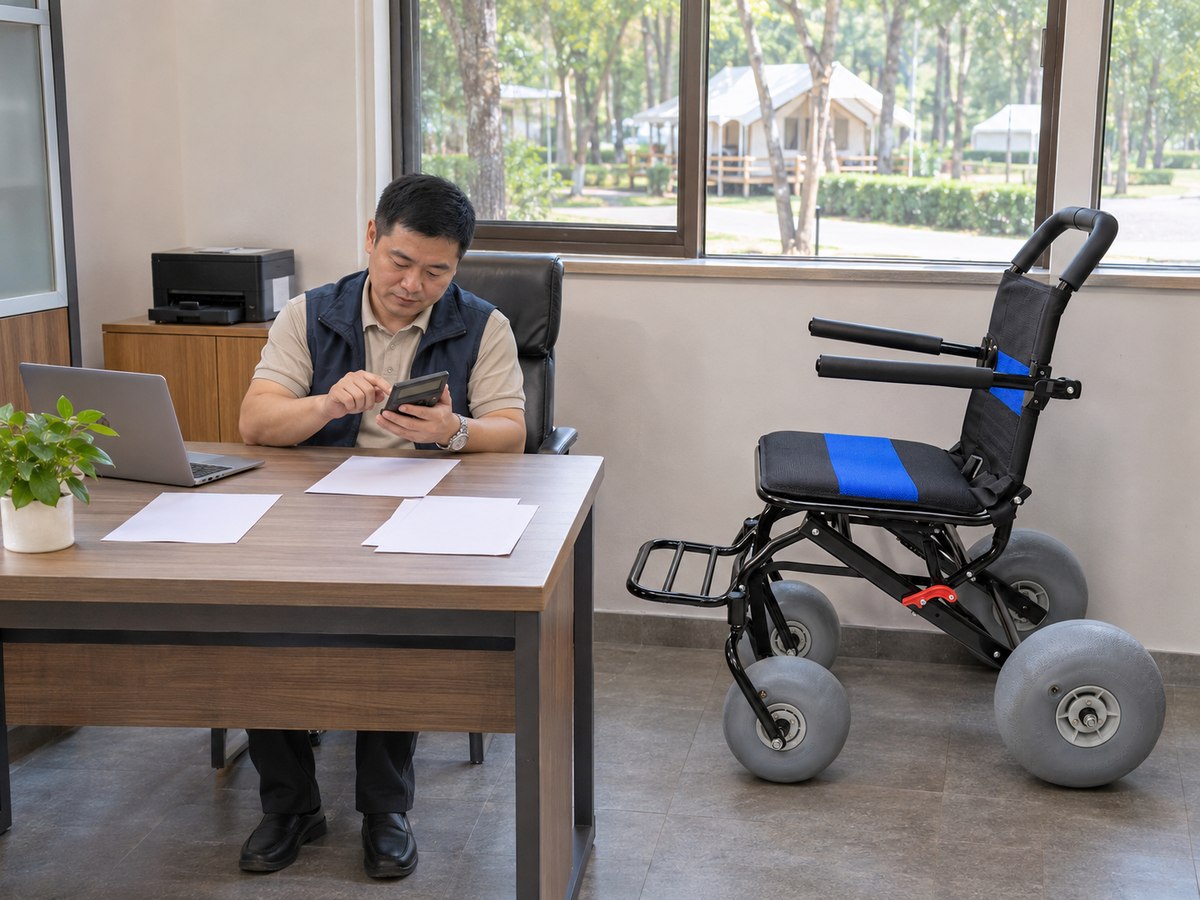
A beach wheelchair for holiday parks Australia budget includes equipment, freight, storage, spares, staff training, cleaning time and service administration. Purchase price tells only part of the story. Compare options over the period your park expects to operate and support them.
Which costs belong in the plan?
Also, separate setup costs from recurring work so management can see what the service needs after launch. Labour can be missed: handovers and care still consume roster time.
- Chair and freight
- Storage and rinse area
- Spare parts and repairs
- Training and refresher sessions
- Booking, handover and cleaning time
How can buyers compare proposals?
Also, give suppliers the same destination, quantity, document and spare requirements. Record exclusions rather than filling gaps with estimates.
| Cost group | Review question |
|---|---|
| Equipment | What model and documents are included? |
| Freight | Where does delivery responsibility end? |
| Spares | Which parts arrive with the order? |
| Operations | What staff time repeats each booking? |
This structure makes a low unit quote easier to compare with a fuller operating package.
Key Takeaway: Budget for the service lifecycle, including labour, storage and spares, rather than equipment alone.
Who Supplies Beach Wheelchair for Holiday Parks Australia?

A beach wheelchair for holiday parks Australia buyer can ask each supplier to confirm intended use, provide current documents, identify spare parts and answer freight questions in writing. Ask what support process is offered after delivery. For fleets or repeat orders, factory-direct discussion may help clarify packing, colours and spare options.
What should parks request before ordering?
Also, send a short site brief covering terrain, chair category, delivery location, storage limits and expected use. Good procurement starts with evidence: compare written answers against the same checklist.
- Current manual and specification sheet
- Packing and freight details
- Spare-parts list and lead-time guidance
- Warranty terms and service contact
- Written confirmation of intended terrain
How should a trial or launch work?
Also, where practical, test fit and handling on firm ground. Then, follow documented terrain guidance with trained staff. Review guest feedback after early bookings without presenting a small trial as proof for every user.
| Launch stage | Practical check |
|---|---|
| Delivery | Parts and documents match order |
| Staff trial | Controls and care routine understood |
| Route trial | Barriers and effort recorded |
| Early review | Booking and handover gaps corrected |
A measured launch lets the park fix process gaps before wider promotion.
Key Takeaway: Choose a supplier on documentation and support, then launch through staff and route checks.
Final Thoughts
A holiday park beach-chair service works when equipment, routes, bookings, staff duties, care and weather decisions support one another. Identify users, choose a chair category, map access, set service boundaries, plan costs and check suppliers without promising that one model fits every person.
If your park is planning a land, floating or folding chair service, contact us today with your location, route and operating needs. We can discuss documentation, packing and spares. Our position is simple: beach access should be planned as a dependable guest service, not treated as a promotional extra.
FAQ
Can I offer a beach chair without staff pushing it?
Yes, if your documented service makes guest and support-person responsibilities clear. Staff should still complete the handover and stay within park procedures.
What’s the best chair for a holiday park beside soft sand?
For example, a land-based chair documented for sand may be a starting category. Confirm terrain, fit factors and intended use in the current manual before purchase.
How do I know if our beach route is suitable?
Walk the whole route and record surfaces, slopes, gates, facilities and soft-sand distance. Repeat the check after storms or site works.
Can I use the same chair on sand and in water?
Not automatically. Land and floating chairs have different intended uses, so follow the manual for the exact model.
How do I know if staff training is adequate?
However, training is adequate when staff can complete the booking, handover, route, care and fault procedures without guessing. Refresh it after equipment or process changes.