
Receiving one carton per ordered cart answers the carrier’s count. It does not establish that each carton contains a complete kit. For a beach cargo cart shipped partly disassembled, keep the package identity intact until the receiver can identify the ordered parts and the designated assembler can check the complete unit.
Ary’s standard cargo cart has a molded tub, metal pull handle and support stand, and two 12-inch balloon wheels. For shipping, the wheels and handle are packed inside the tub. An empty-looking space beside the tub therefore tells the receiver little. Consult the packing list and the order drawing for the supplied version before declaring anything missing. Standard beach cargo cart configuration and packing
At the receiving door, establish what arrived
Compare the delivery reference, number of packages and package marks with the supplier’s dispatch notice. Record any crushed corner, tear, wet area or broken seal as it appeared on arrival. Include both the mark and affected face in the photographs. Advise the carrier and purchasing contact under the agreed reporting arrangements. The shipping handoff guide explains what the buyer should have arranged in advance.
Move cartons to a suitable unpacking area and open one identified kit at a time. Retain its labels and packaging until the contents are reconciled. Keep packing material from the first kit out of the second. A retaining piece left in discarded wrap can look like a factory shortage, while mixing two kits can leave both units of uncertain identity.
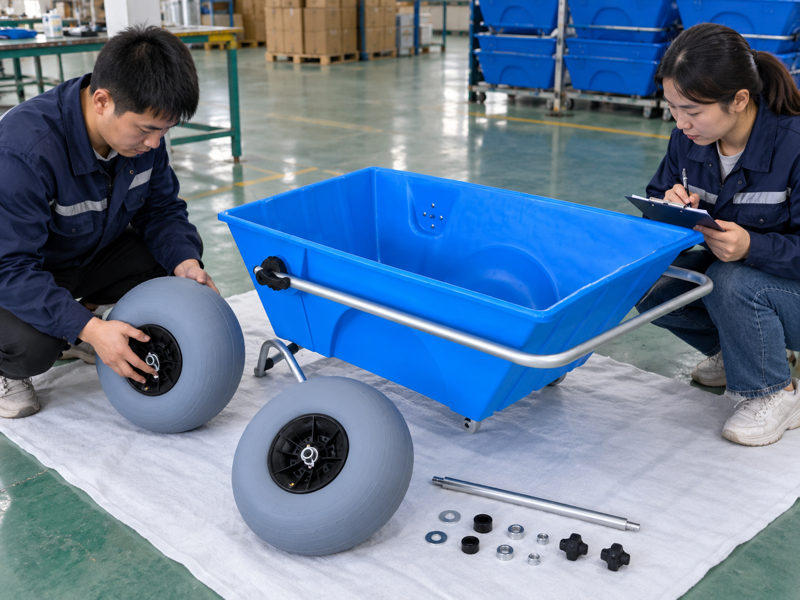
Compare the loose pieces with the supplied drawing
| At the bench | What to compare before assembly |
|---|---|
| Tub and supporting structure | Ordered type, visible condition, attachment points and support components supplied for that version |
| Wheels | Quantity, wheel and hub identity, visible damage and the corresponding hardware listed in the pack |
| Pull handle | Ordered shape or reference, attachment ends, visible distortion and the supplied fixings |
| Fittings and documents | The itemized hardware list, instructions for this configuration and any contracted accessories |
For a complete, assembled delivery, inspect the same ordered components in their fitted positions. Record which connections staff can see and which checks the supplier requires before use. Dismantling a sound unit merely to recreate a kit checklist may disturb its condition. Ask for clarification where a required check cannot be made as delivered.
Keep a shortage with its own kit
Suppose cartons A, B and C all arrive. A and C contain the specified wheel fittings. One listed fixing for B cannot be located after its wrap and parts bag have been checked. Mark B incomplete, retain its loose components together and send the supplier the order reference, item reference and photographs. Borrowing a fitting from C would create a second incomplete cart and obscure the original finding.
Purchasing can decide whether a partial receipt is permitted under the order. Only eligible kits should proceed to assembly. If similar discrepancies appear in several cartons, tell purchasing how many were examined and which lots were affected before releasing the rest.
Hand the assembled cart to operations
Have an authorised person assemble the identified kit using the supplier’s instructions. Confirm the wheels and handle are retained as specified, the stand and tub are secure, and the empty cart moves and rests as intended on the designated check surface. Hold any unit with unexplained movement or damaged attachments for technical review.
Record the assembled asset ID against its original package mark. That connection lets staff trace a later supplier correction to the right cart. Give operations the configuration, instructions and release decision. They can then assess the load and route for the first actual job using the cargo load planning guide.