
What would make this beach wheel sample acceptable for the next order? A procurement team needs an answer before a volunteer rolls it across the sand. Name the host cart, wheel position, axle and retention arrangement, the cargo task and the requirement each check will address. Then identify the physical sample so the supplier and receiver know exactly which assembly was approved.
Ask what the size label leaves open
Ary’s wheel table lists a nominal 12-inch PU option at 315 mm inflated diameter and 162 mm width. Its 12-inch PVC option is listed at 300 mm and 140 mm. The manufacturer notes that inflated size varies with pressure and temperature and confirms final dimensions on the order drawing. Two samples bearing the same inch size can therefore present different clearances before any difference in the hub is considered. Manufacturer’s beach balloon wheel table
Record material, wheel part number, sample ID, drawing revision and supplied hub or insert. Read the pressure instructions for that sample. Record the condition and setting used when measuring its diameter and width. Agree with the supplier which dimensions and tolerances govern acceptance. A discrepancy from a web photograph is a question to investigate; the acceptance decision needs the agreed drawing.
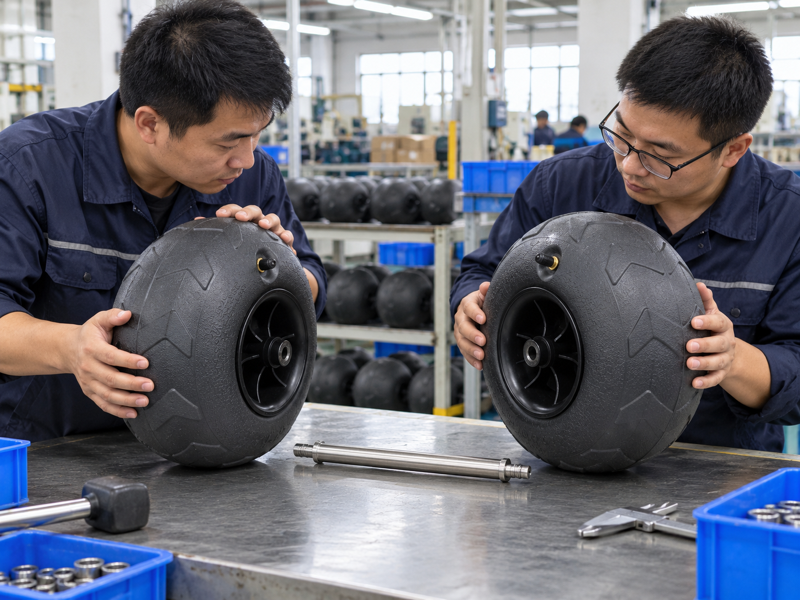
Observe the sample on the intended equipment
| Question for the trial | Evidence that answers it |
|---|---|
| Does this sample fit our axle assembly? | Identify the axle, measure the usable length and compare the bore, hub width, spacers and retainer with the agreed assembly. |
| Is there room for the fitted tire? | Check both faces and the full inflated width at the closest frame or tub point, including any turning movement on that equipment. |
| Can the host cart perform the proposed task? | After authorised fit and retention checks, trial the agreed cargo on the named route within the confirmed limits of the complete cart. Record surface, cargo and any rubbing or handling problem. |
| Can another person reproduce the check? | Retain the references, actual readings, test configuration and a photograph showing the part being measured. |
Use an empty equipment check first. If the retaining hole is partly covered by the hub, stop that trial and send the supplier a photograph with the axle and hub measurements. Changing a spacer at the bench would create a different configuration from the one the supplier submitted. The axle fit guide explains the measurements to collect.
Decide what changed before you sign
Suppose a replacement insert restores the required retainer engagement. Identify the new insert and repeat the affected checks on that sample. Look again at tire clearance and position. Someone reading the record later should see both the initial failure and why this revision passed. If a local sand route was closed during evaluation, keep its trial open or explicitly exclude it from the approval.
A useful sign-off might read, “Sample S2 with insert B accepted for cart C and axle drawing revision 3. Supplier to quote this combination. No other axle assessed.” These are illustrative identifiers. Give the buyer the accepted configuration and the supplier’s deviation list. Mark or photograph a reference sample if both parties agree to retain one. Receiving can then compare the actual production parts and packing labels against the shipping and receipt record.