
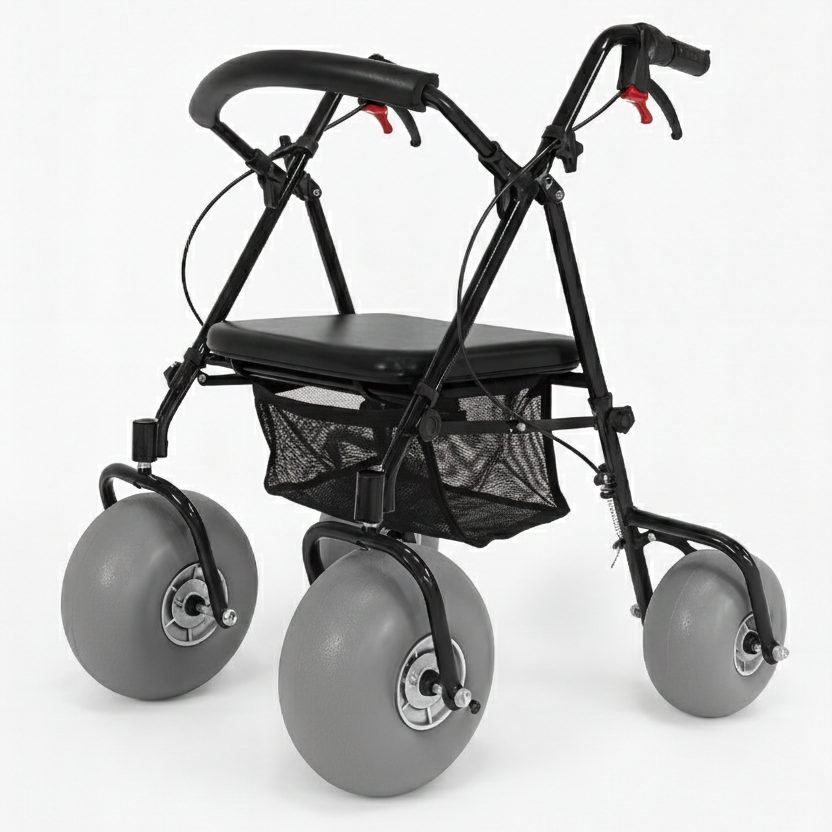
Choosing beach walker wheels means replacing the same approved wheel assembly with a part matching its position, fork, brake, and handoff record. A broad wheel is not a universal upgrade. This guide gives a distributor or facility a clean replacement decision for one walker.
Imagine a coastal operator finding one worn wheel before a busy weekend. This general example keeps walking and resting separate from passenger transport.
1. What should beach walker wheels replace?
Beach walker wheels should replace the same approved walker wheel assembly, in the same position, with its matching interface and brake arrangement.
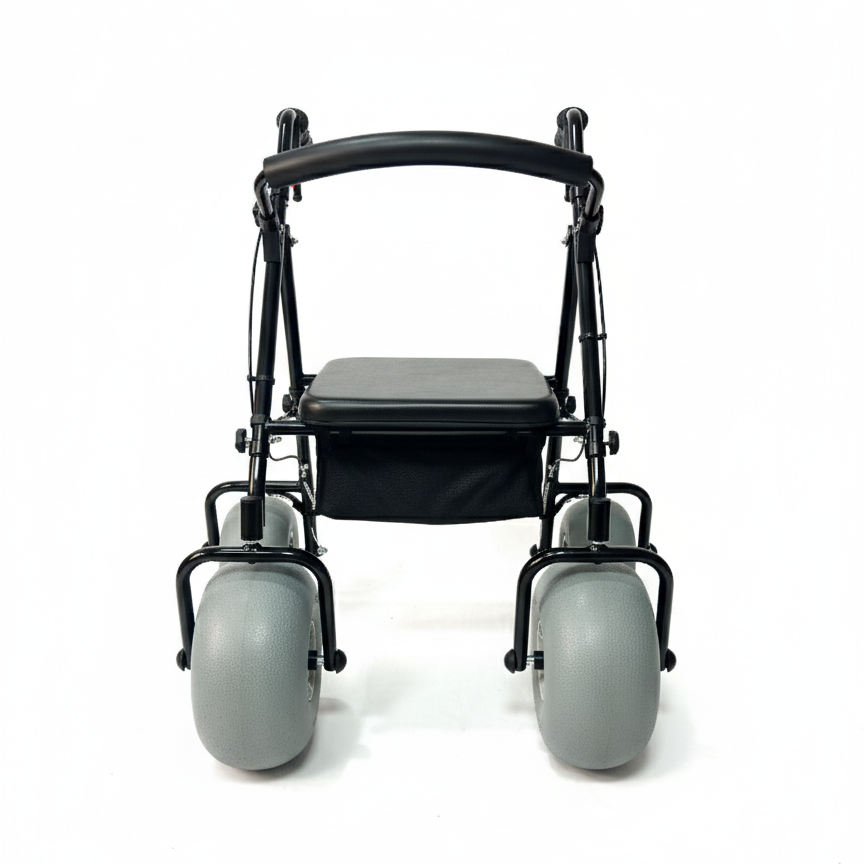
Match the replacement to the same walker
A replacement starts with identity, not appearance. Record the walker label, front or rear, and left or right. A photo helps discuss the part but cannot prove fit. A rest seat remains a walking aid feature, not a passenger chair.
Match the assembly. A short identity note prevents a broad wheel entering the wrong stock bin.
- Record the walker label and wheel position.
- Keep wheel, fork, axle, and brake relationship together.
- Mark missing labels as open items.
Set a narrow replacement boundary
The beach walker category gives product context, not an exact-part review. State ordinary walking as the use. For seated transport, start a separate beach-wheelchair brief.
| Decision | Record | Stop signal |
|---|---|---|
| Role | Same walker wheel; walking/rest | Passenger transport request |
| Position | Front/rear plus side | Position unknown |
| Assembly | Wheel, fork, axle, brake | Parts mixed |
Key takeaway: Name the walker and wheel position before discussing price.
2. Which wheel assembly details must match?
Wheel diameter, tread, fork, axle, brake hardware, and mounting position must match the existing approved assembly or be confirmed in writing for that exact walker.
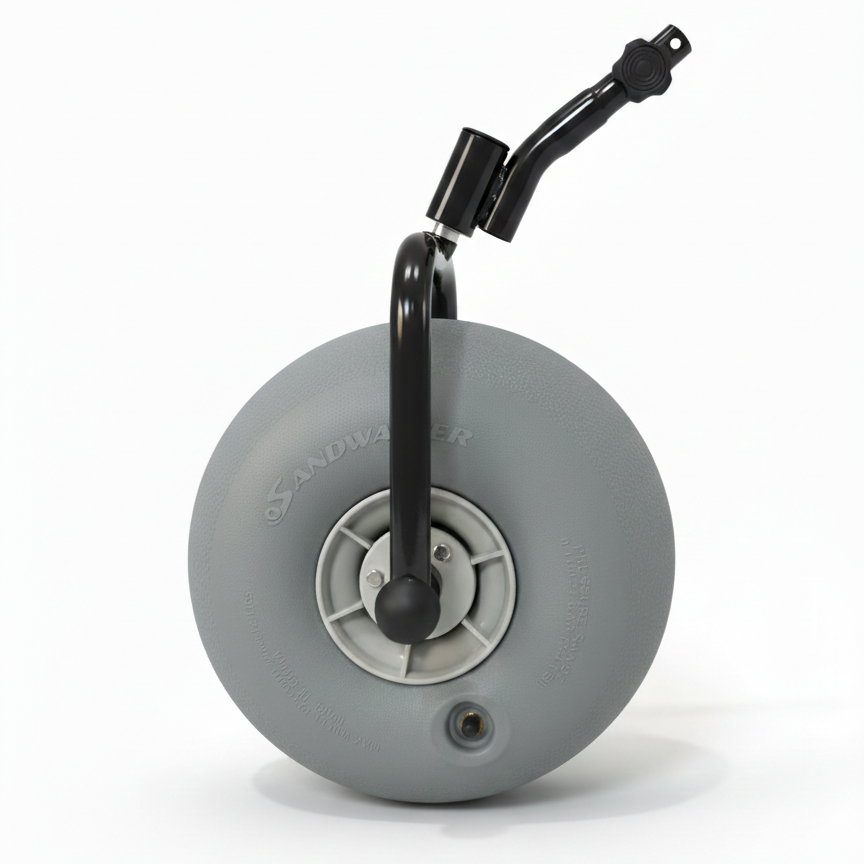
Name the wheel, fork, and brake position
Use plain labels another person can read without seeing the walker. “Rear right wheel with fork” says more than “large wheel.” Note brake hardware. Never guess hidden dimensions, ratings, or compatibility from a catalogue picture.
Keep names aligned. Use the same wording on request, quotation, packing mark, and receiving note.
- Use one position label across records.
- Photograph wheel, fork, and brake hardware together.
- Mark unknown dimensions as unverified.
Create a part-identity line
Build one line per request: asset label, position, visible wheel, related fork, brake presence, and quantity. This compares responses without inventing a universal specification.
| Field | Record style | Purpose |
|---|---|---|
| Asset | Walker label or local ID | Prevents mix-ups |
| Position | Rear-right, operator view | Keeps orientation |
| Assembly | Wheel, fork, axle relation | Protects interface |
| Brake | Present, absent, or open | Avoids incomplete handoff |
Key takeaway: Use a position-specific assembly name, not a generic wheel noun.
3. How can you confirm a replacement will fit?
Confirm fit by comparing the wheel-to-fork interface, axle path, brake relationship, and position against the same walker records.
Compare interfaces, not photos
The wheel picture can show tread, colour, and shape. Fit depends on fork capture, axle path, and brake alignment. Ask for a labelled view when an interface is unclear. “Universal” without a walker identity remains incomplete. The all-terrain beach wheelchair page belongs in a separate seated-product brief.
Check the interface. A similar-looking wheel can still fail at receiving.
- Match fork opening and axle path to the record.
- Check brake hardware for that position.
- Keep unconfirmed interfaces open.
Hold a mismatch before dispatch
Stop a mismatch before return, delay, or a mixed parts box. Compare the order line with the original part and response. Never infer missing technical values.
| Fit question | Compare | Hold when |
|---|---|---|
| Same fork? | Labelled view or part record | Fork unclear |
| Same axle path? | Position assembly note | Axle missing |
| Same brake relation? | Brake-side photo | Hardware differs |
| Clear orientation? | Side/position label | Ambiguous |
Key takeaway: Hold an order that matches a silhouette but not a named interface.
4. What should a buyer record before ordering?
Before ordering, record the walker identity, wheel position, visible condition, required quantity, and unresolved questions in one short brief.
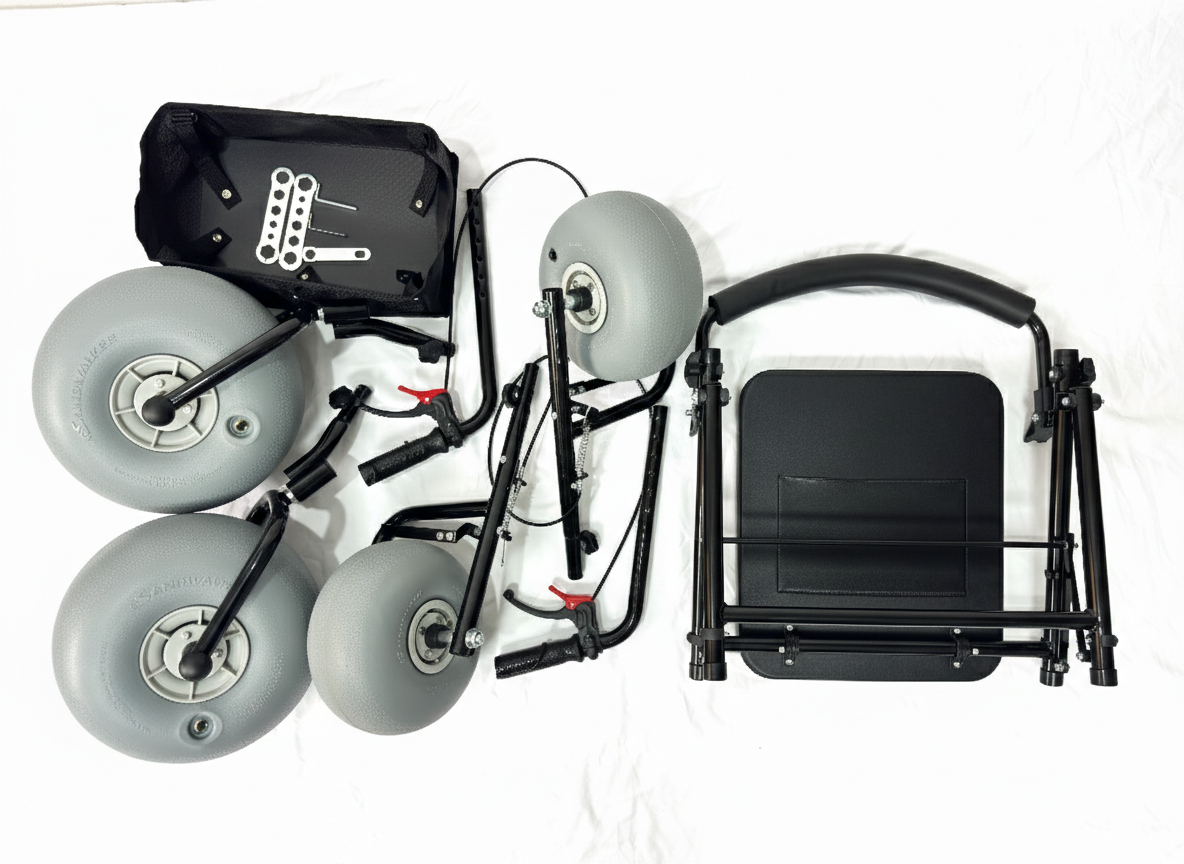
Build a small order brief
An effective brief gives a warehouse colleague the asset label, position photo, wheel description, replacement reason, and a note about parts staying with the walker. The applications overview is route context, not wheel identity. That keeps a wheel request from becoming a frame project.
Keep facts separate. Write only items someone can check.
- Name the walker and ordinary role.
- State replacement and retained parts.
- List missing identifiers as questions.
Separate facts from open items
Use two columns: “observed” and “needs confirmation.” Write “gray wheel on rear-right position” under observed; ask whether a matching fork ships under confirmation. Procurement then has a reason for any hold.
| Area | Observed | Confirm |
|---|---|---|
| Walker | Label and frame photo | Model revision |
| Wheel | Position and tread | Assembly identity |
| Brake | Lever or hardware | Matching relationship |
| Quantity | Affected positions | Spare need |
Key takeaway: Separate facts and questions before requesting a quote.
5. How should wheel and brake checks be handled?
Wheel and brake checks should follow the same position record, with visible condition reviewed by a trained staff member before release.
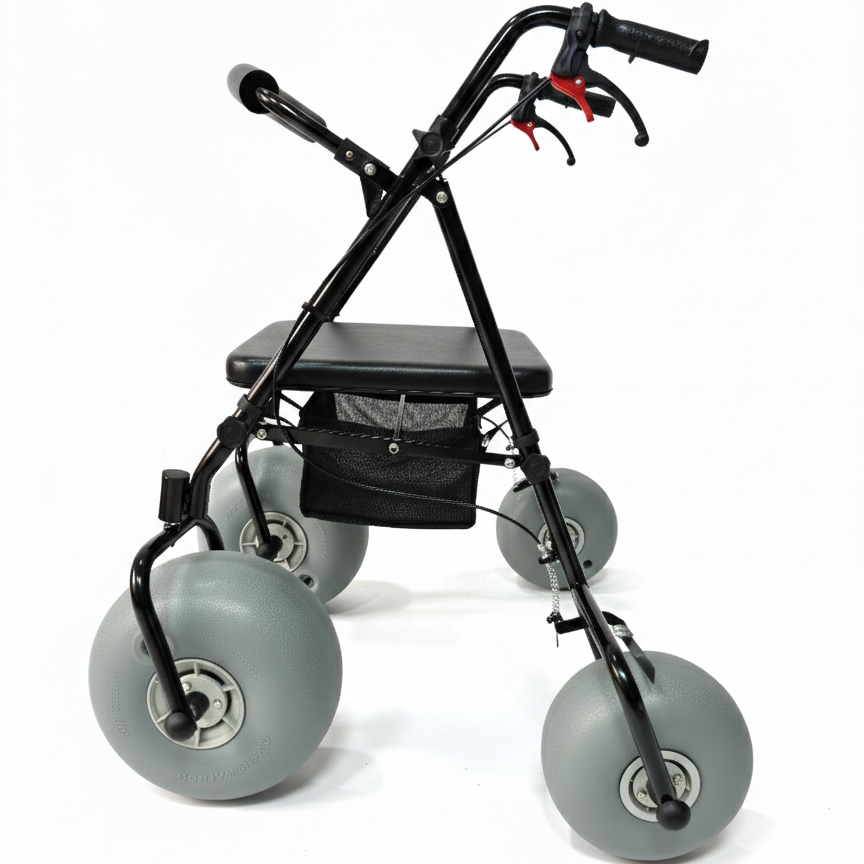
Review the visible interfaces
Reviewers can look for damage, missing components, gaps, or a brake part that does not match the recorded side. This is a procurement record, not a DIY repair method. No model-specific technical value is set here.
Record mismatches. Describe what someone sees, then route judgment to the responsible reviewer.
- Compare wheel position with the order line.
- Record missing hardware before service.
- Hold unclear parts.
Keep the check separate from user fit
Wheel identity does not establish a person’s fit or ability to use a walker. The lightweight beach wheelchair page shows a separate class; a chair decision still needs its own brief and qualified reviewer. WHO describes assistive technology as products and related services, involving users and families throughout access.
| Owner | Focus | Outcome |
|---|---|---|
| Warehouse | Position, count, damage | Received/held |
| Service reviewer | Interface, brake relation | Confirmed/open |
| Operations lead | Walking role and route | Use boundary |
| Fit reviewer | Individual need, if relevant | Separate chair file |
Key takeaway: Let each reviewer answer their qualified question.
6. What should happen when parts arrive?
When replacement parts arrive, compare package marks, position identity, quantity, and visible condition before placing anything into service stock.
Receive against the identity record
Keep the order brief beside the parcel. Confirm that a wheel labelled for one side has not entered another position’s bin. Note damaged packaging or loose hardware before moving it. Keep an accessible beach mat route file separate.
Keep the package label and wheel position in the same receiving photo. That pairing lets a later reviewer connect visible condition with the exact part identity.
Receiving is the gate. Catch mismatches while evidence remains with the package.
- Count wheels and related hardware.
- Compare labels with the order line.
- Photograph visible damage before moving it.
Place a mismatch on hold
Hold an item when position, quantity, interface, or condition differs. Do not install a part because it looks close. Record the discrepancy and keep it identifiable while awaiting a response.
| Result | Action | Release record |
|---|---|---|
| Identity matches | Labelled stock | Receiver/date |
| Quantity differs | Separate parcel | Discrepancy owner |
| Damage visible | Preserve evidence | Hold decision |
| Interface unclear | Isolate part | Assembly note |
Key takeaway: Release a part only after identity and condition match.
7. How should spare wheels move through a team?
Spare wheels should move through a team with labelled storage, one asset record, and a clear owner for every open part question.
Give parts a home
Keep wheel assemblies labelled so left, right, front, and rear positions cannot blur. Similar colour or tread does not make a spare interchangeable. Link each record to walker identity and part description. Beach accessibility projects remain separate programme records.
Track each spare. A simple label saves another inspection.
- Repeat order identity on the bin.
- Keep unmatched items on hold.
- Record the stock movement owner.
Keep service and stock records aligned
When a wheel leaves stock, update the asset record and note whether the old wheel remains. If a part goes to service, its position travels with it. Avoid records that say only “beach walker wheel.”
| Movement | Owner | Update |
|---|---|---|
| Receive | Warehouse | Package/asset line |
| Hold | Discrepancy owner | Reason/evidence |
| Issue | Service lead | Position/date |
| Return/retire | Asset owner | Part status |
Key takeaway: Label parts so colleagues can return them without guessing.
8. When should replacement stay separate from conversion?
Replacement should stay separate from conversion whenever a request changes the walker’s design, use role, or approved assembly.
Protect the same-assembly boundary
A same-assembly replacement swaps an approved wheel-related part for its matched counterpart. A conversion asks whether a changed configuration supports a person or route differently. This article does not authorize that change or passenger use.
Split the files. One covers replacement identity; another covers any changed design decision.
- Use a replacement order for the same assembly.
- Start a separate review for changed configuration.
- Do not treat a rest seat as transport.
Route seating needs to a chair brief
For seated transport, use a wheelchair brief such as the beach wheelchair category and record route, fit, staff roles, and model-specific instructions. The portable beach wheelchair travel guide is separate context. A correct walker wheel does not make that decision.
| Request | Correct file | Do not infer |
|---|---|---|
| Replace rear-right wheel | Walker replacement | Transport |
| Change frame/seat role | Technical review | Photo approval |
| Support seated access | Wheelchair brief | Walker suitability |
| Add unfamiliar hardware | Identity/fit review | Universal fit |
Key takeaway: Treat a changed use role as a new review.
9. What should a supplier handoff contain?
A supplier handoff should contain the exact walker identity, position-specific part line, package count, unresolved items, and named receiving owner.
Close the order with named evidence
A useful handoff joins the buyer’s brief with the final response. Keep part description, position, quantity, visible reference, and exclusions together. State any unconfirmed fork or brake plainly.
Write for receiving. A handoff serves the person receiving a box.
- Attach final part identity and position.
- Name the discrepancy owner.
- State what remains outside the order.
Use a practical handoff sheet
Send one sheet with the order, receiving record, and service file. Make the next action obvious across shifts. A photo supports the record; written identity controls it.
| Line | Content | Owner |
|---|---|---|
| Walker | Label and ordinary role | Buyer |
| Part | Position and assembly | Service reviewer |
| Parcel | Count and condition | Receiver |
| Open item | Question, owner, hold | Operations lead |
Key takeaway: A handoff is complete when receiving needs no guesswork.
10. What is the safest buying decision?
The safest buying decision releases only a matched wheel assembly for the same approved walker, with its position and condition recorded.
Release only a matched replacement
Review identity, interface evidence, receiving record, and use boundary together. A clean decision names the walker, part, checker, and open item. It claims neither universal fit nor passenger approval.
Keep the rule short. Match the assembly, record the handoff, and stop when identity is unclear.
- Keep walking/rest separate from transport.
- Hold mismatched parts before installation.
- Use a separate brief for changed use.
If you want help framing a position-specific request, contact us with the walker identity and clear photos. A precise brief gives every reviewer a better starting point.
Key takeaway: Carry the same walker identity through every record.
Q1: Can I use any wide wheel on a beach walker?
No. A broad wheel still needs the correct position, interface, brake relationship, and fit confirmation.
Q2: Does a walker rest seat allow passenger transport?
No. Keep ordinary walking and resting separate from a beach-wheelchair transport decision.
Q3: What should I photograph before ordering?
Show the full walker, wheel position, fork, brake hardware, and asset label.
Q4: What should happen if an arriving wheel looks different?
Place it on hold, preserve package evidence, record the mismatch, and ask the named owner to confirm its identity.
Q5: Can a wheel replacement include a frame change?
Not under a same-assembly replacement. A frame or use-role change needs a separate technical and fit review.