
Beach walker spare parts planning should start with compatible parts, actual faults, and replenishment time. Build stock around components that can stop service, commonly disappear during handling, or take time to obtain. Keep replacement quantities tied to fleet records rather than buying one of everything.
For an AY-STZ1.0 walker fleet, the relevant groups include wheel assemblies, brake controls, handle adjustment fittings, seating, storage baskets, and approved hardware. Confirm which replacements are supplied separately. This guide explains a stock-control method; it does not claim that every listed component is currently available as an individual spare.
Images are AI-generated illustrations based on product references. They do not document an actual inspection, factory visit, or project.
1. What fleet information should come before a parts order?
Create an asset list with model, received date, configuration, and any changes made during service. A mixed fleet may contain walkers that look alike but use different fittings. Group equipment by confirmed compatibility before counting stock requirements.
Separate active units, reserve units, and units awaiting repair. Each group creates different parts demand. A reserve walker available for temporary substitution can change stocking priorities, while several units already awaiting one component show an immediate shortage.
- List every walker by asset ID.
- Record configuration and replacement history.
- Count active and unavailable equipment separately.
- Identify shared storage or operating locations.
Stock planning needs a denominator. “Several brake faults” says little without fleet size and usage context. Record operating days or loan activity where practical. For programs combining walkers with the wider beach wheelchair range, maintain separate compatibility groups and stock bins.
Fleet information and its stocking purpose
| Fleet record | What it tells you | Parts decision |
|---|---|---|
| Active units | Equipment currently exposed to use | Demand basis |
| Reserve units | Available operating cover | Downtime tolerance |
| Units awaiting repair | Existing unresolved demand | Immediate purchase need |
| Configuration groups | Which units share approved parts | Separate stock references |
2. How should each spare be identified?
Ask for a stable part number or supplier reference, compatible model version, component position, and ordering unit. Add a clear photograph of the supplied part and its packaging label. A description such as “wheel bolt” cannot distinguish length, thread, retention design, or associated hardware.
The walker manual helps locate assemblies, but it is not a complete replacement-parts catalogue. Use its diagrams when asking the supplier to identify a component.
- Record supplier reference and local stock code.
- Identify left/right or front/rear position.
- State whether supply is a piece, pair, or kit.
- List included fittings and required service instructions.
A clear part identity prevents an unusable spare purchase. Request written compatibility before ordering. Preserve superseded references as cross-references, but prevent them from being issued automatically. “New version” needs a stated relationship with existing equipment.
Minimum spare record
| Field | Example of useful content | Avoid |
|---|---|---|
| Identity | Supplier part reference and photo | Colour alone |
| Position | Front or rear; side if relevant | “Universal wheel” |
| Order unit | One assembly or matched kit | Unspecified quantity |
| Compatibility | Named model and version | Assumed fit from appearance |
3. Which parts deserve priority stock?
Rank parts by service impact, observed demand, replenishment delay, and local repair capability. A low-cost missing retainer can immobilize equipment. An expensive assembly may be less urgent if failures are rare and a reserve unit covers downtime.
Separate routine replacement from specialist repair. Stocking a brake assembly has limited value if nobody can install and verify it correctly. Ask what service support is available before deciding that a local spare solves the problem.
- Identify faults that require immediate withdrawal.
- Review recurring replacements and losses.
- Record current supply time for each item.
- Check who can perform approved installation.
Priority follows downtime and compatibility, not purchase price alone. Use your operating application to set tolerable downtime. A remote rental station may need a different reserve than a workshop beside stored equipment. Record that reason beside the stocking decision.
Suggested priority categories
| Category | Typical reason | Stock approach |
|---|---|---|
| Service-stopping, recurring | Repeated fault removes units | Consider local reserve |
| Loss-prone, approved hardware | Handling creates small-part losses | Labelled replacement kits |
| Infrequent major assembly | High cost and uncertain demand | Confirm supply route and backup |
| Specialist repair item | Installation needs outside support | Coordinate stock with service capacity |
4. What should wheel and brake stock include?
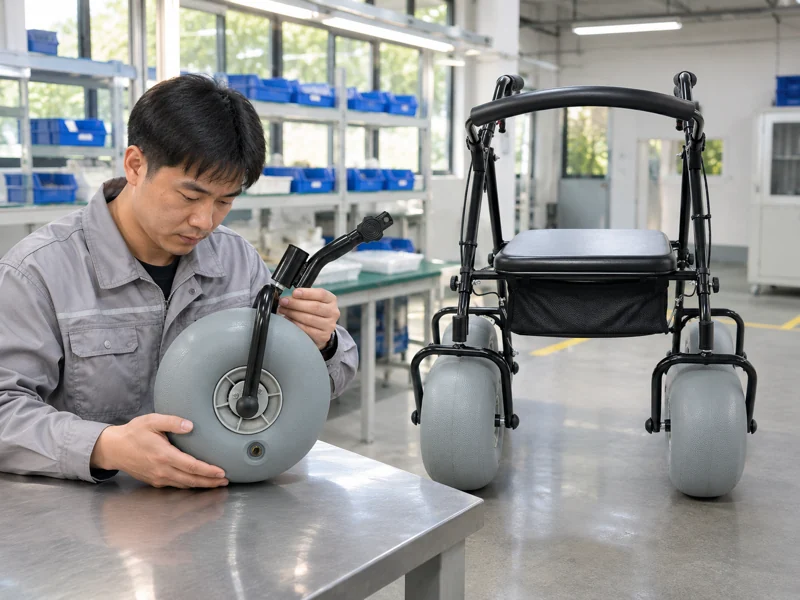
Review wheel-related faults by location and cause: tyre damage, valve faults, hub issues, axle problems, or retention loss. These may need different remedies. Ask whether the supplier recommends a complete assembly or an individual component for each repair.
Keep brake controls and associated connections linked to their approved versions. A similar-looking control can have different geometry or cable requirements. Do not combine spare parts from unrelated beach balloon wheel products without explicit compatibility confirmation.
- Record front and rear wheel references separately.
- Identify whether assemblies include axles and retainers.
- Ask which brake parts are serviceable.
- Keep required installation guidance with stock records.
A replacement assembly must restore the intended function. Choose a complete assembly when that is the approved service route. Do not infer that buying more individual pieces creates a cheaper or valid repair. Include a post-installation brake or rolling check in the work order before issuing parts.
Wheel and brake purchasing questions
| Proposed stock item | Confirm before purchase | Check after installation |
|---|---|---|
| Complete wheel assembly | Position and included hardware | Retention and free movement |
| Tyre or valve component | Approved repairability | Applicable inflation and leak check |
| Brake control | Compatible linkage or cable | Engagement and release |
| Axle or retainer | Exact mating assembly | Secure retention without interference |
5. How should handles, seats, and baskets be treated?
Track each component according to its job. Handle adjustment fittings secure a selected position. Seat attachments support permitted resting use. A basket carries approved contents. Their replacement decisions should reflect those different functions.
Inspect wear and damage trends before adding quantities. Repeated basket damage may come from snagging during folding, while repeated knob loss may point to poor loose-part handling. More stock can cover downtime, but it does not correct that cause.
- Identify handle adjustment hardware by version.
- Keep seat replacements linked to attachment design.
- Confirm basket mounting and load instructions.
- Record recurring loss or damage locations.
A recurring spare issue should trigger a handling review. Retrieve relevant assembly diagrams from the manual library. Update staff instructions when an avoidable handling problem has been confirmed. Order components from the current walker parts list after matching their revision.
Separate component functions
| Part group | Reason to hold equipment | Stock-planning question |
|---|---|---|
| Handle fixing | Adjustment cannot remain secure | Is an approved kit available? |
| Seat or attachment | Damage affects permitted resting use | Complete seat or separate fitting? |
| Basket mounting | Snagging or insecure attachment | Can the basket be removed under instructions? |
| Grip or control mount | Secure operation affected | Which replacement version is required? |
6. What belongs in the parts consumption log?
Record every issue against a work order and asset ID. Include part reference, quantity, reason, date, installer, and remaining balance. Distinguish an installed part from a part merely taken out for diagnosis.
Classify demand by fault, loss, scheduled replacement where specified, or damage during handling. Keep returned unused stock separate until condition and identity are checked. Otherwise an issue log can overstate consumption and produce unnecessary purchases.
- Link each issued part to a named walker.
- Record removed-part condition and cause if known.
- Return unused items through a controlled entry.
- Count serviceable stock separately from damaged stock.
Consumption history becomes useful when reasons stay attached. A parts bin becoming empty does not explain why. Review records across operating locations using the same categories. Beach-access project planning can inform site arrangements, but local service records should set actual stocking priorities.
Transactions that change available stock
| Transaction | Stock treatment | Required reference |
|---|---|---|
| Received and accepted | Add serviceable quantity | Purchase and receipt record |
| Issued for repair | Reduce available quantity | Work order and asset |
| Returned unused | Inspect before adding back | Original issue record |
| Damaged or unidentified | Exclude from serviceable balance | Quarantine record |
7. How should reorder points be calculated?
Use expected demand during replenishment time, then add a reserve suited to uncertainty and service consequences. In plain terms: reorder point equals expected use while waiting plus a chosen buffer. This is a planning method, not a fixed Ary stock recommendation.
For a new fleet, begin with a documented estimate and review it after actual use. Separate supplier production time, shipment time, and receiving time. The relevant wait ends when a compatible, inspected spare becomes available for installation.
- Use recent consumption where records exist.
- Record the replenishment interval being assumed.
- Choose buffer stock for a stated reason.
- Review seasonal demand separately from annual averages.
A reorder trigger must account for stock already committed. Count serviceable on-hand stock plus confirmed incoming stock, then deduct repair allocations. Send a model-linked spares enquiry before expected shortages become urgent. Confirm current terms instead of relying on an expired estimate.
Reorder calculation inputs
| Input | Source | Reason for revision |
|---|---|---|
| Expected demand | Recent issue history or initial estimate | Usage changes |
| Replenishment time | Current supplier and shipping information | Route or supply changes |
| Buffer | Downtime tolerance and uncertainty | Shortages or excess stock |
| Stock position | On hand plus incoming minus allocations | Every issue, receipt, or reservation |
8. How should spare stock be stored and checked?
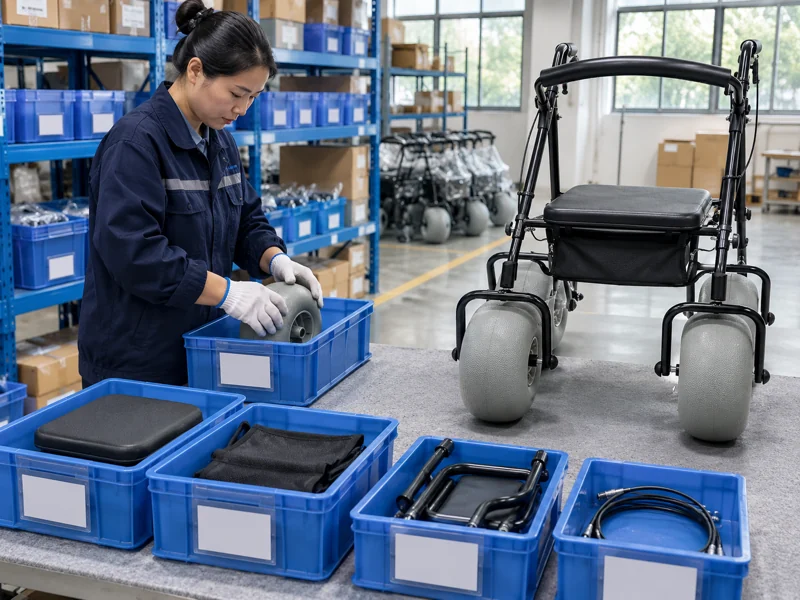
Use labelled bins with one confirmed part reference per location. Keep matched kits together and protect components according to their storage instructions. Place questionable stock in a visibly separate area so it cannot return through a casual handover.
Check packaging labels against bin labels after receipt. Record condition and quantity before shelving parts. Keep contamination away from ready-to-install items, and retain protective packaging where appropriate for valves, surfaces, and small fittings.
- Separate compatible versions and component positions.
- Keep kits complete with their included hardware.
- Identify damaged, returned, and obsolete stock.
- Count serviceable quantities at planned intervals.
A full bin can still contain no usable replacement. Physical stock checks should confirm identity and condition, not quantity alone. Agree applicable storage and support information with the supplier; general sourcing information should not substitute for component instructions.
Stock locations and issue rules
| Location | Contents | Can staff issue it? |
|---|---|---|
| Serviceable stock | Accepted, identified components | Yes, against work order |
| Reserved stock | Parts allocated to specific repairs | Only for that allocation |
| Quarantine | Damaged, uncertain, or returned items | After inspection and release |
| Superseded stock | Older version awaiting compatibility decision | Only after written confirmation |
9. What checks follow replacement work?
Record the original fault, installed part, and approved procedure. Verify the function affected by that repair and any assembly disturbed during access. A wheel replacement needs its retention and movement checked; a control replacement needs the relevant brake functions checked.
Keep equipment unavailable until an authorized person completes release. Separate completion of fitting work from completion of functional checks. If a repair does not resolve that symptom, return the walker to hold and continue diagnosis.
- Identify installed and removed part references.
- Record who performed the work.
- Repeat affected assembly and function checks.
- Update stock consumption and equipment status.
Repair closure and stock replenishment are linked records. Close both entries so a repaired walker cannot leave an unexplained inventory shortage. If the same fault returns, preserve its history and seek technical guidance before repeatedly fitting fresh parts.
Repair-to-stock closure
| Repair step | Equipment record | Inventory record |
|---|---|---|
| Part allocated | Work order awaiting repair | Quantity reserved |
| Part installed | Installer and reference logged | Issue confirmed |
| Function checked | Result and reviewer recorded | Unused parts reconciled |
| Equipment released | Availability updated | Reorder trigger reviewed |
10. What should the fleet manager review each month?
Review stockouts, repeated faults, emergency purchases, and parts that have remained unused. Compare these findings with usage and supply changes. Increase stock only where evidence or a stated operational risk supports the decision.
Check whether a changed component or new walker version affects existing stock. Update compatibility records before combining bins. Remove obsolete items from normal issue locations after a documented disposition.
- Review unavailable walkers and reasons for delay.
- Compare actual demand with reorder assumptions.
- Investigate recurring damage or losses.
- Place replenishment orders against confirmed references.
The next purchase should follow a current stock position. Produce a short replenishment list showing compatible part, serviceable balance, committed demand, incoming quantity, and proposed order. Keep repair release separate from purchasing approval so both remain traceable.
Q1: Should every walker fleet hold a complete spare wheel?
That depends on compatibility, failure history, replenishment time, repair capability, and available reserve equipment. Record the reason for your chosen stock level.
Q2: Can similar knobs or bolts be purchased locally?
Use only parts confirmed for the application. Matching appearance or thread alone does not establish a suitable replacement.
Q3: How should unused parts from a repair be returned?
Check identity, completeness, and condition, then record the return against its original issue before adding it to available stock.
Q4: What if a compatible spare has never been consumed?
Review its downtime consequence and supply delay before removing it. Some reserve stock covers infrequent but disruptive faults.
Q5: When should reorder settings change?
Review them after usage shifts, stockouts, repeated faults, new component versions, or changed replenishment times.