
A useful beach walker size guide turns product dimensions into a repeatable selection and fitting conversation for buyers, staff, and end users. A resort or rental program may receive a walker that looks suitable in a catalog yet feels awkward at the handle, seat, doorway, vehicle, or storage bay. Size is not one number, and it should never replace product instructions or qualified personal advice. This article shows B2B teams how to compare handle position, frame space, seat access, wheel layout, folding footprint, route conditions, fitting records, and trial feedback without inventing user claims.
Why does a size guide need more than one number?
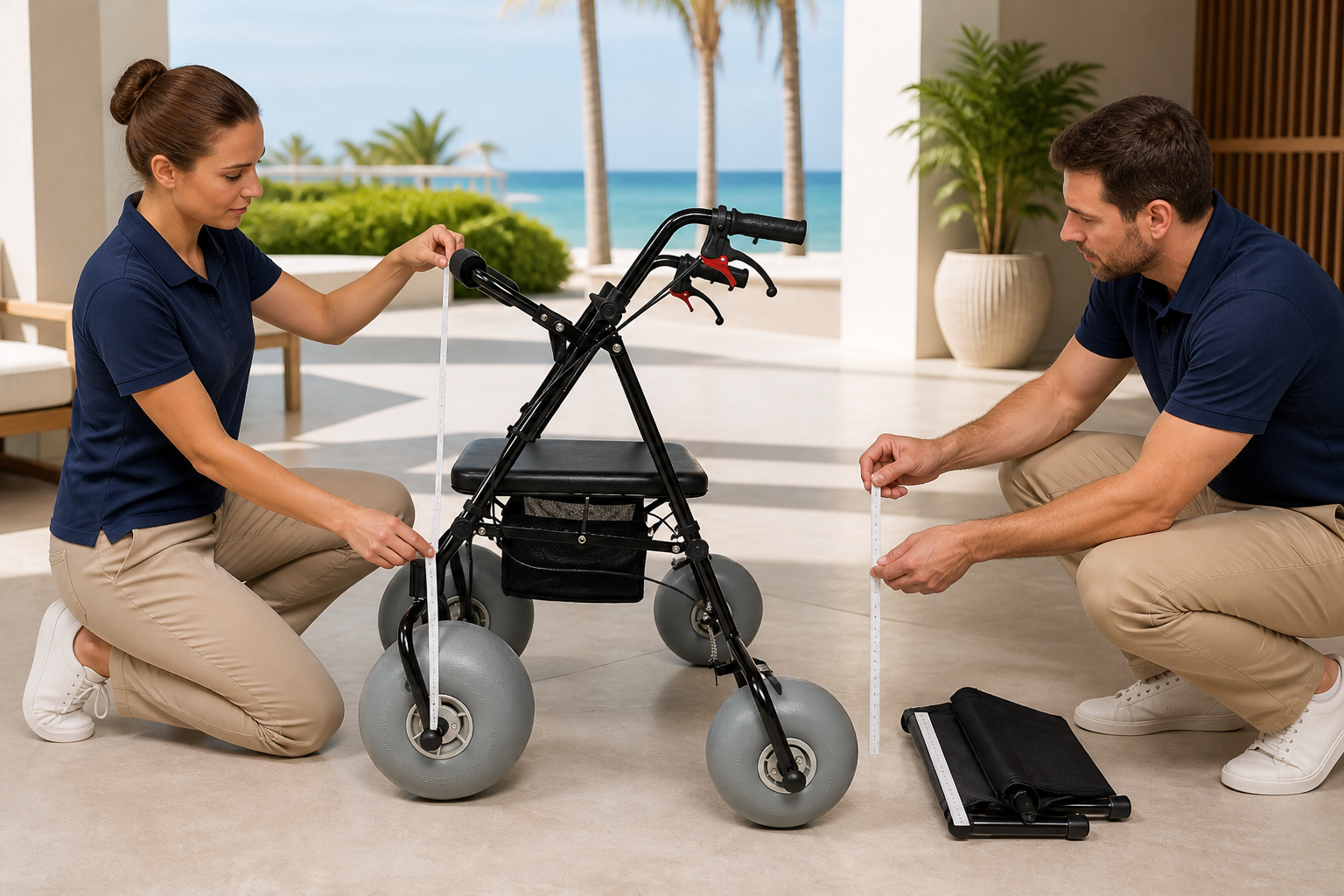
A beach walker size guide needs several measurements because handle, frame, seat, wheel, route, and storage dimensions answer different questions. Exterior width may help with doors, while handle range affects fitting and folded size affects transport. A single product height cannot describe all three. Buyers should ask suppliers for verified specifications and keep user-related decisions within a supervised fitting process. For example, the Padre Island National Seashore guidance treats beach walkers and beach wheelchairs as different devices with local operating limits.
Separate user, product, and site dimensions
Use three measurement groups: Place user-facing settings, product footprint, and site clearances in separate parts of the guide. That layout prevents a storage dimension from being mistaken for a fitting recommendation. Mark every figure with its source and model. Leave uncertain fields blank until the supplier or product manual confirms them.
- Group user-facing settings
- List product dimensions
- Record site clearances
Key Takeaway: Separate measurement groups help buyers use each number for the decision it actually supports.
| Checkpoint | Working choice |
|---|---|
| Dimension group | Decision |
| Handle and seat | Fitting conversation |
| Width and fold | Route and storage |
Review the draft guide and remove any number that lacks a product source or a named use.
How should teams review handle position?
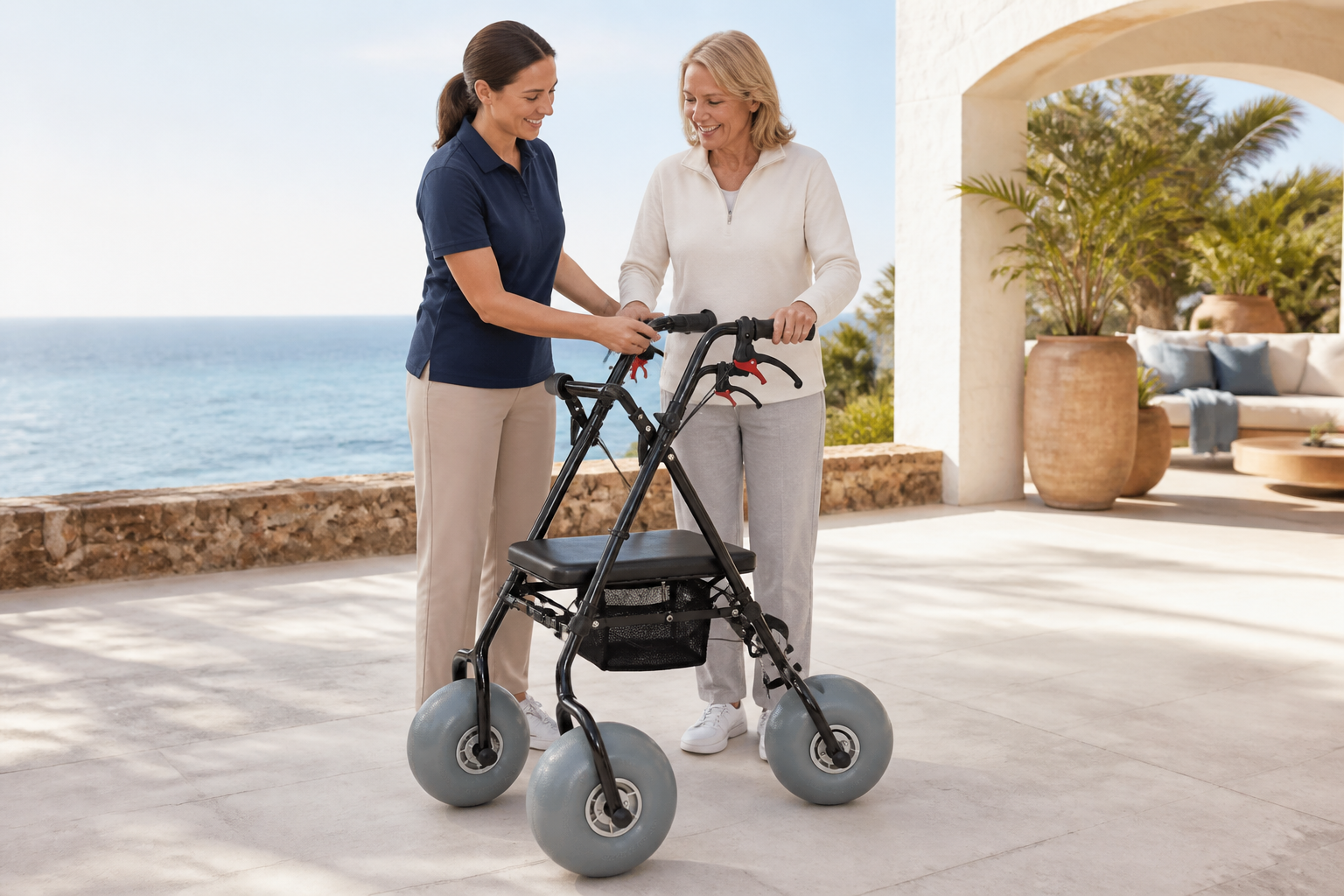
A beach walker size guide should present the verified handle adjustment range and a supervised method for checking user comfort and control. The guide must not prescribe one height for every person. Staff should follow product instructions, local policy, and any qualified personal guidance. The beach walker care application shows the operating setting in which fitting and route planning meet.
Follow product settings and user feedback
Keep the check user-led: Explain the available adjustment, set the walker only as instructed, and invite the user to describe reach, posture, and brake access. Stop if the setting feels wrong or the user cannot operate controls as intended. Record the approved setting only after the fitting process is complete.
- Confirm the adjustment range
- Check control access
- Record the approved setting
Key Takeaway: Handle review works best as a documented conversation rather than a universal height rule.
| Checkpoint | Working choice |
|---|---|
| Handle cue | Review point |
| Adjustment | Manual range |
| User feedback | Reach and control |
Use the same fitting script across staff while allowing the user time to respond at each change.
What frame space should buyers compare?
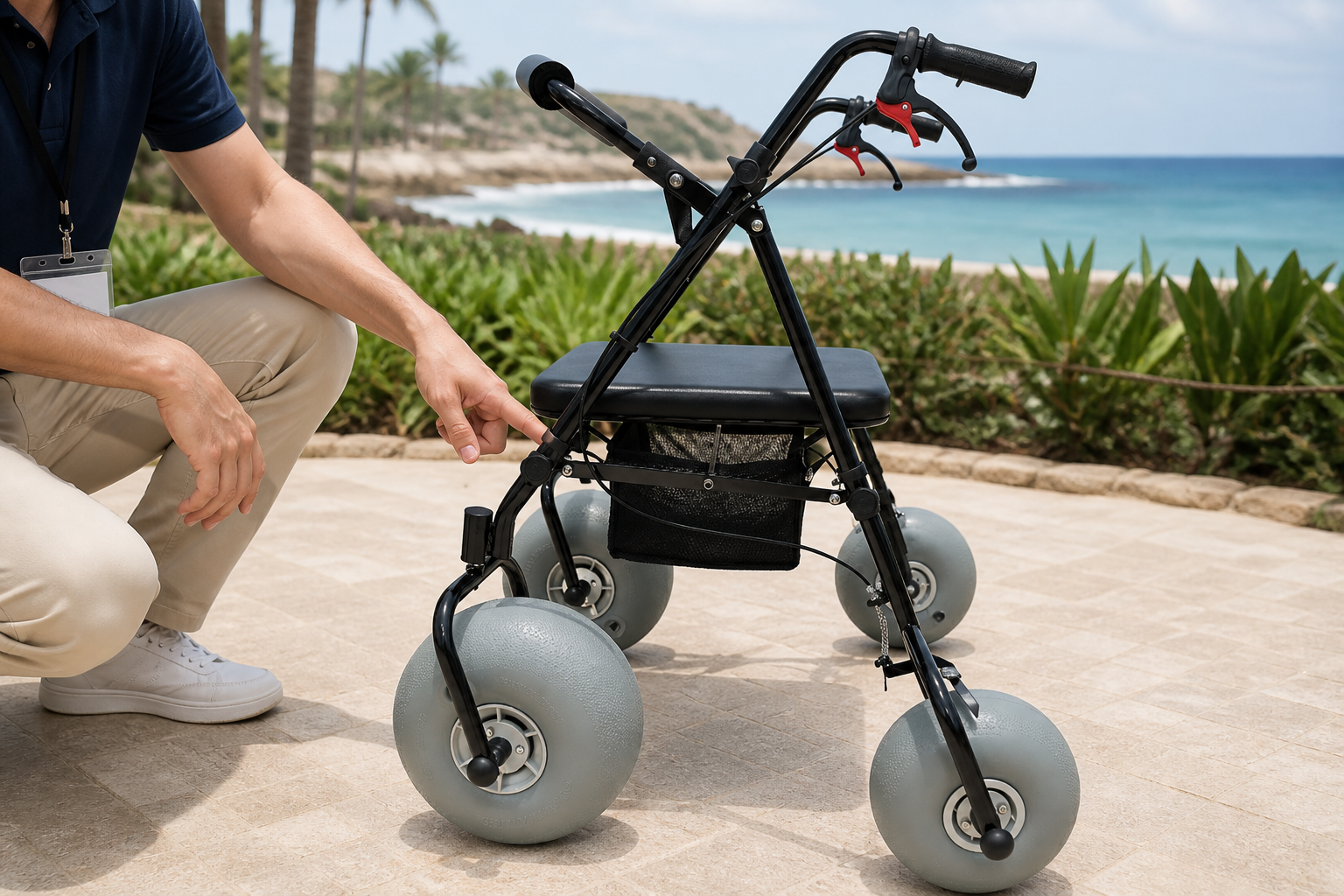
A beach walker size guide should compare the open frame area, seat approach, handle spacing, and wheel position with intended use. A generous exterior footprint does not automatically mean the standing or seating space suits a person. Clothing, bags, arm position, and the approach to the seat may affect how the frame feels. Product photos help orientation, but verified dimensions and a supervised trial support the actual choice.
Compare the open working area
Look inside the footprint: Ask for clear measurement points rather than a single width. Note where tubes, hinges, brake cables, and the seat enter the usable space. Keep accessories in their normal positions during a trial. If the configuration changes, treat it as a new fitting state and review it again.
- Check open frame space
- Check the seat approach
- Keep accessories in place
Key Takeaway: Usable frame space tells buyers more than exterior width alone.
| Checkpoint | Working choice |
|---|---|
| Frame area | Question |
| Standing space | Clear and comfortable |
| Seat approach | Unblocked access |
Photograph the empty setup under local policy so staff can rebuild the same approved configuration.
How does wheel layout affect the size choice?
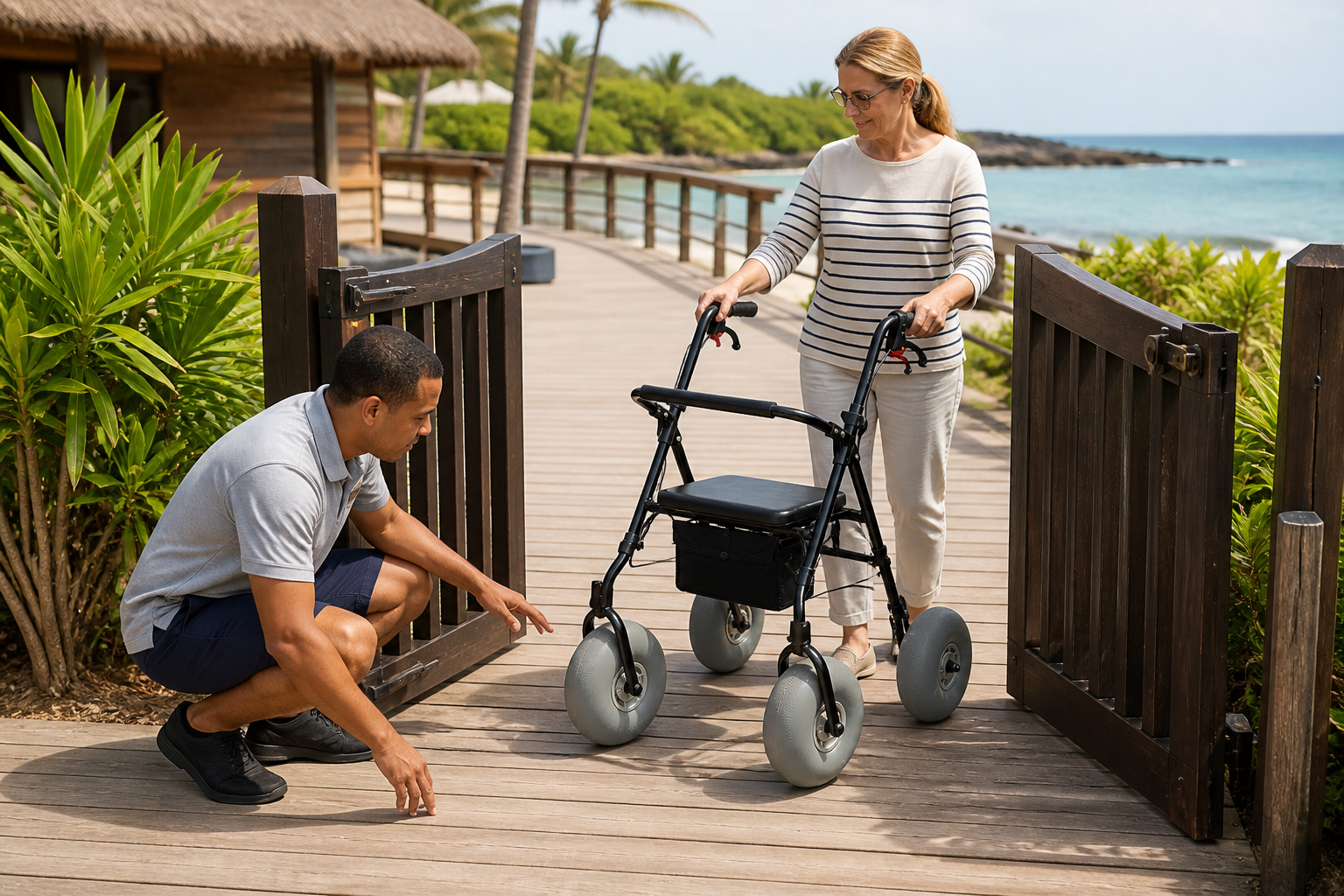
A beach walker size guide should connect wheelbase and wheel placement with the route, turning space, and storage plan. Large balloon wheels can create a wider or longer footprint than narrow indoor wheels, and their position affects how the walker approaches doors and turns. The beach equipment portfolio helps procurement teams compare category roles before requesting model data. Then compare the planned path with a beach access mat wherever wheels cross surface joins.
Match footprint with route and turning needs
Test the complete wheel footprint: Measure from the outermost wheel points using the supplier method, then trace the route without a user. Check forward movement, turns, backing, and parking position. Do not infer sand performance from size alone. Product design, site conditions, and operating instructions still control suitability.
- Check outer wheel points
- Test turns and backing
- Map the parking footprint
Key Takeaway: Wheel layout belongs in both the fitting guide and the site route plan.
| Checkpoint | Working choice |
|---|---|
| Wheel cue | Site check |
| Outer width | Doors and lanes |
| Wheelbase | Turns and parking |
Run the empty walker through the narrowest planned point before placing that route in service.
What seat details belong in the guide?
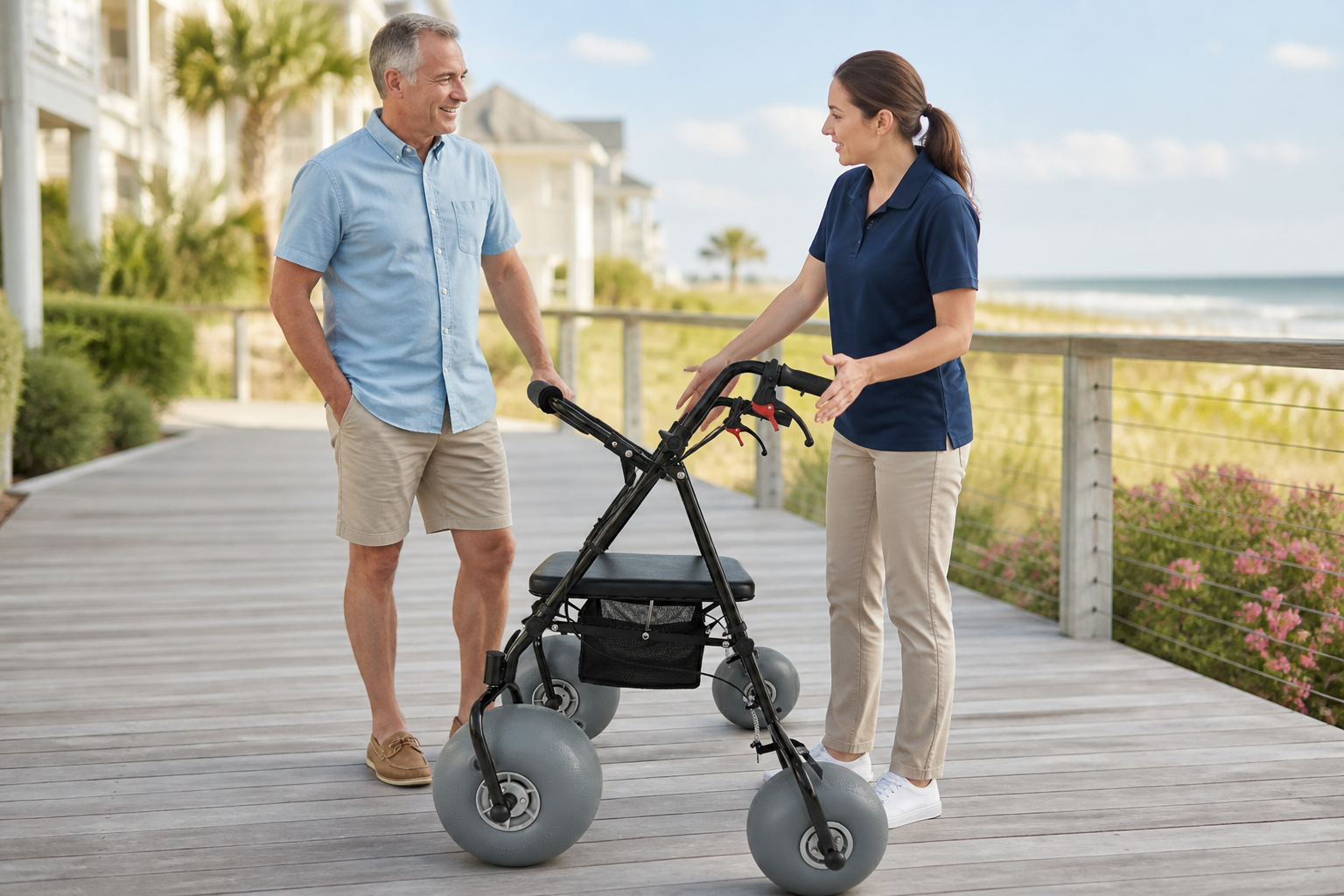
A beach walker size guide should list verified seat height, width, depth, access direction, and any product rules for seated use. The seat may support a rest routine, yet buyers should not assume it suits every person or every surface. Product instructions control how brakes, parking, and seating are handled. Staff training should separate factual product data from individual advice.
Describe access without making personal claims
Use a plain seat review: Show how the user approaches the seat, where hands remain, and how staff confirms the walker is positioned according to instructions. Invite feedback about space and comfort without promising a health result. Any uncertainty should lead to qualified guidance or another product choice.
- List verified seat dimensions
- Show the approved approach
- Invite direct user feedback
Key Takeaway: Clear seat information supports a safer fitting conversation without turning the guide into medical advice.
| Checkpoint | Working choice |
|---|---|
| Seat detail | Use |
| Height and width | Product comparison |
| Approach | Fitting routine |
Check that every seat statement can be traced to the product manual or the supervised trial.
How should buyers account for clothing and accessories?
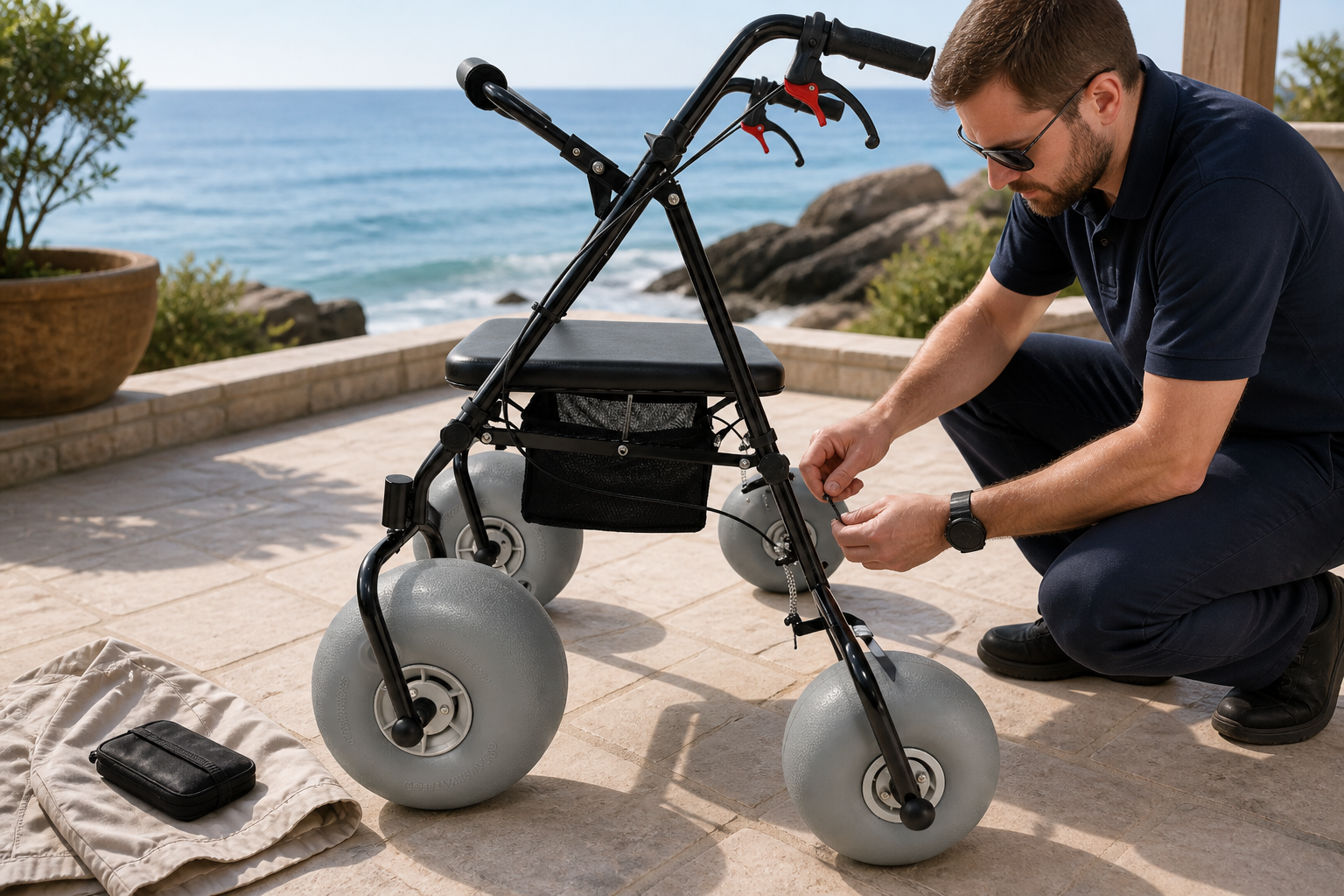
A beach walker size guide should account for normal clothing, permitted accessories, and any bag mounted during service. A fitting done with an empty frame may change when a jacket, personal item, or approved pouch occupies space. Staff should never add accessories that the manufacturer has not permitted. The working guide should name the tested configuration so later shifts do not recreate a different setup.
Review the real service configuration
Treat every setup as specific: List the approved components, place them in their intended positions, and repeat the frame-space and control-access checks. Keep loose items away from wheels and brake cables. If the user brings a new item, review its placement before movement rather than forcing it into the existing setup.
- List approved components
- Keep wheel areas clear
- Repeat access checks
Key Takeaway: A named service configuration keeps fitting results tied to the setup staff will actually use.
| Checkpoint | Working choice |
|---|---|
| Configuration | Review |
| Clothing layer | Frame space |
| Approved pouch | Wheel and cable clearance |
Use a blank setup card with simple product pictures so staff can match the approved arrangement.
Which route measurements belong with product size?
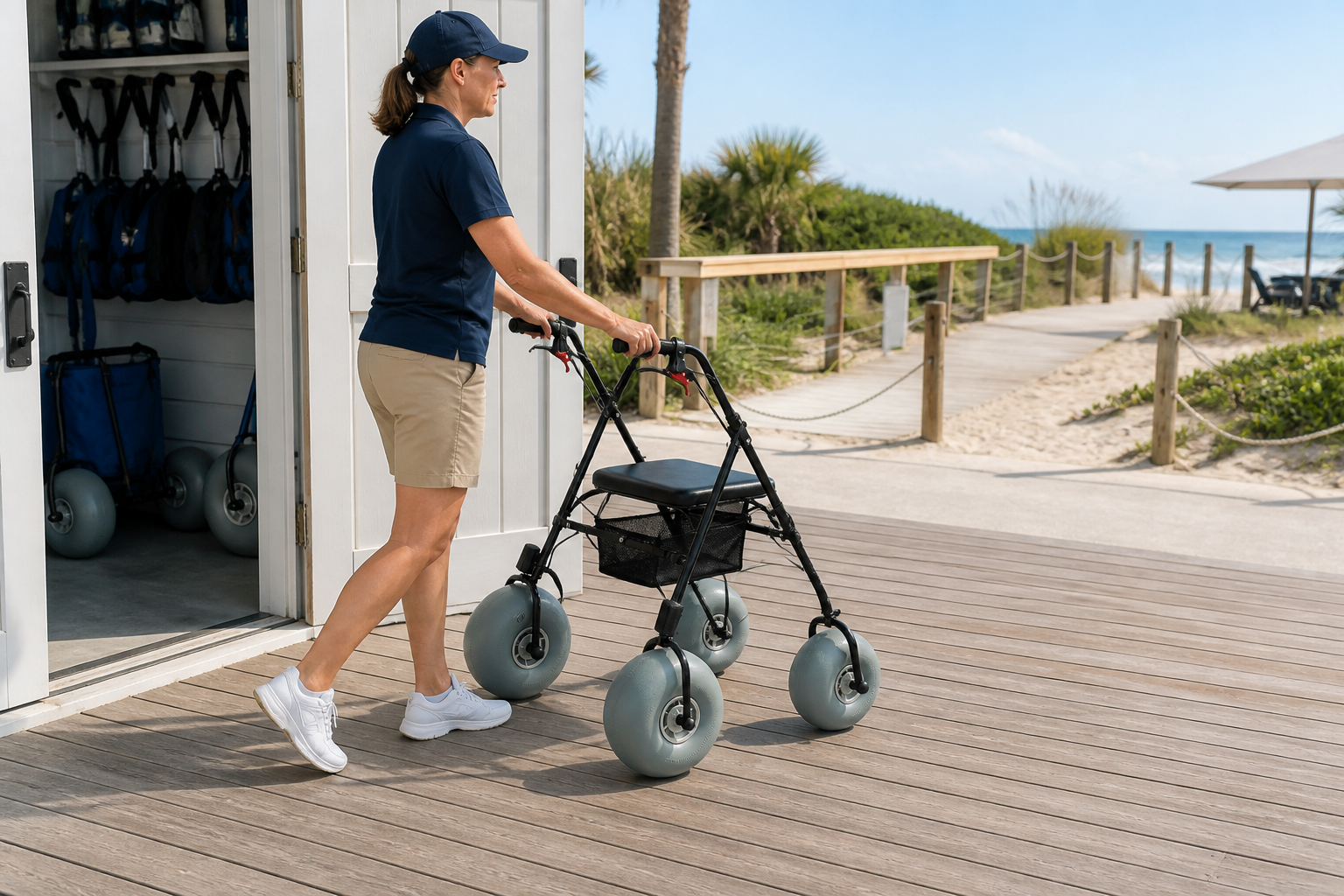
A beach walker size guide should pair verified product dimensions with door, gate, turn, staging, and storage checks. A product can fit the user yet conflict with a narrow route or crowded service zone. Buyers should inspect the full path from storage to sand and back. The beach walker project example gives teams a starting context for program design.
Connect the walker to the planned path
Build a site-fit page: Record the narrowest planned access point, the direction of approach, the turn area, and where the walker waits between uses. Avoid declaring legal compliance from a procurement worksheet. Route measurements support operations, while qualified local review handles formal determinations.
- Check the narrowest point
- Measure the turning area
- Review the waiting zone
Key Takeaway: Product size and route size should be reviewed together before a buyer approves a service configuration.
| Checkpoint | Working choice |
|---|---|
| Site point | Product comparison |
| Gate | Outer wheel width |
| Storage bay | Open or folded footprint |
Trace the path with the empty walker and normal staff position, not with measurements alone.
How should folded size affect procurement?
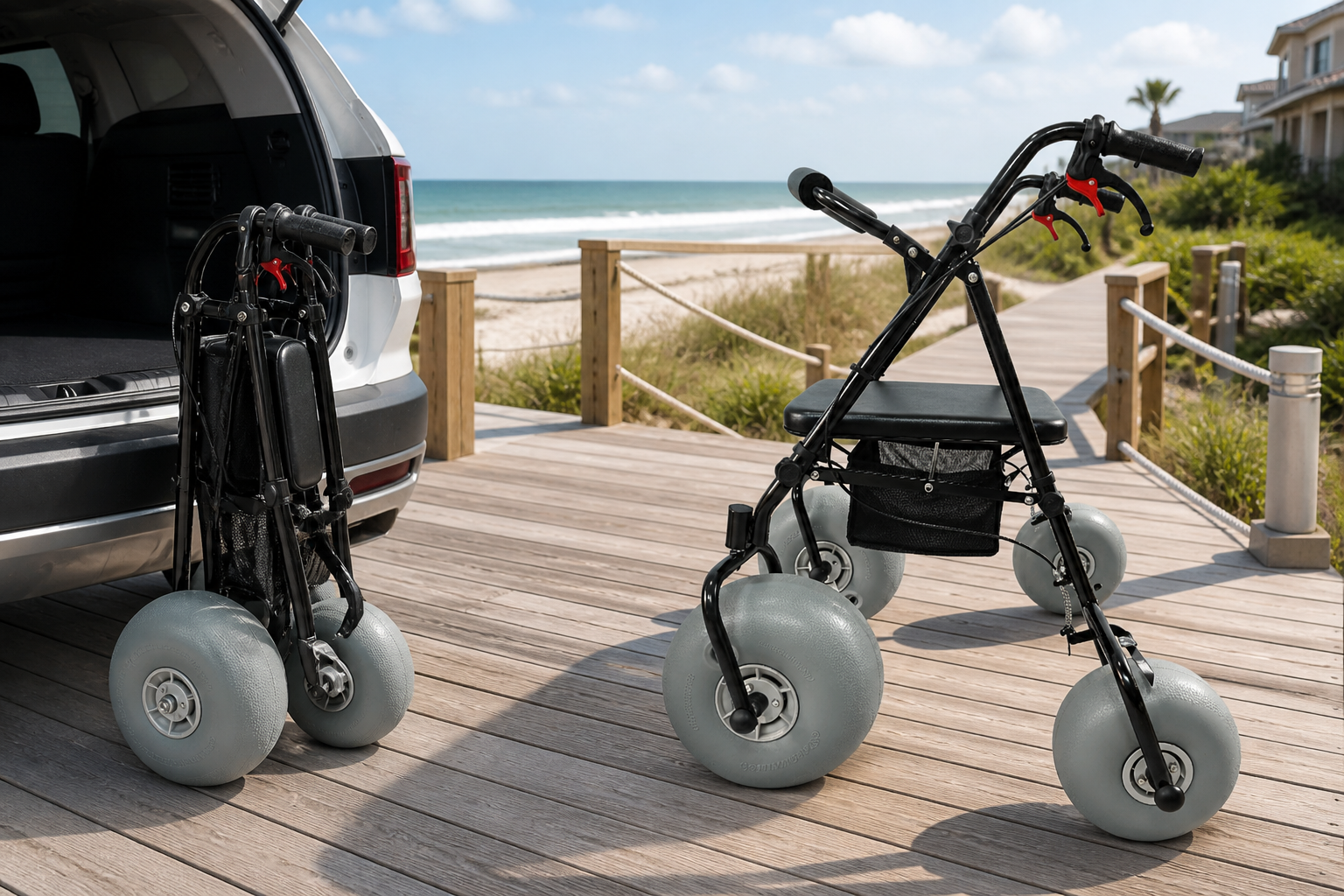
A beach walker size guide should record folded dimensions for handling, vehicle placement, and storage without confusing them with user fit. A compact folded product may suit a vehicle yet require a careful reopening check before service. Buyers should also look at handholds, wheel position, latch behavior, and whether the folded unit stands or must lie supported. Follow the manual for folding and restraint. A lightweight beach wheelchair needs a separate folded-size and loading record rather than sharing the walker sheet.
Plan transport and storage separately
Run a dry logistics trial: Clear the route, fold the empty walker as instructed, place it in the planned vehicle or bay, and reopen it at staging. Check that fabric, cables, brakes, and wheels return to their intended position. Record the required staff role and space, not a claimed handling time.
- Record folded dimensions
- Check stable placement
- Inspect after reopening
Key Takeaway: Folded size supports logistics planning but never replaces the user-facing fitting review.
| Checkpoint | Working choice |
|---|---|
| Logistics point | Check |
| Vehicle space | Stable placement |
| Reopening | Frame and controls |
Repeat the trial with normal service gear so other items do not crowd the walker.
What should staff record after a fitting?
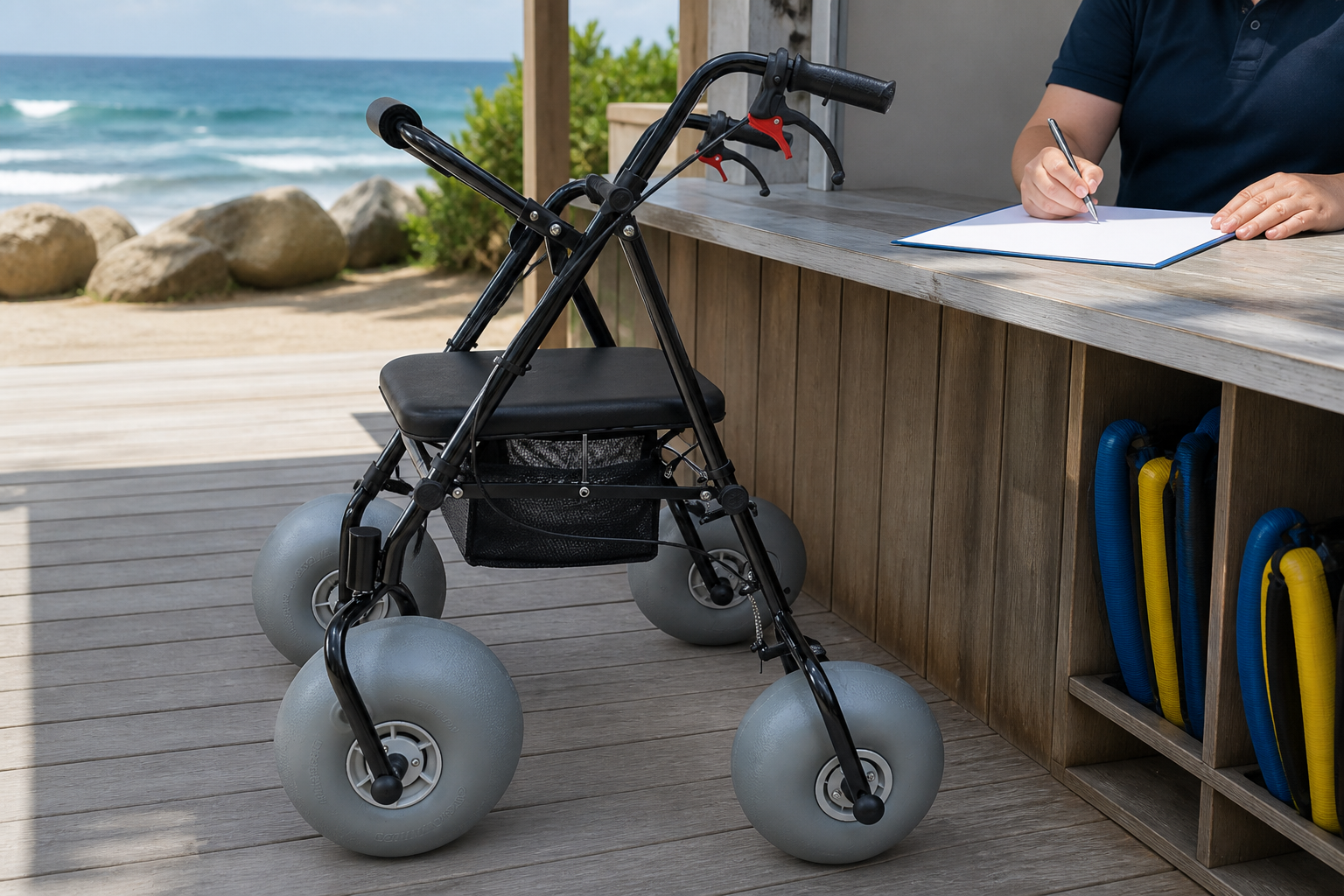
A beach walker size guide should record the model, approved settings, route, configuration, user feedback, date, and responsible role. The record lets another trained staff member rebuild the same setup without guessing. It should not contain unnecessary personal data or unsupported observations. Local privacy rules control storage and access, while the operational record stays focused on the product setup and route.
Keep settings and feedback accountable
Use a short factual form: Write what was set, what route was checked, what the user reported, and what action follows. If a setting remains uncertain, mark the walker held rather than ready. Review records when the product, accessory, route, or user request changes.
- Identify the product model
- Record approved settings
- Name the next review trigger
Key Takeaway: A concise fitting record helps staff repeat an approved setup and recognize when another review is needed.
| Checkpoint | Working choice |
|---|---|
| Record field | Purpose |
| Approved setting | Repeat setup |
| Review trigger | Prompt another check |
Audit several records for missing sources or vague phrases and revise the form where staff hesitate.
How can procurement teams use the guide?
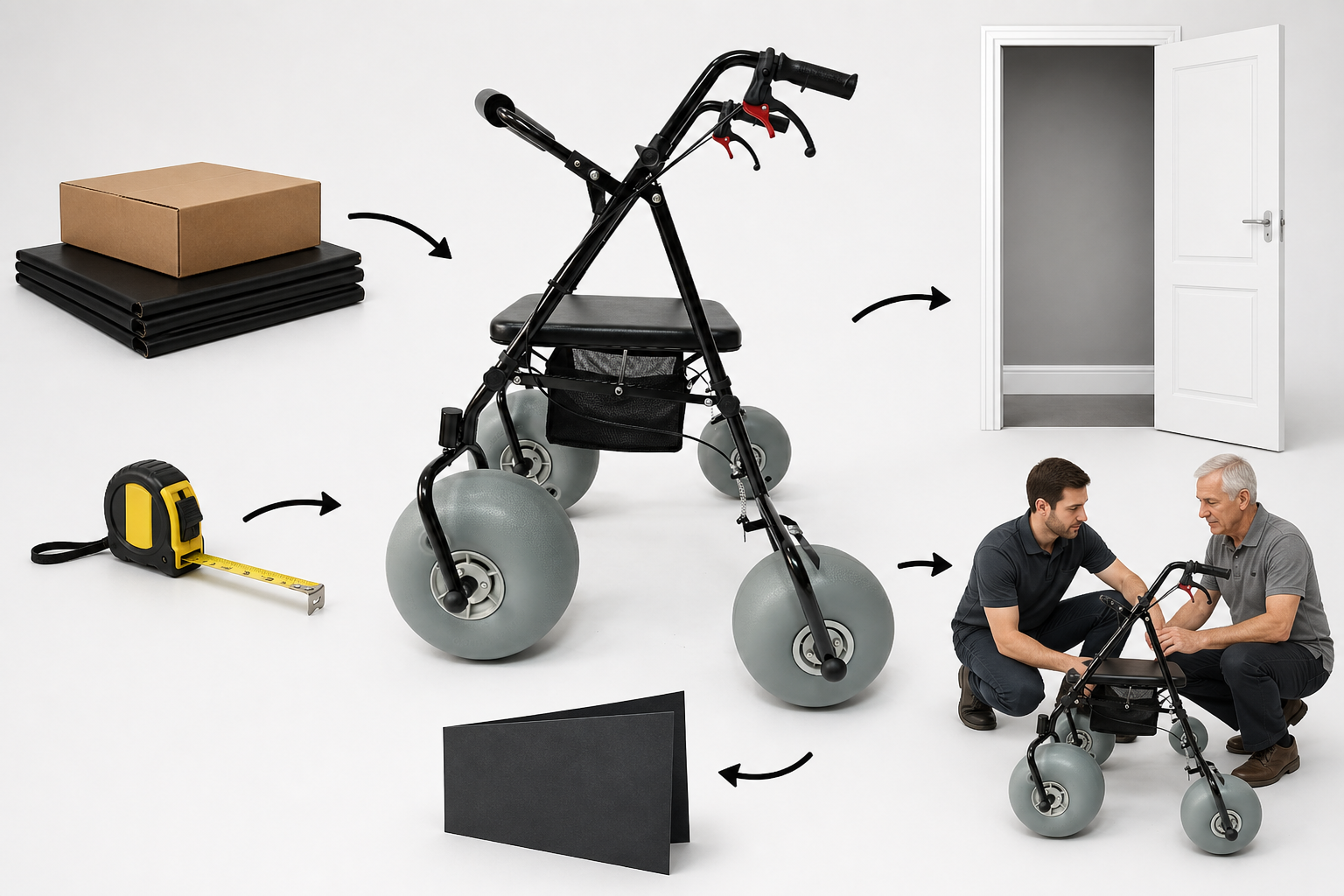
A beach walker size guide helps procurement teams compare verified data, test site logistics, support fitting, and record the approved configuration. The guide is strongest when it separates supplier facts from user feedback and local route observations. It should point buyers toward questions that can be answered before purchase while reserving personal decisions for a supervised process. Update the guide whenever a model or route changes. Use the supplier overview to prepare questions, then verify dimensions against the exact model documents.
Apply a compare, trial, record loop
Use the complete loop: Collect verified specifications, compare route and storage needs, run an empty-product logistics trial, conduct the fitting under local policy, and record the result. Reject invented measurements or one-size claims. One clear loop gives buyers a defensible selection workflow without replacing product instructions.
- Collect verified dimensions
- Test route and storage
- Record the approved setup
Key Takeaway: A structured guide turns scattered product figures into a repeatable B2B selection process.
| Checkpoint | Working choice |
|---|---|
| Loop stage | Output |
| Compare | Shortlist |
| Trial and record | Approved setup |
Use this object-based flowchart as the opening page of the buyer worksheet.
Closing Guidance
A practical size guide connects product dimensions with route, storage, staff fitting, and user feedback. Build the guide from verified supplier data, test the workflow with an empty product, and keep personal decisions with the user and qualified local support. Buyers comparing program needs can contact us today with their route and storage questions.
FAQ
Can I select one beach walker size for every user?
No. Use verified product data and an individual fitting conversation because posture, reach, route, and support needs differ.
What’s the best handle height for a beach walker?
There is no universal setting. Follow product instructions and personal guidance, then confirm the user can stand and operate the walker as intended.
How do I know if the frame space is suitable?
Compare verified dimensions with the user, clothing, transfer approach, and route, then run a supervised trial under local policy.
Can a storage measurement decide product fit?
No. Storage fit matters to the program, but it does not replace user fit, route review, or product instructions.
What should a fitting record contain?
Record the product model, approved settings, route, user feedback, staff role, and date while protecting personal information.