
Choose the shipping configuration before ordering cartons. An AY-STZ1.0 packed with wheel assemblies removed, for example, needs a different allocation of loose parts from a unit shipped in another approved state. The person opening the package should be able to identify each part, lift it clear and restore the documented setup without pulling on a brake cable or searching another unit’s carton.
Page 2 of the manufacturer’s manual lists a 53 × 28 × 79 cm carton, a net product weight of 13.5 kg and a packaged gross weight of 15.6 kg. These are reference values for the manufacturer’s listed configuration. Additional accessories, protection or a different packing arrangement require new measurements. Measure the approved package rather than an empty carton. AY-STZ1.0 manufacturer manual
Build a trial pack around the actual parts
Start with one identified walker and a clean component list. Follow the supplier’s authorised folding or disassembly instructions. Photograph the chosen state before placing the unit in the pack. Note which wheel positions are packed separately, identify their retainers where applicable and keep the related hardware together.
The AY-STZ1.0 manual identifies larger rear wheels, smaller front wheels, a folding frame and height-adjustable handles with brake controls. Check whether a loose wheel, bag of fittings or surrounding packing can press against a lever, bend a cable or rub the frame finish. Use protection suitable for the route and agreed shipping arrangement. Keep each protective piece removable without cutting against the product or obscuring the hardware the receiver needs to find.
Inspect the seat and under-seat bag before closing the pack. Remove loose inventory from any pocket and list separately supplied parts in a marked bag or compartment. A bag inside the walker can look like a convenient place to hide hardware until the unpacking team misses it.
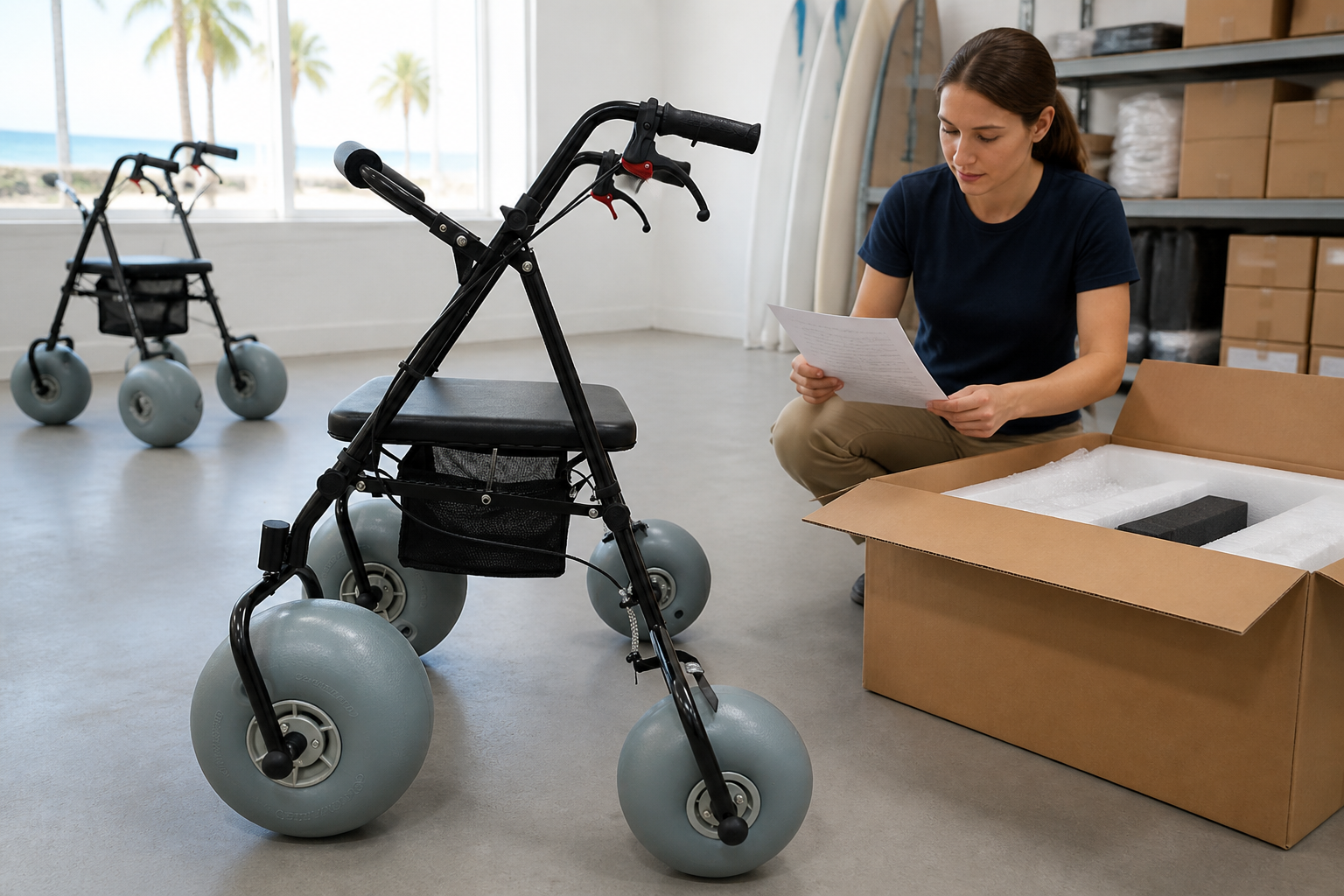
Compare the label with the document it refers to
| On each package | In the package record |
|---|---|
| Buyer order and package identifier | Model and configuration revision, number of walkers or component sets assigned to this package. |
| Clear description of the contents | Fitted versus loose components, included instructions and location of small hardware. |
| Actual packed dimensions and gross weight | Measured length, width, height, units and the state in which the reading was taken. |
| Agreed handling information | Applicable handling or storage instructions and any limits confirmed for the approved pack. |
If the shipment contains spare wheels for stock as well as wheels belonging to the walkers, mark those groups separately. A shipping total that combines them can leave the receiver with the correct number of wheels and the wrong sets for assembly. Link a separate spare-parts carton to its order line and destination.
Ask another member of the warehouse team to open the trial pack using only the label, packing list and supplied instructions. Can they find the first part needed for assembly? Can they identify the front and rear assemblies? Can they recover the paperwork without discarding a small fitting? Correct the pack map and protection before repeating the exercise.
Release the pack that will actually travel
Measure and weigh the closed trial package with the final protection and accompanying documents. Verify access for loading at dispatch and unloading at the named destination. Confirm handling equipment, pallet or outer packaging where applicable, and any limits set by the freight provider. A trial pack demonstrates the agreed packing arrangement. Formal transport-performance evidence requires the specific test and shipment conditions the buyer has specified.
Reconcile the commercial invoice, packing list, carton marks and transport documents against the same product and package identities. Requirements vary with shipment and destination. Ask the parties responsible for export and import to confirm the actual documentation. International Trade Administration overview of common export documents
Send the receiver an overview photograph, the package map, final count and contact for discrepancies before dispatch. Identify any temporary sample packing still awaiting production approval. The receiving team can then compare an actual shipment against an agreed reference and preserve evidence where a package arrives damaged. Beach walker receiving inspection