
A beach walker inspection routine becomes reliable when staff use the same empty-unit checks, stop rules, cleaning record, and handoff language before every service period. Coastal senior-care programs, resorts, rental teams, and recreation operators can see a black frame, broad padded seat, continuous grip, folding braces, splayed legs, and rubber feet, yet appearance alone cannot confirm readiness. Sand, moisture, storage contact, loose fasteners, fabric damage, or a missed handoff can turn a small finding into an operational delay. This guide links beach walker inspection with a repeatable staff record. It does not make personal-fit, clinical, performance, certification, or medical claims.
Which visible parts should staff check before service?
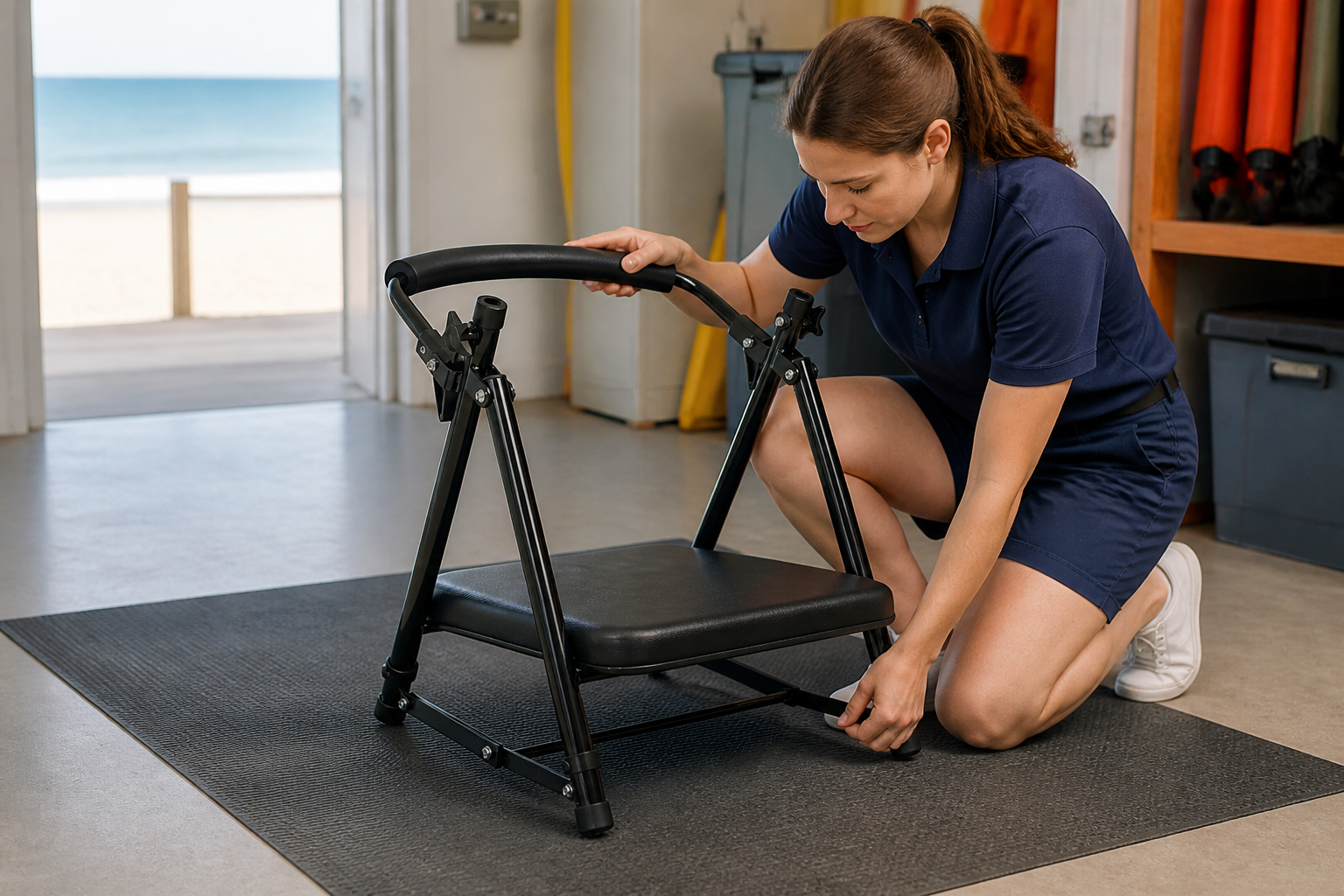
A beach walker inspection should cover frame tubes, top grip, seat, braces, fasteners, leg ends, rubber feet, visible damage, cleanliness, and unit identity before service. Then compare the walker with the site’s wider beach mobility equipment so each unit keeps its own check sheet.
Use the same empty-unit scan every time
Begin with a fixed route: Place the empty walker in a bright dry area and scan from top grip through seat, frame, braces, legs, and feet. A fixed route cuts down on skipped areas during busy openings. Staff should compare findings with current instructions and local policy rather than guessing from another walker.
Record ready, clean, hold, or service beside the unit identity. Connect the routine with the senior-care application for program context while product instructions and local rules control the inspection.
- Confirm unit identity and visible configuration.
- Scan grip, seat, frame, braces, legs, and feet.
- Look for dirt, moisture, damage, or loose items.
- Record status before service begins.
Key Takeaway: A fixed visual route helps staff check the same parts in the same order.
| Scan area | Record |
|---|---|
| Upper | Grip, seat, frame connection |
| Lower | Braces, legs, feet |
| Status | Ready, clean, hold, or service |
The route turns a quick glance into a repeatable operational check.
How should frame joints and fasteners be reviewed?
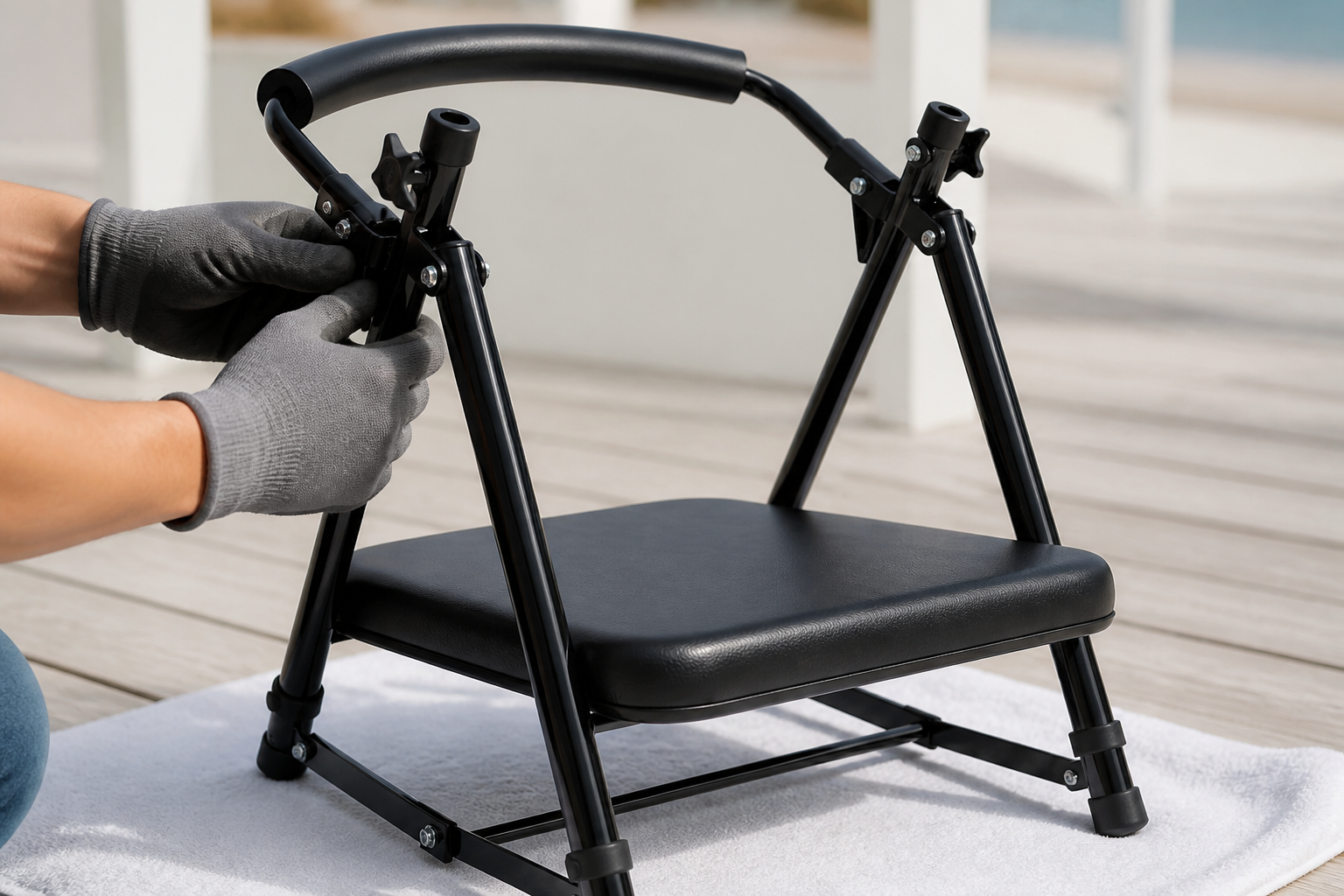
A beach walker inspection should review visible frame joints, folding points, braces, and fasteners for condition, alignment, movement, and missing parts under current product instructions.
Follow current instructions for every connection check
Keep the check controlled: Staff should not tighten, replace, or alter a connection unless the approved service process permits that work. Observe the empty walker on a stable surface, compare left and right structure, and note unusual movement, contact, gap, or sound without inventing a diagnosis.
Move an unclear connection into the local hold path and identify who can review it. Keep photographs with the unit record when policy permits. A later reviewer should see what staff observed, which source they used, and whether the walker returned to service.
- Compare visible joints and braces side by side.
- Check for missing or displaced fasteners.
- Record unusual movement, contact, gap, or sound.
- Use the approved hold and service path.
Key Takeaway: Connection checks need observation, source control, and a named response path.
| Connection area | Staff action |
|---|---|
| Joint | Observe alignment and condition |
| Fastener | Check presence and visible state |
| Finding | Record, hold, route, and close |
A written observation helps service staff review the same finding without guesswork.
What should staff record about the seat and handles?
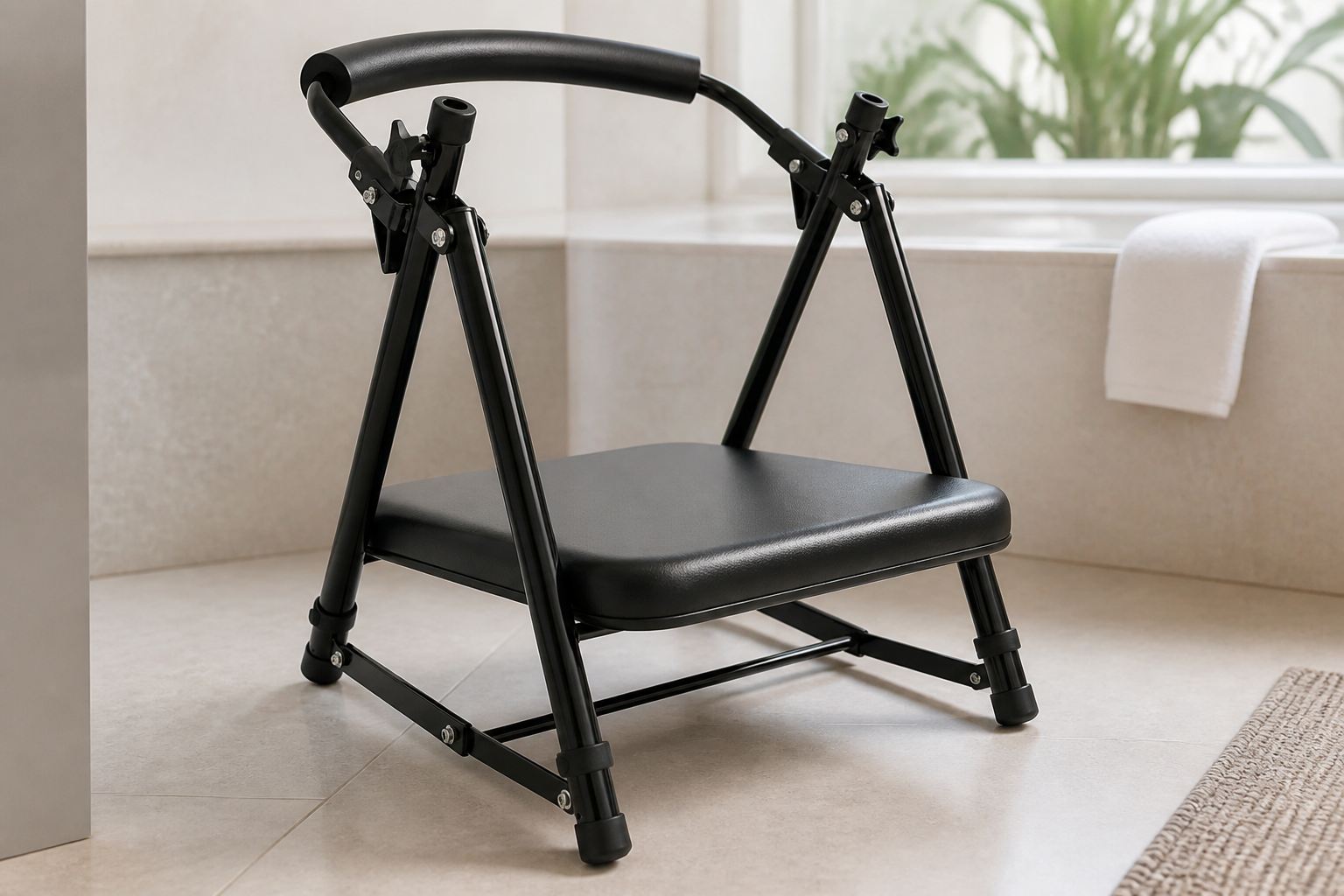
A beach walker inspection should record seat surface, edges, underside support, attachment points, top grip condition, cleanliness, dryness, and visible damage.
Record condition and attachment without making fit claims
Separate condition from personal fit: The broad padded seat and continuous top grip may support a planned rest workflow, but inspection cannot decide whether a specific person should use the product. Staff can document tears, cuts, lifting edges, loose attachment, residue, dampness, or damaged grip material and route personal questions through local policy.
Use consistent words and photos rather than vague labels. Connect operating teams with the beach walker project while keeping user-specific decisions outside the equipment record.
- Check seat surface, edge, underside, and attachment.
- Review grip surface and connection points.
- Record clean, dry, damaged, loose, or held.
- Route personal-fit questions through local policy.
Key Takeaway: Seat and handle records describe equipment condition without making personal promises.
| Area | Condition words |
|---|---|
| Seat | Clean, dry, secure, damaged |
| Grip | Clean, intact, loose, worn |
| Decision | Ready, clean, hold, or service |
Consistent condition words make shift handoffs quicker and clearer.
How can teams review feet and ground contact?
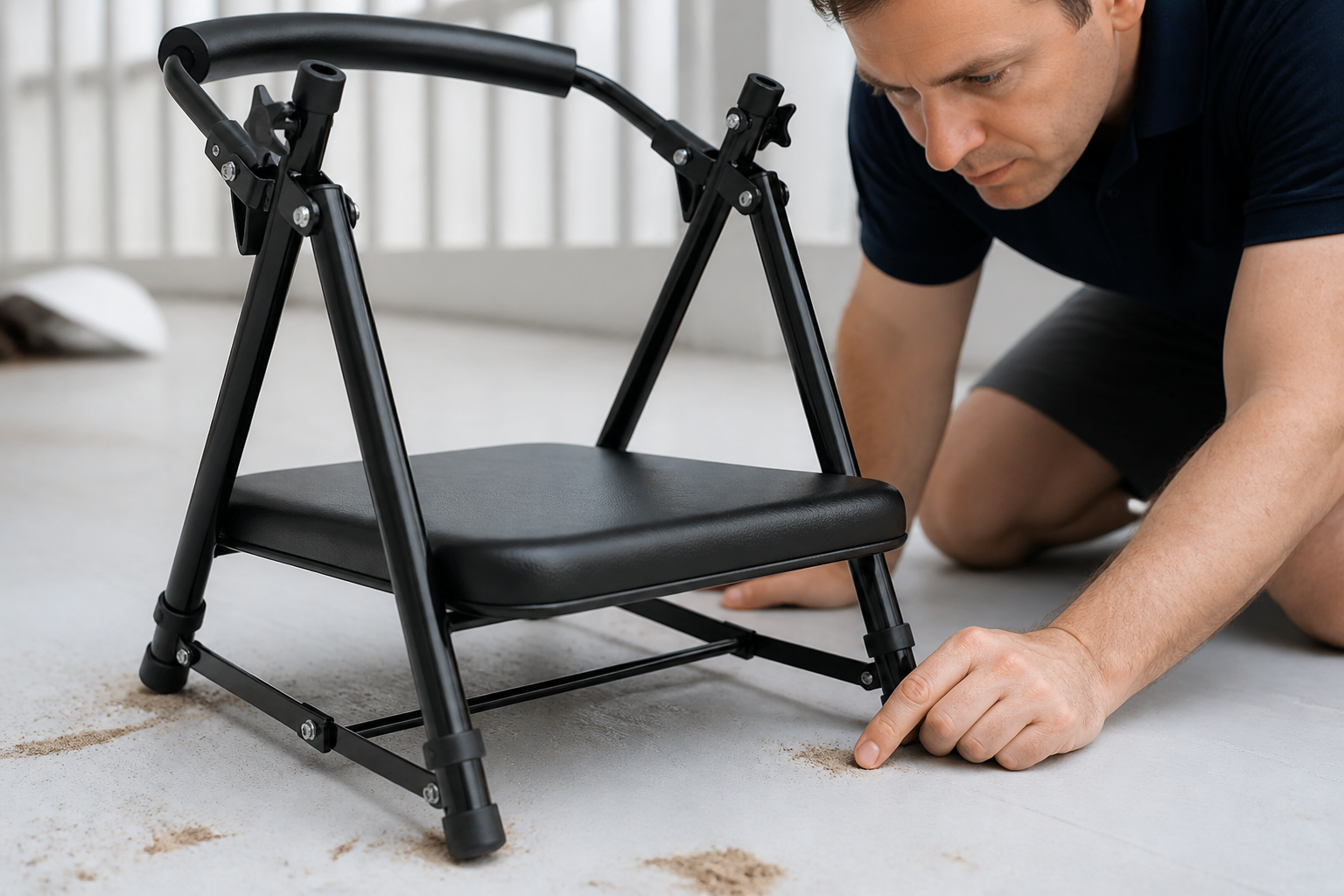
A beach walker inspection should review each leg, rubber foot, contact surface, visible wear, trapped debris, moisture, and secure attachment before service. A beach access mat changes ground contact, so log it as a separate route surface.
Check every leg end on a clean stable surface
Look at all contact points: Sand and small debris can hide around rubber feet or lower leg ends. Place the empty walker where staff can see every contact point, compare the four feet, and record cracks, missing material, uneven seating, loose attachment, or residue. Do not infer traction or ground performance from a visual check.
Move the unit through the approved cleaning or hold path when a foot needs attention. Record which foot, what staff saw, and who closed the finding. A clear location description prevents later teams from repeating the whole inspection without focus.
- Inspect every lower leg and rubber foot.
- Remove loose debris through the approved cleaning method.
- Record visible wear, damage, or loose attachment.
- Name the exact foot and response owner.
Key Takeaway: Ground-contact checks cover condition and cleanliness without promising surface performance.
| Contact point | Record |
|---|---|
| Leg end | Condition and visible alignment |
| Rubber foot | Attachment, wear, debris, moisture |
| Response | Clean, hold, service, or release |
Location-specific findings help service staff act without reinterpreting a vague note.
When should a walker stay out of service?
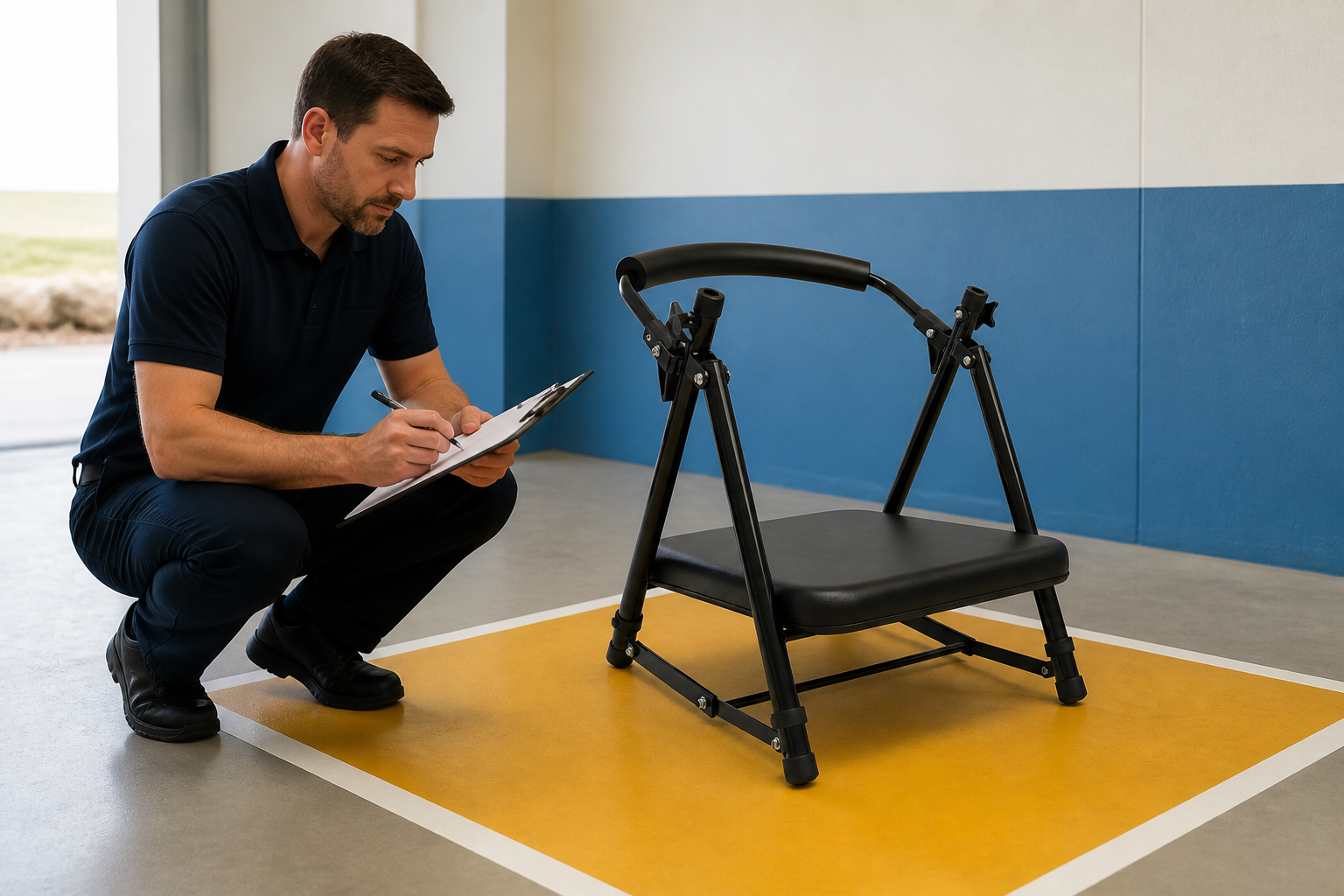
A beach walker inspection should place a unit on hold when local stop rules identify damage, missing parts, unresolved movement, contamination, incomplete records, or any condition outside staff authority. For example, the Padre Island National Seashore guidance separates beach walkers from beach wheelchairs and states local operating limits.
Use written stop rules for damage, uncertainty, or missing parts
Make the stop rule easy to use: Frontline staff do not need to diagnose a fault before protecting the workflow. A clear hold tag, unit identity, brief finding, time, owner, and alternate unit path can keep uncertainty from moving into service. The hold record should stay with the walker or its controlled asset file.
Managers should define who may inspect, clean, service, release, or retire a unit. Avoid casual fixes between shifts. Close each hold with the action taken, source used, reviewer, and release time so later staff do not rely on memory.
- Publish plain stop conditions for staff.
- Attach hold status to the unit identity.
- Name the service and release authority.
- Record closure before return to service.
Key Takeaway: A stop rule works when staff can hold a unit without diagnosing the cause.
| Hold trigger | Required record |
|---|---|
| Finding | Location and visible condition |
| Control | Unit status and alternate path |
| Closure | Action, reviewer, source, and time |
The hold process protects consistency during shift changes and busy periods.
How should cleaning fit into inspection?
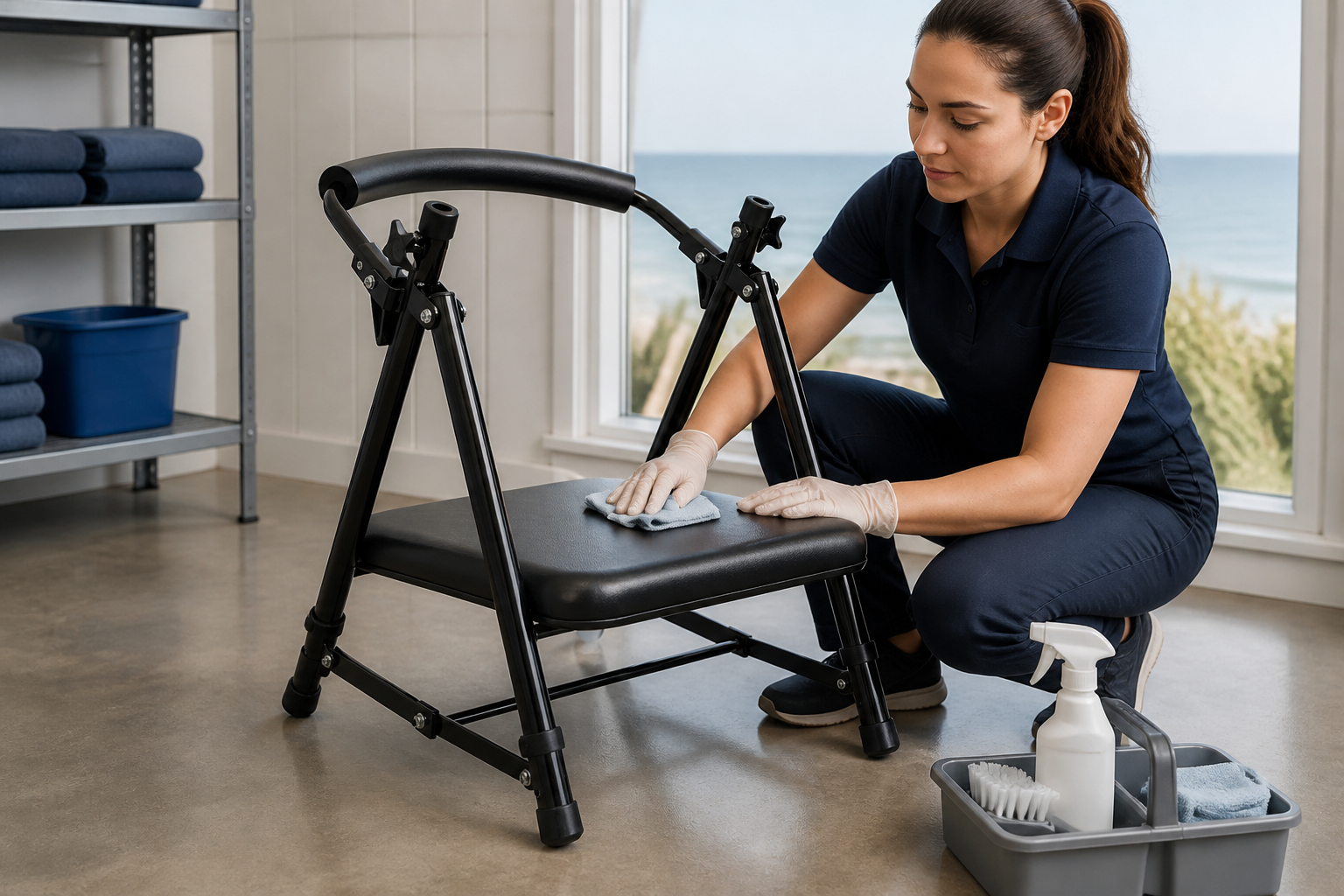
A beach walker inspection should confirm the unit is clean and dry while keeping cleaning steps, condition findings, and service decisions as separate recorded actions.
Treat cleaning and condition review as linked records
Use the clean-check split: Cleaning can expose a cut, loose edge, trapped debris, surface change, or missing item that was hidden by sand. Staff should follow current product and local cleaning guidance, avoid unapproved chemicals or methods, and reinspect relevant areas after the unit dries.
Record what was cleaned, which method source applied, what staff found, and whether another review became necessary. The walker product page can help teams identify visible product areas without replacing current care instructions.
- Follow current product and local cleaning sources.
- Keep cleaning and condition findings separate.
- Recheck areas exposed during cleaning.
- Release only after the recorded review closes.
Key Takeaway: Cleaning supports inspection when it reveals condition without hiding the decision trail.
| Care step | Record |
|---|---|
| Before | Residue, moisture, visible finding |
| Cleaning | Approved method and staff |
| After | Dry state, recheck, release or hold |
Separate records show whether cleaning solved residue or uncovered another issue.
What belongs in a shift handoff log?

A beach walker inspection handoff should record unit identity, current status, last check, cleaning state, open finding, assigned owner, alternate unit, and release boundary.
Carry unit status and open findings into every handoff
Keep handoffs short and exact: A long narrative can bury the current decision. Use controlled status words and a brief location-based finding. Staff taking the next shift should know which units are ready, which need cleaning, which remain held, and which owner is expected to act.
Review open holds aloud when shifts overlap and update the shared log at the same time. Do not copy old findings forward after closure. Keep a history for audit while making the active state easy to spot.
- Record unit identity and current status.
- Name the last check and cleaning state.
- Carry open finding and owner forward.
- Close resolved items without deleting history.
Key Takeaway: A handoff log gives each shift one current unit state and one owner path.
| Handoff field | Example state |
|---|---|
| Unit | Identity and location |
| Status | Ready, clean, hold, or service |
| Open item | Finding, owner, next action |
A compact active view reduces uncertainty while retained history supports review.
How can managers train consistent checks?
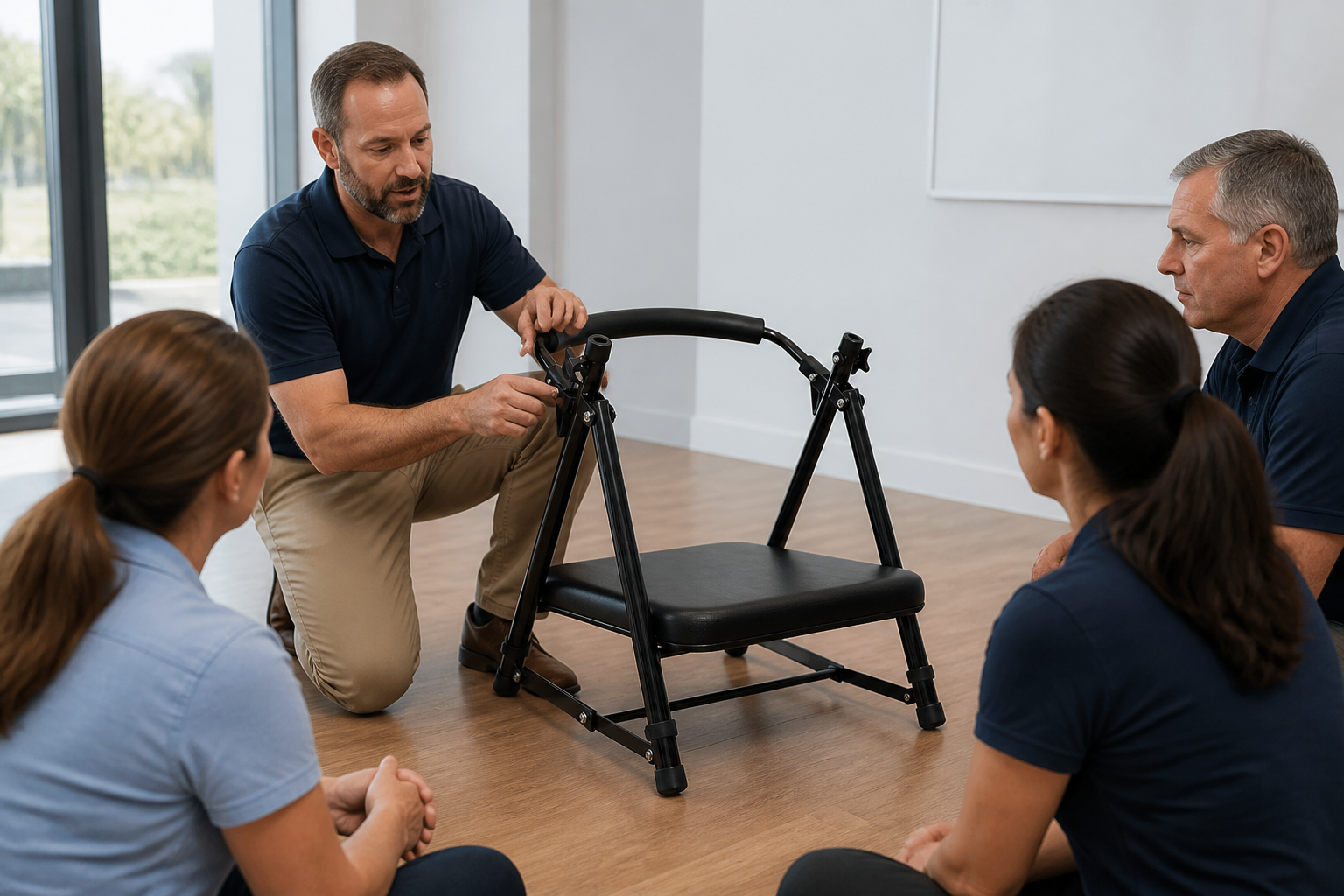
A beach walker inspection training session should combine the fixed scan route, approved condition words, cleaning boundary, hold triggers, documentation, and release authority.
Train the route, words, stop rules, and record together
Practice with controlled examples: Use an empty walker and staged non-destructive examples such as removable surface debris, a missing record, or a clearly tagged training photo. Staff should state what they observe without diagnosing. Trainers can compare wording and show how the same finding moves into clean, hold, service, or release status.
Repeat training after process or product changes and keep attendance with the procedure revision. A short observed practice offers better evidence than a signature alone because managers can see whether staff follow the route and use the right stop boundary.
- Teach one repeatable top-to-bottom scan.
- Practice approved condition words.
- Rehearse hold and escalation steps.
- Record observed practice and procedure revision.
Key Takeaway: Training becomes consistent when observation, words, records, and authority match.
| Training area | Observed behavior |
|---|---|
| Scan | Same route and component coverage |
| Language | Condition rather than diagnosis |
| Control | Correct status, owner, and release path |
Observed practice reveals whether written instructions work during a real handoff.
What should periodic reviews compare?

A beach walker inspection periodic review should compare unit status history, recurring locations, cleaning records, hold time, service closure, staff wording, and procedure revisions. Use the supplier overview to prepare service questions, then rely on the exact unit’s documents.
Compare recurring findings with procedure and product changes
Look for repeat patterns: A single record describes one moment. A grouped review can show repeated debris at lower feet, recurring seat cleaning, unclear handoff words, or delayed closure. Managers should not turn these patterns into product claims; they can use them to refine local storage, cleaning, training, or service routing.
Review records by unit identity and finding location, then sample closed holds for source and reviewer details. Update the procedure only through the approved change path and tell staff which revision now controls their checks.
- Group findings by unit and location.
- Compare cleaning, hold, service, and closure records.
- Sample wording and source quality.
- Control any procedure change by revision.
Key Takeaway: Periodic review turns local records into process changes without inventing product outcomes.
| Review lens | Question |
|---|---|
| Pattern | Which locations or statuses repeat? |
| Closure | Were owner and source recorded? |
| Change | Which local process needs revision? |
The review should improve local control while keeping product claims outside the evidence.
How can teams turn findings into daily actions?
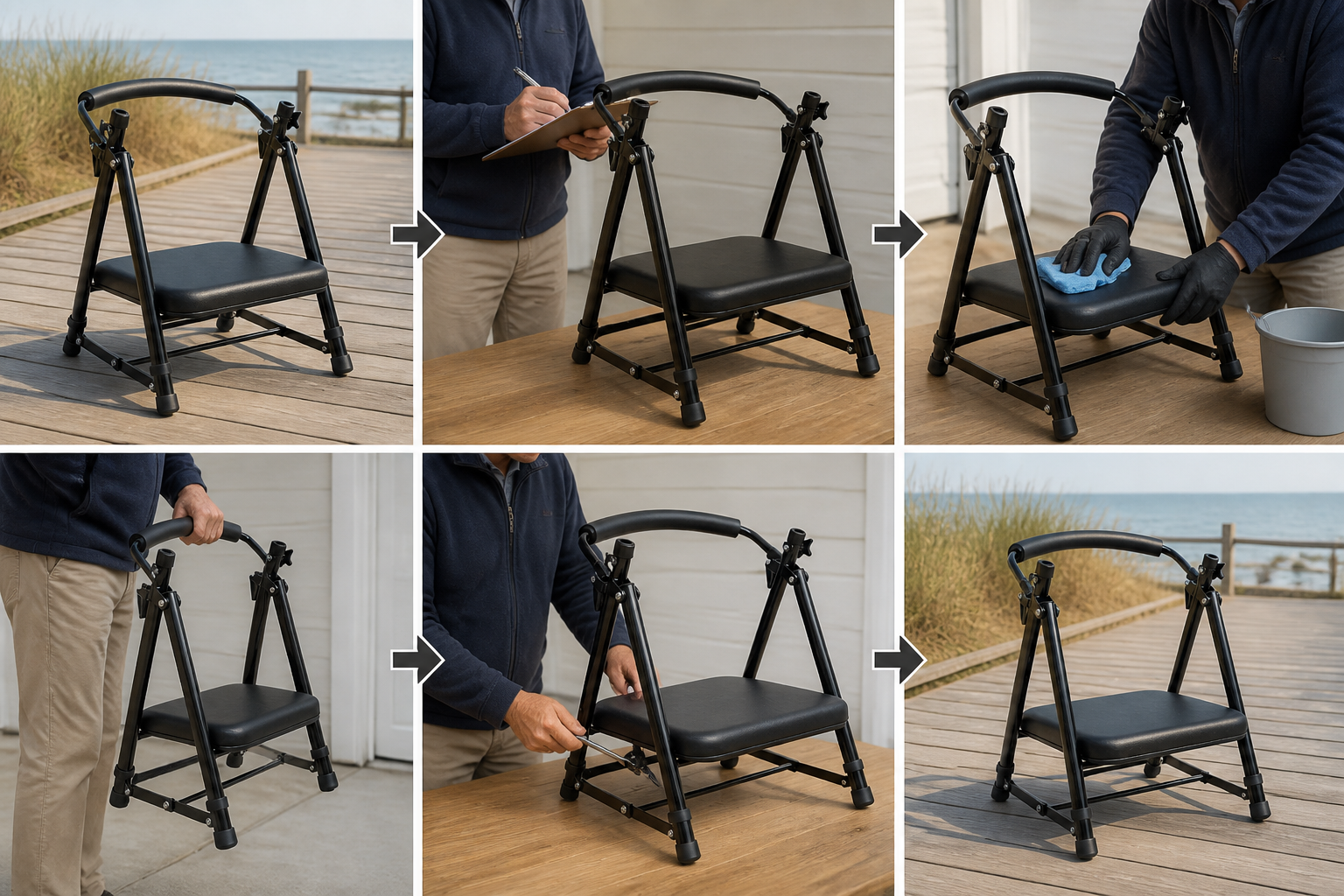
A beach walker inspection can guide daily action when every finding moves through observe, record, clean or hold, route, close, and release steps.
Use one flow from observation through release
Make the flow visible: Place the active decision beside the unit identity and keep the detailed record in the shared system. Staff should never need to choose between serving a guest and protecting a hold rule; an alternate-unit plan belongs inside the workflow. Management should review open items at a named time and assign missing owners.
Keep the flow beside the local program record so facility planning and active unit status stay aligned. For help discussing a documented coastal equipment workflow, contact us today with your unit list, cleaning method, handoff record, and open inspection questions.
- Observe and record the exact location.
- Clean or hold within staff authority.
- Route the finding to a named owner.
- Close and release through the approved path.
Key Takeaway: A reliable routine ends with a visible status and a recorded release decision.
| Flow stage | Working output |
|---|---|
| Observe | Unit, location, condition |
| Control | Clean, hold, owner, alternate |
| Close | Action, source, reviewer, release |
The flow keeps a small finding from disappearing between inspection and service.
Closing Notes
A reliable inspection routine joins unit identity, a fixed scan route, condition words, cleaning, stop rules, handoffs, training, periodic review, and recorded release. Keep personal guidance outside the equipment record and route unclear conditions through current instructions and local authority. A short consistent check can support a calmer opening and a cleaner shift handoff.
Frequently Asked Questions
Can I release a walker after a quick visual check?
Use the full local routine. A quick glance may miss lower feet, braces, cleaning state, or an open hold.
What’s the best order for a beach walker check?
Use one fixed route. Move from grip and seat through frame, braces, legs, and feet.
How do I know if a finding needs a hold?
Follow written stop rules. Damage, missing parts, uncertainty, contamination, or work outside staff authority should enter the hold path.
Can cleaning replace inspection?
No. Cleaning removes residue, while inspection records condition and service status.
What’s the best handoff note?
Use a short status record with unit identity, finding location, owner, and next action.