
A practical floating beach wheelchair resort plan connects site boundaries, trained roles, guest communication, product checks, route review, water-entry controls, cleaning, storage, and daily records before service opens. A resort may have an orange floating chair with buoyant wheels, silver tubular frame, striped seat and back, belt, and forward foot support, yet equipment alone does not define a water-access program. Teams need a documented operating boundary that reflects local water conditions, lifeguard or safety policy, product instructions, staffing, and guest choice. This guide frames floating beach wheelchair resort planning for B2B operators without inventing depth limits, staffing ratios, certifications, weather thresholds, performance data, or medical outcomes.
Which site questions shape the program boundary?
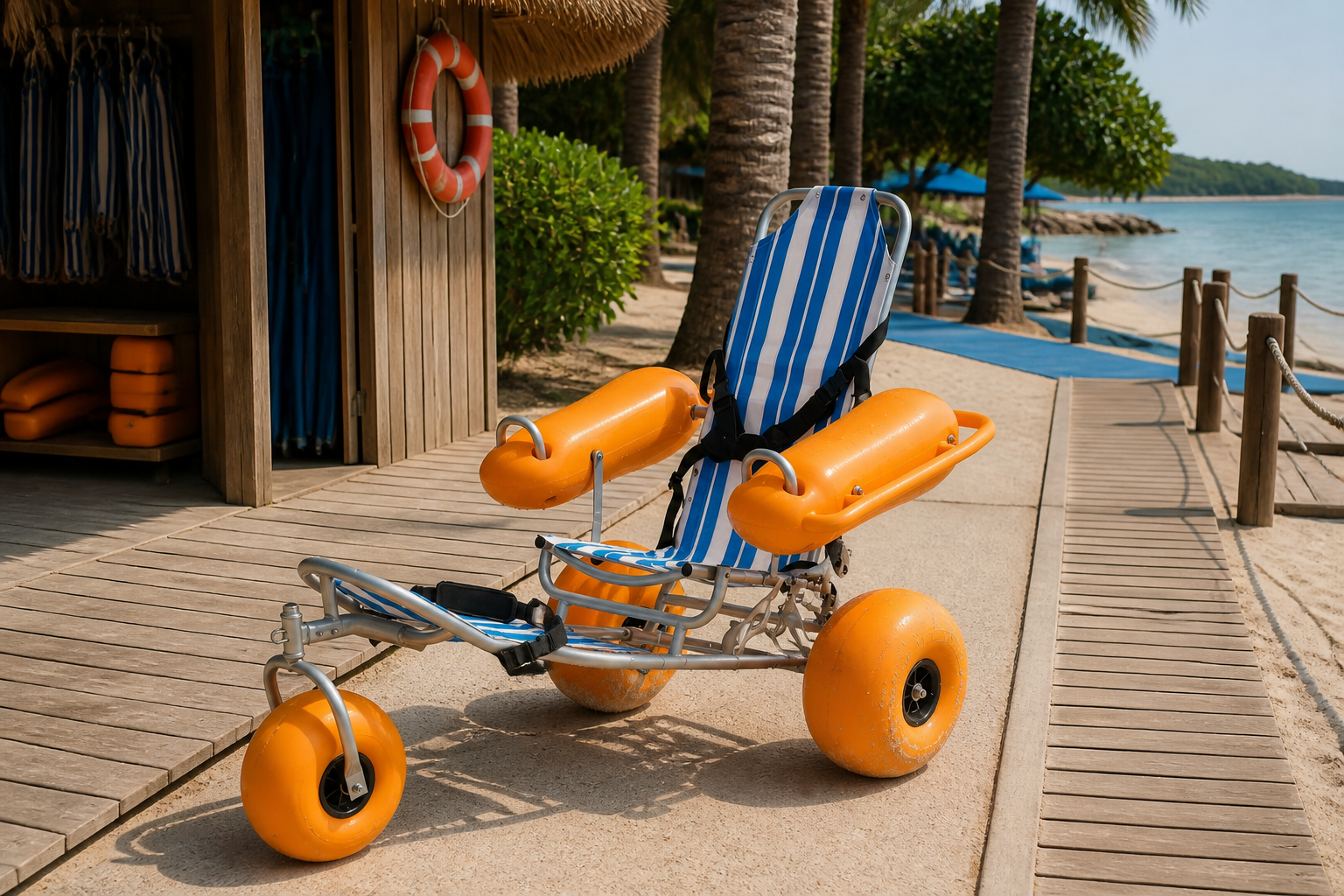
A floating beach wheelchair resort plan should start with site access, storage, preparation, handoff, beach route, water-entry area, exit path, cleaning point, and stop conditions. Compare dry-sand travel with an all-terrain beach wheelchair when one device cannot cover the full route.
Map the complete guest and equipment route
Start with the site map: Walk the route without a guest and record surfaces, widths, slopes, gates, crowded zones, shade, communication points, cleaning access, and storage. Conditions can change with weather, tide, debris, events, and beach traffic, so the map needs an owner and review time rather than a permanent approval label.
Link the local map with the floating chair resort project for application context while site policy and current product instructions control local decisions. Mark where staff pause, brief, inspect, turn, enter, exit, clean, and store.
- Map storage through return and cleaning.
- Name changing and fixed site conditions.
- Place staff and communication points.
- Record stop conditions and review owner.
Key Takeaway: The site map connects equipment movement with a controlled service boundary.
| Route zone | Planning record |
|---|---|
| Land | Storage, handoff, access, return |
| Water edge | Entry, boundary, exit, stop point |
| Support | Staff, communication, cleaning, review |
The map shows where equipment planning ends and local safety authority begins.
How should teams define water boundaries?
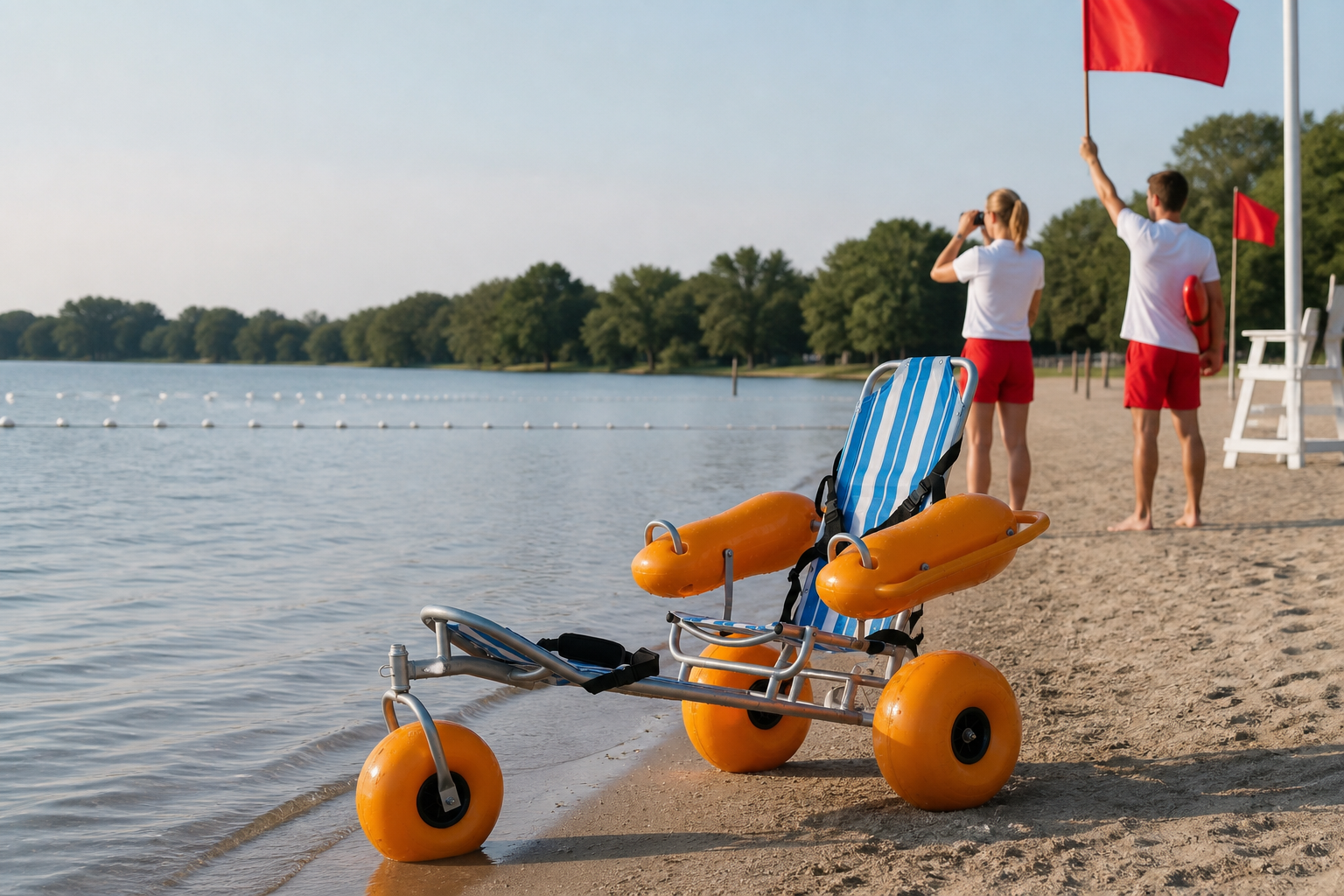
A floating beach wheelchair resort water boundary should follow local safety policy, responsible on-site authority, current conditions, product instructions, and a clear stop decision. For U.S. coastal sites, NOAA tide predictions can inform a timed review, while current local conditions still control the decision.
Use local authority, current conditions, and product guidance
Keep the boundary conditional: A still photograph cannot define waves, current, depth, visibility, traffic, weather, or staffing. The responsible team should review conditions at the named service time and document whether the water portion opens, changes, or closes. Staff need a plain signal and exit route when conditions move outside the approved boundary.
Do not copy a threshold from another beach or invent a universal limit. Record the source, reviewer, time, condition, boundary decision, and next review. Keep guest communication aligned with the active decision rather than the day’s earlier plan.
- Name the local authority and source.
- Review current conditions at service time.
- Define open, changed, or closed status.
- Keep exit route and stop signal clear.
Key Takeaway: Water access stays conditional on local authority and current conditions.
| Boundary record | Field |
|---|---|
| Source | Local policy and product guidance |
| Condition | Time, reviewer, observed state |
| Decision | Open, changed, closed, next review |
A time-stamped boundary prevents an old decision from standing in for current conditions.
What should staff roles cover?

A floating beach wheelchair resort team should assign reservation, briefing, equipment check, route support, water-edge control, communication, cleaning, storage, recordkeeping, and stop authority.
Assign each task, stop authority, and handoff owner
Name roles before service: Titles matter less than clear tasks and authority. One staff member may cover several tasks during a small program, yet the plan should still state who checks the chair, who reviews the route, who communicates with the guest, who controls water entry, and who can stop service without delay.
Use an observed empty-chair practice to confirm handoffs and signals. Record staff readiness against the current procedure revision. The water-park application offers program context while each resort sets its own roles through local policy.
- Assign each task and decision owner.
- Give every role clear stop authority.
- Practice handoffs with an empty chair.
- Record readiness by procedure revision.
Key Takeaway: Role clarity joins guest communication, equipment control, and stop authority.
| Role area | Named responsibility |
|---|---|
| Before | Booking, briefing, chair and route check |
| During | Communication, boundary, stop decision |
| After | Return, cleaning, storage, record |
A role map reveals gaps before staff face a live handoff.
How can teams plan reservations and handoffs?
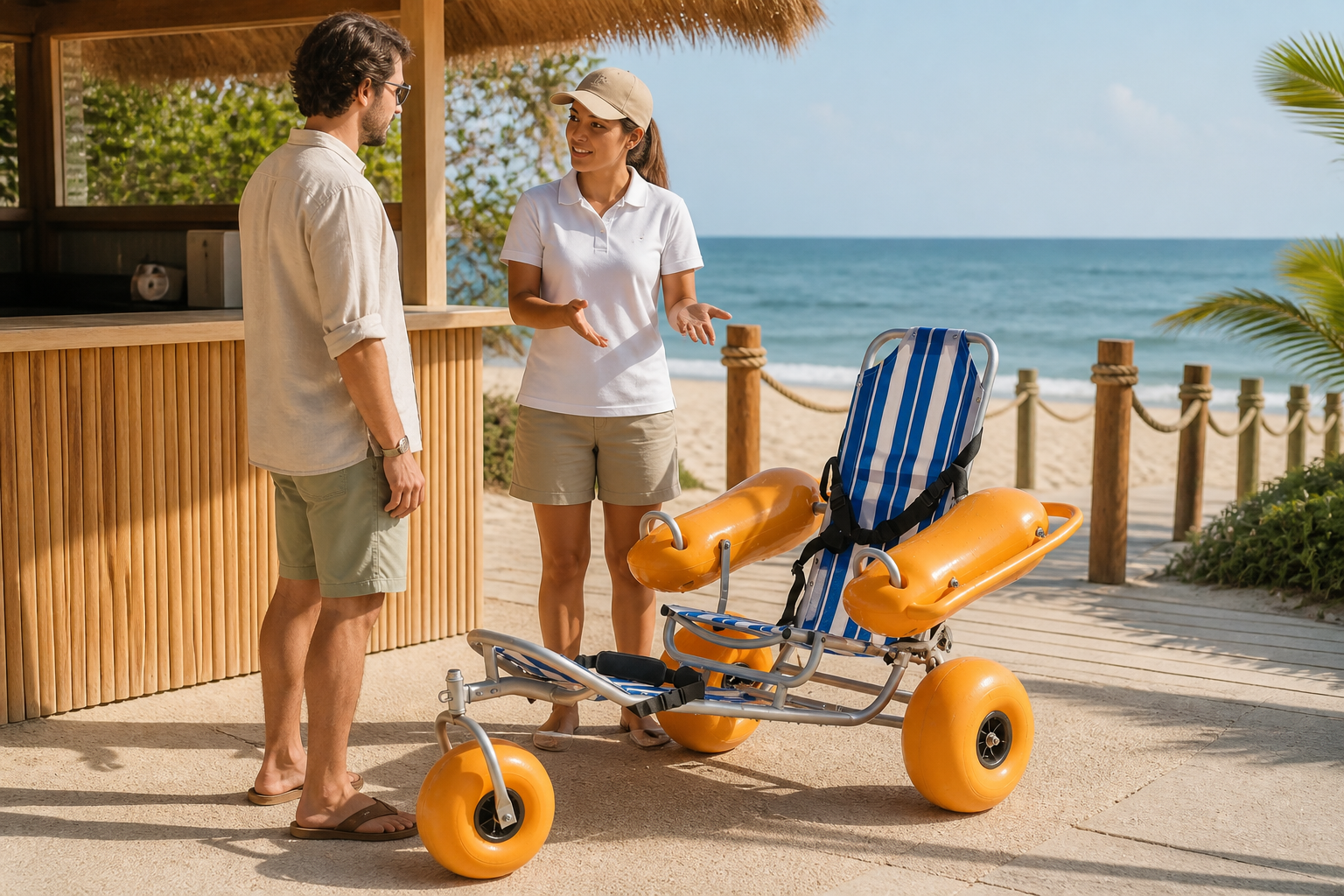
A floating beach wheelchair resort reservation should set service scope, meeting point, timing, communication method, preparation questions, cancellation path, and on-site decision boundary.
Use booking information to prepare rather than promise outcomes
Keep expectations exact: Booking staff can explain what the program offers, where the handoff begins, what information the team needs, and which local conditions may change service. They should not make clinical judgments or promise water access before the responsible on-site review.
At handoff, confirm the active plan with the guest and support party, invite questions, explain stop signals, and respect the guest’s choice to pause or decline. Record only the information required by local policy and protect private details through the resort’s data process.
- State service scope and meeting point.
- Explain condition-based changes or closure.
- Confirm communication and stop signals.
- Keep private data inside approved systems.
Key Takeaway: A clear reservation prepares the handoff without promising a fixed water outcome.
| Handoff stage | Communication |
|---|---|
| Booking | Scope, meeting point, timing, change path |
| On site | Active boundary, signals, guest choice |
| Record | Required fields and privacy control |
Expectation control helps staff adapt the plan without surprising the guest.
Which equipment checks belong before service?
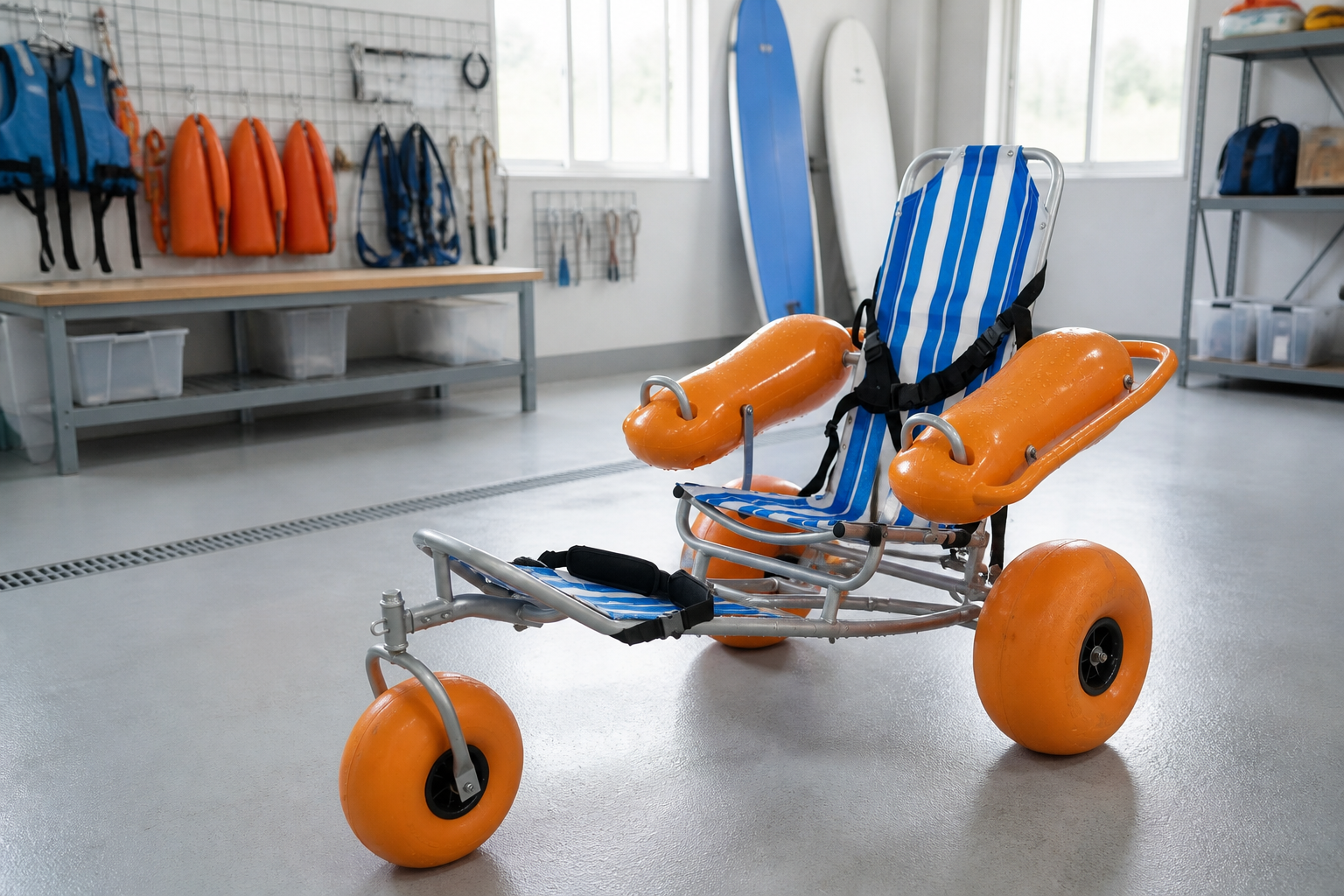
A floating beach wheelchair resort check should cover model identity, frame, buoyant components, wheels, seat, back, belt, foot support, connections, cleanliness, and current instructions before release. Use the supplier overview only to frame questions; model-specific documents remain the evidence source.
Follow a model-specific empty-chair check and release record
Use the same inspection path: Visible orange buoyant wheels, silver frame, striped fabric, belt, and foot support can guide the scan order, yet staff should not infer readiness from appearance. Check every named area under current instructions, record an unclear condition, and move the chair into the approved hold path when staff authority ends.
Keep cleaning status and condition findings separate. Use a bright dry preparation area and document release before the chair moves toward the shoreline. A later shift should be able to see who checked the unit and which procedure revision applied.
- Confirm model and visible configuration.
- Check frame, floats, wheels, fabric, belt, and support.
- Separate cleaning from condition findings.
- Record release or hold with owner.
Key Takeaway: The pre-service check links model condition with a named release decision.
| Check area | Record |
|---|---|
| Structure | Frame, connections, wheels, floats |
| Contact | Seat, back, belt, foot support |
| Status | Clean, ready, hold, service |
A consistent check keeps unresolved equipment questions away from the route.
How should the land-to-water route be reviewed?

A floating beach wheelchair resort route review should cover preparation, handoff, boardwalk or mat, soft sand, pause zones, entry, exit, return, cleaning, and storage under current conditions. A beach access mat may support part of a land route, but staff should still record every surface join.
Review the route as one loop rather than a one-way path
Walk the return path too: A team may focus on reaching the water and miss a blocked return, steep surface change, crowded turn, rinse area conflict, or storage access issue. Review the empty-chair route in both directions and place stop points before constrained sections. Recheck after weather, event, maintenance, or layout changes.
Use the beach wheelchair collection to frame product categories while the exact model record and local route map guide selection. Record alternate paths and who can close a route segment.
- Walk preparation through storage in both directions.
- Mark surface changes, turns, pauses, and return access.
- Name alternate paths and closure authority.
- Recheck after condition or layout changes.
Key Takeaway: A complete route loop keeps return, care, and storage inside the operating plan.
| Route phase | Review point |
|---|---|
| Outbound | Handoff, path, surface changes, entry |
| Return | Exit, pause, cleaning, storage |
| Control | Stop point, alternate, owner, recheck |
The return review often reveals constraints hidden by an outbound-only walk.
What communication belongs in the guest briefing?
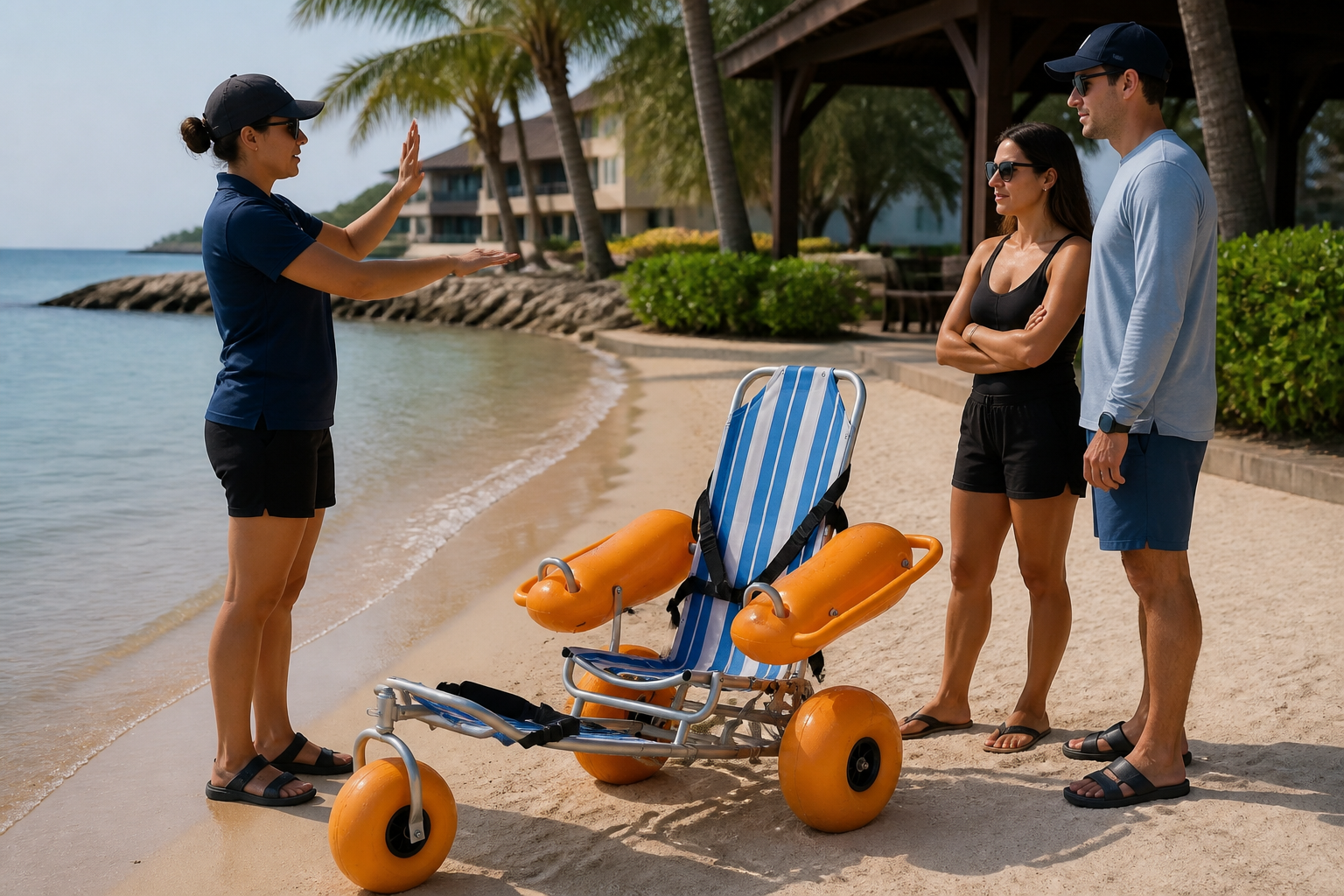
A floating beach wheelchair resort briefing should explain the active service plan, staff roles, equipment features used during the session, route, water boundary, stop signals, return path, and guest choice.
Explain scope, roles, signals, boundaries, and guest choice
Invite a real dialogue: Use plain language and ask the guest or support party to repeat signals or raise any question. Staff should explain what they will do and what may cause a pause or route change. Personal or clinical decisions belong with the guest’s own support and local qualified guidance, not the equipment briefing.
Keep the briefing short enough for attention yet complete enough for shared expectations. Record completion through the resort’s approved process and repeat key points when roles, conditions, or route decisions change.
- State the active plan and staff roles.
- Explain route, boundary, stop, and return signals.
- Invite questions and respect guest choice.
- Repeat key points after any plan change.
Key Takeaway: Briefing quality comes from shared signals and clear permission to pause.
| Briefing topic | Shared message |
|---|---|
| Plan | Route, roles, active boundary |
| Control | Signals, stop, return, change |
| Choice | Questions, pause, decline, privacy |
A brief exchange can confirm whether staff and guest are using the same plan.
How should cleaning and storage work after return?
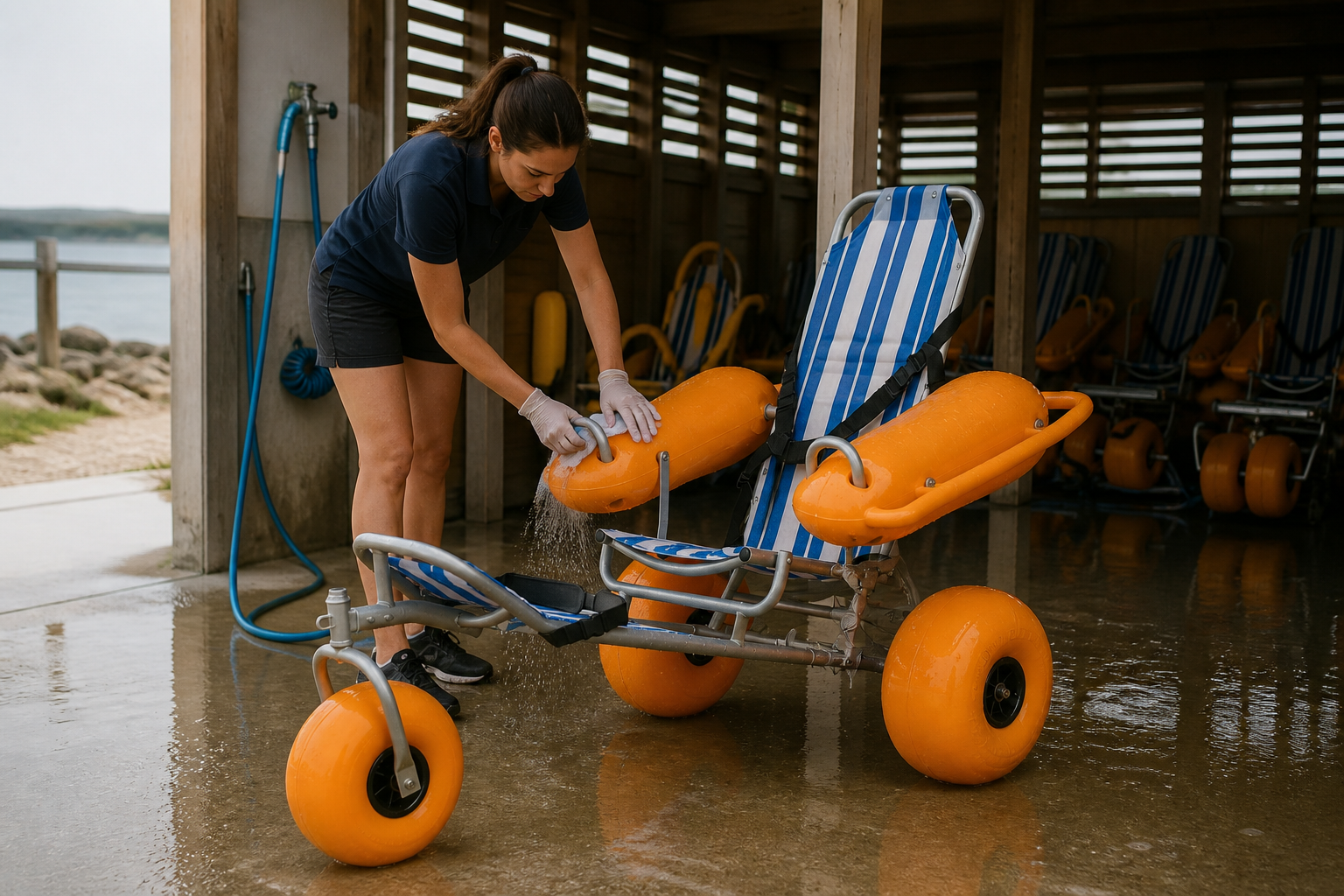
A floating beach wheelchair resort return process should connect exit, guest handoff, condition check, cleaning, drying, parts control, storage, and the next release decision.
Follow current care guidance and protect unit identity
Keep return care in the service loop: Do not park a wet chair without a recorded care step. Follow current product and local cleaning guidance, avoid unapproved methods, inspect areas exposed during cleaning, and keep removable items tied to the unit identity. Storage should support drying, protection, access, and the next inspection.
Record what staff cleaned, what they observed, where the chair was stored, and whether it remains ready or held. A rushed end-of-day handoff can erase the evidence needed at the next opening.
- Complete guest handoff before care work.
- Use current cleaning and drying guidance.
- Keep removable parts with unit identity.
- Record storage location and next status.
Key Takeaway: Return care prepares the chair record for the next service decision.
| Return stage | Record |
|---|---|
| Exit | Handoff and visible condition |
| Care | Cleaning, drying, recheck |
| Storage | Location, parts, ready or hold |
The stored status should tell the opening team what still needs attention.
Which records support daily operations?
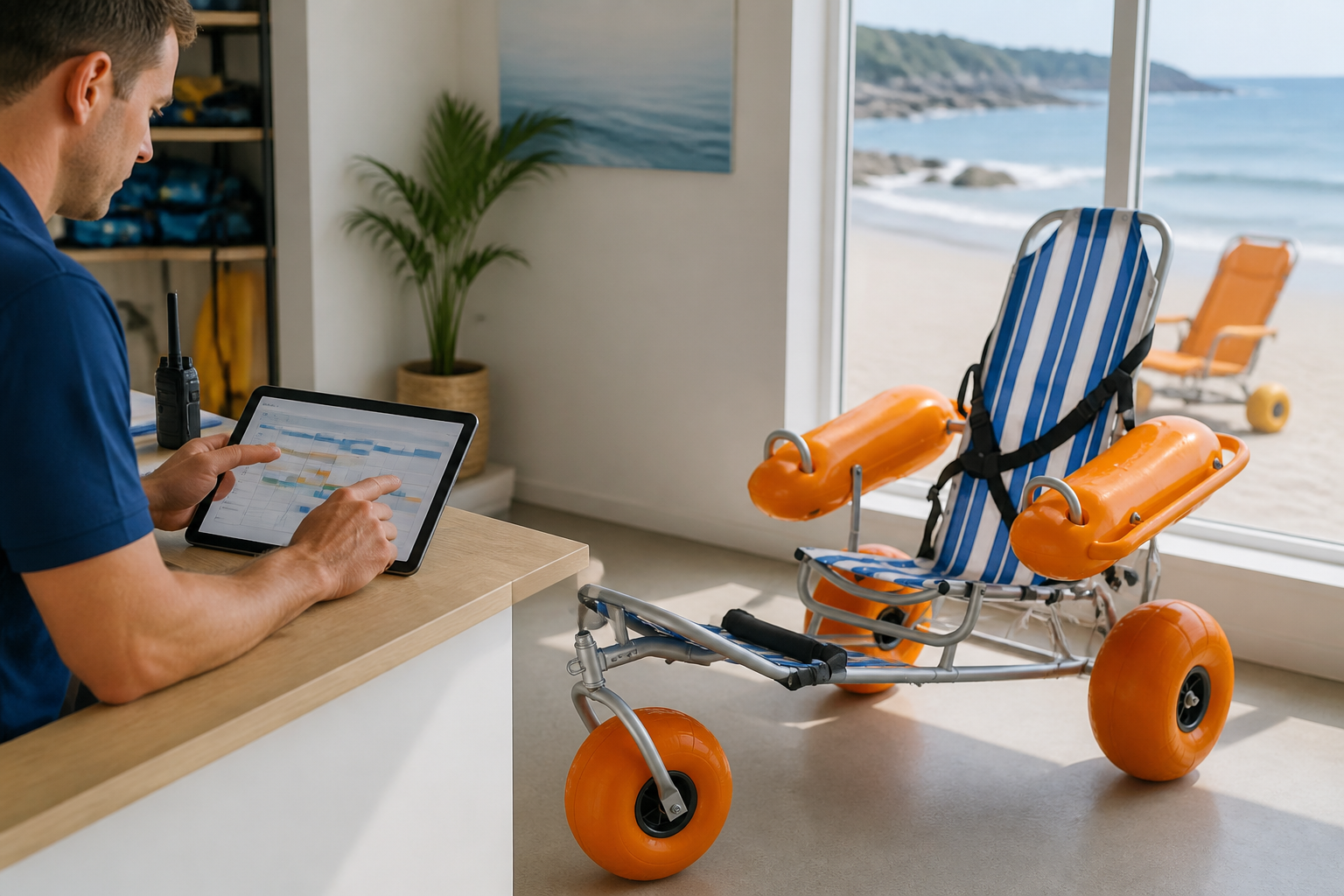
A floating beach wheelchair resort record set should cover reservations, site review, water decision, staff roles, chair check, briefing, session status, return care, holds, and closing review.
Keep one active status view and linked detail records
Make the active state easy to see: Managers need a quick view of open or closed service, ready or held chairs, assigned staff, booked handoffs, route changes, and unresolved actions. Detailed records can sit behind that view, but active decisions should not hide inside long notes.
Use controlled status words, timestamps, and owners. Close outdated items without deleting history. Keep private guest information in the approved reservation system rather than copying it into equipment or site logs.
- Show current site, chair, and staffing status.
- Link detailed records behind the active view.
- Use timestamps, owners, and controlled words.
- Separate guest privacy from equipment logs.
Key Takeaway: A daily record gives staff one current operating picture without losing history.
| Daily record | Active view |
|---|---|
| Program | Open, changed, closed, next review |
| Chair | Ready, clean, hold, service |
| Action | Owner, due point, closure |
The active view supports handoffs while linked detail keeps decisions traceable.
How can managers review program readiness?
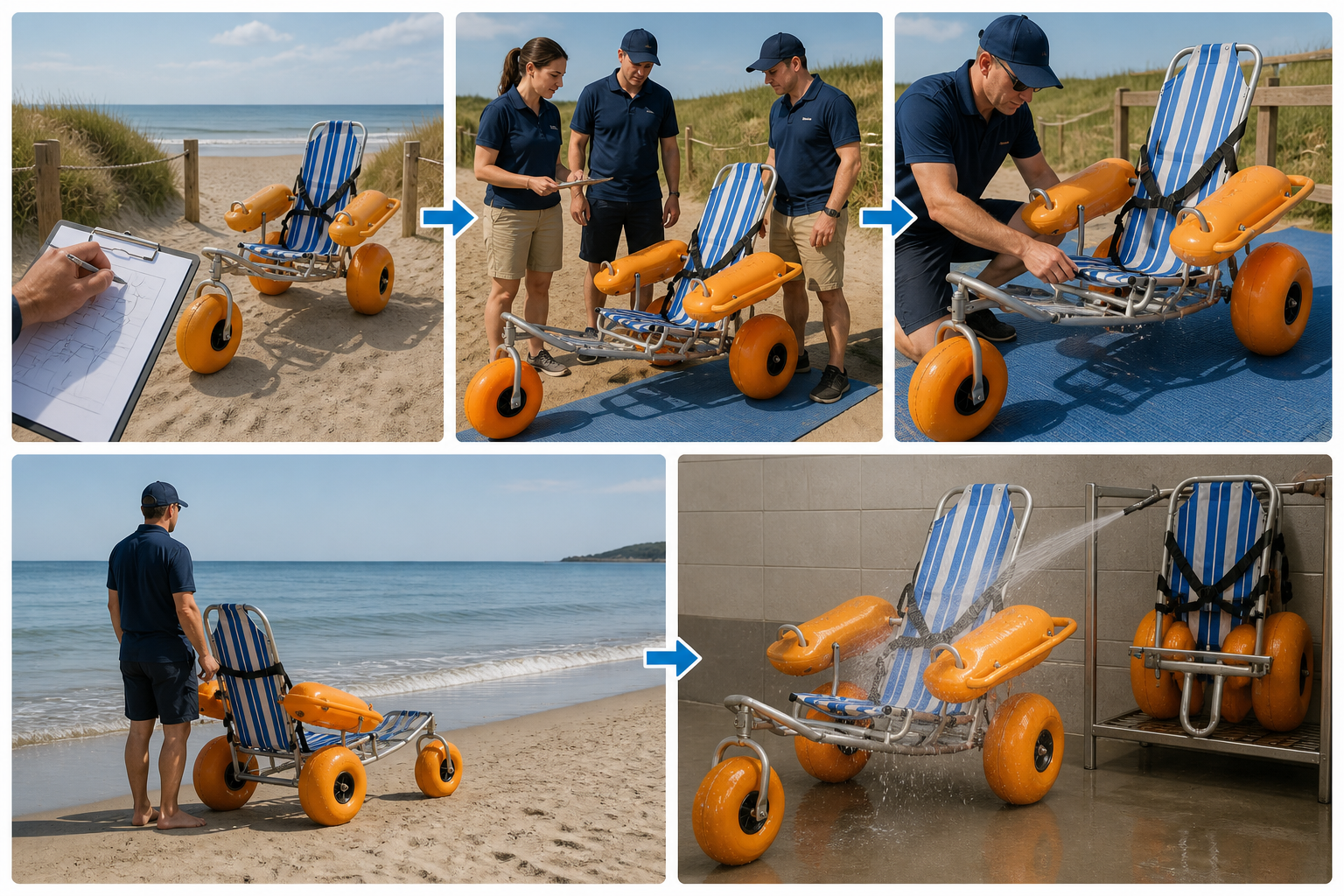
A floating beach wheelchair resort readiness review should close site, water, staffing, equipment, communication, route, care, storage, and record questions before service opens.
Use a gate that joins site, people, equipment, and records
Use one opening gate: The manager should see the current site decision, active water boundary, trained roles, released chair, booked handoffs, open holds, route state, cleaning capacity, and alternate plan. Any missing owner or outdated condition review should remain visible rather than receiving a favorable guess.
Repeat the gate when conditions, staff, equipment, or route state changes. For help discussing a documented resort access brief, contact us today with your site map, staffing plan, chair records, water decision process, cleaning area, and storage workflow.
- Confirm site and water decisions are current.
- Match trained roles with booked service.
- Verify chair, route, care, and storage status.
- Assign every gap before opening.
Key Takeaway: Readiness exists only while site, staff, chair, and records share the same active plan.
| Opening gate | Evidence |
|---|---|
| Site | Route, boundary, conditions, alternate |
| People | Roles, briefing, communication, stop authority |
| Chair | Release, care, storage, active record |
The gate reveals whether a complete program stands behind the equipment.
Closing Notes
A practical resort plan links site boundaries, water decisions, staff roles, reservations, chair checks, route loops, guest communication, return care, storage, and daily records. Keep every threshold tied to local authority and current product guidance. Equipment can support access only when a live operating plan stands around it and every participant retains the choice to pause.
Frequently Asked Questions
Can I open water access because the chair is designed to float?
No. Local policy, current conditions, responsible authority, staff readiness, and product guidance still control service.
What’s the best place to start a resort plan?
Start with the full site loop. Map storage, handoff, route, entry, exit, cleaning, and return.
How do I know if the water portion should close?
Use the resort’s written stop process and current review by the responsible local authority.
Can one staff role cover several tasks?
Yes, if the plan still names every task, handoff, and stop authority clearly.
What’s the best daily record for managers?
Use a compact active view for site, chair, staffing, bookings, holds, owners, and next review.