
A member may know the gate code, the shortest way through the clubhouse and which lifeguard station has a beach chair. A guest arriving for a wedding may know none of those things. Both need a route they can follow from the entrance to a particular seat on the beach and back again. Trace that trip before buying a beach club access mat. The stretch of sand is only one part of it.
Walk from the gate that guests actually use
Start at the member entrance, then make the same journey from the guest check-in or event drop-off. Mark the changing room, the last firm surface, the place to borrow a chair if the club offers one, and the destination on the sand. Try the return through the gate at the time an evening guest would leave. Find out who has the key after reception closes.
A route drawing should distinguish club-controlled areas from shared boardwalks or publicly managed sand. Ask the responsible party before planning a mat connection there. Write down where someone can wait and whom to contact if a gate is locked. A sign at the far end of the mat gives a visitor little help at the front gate.
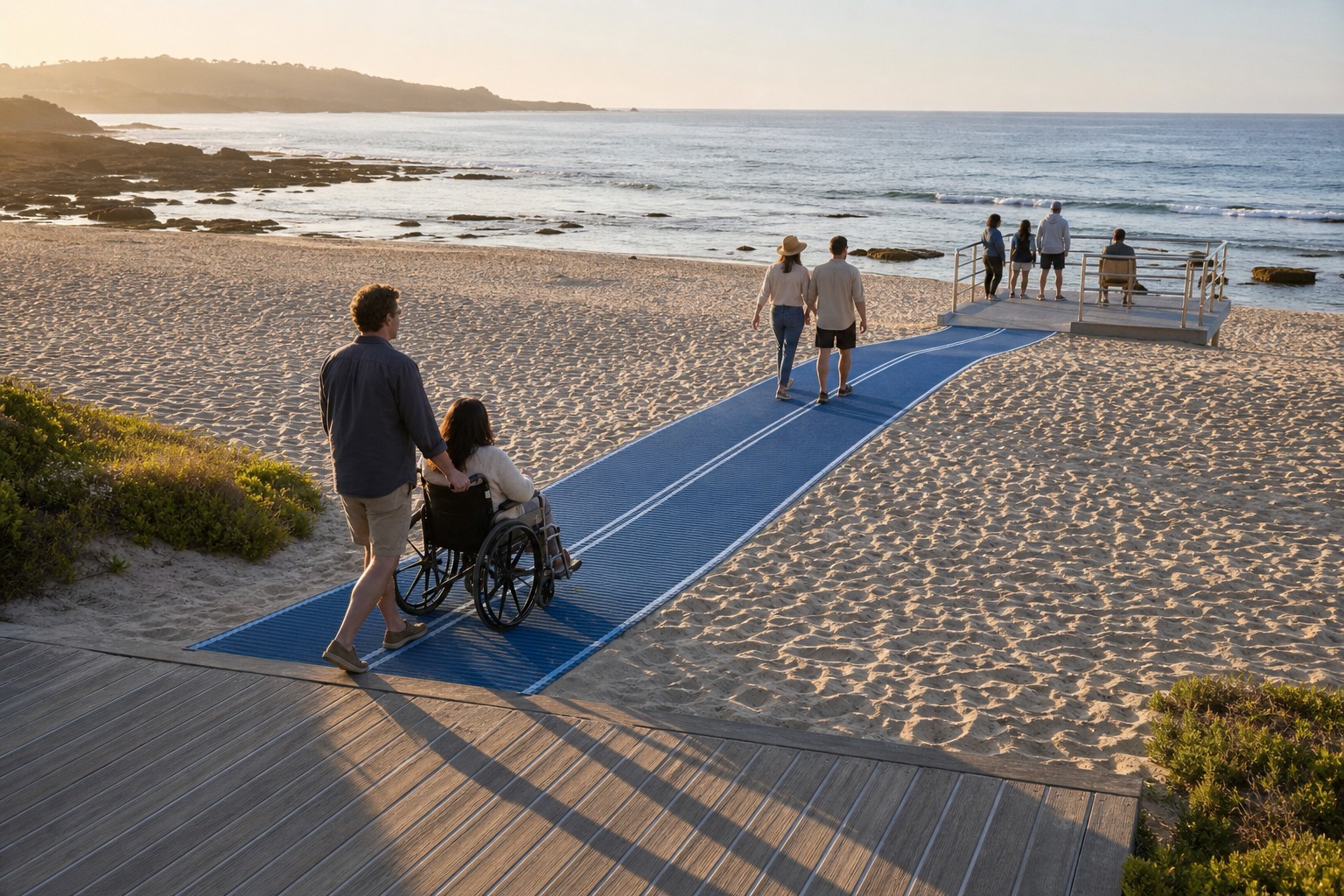
Fit the mat to the club’s seating plan
Ask the beach attendant to mark where loungers, umbrellas and towels normally go. Draw an unoccupied space alongside the destination where a wheelchair user can join companions. Check the approach with furniture in its normal position and measure the narrowest usable passage. Ask the caterer to trace the trolley route during table service. If the routes cross, agree where deliveries can wait without blocking the mat.
Use the walk to tell the supplier which deck edge, gate opening and sand endpoint the mat must meet. Request the section layout and compatible end pieces for that arrangement. The supplier’s description of its modular beach mat gives the equipment context. The club still needs to verify its gate clearance, return space and staffing hours.
Give reception a usable answer for each type of visit
| Person contacting the club | What reception should be able to tell them |
|---|---|
| Member bringing a guest | Where both people check in, whether the guest needs a pass, and how to reach the same seating area |
| Visitor attending a private event | Which entrance the host is using, where the mat ends for this event, and who can meet them there if arranged |
| Visitor asking about a beach wheelchair | Whether a particular chair is available that day, where to collect and return it, and whom to contact about assistance |
| Guest staying after normal service | When the gate and staffed route close, and which return arrangement the club has confirmed |
Keep entry information consistent across the invitation, reception desk and club map. If the beach chair has to be reserved separately from event admission, say so at booking. Distinguish a confirmed reservation from an inquiry. Give staff the operating rules for the mat route and directions they can explain without asking the guest to describe a diagnosis.
Check the layout after the event crew finishes
Temporary seating, crowd routes, deliveries, weather and changed service hours all affect an evening event. Before guests arrive, have the event lead and beach attendant walk from check-in to a seat and back with the tables, barriers and sound cables in place. A clear mat on the beach does little for a guest if the caterer has parked a trolley across its entrance.
For example, a stage extension might take the space reserved for turning at the end of the mat. The event lead can move the seating arrangement and have the beach attendant recheck it. If the club cannot restore the route, give reception and the host the actual endpoint and available options before they direct guests there. Record the person responsible for unlocking the return gate until the last booked group leaves.